Set and Setting: The Complete Guide
How mindset and environment shape psychedelic experiences, from the concept's origins through practical preparation for clinical, ceremonial, and personal contexts.
Origins of the Concept
The phrase "set and setting" was popularized by Timothy Leary and colleagues at Harvard in the early 1960s, but the principle it describes is far older. Indigenous traditions that have worked with psychedelic plants for centuries, sometimes millennia, have always recognized that the inner state of the participant and the outer conditions of the ceremony determine what the experience becomes. The Mazatec curandera María Sabina conducted her psilocybin mushroom ceremonies within a carefully held cultural and spiritual container. Amazonian ayahuasca traditions prescribe specific dietas (dietary and behavioral restrictions) in the weeks before ceremony, shaping the participant's internal landscape before the brew is ever consumed.
Leary's contribution was to name the principle in terms that Western science could engage with. In his 1964 book "The Psychedelic Experience" (co-authored with Ralph Metzner and Richard Alpert), he argued that the character of a psychedelic experience depends primarily on "set" (the mental state, personality, expectations, and intention of the person) and "setting" (the physical, social, and cultural environment). This insight, though often stated simply, has been consistently supported by subsequent research.
Understanding "Set": The Inner Landscape
The "set" in set and setting encompasses everything you bring to the experience from the inside. This includes:
Intention. Not a rigid goal, but a compass. Clarifying why you are seeking this experience, what questions you are holding, what you hope to learn or release, helps orient the journey without trying to control it. Clinical protocols at Johns Hopkins and NYU ask participants to articulate their intentions in preparatory sessions, and researchers have found that clarity of intention correlates with more meaningful outcomes.
Psychological readiness. This includes both acute factors (how you feel today, what stressors you are carrying, whether you slept well) and longer-term factors (your psychological history, unresolved trauma, current mental health). People with a history of psychosis or severe dissociative disorders are generally advised against psychedelic use, a screening that both clinical trials and responsible ceremonial contexts take seriously.
Emotional state. Anxiety before a psychedelic experience is common and not inherently problematic. Many experienced practitioners distinguish between healthy nervousness (which reflects respect for the experience) and destabilizing fear (which may indicate that the timing is wrong). Being honest about where you are emotionally, rather than performing readiness, is itself a form of preparation.
Expectations. What you believe will happen influences what does happen, not because psychedelics are "just placebo," but because expectations shape attention, interpretation, and emotional response. Entering with rigid expectations ("I will have a mystical experience" or "This will cure my depression") can create disappointment or resistance when the actual experience takes a different form.
Understanding "Setting": The Outer Container
Setting encompasses everything external to the person: the physical space, the people present, the music, the cultural framework, and the broader social context.
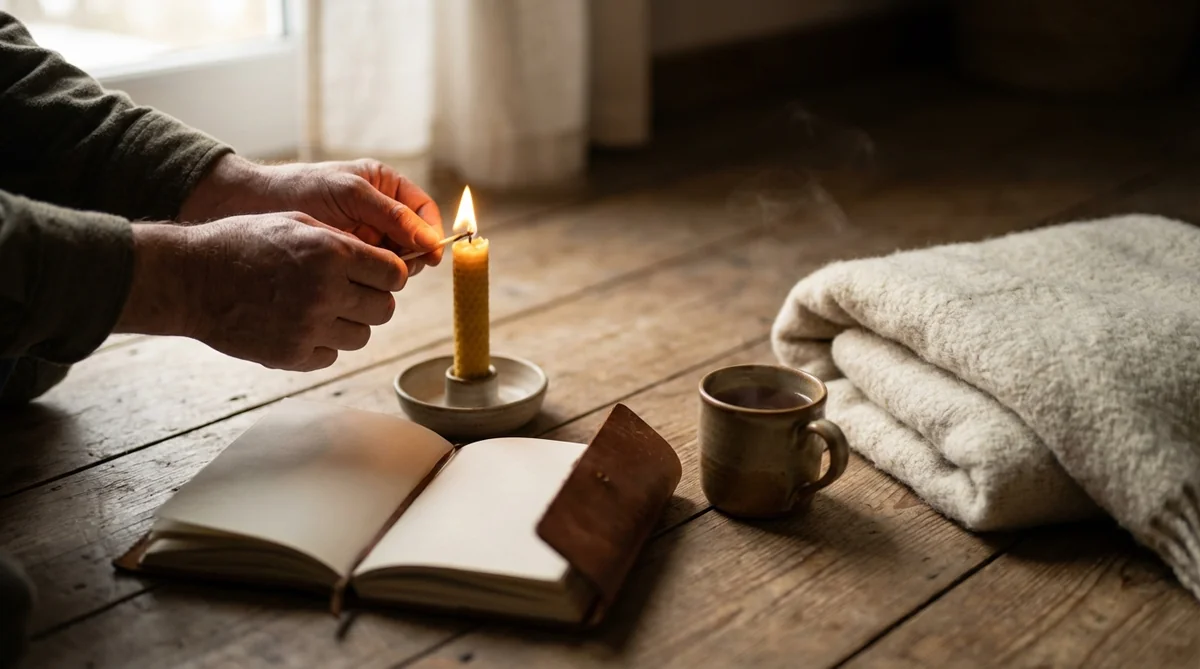
Physical space. A calm, comfortable environment reduces anxiety and supports openness. Clinical trials typically use rooms designed to feel warm and non-institutional, with soft lighting, comfortable furniture, and curated art. Home settings benefit from similar attention: clearing clutter, ensuring privacy, having water, blankets, and a bathroom nearby, and creating a space that feels safe rather than stimulating.
Social context. Who is present matters enormously. A trusted guide, therapist, or sitter, someone who can offer calm presence without interference, is considered essential in both clinical and traditional contexts. The sitter's role is not to direct the experience but to provide a steady anchor: reassurance during difficult moments, water when needed, a hand to hold. Group settings (ceremonies, retreats) add the dimension of collective energy, which can be supportive but also unpredictable.
Music. The role of music in psychedelic experiences is significant enough that Johns Hopkins researchers have developed specific playlists for their psilocybin trials. Music can guide emotional trajectory, provide structure during formless moments, and serve as a container for experiences that might otherwise feel overwhelming. The choice of music, whether classical, ambient, indigenous, or silence, shapes the experience in ways participants often describe as profound.
Nature. Many people report that psychedelic experiences in natural settings, forests, mountains, beaches, carry a distinctive quality of connection and awe. Research by environmental psychologists suggests that natural settings may reduce anxiety and support the kind of open, receptive awareness that psychedelics enhance.
Clinical, Ceremonial, and Personal Settings
The three most common containers for psychedelic experiences each offer different strengths and limitations.
Clinical settings provide medical screening, standardized protocols, trained therapists, and a framework for integration. They prioritize safety and reproducibility. The limitations include cost (often thousands of dollars per session), limited availability, and an environment that some people find sterile or impersonal.
Ceremonial settings embed the psychedelic experience within a cultural and spiritual tradition. Ayahuasca ceremonies, Native American Church peyote ceremonies, and mushroom ceremonies in the Mazatec tradition each provide a container refined over generations. These settings offer meaning, community, and accumulated wisdom. The limitations include variable quality of facilitation, potential for cultural appropriation, limited medical oversight, and the challenge of integrating experiences from one cultural context into another.
Personal settings (using psychedelics independently or with a trusted sitter) offer privacy, comfort, and autonomy. The limitations are obvious: no professional support if things become difficult, no medical oversight, and the full burden of preparation and integration falling on the individual. For people who choose this path, thorough preparation, honest self-assessment, and a reliable sitter are especially important.
A Practical Preparation Checklist
Regardless of setting, the following preparation steps tend to be consistently recommended:
- ●Research the specific substance: dose ranges, duration, contraindications, and expected effects
- ●Screen for medical and psychiatric contraindications (especially interactions with SSRIs, MAOIs, lithium, and cardiovascular conditions)
- ●Clarify your intention without rigidifying your expectations
- ●Choose a comfortable, private, familiar space
- ●Arrange a trusted sitter or guide
- ●Clear your schedule for the day of the experience and the following day
- ●Prepare simple food, water, blankets, a journal, and a curated playlist
- ●Inform the sitter about any concerns, health conditions, or specific fears
- ●Turn off your phone and remove sources of interruption
- ●Allow yourself to feel whatever arises, including uncertainty about whether this is the right time
Set and setting are not guarantees. Psychedelic experiences retain an element of genuine unpredictability that no amount of preparation can fully eliminate. But preparation dramatically shifts the probability distribution toward experiences that are safe, meaningful, and growthful rather than destabilizing. The container does not determine what unfolds inside it, but it profoundly shapes whether what unfolds can be held.