The Major Psychedelic Substances: A Field Guide
A map of the psychedelic landscape, covering tryptamines, phenethylamines, lysergamides, dissociatives, empathogens, and unique compounds like ibogaine and salvia.
A Landscape, Not a Ladder
The word "psychedelic" literally means "mind-manifesting," but it has come to cover a remarkably varied family of substances. Psilocybin mushrooms, LSD, ayahuasca, ketamine, MDMA, and ibogaine differ in their chemistry, their history, their duration, and the texture of the experiences they produce. Treating them as interchangeable, or ranking them from "beginner" to "advanced," misses the point. Each substance has its own character, its own risks, and its own cultural context. What follows is a map, not a hierarchy.
Tryptamines: Psilocybin, DMT, and Ayahuasca
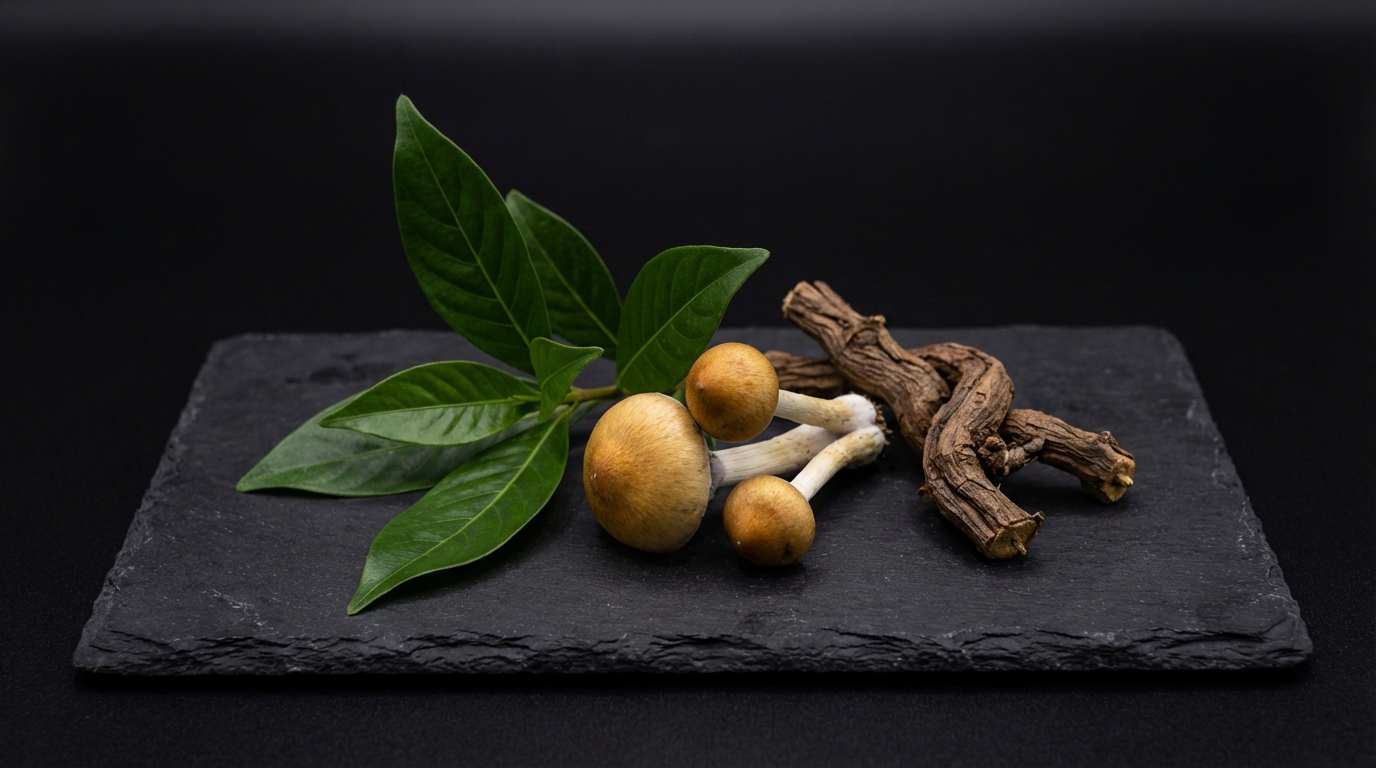
Tryptamines are structurally related to serotonin, one of the brain's primary neurotransmitters. Psilocybin (found in over 200 species of mushrooms) is perhaps the most widely studied psychedelic today. It tends to produce experiences lasting four to six hours, often described as introspective, emotionally rich, and connected to nature. Research teams at Johns Hopkins, Imperial College London, and NYU have published extensively on its potential for treating depression, end-of-life anxiety, and addiction.
DMT (N,N-dimethyltryptamine) occurs naturally in many plants and, in trace amounts, in the human body. When smoked or vaporized, it produces an intense but brief experience (typically 10 to 20 minutes) often described as visionary or otherworldly. Ayahuasca, the Amazonian brew, combines DMT-containing plants with an MAO inhibitor (usually Banisteriopsis caapi) that allows oral absorption, extending the experience to four to six hours and embedding it in a centuries-old ceremonial tradition.
Phenethylamines: Mescaline and the 2C Family
Phenethylamines are structurally related to dopamine and amphetamine, though their effects differ markedly from stimulants. Mescaline, found in the peyote cactus (Lophophora williamsii) and the San Pedro cactus (Echinopsis pachanoi), has been used ceremonially by Indigenous peoples of the Americas for thousands of years. The experience tends to be long (8 to 12 hours), often described as warm, embodied, and visually vivid with a grounded emotional quality.
The 2C family (2C-B, 2C-E, and others), synthesized and cataloged by chemist Alexander Shulgin in his book PiHKAL, occupies a middle ground between psychedelic and empathogenic effects. 2C-B in particular has gained attention for its relatively gentle profile: shorter duration (four to six hours), manageable intensity at moderate doses, and a blend of visual enhancement with emotional openness. These are synthetic compounds with limited research and widely varying individual responses.
Lysergamides: LSD
Lysergic acid diethylamide, synthesized by Albert Hofmann at Sandoz Laboratories in 1938, remains one of the most potent psychedelics known by weight. A typical dose is measured in micrograms (millionths of a gram). The experience lasts 8 to 12 hours and is often described as more analytical or electric than psilocybin, with vivid visual phenomena, altered sense of time, and shifts in conceptual thinking. LSD was the subject of over 1,000 published studies before prohibition effectively halted research in the early 1970s. Modern trials have resumed, with researchers at the University of Basel, Imperial College London, and elsewhere investigating its potential for anxiety, depression, and cluster headaches.
Dissociatives: Ketamine
Ketamine works through an entirely different mechanism than the classic psychedelics. Rather than acting on serotonin receptors, it blocks NMDA glutamate receptors, producing a state that can range from mild dissociation and emotional distancing to full "K-hole" experiences of disembodiment. Originally developed as an anesthetic in the 1960s, ketamine is now the most legally accessible psychedelic therapy in the United States, prescribed off-label for treatment-resistant depression and available in specialized clinics. The FDA approved esketamine (Spravato), a nasal spray formulation, in 2019. Duration is relatively short (45 minutes to two hours depending on route of administration), and its safety profile is well-characterized from decades of medical use.
Empathogens: MDMA
MDMA (3,4-methylenedioxymethamphetamine) is sometimes classified separately from psychedelics because its primary effects center on emotional openness, empathy, and connection rather than perceptual distortion. It acts primarily by releasing serotonin, dopamine, and norepinephrine, producing a state of reduced fear, increased trust, and heightened emotional clarity. MDMA-assisted therapy for PTSD has been the subject of rigorous clinical trials conducted by MAPS (now Lykos Therapeutics), with Phase 3 results showing significant improvements in PTSD symptoms. Duration is typically three to five hours. MDMA carries particular risks around neurotoxicity with repeated use, hyperthermia, and dangerous interactions with other serotonergic substances.
Unique Compounds: Ibogaine and Salvia
Some psychoactive substances resist easy categorization. Ibogaine, derived from the West African shrub Tabernanthe iboga, produces an extraordinarily long experience (often 24 to 36 hours) that is frequently described as a life review or a confrontation with autobiographical material. It has shown remarkable potential for interrupting opioid addiction, with some studies reporting dramatic reductions in withdrawal symptoms and cravings. However, ibogaine carries serious cardiac risks, including QT prolongation, and several fatalities have been reported. It should only be administered under medical supervision with cardiac monitoring.
Salvinorin A, the active compound in Salvia divinorum, works through kappa-opioid receptors rather than serotonin pathways, making it pharmacologically unique among psychedelics. The smoked form produces an extremely intense but brief experience (one to five minutes) often described as disorienting, bizarre, or gravity-defying. The Mazatec tradition uses salvia in a very different way: chewing fresh leaves for a gentler, longer experience embedded in healing ritual.
Navigating the Landscape
This overview is necessarily incomplete. Dozens of other compounds, from 5-MeO-DMT to various research chemicals, populate the broader psychedelic landscape. The point is not to catalog every substance, but to convey that "psychedelic" is a broad category containing fundamentally different experiences. Pharmacology, duration, intensity, cultural context, and individual temperament all matter. Learning to distinguish between these substances, rather than treating them as a single phenomenon, is a foundation of psychedelic literacy.