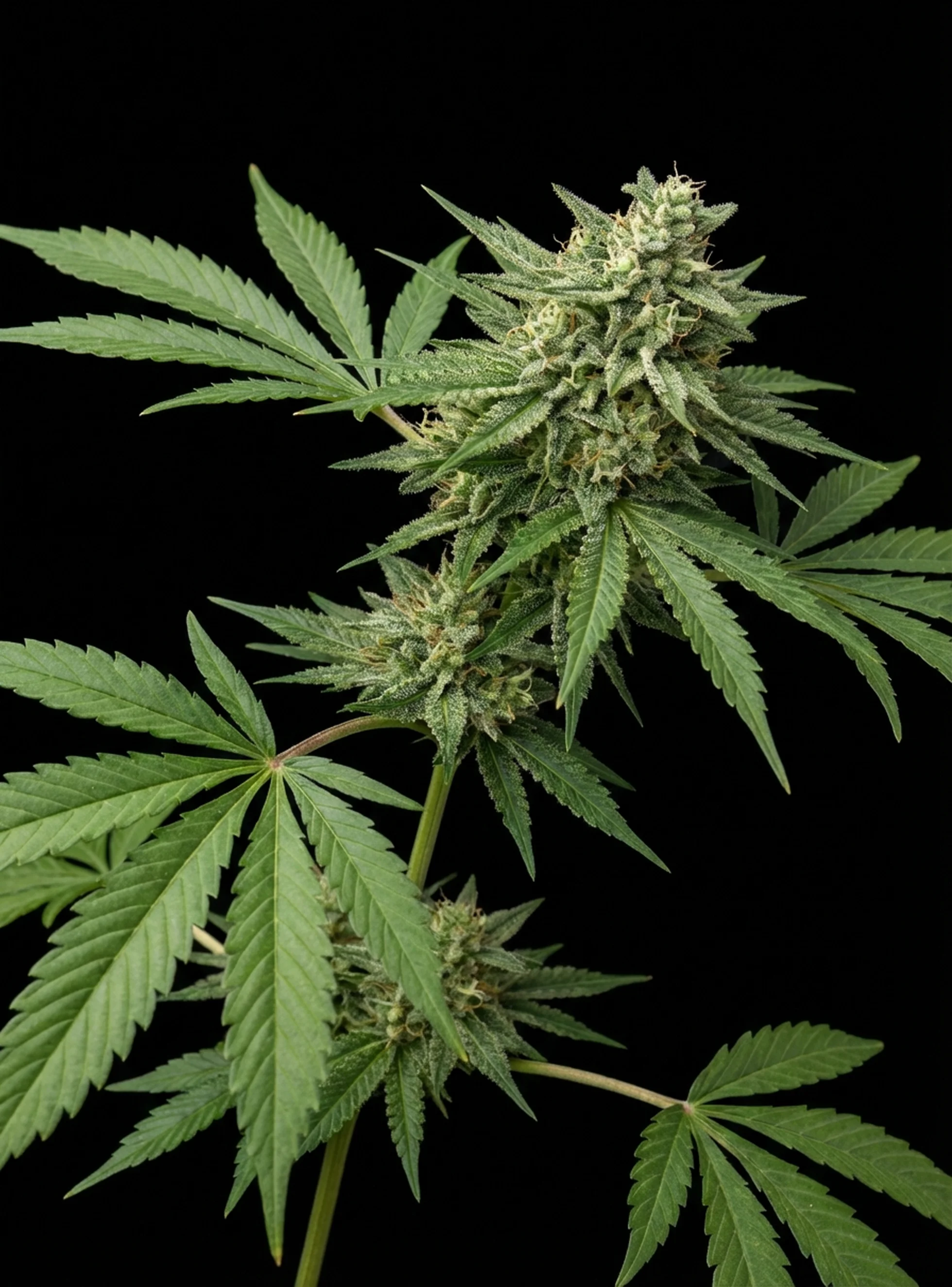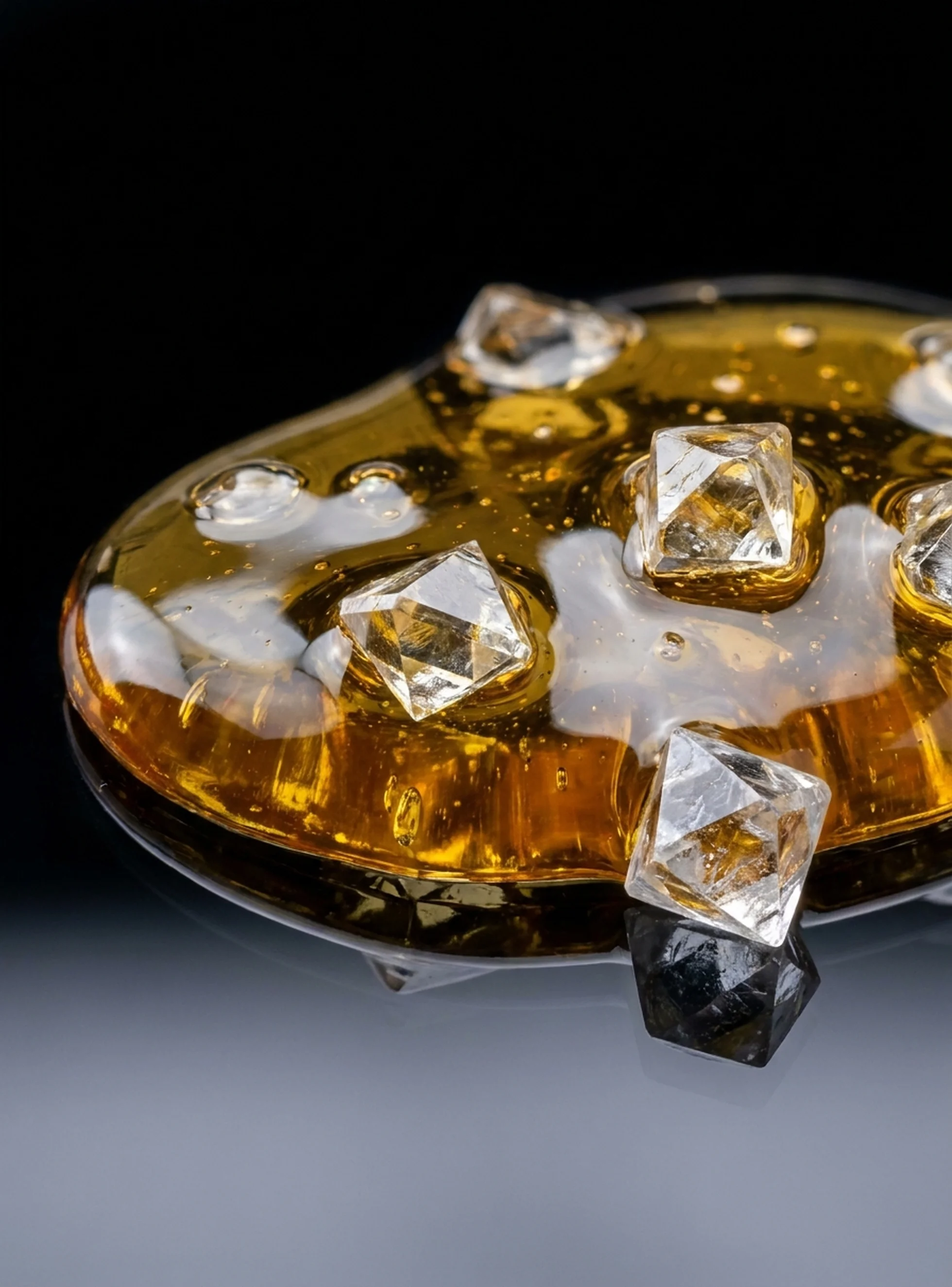

THC is the primary psychoactive compound in cannabis, binding CB1 receptors to produce euphoria, altered perception, and appetite stimulation, with psychedelic effects emerging at higher doses.
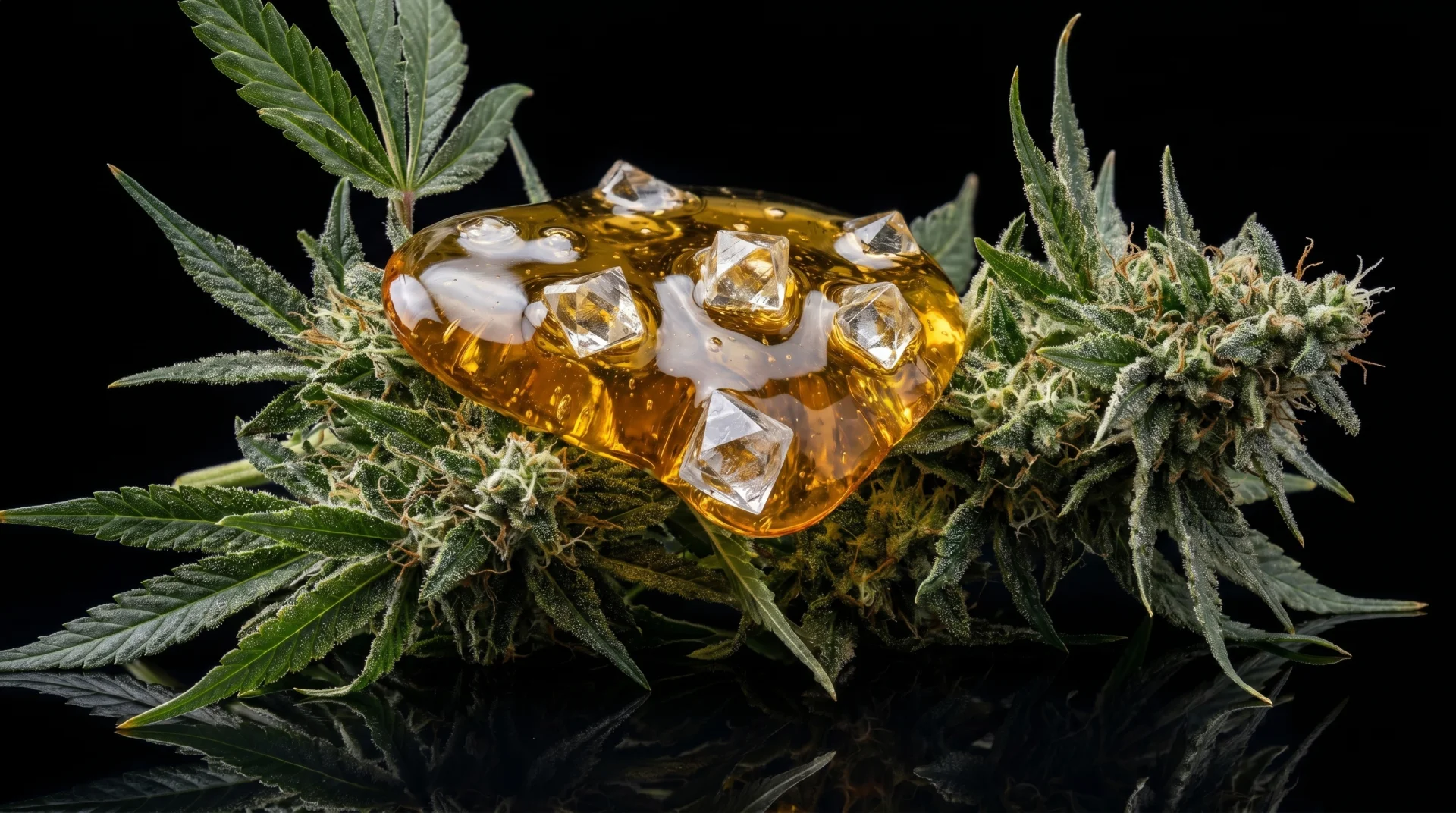
THC
THC is the primary psychoactive compound in cannabis, binding CB1 receptors to produce euphoria, altered perception, and appetite stimulation, with psychedelic effects emerging at higher doses.
Fact file
- Type
- Synthetic compound
- Botanical name
- Sublingual tinctures
- Origin
- First cannabinoid isolation (Adams)
- Duration
- 2 to 6h
- Legal status
- Decriminalized in 5 of 13 listed jurisdictions, and varies elsewhere
What is THC?
Of the more than one hundred and fifty cannabinoids the cannabis plant produces, one molecule is responsible for almost everything most people associate with the experience of being high. It is small, oily, fat-loving, and shaped just well enough to slip into a receptor system the human body had been quietly maintaining for millions of years before anyone knew the receptor existed.
Delta-9-tetrahydrocannabinol (THC) is the primary intoxicating compound in Cannabis sativa. The cannabis plant has its own page in this library; this one is about the molecule, the thing that travels through smoke and butter and tincture and capsule and lands in a system the body built for something else entirely. Identifying that system, in 1988, was one of the more humbling moments in modern neuroscience: a network of receptors woven through memory, mood, motor control, appetite, and pain, all waiting on signals the brain itself produces.
THC is not those signals. It is a partial mimic, a slightly off-key version that sticks longer and binds harder than the body usually permits. That subtle mismatch is most of what people feel.
What follows is the molecule on its own terms: the chemistry, the contested edges of its risk profile, the long arc from Central Asian valley to pharmacy shelf, and the question of what it means that a compound this widely used remains, in many ways, this poorly understood.
The substance
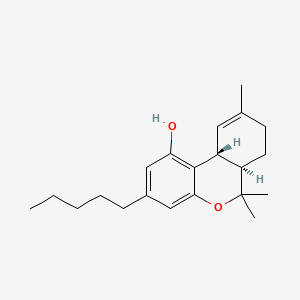
Delta-9-tetrahydrocannabinol (Δ9-THC, often written THC) is a phytocannabinoid produced by Cannabis sativa L. and closely related cannabis taxa. Its IUPAC name is (6aR,10aR)-6,6,9-trimethyl-3-pentyl-6a,7,8,10a-tetrahydro-6H-benzo[c]chromen-1-ol. Molecular formula C₂₁H₃₀O₂, molecular weight 314.46 g/mol.
It belongs to the classical cannabinoid subclass of the broader cannabinoid family, characterized by a tricyclic dibenzopyran core with a pentyl side chain. CBD, CBN, and Δ8-THC share the same molecular formula but differ in ring fusion or double-bond position, which is enough to produce very different pharmacology. Pure THC is an odorless, colorless to pale yellow oil at room temperature, essentially insoluble in water, highly soluble in fats and organic solvents.
In the broader taxonomy of psychoactive compounds, THC sits apart from the classical psychedelics (which act on serotonin), the dissociatives (which act on NMDA), and the empathogens (which act on monoamine release). It engages a distinct endogenous signaling system, the endocannabinoid system, and that distinction shapes nearly everything about how it feels and what it does.
Pharmaceutical equivalents include dronabinol (Marinol, synthetic THC) and nabiximols (Sativex, a 1:1 THC:CBD oromucosal spray). Nabilone (Cesamet) is a related synthetic cannabinoid, structurally similar but distinct from THC.
Strength and duration
Duration
Aftereffects: Vaporization
Molecular structure
Chemistry and mechanism
THC's effects begin with a partial fit. The compound is a partial agonist at CB1 and CB2 receptors, the two main components of the endocannabinoid system. CB1 receptors cluster densely in the prefrontal cortex, hippocampus, amygdala, basal ganglia, and cerebellum, and more sparsely in the periphery. CB2 receptors are concentrated in immune tissues. The pattern of CB1 distribution maps almost exactly onto the things THC tends to alter: working memory, time perception, motor coordination, mood, and pain processing.
Unlike many drugs, THC does not structurally resemble the natural ligands of the system it activates. The body produces its own cannabinoids, principally anandamide and 2-arachidonoylglycerol (2-AG), on demand at synapses. These molecules are released by the postsynaptic neuron and travel backward to dampen the presynaptic neuron's neurotransmitter release. The endocannabinoid system functions, in effect, as a brake on signaling, fast, local, and continuously adjusted. THC engages the same receptors but does so as an exogenous compound that lingers, accumulates in fat tissue, and is not subject to the rapid breakdown that controls endogenous cannabinoid signaling.
The partial agonist character matters. A full agonist (like the synthetic cannabinoids JWH-018 or related designer compounds) drives the receptor to maximal activation and tends to produce more severe and less predictable effects. THC activates CB1 to roughly half-maximal capacity, which is part of why its acute toxicity is comparatively low and its dose-response curve is, within limits, more forgiving.
Secondary actions matter too: weak agonism at the 5-HT1A serotonin receptor (contributing to mild anxiolysis at low doses), activity at TRPV1 (involved in pain and temperature sensing), and modulation of dopamine release in mesolimbic reward circuits. The contested feature is the inverted-U dose-response: low doses tend toward relaxation, moderate doses toward euphoria and altered cognition, and high doses, particularly in sensitive individuals, toward anxiety and paranoia.
Metabolism is liver-heavy and unusual. Oral THC is converted by CYP3A4 and CYP2C9 into 11-hydroxy-THC, a metabolite that crosses the blood-brain barrier more readily than its parent and is itself psychoactive. This is why edibles often feel more potent and more body-loaded than smoked cannabis at equivalent labeled doses.
How people encounter it
Most people who encounter THC do so through cannabis flower, smoked or vaporized. Inhaled THC reaches the brain within seconds, peaks within fifteen to forty-five minutes, and largely subsides within two to six hours. Vaporization, which heats the plant material below combustion temperature, delivers THC with somewhat higher bioavailability and without the byproducts of burning leaf matter.
Oral routes behave differently. When THC passes through the gut and the liver, much of it is converted to 11-hydroxy-THC before it reaches the brain. Onset is delayed (often thirty minutes to two hours), the peak is broader and later, and the total duration extends to six to twelve hours, sometimes longer at higher doses. The subjective profile shifts: edible cannabis is often described as more sedating and more body-oriented than the inhaled form. The delayed onset is also where most adverse experiences in inexperienced users originate, when an early dose feels weak, a second is taken, and the combined effects arrive together hours later.
Sublingual tinctures sit between these two: onset within fifteen to forty-five minutes, duration of three to six hours, with a metabolite ratio closer to inhalation than to oral consumption.
Pharmaceutical preparations include dronabinol capsules (synthetic THC in sesame oil), nabiximols oromucosal spray (a fixed THC:CBD ratio), and standardized cannabis flower or oils dispensed under medical frameworks. Transdermal patches deliver THC steadily over many hours, producing low-grade prolonged effects rather than acute intoxication.
In traditional contexts, cannabis was prepared as bhang in South Asian Ayurvedic practice (a milk-and-spice infusion), as hashish across the Middle East and North Africa, and in various decoctions and edibles in classical Chinese, Persian, and African medical traditions. Those preparations typically contained one to five percent THC by weight. Modern cultivars often contain fifteen to thirty percent, and concentrates reach fifty to ninety percent. The plant has not changed shape, but the dose people now meet through it has changed dramatically.
Origin and history
Cannabis was among the earliest plants humans cultivated. Archaeological and genetic evidence places domestication roughly ten to twelve thousand years ago, in the foothills somewhere between the Caspian Sea and the Tian Shan range, with early diffusion into China, Central Asia, and the Indian subcontinent. From these origins it traveled along trade and migration routes into the Mediterranean, sub-Saharan Africa, and eventually the Americas. For most of its long human history, cannabis was a fiber crop, a seed crop, and a medicine, often all three at once.
The molecule itself, however, was unknown until the twentieth century. Roger Adams at the University of Illinois isolated cannabidiol from cannabis in 1940 and described several related compounds, but the structure of the principal psychoactive component remained unclear. That clarity arrived in 1964, when Yehiel Gaoni and Raphael Mechoulam at the Hebrew University of Jerusalem isolated and characterized THC. Mechoulam's laboratory would go on to identify many more cannabinoids and, in 1992, anandamide, the first endogenous cannabinoid. The discovery of the CB1 receptor in 1988 by Allyn Howlett's group, followed by its molecular cloning in 1990, transformed cannabis pharmacology from a study of a plant compound into the study of a previously unknown signaling system in the human brain.
The legal arc moved in the opposite direction during much of the same period. The United States Marihuana Tax Act of 1937 effectively criminalized cannabis through prohibitive taxation. The 1970 Controlled Substances Act placed it on Schedule I, where it formally remains. The 1971 UN Convention on Psychotropic Substances carried that prohibition into international treaty. Enforcement was applied unequally from the start, with arrests and incarcerations falling disproportionately on Black and Latinx communities in the United States and on marginalized populations elsewhere, despite broadly similar use rates across groups.
The reversal came slowly. California's Proposition 215 legalized medical cannabis at the state level in 1996. Uruguay legalized adult use in 2013, Canada federally in 2018, and a growing list of US states, European countries, and other jurisdictions have followed in some form. As of this writing, more than forty countries permit medical cannabis access in some framework, and roughly two dozen permit adult recreational use, though international scheduling is unchanged. The United States Drug Enforcement Administration is, as of 2026, in the late stages of a long-debated process that may move cannabis from Schedule I to Schedule III, which would loosen research restrictions without legalizing recreational use federally.
What began as a multi-millennium plant relationship has become, in the span of about sixty years, a molecule with a pharmacology, a regulatory file, a multi-billion-dollar industry, and an unsettled place in medicine.

Effects
The THC experience does not announce itself the way a classical psychedelic does. There is rarely a clear threshold, no obvious moment of arrival. The effects more often gather, then spread, then settle into something that feels at once familiar and slightly off-axis from ordinary consciousness.
Perceptually, color and contrast often seem heightened, particularly in low light. Music tends to gain dimension, with some users reporting the experience of hearing layers or textures that ordinarily go unnoticed. Time slows. A thirty-minute interval may feel like an hour. Visual hallucinations are uncommon at typical doses, though geometric patterns and mild distortions can appear at higher ones. Tactile awareness deepens. The senses of taste and smell sharpen, which is part of why food often becomes intensely interesting, the so-called munchies, an effect mediated by CB1 signaling in the hypothalamus.
Cognitively, working memory is reliably disrupted. The reader may walk into a room and forget the errand, or lose the thread of a sentence midway through speaking it. Attention narrows or wanders. Some people report an opening of free association at low to moderate doses, a sense of ideas linking in unfamiliar ways, though objective tests of creative output rarely confirm the subjective impression. Self-referential thought tends to amplify, sometimes pleasantly, sometimes uncomfortably; the inward turn can become a hall of mirrors at higher doses.
Emotionally, the dose-response curve is famously inverted. Low doses tend toward mild euphoria, social warmth, and a relaxed openness. Moderate doses can deepen these qualities or produce a contemplative, sometimes silly, sometimes profound mood. Higher doses, particularly in those without prior tolerance or with underlying anxiety, can flip the experience into paranoia, depersonalization, or panic. This is not a moral failure on the part of the user; it is a feature of how the molecule behaves at high CB1 occupancy in particular brain regions.
Somatically, physical relaxation is common, sometimes deepening into heaviness or sedation. Heart rate rises (often by ten to forty beats per minute). Mouth and eyes feel dry. Coordination and reaction time decline measurably, often more than the user perceives. The body, like the mind, becomes more present and more porous: ordinary sensations gain weight, hunger sharpens, the breath feels closer.
The quality of the experience is heavily shaped by route, dose, prior exposure, the THC:CBD ratio of the cannabis material, the surrounding environment, and the user's emotional state at onset. A small smoked dose with friends in a familiar room is a different event from a strong edible alone in an unfamiliar one. THC does not exempt itself from set and setting; in some ways it is more sensitive to them than other substances, because the signal it amplifies is one the brain was already running.
Risks and limits
The risk profile of THC is neither as catastrophic as twentieth-century prohibition rhetoric implied, nor as benign as parts of cannabis culture have sometimes argued. The honest middle is more interesting than either pole.
Acute risks. The most common adverse experience is acute anxiety or panic, particularly at higher doses, in inexperienced users, or in those with a history of anxiety. Transient paranoia or psychotic-like symptoms can occur even in otherwise well people at high doses; these resolve with the offset of intoxication but can be deeply unpleasant. Tachycardia of ten to forty beats per minute is near-universal; this is generally benign in healthy individuals but warrants caution in those with arrhythmias or significant coronary disease. Driving and operation of complex machinery are objectively impaired for several hours after smoking and substantially longer after oral consumption, often beyond the point at which subjective intoxication has faded.
Psychosis and severe mental illness. This is the area where the evidence is most consequential and most often misrepresented. Epidemiological studies consistently find that cannabis use, particularly heavy use of high-THC products and particularly in adolescence, is associated with an elevated risk of psychotic symptoms and, in vulnerable individuals, with the earlier onset of psychotic disorders. The risk is not uniform: those with a personal or family history of psychosis carry a substantially higher liability. Causation versus correlation is still debated for the population as a whole, but the signal in vulnerable groups is strong enough that personal or family history of schizophrenia, bipolar disorder with psychotic features, or other psychotic illness is a serious relative contraindication.
Cannabis use disorder. Approximately nine percent of users and roughly thirty percent of regular users meet criteria for cannabis use disorder, a clinically recognized condition involving tolerance, withdrawal, failed attempts to cut back, and continued use despite negative consequences. Withdrawal is psychologically uncomfortable (irritability, sleep disturbance, anxiety, appetite loss) but not medically dangerous, and typically resolves over one to three weeks.
Cannabinoid hyperemesis syndrome (CHS) is a paradoxical condition in which heavy chronic users develop cyclic vomiting and abdominal pain, often relieved temporarily by hot showers. The mechanism remains unclear. The condition typically resolves with sustained abstinence.
Pregnancy and adolescence. THC crosses the placenta and is excreted in breast milk; preclinical and observational data are concerning enough that pregnancy and breastfeeding represent strong relative contraindications. Adolescent use, particularly heavy use during the years of major neurodevelopment, has been associated with persistent cognitive effects and elevated psychosis risk, though confounding remains a real interpretive challenge.
Drug interactions. Combining THC with alcohol, opioids, or benzodiazepines compounds sedation and impairment. Strong CYP3A4 inhibitors can elevate THC levels. Adulterated cannabis, particularly in unregulated markets, may contain pesticides, mold, heavy metals, or, occasionally, synthetic cannabinoids that produce dramatically more severe effects than THC itself.
As with most psychoactive substances, set, setting, and support are not optional considerations. A familiar environment, a calm internal state, a known dose, and someone trusted nearby reduce the likelihood of difficult experiences. They do not eliminate it.
Integration and aftercare
Integration is a strange word to apply to cannabis, partly because the substance is so often used casually, and partly because the cannabis culture surrounding it rarely treats integration as a practice at all. For occasional or recreational use, there may be little to integrate. For frequent use, for use in difficult contexts, or for use that revealed something the user did not expect to see, the practice becomes more meaningful.
What integration tends to ask, regardless of substance, is a slowing down. After a difficult or surprising experience, time and space help. Sleep helps. Conversation with someone trusted helps, especially if that person can listen without immediately interpreting. Writing a few honest sentences about what happened (what was felt, what surfaced, what felt unlike ordinary thought) often makes the experience more usable than turning it over silently in the mind.
For those using THC therapeutically (for chronic pain, for sleep, for spasticity, for chemotherapy-induced nausea), integration looks more clinical: tracking dose, tracking response, paying attention to what the medicine is and is not doing, communicating with a clinician if one is involved, and being honest with oneself about whether benefit is sustained or whether tolerance has begun to erode it.
For those whose use has begun to feel less like a choice and more like a default, integration may mean a tolerance break or a longer pause. Tolerance to THC reverses slowly, typically over four to eight weeks of abstinence. The first days of a break can be uncomfortable, with sleep disturbance, irritability, and dreams that surface vividly after months of suppression. These pass. What returns afterward is often a calibration of self that the daily user had stopped being able to feel against.
Integration is not a checklist. It is not a guarantee that an experience will resolve cleanly into insight. It is, more modestly, a willingness to give the experience time, attention, and language. For some people that means an evening of reflection. For others it means months of structured therapy. The cannabis culture's tendency to skip this step entirely is, by the standards of how older traditions met this plant, an unusual choice.
Legal and ethical context
Cannabis is not endangered. The plant grows readily across an extraordinary range of climates, and its cultivation footprint is global. The ethical questions around THC are not about scarcity. They are about who has been harmed by its prohibition, who is profiting from its legalization, and what the costs of large-scale cultivation are for ecosystems that did not evolve to host industrial cannabis production.
The enforcement record of cannabis prohibition is one of the clearer cases of disproportionate harm in recent legal history. In the United States, despite broadly similar use rates across racial groups, Black Americans have been arrested for cannabis offenses several times more often than white Americans, with similar disparities affecting Latinx communities. Hundreds of thousands of people remain incarcerated or under criminal justice supervision for cannabis offenses globally, the majority in countries where prohibition continues and in marginalized communities within legalizing jurisdictions. Expungement programs are an attempt to address this, but their reach is partial and uneven, and they cannot return time or repair the second-order harms (employment, housing, family separation) that cannabis convictions tended to produce.
The legalization economy has so far benefited a narrower range of people than its rhetoric promised. Early licensing and capital flowed disproportionately to existing wealth and existing networks. Social equity provisions in some jurisdictions have begun to widen participation, but progress is uneven and slow. Meanwhile, commercial incentives push toward higher-potency products (better margins, lower distribution cost per unit of effect), which may not align with population health.
Ecologically, indoor cannabis cultivation is an energy-intensive activity, with electricity consumption that can rival or exceed industrial agriculture per gram of finished product. Outdoor cultivation in arid regions can place pressure on water supplies, and illegal cultivation on public lands has been linked to pesticide contamination, habitat destruction, and water diversion in California, Oregon, and elsewhere. Sustainable cultivation practices exist (greenhouse production, integrated pest management, renewable energy, water-conscious irrigation) and are slowly becoming more common in regulated markets, though the cost pressures of competitive commerce continue to push in the opposite direction.
The indigenous and traditional medicine question is less pronounced for THC than for substances like ayahuasca or peyote, because cannabis use spread broadly enough across so many cultures, so long ago, that no single tradition holds it as sacred in the same protected sense. Even so, traditional uses (Ayurvedic bhang, Persian and North African medicinal preparations, African folk medicine) deserve acknowledgment rather than erasure, and the contemporary Western branding of cannabis as a product should not obscure the much longer relationship many cultures have had with the plant.
The legal status of THC across jurisdictions is captured separately in this entry's data. Legality is not the same as ethics. Some legal markets cause harm; some illegal use causes very little. The questions worth asking are usually downstream of the law: who is helped, who is hurt, what is being taken, and what is being given back.
Common misconceptions
Cannabis isn't addictive.
It is, for a meaningful minority of users. Cannabis use disorder is a recognized clinical diagnosis, and roughly nine percent of users (and around thirty percent of those who use frequently) meet criteria for it. Withdrawal is psychologically uncomfortable rather than medically dangerous, but the pattern of tolerance, failed cut-back attempts, and continued use despite negative consequences is real.
THC causes permanent brain damage.
In adults, the available evidence does not support this strong claim. Heavy adolescent use is associated with cognitive effects that may persist, though confounding factors (peer environment, polysubstance use, socioeconomic factors) make causation difficult to isolate. Adult-onset use generally shows recovery of cognitive function with abstinence, suggesting reversibility rather than permanent damage in most cases.
Modern cannabis is genetically engineered to be stronger.
Modern high-potency cannabis is the result of selective breeding (a practice as old as agriculture), not genetic modification. Cultivars have been bred for higher THC and lower CBD content over decades, and the typical THC concentration of cannabis flower is now five to ten times what it was in the 1960s. The breeding is conventional; the dose is not.
You can't drive impaired if you don't feel high anymore.
Objective driving impairment persists for four to eight hours after smoking and longer after oral consumption, often well after the subjective sense of being high has faded. Blood THC concentration correlates poorly with impairment, particularly in regular users, which is why per-se thresholds remain contested. The impairment, however, is real regardless of how the user feels.
THC has no medical value.
This was the formal position of US federal scheduling for fifty years, and it never matched the evidence. THC has demonstrated efficacy for chemotherapy-induced nausea, multiple sclerosis spasticity, certain forms of chronic pain (especially neuropathic pain), and shows promise in PTSD and other conditions. None of this means it is harmless, or appropriate for everyone; it does mean the binary framing was always wrong.
Frequently asked questions

Reflection
What is unusual about THC is not its potency, which is moderate, nor its risk profile, which is real but not extraordinary. What is unusual is how thoroughly the human body was prepared to receive it.
The cannabis plant manufactures this molecule for reasons of its own, probably as a defense compound. Long before any human cultivated cannabis, the mammalian brain had built a network of receptors that just happened to respond to it. The endocannabinoid system did not arise in answer to the plant; it has been running quietly inside us for millions of years, modulating memory, appetite, mood, pain, and the strange interplay between forgetting and remembering. THC's effect on consciousness is, in some sense, a glimpse into how that internal system already shapes ordinary experience, made briefly visible by a compound that overstays its welcome at the receptor.
That may be why the experience tends toward a slight unmooring of the familiar, rather than the wholesale strangeness of a classical psychedelic. The wiring being touched is wiring the user has always had. THC does not introduce a new mode of mind. It quiets and amplifies parts of the existing one, often the parts ordinary attention skips past.
What does it ask of those who meet it? Probably what any psychoactive compound asks: that the meeting be honest. That dose, context, and intention be considered rather than assumed. That the difference between use and habit be examined occasionally. That the long human relationship with this plant, so thoroughly distorted by prohibition and now reshaped again by commerce, be inherited with some care.
Sources
Foundational chemistry and pharmacology
- ●Gaoni, Y. & Mechoulam, R. (1964). Isolation, structure and partial synthesis of an active constituent of hashish. Journal of the American Chemical Society, 86(8), 1646-1647.
- ●Devane, W. A., Dysarz, F. A., Johnson, M. R., Melvin, L. S., & Howlett, A. C. (1988). Determination and characterization of a cannabinoid receptor in rat brain. Molecular Pharmacology, 34(5), 605-613.
- ●Matsuda, L. A., Lolait, S. J., Brownstein, M. J., Young, A. C., & Bonner, T. I. (1990). Structure of a cannabinoid receptor and functional expression of the cloned cDNA. Nature, 346(6284), 561-564.
- ●Devane, W. A., Hanus, L., Breuer, A., Pertwee, R. G., Stevenson, L. A., Griffin, G., Gibson, D., Mandelbaum, A., Etinger, A., & Mechoulam, R. (1992). Isolation and structure of a brain constituent that binds to the cannabinoid receptor. Science, 258(5090), 1946-1949.
- ●Pertwee, R. G. (2008). The diverse CB1 and CB2 receptor pharmacology of three plant cannabinoids: Δ9-tetrahydrocannabinol, cannabidiol and Δ9-tetrahydrocannabivarin. British Journal of Pharmacology, 153(2), 199-215.
- ●Huestis, M. A. (2007). Human cannabinoid pharmacokinetics. Chemistry & Biodiversity, 4(8), 1770-1804.
Clinical and therapeutic evidence
- ●National Academies of Sciences, Engineering, and Medicine. (2017). The Health Effects of Cannabis and Cannabinoids: The Current State of Evidence and Recommendations for Research. Washington, DC: The National Academies Press.
- ●Whiting, P. F., Wolff, R. F., Deshpande, S., et al. (2015). Cannabinoids for medical use: A systematic review and meta-analysis. JAMA, 313(24), 2456-2473.
- ●Abrams, D. I. (2018). The therapeutic effects of Cannabis and cannabinoids: An update from the National Academies of Sciences, Engineering and Medicine report. European Journal of Internal Medicine, 49, 7-11.
- ●Volkow, N. D., Baler, R. D., Compton, W. M., & Weiss, S. R. B. (2014). Adverse health effects of marijuana use. New England Journal of Medicine, 370(23), 2219-2227.
Risks, dependence, and psychiatric outcomes
- ●Hasin, D. S., Saha, T. D., Kerridge, B. T., et al. (2015). Prevalence of marijuana use disorders in the United States between 2001-2002 and 2012-2013. JAMA Psychiatry, 72(12), 1235-1242.
- ●Di Forti, M., Quattrone, D., Freeman, T. P., et al. (2019). The contribution of cannabis use to variation in the incidence of psychotic disorder across Europe (EU-GEI): A multicentre case-control study. The Lancet Psychiatry, 6(5), 427-436.
- ●Marconi, A., Di Forti, M., Lewis, C. M., Murray, R. M., & Vassos, E. (2016). Meta-analysis of the association between the level of cannabis use and risk of psychosis. Schizophrenia Bulletin, 42(5), 1262-1269.
- ●Allen, J. H., de Moore, G. M., Heddle, R., & Twartz, J. C. (2004). Cannabinoid hyperemesis: Cyclical hyperemesis in association with chronic cannabis abuse. Gut, 53(11), 1566-1570.
History, policy, and social context
- ●Mechoulam, R. (1986). Cannabinoids as Therapeutic Agents. Boca Raton: CRC Press.
- ●Booth, M. (2003). Cannabis: A History. New York: St. Martin's Press.
- ●ACLU. (2020). A Tale of Two Countries: Racially Targeted Arrests in the Era of Marijuana Reform. American Civil Liberties Union.
- ●United Nations Office on Drugs and Crime. (2023). World Drug Report 2023. Vienna: UNODC.
- ●Russo, E. B. (2007). History of cannabis and its preparations in saga, science, and sobriquet. Chemistry & Biodiversity, 4(8), 1614-1648.
For how we evaluate sources and structure our claims, see the methodology.