Cannabis is a resinous flowering plant whose cannabinoids interact with the endocannabinoid system, producing effects from mild relaxation to perceptual shifts depending on variety, dose, and context.
Cannabis
Cannabis is a resinous flowering plant whose cannabinoids interact with the endocannabinoid system, producing effects from mild relaxation to perceptual shifts depending on variety, dose, and context.
Fact file
- Type
- Plant
- Botanical name
- Cannabis sativa / Cannabis indica
- Other names
- marijuana, marihuana, ganja, weed
- Key compounds
- THC, CBD, CBN, CBG
- Origin
- Central Asia
- Duration
- 1-4 hours (inhaled), 4-10 hours (oral)
- Strength
- Moderate
- Legal status
- Decriminalized in 10 of 32 listed jurisdictions, and varies elsewhere
What is Cannabis?
Cannabis does not so much alter perception as soften it. The edges of the day's accumulated tension begin to dissolve, sounds take on a richer texture, and the body remembers a state of ease it may have forgotten it knew. It is one of humanity's oldest plant companions, a botanical mirror that reflects back whatever mood, intention, or vulnerability you bring to it. At low doses, it quiets the noise. At higher doses, it may amplify it.
The substance
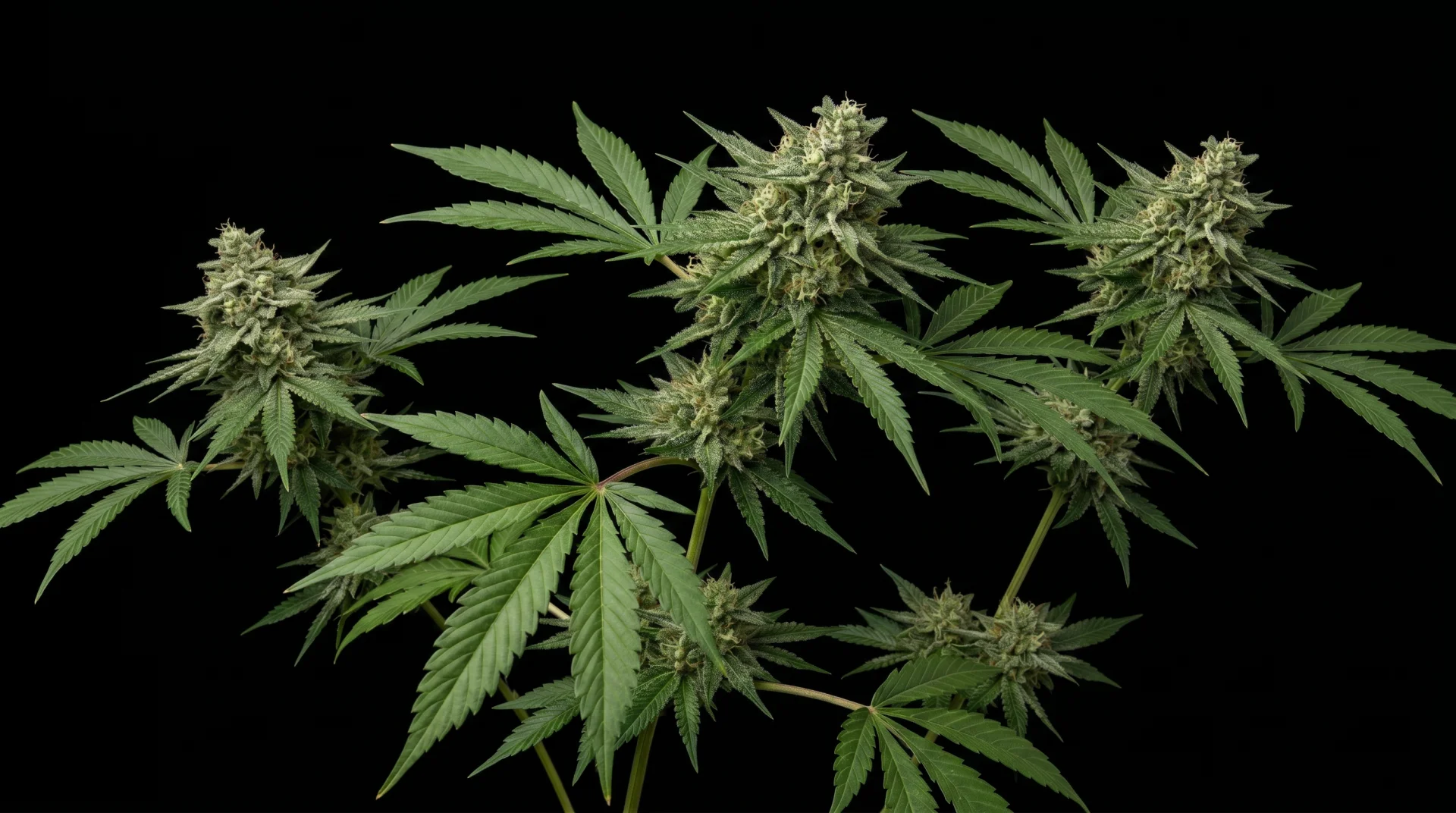
Cannabis is a tall, branching annual plant with a sharp, unmistakable scent, something between pine resin and skunk musk, layered with citrus or earth depending on the variety. The leaves are palmate, typically five to seven serrated fingers fanning from a central stem. Female flowers cluster in dense, sticky buds coated with trichomes, tiny crystalline glands that glint in light and leave a tacky residue on the fingers.
The plant belongs to the family Cannabaceae and is classified under the genus Cannabis. The traditional division into Cannabis sativa (tall, narrow-leafed, energizing) and Cannabis indica (short, broad-leafed, sedating) persists in popular language but has largely broken down under modern genetic and chemical analysis. What matters more than morphology is chemotype: the specific ratio of cannabinoids and terpenes a given plant produces.
Cannabis is remarkably adaptable. It grows in temperate and tropical climates alike, from the foothills of the Himalayas to greenhouses in the Netherlands. Modern cultivation has produced thousands of named varieties, each with its own chemical signature, aroma profile, and experiential character. The plant has been bred for fiber (hemp), for seed oil, and for the psychoactive resin concentrated in its flowers.
Strength and duration
Intensity profile
Variability: High (depends heavily on dose, setting, and individual sensitivity)
Duration
Aftereffects: Subtle cognitive softening, appetite shifts, and altered sleep may linger 6-24 hours. Residual effects tend to be more pronounced with oral consumption.
Chemistry and mechanism
The Endocannabinoid System
The human body maintains its own cannabinoid signaling network, the endocannabinoid system (ECS), which predates humanity's relationship with the plant by hundreds of millions of years. This system uses molecules called endocannabinoids (primarily anandamide and 2-AG) as retrograde messengers, tiny chemical signals that travel backward across synapses to fine-tune neurotransmitter release. The ECS acts as a kind of volume dial for the nervous system, modulating pain, mood, appetite, memory, and inflammation.
Cannabis works because its molecules fit into the same receptors this system uses. It is less an invasion than a conversation in a language the body already speaks.
THC: The Principal Voice
Delta-9-tetrahydrocannabinol (THC) is the compound most responsible for the characteristic cannabis experience. It acts as a partial agonist at CB1 receptors, which are densely concentrated in brain regions governing memory (hippocampus), executive function (prefrontal cortex), motor control (cerebellum and basal ganglia), and emotion (limbic structures).
Unlike the body's own endocannabinoids, which are released on demand in specific circuits, THC floods the entire brain simultaneously. This global modulation is what produces the layered, whole-body quality of the cannabis experience: altered time perception, softened memory formation, shifted emotional tone, and pronounced physical relaxation all arriving together.
CBD: The Modulator
Cannabidiol (CBD) does not produce intoxication. Instead, it acts as a kind of counterweight to THC, functioning as a negative allosteric modulator at CB1 receptors (reducing THC's binding efficiency) while simultaneously activating serotonin 5-HT1A receptors (contributing to anxiolytic effects) and TRPV1 channels (involved in pain and temperature sensation). This multi-target pharmacology explains why balanced THC:CBD preparations often feel calmer and less disorienting than THC-dominant ones.
The Entourage Effect
Cannabis produces over 400 distinct chemical compounds, including dozens of minor cannabinoids (CBN, CBG, CBC) and aromatic terpenes (myrcene, limonene, pinene, linalool, caryophyllene). Recent research confirms that terpenes bind to cannabinoid receptors and can amplify THC's activation of CB1 receptors, sometimes increasing receptor activity several-fold. This molecular synergy, often called the entourage effect, means that the same THC concentration can produce markedly different experiences depending on the terpene and cannabinoid context surrounding it.
Myrcene tends toward sedation. Limonene lifts mood. Pinene supports alertness. Linalool calms. The plant, in other words, is not a single instrument but an ensemble.
What Remains Unknown
The basic pharmacology of THC and CBD is well established. What remains incompletely understood includes the precise mechanisms of the entourage effect, the long-term neuroplastic consequences of chronic use (particularly during adolescence), the reasons for extreme individual variability in response, and the neurobiological pathways by which cannabis may precipitate psychosis in vulnerable individuals.
THC
Δ9-tetrahydrocannabinol
Principal psychoactive compound. Concentration ranges from <1% to >30% THC by dry weight in modern cultivars.
CBD
Cannabidiol
Major non-intoxicating cannabinoid that modulates THC effects. Ratio of THC:CBD significantly shapes the experience.
CBN
Cannabinol
Degradation product of THC, found in aged cannabis. Mildly psychoactive with possible sedative properties.
CBG
Cannabigerol
Precursor cannabinoid from which THC and CBD are biosynthesized. Present in small quantities in most varieties.
CBC
Cannabichromene
Abundant minor cannabinoid with emerging anti-inflammatory and analgesic research interest.
How people encounter it
Traditional Contexts
In Hindu tradition, cannabis has been encountered as bhang, a preparation of ground leaves blended with milk, ghee, and spices, consumed during festivals honoring Shiva, particularly Maha Shivaratri and Holi. Participants understand this not as recreation but as a means of accessing heightened consciousness and connecting with divine awareness. Temples in India continue to serve bhang as part of religious observance.
Archaeological evidence from the Jirzankal Cemetery in western China (circa 500 BCE) reveals cannabis burned in wooden braziers during mortuary ceremonies, the earliest scientifically verified evidence of ritualized cannabis smoking. In Ayurvedic medicine, cannabis has been employed for thousands of years for pain, inflammation, sleep disorders, and digestive complaints.
Modern Contexts
Today, people encounter cannabis across a wide spectrum of settings and motivations. Medical programs in many jurisdictions provide access for conditions including chronic pain, nausea, muscle spasticity, epilepsy, PTSD, and sleep disorders. In places with legal adult-use frameworks, retail dispensaries offer products categorized by strain, potency, and intended effects.
A growing number of people incorporate cannabis into contemplative practices: meditation, yoga, journaling, creative work. Some therapeutic practitioners have begun exploring cannabis-assisted psychotherapy, though this remains in early research stages.
Many individuals encounter cannabis through self-directed use for managing anxiety, insomnia, or stress, often without formal guidance.
Routes of Encounter
Cannabis is encountered through multiple routes, each with distinct characteristics. Inhalation (smoking or vaporizing) delivers effects within minutes. Oral consumption (edibles, beverages, capsules) produces delayed onset but longer duration. Sublingual tinctures offer intermediate timing. Topical applications provide localized effects without psychoactivity.
Origin and history
Cannabis likely evolved approximately 28 million years ago on the eastern Tibetan Plateau. Pollen fossil evidence traces its subsequent spread throughout Central and East Asia, where wild populations persist to this day.
Ancient Roots
Archaeological and ethnobotanical evidence documents human interaction with cannabis extending back at least 10,000 years. Chinese agricultural records indicate cultivation for fiber, oil, and seed began over 4,000 years ago. But the intentional use of cannabis for its psychoactive properties appears to have intensified during the first millennium BCE.
The most compelling early evidence comes from two sites. At the Jirzankal Cemetery in the eastern Pamirs of western China (circa 500 BCE), wooden braziers were found with chemical residues of cannabinol (CBN, a degradation product of THC) on their internal surfaces, indicating intentional burning of high-THC cannabis during funerary rites. The Sogdian peoples who practiced these ceremonies generally followed Zoroastrianism; the plant's spread across Central Asia coincided with early Silk Road trade networks.
At the Yanghai tombs in Turpan, China (also circa 500 BCE), a leather basket and wooden bowl containing cannabis seeds, leaves, and shoots were placed near the head and feet of a deceased individual, possibly a shaman. Chemical analysis revealed elevated levels of psychoactive compounds, suggesting selective cultivation of potent varieties even at this early date.
Sacred Plant of Shiva
On the Indian subcontinent, cannabis appears in the Vedic texts composed between 2000 and 1400 BCE as one of five sacred plants. The Atharvaveda describes cannabis as a source of happiness and liberation. Hindu mythology associates the plant intimately with Lord Shiva, who, according to legend, discovered its consciousness-altering properties and earned the epithet "Lord of Bhang." Devotees have consumed bhang during festivals honoring Shiva for centuries, a practice that continues at temples and celebrations today.
Contested Histories
Several threads of cannabis history remain debated. The identity of soma, the sacred plant described extensively in Vedic texts, has been contested, with some researchers proposing cannabis as a candidate, though this remains unconfirmed. Early claims of cannabis at Bronze Age sites in Central Asia (such as Gonur Tepe) were later contradicted by subsequent analysis. The degree to which Scythian and Yamnaya cultures utilized cannabis remains unclear, complicated by the difficulty of distinguishing ceremonial use from utilitarian hemp cultivation.
Into the Modern World
Beginning in the 20th century, cannabis transitioned from traditional ethnobotanical applications to widespread recreational and medicinal use in Western societies, evolving distinct consumption cultures and subcultures largely disconnected from its historical sacred contexts.

Effects
Cannabis produces a multidimensional state that touches nearly every register of experience. Individual responses vary substantially based on dose, cannabinoid profile, terpene content, set and setting, tolerance, and genetics. The following descriptions represent commonly reported effects, acknowledging that no two people, and no two sessions, are quite the same.
Emotional Dimension
The emotional landscape of cannabis often begins with relaxation, a sense of contentment settling over the mind like a warm cloth. Many people report reduced stress, emotional ease, and mild euphoria. At lower doses, particularly with balanced THC:CBD ratios, anxiety tends to quiet, and present-moment awareness may sharpen.
However, emotional effects are notably dose-dependent and bidirectional. Higher THC doses, particularly in those who are less experienced or predisposed to anxiety, can paradoxically induce acute anxiety, paranoia, or panic. Emotional lability may occur, with rapid shifts between amusement, introspection, and unease. Cannabis also appears to alter emotional processing of social cues: THC may reduce cognitive empathy (the ability to read others' emotional states), while CBD may enhance it.
With chronic daily use, a different pattern can emerge. The acute reduction in anxiety may give way over time to increased susceptibility to anxiety and depression, and the dopamine system may dampen, leading to anhedonia, fatigue, and low mood.
Perceptual Dimension
Cannabis produces subtle but consistent alterations in sensory perception, though these remain less intense than those of classic psychedelics. Colors may appear more vivid, sounds more textured and spatially rich. Tastes and flavors deepen. Tactile sensitivity increases. The sense of time distorts, minutes stretching into what feels like longer durations.
At moderate to high doses, mild visual effects may appear: enhanced pattern recognition, color intensification, or trailing of moving objects. True hallucinations remain rare with plant cannabis at typical amounts. The most consistent perceptual shift is a heightened absorption in immediate sensory experience, a quality that practitioners of meditation sometimes find useful.
Cognitive Dimension
Cannabis produces substantial effects on cognitive function. Short-term and working memory weaken noticeably, the hippocampus (dense with CB1 receptors) struggling to form new memories under THC's influence. Attention fractures. Executive function, including planning, organization, and inhibitory control, may degrade in a dose-dependent manner.
Alongside these impairments, thought itself changes character. Many people report hyper-associative thinking, loose and rapid connections between concepts that can feel either creatively liberating or mentally disorganizing depending on context. Pattern recognition may sharpen. Thought becomes more tangential, intuitive, or abstract. It is worth noting that these subjective experiences of enhanced creativity do not reliably correspond to improved performance on objective creative tasks.
CBD does not produce cognitive impairment and may partially soften THC's cognitive effects when both are present.
Somatic Dimension
The body high is cannabis's most pronounced and consistent register. Physical relaxation can be profound, tension dissolving from the shoulders, jaw, and limbs. This may progress to "couch-lock," a pleasant but deep sedation where movement feels effortful. Proprioception shifts; the body may feel lighter, heavier, or spatially transformed. Tactile sensitivity increases, fabrics and textures producing amplified sensation.
Cardiovascular effects are real: heart rate typically increases by 20-50 beats per minute for up to three hours. Dry mouth, red eyes (from vasodilation), and increased appetite are near-universal. Pain perception often diminishes, both through peripheral and central mechanisms.
The somatic dimension tends to predominate with oral consumption and with varieties rich in myrcene, though the popular indica/sativa distinction correlates poorly with actual chemical composition.
A note before reading
Each experience is different. What you may notice depends on dose, setting, and the body and mind you bring to it.
What people often notice
Emotional spectrum
Visual
Visuals tend to stay soft and mostly closed-eye, often subtle textures or gentle color shifts behind the eyelids.
Cognitive
Loose associations may appear, insights surface sideways, and familiar ideas can rearrange into fresh shapes.
Risks and limits
Cannabis carries real risks. Cultural familiarity and plant origin do not reduce them.
Psychological Risks
Psychosis and schizophrenia. Cannabis use, particularly frequent use of high-THC varieties, substantially increases the risk of developing psychotic disorders. Daily use increases psychotic disorder risk roughly 3-fold compared to non-use. High-potency cannabis (above 10% THC) adds further risk. Dose-response relationships are clear: greater frequency and potency correlate with higher risk. Adolescent use confers the greatest vulnerability. Cannabis can also induce acute psychotic symptoms (hallucinations, delusions, paranoia) even in those without prior psychotic conditions.
Anxiety and mood disorders. Low doses often reduce anxiety. Higher doses frequently induce it, including panic and paranoia, the most common acute adverse effects. With chronic daily use, risk of developing anxiety disorders and depression increases. The dopamine system may dampen over time, producing anhedonia, fatigue, and low motivation.
Cognitive impairment. Memory, attention, executive function, and motor coordination all degrade during use. Heavy chronic users show deficits extending beyond intoxication, particularly in memory and attention. These effects partially recover with sustained abstinence but may not fully resolve in long-term users who began during adolescence.
Dependence. Approximately 9% of people who use cannabis develop cannabis use disorder, rising to around 17% among those who begin in adolescence and 25-50% among daily users. Withdrawal onset typically occurs 1-3 days after cessation, peaks between days 3-10, and resolves over 2-4 weeks. Symptoms include irritability, anxiety, depression, sleep disturbance, vivid dreams, reduced appetite, and physical discomfort. Psychological dependence on cannabis for stress management, sleep, or emotional regulation can be significant.
Physiological Risks
Cardiovascular. THC produces tachycardia and blood pressure fluctuations that pose minimal risk for healthy individuals but may trigger adverse cardiac events in those with cardiovascular disease, particularly in the hour immediately following use.
Respiratory. Smoking cannabis produces chronic bronchitis symptoms, airway inflammation, and increased infection risk. Vaporization substantially reduces respiratory exposure compared to combustion.
Cannabinoid hyperemesis syndrome. Chronic heavy use can produce cyclical severe nausea and vomiting requiring emergency care. The condition resolves with sustained abstinence.
Drug Interactions
CBD inhibits cytochrome P450 enzymes (CYP2C9, CYP2D6, CYP3A4), potentially altering metabolism of anticoagulants, antidepressants, antipsychotics, anticonvulsants, benzodiazepines, and statins. Cannabis also shows additive sedation with CNS depressants.
Who Should Not Use Cannabis
- ●Individuals with current or past psychotic disorders
- ●Those with strong family history of schizophrenia or bipolar disorder
- ●Pregnant or breastfeeding individuals
- ●People with severe cardiovascular disease or recent heart events
- ●Children and adolescents (under 18, ideally under 25)
- ●Those with active substance use disorders
- ●Anyone operating vehicles or machinery
Integration and aftercare
There is no single right way to integrate a cannabis experience. What matters is that something returns with you, some thread of awareness, sensation, or understanding that connects the altered state to daily life.
Journaling
Systematic documentation of cannabis experiences, the variety used, the setting, the emotional and physical arc, any insights or discomforts, supports pattern recognition over time. What felt useful? What felt excessive? Journaling transforms casual use into intentional practice.
Mindfulness and Meditation
Cannabis and mindfulness show natural complementarity. The plant may quiet mental chatter, enhance present-moment awareness, and reduce resistance to sitting practice. Some practitioners report deeper concentration and amplified sensory attention during body scans. It is worth noting that reliance on cannabis for meditation may eventually impede the development of unassisted mindfulness capacity.
Embodied Practices
Combining cannabis with gentle movement practices (restorative yoga, walking, stretching) can amplify body awareness, enhance proprioceptive feedback, and deepen relaxation. The heightened physical sensitivity cannabis produces tends to enrich somatic practices.
Creative Expression
Some people find that painting, writing, composing, or other creative work during or after cannabis use captures associations, images, or emotional states that might otherwise dissolve. The creative act becomes a bridge between the altered state and waking life.
Post-Session Reflection
Dedicated sober reflection time after intentional use, even ten minutes of quiet sitting or writing, helps consolidate whatever arose. Without this step, insights tend to evaporate.
Community and Conversation
Discussing experiences with trusted friends, partners, or intentional cannabis communities can contextualize individual experiences within collective wisdom and prevent isolation in one's own interpretation.
Sacred stacks
Cannabis appears in the following curated combinations. Combinations can amplify both effects and risks. Read each guide carefully before considering.
All sacred stacks →Legal and ethical context
Legal Landscape
Cannabis occupies one of the most varied legal positions of any psychoactive substance. Full legalization for adult use exists in Canada, Uruguay, and a growing number of U.S. states. Medical-only access is available in dozens of countries across Europe, Latin America, and Oceania. Many jurisdictions have decriminalized personal possession while maintaining prohibition on sale. Others retain full criminal penalties, including imprisonment, for any cannabis-related offense.
This patchwork means that the same plant carries no legal consequence in one place and severe criminal risk in another. Anyone considering cannabis should understand the specific laws of their jurisdiction.
Cultural Appropriation and Equity
The commercialization of cannabis in legalized markets has raised significant equity concerns. Communities, particularly Black and Latino communities in the United States, that bore the disproportionate burden of cannabis prohibition (arrest, incarceration, loss of opportunity) have often been excluded from the economic benefits of legal markets. Meanwhile, corporations and investors, frequently from communities that were never targeted by enforcement, have captured the majority of commercial value.
Similarly, the adoption of cannabis rituals from Hindu, Rastafari, and indigenous traditions into Western commercial and wellness contexts raises questions about cultural credit and respect.
Environmental Considerations
Indoor cannabis cultivation is energy-intensive, with high electricity demands for lighting, climate control, and ventilation. Some estimates place indoor cannabis among the most energy-intensive agricultural products per unit weight. Outdoor and sun-grown cultivation carry significantly lower environmental footprints. Water use, pesticide runoff, and illegal cultivation on public lands (particularly in California) have caused measurable ecological damage in some regions.
The Harm Reduction Imperative
Regardless of legal status, millions of people use cannabis. Accurate, non-judgmental information about risks, interactions, and safer practices reduces harm more effectively than prohibition or silence.
Common misconceptions
Cannabis is completely safe because it is natural and plant-based.
Natural origin does not determine safety. Cannabis produces measurable cognitive impairment, carries psychiatric risks (including psychosis in vulnerable individuals), and can precipitate serious adverse events. The "natural equals safe" assumption is a logical fallacy that applies equally to hemlock, belladonna, and tobacco.
You cannot become addicted to cannabis.
Approximately 30% of users develop cannabis use disorder, with clear withdrawal symptoms upon cessation including irritability, anxiety, insomnia, vivid dreams, and reduced appetite. While physiological dependence may be less severe than with alcohol or opioids, psychological dependence can be profound and difficult to resolve.
Indica strains are sedating and sativa strains are energizing.
Modern genetic analysis reveals that commercial indica/sativa classifications correlate poorly with chemical composition. What determines the character of effects is chemotype: the specific ratio of cannabinoids and terpenes, not the morphological category on the label. Two plants labeled "indica" can produce very different experiences.
CBD is completely safe with no side effects.
While CBD shows a better safety profile than THC, it produces significant drug interactions (inhibiting liver enzymes that metabolize many common medications), can affect liver function at high doses, and may cause drowsiness and gastrointestinal discomfort.
Cannabis cures cancer.
While certain cannabinoids show therapeutic promise for specific conditions with varying levels of evidence (epilepsy, MS spasticity, nausea, chronic pain), claims of universal curative properties lack scientific support. Substituting cannabis for evidence-based cancer treatment is dangerous.
Frequently asked questions

Reflection
What is the difference between softening your edges and dulling them?
When you reach for ease, what are you reaching toward, and what are you reaching away from?
How do you know when a plant companion has become a habit?
Sources
- ●
McPartland, J.M. (2018). Cannabis systematics at the levels of family, genus, and species. Cannabis and Cannabinoid Research, 3(1), 203-212.
- ●
Russo, E.B. (2011). Taming THC: potential cannabis synergy and phytocannabinoid-terpenoid entourage effects. British Journal of Pharmacology, 163(7), 1344-1364.
- ●
Murray, R.M., et al. (2021). Cannabis-associated psychosis: neural substrate and clinical impact. Neuropharmacology, 124, 89-104.
- ●
Pertwee, R.G. (2008). The diverse CB1 and CB2 receptor pharmacology of three plant cannabinoids. British Journal of Pharmacology, 153(2), 199-215.
- ●
Ren, M., et al. (2019). The origins of cannabis smoking: chemical residue evidence from the first millennium BCE in the Pamirs. Science Advances, 5(6), eaaw1391.
- ●
Touw, M. (1981). The religious and medicinal uses of cannabis in China, India and Tibet. Journal of Psychoactive Drugs, 13(1), 23-34.
- ●
National Academies of Sciences, Engineering, and Medicine. (2017). The Health Effects of Cannabis and Cannabinoids. Washington, DC: The National Academies Press.
- ●
LaFrance, E.M., & Bhatt, A.P. (2023). Cannabis and the endocannabinoid system. In Handbook of Cannabis and Related Pathologies (pp. 3-18). Academic Press.
- ●
Solowij, N., & Battisti, R. (2008). The chronic effects of cannabis on memory in humans. Current Drug Abuse Reviews, 1(1), 81-98.
- ●
Di Forti, M., et al. (2019). The contribution of cannabis use to variation in the incidence of psychotic disorder across Europe. The Lancet Psychiatry, 6(5), 427-436.
For how we evaluate sources and structure our claims, see the methodology.
States you may encounter
Altered states of consciousness commonly reported with this substance.
Euphoria
A sustained feeling of deep wellbeing and joy, often described as feeling connected to everything. Not the sharp hit of pleasure, but a warm, expansive sense that the world is fundamentally okay.
Time dilationcommon
The subjective experience of time slowing down, speeding up, or losing meaning entirely. Minutes may feel like hours, or an hour may compress into what feels like moments.
Thought loopscommon
Recurring patterns of thought that cycle repeatedly, sometimes with insight, sometimes with discomfort. The same idea returns with variations, each pass revealing a new facet.
Meta-awarenesscommon
The ability to observe one's own thoughts and mental processes with unusual clarity and detachment. A witness perspective emerges that can notice patterns normally invisible.
Deep relaxationcommon
A profound softening of muscular tension and nervous system activation, sometimes lasting well beyond the experience. The body enters a state of deep rest.