Ashwagandha
Strength
2 / 10
Type of Effect
Adaptogenic, Anxiolytic
Method of use
Oral
Origin
India, Middle East
Duration
2-6 hours
Traditional Use
Medicinal, Adaptogenic
What is Ashwagandha?
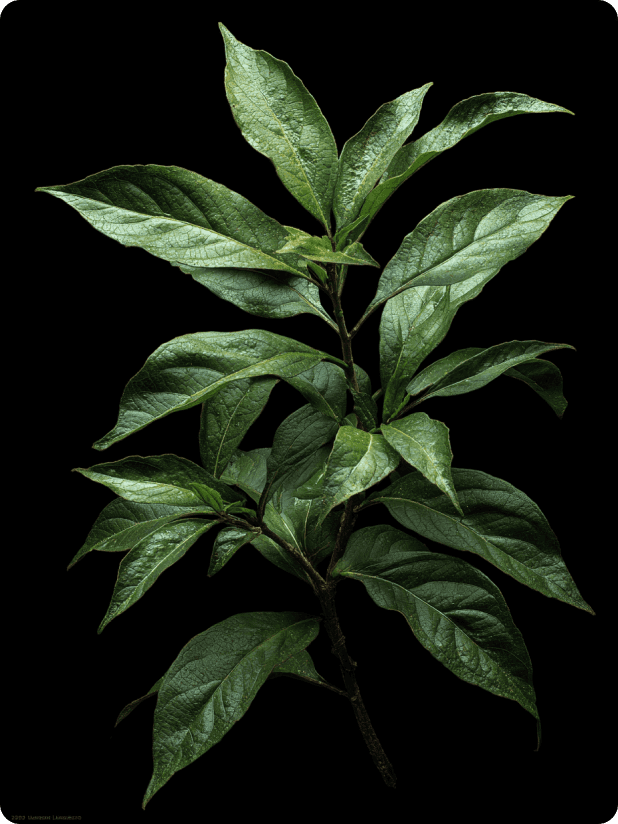
Ashwagandha (Withania somnifera) is a classic adaptogenic plant from Ayurvedic medicine, used for over 3,000 years to support stress resilience, nervous system balance, and overall vitality.
Ashwagandha is not a psychedelic.
It does not create altered perception, visions, or introspective states.
Its effects are stabilizing, grounding, and regulating.
Ashwagandha works by helping the body adapt to stress, not escape it.
Where does Ashwagandha come from?
Ashwagandha is native to:
India
The Middle East
Parts of North Africa
In Ayurveda, it is considered a rasayana, a rejuvenating herb used to:
Restore strength
Calm the nervous system
Support longevity
Balance mind and body
Its name loosely translates to “the smell of a horse”, referring to both the scent of the root and its association with strength and endurance.
What makes Ashwagandha active?
Ashwagandha contains a group of compounds called:
Withanolides
These compounds:
Regulate cortisol (stress hormone)
Support adrenal function
Modulate the nervous system
Reduce inflammation
Ashwagandha does not stimulate or sedate directly.
It normalizes.
What does Ashwagandha do?
Ashwagandha works gradually, over days or weeks.
Mental effects
Reduced stress and anxiety
Improved emotional stability
Less mental reactivity
Emotional effects
Greater calm under pressure
Increased resilience
Reduced overwhelm
Physical effects
Improved sleep quality
Reduced fatigue
Support for strength and recovery
Hormonal balance support
Ashwagandha does not push energy.
It restores baseline capacity.
What does Ashwagandha feel like?
Most people describe ashwagandha as:
Subtly calming
Grounding
Emotionally steady
Not immediately noticeable
If it is working, you often realize it in hindsight:
You react less
You sleep better
Stress feels more manageable
Ashwagandha whispers.
It does not announce itself.
Why do people use Ashwagandha?
Ashwagandha is commonly used for:
Chronic stress
Anxiety
Burnout
Poor sleep
Fatigue
Hormonal imbalance
It is especially helpful for people who:
Feel constantly “on”
Are wired but tired
Live under long-term stress
Is Ashwagandha safe?
Ashwagandha is generally considered safe and well tolerated, but it is not for everyone.
Important considerations:
Can be too calming for some people
May blunt emotions in sensitive individuals
Not recommended during pregnancy
Can interact with thyroid medication or sedatives
As with all adaptogens, individual response varies.
Ashwagandha vs calming herbs
Compared to gentle calming herbs (like passionflower):
Slower onset
Deeper systemic effect
Less immediate sedation
Compared to stimulants:
No stimulation
No crash
Ashwagandha does not change state.
It changes capacity.
The role of intention
Ashwagandha works best with long-term intentions.
Helpful intentions include:
“Help me handle stress better”
“Restore my balance”
“Support my nervous system”
It is not for acute relief or instant calm.
Integration: living with more margin
Ashwagandha integrates into life quietly.
Over time, people may notice:
Better stress tolerance
Improved sleep
More emotional bandwidth
Less burnout
The change is often subtle but meaningful.
Ashwagandha in modern times
Today, ashwagandha is widely used in:
Stress-support supplements
Sleep and recovery formulas
Wellness routines
It is sometimes misunderstood when expected to act like a sedative or mood-altering drug.
Ashwagandha is support, not escape.
A final note
Ashwagandha does not expand consciousness or reveal insight.
It strengthens the system that holds consciousness.
In a world that constantly demands more output, ashwagandha offers a different solution:
not pushing harder, but building resilience from the inside.
Sometimes the most powerful shift is not changing how you feel in the moment,
but changing how much stress you can carry without breaking.