Chacruna
Strength
4 / 10
Type of Effect
Hallucinogenic
Method of use
Oral (Brew)
Origin
Amazon Basin
Duration
4-6 hours
Traditional Use
Spiritual, Healing
What is Chacruna?
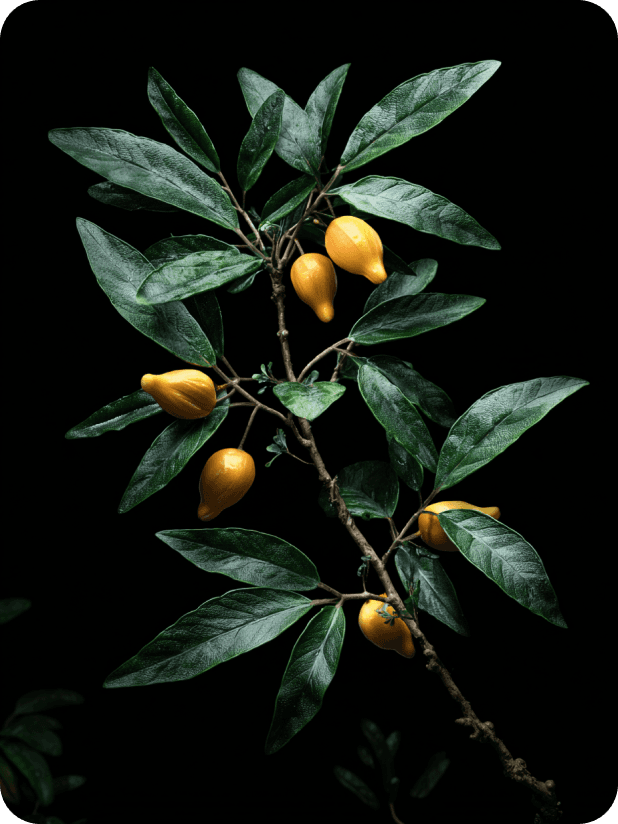
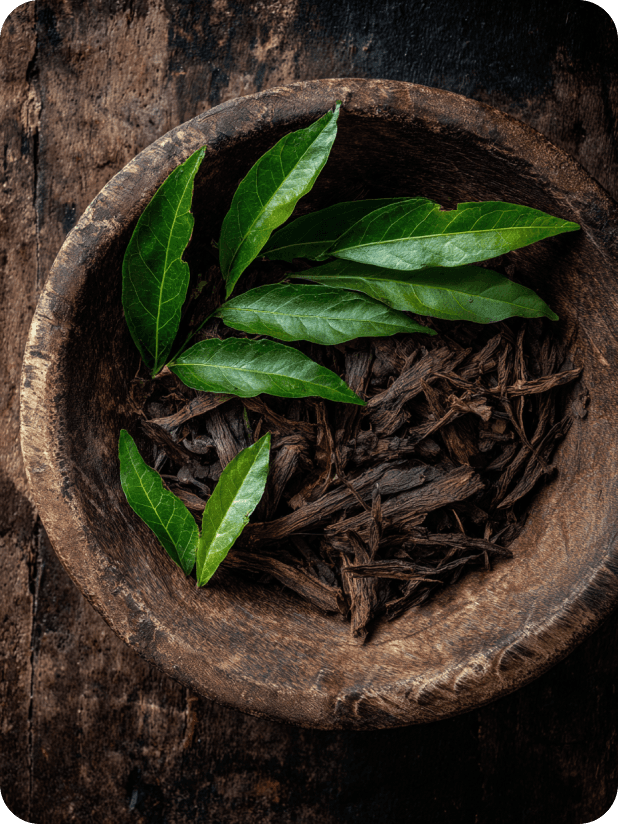
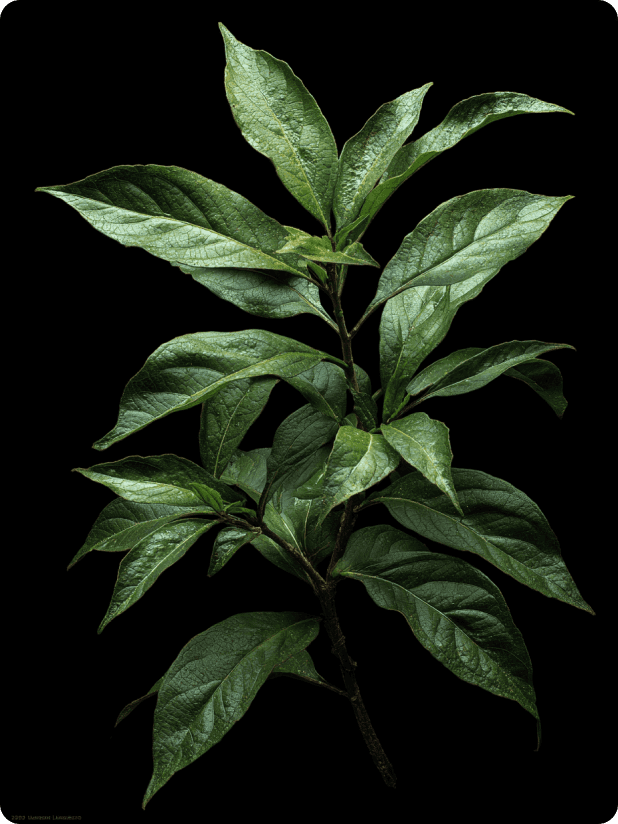
Chacruna (Psychotria viridis) is a visionary Amazonian plant best known as the light-bringing partner in ayahuasca.
If the Caapi vine is the teacher,
Chacruna is the one that opens the inner vision.
On its own, Chacruna does not produce a strong effect when eaten or brewed.
Its power appears only in relationship, when combined with Caapi.
Chacruna is about seeing.
Where does Chacruna come from?
Chacruna is native to the Amazon rainforest, especially in:
Peru
Brazil
Colombia
Ecuador
For Indigenous cultures, Chacruna is not just an ingredient.
It is treated as a sacred plant ally, often associated with:
Vision
Light
Communication
Insight
It is handled with care and respect, not casually.
What makes Chacruna psychoactive?
Chacruna leaves contain DMT (dimethyltryptamine), a powerful naturally occurring psychedelic compound.
Normally, DMT is broken down quickly in the human body and has no effect when taken orally.
This is where Caapi comes in.
Caapi:
Temporarily blocks MAO enzymes
Allows DMT to become active
Shapes and stabilizes the experience
Without Caapi, Chacruna remains silent.
Together, they speak.
What does Chacruna do in Ayahuasca?
In an ayahuasca brew, Chacruna is responsible for:
Visual experiences
Inner imagery and visions
Symbolic storytelling
Encounters with archetypal forms
It adds color, movement, and imagery to the emotional and structural work done by the vine.
Chacruna shows.
Caapi explains.
What does Chacruna feel like?
When active, Chacruna often produces:
Vivid inner visions
Patterns, colors, and forms
Symbolic scenes or memories
Dreamlike narratives
The visuals are not just decorative.
They often carry personal or emotional meaning.
Chacruna tends to feel:
Bright
Fluid
Expressive
Sometimes overwhelming without guidance
Chacruna on its own vs with Caapi
This distinction is important.
Chacruna alone:
Little to no effect
DMT is inactive orally
Chacruna with Caapi:
Full ayahuasca experience
Vision, insight, and emotional processing
Long, guided journey
This relationship is one of the clearest examples of plant synergy in traditional medicine.
Why is Chacruna important?
Chacruna allows people to:
See internal states clearly
Visualize emotions and memories
Access symbolic understanding
Experience non-verbal insight
For many, Chacruna is the gateway to meaning, while Caapi is the grounding force.
One without the other is incomplete.
Is Chacruna safe?
Chacruna itself is considered physically gentle, but safety depends entirely on:
The presence of Caapi
Preparation and screening
Setting and guidance
The risks associated with Chacruna are the same as with ayahuasca:
Psychological intensity
Emotional overwhelm
Interaction with medications
Chacruna should never be approached casually.
The role of intention
Chacruna responds strongly to mental and emotional openness.
Helpful intentions include:
“Show me what I need to see”
“Help me understand my inner world”
“Bring clarity to what is hidden”
Chacruna does not decide what you see.
It reveals what is already there.
Integration: turning vision into meaning
Visions alone do not create change.
Integration involves:
Interpreting symbols carefully
Connecting images to real life
Avoiding literal or ego-driven conclusions
Letting meaning unfold slowly
Chacruna speaks in images, not instructions.
Understanding takes time.
Chacruna in modern contexts
Today, Chacruna is often misunderstood as:
“The DMT plant”
“The visual part of ayahuasca”
This misses the point.
Chacruna is not entertainment.
It is language.
A visual language that requires grounding, guidance, and humility to understand.
A final note
Chacruna does not teach with words.
It paints.
It shows what cannot be spoken, what cannot be reasoned, what cannot be forced.
In the presence of the vine, Chacruna becomes a mirror of the inner world.
And like all mirrors, it does not choose what appears.
It only reflects what is already within you.