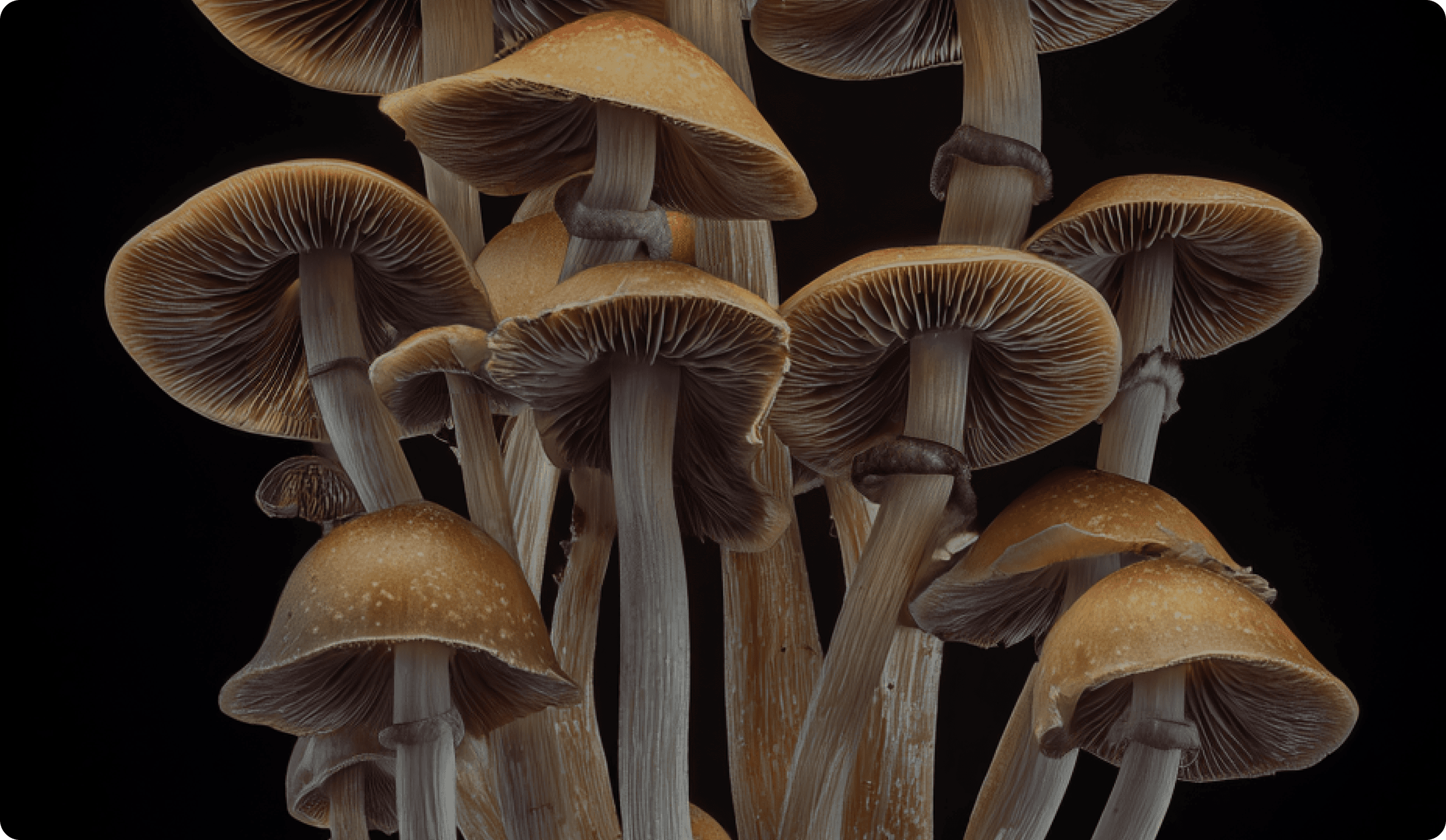

Psilocybin Mushrooms
Strength
6 / 10
Type of Effect
Hallucinogenic
Method of use
Oral
Origin
Global
Duration
4-6 hours
Traditional Use
Spiritual, Healing
What are Psilocybin Mushrooms?
Psilocybin mushrooms, often called magic mushrooms, are naturally occurring fungi that contain psilocybin, a psychedelic compound that changes how the brain processes thoughts, emotions, and perception.
Humans have used these mushrooms for thousands of years in rituals, healing practices, and spiritual ceremonies. Ancient cultures in Central and South America treated them as sacred tools for insight, connection, and healing.
Today, psilocybin mushrooms are being rediscovered not only in spiritual contexts, but also in modern psychology and neuroscience.
What is Psilocybin?
Psilocybin is the main active compound in these mushrooms. Once inside the body, it is converted into psilocin, which affects serotonin receptors in the brain.
Serotonin is linked to:
Mood
Emotions
Sense of self
Perception
Meaning-making
By changing how these systems communicate, psilocybin can temporarily loosen rigid thought patterns and open new ways of experiencing reality.
What do Psilocybin Mushrooms do?
Psilocybin mushrooms tend to work in a gentler and more playful way compared to stronger plant medicines, but they can still be very deep.
Mental and emotional effects
Increased emotional awareness
Easier access to feelings
Reduced mental noise
More curiosity and openness
Psychological effects
Breaks repetitive thinking
Helps see problems from new angles
Can soften harsh self-judgment
Often increases self-compassion
Perceptual effects
Enhanced colors and patterns
Visual movement or breathing surfaces
Heightened sound and music perception
Strong imagination and symbolism
Spiritual or existential effects
Sense of connection to nature or others
Feelings of wonder or awe
Insights about life, purpose, or identity
Temporary loss of ego boundaries
Not every experience is visual or “trippy”. Some are emotional, quiet, or deeply reflective.
What does a Mushroom experience feel like?
A psilocybin experience often unfolds in waves, rather than one intense peak.
People commonly report:
Feeling more present in the body
Heightened sensitivity to emotions
Deep laughter or deep tears
Childlike curiosity
Moments of clarity or realization
Mushrooms often feel like they amplify what is already inside you.
If you are calm and open, the experience can feel warm and insightful.
If you are anxious or resisting, the experience can feel confusing or intense.
Why do people use Psilocybin Mushrooms?
People approach mushrooms for many reasons, including:
Emotional healing
Reducing anxiety or depression
Processing grief or life transitions
Creative inspiration
Self-discovery
Spiritual exploration
Reconnecting with nature
Some people describe mushrooms as a mirror, others as a friend, others as a teacher.
Microdosing vs full experiences
Psilocybin mushrooms are often used in two very different ways:
Microdosing
Very small doses
No strong visual effects
Used over time
Can improve mood, focus, creativity, and emotional balance
Often described as “life feels slightly easier”
Full or macro doses
Clear psychedelic effects
Deep emotional and psychological experiences
Require preparation, safe setting, and time for integration
Can create long-lasting perspective shifts
Both approaches have value. They serve different intentions.
Are Psilocybin Mushrooms safe?
Psilocybin mushrooms are considered physically low-toxicity, but they are not risk-free.
They can be challenging if:
Taken in unsafe environments
Used during emotional instability
Combined with certain medications
Used without preparation or support
The most important factors are:
Mindset (how you feel going in)
Setting (where and with whom)
Dose
Integration afterward
Psilocybin is not about escaping reality. It often makes you feel more, not less.
The role of intention
Intentions help guide the experience, but mushrooms are flexible and unpredictable.
Helpful intentions are open-ended, such as:
“Help me understand myself”
“Show me what I’m holding onto”
“Help me reconnect with joy”
Trying to control the experience usually makes it harder. Letting go tends to make it clearer.
Integration: turning insight into change
Insights alone do not change lives. Integration does.
Integration can include:
Writing or reflecting
Talking with trusted people
Making small behavior changes
Spending time in nature
Giving insights time to mature
Many mushroom insights are simple, not dramatic. Their power is in how quietly they reshape daily life.
Psilocybin mushrooms today
Psilocybin sits at the intersection of:
Ancient ritual use
Modern mental health research
Creativity and self-exploration
Cultural and legal change
As interest grows, education, respect, and responsibility become essential.
Mushrooms are not party drugs.
They are tools that ask for presence.
A final note
Psilocybin mushrooms often teach through gentleness, honesty, and curiosity.
They do not usually force lessons.
They invite you to look.
When approached with care, patience, and respect, mushrooms can help you remember what it feels like to be alive, connected, and emotionally open, sometimes in very quiet but lasting ways.