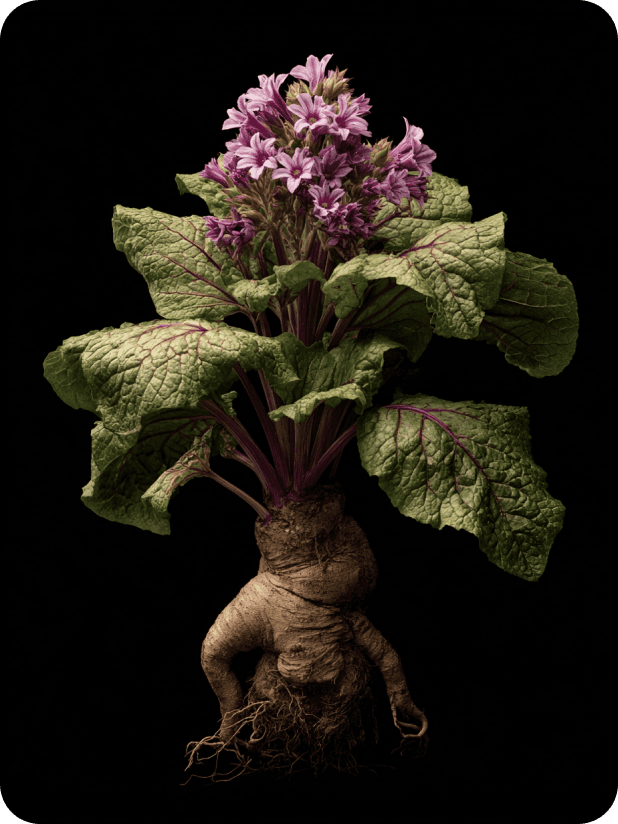
Belladonna
Strength
6 / 10
Type of Effect
Hallucinogenic, Deliriant
Method of use
Oral, Topical
Origin
Europe, North Africa, Western Asia
Duration
Variable
Traditional Use
Medicinal, Magical
What is Belladonna?
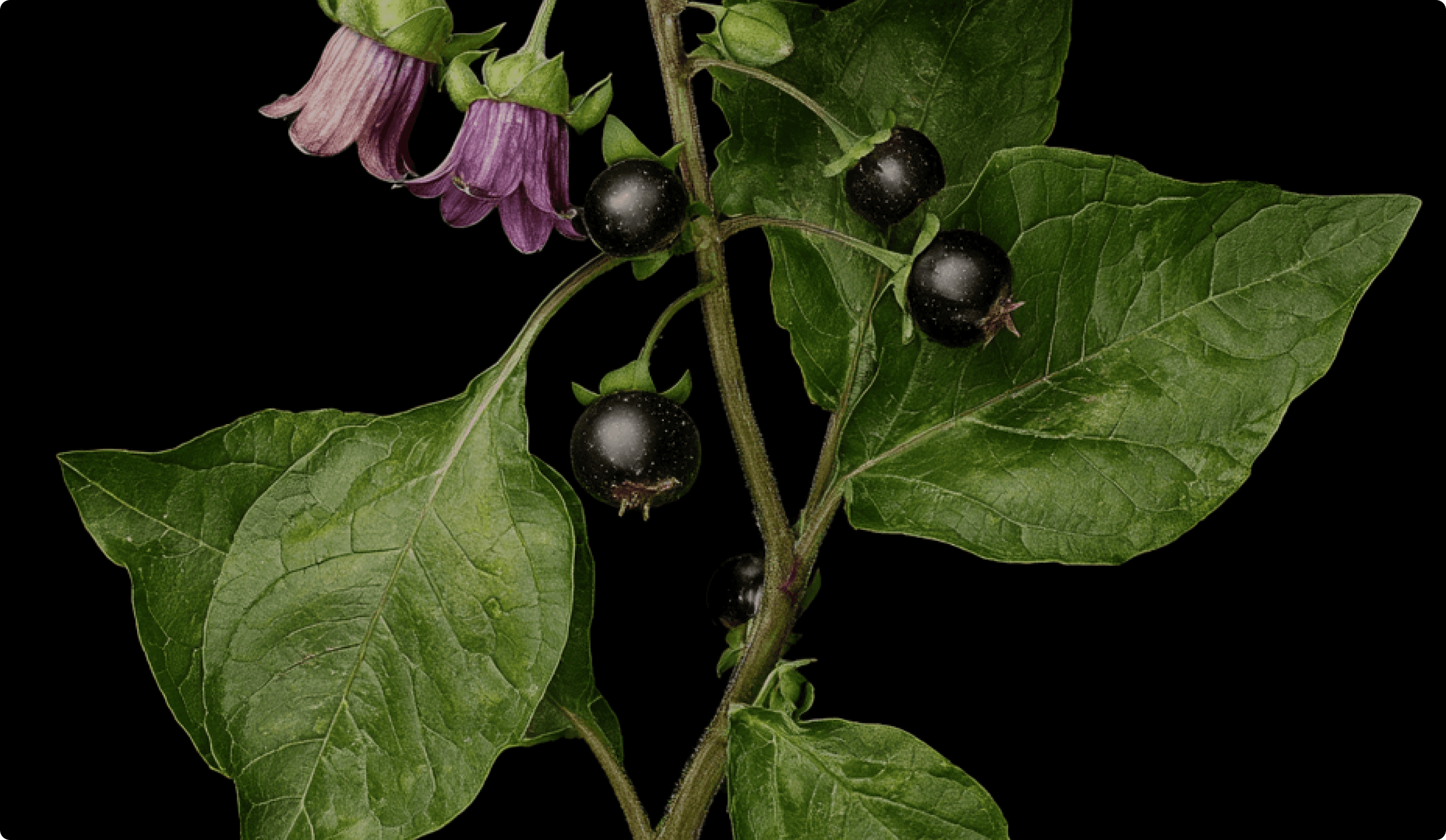
Belladonna, also known as deadly nightshade, is one of the most dangerous psychoactive plants in Europe. Its scientific name is Atropa belladonna, a reference to Atropos, the Greek Fate who cuts the thread of life.
Belladonna is not a psychedelic.
It belongs to the same category as datura and mandrake: deliriants.
It does not expand awareness.
It removes it.
Where does Belladonna come from?
Belladonna is native to:
Europe
North Africa
Western Asia
It has appeared throughout history in:
Ancient medicine
Poisons and assassinations
Witchcraft and folklore
Early anesthesia
Despite its dark reputation, belladonna was widely used before its dangers were fully understood.
Why is Belladonna called “deadly nightshade”?
Every part of the plant is toxic, especially:
The berries
The leaves
The roots
The berries look harmless and sweet, which made them especially dangerous.
Historically, belladonna caused:
Accidental poisonings
Fatal overdoses
Long-term mental damage
The name is not symbolic.
It is literal.
What makes Belladonna psychoactive?
Belladonna contains tropane alkaloids, mainly:
Atropine
Scopolamine
Hyoscyamine
These substances:
Block acetylcholine in the brain
Shut down normal memory and awareness
Create fully realistic hallucinations
Remove insight into what is real
This leads to true delirium, not a controlled altered state.
What does Belladonna do?
Belladonna causes a complete break from reality.
Mental effects
Severe confusion
Loss of self-awareness
No ability to reason
Memory blackout
Perceptual effects
Seeing people who are not there
Talking to imaginary beings
Performing normal actions in a hallucinated world
No awareness that anything is wrong
Physical effects
Extremely dry mouth and skin
Dilated pupils and blurred vision
Rapid heart rate
Overheating
Risk of seizures, coma, or death
Belladonna does not feel symbolic or meaningful.
It feels real, wrong, and uncontrollable.
What does a Belladonna experience feel like?
People who survive belladonna poisoning often report:
Days of missing time
Acting normally while hallucinating
Confusion that lasts long after
Fear, paranoia, or distress
There is usually nothing to integrate, because there is little memory and no insight.
Belladonna does not teach.
It erases.
Why was Belladonna ever used?
Historically, belladonna was used:
As a poison
As a sedative or anesthetic
In witchcraft and magical rituals
In cosmetics (to dilate pupils for beauty, hence “bella donna”)
These uses came at a high cost. Many were abandoned as knowledge improved.
Is Belladonna safe?
No.
Belladonna is extremely dangerous.
Risks include:
Fatal overdose
Permanent cognitive damage
Heart failure
Severe overheating
Accidental injury or death
Dosage is unpredictable.
There is no safe recreational use.
Belladonna vs psychedelics
Belladonna is often confused with psychedelics because of its hallucinations, but the difference is critical.
Psychedelics:
Preserve awareness
Allow reflection
Create symbolic meaning
Belladonna:
Destroys awareness
Removes insight
Replaces reality completely
This is why belladonna is considered poisonous, not enlightening.
Belladonna in modern times
Today, belladonna is mainly:
A historical and botanical subject
A cautionary example in toxicology
A reminder of pre-modern medicine
It has no role in modern spiritual or therapeutic practice.
A final note
Belladonna is not misunderstood wisdom.
It is understood danger.
Its long history is not one of insight, but of loss, confusion, and harm.
Respecting belladonna means knowing its story and choosing distance.
Some plants expand consciousness.
Others show us why limits exist.
Belladonna is one of them.