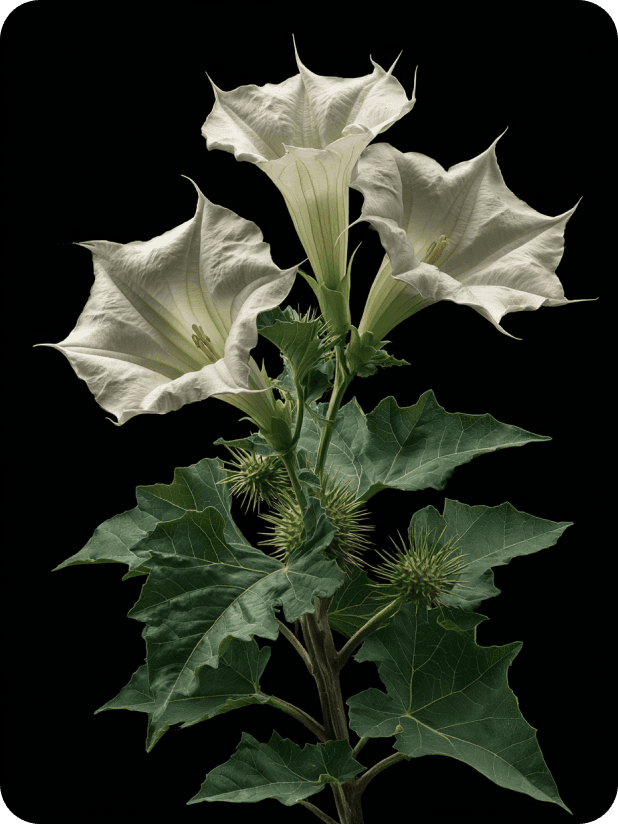
Datura
Strength
7 / 10
Type of Effect
Hallucinogenic, Deliriant
Method of use
Oral, Smoking
Origin
Global
Duration
Variable
Traditional Use
Shamanic, Medicinal
What is Datura?
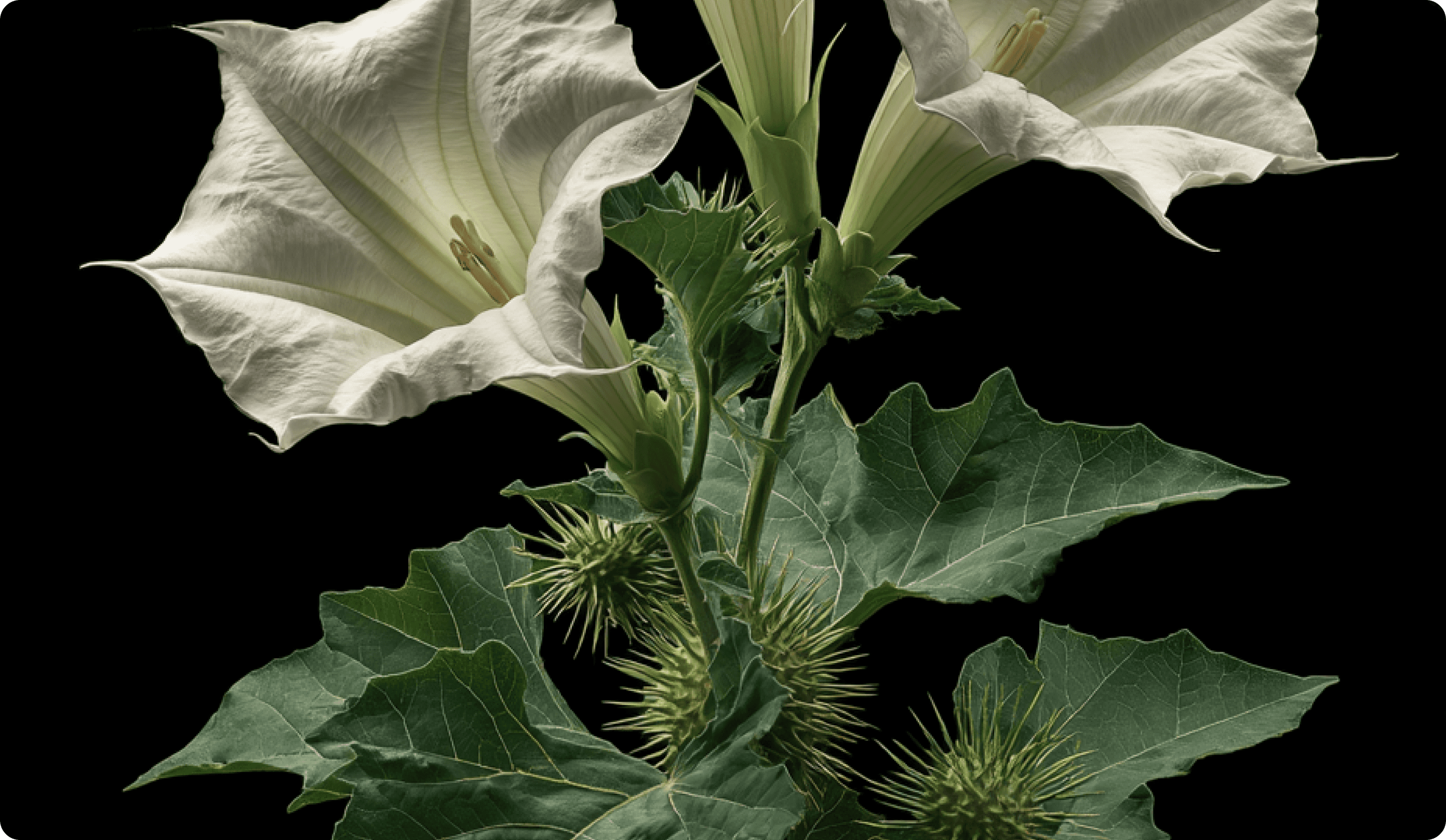
Datura is a powerful and dangerous psychoactive plant found in many parts of the world. It is sometimes called thorn apple, devil’s trumpet, or jimsonweed.
Unlike most psychedelics, datura is not a visionary or heart-opening medicine.
It belongs to a different category entirely: deliriants.
Datura does not expand awareness.
It destroys the boundary between imagination and reality.
Where does Datura come from?
Datura grows wild across:
North and South America
Europe
Asia
Africa
It has been used historically in:
Shamanic rituals
Witchcraft traditions
Initiation rites
Poisoning and warfare
Its use was rare, secretive, and often surrounded by fear. Even traditional cultures treated datura as extremely risky.
What makes Datura psychoactive?
Datura contains toxic compounds called tropane alkaloids, mainly:
Scopolamine
Atropine
Hyoscyamine
These substances:
Block acetylcholine in the brain
Sever normal memory and awareness
Disrupt perception completely
This is why datura experiences are not lucid or reflective.
What does Datura do?
Datura causes a true delirium, not a psychedelic state.
Mental effects
Complete confusion
Inability to tell what is real
Loss of self-awareness
Memory blackout
Perceptual effects
Fully realistic hallucinations
Seeing and talking to people who are not there
Smoking imaginary cigarettes
Performing normal actions in an unreal world
Physical effects
Dry mouth and skin
Rapid heart rate
Overheating
Loss of coordination
Risk of coma or death
Unlike psychedelics, you usually do not know you are hallucinating.
What does a Datura experience feel like?
People who survive datura experiences often report:
Days of missing memory
Acting normally while fully hallucinating
Conversations with imaginary people
Extreme fear or paranoia
Long-lasting confusion afterward
There is rarely insight, beauty, or meaning.
Datura does not feel symbolic or spiritual.
It feels indistinguishable from reality, until it ends.
Why was Datura ever used?
Historically, datura was used:
As a test of endurance or initiation
In very controlled shamanic contexts
As a poison or truth serum
In dark ritual traditions
Its use was often associated with:
Death rituals
Sorcery
Severe trials
Social taboos
Many traditions abandoned it because the risk outweighed any benefit.
Is Datura safe?
No.
Datura is considered one of the most dangerous psychoactive plants in the world.
Risks include:
Fatal overdose
Permanent cognitive damage
Heart failure
Heat stroke
Psychosis
Accidental injury or death
Dosage is unpredictable.
Two plants from the same species can have wildly different toxicity.
There is no safe recreational use.
Datura vs psychedelics
Compared to psychedelics like mushrooms or ayahuasca:
No insight
No emotional healing
No spiritual clarity
No control
No memory
Psychedelics alter perception.
Datura replaces reality entirely.
The illusion of curiosity
Some people are drawn to datura out of curiosity or a desire to go “further” than psychedelics.
This is a misunderstanding.
Datura does not go deeper.
It goes offline.
There is nothing to integrate if you cannot remember what happened.
Datura in modern times
Today, datura is widely regarded as:
A poison, not a medicine
A plant to avoid
A cautionary example
Even experienced psychonauts generally agree:
Datura is not worth the risk.
A final note
Datura is not a teacher.
It is not a guide.
It is not a healer.
It is a plant that shows what happens when consciousness loses its anchor to reality.
Respect, in this case, means distance.
Some doors exist not to be opened, but to remind us why boundaries matter.