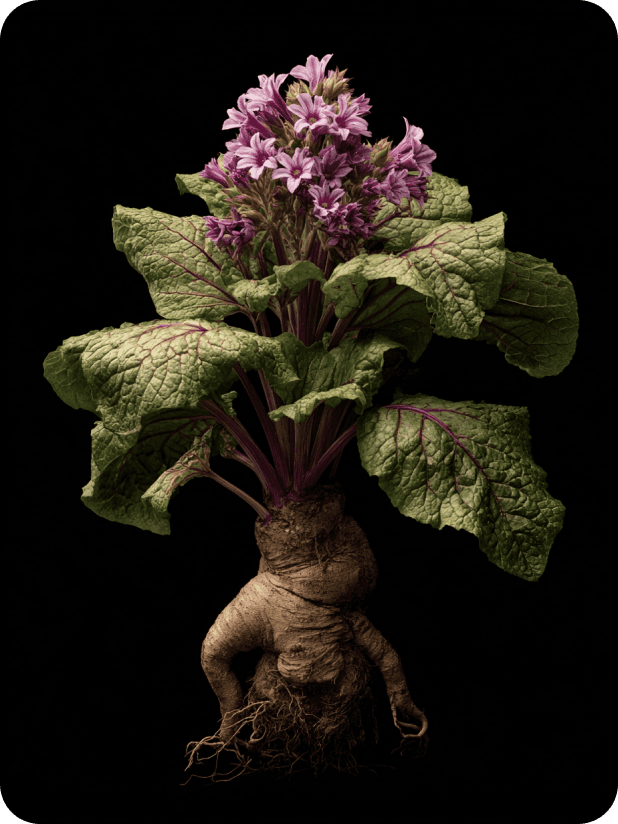
Mandrake
Strength
6 / 10
Type of Effect
Hallucinogenic
Method of use
Oral
Origin
Mediterranean, Himalayas
Duration
Variable
Traditional Use
Magical, Medicinal
What is Mandrake?
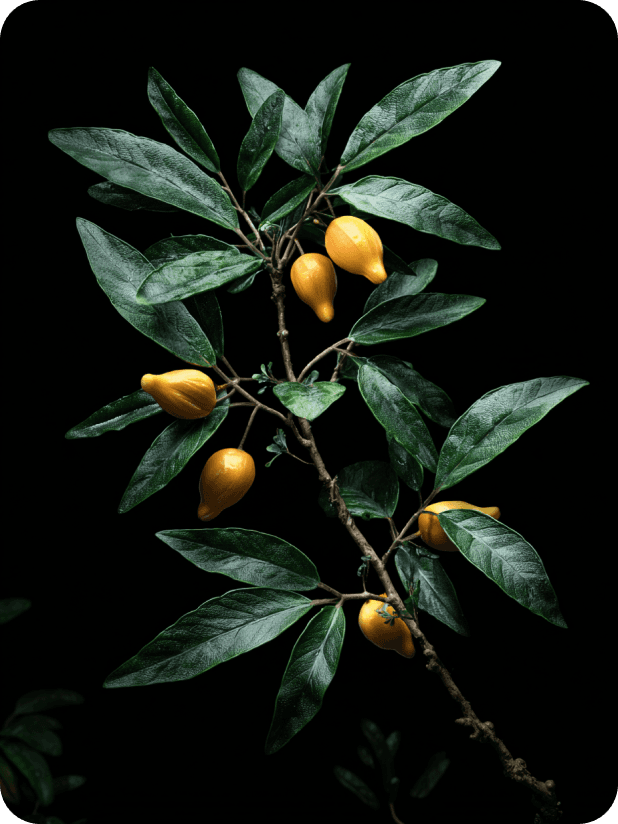
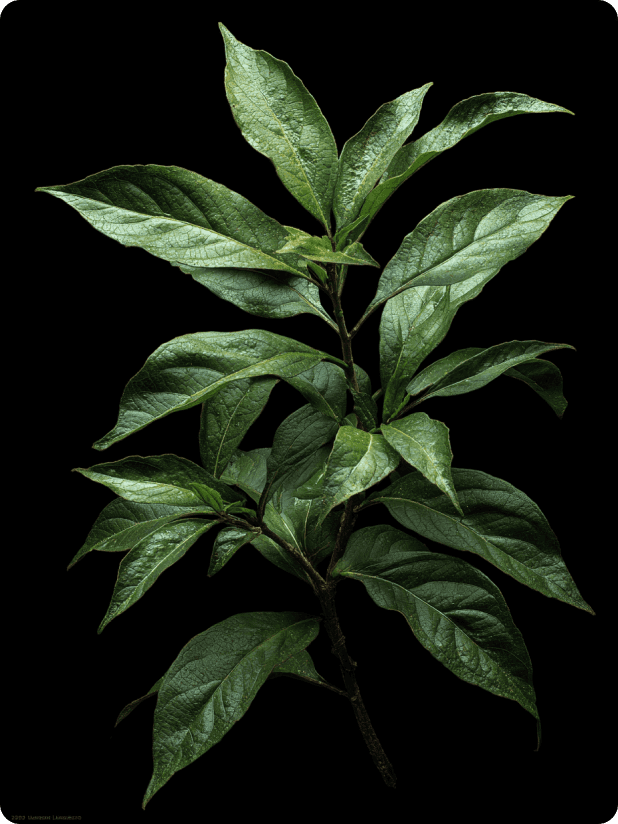
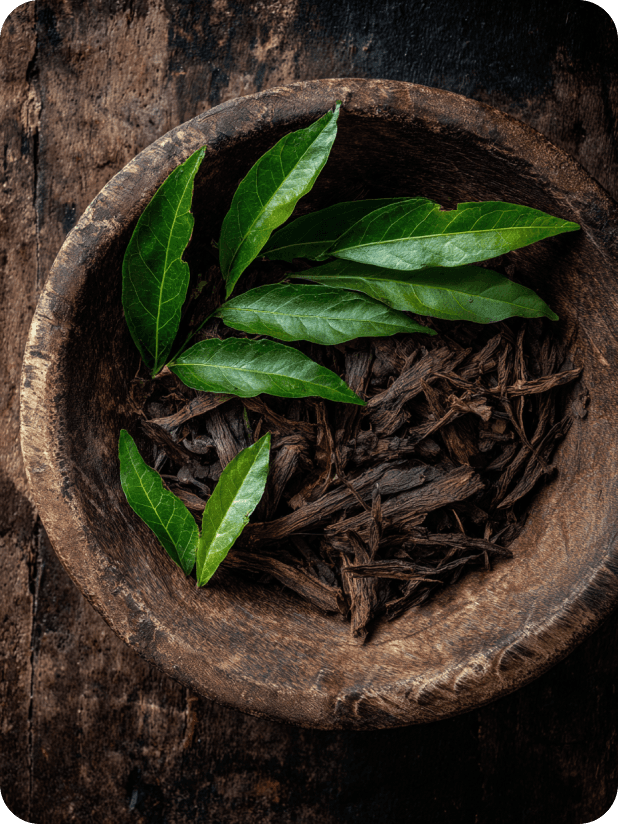
Mandrake is one of the most myth-covered psychoactive plants in human history. It has been feared, worshipped, and misunderstood for thousands of years.
The mandrake plant (Mandragora officinarum) contains powerful toxic compounds that can cause hallucinations, delirium, and loss of consciousness.
Mandrake is not a psychedelic in the modern sense.
Like datura, it belongs to the class of deliriants.
It does not expand awareness.
It disconnects it.
Where does Mandrake come from?
Mandrake is native to:
The Mediterranean
The Middle East
Parts of Central Asia
It appears throughout:
Ancient Greek medicine
Roman texts
Medieval European folklore
Witchcraft and occult traditions
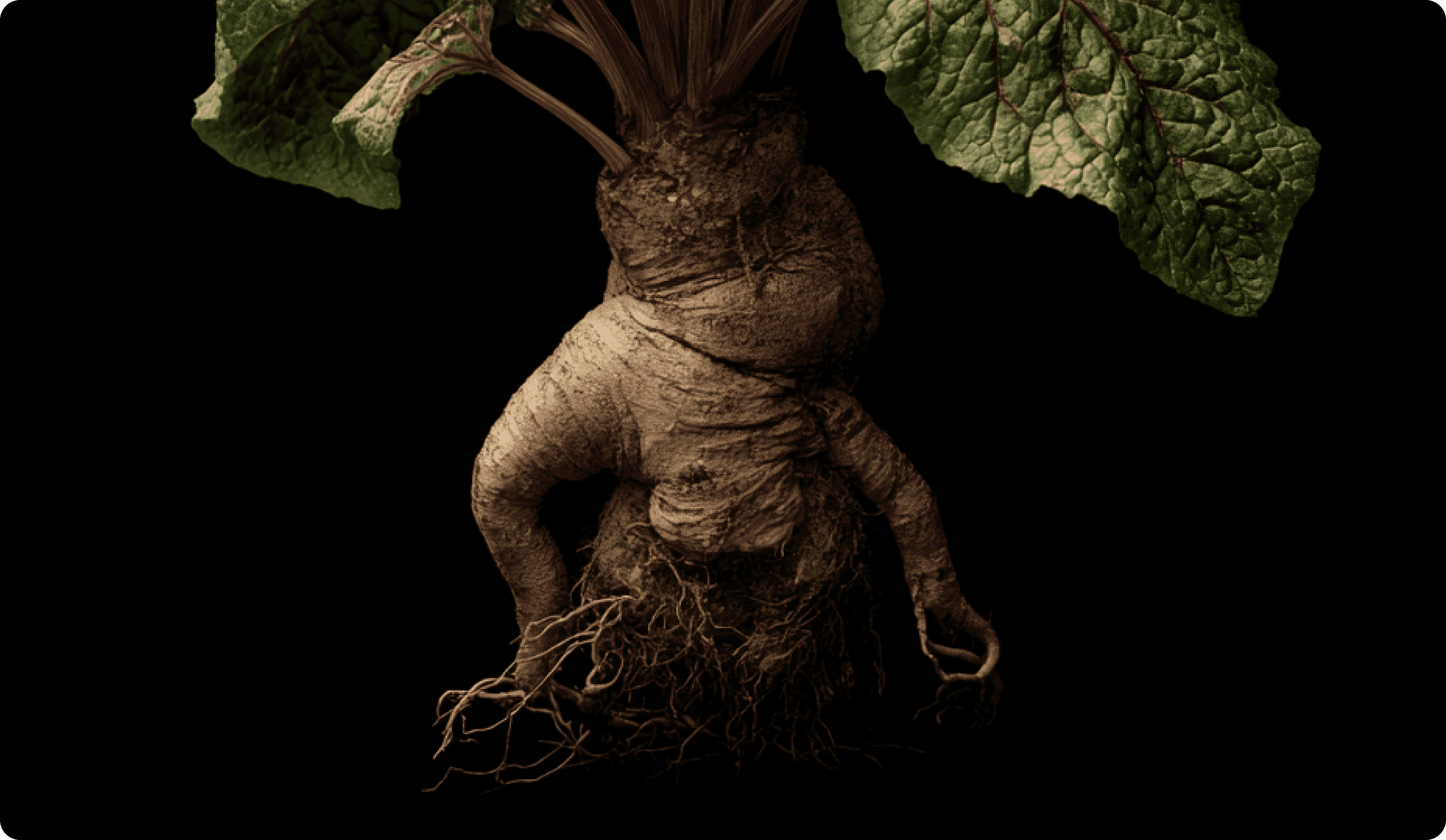
Mandrake was surrounded by ritual, fear, and superstition, partly because of its strong effects, and partly because of its human-shaped root, which people believed held spirits or souls.
Why was Mandrake so famous?
Mandrake became legendary because it was believed to:
Induce visions
Cause madness or death
Act as a powerful anesthetic
Enhance fertility or love
Protect or curse those who possessed it
Stories claimed that pulling a mandrake root from the ground would cause it to scream, killing anyone who heard it. These myths reflect how dangerous and unpredictable the plant actually is.
What makes Mandrake psychoactive?
Mandrake contains tropane alkaloids, similar to datura and belladonna, including:
Scopolamine
Atropine
Hyoscyamine
These substances:
Block acetylcholine in the brain
Disrupt memory and awareness
Cause realistic hallucinations
Remove insight into what is real
This creates a state of true delirium, not a guided or meaningful altered state.
What does Mandrake do?
Mandrake effects are confusing, disorienting, and dangerous.
Mental effects
Severe confusion
Loss of self-awareness
Inability to distinguish hallucination from reality
Memory blackout
Perceptual effects
Seeing and hearing people who are not there
Talking to imaginary beings
Fully believable hallucinations
No awareness that anything is wrong
Physical effects
Extreme dry mouth and skin
Dilated pupils
Rapid heartbeat
Overheating
Risk of coma or death
There is no clear insight during these states.
What does a Mandrake experience feel like?
People who have survived mandrake poisoning often report:
Days of missing time
Acting normally while hallucinating
Confusion that lasts long after
Fear, paranoia, or distress
Unlike psychedelics, there is usually no memory to reflect on, and no symbolic meaning to integrate.
Mandrake does not feel visionary.
It feels lost.
Why was Mandrake ever used?
Historically, mandrake was used:
As a crude anesthetic before surgery
In love potions and fertility rituals
In witchcraft and magical practices
In poisons and sedatives
Its use was often experimental and dangerous, and many cultures eventually abandoned it due to the high risk.
Is Mandrake safe?
No.
Mandrake is highly toxic.
Risks include:
Fatal overdose
Long-term cognitive damage
Heart failure
Respiratory depression
Accidental injury or death
Dosage is unpredictable, and effects vary widely between plants.
There is no safe recreational or exploratory use.
Mandrake vs psychedelics
Mandrake is often confused with psychedelics because of its myths, but it is fundamentally different.
Psychedelics:
Preserve awareness
Allow reflection
Create symbolic meaning
Mandrake:
Removes awareness
Destroys insight
Replaces reality entirely
This is why mandrake is considered dangerous, not enlightening.
Mandrake in modern times
Today, mandrake is mainly:
A historical curiosity
A subject of folklore and fantasy
A cautionary example in ethnobotany
It has no role in modern therapeutic or spiritual practice.
Mandrake’s legacy is cultural, not experiential.
A final note
Mandrake is not a teacher.
It is not a guide.
It is not a doorway.
It is a reminder from history of what happens when humans confuse poison with wisdom.
Respecting mandrake means understanding it, studying it, and not ingesting it.
Some plants teach by showing the limits of exploration.
Mandrake is one of them.