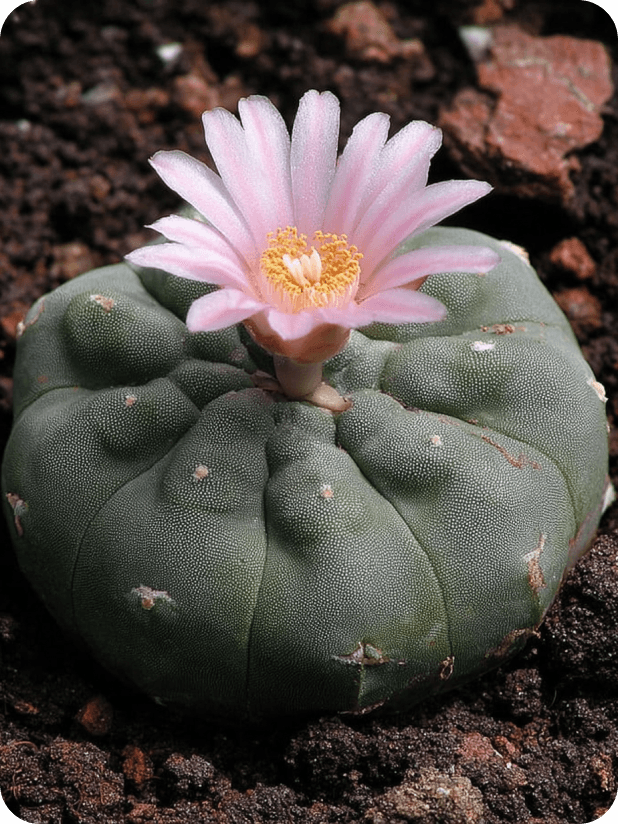
Peyote
Strength
7 / 10
Type of Effect
Hallucinogenic
Method of use
Oral
Origin
North America
Duration
8-12 hours
Traditional Use
Spiritual, Healing
What is Peyote?
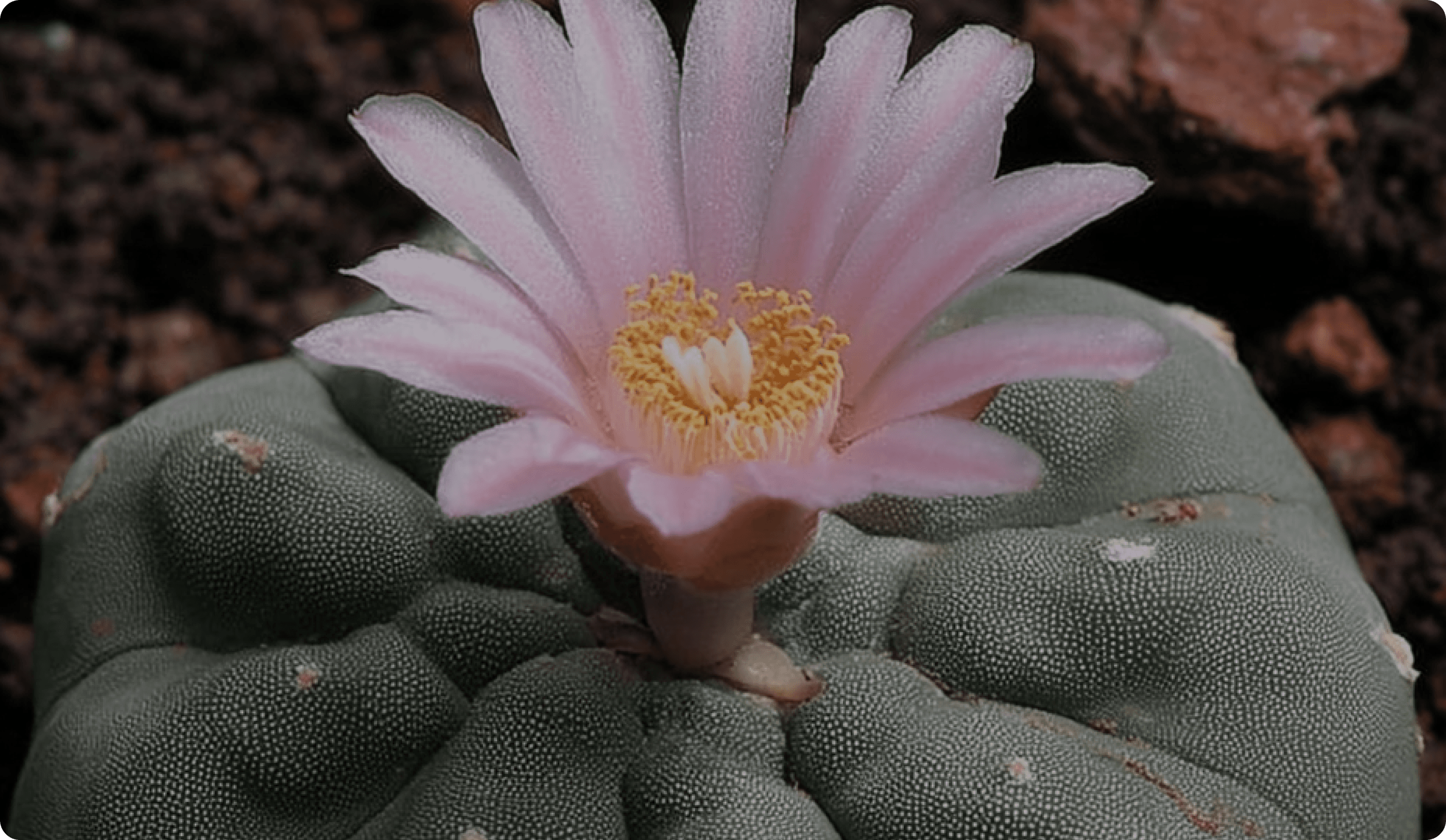
Peyote is a small, slow-growing cactus that contains mescaline, a natural psychedelic compound. It has been used for thousands of years by Indigenous peoples of North America, especially in what is now Mexico and the southwestern United States.
Peyote is not a party substance.
It is a sacred medicine, traditionally used in prayer, healing, and all-night ceremonies.
Many people describe peyote as gentle, wise, and heart-centered.
Where does Peyote come from?
Peyote grows naturally in desert regions. It takes many years to mature, which is why it is treated with deep respect.
For Indigenous cultures, peyote is part of a living spiritual tradition, not just a plant. Ceremonies are often led by elders and include:
Prayer
Chanting
Drumming
Silence
Sitting together through the night
Peyote is about community, humility, and listening.
What is Mescaline?
Mescaline is the main active compound in peyote. It affects perception, emotions, and meaning-making, but in a clear and grounded way.
Compared to other psychedelics, mescaline is often described as:
Less chaotic
Less overwhelming
More emotionally warm
More stabilizing
Mescaline does not usually “shatter” the mind.
It tends to open the heart and sharpen awareness.
What does Peyote do?
Peyote works slowly and steadily, often over 10–14 hours or more.
Emotional effects
Deep emotional clarity
Feelings of gratitude and humility
Emotional honesty without drama
A sense of forgiveness or acceptance
Mental effects
Clear, calm thinking
Insight into personal values
Reduced mental noise
Strong sense of meaning
Perceptual effects
Enhanced colors and light
Gentle patterns and movement
Heightened awareness of nature
A feeling that everything is “alive”
Spiritual effects
Strong sense of connection
Feeling guided or protected
Prayer-like states of awareness
A sense of sacredness
Peyote rarely rushes.
It unfolds slowly, like a long conversation.
What does a Peyote experience feel like?
People often describe peyote as:
Sitting with an old, kind teacher
Feeling held rather than pushed
Being reminded of what matters
Feeling emotionally clean afterward
There can be physical discomfort, especially nausea at the beginning, but many say the overall tone is loving, grounding, and stabilizing.
Peyote does not usually take you far away.
It brings you deeper into yourself.
Why do people work with Peyote?
People approach peyote for reasons such as:
Emotional healing
Grief and loss
Finding direction
Strengthening spiritual connection
Reconnecting with values
Feeling grounded and whole
Peyote is often chosen by people who want clarity without chaos.
Peyote and the heart
One of peyote’s most talked-about qualities is its heart-opening nature.
People often report:
Feeling more compassion for themselves
Seeing others with more understanding
Letting go of resentment
Feeling connected rather than separate
Peyote teaches softly, but deeply.
Is Peyote safe?
Peyote is generally considered physically gentle, but it still requires care.
Important considerations:
Long duration
Strong nausea at the start
Emotional sensitivity
Legal restrictions in many countries
Peyote should always be approached:
With respect for Indigenous traditions
With proper preparation
In a safe, supported setting
It is not something to rush or experiment with casually.
The role of intention
Peyote responds well to prayer-like intentions.
Helpful intentions are often simple:
“Help me see clearly”
“Help me heal”
“Help me walk my path”
Peyote tends to meet sincerity with sincerity.
Integration: carrying it forward
Peyote teachings are often subtle but lasting.
Integration may look like:
Living more honestly
Treating others with more care
Slowing down
Making choices aligned with values
Staying connected to nature
Peyote does not usually demand change loudly.
It reminds you.
Peyote today
Peyote is increasingly threatened due to:
Overharvesting
Habitat loss
Cultural misunderstanding
Respecting peyote means respecting:
Indigenous sovereignty
Sustainable use
Cultural context
Peyote is not just a substance.
It is a relationship.
A final note
Peyote is often described as quiet wisdom.
It does not shock or overwhelm.
It listens, waits, and gently points.
For those who approach it with patience, humility, and respect, peyote can feel like being reminded of something ancient and true, something you always knew, but had forgotten how to hear.