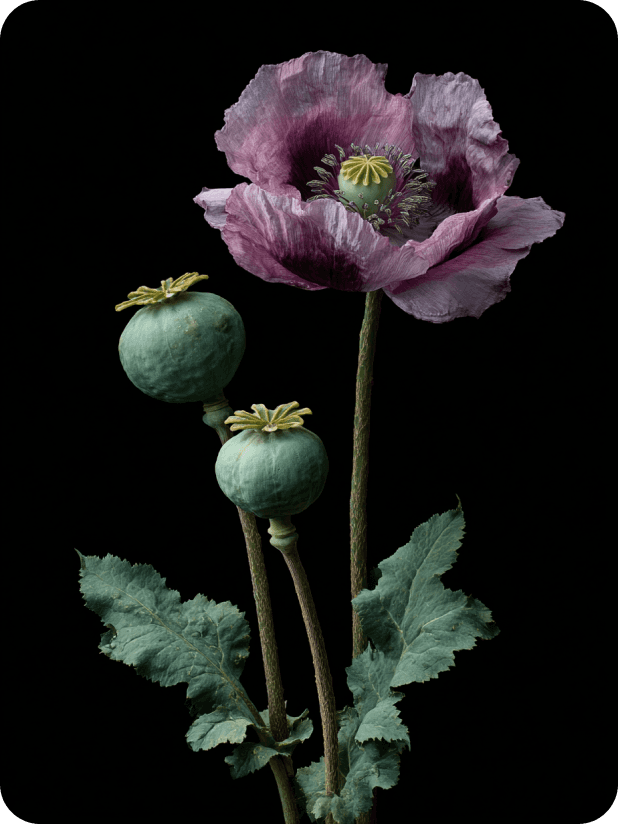
Poppy
Strength
6 / 10
Type of Effect
Sedative, Analgesic
Method of use
Oral, Smoking
Origin
Eastern Mediterranean
Duration
Variable
Traditional Use
Medicinal, Recreational
What is Poppy?
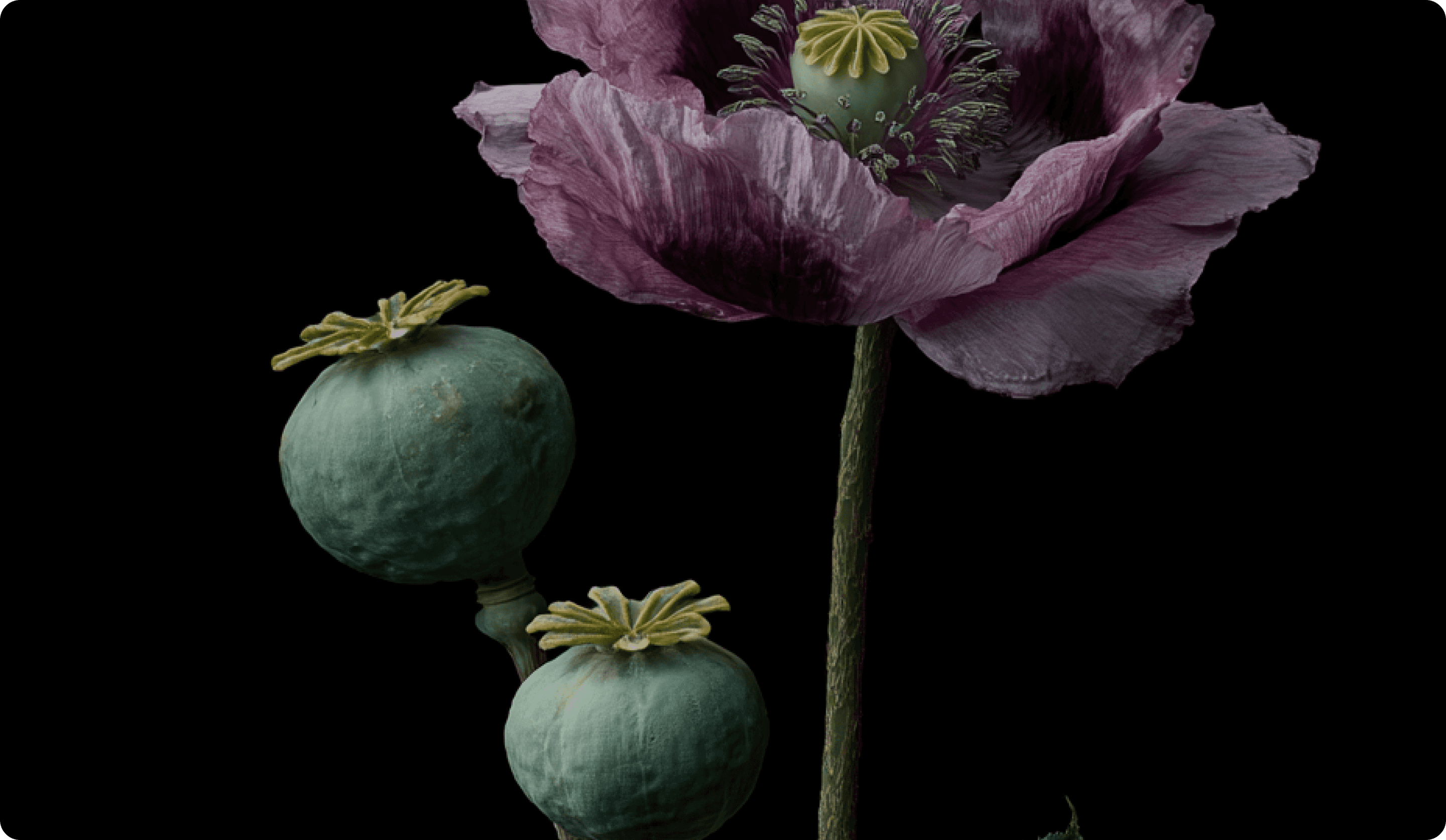
When people talk about Poppy in a psychoactive context, they usually mean the opium poppy (Papaver somniferum).
This plant has shaped human history more than almost any other psychoactive substance. It has been used as:
A medicine
A painkiller
A ritual sedative
A drug of dependence
A cause of wars and epidemics
Poppy is not a psychedelic.
It is a narcotic plant that works by numbing pain and consciousness, not expanding awareness.
Where does Poppy come from?
The opium poppy is native to:
The eastern Mediterranean
The Middle East
Parts of Asia
It has been cultivated for thousands of years.
Poppy appears in:
Ancient medicine
Religious rituals
Traditional pain treatment
Modern pharmaceuticals
From this single plant come substances such as opium, morphine, codeine, and heroin.
What makes Poppy psychoactive?
The poppy produces a milky latex when its seed pod is cut. This latex contains opioid alkaloids, mainly:
Morphine
Codeine
Thebaine
These compounds act on opioid receptors in the brain and body.
They:
Reduce pain
Create sedation
Produce euphoria
Suppress emotional and physical discomfort
This mechanism is very different from psychedelics or deliriants.
What does Poppy do?
Poppy-based substances create a state of relief and numbness.
Mental and emotional effects
Strong relaxation
Emotional dulling
Reduced anxiety or distress
Euphoria in some cases
Physical effects
Pain relief
Heavy body feeling
Slowed breathing
Sleepiness
Unlike psychedelics, poppy does not increase insight or awareness.
It reduces sensation and feeling.
What does a Poppy experience feel like?
People often describe it as:
Warm
Heavy
Comforting
Dreamlike
Emotionally quiet
There is usually:
Little reflection
Little insight
Little memory-making
Poppy does not show you something new.
It makes things stop hurting.
Why was Poppy used traditionally?
Historically, poppy was used for:
Pain relief
Surgery and injury
Childbirth
Severe illness
Sleep and sedation
In some cultures, it was also used in rituals to:
Dull suffering
Ease death
Create states of rest or surrender
Its power made it valuable, but also extremely dangerous.
The shadow of Poppy: dependence
Poppy is one of the most addictive plants known.
Risks include:
Physical dependence
Severe withdrawal
Loss of emotional range
Respiratory depression
Overdose and death
This is not a moral issue.
It is how the plant works on the brain.
Many modern opioid crises trace directly back to this mechanism.
Is Poppy safe?
Poppy-derived substances can be safe only in tightly controlled medical contexts.
Outside of that:
Dosage is unpredictable
Dependence develops quickly
Overdose risk is high
There is no safe ceremonial or exploratory use comparable to psychedelics.
Poppy vs psychedelics
The difference is fundamental.
Psychedelics:
Increase awareness
Intensify perception
Reveal emotions
Poppy:
Suppresses awareness
Numbs perception
Hides emotions
Psychedelics open.
Poppy closes.
Poppy in modern times
Today, poppy exists in two very different worlds:
As a vital medical tool for pain relief
As a source of addiction and harm
This duality makes it one of the most ethically complex plants in human history.
It is both a gift and a warning.
A final note
Poppy teaches nothing directly.
Its lesson comes from history.
It shows what happens when relief becomes escape, when numbness replaces presence, and when pain is avoided instead of understood.
Poppy is not a path to insight.
It is a reminder that not all altered states are wisdom, and that some plants offer comfort at the cost of awareness.
Respecting poppy means respecting its power, its danger, and its place, primarily in medicine, not exploration.