Voacanga africana
Strength
4 / 10
Type of Effect
Stimulant, Hallucinogenic
Method of use
Oral
Origin
West Africa
Duration
Variable
Traditional Use
Medicinal, Ritualistic
What is Voacanga africana?
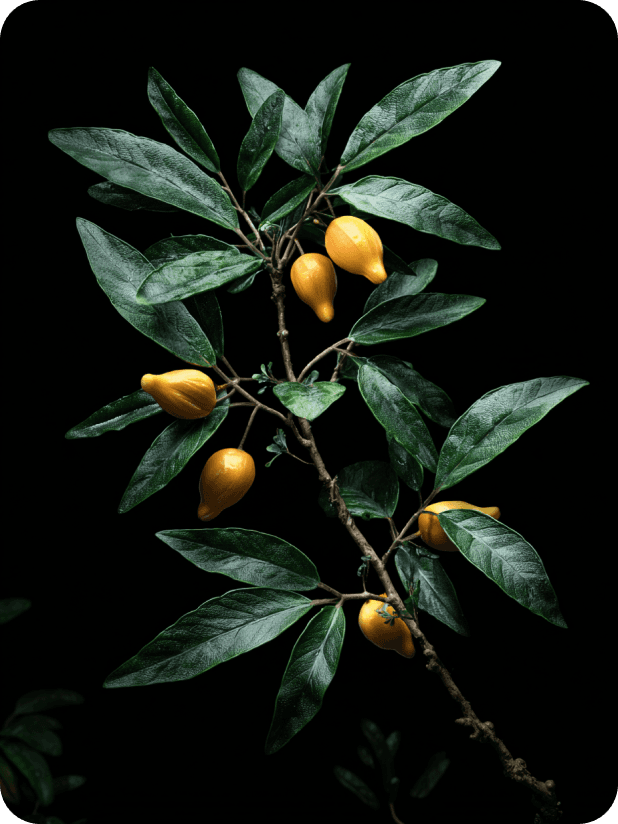
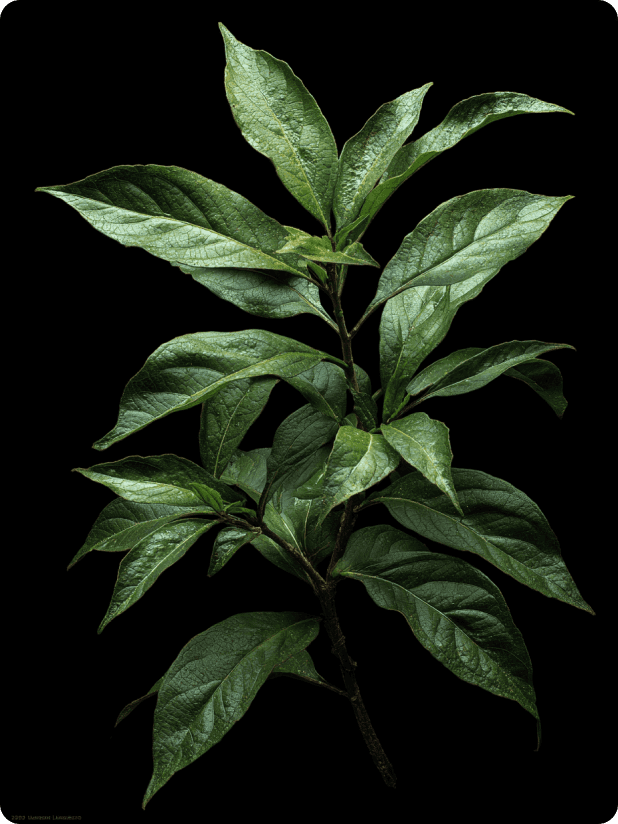
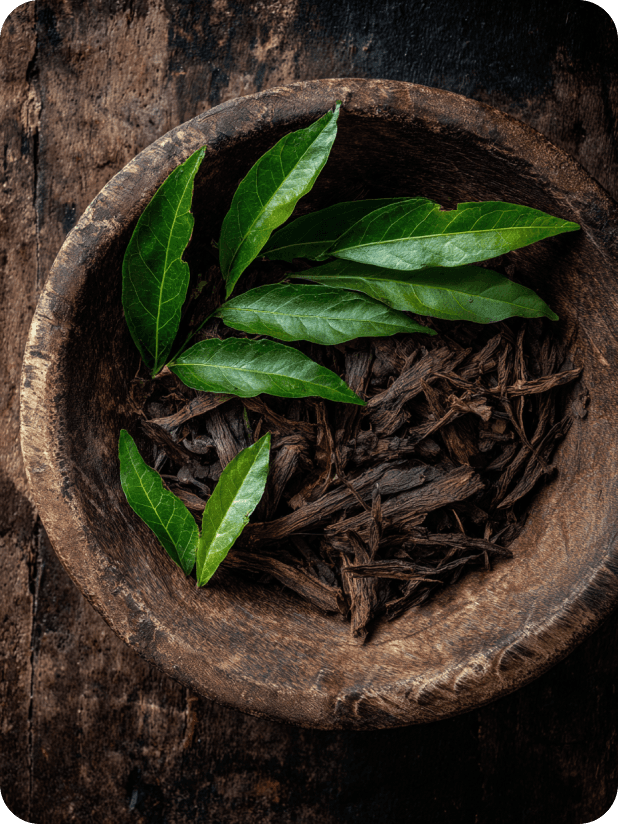
Voacanga africana is a West African tree whose seeds and bark contain powerful psychoactive alkaloids. It is best known today because it contains precursor compounds related to ibogaine, the active substance found in Iboga.
Voacanga itself is not Iboga.
Its effects are milder, more fragmented, and less complete.
Where Iboga feels like a full life review,
Voacanga feels like touching the edges of that space.
It is often described as introspective, mentally stimulating, and unfinished.
Where does Voacanga africana come from?
Voacanga africana grows in:
West Africa
Central Africa
Traditionally, it has been used in:
Local medicinal practices
Spiritual and ritual contexts
Healing preparations
Unlike Iboga, Voacanga does not have a single, well-defined ceremonial lineage that survived into modern times. Its use has been more regional and practical.
What makes Voacanga psychoactive?
Voacanga africana contains several alkaloids, including:
Voacangine
Voacamine
Ibogamine (in small amounts)
Some of these compounds are chemically related to ibogaine, but they are not identical in effect.
In modern contexts, voacangine is sometimes chemically converted into ibogaine, which is why Voacanga gained attention outside Africa.
What does Voacanga do?
Voacanga produces a subtle but noticeable alteration of consciousness.
Mental and psychological effects
Increased introspection
Heightened mental activity
Focus on memories or personal themes
Analytical rather than emotional tone
Emotional effects
Emotional neutrality
Reduced emotional warmth
Less catharsis than Iboga
More thinking, less feeling
Physical effects
Stimulation or restlessness
Nausea in some cases
Mild body discomfort
Voacanga does not usually produce:
Strong visions
Clear narratives
Deep emotional release
What does a Voacanga experience feel like?
People often describe it as:
Mentally active but emotionally flat
Thought-heavy
Fragmented
Lacking clear resolution
It may feel like starting a process without finishing it.
For some, this is interesting.
For others, it feels unsatisfying.
Why do people use Voacanga?
People are drawn to Voacanga for:
Curiosity about iboga-related plants
Cognitive stimulation
Mild introspection
Exploration of African ethnobotany
It is not commonly used for addiction interruption or deep healing on its own.
Voacanga vs Iboga
This comparison is important.
Iboga:
Deep
Structured
Exhaustive
Transformational
Voacanga:
Partial
Mental
Fragmented
Less grounding
Iboga confronts the whole self.
Voacanga touches pieces of it.
Is Voacanga safe?
Voacanga is not well-studied compared to many other psychoactive plants.
Potential risks include:
Nausea and vomiting
Cardiovascular strain
Psychological discomfort
Unpredictable reactions
Because of its chemical similarity to iboga-related compounds, medical screening and caution are strongly advised.
Voacanga should never be treated as a “lighter Iboga”.
The role of intention
Voacanga responds best to curiosity and observation, not expectation.
Helpful intentions include:
“Let me observe my mind”
“Show me patterns without force”
“Help me understand, not change”
Trying to push it into a healing or transformational role often leads to disappointment.
Integration: making sense of fragments
Integration after Voacanga often focuses on:
Mental clarity
Connecting loose insights
Avoiding over-interpretation
Accepting incompleteness
Voacanga may raise questions without answering them.
That is part of its nature.
Voacanga in modern contexts
Today, Voacanga exists mostly:
In ethnobotanical research
In pharmaceutical interest
On the edges of psychonaut culture
It is often misunderstood as:
A replacement for Iboga
A shortcut to ibogaine experiences
It is neither.
A final note
Voacanga africana is not a teacher in the traditional sense.
It does not guide, confront, or resolve.
It opens a window, briefly, into a mental landscape that Iboga explores fully.
For those who approach it with modest expectations and respect, Voacanga can offer insight into the mind’s structure.
But it is not a path.
It is a glimpse.