Microdosing Psilocybin: What the Research Actually Says
An honest look at the science of microdosing psilocybin, from survey data and the placebo question to controlled trials and what we can (and cannot) conclude.
What Microdosing Is and Is Not
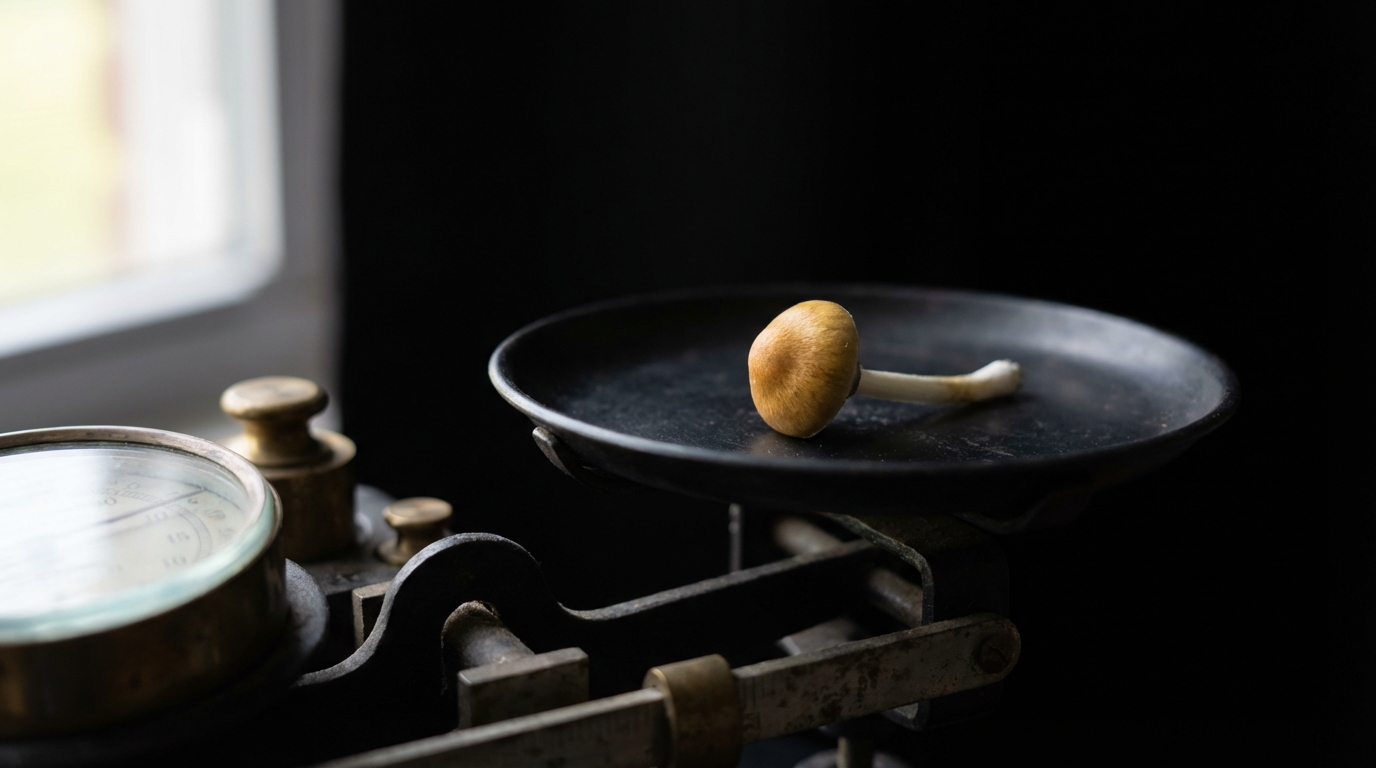
Microdosing refers to taking roughly one-tenth to one-twentieth of a standard psychedelic dose, an amount intended to be sub-perceptual, meaning it should not produce hallucinations, significant perceptual distortion, or impairment. For psilocybin mushrooms, this typically means 0.05 to 0.3 grams of dried material, though potency varies considerably between species and even between individual mushrooms.
The practice gained mainstream attention through James Fadiman's 2011 book "The Psychedelic Explorer's Guide" and subsequent media coverage of Silicon Valley professionals microdosing for productivity and creativity. Claims expanded rapidly: microdosing was said to improve mood, focus, creativity, energy, empathy, and even physical health. The enthusiasm outpaced the evidence considerably, and the research community has spent the past several years trying to determine what, if anything, microdosing actually does.
What microdosing is not: it is not a substitute for therapy, a cognitive enhancer with proven efficacy, or a risk-free practice. It remains illegal in most jurisdictions, and the lack of standardized dosing, quality control, and medical oversight creates genuine safety concerns.
The Main Protocols
Two protocols dominate the microdosing community. The Fadiman protocol involves taking a microdose once every three days (one day on, two days off), typically for a period of four to eight weeks. The rationale is that spacing doses prevents tolerance buildup and allows observation of both "on" and "off" day differences.
The Stamets Stack, proposed by mycologist Paul Stamets, combines a psilocybin microdose with lion's mane mushroom (Hericium erinaceus) and a low dose of niacin (vitamin B3), taken four days on followed by three days off. Stamets has hypothesized that this combination may promote neurogenesis and cognitive enhancement, though this hypothesis has not been tested in controlled human trials. The addition of niacin, which causes a temporary flushing sensation, is proposed to aid distribution of the active compounds, but this mechanism remains speculative.
Most practitioners keep detailed journals tracking mood, energy, creativity, focus, sleep quality, and social interactions to monitor effects over time.
Survey Data: What People Report
Large-scale surveys have consistently found that microdosers report subjective improvements across several domains. A 2019 systematic review by Polito and Stevenson, drawing on survey and observational data, found that microdosers commonly reported improved mood, increased focus, enhanced creativity, and greater emotional awareness. A 2019 study by Anderson and colleagues, surveying over 1,100 microdosers, found similar patterns, with respondents also reporting reduced anxiety and improved social connectedness.
These findings are interesting but carry significant methodological limitations. Survey respondents are self-selected, often recruited from online communities of enthusiasts. They are not blinded (they know they are taking a psychedelic), and they have strong expectations of benefit, creating ideal conditions for placebo and confirmation bias. People who had negative experiences may be less likely to participate in surveys or identify as microdosers.
The Placebo Question: Controlled Trials
The most important methodological advance in microdosing research has been the introduction of placebo controls and blinding. The results have been sobering for microdosing advocates.
The landmark study is Szigeti et al. (2021), published in eLife, which used an innovative "self-blinding" design. Participants prepared their own microdose and placebo capsules using a coded envelope system, allowing researchers to compare outcomes without knowing which participants received active doses. The study, involving 191 participants over four weeks, found that both the microdosing group and the placebo group showed significant improvements in well-being, mindfulness, and life satisfaction, but the differences between the two groups were not statistically significant. In other words, people who thought they were microdosing improved regardless of whether their capsules contained psilocybin or a placebo.
A smaller randomized controlled trial by Marschall et al. (2022), published in Translational Psychiatry, similarly found no significant difference between microdoses of psilocybin and placebo on measures of creativity, cognition, or well-being in a laboratory setting. Hutten et al. (2020), in a controlled study examining repeated low doses of LSD (a related but distinct substance), found minimal acute cognitive effects, though participants did report subjective increases in "drug effect" on dosing days.
What We Can and Cannot Conclude
The current state of the evidence suggests several tentative conclusions:
Expectancy effects are powerful. The belief that one is microdosing appears to produce meaningful subjective improvements in mood, focus, and well-being. This is not trivial or dismissive: placebo effects reflect genuine changes in brain activity and subjective experience. But it complicates claims that psilocybin itself is the active ingredient at sub-perceptual doses.
Controlled trials have not confirmed the claims. As of early 2026, no well-controlled study has demonstrated that psilocybin microdoses produce reliable effects beyond placebo on standard measures of mood, cognition, or creativity. This does not mean the effects do not exist; it means they have not been reliably detected with current methods and sample sizes.
The research is still young. Sample sizes have been small, dosing protocols inconsistent, and outcome measures variable. The self-blinding methodology, while ingenious, has its own limitations. Larger, longer, and more rigorous trials are underway at several institutions, and the picture may change as data accumulates.
Individual variation may be significant. Some researchers have suggested that microdosing effects may be concentrated in specific subgroups (people with certain personality traits, baseline mood states, or neurobiological profiles) rather than being universal. If true, this could explain why survey data and controlled trials tell different stories.
Risks and Considerations
Microdosing is not risk-free. Psilocybin acts on serotonin receptors, and its interactions with psychiatric medications (particularly SSRIs, MAOIs, and lithium) are not fully characterized at low doses. Cardiovascular concerns have been raised regarding chronic activation of the 5-HT2B receptor, which plays a role in heart valve function, though no clinical evidence of harm at microdosing levels has been reported. The unregulated nature of the practice means that dose consistency, substance identity, and purity are not guaranteed.
People with a personal or family history of psychotic disorders are generally advised to avoid all psychedelic use, including microdosing. And the legal risks, while varying by jurisdiction, remain real in most places.
An Honest Assessment
Microdosing psilocybin occupies an unusual position in the psychedelic landscape: enormously popular, widely discussed, and still genuinely uncertain in its effects. The gap between what practitioners report and what controlled studies have found is one of the most interesting puzzles in current psychedelic science. The honest answer to "does microdosing work?" is: we do not yet know with confidence, but the early controlled evidence suggests that expectancy and ritual may account for a substantial portion of what people experience. That is not a reason for dismissal, but it is a reason for intellectual honesty and continued rigorous investigation.