Ayahuasca vs Psilocybin: Understanding the Differences
An honest comparison of ayahuasca and psilocybin, mapping the differences in chemistry, duration, experience, cultural context, and practical considerations.
Two Paths, Different Terrain
Ayahuasca and psilocybin mushrooms are among the most widely discussed psychedelic medicines, and people often wonder how they compare. Both can catalyze profound shifts in perception, emotion, and self-understanding, but they differ substantially in chemistry, cultural context, physical experience, and practical accessibility. This is not a recommendation for either. It is a map of the differences, offered so that anyone exploring these territories can orient themselves with greater clarity.
The shortest honest answer: ayahuasca combines two plants into a single pharmacological system, is usually taken inside a ceremonial container held by a trained practitioner, and tends to be physically demanding. Psilocybin is one compound, active on its own, and in contemporary Western use it is most often taken with far less structure around it.
At a Glance
| | Ayahuasca | Psilocybin mushrooms | |---|---|---| | Active compounds | DMT (from Psychotria viridis or similar) plus harmala alkaloids (from Banisteriopsis caapi) | Psilocybin, converted in the body to psilocin | | Why it works orally | The vine's MAOIs prevent gut enzymes from destroying the DMT | Psilocin is orally active without a partner compound | | Onset | Roughly 30 to 60 minutes | Roughly 20 to 60 minutes | | Duration | Roughly 4 to 6 hours, ceremonies often longer | Roughly 4 to 6 hours | | Physical profile | Nausea and purging are common and expected | Nausea possible at onset, purging less common | | Typical container | Group ceremony, guided, overnight | Solo or small group, often unguided | | Key interaction risk | MAOI interactions with medications and foods | Fewer interactions, but SSRIs and lithium still matter | | Access | Retreats and ceremonies, usually paid and travelled to | Grows widely, legality varies enormously |
Chemistry: Different Molecules, Different Mechanisms
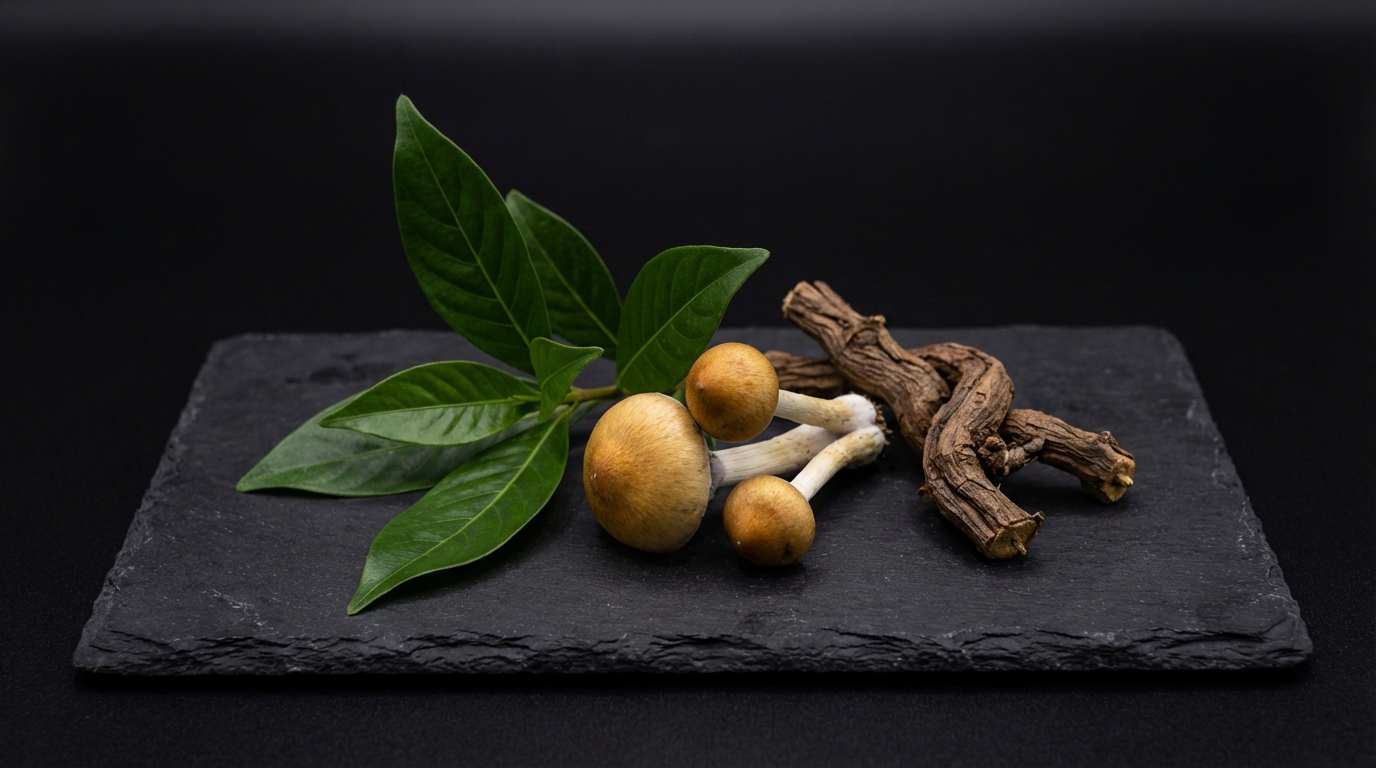
Psilocybin mushrooms contain psilocybin, which the body converts to psilocin, a molecule that binds primarily to serotonin 2A receptors in the brain. The pharmacology is relatively straightforward: one prodrug, one active metabolite, one primary receptor target. Psilocybin is essentially inert until the body strips a phosphate group from it, at which point psilocin can cross into the brain and take its seat at the receptor.
Ayahuasca is pharmacologically more complex. The brew traditionally combines two plants: Banisteriopsis caapi, which contains beta-carboline alkaloids (harmine, harmaline, tetrahydroharmine) that act as monoamine oxidase inhibitors (MAOIs), and Psychotria viridis (or similar DMT-containing plants), which provides N,N-dimethyltryptamine. DMT is normally broken down rapidly in the gut by monoamine oxidase enzymes, making it inactive when taken orally. The MAOIs in B. caapi inhibit this breakdown, allowing DMT to reach the brain. This two-component system means ayahuasca involves both serotonergic psychedelic effects and MAOI activity, which has significant implications for drug interactions and dietary considerations.
It is worth sitting with what the vine is doing, because it explains almost everything else on this page. Monoamine oxidase is a housekeeping enzyme, dismantling a whole family of molecules before they can circulate, DMT among them. The harmala alkaloids act as a gatekeeper, holding that door open long enough for the DMT to pass. Without the vine, the leaf does nothing at all when swallowed. Why this pairing was found, among the tens of thousands of plant species in the Amazon basin, remains one of ethnobotany's open questions.
So ayahuasca is not one drug with one job. It is a system, and the MAO inhibition does not stop at DMT: while the harmala alkaloids are active, the same enzyme is unavailable to break down other monoamines, including tyramine from food and serotonin affected by certain medications. That is why the risk section below matters more here than anywhere else on the page. Psilocybin carries no equivalent mechanism. It arrives, binds, and is cleared.
Duration, Onset, and Arc
Both experiences tend to last roughly four to six hours, but their arcs differ. Psilocybin mushrooms typically produce a gradual onset (30 to 60 minutes), a peak lasting one to two hours, and a gentle descent. The trajectory is often described as wave-like, with periods of intensity followed by relative calm.
Ayahuasca ceremonies often begin with a slower onset (30 to 60 minutes), followed by waves of visionary experience that can feel more episodic, with distinct peaks and valleys. The MAOI component can extend and modulate the experience in ways that feel different from a psilocybin arc. Some people report that ayahuasca feels more "directed" or narrative, while psilocybin feels more open and exploratory, though individual variation is enormous.
Clock time is only part of the picture. A five-hour psilocybin session is usually five hours of your day, while an ayahuasca ceremony is commonly a whole evening: arrival, preparation, the brew served in a darkened space, sometimes a second cup a few hours in, then the long settling until dawn.
The Experience: Body, Vision, and Emotion
One of the most discussed differences is the physical dimension. Ayahuasca frequently involves nausea and purging (vomiting or diarrhea), which many traditions regard not as a side effect but as a meaningful part of the process, often described as cleansing or release. This physical intensity can be challenging, particularly for newcomers.
Purging deserves plain description rather than squeamishness or mystification. In most ceremonies, participants are given a bucket at the start, and using it is unremarkable. Nausea tends to build during onset. Vomiting, when it comes, is often followed by a distinct easing, and the experience may deepen rather than end. Diarrhea is common. Some people purge at every ceremony, some rarely, some not at all. In Spanish-speaking Amazonian contexts the brew is sometimes called la purga, the purge, which tells you how central this is understood to be. Whether it is physiological (the harmala alkaloids are emetic), psychological, culturally shaped, or all three is not settled. It is expected, planned for, and not a sign that something has gone wrong.
Psilocybin mushrooms can also cause nausea, especially during onset, but purging is less common and less central to the experience. The physical profile tends to be milder, though body load (sensations of heaviness, temperature changes, or muscle tension) varies by individual and dose.
Visually, ayahuasca is often associated with vivid, complex imagery, sometimes described as encounters with entities, landscapes, or archetypal scenes. Psilocybin can produce equally vivid visual phenomena, but many people describe the experience as more emotional and introspective, with visual effects that feel more organic and less structured. These are generalizations, and both substances can produce the full range of psychedelic phenomenology.
The difference people reach for most often is not intensity but character. Ayahuasca is frequently described as having something like agency: a sense of being shown something, in sequence, by something other than yourself. Psilocybin is more often described as a loosening, where what surfaces feels like your own material, arriving from your own depth rather than from outside. Neither is a claim about what is happening. They are reports of how the two tend to feel, and plenty of people report the opposite of both.
Set, Setting, and Container
The largest practical difference between these two medicines is not chemical. It is the container. Ayahuasca almost always arrives inside a structure: a ceremony, a facilitator, a group, a night, a set of protocols. Psilocybin, in contemporary Western use, usually arrives without one.
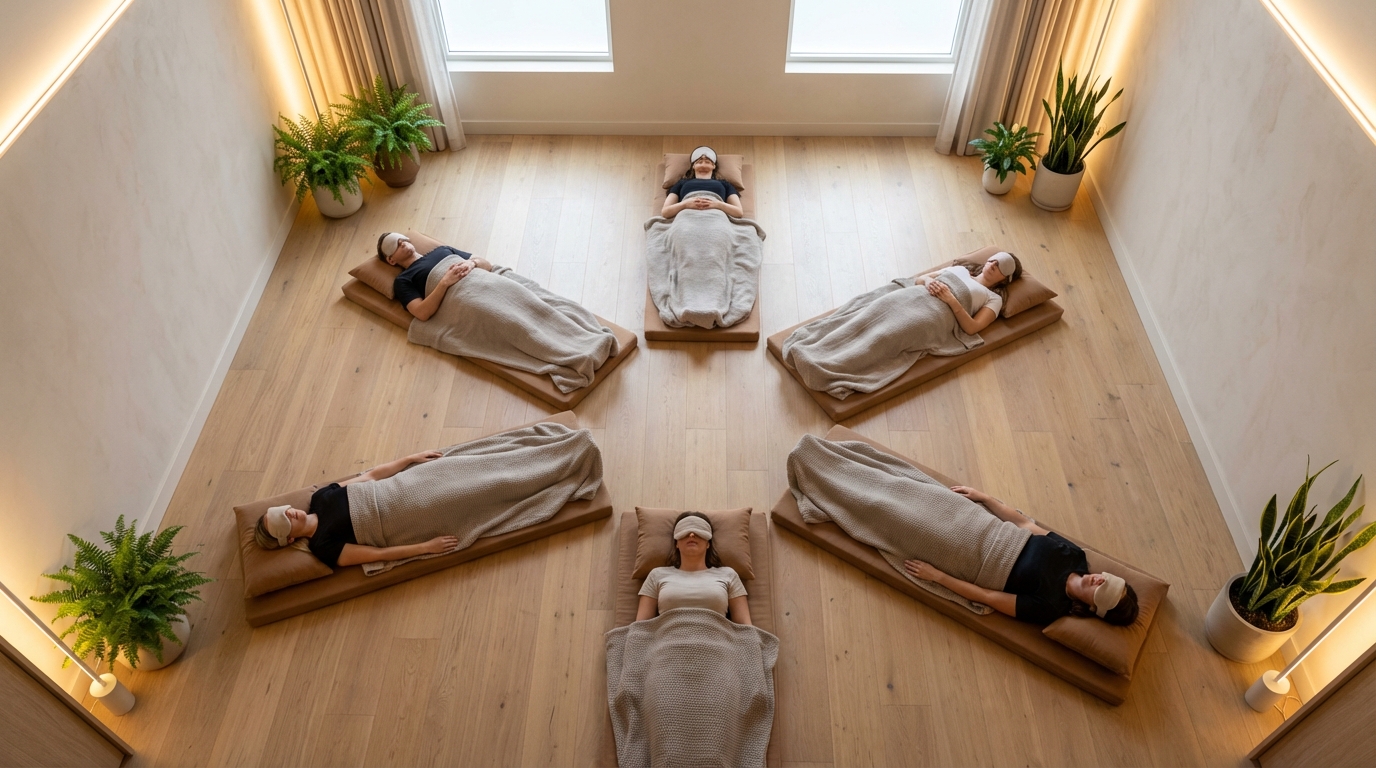
In a traditional or retreat ayahuasca setting, someone else holds the frame. The curandero or facilitator decides the dose, sings the icaros that shape the arc of the night, attends to people who are struggling, and decides when the ceremony ends. You are not in charge, which is the point and also the risk: the quality of the experience is bound to the competence and ethics of whoever is holding it.
Psilocybin in an informal setting inverts this. There is autonomy, familiarity, and the ability to stop, move, or change the music. There is also, frequently, no one whose job it is to notice that you are frightened. Clinical and licensed-therapy settings supply that role deliberately: screening beforehand, a prepared room, attendants present for the duration, integration afterward. The gap between an informally taken psilocybin session and a supervised one may be wider than the gap between psilocybin and ayahuasca themselves. Of the variables here, the container is the one you have the most control over.
Cultural Context and Tradition
Ayahuasca has deep roots in Amazonian indigenous traditions, where it has been used in ceremonial and healing contexts for centuries (and possibly much longer). The brew is typically prepared and administered by a trained practitioner (curandero, ayahuascero, or similar), within a ritual container that includes songs (icaros), prayers, and specific protocols. The communal, guided nature of ceremony is central to how the experience unfolds.
This is not one tradition, and flattening it into "ayahuasca culture" does real damage. Practices differ substantially between the Shipibo-Conibo of the Ucayali, the Quechua-speaking communities of the Napo, the Ashaninka, the Huni Kuin, and many others, each with distinct cosmologies, songs, diets, and rules about who may serve. Distinct from these are the Brazilian syncretic churches (Santo Daime, União do Vegetal, Barquinha), which emerged in the twentieth century and blend Amazonian practice with Christian liturgy. Training a curandero is measured in years and involves extended dietas, periods of isolation and restricted eating alongside specific plants. When a retreat compresses that lineage into a logo and a booking form, something is being taken.
Psilocybin mushrooms have been used in Mesoamerican indigenous traditions (particularly by Mazatec, Zapotec, and Mixtec peoples) for centuries, often in healing and divination ceremonies guided by a curandero or curandera. In contemporary Western use, psilocybin is more commonly taken individually or in small groups, with or without a formal guide, which represents a significant departure from its traditional contexts. That departure has its own history: the Mazatec healer María Sabina, who shared the velada with outsiders in the 1950s, later described the loss that followed for her community. The mushrooms travelled; the context did not.
Risks and Interactions
Ayahuasca and psilocybin have different risk profiles, and the difference is mostly the MAOI. This is the section that matters most.
The MAOI interaction risk is the single most consequential difference between these two medicines. Because the harmala alkaloids in B. caapi inhibit monoamine oxidase, ayahuasca can interact dangerously with a long list of medications and, to a lesser degree, foods. Combining ayahuasca with SSRIs, SNRIs, MAOI antidepressants, tramadol, certain migraine medications, some stimulants, or other serotonergic drugs can produce serotonin syndrome, which is potentially life-threatening. Tyramine-rich foods (aged cheeses, cured meats, fermented products, some fish, yeast extracts) can contribute to a hypertensive reaction while MAO is inhibited, which is the reason ceremonial dietas restrict them. Stopping a psychiatric medication in order to attend a ceremony is itself a medical decision with real risks, including discontinuation effects and relapse, and it is not something to do alone or on a retreat's advice. If you take any regular medication, check it before you go anywhere near a ceremony. Psylopedia maintains an interaction reference at /tools/maoi-checker, and it is a starting point for a conversation with a doctor, not a substitute for one.
Ayahuasca also raises blood pressure and heart rate transiently, which is a real concern for people with cardiovascular conditions. The purging carries its own risks: dehydration, and for anyone with a history of disordered eating, a physical dimension that may land badly.
Psilocybin has a comparatively narrow interaction profile and no known lethal dose in the ordinary sense, but that is not the same as safe. SSRIs tend to blunt its effects rather than endanger the person, though the picture with lithium is different: reports link the lithium and psilocybin combination with seizures, and it is treated as a contraindication. Psilocybin also raises heart rate and blood pressure modestly. Misidentification of wild mushrooms is a risk unique to psilocybin and a serious one, since several toxic species resemble psychoactive ones.
Both carry psychological risk. Both may destabilize people with a personal or family history of psychosis, schizophrenia, or bipolar disorder, and screening for this is standard in clinical settings and inconsistent in informal and retreat ones. Both can surface trauma without warning, which is survivable with support and much harder without it. Neither is a treatment, and neither replaces care.
Legality, in Broad Terms
DMT and psilocybin are both controlled substances under the 1971 UN Convention on Psychotropic Substances, and most countries follow that framing, so both are illegal by default in most places. The details diverge from there, and they change often.
Ayahuasca sits in an unusual position: the plants themselves are generally not scheduled, while the DMT they contain is. Several countries have carved out religious exemptions, most notably Brazil, where Santo Daime and União do Vegetal use is legal, and some jurisdictions elsewhere have recognized similar religious-freedom claims through the courts. Peru has recognized ayahuasca as cultural heritage. Enforcement varies widely, including where the legal position looks clear on paper.
Psilocybin's landscape has been moving faster. Some jurisdictions have decriminalized possession or deprioritized enforcement, some have licensed supervised-use frameworks, and clinical research access exists in a growing number of countries. Others treat it as severely as any controlled substance, and a few treat spores or cultivation differently from the mushrooms themselves.
None of this is legal advice, and none of it is stable. Anything written about the legal status of either medicine can be out of date within a year, and carrying either across a border is a risk of its own.
Access, Cost, and the Realities of Ayahuasca Tourism
Accessibility differs considerably. Psilocybin mushrooms grow naturally on every inhabited continent and can be obtained in many regions, though legality varies widely. The experience requires minimal preparation beyond a safe setting and, ideally, a trusted companion.
Ayahuasca is less accessible. The brew must be prepared from specific plants, and the MAOI component necessitates dietary restrictions (avoiding tyramine-rich foods) and careful screening for medication interactions. Most people encounter ayahuasca through organized retreats or ceremonies, which adds both structure and cost. The physical demands of the experience, including purging and extended ceremony duration (often six or more hours in a group setting), make it less casual than a psilocybin session.
The cost difference is not marginal. A retreat in Peru, Costa Rica, or the Netherlands typically runs from several hundred to several thousand US dollars for a week before flights, time away from work, and recovery afterward. This has produced an industry, and the industry has produced its own problems. Screening quality varies from thorough medical intake to a single online form, and facilitator training from a decade of apprenticeship to a two-week course. Reports of sexual abuse by facilitators are documented and not rare, and they cluster in exactly the conditions retreats create: a vulnerable state, a foreign country, an unfamiliar language, and an authority figure whose competence you cannot assess. There are also questions about who benefits, since the money largely leaves the region, and about sustainability, since demand for B. caapi has put pressure on wild populations.
None of this means retreats are inherently exploitative. Many are run carefully, in relationship with the communities whose practice they draw on, and pay them. It does mean that where to go is due diligence rather than a booking decision, and that the questions worth asking (who trained the facilitator, what is the screening, who is present overnight, what happens if something goes wrong, where does the money go) are practical rather than impolite.
Who Each Tends to Suit
There is no reliable rule here, and anyone who offers one confidently is overreaching. Still, some tendencies are worth naming.
Ayahuasca may suit people who want structure they do not have to hold themselves, who are drawn to a tradition rather than a compound, who can tolerate physical difficulty, who can travel and afford it, and who are not taking medications that make it dangerous. It tends to suit people prepared to be a participant rather than the person in charge.
Psilocybin may suit people who want fewer logistical and medical prerequisites, who prefer to control their own setting, who cannot travel or afford a retreat, or who are looking for something more gradual. Where supervised or clinical access exists, it may suit people who want a held container without the demands of ceremony.
For anyone taking a psychiatric medication, living with a heart condition, or carrying a family history of psychosis, the honest answer for both is: not without medical guidance, and possibly not at all.
Neither substance is inherently "better" or "worse." They offer different doorways into non-ordinary experience, each with its own demands, gifts, and risks. The right choice, if either is appropriate at all, depends on individual circumstances, intentions, health status, and access to safe, informed settings.