
Syrian Rue is an ancient Eurasian plant containing harmala alkaloids that act as MAOIs, used for millennia in folk medicine and increasingly as a component in ayahuasca analogues.
Syrian
Rue
Syrian Rue is an ancient Eurasian plant containing harmala alkaloids that act as MAOIs, used for millennia in folk medicine and increasingly as a component in ayahuasca analogues.
Fact file
- Type
- Plant
- Botanical name
- Peganum harmala
- Key compounds
- Harmaline, Harmine
- Origin
- Central Asia and Middle East
- Duration
- 3-6 hours
- Strength
- Moderate
- Legal status
- Legal in 16 of 40 listed jurisdictions, and varies elsewhere
What is Syrian Rue?
In the dry highlands of Iran, where summer heat cracks the earth and winter winds strip the soil bare, a small shrub persists. Its leaves are feathery, almost fern-like, delicate in appearance but resilient in temperament. Its seeds are tiny, angular, intensely bitter. For thousands of years, Persian families have burned those seeds at thresholds and doorways, filling rooms with acrid smoke meant to keep harm at bay. The plant they call esfand was never about visions. It was about protection.
Syrian rue (Peganum harmala) occupies an unusual position in the landscape of psychoactive plants. It is not a classical psychedelic. It does not reliably produce visual hallucinations or dissolve the boundaries of self. What it does is turn the volume up on the body's own chemistry, blocking the enzymes that normally break down serotonin, norepinephrine, and dopamine, letting those signals accumulate and amplify. The result is something harder to categorize: a state that feels physical before it feels mental, contemplative before it feels perceptual, and deeply variable from one person to the next.
That variability may be the most important thing to understand. Two people consuming the same handful of seeds may have profoundly different experiences, shaped by the plant's unpredictable alkaloid content, by individual metabolism, by the weight of what they carry into the encounter. Syrian rue does not offer a predictable map. It offers a territory, and asks you to navigate it with your own instruments.
Identity
Scientific name: Peganum harmala L. (Linnaeus, 1753)
Common names: Syrian rue, harmala, esfand (Persian: اسفند), harmal (Arabic: حرمل), ülüt (Turkish), wild rue, African rue
Family: Zygophyllaceae (caltrop family), which includes creosote bush (Larrea) and puncture vine (Tribulus)
Substance type: Plant (angiosperm)
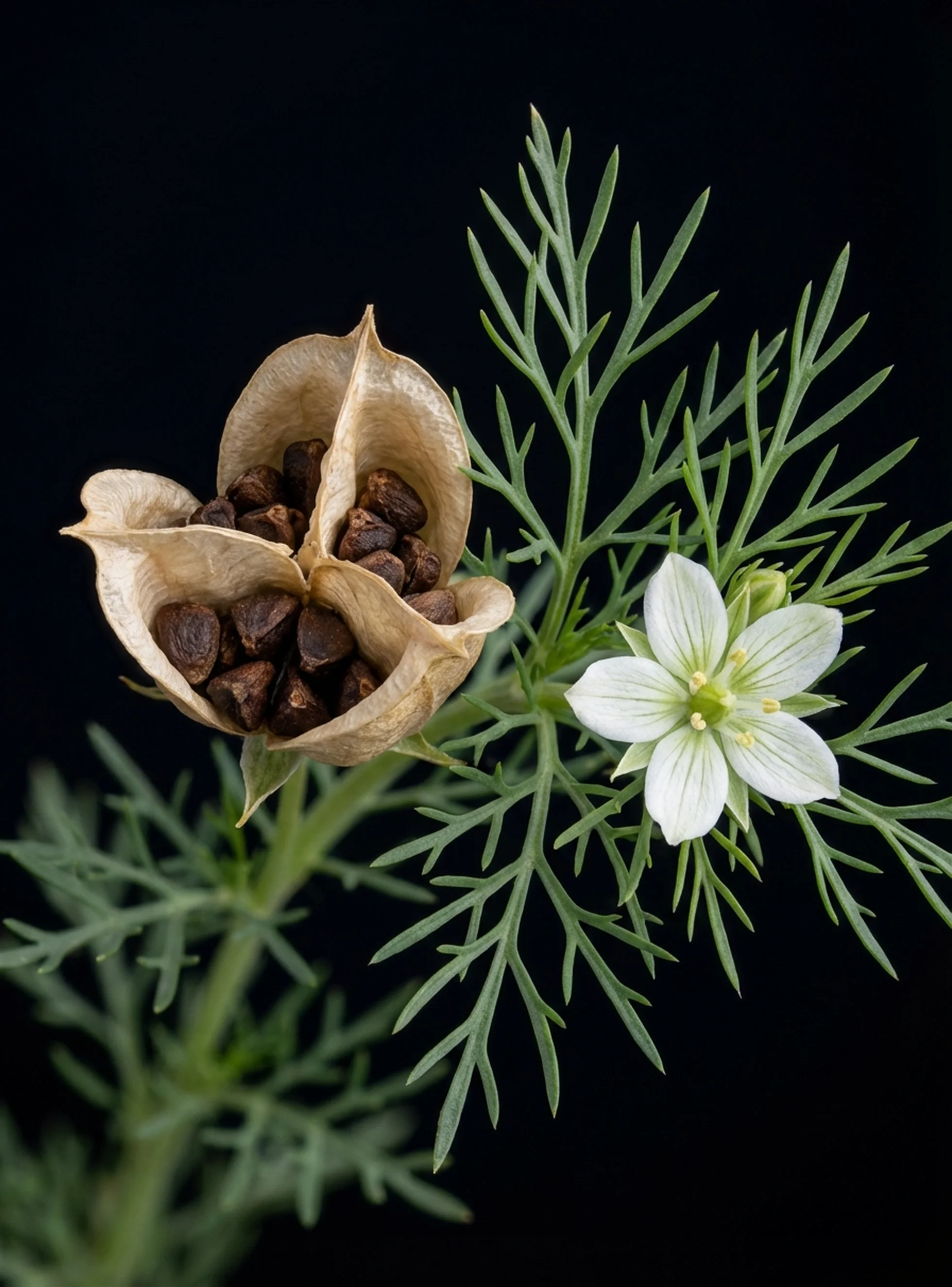
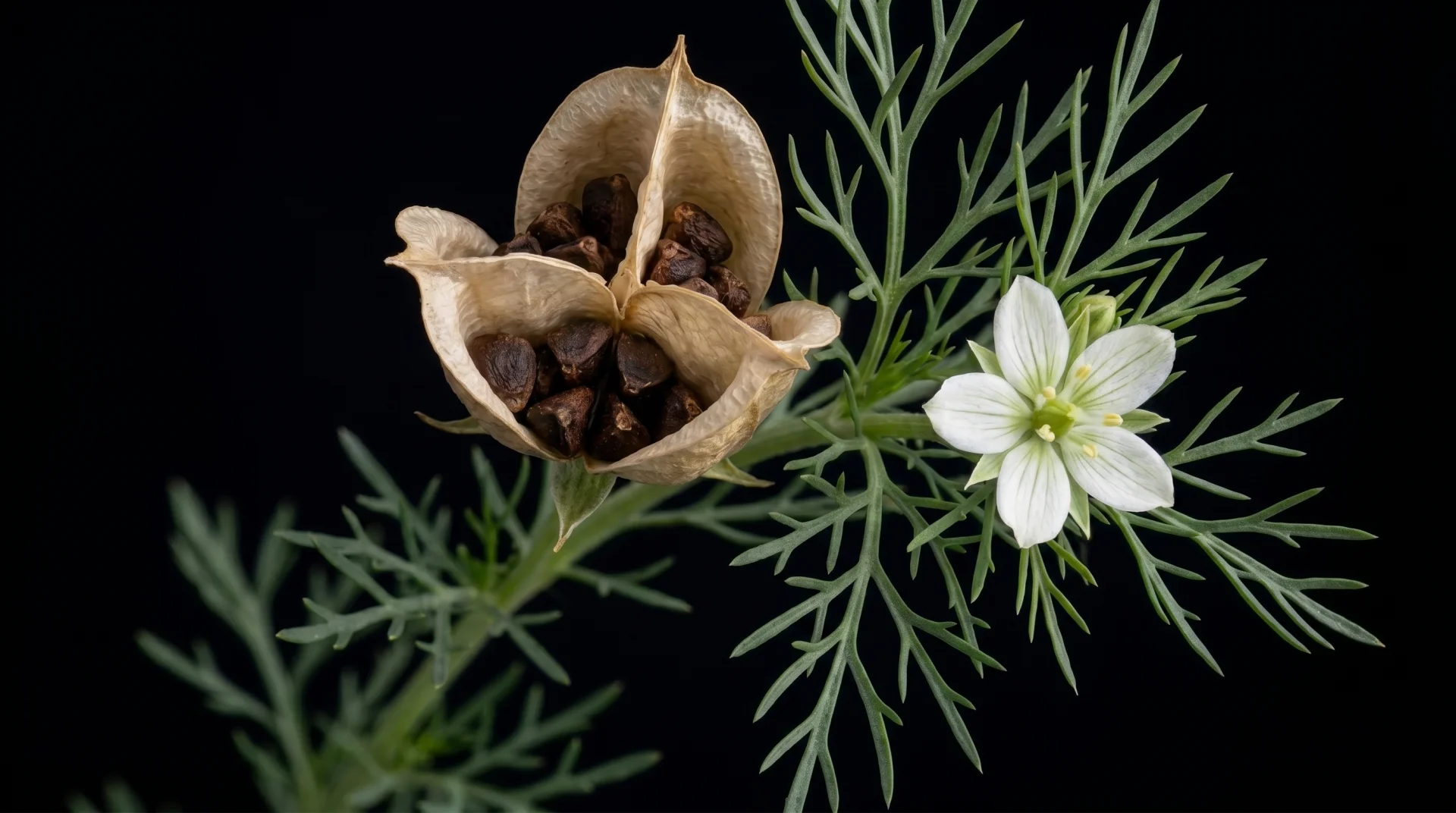
Syrian rue is a low, branching herbaceous shrub standing 15 to 60 centimeters tall. Its leaves are thin and finely divided (tripinnate), giving the plant a delicate, fern-like silhouette. The flowers are small, white to pale yellow, five-petaled, each about 1 to 1.5 centimeters across. The fruit is a dry, spherical capsule that opens into four or five chambers, releasing small, angular, brownish seeds roughly 2 to 3 millimeters across. These seeds are the primary alkaloid-containing tissue and the part most commonly used.
The plant thrives in semi-arid regions at elevations of 100 to 2,000 meters, native to the Iranian Plateau, Afghanistan, Turkmenistan, and the Caucasus. It has naturalized across North Africa, the Mediterranean, northern India, parts of Australia, and the southwestern United States.
Syrian rue should not be confused with Ruta graveolens (common rue), which belongs to an entirely different family (Rutaceae) and lacks harmala alkaloids.
Strength and duration
Intensity profile
Duration
Aftereffects: ** - **Physical:** Fatigue common in hours following (0–12 hours post-onset); body heaviness; mild muscular soreness sometimes reported - **Cognitive:** Mild cognitive slowness or "fogginess" for hours post-peak; usually returns to baseline by 24 hours - **Emotional:** Some users report lingering mood elevation (positive afterglow) lasting 12–24 hours; others report emotional flatness or mild dysphoria (comedown) for hours post-session - **Sleep:** Many users report difficulty sleeping for 6–12
Chemistry
Syrian rue's psychoactive effects arise from a family of compounds called beta-carbolines, concentrated primarily in the seeds. Three are pharmacologically significant: harmaline, harmine, and tetrahydroharmine (THH). Two minor alkaloids, harmol and peganol, appear in trace quantities but are poorly characterized.
The primary mechanism is monoamine oxidase (MAO) inhibition. Harmaline and harmine are potent, irreversible inhibitors of MAO, particularly the MAO-A subtype. MAO-A is the enzyme responsible for breaking down serotonin, norepinephrine, and dopamine in the brain and body. When harmaline blocks this enzyme (with an IC50 of approximately 0.2 micromolar for MAO-A), these neurotransmitters accumulate in the synapse, amplifying their signaling. The inhibition is irreversible, meaning the enzyme must be rebuilt by the cell rather than simply released, which is why the effects of Syrian rue extend well beyond the point when the alkaloids themselves have been cleared from the blood.
This MAO inhibition acts throughout the body. In the gut, where MAO-A is abundant, it contributes to nausea and gastrointestinal effects. In the brain, it elevates serotonin in circuits involved in mood regulation (orbitofrontal cortex, anterior cingulate), perception (visual cortex, temporal regions), and self-referential processing (medial prefrontal cortex, posterior cingulate). The result is altered mood, heightened introspection, and variable perceptual shifts.
Tetrahydroharmine adds a secondary layer. In laboratory studies, it shows weak serotonin reuptake inhibitor activity, functionally similar to SSRIs but far less potent. Whether this contributes meaningfully to the subjective experience remains debated. Harmaline also shows low-affinity binding to several serotonin receptors (5-HT1A, 5-HT2A, 5-HT7), but the functional significance of this is unclear given the dominance of MAO inhibition.
One important pharmacological detail: alkaloid content in the seeds varies enormously, from 0.3% to 5.5% of dry weight depending on geographic origin, growing conditions, and harvest timing. Seeds from Iran and Turkey tend toward higher concentrations (2 to 5%), while North African populations average lower (0.5 to 1.5%). This 18-fold variation in active compound content is a primary driver of the substance's unpredictability.
Harmaline
Most abundant alkaloid (up to 2–5% of seed dry weight); potent MAOI
Harmine
Second most abundant (0.5–2% dry weight); MAOI, neurotoxic at high doses
Methods of Encounter
People encounter Syrian rue through several routes, each producing a distinct temporal arc.
Oral ingestion (as a tea, seed powder, or decoction) is the most common method, both historically and in contemporary use. Effects typically begin within 30 to 90 minutes, depending on stomach contents and individual absorption. An empty stomach accelerates onset to roughly 20 to 30 minutes, while food delays it to 60 to 90 minutes and smooths the peak. The total experience spans 6 to 12 hours. Nausea is frequently reported in the first one to two hours, reflecting both the intensely bitter taste and the local effects of MAO inhibition in the gut.
Smoking or inhalation of dried seeds produces a markedly different profile. Alkaloids absorbed through the lungs bypass the digestive system and hepatic first-pass metabolism, producing onset within 5 to 15 minutes. The peak is sharper and more acute, with a pronounced sympathomimetic rush (rapid heart rate increase, tremor, energy surge). Total duration is shorter, typically 4 to 8 hours. This route carries additional considerations: respiratory irritation, coughing, and a steeper, less forgiving onset that can feel overwhelming.
The same quantity of plant material produces qualitatively different experiences depending on route. Oral ingestion tends toward contemplative, gradually building states. Smoking tends toward more acute, physically activating ones. This distinction is important for setting and intention.
Traditional contexts center on burning the seeds as protective incense, particularly in Persian Nowruz celebrations and household cleansing rituals. The plant is valued for its aromatic and symbolic properties rather than its psychoactive potential.
Modern contexts include combining Syrian rue with DMT-containing plants to create syncretic ayahuasca analogs, a practice that emerged in ethnobotanical communities in the 1990s. This combination is pharmacologically intentional (MAO inhibition enables oral DMT bioavailability) but culturally distinct from traditional ayahuasca and ethically contested.
Origin & History
Syrian rue belongs to the dry earth. Its native range centers on the Iranian Plateau, stretching through the arid scrublands of eastern Iran, Afghanistan, Turkmenistan, and the southern Caucasus. This is land shaped by extremes: summer heat that fractures stone, winter cold that strips the soil, saline flats where few plants bother to root. Syrian rue roots deeply in all of it.
The plant's relationship with human cultures reaches back further than any surviving text can document with certainty. By the medieval period, it appears in the pharmaceutical writings of the Persian physician al-Razi (9th to 10th century), described as harmal and valued as a bitter tonic within the Galenic medical tradition. Ottoman manuscripts, including the Cerrahiyyetü'l-Haniyye of the 16th century, record it as a recognized medicinal substance.
But the deeper cultural relationship is not medicinal. It is protective. In Persian tradition, esfand is burned to shield households from bala, harm and misfortune. The seeds are set alight, their smoke waved over people and through doorways, particularly during Nowruz and at moments of transition. This practice continues in Iran and diaspora communities worldwide. The plant is not consumed for consciousness in this context. It is offered to the threshold.
Similar burning practices appear across Central Asia, South Asia, and North Africa, wherever the plant's range and human communities overlap. Turkish, Tajik, Indian, and North African traditions each carry their own versions of this relationship, though the accessible historical record is heavily weighted toward Persian and Islamic textual sources.
The modern chapter begins with chemistry. In the 1920s and 1930s, the Austrian chemist Georg Spath elucidated the structure of harmaline. A clarifying moment arrived in 1950, when a compound called "telepathine," isolated from South American ayahuasca vines, was determined to be identical to harmaline. Two geographically distant plant traditions were connected through a shared molecule.
The plant remained largely invisible to Western pharmacology until the 1990s, when the internet carried ethnobotanical knowledge into wider circulation. Jonathan Ott's Pharmacotheon (1996) and databases like Erowid brought Syrian rue to the attention of people interested in consciousness exploration. Research interest in beta-carbolines has continued since, particularly their neuroprotective properties, but no pharmaceutical product has emerged and no clinical translation has occurred.

Effects
The defining feature of the Syrian rue experience is variability. Unlike psilocybin or LSD, which produce relatively consistent phenomenology, Syrian rue generates a wide spectrum of effects shaped by alkaloid content, route, individual metabolism, and psychological context. Two people consuming the same preparation may have profoundly different encounters.
Somatic (6.5/10)
The body notices first. Heart rate typically increases by 15 to 25 beats per minute, with blood pressure rising in parallel. Tremor appears in the hands one to three hours in. Muscle tension concentrates in the jaw, neck, and shoulders, sometimes described as coiled energy held in the frame. Nausea is very common with oral ingestion, typically peaking at 30 to 90 minutes before subsiding. Temperature regulation can feel unreliable: alternating chills and sweating. Pupil dilation may persist for hours.
This somatic load distinguishes Syrian rue from most classical psychedelics. Where psilocybin produces a heart rate increase of roughly 5 beats per minute, Syrian rue places significant demands on the cardiovascular system.
Cognitive (5.5/10)
The cognitive signature tends toward accelerated, inward-turning thought. At lower amounts, many people report mental sharpness and easier access to ideas. As intensity increases, thoughts can race with a velocity that feels exhilarating or overwhelming depending on context. Time perception stretches: a single hour feels like two or three.
Introspection is one of the more reliable effects. People frequently describe turning inward, reflecting on personal history and emotional patterns. Forgotten memories can surface unexpectedly. Unlike classical psychedelics, profound ego dissolution is not typical. Most people retain a sense of self throughout.
Emotional (5.5/10)
The emotional landscape tends to be rich and shifting. Many people report mild to moderate euphoria in the first several hours, a gentle lift, a sense of well-being. Some describe access to emotions that feel deeper than baseline, where sadness becomes more poignant and joy more vivid.
But roughly 20 to 40 percent of people in ethnobotanical databases report anxiety, irritability, or dysphoria, particularly at higher amounts or with rapid onset. Emotional lability can emerge, with rapid shifts between contentment and unease. At the heavier end, some describe a sense of futility or depletion that passes but is not pleasant while it lasts.
Perceptual (3.5/10)
Perceptual effects are the least reliable dimension. At typical amounts, many people report no meaningful visual effects at all. Those who notice shifts tend to describe subtle changes: slightly more saturated colors, mild visual noise, a shimmer or breathing quality to surfaces. At higher amounts, a subset report geometric patterns or motion distortion, but less detailed than what psilocybin or LSD produces. Tactile sensations (tingling, vibration, paresthesias) are more common than visual ones.
The arc
With oral ingestion, the experience builds over 30 to 90 minutes, peaks at roughly two to four hours, and descends gradually, with emotional and cognitive effects fading faster than somatic ones. Total duration spans 6 to 12 hours. Many people report difficulty sleeping for hours after onset. The following day may bring a quiet afterglow or, for some, emotional flatness and fatigue.
A note before reading
Each experience is different. What you may notice depends on dose, setting, and the body and mind you bring to it.
What people often notice
Emotional spectrum
Visual
Patterns and gentle distortions may surface, surfaces breathing slightly, edges softening, geometries flickering at the periphery.
Cognitive
Loose associations may appear, insights surface sideways, and familiar ideas can rearrange into fresh shapes.
Risks & Limits
Syrian rue carries genuine risks that deserve honest attention. No documented fatalities from Syrian rue alone appear in peer-reviewed medical literature, and the therapeutic index in animal models is broad (roughly 100 to 200 times the active amount). But "no documented deaths" is not the same as "safe."
Cardiovascular stress is the most consistently reported physical concern. Heart rate typically increases by 15 to 25 beats per minute, with blood pressure rising 10 to 20 mmHg. For healthy individuals, this is generally tolerable. For people with pre-existing hypertension, coronary artery disease, arrhythmias, or cardiomyopathy, this sympathomimetic load could precipitate serious cardiac events.
Drug interactions represent the most serious safety concern. As a potent MAO inhibitor, Syrian rue creates dangerous territory when combined with serotonergic medications. SSRIs, tricyclic antidepressants, and tramadol carry a risk of serotonin syndrome, a potentially life-threatening condition causing hyperthermia, rigidity, and autonomic dysregulation. Stimulants and sympathomimetic agents create risk of hypertensive crisis. Tyramine-rich foods (aged cheeses, cured meats, fermented foods) pose a theoretical risk of blood pressure spikes. These interactions are extrapolated from pharmaceutical MAO inhibitor data, but the pharmacological mechanism is the same.
Psychological risks include anxiety (reported by roughly 20 to 40 percent in ethnobotanical databases), dysphoria, and emotional destabilization. The long duration of 6 to 12 hours can make difficult experiences feel protracted. Panic attacks occur in an estimated 5 to 10 percent of sessions. At high amounts, psychotic-like symptoms have been reported, though less commonly than with classical psychedelics. People with a family history of psychosis or severe anxiety disorders face elevated risk.
Neurotoxicity has been documented in animal studies at doses many times above human use, manifesting as white matter degeneration. No human cases have been identified, but the threshold for human neurotoxicity remains unknown.
Populations requiring particular caution: People taking serotonergic medications should not combine them with Syrian rue. People with cardiovascular disease, uncontrolled hypertension, or hyperthyroidism face elevated physical risk. Pregnant and breastfeeding individuals should avoid the substance entirely, as no safety data exists. People with hepatic or renal disease may metabolize the alkaloids more slowly.
The 18-fold variation in alkaloid content means that even experienced individuals cannot predict intensity from appearance alone. A supportive environment, trusted company, and honest self-assessment of readiness are not optional precautions. They are the minimum.
Critical interactions
Syrian Rue acts as a monoamine oxidase inhibitor. Certain foods, supplements, and medications can become unsafe within roughly 24 hours before and 12 hours after a session.
Do not combine with
- Serotonergic medications: SSRIs, SNRIs, Tricyclic antidepressants
- Tyramine-rich foods: Aged cheeses, Cured and aged meats, Fermented soy products
- Stimulants and sympathomimetics: Pseudoephedrine, Phenylephrine, Amphetamines
- Supplements and OTC: St. John's Wort, 5-HTP
- Other psychoactives: MDMA
Integration
Syrian rue often leaves behind more questions than answers, and that is not a failing of the experience. The substance tends to surface material: emotions that have been quietly waiting, memories that had settled into the background, patterns of thought that become visible only when the usual noise recedes. What you do with that material in the days that follow determines whether the experience deepens or dissipates.
Formal research on integration specific to Syrian rue does not exist. What follows is drawn from the broader landscape of psychedelic integration research and patterns observed in ethnobotanical communities.
The first days tend to be the most psychologically active. Roughly 40 to 60 percent of people report elevated mood or emotional clarity in the 24 to 72 hours following a session. Others (roughly 10 to 25 percent) experience emotional flatness or fatigue, a comedown that typically resolves within a few days. Both responses deserve attention rather than dismissal.
Simple practices tend to serve best. Writing about the experience while it is still fresh, not as analysis but as honest description of what surfaced. Resting, giving the nervous system time to recalibrate. Gentle movement, time outdoors. A conversation with someone trusted, where the goal is not to explain but simply to let the experience be spoken aloud.
If difficult emotions or memories surfaced, they deserve particular care. The introspective depth that Syrian rue can produce means buried material sometimes comes to light unprepared. If distressing content persists beyond the first few days, working with a psychedelic-informed therapist can help prevent a single difficult encounter from becoming an unprocessed weight.
Integration is not a single act that happens after the experience. It is the ongoing practice of letting what you noticed reshape how you live. The insights rarely arrive as clear instructions. They arrive as impressions, as shifts in feeling, as questions that did not exist before. Giving them time and honest reflection is how they become useful.
Ethics & Ecology
Syrian rue is not endangered. The plant is hardy, drought-tolerant, and deeply adapted to the marginal landscapes it calls home. It stabilizes degraded soils in arid regions, requires minimal water, and has been commercially cultivated in Iran and Turkey without evidence of overexploitation or resource depletion. In some regions where it has naturalized (parts of Australia and the southwestern United States), it is considered a pest rather than a conservation concern. Its ecological footprint as a crop is low by any reasonable measure.
The more pressing ethical questions are cultural rather than ecological. Syrian rue has been woven into Persian, Central Asian, and South Asian traditions for millennia, primarily as a protective and medicinal plant. The practice of burning esfand at Nowruz and at household thresholds carries spiritual and cultural weight that extends far beyond pharmacology. When Western ethnobotanical communities adopted the plant in the 1990s, the context shifted entirely, from protection to consciousness exploration, from communal ritual to individual experimentation.
The sharpest cultural tension involves the practice of combining Syrian rue with DMT-containing plants to create syncretic ayahuasca analogs. This divorces the plant from both its Persian cultural context and the Amazonian Indigenous traditions it is being made to approximate. Ayahuasca practitioners and Indigenous advocates have publicly criticized these analogs as disrespectful to authentic tradition, as contributing to spiritual tourism, and as creating confusion about what constitutes legitimate cultural practice.
Respectful engagement begins with acknowledgment. The plant carries thousands of years of relationship with Persian and Central Asian peoples. Using it does not require adopting their framework, but it asks for recognition that the plant's meaning did not begin with your encounter. Preferring fair-trade sources, learning the plant's traditional names, and distinguishing between personal exploration and traditional practice are small but meaningful gestures of reciprocity.
Misconceptions
Syrian rue produces ayahuasca experiences.
Syrian rue contains MAO inhibitors similar to those in ayahuasca, but it does not contain DMT, the compound responsible for ayahuasca's intense visual and emotional effects. Taken alone, Syrian rue produces a different profile: more physically activating, more introspective, far less visually dramatic.
The effects are consistent from session to session.
Alkaloid content ranges from 0.3% to 5.5% of dry weight, an 18-fold spread. Individual CYP2D6 metabolism creates 2 to 5 times differences in processing. Route of administration produces qualitatively different experiences from the same material. Two sessions with apparently similar preparations can feel profoundly different.
It is completely safe because no one has died from it.
No documented fatalities appear in peer-reviewed literature, but the substance produces significant cardiovascular stress, carries serious drug interaction risks (particularly with serotonergic medications), and can precipitate anxiety or psychotic-like symptoms in vulnerable individuals. A broad therapeutic index is not the same as an absence of risk.
It is an ancient shamanic tool for consciousness exploration.
Documented historical use centers on protective and medicinal purposes: burning seeds to ward off harm, using them as bitter tonics. No peer-reviewed evidence supports intentional psychoactive use by pre-modern shamans or Sufi mystics. Modern consciousness exploration emerged primarily in the 1990s.
If there are no visuals, it is not working.
Syrian rue frequently produces minimal or no visual effects at typical amounts, even when cognitive, emotional, and somatic dimensions are significantly altered. The absence of visuals reflects the substance's pharmacological profile, not ineffectiveness.
FAQ

Reflection
There is something instructive about a plant that has been known for millennia and still resists easy categorization. Syrian rue is not a psychedelic in the way most people use that word, yet it alters consciousness in ways that are difficult to dismiss. It is not a medicine in any approved sense, yet cultures across Central and Southwest Asia have turned to it for protection and healing for longer than any written record can trace. It is not dangerous in the way that poisons are dangerous, yet it demands respect in ways that casual use tends to overlook.
Perhaps what Syrian rue asks of us is patience with ambiguity. The modern impulse is to classify, to sort substances into neat categories of legal or illegal, therapeutic or recreational, safe or dangerous. This plant resists all of those binaries. It sits in the spaces between, where the body's own chemistry becomes the territory of exploration, where the line between protector and disruptor depends entirely on context, intention, and care.
What would it mean to approach a substance not as a tool to be used, but as a relationship to be understood?
Sources
Primary research sourced from peer-reviewed pharmacological, ethnobotanical, and clinical literature. See the full research profile for detailed citations and evidence tags.
For how we evaluate sources and structure our claims, see the methodology.