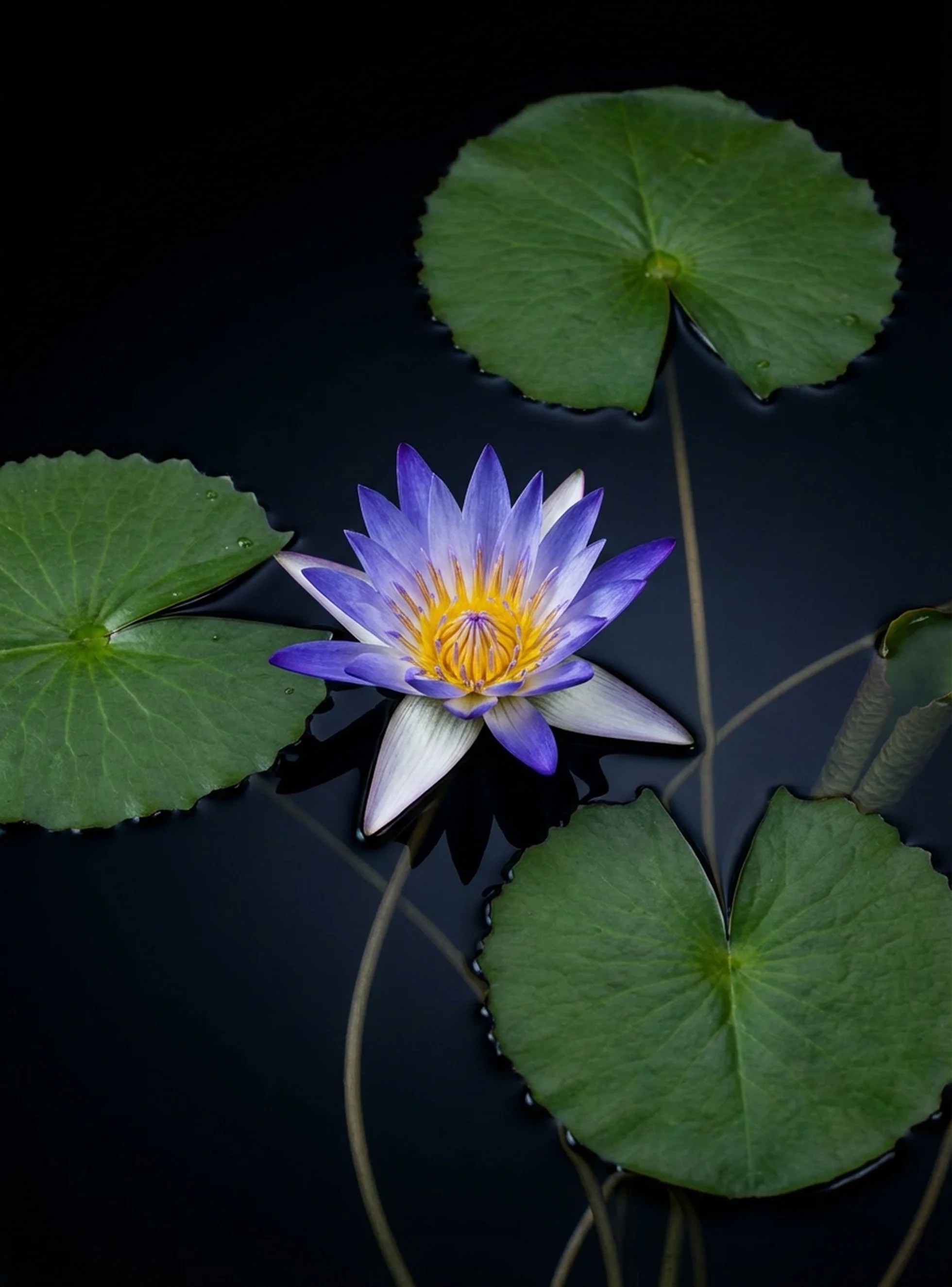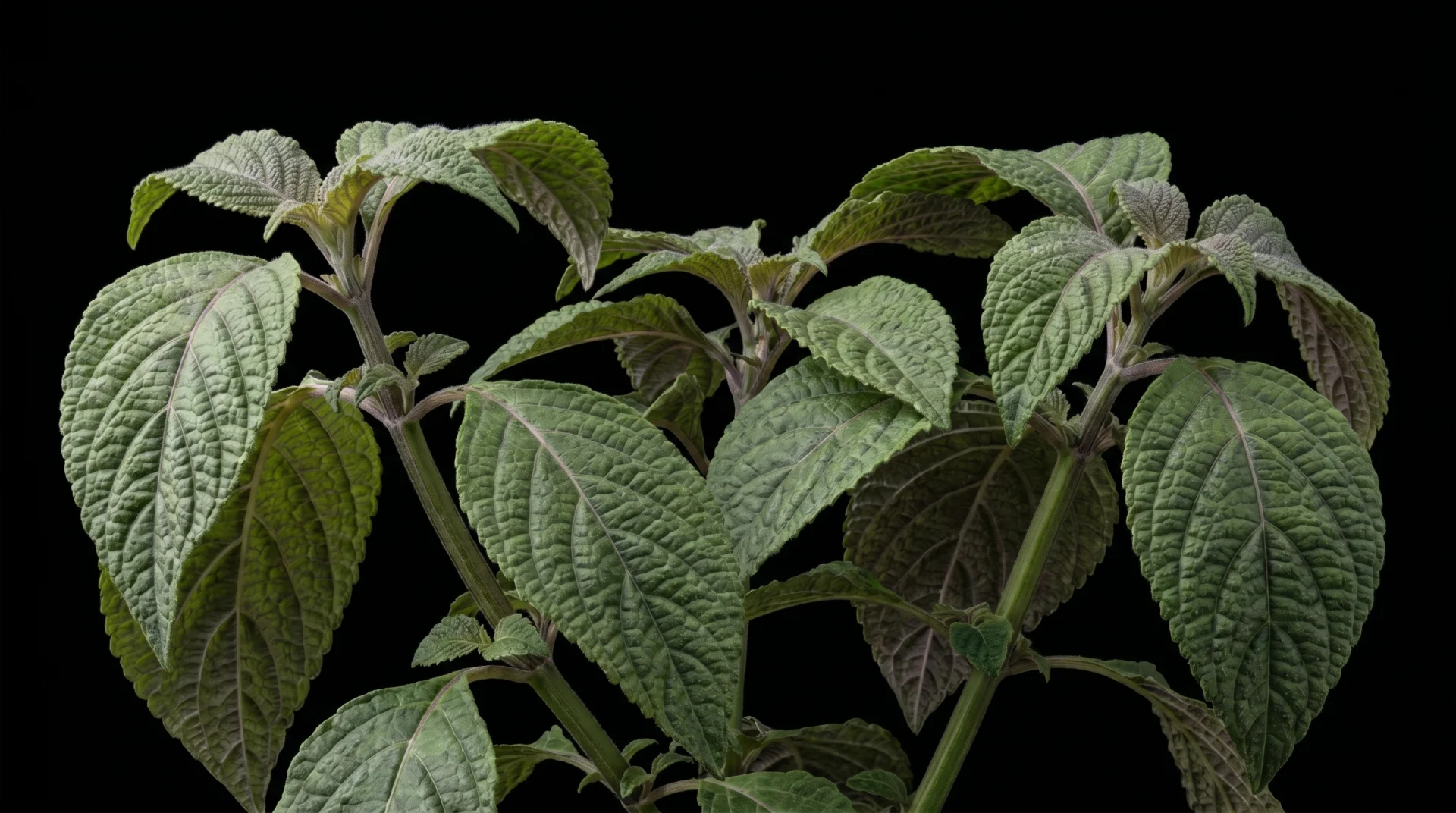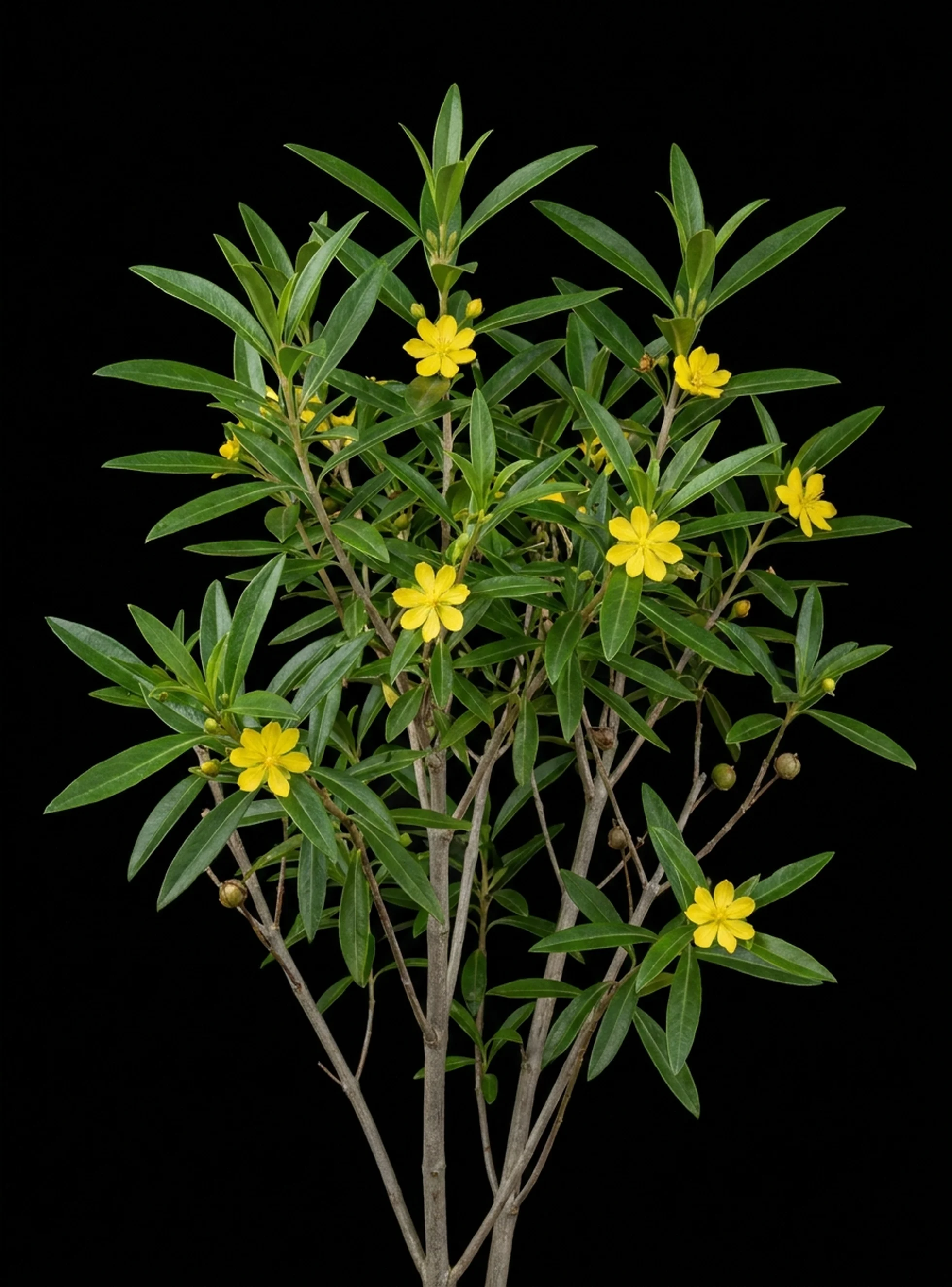

Sinicuichi (Heimia salicifolia) is a Mexican shrub historically used in Aztec medicine, said to produce mild euphoria and unusual auditory effects, with research on its alkaloids still emerging.
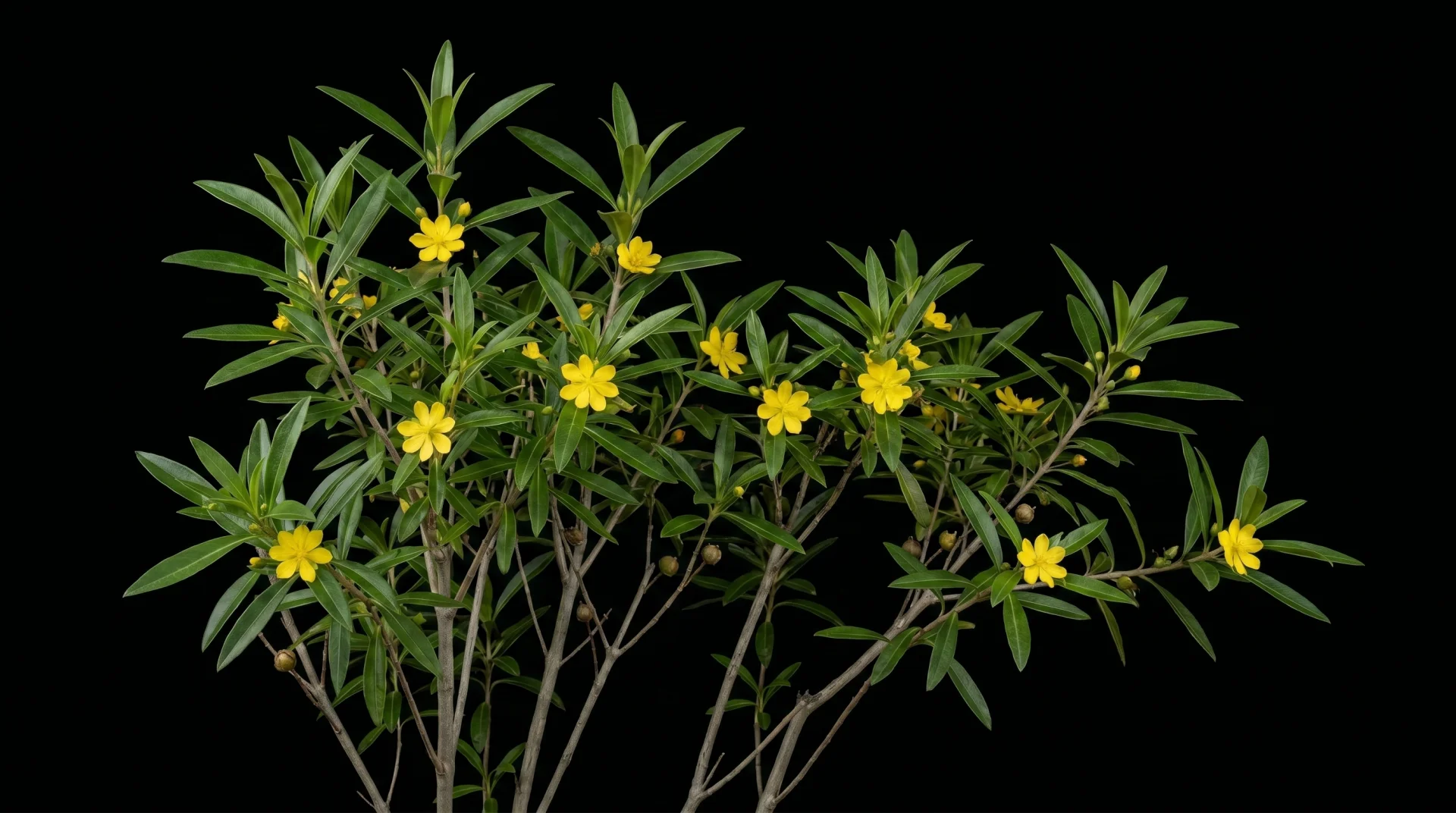
Sinicuichi
Sinicuichi (Heimia salicifolia) is a Mexican shrub historically used in Aztec medicine, said to produce mild euphoria and unusual auditory effects, with research on its alkaloids still emerging.
Fact file
- Type
- Plant
- Duration
- 6 to 12h
- Strength
- Moderate
- Legal status
- Legal in 29 of 30 listed jurisdictions, and varies elsewhere
What is Sinicuichi?
Most plants in the consciousness-exploration tradition pull awareness toward the eyes. Sinicuichi pulls it toward the ears.
A modest yellow-flowered shrub from the river valleys of Mexico and Central America, Heimia salicifolia has carried a quiet reputation among Nahuatl-speaking peoples for centuries: a slow, warming infusion that softens the edges of speech, deepens the layering of music, and (some report) opens an inner register of sound that does not seem to belong to any room.
The experience tends to arrive as a long, sustained plateau rather than a peak, more dusk than thunderstorm. There are no chasms here, no kaleidoscopic visuals, no vertigo. There is, instead, a sense that the auditory world has gained a few hidden floors, and that one's own thinking has slowed to listen to them.
It is a substance of moderate intensity and unusual character, more often described than understood. What follows is what is presently known, what remains contested, and what the plant seems to ask of those who meet it.
The substance
Sinicuichi is the common name for Heimia salicifolia (Kunth) Link, a deciduous to semi-evergreen woody shrub in the family Lythraceae (the same broad family as crape myrtle and loosestrife). The genus Heimia contains roughly six species, all native to the Americas, of which H. salicifolia is the most widely studied.
In ethnobotanical literature it also appears as sinicuiche, sun opener, and (less reliably) ébano falso. The common name itself is of Nahuatl origin.
Mature plants reach one to three meters, with narrow lance-shaped leaves and small, six-petalled yellow flowers. Within the broader taxonomy of psychoactive substances, sinicuichi sits among the plant-based monoamine oxidase inhibitors, a small family that includes Syrian rue (Peganum harmala) and the Banisteriopsis component of ayahuasca. Unlike the classical tryptamine and phenethylamine psychedelics, it is not a direct serotonin-receptor agonist, and its phenomenology reflects that distinction.
Strength and duration
Intensity profile
Variability: Moderate (varies with dose and setting)
Duration
Chemistry and mechanism
Sinicuichi's pharmacological signature is the work of a small set of alkaloids concentrated in the leaves and stems. Two stand out: cryogenine, a benzyl isoquinoline alkaloid that is consistently identified as the most abundant constituent, and lythrine, an aporphine alkaloid that appears to contribute meaningfully to the cognitive character of the experience. Several minor alkaloids accompany them, including dehydrocryogenine (an oxidation product of cryogenine), 2-methylprotoberberine, and heimine. Tannins and flavonoids round out the chemistry, lending the plant its characteristic bitterness.
The primary mechanism of action understood today is monoamine oxidase inhibition. Monoamine oxidase, or MAO, is an enzyme that ordinarily breaks down serotonin, dopamine, and norepinephrine in the synaptic cleft. By slowing that breakdown, cryogenine allows these neurotransmitters to remain available longer, raising their tonic levels in ways that alter mood, attention, and perception. This places sinicuichi in the same broad mechanistic family as the harmala alkaloids in ayahuasca, although without the accompanying tryptamine that gives ayahuasca its visual intensity.
What MAO inhibition cannot fully explain, however, is the plant's most distinctive property: a pronounced shift in auditory perception. Classical psychedelics that act on the 5-HT2A receptor (a serotonin subtype implicated in cortical processing of sensory information) tend to produce visual effects. Sinicuichi's predominantly auditory phenomenology suggests that additional mechanisms are at work, possibly involving auditory cortex processing or cross-modal integration, though direct evidence is limited.
Human pharmacokinetics, including absorption rates, half-life, and the role of liver metabolism, have not been systematically characterized in the published literature. The compound profile is established; the precise pathway from molecule to experience remains, in much of its detail, an open question.

How people encounter it
The traditional and most consistently documented way of meeting sinicuichi is as a warm aqueous decoction, a tea brewed from dried leaves and stems. In this form, the alkaloids extract slowly into water, and the body absorbs them slowly in turn. Onset typically arrives between thirty and ninety minutes after drinking, with the full arc unfolding across several hours: a gentle come-up, a sustained plateau, and a gradual return.
In some historical accounts, the plant material was allowed to wilt or partially ferment before brewing, a step thought to alter the alkaloid balance. Whether this changed the chemistry meaningfully or simply reflected local preference is not clearly established in contemporary literature.
Other routes are mentioned in modern reports but poorly documented. Inhalation of dried plant material would, in principle, produce a faster and shorter experience; tinctures and concentrated extracts would do something else again. Neither has been studied with any rigor, and neither figures prominently in traditional accounts.
Contemporary encounter most often occurs outside ceremonial frameworks: someone reads about the plant, finds a supplier or grows their own, and brews tea in a private setting. Online ethnobotanical communities have shaped how the plant is understood today, sometimes amplifying expectations the experience does not consistently meet. Where traditional contexts offered ritual structure, intention, and integration, the modern setting often supplies only curiosity. The substance tends to respond accordingly.

Origin and history
The plant's range traces a wide arc through the warm, seasonally wet forests of southern Mexico and Central America, reaching south into Colombia and Venezuela. Its first human encounters cannot be precisely dated; the alkaloids that make sinicuichi notable do not preserve well in the archaeological record, and direct material evidence is sparse.
What is clearer is the linguistic trail. The name itself is Nahuatl, and Nahuatl-speaking communities of central Mexico are the most consistently documented traditional users. Anthropological and ethnobotanical literature also points, with somewhat less certainty, to use among the Huichol (Wixárika) of northwestern Mexico, whose ceremonial traditions involve a sophisticated vocabulary of psychoactive plants. The plant's distinctive auditory effects appear to have held particular meaning in these contexts, sometimes interpreted as access to voices or messages from non-ordinary realms. Specific ceremonial details, however, were not extensively recorded by outside observers, and much of what existed was disrupted in the centuries that followed.
The arrival of Spanish colonial authority in the early 16th century initiated systematic suppression of indigenous spiritual practices, including those that involved plant medicines. Sinicuichi did not become a focal target the way peyote or psilocybin mushrooms eventually did; it received less explicit prohibition, possibly because its use was geographically narrower, possibly because colonial chroniclers simply paid it less attention. Either way, the broader machinery of cultural disruption affected it: knowledge transmission frayed, language was suppressed, and the contexts that gave the plant its meaning were eroded.
The plant entered modern Western awareness gradually through the 20th century, as ethnobotanists and chemists began identifying its alkaloids and cataloguing its effects. By the 1980s and 1990s it had a small but durable presence in ethnobotanical communities outside its native range. It has never reached the cultural prominence of mushrooms, ayahuasca, or peyote, and that relative obscurity is part of what has kept its use pattern (and its legal status) comparatively quiet.
What survives, then, is partial: a recognizable plant with a Nahuatl name, a chemical profile, a few threads of indigenous association, and a contemporary readership trying to listen carefully to what is left.

Effects
Sinicuichi sits in the moderate range across most dimensions of altered experience. Its overall composite intensity is roughly 5 out of 10, the perceptual, cognitive, and emotional dimensions all clustering around that midpoint, with somatic effects somewhat lower at 3. This is a substance that alters baseline consciousness clearly without dissolving it.
Perceptually, the most reported and most distinctive feature is auditory. Many people notice an apparent gain of resolution in sound: layered detail in music, depth and dimensionality in ambient noise, an extended sense of acoustic space. Some describe a quality of inner hearing, subtle tones or frequencies that do not seem tied to any external source. Whether this represents heightened sensitivity to ordinarily filtered information, a genuine perceptual reorganization, or both, is not settled. Visual effects, by contrast, are typically modest. There may be slight enhancement of color or fleeting tracers at higher intakes, but the kaleidoscopic geometry of classical psychedelics is generally absent. Synesthetic crossings, particularly between sound and color, are reported by some and not by others.
Cognitively, the experience tends toward the introspective. Thought often becomes more associative and metaphorical, less linear. Time may feel expanded; an objective four hours can feel considerably longer. Many people report easier access to autobiographical memory and to thoughts they had not been able to articulate before. Critical, evaluative function tends to recede during the peak, returning during the descent, which can support sustained reflection but also reduce the capacity to test one's own conclusions in the moment.
Emotionally, the effect is most often described as an opening rather than a flood. Feelings tend to surface with more nuance and less defense. Some people report a quiet euphoria; others find themselves face to face with material they had been managing rather than meeting. The experience is generally not as overwhelming as higher-intensity substances, but it is also not reliably gentle: difficult emotional content can arise, particularly when set and setting do not support it.
Somatically, the most common complaint is nausea, especially in the first hour after the tea. It is usually mild to moderate and tends to pass. Appetite often diminishes during the experience. Cardiovascular effects have not been systematically studied in humans, which is a meaningful gap rather than a reassurance.
The arc itself is unusually gradual. Onset is slow (30 to 90 minutes), the come-up gentle, the peak a sustained plateau rather than a sharp summit, and the descent unhurried. Total duration typically runs 6 to 12 hours, with most people landing somewhere in the 7-to-9-hour range. A subtle afterglow, often involving vivid dreams the following night, can extend the experience well beyond its formal end.
A note before reading
Each experience is different. What you may notice depends on dose, setting, and the body and mind you bring to it.
What people often notice
Visual
Patterns and gentle distortions may surface, surfaces breathing slightly, edges softening, geometries flickering at the periphery.
Cognitive
Loose associations may appear, insights surface sideways, and familiar ideas can rearrange into fresh shapes.

Risks and limits
The most important risks associated with sinicuichi are pharmacological rather than experiential. Because the plant's primary alkaloids inhibit monoamine oxidase, the same set of interactions that apply to pharmaceutical MAO inhibitors apply, in principle, here.
Drug interactions to take seriously include:
- ●SSRIs and SNRIs (most modern antidepressants): combining serotonergic medications with an MAO inhibitor can produce serotonin syndrome, a serious condition involving agitation, tremor, fever, and muscle rigidity.
- ●Other MAO inhibitors, pharmaceutical or plant-based (Syrian rue, ayahuasca, certain antidepressants): the effects compound rather than overlap.
- ●Sympathomimetics, including some over-the-counter decongestants, stimulants, and amphetamines: combined effects may raise blood pressure or heart rate dangerously.
- ●Tyramine-rich foods, such as aged cheeses, cured meats, and many fermented products: a classic MAO-inhibitor interaction that can produce a hypertensive response.
- ●Alcohol and opioid medications: additive central nervous system depression and unpredictable hepatic load.
Population-specific risks are also relevant. People with cardiovascular disease or uncontrolled hypertension may be at elevated risk because the plant's cardiovascular effects in humans have not been studied in any systematic way. People with personal or family history of psychotic disorders should approach with caution; monoamine alterations carry theoretical risk for vulnerable individuals. People with severe anxiety or panic disorder may find the introspective character difficult rather than helpful. Pregnancy, breastfeeding, hepatic disease, and adolescence are all reasonable grounds for not using.
Acute psychological risks include anxiety or panic episodes (more likely in poor set and setting or for people with relevant predisposition), depersonalization or derealization, and the surfacing of difficult emotional material without the resources to integrate it. Serious adverse events have not been epidemic in the available reports, but the absence of systematic study means absence of evidence rather than evidence of absence.
Acute toxicity in humans is not documented in the accessible literature. No fatalities have been clearly attributed to sinicuichi alone. This is meaningful but not conclusive: the plant has had a comparatively narrow user base, and rare events can stay rare while remaining real.
Finally: set and setting matter. Time matters. Trusted company matters. The substance produces its effects across a long arc, and an environment that is calm, undisturbed, and safe is a meaningful part of how that arc is experienced.

Integration and aftercare
Integration, with sinicuichi, tends to be quieter than the work that follows more intense substances. There is rarely a single overwhelming insight to translate into ordinary life; more often there are textures, a way the auditory world felt for a while, a thought that surfaced and would not leave, an emotion that asked to be reconsidered.
Many people describe a window of enhanced introspection lasting one to three days afterward, during which themes from the experience continue to surface unbidden. A subset report a softer kind of vulnerability in this window: less appetite for conflict, more sensitivity to supportive company. This is not a problem to be solved. It is a temporary openness that can be honored.
General practices that have emerged around other consciousness-altering experiences appear to apply here, with the caveat that none has been formally studied for sinicuichi specifically. Journaling in the day after, especially of fragments rather than tidy summaries, tends to capture material that fades quickly. Rest matters, particularly if the experience extended into the evening; sleep can be subtly disrupted, and dreams the following night are often vivid. Quiet time before returning to demanding social or professional environments allows the nervous system to settle. Conversation with a trusted listener, whether friend, integration facilitator, or therapist, often helps thoughts crystallize that resist solitary reflection.
Integration is not a checklist. It is closer to a practice of paying attention. The auditory and emotional character of the experience can leave a lingering attentiveness to small things: a phrase someone uses, a piece of music heard differently, a feeling that recurs at the same time each day. The work, if there is work, is to keep listening.
If difficult material surfaces and does not settle within a week or two, professional support is reasonable. The introspective character of this plant can put people in genuine contact with things they have been avoiding, and that contact deserves company.
Legal and ethical context
Heimia salicifolia is not currently listed on the IUCN Red List, and its wide native range across Mexico and Central America, combined with its tolerance for cultivation, suggests that wild populations are not under significant global pressure. The plant grows readily in suitable subtropical climates, which means demand can be met largely through cultivation rather than wild harvest. Local depletion in particular regions is possible but not well documented.
The ethical questions that surround sinicuichi are less ecological than cultural. The plant's traditional use is rooted in Nahuatl-speaking communities and likely other indigenous peoples of Mexico, and that knowledge belongs to those lineages. Unlike peyote or ayahuasca, where active contemporary indigenous ceremonial communities are central to the conversation, sinicuichi's traditional use was disrupted enough by colonization that contemporary practice is more fragmented. This does not erase the ethical obligation; it shifts its shape. The pattern that recurs across ethnobotanical commerce, in which plant knowledge moves outward and economic benefit does not flow back, is worth naming.
For people encountering the plant outside its cultural origins, a few practical orientations help. Cultivate rather than wild-harvest where possible. Acknowledge the lineage rather than reframing the plant as a generic consciousness tool. Be careful with language: words like medicine, teacher, and spirit, when used loosely, can flatten traditions that did not originate the speaker.
Legal status is largely permissive in most jurisdictions, but legality and ethics are not the same conversation. The legal information lives elsewhere on this page; the ethical work is ongoing.
Common misconceptions
Sinicuichi is essentially psilocybin without the visuals.
The two substances act through fundamentally different mechanisms. Classical psychedelics like psilocybin are direct serotonin 2A receptor agonists; sinicuichi appears to work primarily through monoamine oxidase inhibition. The experiences are not subtractions of each other. Sinicuichi's auditory orientation, gradual arc, and moderate intensity describe a distinct phenomenology rather than a quieter version of something else.
Because the plant isn't scheduled, using it is legal everywhere.
Legal absence is not legal permission. Most jurisdictions have not specifically addressed *Heimia salicifolia*, which leaves it in a grey area rather than affirmatively legal. Several countries with broad new psychoactive substances legislation could potentially apply those laws on interpretation, and marketing the plant for human consumption can trigger food or pharmaceutical regulations even where the plant itself is not controlled. Always check local rules.
Lower visual intensity means lower overall risk.
The risk profile of sinicuichi is shaped by its pharmacology, not its visual quietness. Monoamine oxidase inhibition introduces a specific class of drug interactions, particularly with SSRIs, sympathomimetics, and tyramine-rich foods, that classical psychedelics do not share. Cardiovascular effects in humans remain understudied. A muted visual field is not a measure of safety.
The auditory phenomena are literal communications from spiritual realms.
The distinctive shifts in hearing are produced by changes in how the brain processes sound under altered neurochemistry. They can be experienced as deeply meaningful, and that experience is not invalidated by its biological substrate, but the perceptual phenomena themselves are generated internally rather than arriving from outside.
Sinicuichi has a long, well-documented history as a treatment for specific medical conditions.
References to traditional medicinal use exist, but much of what circulates in contemporary writing is reconstruction or extrapolation rather than directly documented historical practice. The plant's ethnobotanical record is real but partial, and it should not be confused with a clinical evidence base.
Frequently asked questions

Reflection
It is worth noticing that most of what we know about consciousness-altering plants has come, historically, through the eyes. The visual is the language we trained ourselves on: geometry, color, the dilation of vision into pattern.
Sinicuichi proposes a different door. It asks what becomes possible when attention slows down enough to listen, and when the ear, rather than the eye, is the organ of strangeness. In that sense it is a small plant with a quiet question.
The people who used it first lived in a world where the sound of wind, water, and animal voice carried meaning the modern ear has largely stopped reaching for. What might it mean to hear again, even briefly, in that older register?
Sources
Ethnobotany and traditional context
- ●Schultes, R. E., & Hofmann, A. (1992). Plants of the Gods: Their Sacred, Healing and Hallucinogenic Powers. Healing Arts Press. [1]
- ●Ratsch, C. (2005). The Encyclopedia of Psychoactive Plants: Ethnopharmacology and Its Applications. Park Street Press. [4]
- ●Emboden, W. (1979). Narcotic Plants and Rituals in the Americas. In The Psychedelic Reader. Citadel Press. [3]
- ●Stafford, P. (1992). Psychedelics Encyclopedia. Ronin Publishing. [7]
- ●Weil, A. T., & Rosen, W. (1983). Chocolate to Morphine: Understanding Mind-Active Drugs. Houghton Mifflin. [11]
Chemistry and pharmacology
- ●Trout, K. (2007). Phenethylamines I Have Known and Loved: A Chemical Love Story. Transform Press. [2]
- ●Meyer, J. H. (2012). Serotonin 2A receptor imaging in psychedelic substance abuse. Synapse, 66(2), 150-160. [8]
- ●Pechnick, R. N., & Ungerleider, J. T. (2002). Hallucinogens. In Substance Abuse: A Comprehensive Textbook. Lippincott Williams & Wilkins. [15]
Toxicology and safety framework
- ●Frison, G., & Favretto, D. (2003). Forensic toxicology of drugs of abuse. Clinica Chimica Acta, 330(1-2), 85-100. [9]
- ●Breuner, C. C., & Dereeff, C. (2016). Toxidrome recognition in herbal poisoning. Journal of Toxicology, 2016, Article 8490705. [10]
Set, setting, and integration framework
- ●Leary, T., Metzner, R., & Alpert, R. (1964). The Psychedelic Experience: A Manual Based on the Tibetan Book of the Dead. Citadel Press. [13]
- ●Ratsch, C. (2002). Gateway to Inner Space: Sacred Plants, Mysticism and Psychotherapy. Park Street Press. [12]
- ●Hofmann, A., Ruck, C. A., & Wasson, R. G. (1978). The Road to Eleusis: Unveiling the Secret of the Mysteries. Harcourt Brace Jovanovich. [14]
Note: peer-reviewed scientific literature specifically on Heimia salicifolia is sparse. Most material currently available comes from ethnobotanical reference works, comparative pharmacology texts, and informal experiential reports rather than controlled clinical research. The references above represent the most substantive accessible sources cited in the underlying research profile.
For how we evaluate sources and structure our claims, see the methodology.