Ayahuasca is an Amazonian brew that pairs the Banisteriopsis caapi vine with DMT-containing leaves to produce one of the most profound psychedelic experiences known, used in healing ceremonies for centuries.
Ayahuasca
Ayahuasca is an Amazonian brew that pairs the Banisteriopsis caapi vine with DMT-containing leaves to produce one of the most profound psychedelic experiences known, used in healing ceremonies for centuries.
Fact file
- Type
- Brew
- Botanical name
- Banisteriopsis caapi + Psychotria viridis
- Other names
- yagé, caapi, natem, natema
- Key compounds
- DMT, Harmine, Harmaline, Tetrahydroharmine (THH)
- Origin
- Amazon Basin
- Duration
- 4-8 hours
- Strength
- Intense
- Legal status
- Illegal in 18 of 37 listed jurisdictions, and varies elsewhere
What is Ayahuasca?
Somewhere in the Amazon, a healer boils a woody vine with the glossy leaves of a forest shrub until the liquid darkens to the color of strong tea. The brew that results, bitter and thick, has been used for millennia to open what many Indigenous traditions describe as a door between worlds. Ayahuasca is not gentle. It is purgative, visionary, and emotionally overwhelming in equal measure. It asks something of the people who drink it, and what it gives back depends, in part, on what they bring.
The substance
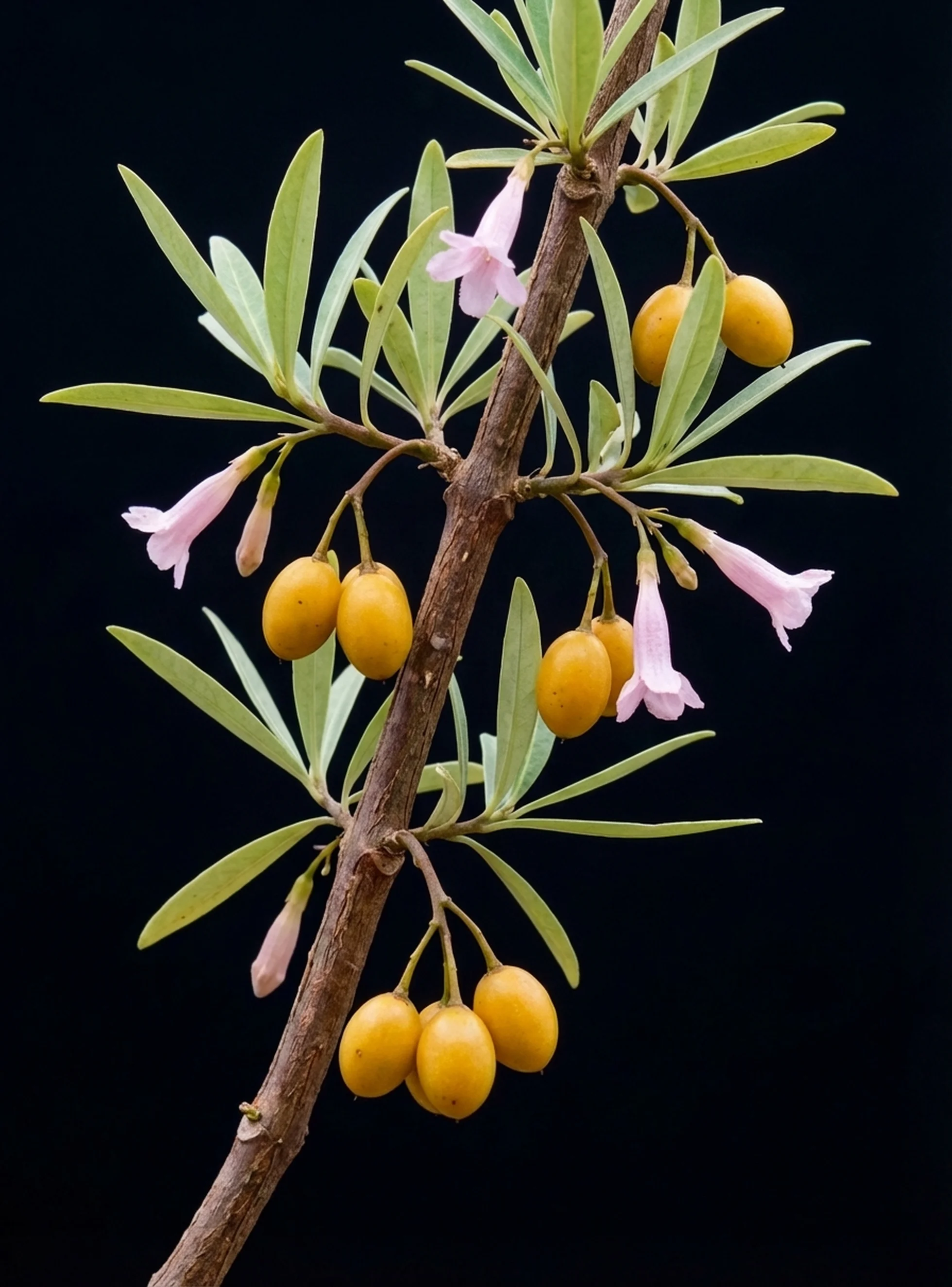
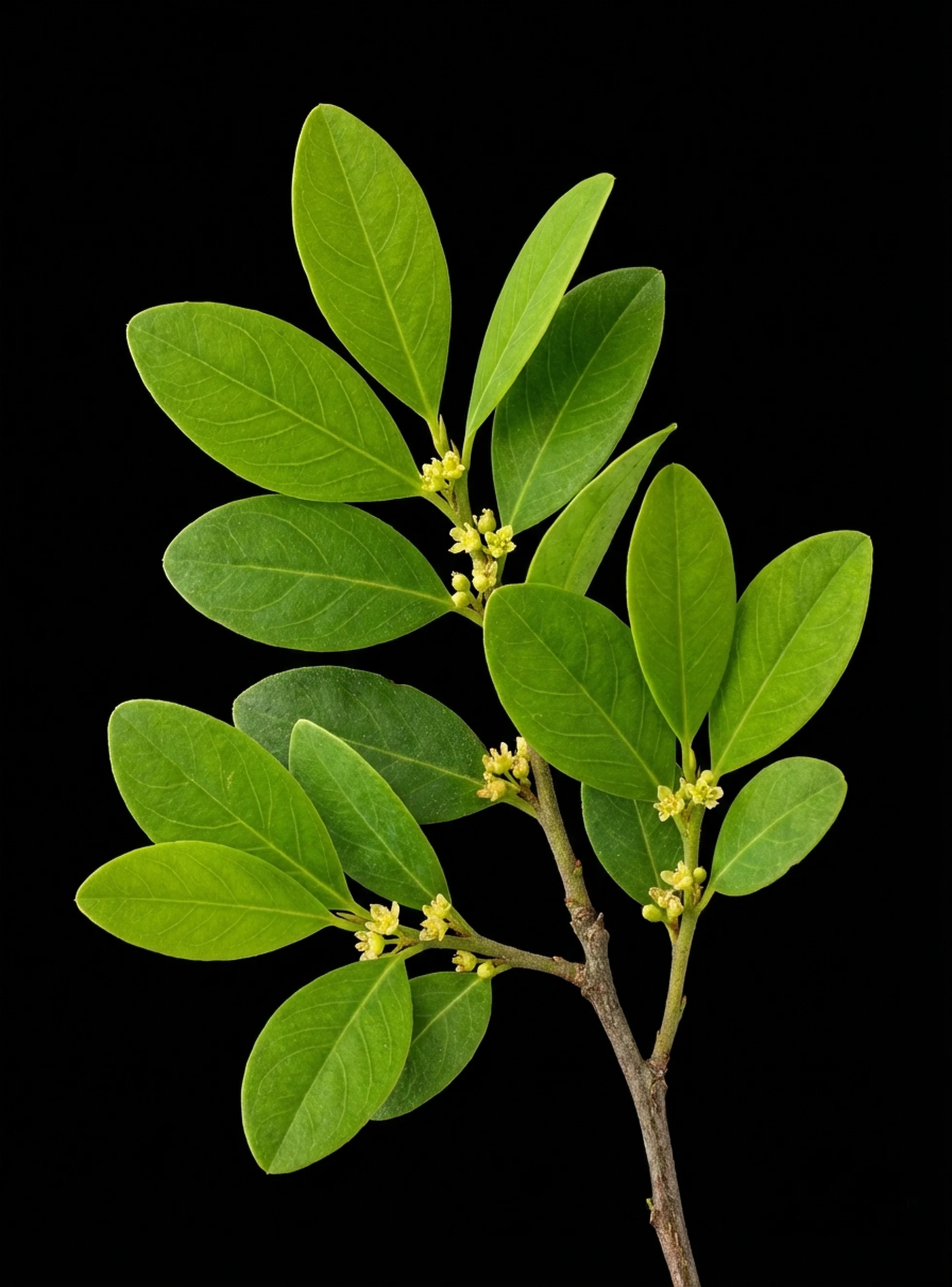
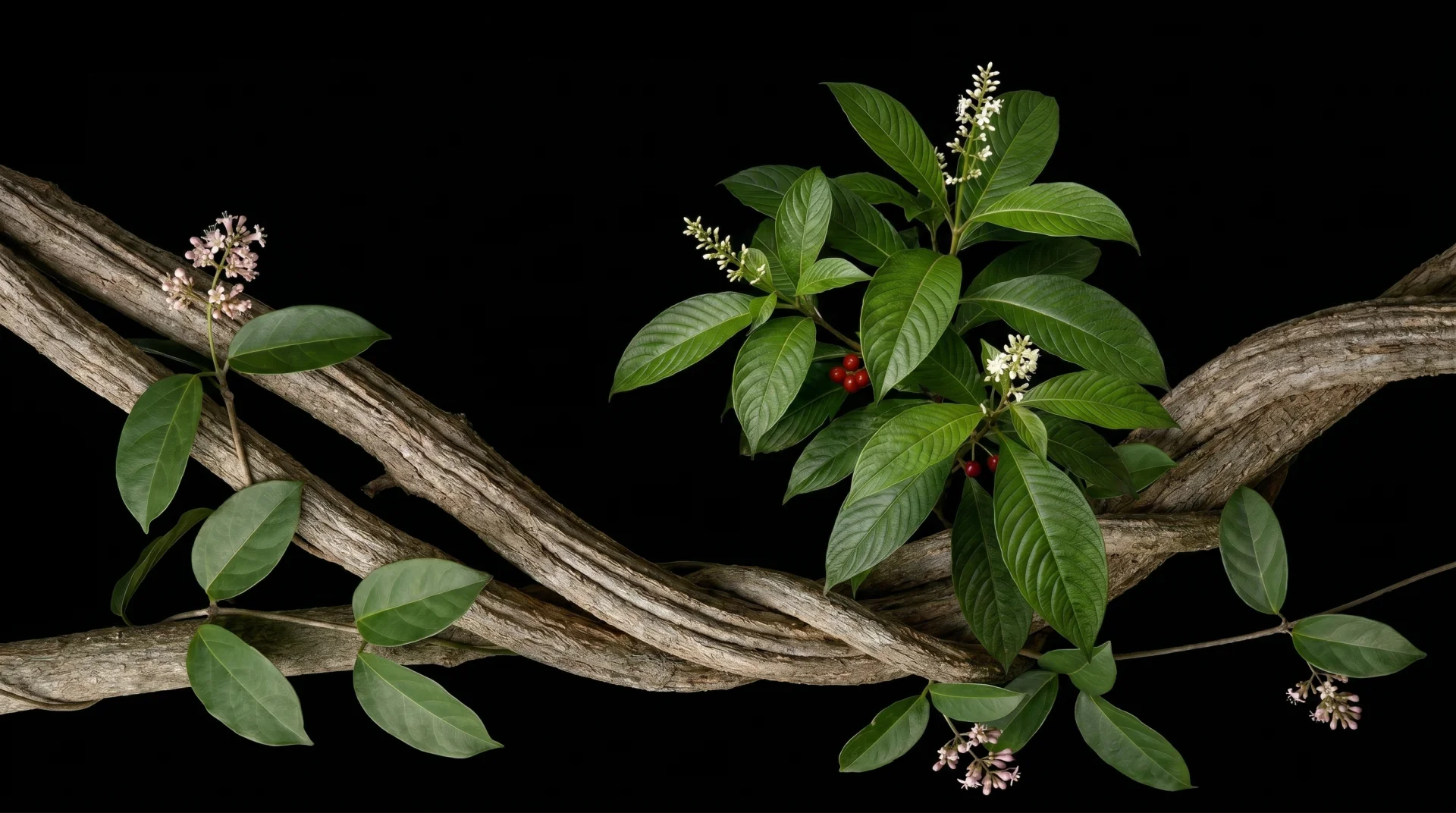
Ayahuasca is a brew, not a single plant. It combines two botanical partners: Banisteriopsis caapi, a thick woody vine known simply as "the vine" or caapi, and Psychotria viridis (chacruna), a leafy shrub of the coffee family. In some traditions, Diplopterys cabrerana (chaliponga) replaces chacruna as the leaf component.
The vine is the older partner. It grows slowly through the canopy, wrapping around host trees for decades before it is harvested. Cut cross-sections reveal a distinctive spiral pattern. The leaves, by contrast, are unremarkable to the eye, glossy and oval, offering no outward hint of what they contain.
The brew itself is dark, ranging from amber to deep reddish-brown depending on preparation. It smells of the forest floor, earthy and vegetal, with a bitterness that most people find difficult to mask. Texture varies from thin and watery to thick and syrupy, depending on how long the mixture has been reduced.
The name "ayahuasca" comes from Quechua: aya (soul, ancestor, dead person) and waska (vine, rope). It translates loosely as "vine of the soul" or "vine of the dead," reflecting the traditional understanding that the brew opens communication between the living and ancestral or spiritual realms. Other names include yagé (Colombia), natem (Shuar), and mihi (Tukano). In Brazilian syncretic religions, it is called Santo Daime or Hoasca.
Strength and duration
Intensity profile
Variability: Moderate (varies with dose and setting)
Duration
Aftereffects: Fatigue and emotional sensitivity may last 1-2 days. Psychological processing can continue for weeks.
Chemistry and mechanism
The pharmacology of ayahuasca rests on a partnership between two classes of molecules, each from a different plant, neither fully active without the other.
The leaf: DMT
The leaves of Psychotria viridis contain N,N-dimethyltryptamine (DMT), a tryptamine compound structurally similar to serotonin. DMT is one of the most potent psychedelic molecules known. It binds primarily to serotonin 5-HT2A receptors in the cortex, the same receptors activated by psilocybin and LSD, triggering cascades of altered perception, emotion, and cognition.
But here is the problem: when swallowed, DMT never reaches the brain. An enzyme family called monoamine oxidase (MAO), concentrated in the gut and liver, breaks it down within minutes. Eaten alone, chacruna leaves produce no psychedelic effect at all.
The vine: harmala alkaloids
This is where the vine enters. Banisteriopsis caapi contains three beta-carboline alkaloids: harmine, harmaline, and tetrahydroharmine (THH). These compounds are reversible MAO-A inhibitors, meaning they temporarily block the enzyme that would otherwise destroy DMT in the digestive tract.
Think of it as a gatekeeper stepping aside. The harmala alkaloids occupy MAO-A long enough for DMT to pass through the gut wall, enter the bloodstream, cross the blood-brain barrier, and reach cortical serotonin receptors in psychoactive concentrations. The inhibition is temporary and reversible, lasting roughly the duration of the experience.
More than a catalyst
The vine is not merely a delivery mechanism. Harmine and harmaline have their own psychoactive properties: mild mood elevation, visual enhancement, and a dreamy introspective quality that many traditions consider the "teaching" aspect of the experience. Some Indigenous practitioners regard the vine, not the leaf, as the true intelligence of the brew. The leaf, they say, provides the visions. The vine provides the meaning.
Tetrahydroharmine (THH) adds another layer by weakly inhibiting serotonin reuptake, increasing available serotonin in the synaptic cleft. This may contribute to the emotional depth and warmth that many people report during the experience.
Variability
Brew composition varies substantially between traditions, individual preparations, and even batches. The ratio of vine to leaf, boiling duration, and plant source all influence the relative concentrations of DMT and harmala alkaloids. This variability is one reason ayahuasca experiences differ so widely from session to session, even for the same person.
DMT
N,N-Dimethyltryptamine
Primary psychedelic compound, from Psychotria viridis leaves
Harmine
MAO-A inhibitor, from Banisteriopsis caapi vine
Harmaline
MAO-A inhibitor, from Banisteriopsis caapi vine
THH
Tetrahydroharmine
Weak serotonin reuptake inhibitor, from Banisteriopsis caapi vine
How people encounter it
Ayahuasca is encountered almost exclusively in group ceremony. Unlike many psychoactive substances, it has no significant tradition of casual or solitary use. The contexts in which people meet this brew shape the experience as much as the chemistry itself.
Traditional ceremony
In Amazonian practice, ceremonies take place at night, often in a simple wooden structure called a maloca. A ritual specialist, variously known as a curandero, vegetalista, onanya, or pajé, prepares and administers the brew. The ceremony unfolds through hours of darkness, guided by icaros, melodic songs that practitioners describe as tools for navigating and shaping the visionary space.
Participants typically follow a dieta before and after ceremony: dietary restrictions (no salt, sugar, alcohol, spices, or sexual contact), sometimes for days or weeks. The dieta is not incidental. It is considered a form of respect and preparation that conditions both body and mind for the encounter.
Syncretic religious practice
In Brazil, three organized religions incorporate ayahuasca as a sacrament: Santo Daime, União do Vegetal (UDV), and Barquinha. Each has its own liturgical structure, hymns, and doctrinal framework. Services may involve dozens or hundreds of participants, with the brew consumed as part of structured worship rather than individual healing.
International retreat centers
The most common contemporary context outside South America is the retreat center, typically offering multi-day programs that combine ceremony with preparation sessions, integration circles, and complementary practices. Quality, safety standards, and adherence to traditional protocols vary widely.
Clinical research
A growing body of research studies ayahuasca under controlled conditions: chemically characterized preparations, standardized doses, psychological monitoring, and structured outcome measures. These studies typically focus on treatment-resistant depression, PTSD, and addiction, though the field remains in early stages.
Origin and history
The Amazon basin is not one place. It stretches across nine countries, harboring more biological and cultural diversity per square kilometer than almost anywhere else on Earth. Within this complexity, at least 70 distinct Indigenous groups developed independent relationships with the ayahuasca brew, each with their own names, songs, protocols, and cosmologies.
There is no single origin story. Archaeological evidence suggests use dating back at least 2,000 years, including a ceremonial vessel found in Ecuador containing chemical residues consistent with ayahuasca preparation. But the oral traditions that carry this knowledge are older than archaeology can measure, and they do not agree on a single point of discovery. The brew may have been found independently, many times, in many places.
Roles in traditional life
Ayahuasca was not a recreational substance. In most traditions, it was reserved for healers and those seeking healing, used in the diagnosis and treatment of illness, divination, conflict resolution, and communication with plant and ancestral spirits. Among the Shipibo-Conibo of Peru, healers use ayahuasca visions to perceive geometric patterns they call kené, which they then reproduce in textiles and ceramics as maps of healing. Among the Shuar of Ecuador, the brew plays a role in vision quests and warrior initiation.
Colonial disruption and survival
European colonization disrupted but did not erase ayahuasca traditions. Missionary campaigns and state prohibitions drove practices underground in many regions. Yet the knowledge survived, carried by healers and communities who continued the work in quieter forms.
Brazilian syncretic religions
In the early 20th century, ayahuasca entered new cultural containers. Raimundo Irineu Serra, a rubber tapper of African-Brazilian descent, founded Santo Daime in the 1930s after his own experiences with the brew. União do Vegetal followed in the 1960s. These movements blended ayahuasca with Christian theology, African spiritual traditions, and Brazilian folk practice, creating new liturgical frameworks that carried the brew beyond Indigenous contexts.
Globalization
Since the 1990s, ayahuasca has moved rapidly across borders. Retreat centers now operate on every inhabited continent. Academic research has accelerated. And with this expansion have come difficult questions about sustainability, cultural ownership, and the relationship between traditional knowledge and global markets.

Effects
The ayahuasca experience resists tidy summary. It unfolds in waves rather than a single arc, often shifting between extremes of beauty and difficulty within the same session. What follows is a composite drawn from research literature, phenomenological studies, and participant reports, not a prediction of what any individual will experience.
Emotional dimension
Emotional intensity is typically the most prominent feature. People describe waves of feeling that can range from profound gratitude and love to deep grief, shame, or fear, sometimes within minutes of each other. Autobiographical memories may surface with unusual vividness, as though being relived rather than recalled. Many people describe a confrontation with emotional material they had avoided or suppressed, experienced not as intellectual insight but as felt, bodily knowledge.
Catharsis is common. The emotional release often coincides with physical purging (nausea, vomiting, tears), and many traditions interpret this as a unified process of clearing rather than a side effect.
Visual dimension
Closed-eye visions are central to the experience for most people. These may begin as geometric patterns, swirling colors, or fractal structures, then evolve into scene-like sequences: landscapes, architectural spaces, encounters with figures that feel autonomous and communicative. Some people describe seeing events from their own past or possible futures. Others report contact with entities, animals, or presences that convey information or emotional states.
Open-eye visuals tend to be subtler: color enhancement, surface breathing, tracers, and a sense that objects carry more significance than usual.
Cognitive dimension
Thinking becomes highly associative, symbolic, and narrative. Linear reasoning gives way to a kind of logic that operates through images and felt connections rather than arguments. Many people describe receiving "teachings" or arriving at moral and psychological insights with unusual clarity and conviction.
At higher intensities, the sense of self can become fluid. Boundaries between observer and observed may dissolve, producing states that range from ego softening to full loss of personal identity. These states can feel liberating or deeply disorienting, depending on context and preparation.
Somatic dimension
A note before reading
Each experience is different. What you may notice depends on dose, setting, and the body and mind you bring to it.
What people often notice
Emotional spectrum
Visual
Imagery can become vivid and immersive, often with rich geometry, color depth, and scenes that feel layered onto the room.
Cognitive
Rapid pattern recognition is common, with frames and assumptions dissolving and reforming in quick succession.
Risks and limits
Ayahuasca carries real risks. Understanding them is not optional.
Psychological risks
Intense anxiety, panic, and confusion can occur during the experience. Distressing visions are common, not rare. Some people experience lingering mood disturbances for days or weeks after ceremony.
Case reports document psychotic episodes and manic states, most often in individuals with a personal or family history of psychosis or bipolar spectrum conditions. These populations face elevated risk and should approach ayahuasca with extreme caution or avoid it entirely.
Experiences in unstable psychosocial environments, with inexperienced facilitators, or without adequate screening increase the likelihood of adverse psychological outcomes.
Physiological risks
Transient increases in blood pressure and heart rate are well-documented. Nausea, vomiting, and diarrhea are expected rather than exceptional. Dizziness, temperature changes, and sweating are common.
Rare but documented serious events include seizures, respiratory distress, and cardiac arrest. These are most often associated with additional risk factors: pre-existing cardiovascular disease, concurrent substance use, or contaminated preparations.
Drug interactions
This is the most critical safety consideration. The harmala alkaloids in ayahuasca are MAO-A inhibitors. Combining them with serotonergic medications creates a risk of serotonin syndrome, a potentially life-threatening condition.
Dangerous combinations include:
- ●SSRIs (fluoxetine, sertraline, escitalopram, and others)
- ●SNRIs (venlafaxine, duloxetine)
- ●MAOIs (phenelzine, tranylcypromine)
- ●Tricyclic antidepressants
- ●Tramadol, dextromethorphan
- ●MDMA, amphetamines
- ●St. John's Wort
Discontinuing SSRIs requires a washout period of weeks, not days. This should be discussed with a prescribing physician, never managed independently.
Sympathomimetic interactions (stimulants, certain decongestants) can cause hypertensive crisis.
Higher-risk populations
- ●Cardiovascular disease or uncontrolled hypertension
- ●Liver disease
- ●Seizure disorders
- ●Psychotic or bipolar spectrum conditions
- ●Pregnancy (insufficient safety data)
Responsible context
Medical and psychological screening before participation, experienced facilitation, and post-ceremony integration support are not luxuries. They are baseline requirements for reducing harm.
Critical interactions
Ayahuasca acts as a monoamine oxidase inhibitor. Certain foods, supplements, and medications can become unsafe within roughly 24 hours before and 12 hours after a session.
Do not combine with
- Serotonergic medications: SSRIs, SNRIs, Tricyclic antidepressants
- Tyramine-rich foods: Aged cheeses, Cured and aged meats, Fermented soy products
- Stimulants and sympathomimetics: Pseudoephedrine, Phenylephrine, Amphetamines
- Supplements and OTC: St. John's Wort, 5-HTP
- Other psychoactives: MDMA
Integration and aftercare
The ceremony ends, but the process does not.
Ayahuasca experiences can surface intense emotional material, shift long-held perspectives, and open questions that do not resolve on their own. Integration is the practice of making sense of what happened and carrying whatever was useful into daily life. Without it, even the most vivid experience can fade into a strange memory with no lasting effect.
What integration looks like
There is no single right way. Some people find that writing helps, whether structured journaling or unfiltered stream of consciousness in the days following ceremony. Others process better through conversation with a trusted friend, therapist, or integration circle.
Contemplative practices, meditation, breathwork, time in nature, can provide a container for material that does not yet have words. Movement practices (walking, yoga, gentle exercise) help reconnect with the body after an experience that may have been somatically intense.
Timing
The first 48 hours after ceremony tend to be the most sensitive. Fatigue, emotional tenderness, and altered sleep patterns are common. Many people benefit from keeping this period relatively unstructured, with minimal social obligations and no major decisions.
Deeper shifts may continue to unfold over weeks or months. Some insights that seemed clear during the experience need time to mature before they become actionable. Others may need to be gently released rather than pursued.
Professional support
For experiences that surface trauma, persistent anxiety, or destabilizing shifts in identity, working with a therapist who has familiarity with psychedelic experiences can be valuable. Integration-focused therapy is a growing field, and directories of trained practitioners are increasingly available.
A quiet reminder
Integration is not about performing transformation. It is not about having the right insights or making dramatic life changes. Sometimes the most honest integration is simply noticing what is different, however small, and letting that be enough.
Sacred stacks
Ayahuasca appears in the following curated combinations. Combinations can amplify both effects and risks. Read each guide carefully before considering.
All sacred stacks →Legal and ethical context
Legal status
DMT, the primary psychedelic compound in ayahuasca, is classified as Schedule I in the United States and controlled under the UN Convention on Psychotropic Substances. The legal status of the brew itself varies by jurisdiction and is often ambiguous.
Religious exemptions exist in Brazil (where Santo Daime and UDV use is legally protected), the United States (UDV received a Supreme Court exemption in 2006), and the Netherlands. Several other countries maintain a legal grey area where the plants are uncontrolled but the extracted compound is prohibited.
In most of Europe, possession and use remain illegal, though enforcement varies.
Cultural sovereignty
The globalization of ayahuasca raises questions that chemistry cannot answer. More than 70 Indigenous groups developed relationships with this brew over millennia. The rapid commercialization of retreat tourism has created economies in which non-Indigenous operators profit from traditional knowledge, often without meaningful benefit-sharing or consultation with source communities.
This is not a simple story of appropriation. Some Indigenous practitioners actively choose to share their knowledge with outsiders. Others object to the commodification of what they consider sacred. Both positions deserve respect and attention.
Sustainability
Increasing global demand has placed pressure on wild populations of Banisteriopsis caapi, which grows slowly and requires years to reach harvestable maturity. Cultivation programs exist but are not yet widespread enough to meet demand sustainably.
Research ethics
Clinical research on ayahuasca intersects with questions of biocultural heritage. Whose knowledge is being studied? Who benefits from the findings? These questions are increasingly part of the conversation in psychedelic research ethics, though they remain far from resolved.
Common misconceptions
Ayahuasca is natural, so it is safe
The brew is plant-derived, but "natural" does not mean risk-free. Ayahuasca causes measurable cardiovascular changes, interacts dangerously with common medications, and can trigger serious psychological crises, particularly in people with certain pre-existing conditions. Safety depends on screening, preparation, and context, not on the substance's botanical origin.
It is a recreational drug
Ayahuasca has no significant history of recreational use. The experience is physically demanding, emotionally intense, and typically involves hours of nausea, vomiting, and psychological confrontation. It has been used for millennia within structured ceremonial frameworks designed to manage its intensity and direct its effects toward healing and insight.
The vine is just a catalyst for DMT
Many Indigenous traditions regard *Banisteriopsis caapi*, the vine, as the true teacher and intelligence of the brew. The leaves provide the visions, but the vine provides the direction, the emotional depth, and the sense of being guided. Pharmacologically, the harmala alkaloids in the vine have their own psychoactive properties beyond MAO inhibition. Reducing the vine to a delivery mechanism misses both the traditional understanding and the pharmacological reality.
Ayahuasca will heal you
The brew does not guarantee transformation. Outcomes vary substantially depending on the person, the context, the quality of facilitation, and the integration work that follows. Some people have profoundly meaningful experiences. Others have difficult or confusing ones that require significant processing. Framing ayahuasca as a cure, for depression, trauma, addiction, or existential distress, creates unrealistic expectations and can lead to harm when those expectations are not met.
One ceremony is enough
In most traditional contexts, ayahuasca is part of an ongoing practice, not a one-time event. Single ceremonies can be meaningful, but the depth of the work typically unfolds over multiple sessions, each building on what came before. The expectation of a single transformative night is largely a product of the retreat industry, not of the traditions that developed this practice.
Frequently asked questions

Reflection
What does it mean to ask a plant for something you cannot name?
If healing is not guaranteed, what draws people back to this brew, generation after generation?
Where is the line between receiving a tradition and taking it?
Sources
- ●
Riba, J., et al. (2003). Human pharmacology of ayahuasca: subjective and cardiovascular effects, monoamine metabolite excretion, and pharmacokinetics. Journal of Pharmacology and Experimental Therapeutics, 306(1), 73-83.
- ●
dos Santos, R.G., et al. (2016). Antidepressive, anxiolytic, and antiaddictive effects of ayahuasca, psilocybin and lysergic acid diethylamide (LSD): a systematic review of clinical trials published in the last 25 years. Therapeutic Advances in Psychopharmacology, 6(3), 193-213.
- ●
Palhano-Fontes, F., et al. (2019). Rapid antidepressant effects of the psychedelic ayahuasca in treatment-resistant depression: a randomized placebo-controlled trial. Psychological Medicine, 49(4), 655-663.
- ●
Hamill, J., et al. (2019). Ayahuasca: psychological and physiologic effects, pharmacology and potential uses in addiction and mental illness. Current Neuropharmacology, 17(2), 108-128.
- ●
Frecska, E., Bokor, P., & Winkelman, M. (2016). The therapeutic potentials of ayahuasca: possible effects against various diseases of civilization. Frontiers in Pharmacology, 7, 35.
- ●
McKenna, D.J. (2004). Clinical investigations of the therapeutic potential of ayahuasca: rationale and regulatory challenges. Pharmacology & Therapeutics, 102(2), 111-129.
- ●
Labate, B.C. & Cavnar, C. (Eds.) (2014). Ayahuasca Shamanism in the Amazon and Beyond. Oxford University Press.
- ●
Luna, L.E. (1986). Vegetalismo: Shamanism among the Mestizo Population of the Peruvian Amazon. Stockholm Studies in Comparative Religion.
- ●
Tupper, K.W. (2008). The globalization of ayahuasca: harm reduction or benefit maximization?. International Journal of Drug Policy, 19(4), 297-303.
- ●
Dominguez-Clave, E., et al. (2016). Ayahuasca: pharmacology, neuroscience and therapeutic potential. Brain Research Bulletin, 126, 89-101.
- ●
Labate, B.C. & Feeney, K. (2012). Ayahuasca and the process of regulation in Brazil and internationally. International Journal of Drug Policy, 23(2), 154-161.
- ●
Callaway, J.C., et al. (2005). Pharmacology of harmala alkaloids found in ayahuasca. Journal of Psychoactive Drugs, 37(2), 151-159.
- ●
Bouso, J.C., et al. (2022). Adverse effects of ayahuasca: a systematic review of case reports. Frontiers in Pharmacology, 13, 1-15.
- ●
ICEERS (2020). Ayahuasca: pharmacological interactions factsheet. International Center for Ethnobotanical Education, Research & Service.
- ●
ICEERS (2023). Ayahuasca: basic information. International Center for Ethnobotanical Education, Research & Service.
- ●
Cultural Survival (2003). Ayahuasca shamanism shared across cultures. Cultural Survival Quarterly.
- ●
Guimaraes dos Santos, R. (2013). The ethnopharmacology of ayahuasca. In The Ethnopharmacology of Ayahuasca. Transworld Research Network.
For how we evaluate sources and structure our claims, see the methodology.
States you may encounter
Altered states of consciousness commonly reported with this substance.
Catharsiscommon
The release of suppressed emotions, sometimes through tears, laughter, or physical trembling. Often arrives uninvited and leaves behind a surprising lightness.
Empathic opening
A heightened capacity for compassion and emotional attunement, both toward oneself and others. Boundaries between self-concern and concern for others soften.
Existential awecommon
A feeling of reverence or wonder in the face of something vast and incomprehensible. The ordinary frame of reference dissolves, replaced by a sense of contact with something immeasurably larger.
Grief surfacingcommon
Buried losses and unprocessed sadness may rise to awareness with unusual clarity and tenderness. The grief arrives not as re-traumatization but as something finally ready to be felt.
Synesthesia
The blending of senses, such as hearing colors or seeing sounds. Boundaries between sensory channels become fluid, revealing unexpected correspondences.
Entity contactcommon
The perception of encountering autonomous beings or presences during deep psychedelic states. These presences may communicate, teach, or simply observe.
Ego dissolutioncommon
A temporary loss of the boundary between self and world. The sense of being a separate individual fades or disappears, often described as merging with everything.
Noetic qualitycommon
A strong sense that what is being experienced is deeply true or meaningful, even if difficult to articulate. Insights feel self-evident in the moment.
Narrative visionscommon
Complex, story-like sequences that unfold with coherence and symbolic meaning, often felt as personally significant. These may feel received rather than imagined.
Energetic flowcommon
Sensations of energy moving through the body, often described as waves, currents, or pulses along the spine. May feel electric, warm, or tingling.
Purgingcommon
Physical release through vomiting, crying, or sweating. Considered cleansing in many ceremonial traditions. Often accompanied by a sense of lightness or relief afterward.
Chacruna: the DMT-containing partner
Psychotria viridis, the leaf that provides the visionary compound in ayahuasca, and why it is not a standalone medicine.
Chacruna
Botanical identity, its role in preparation, and the MAOI mechanism that makes it active.