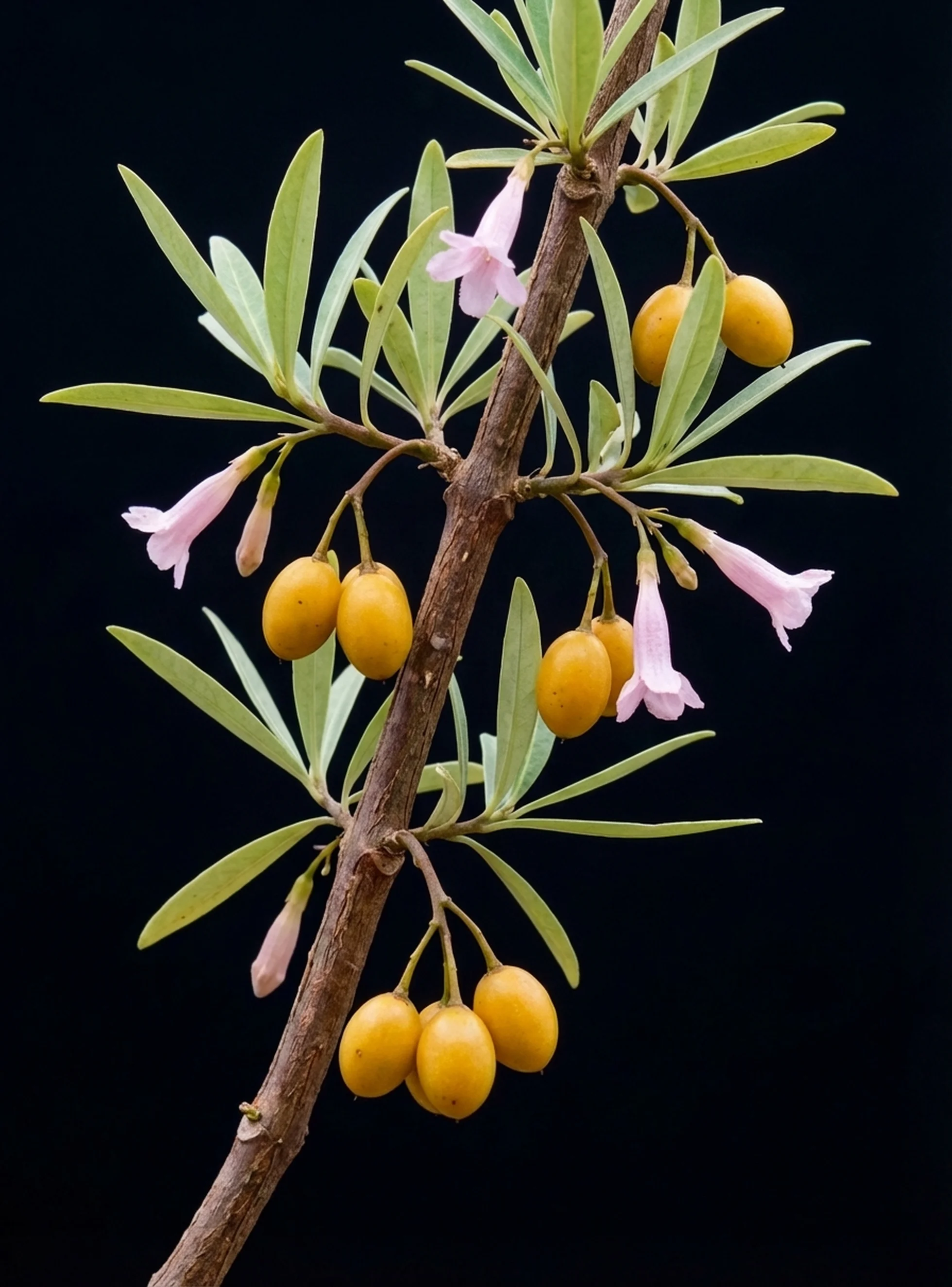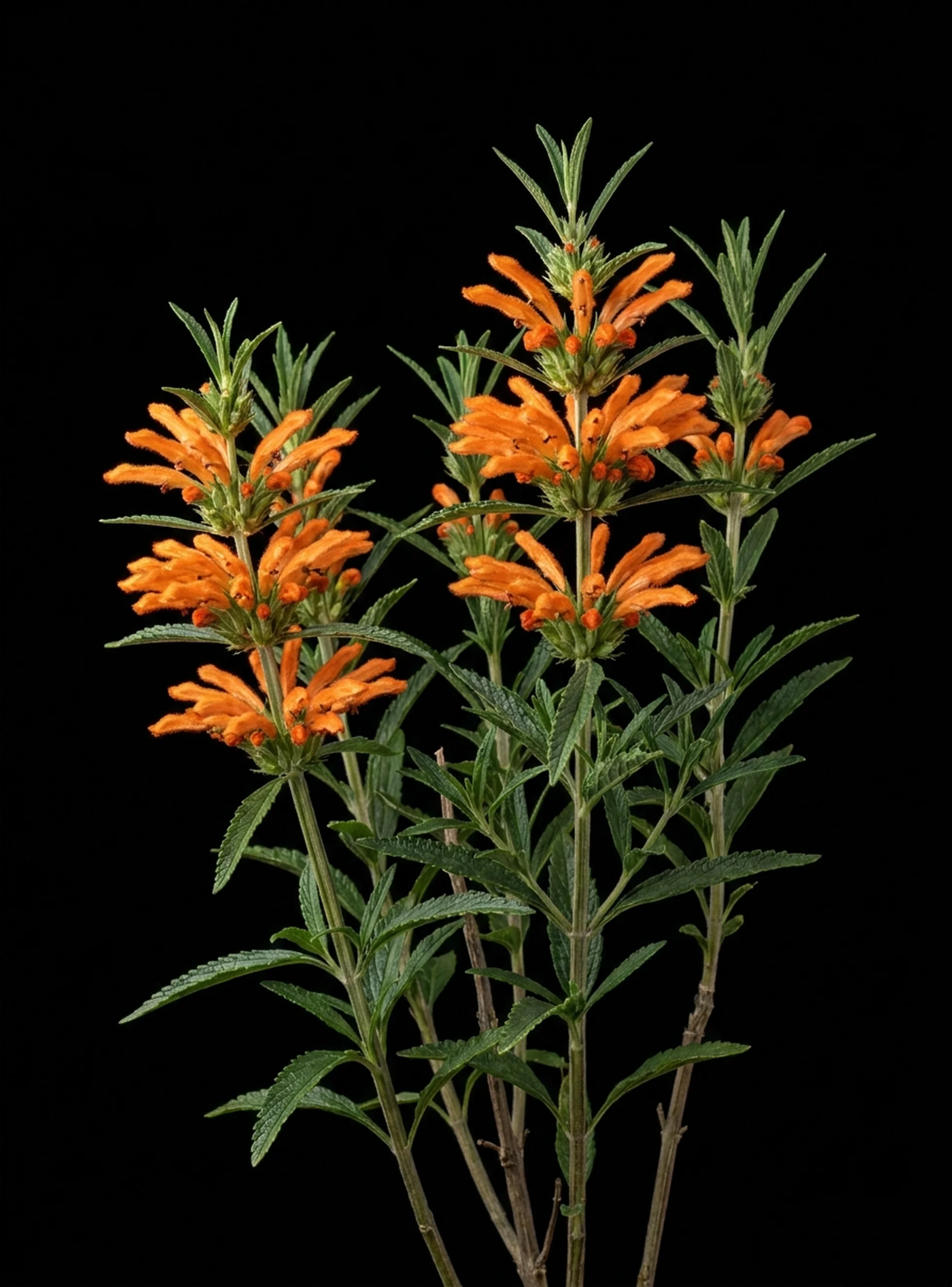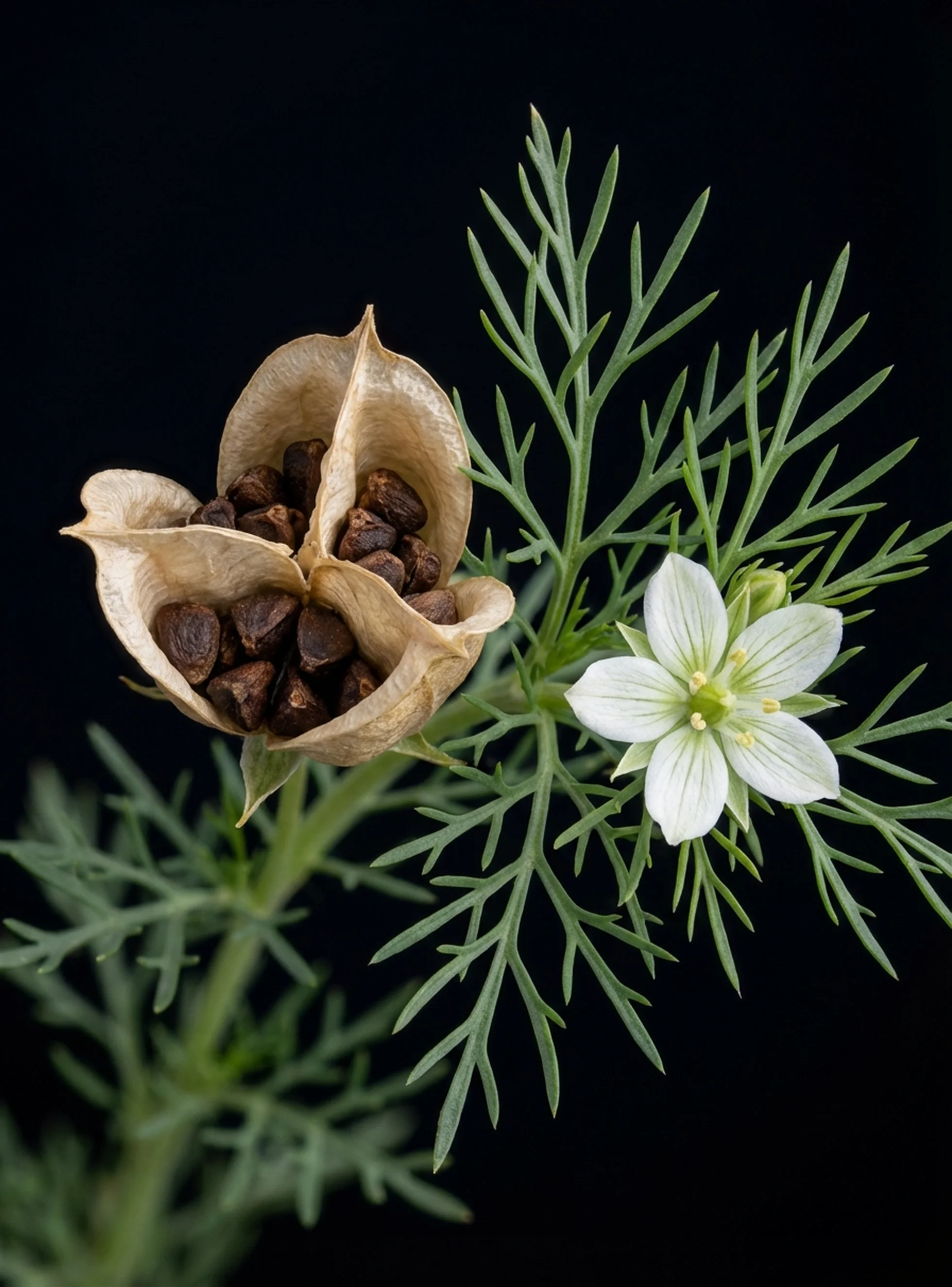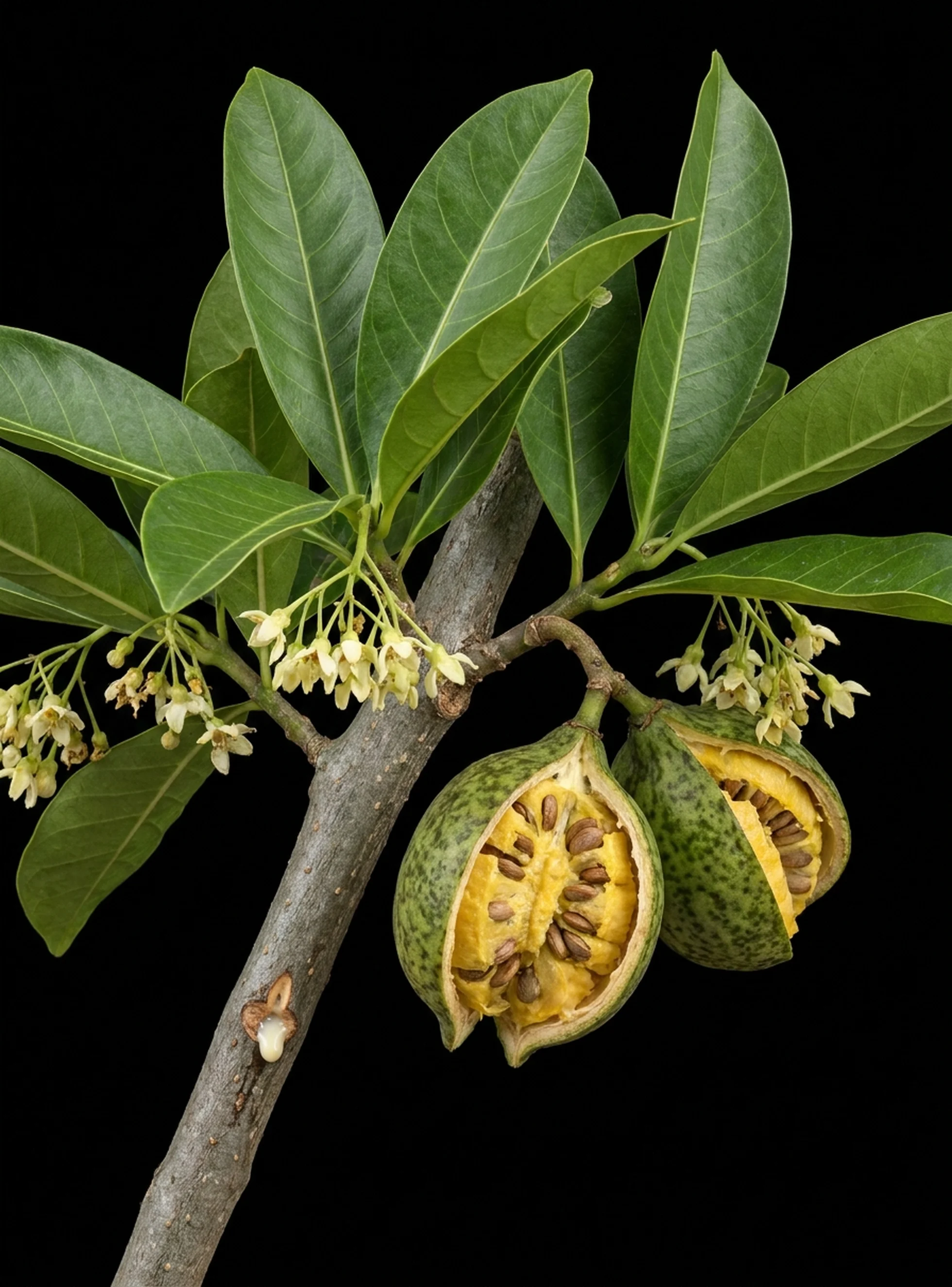

Voacanga is a West African tree whose seeds contain voacangine, a precursor to ibogaine, used in traditional medicine and now sourced for the semi-synthesis of ibogaine therapeutics.
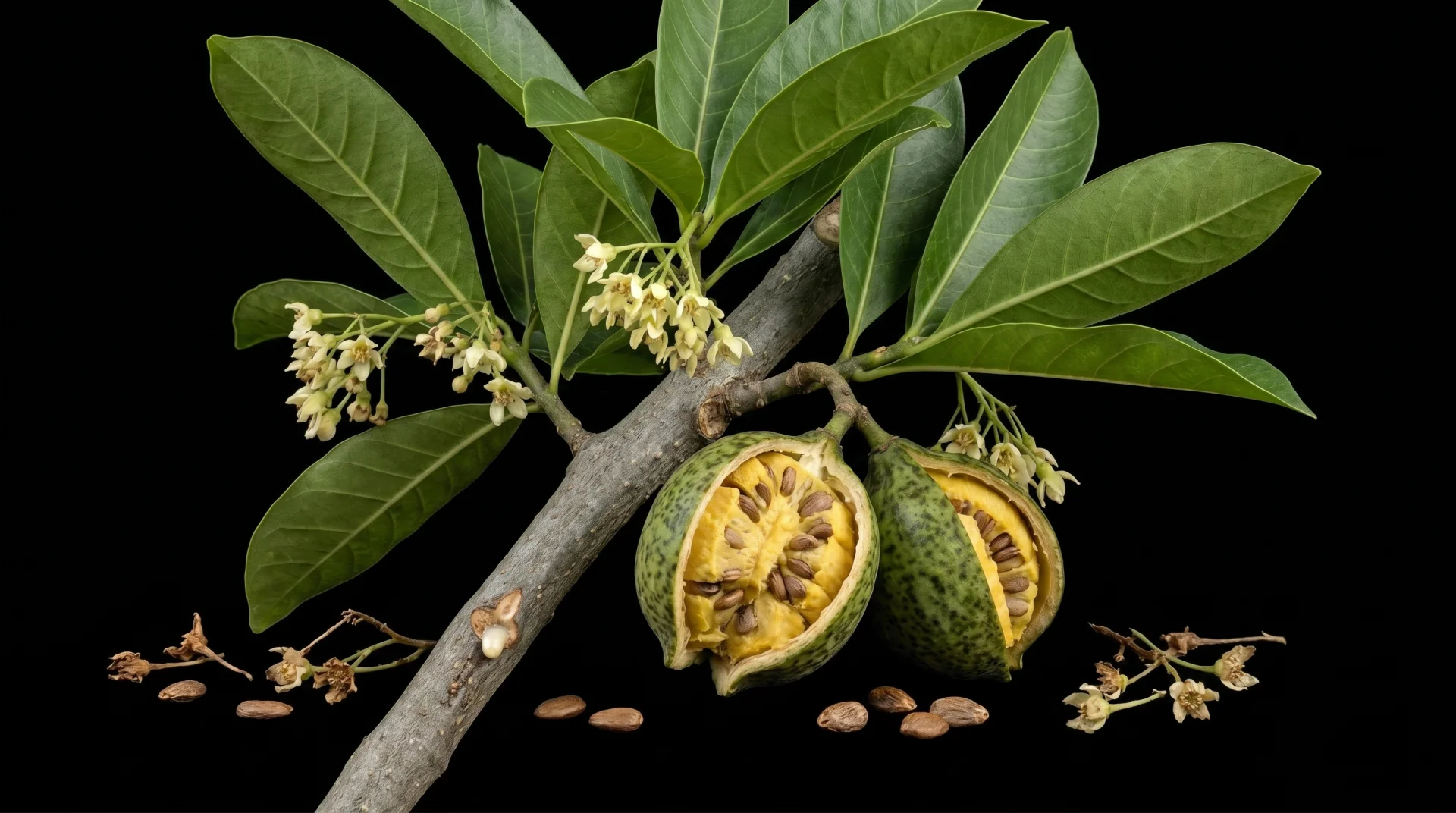
Voacanga africana
Voacanga is a West African tree whose seeds contain voacangine, a precursor to ibogaine, used in traditional medicine and now sourced for the semi-synthesis of ibogaine therapeutics.
Fact file
- Type
- Plant
- Botanical name
- Voacanga africana
- Key compounds
- Voacangine, Ibogaine
- Duration
- 4 to 8h
- Strength
- Gentle
- Legal status
- Unclear in 24 of 35 listed jurisdictions, and varies elsewhere
What is Voacanga africana?
A small tree, perhaps six meters tall, grows in the humid rainforests of Cameroon, Ghana, and Côte d'Ivoire. Its bark is unremarkable, its paired green fruits split open to reveal seeds that look ordinary enough. Yet from those seeds, in 2009 alone, roughly 1,600 tons left African ports for European pharmaceutical factories, where they were processed into compounds used in cancer chemotherapy, dementia drugs, and increasingly, semi-synthetic ibogaine.
Voacanga africana sits at an unusual intersection. It is, on one hand, a workhorse of modern pharmacy, quietly supplying alkaloids the world depends on. It is also a plant whose reputation as a ceremonial psychedelic was, the historical record suggests, largely invented in 2007 by a single Wikipedia editor with seeds to sell. The actual ethnobotany is more interesting than the fiction: West and Central African healers have used the bark and leaves for generations to treat the heart, the gut, and the troubled mind.
What to make of a plant that occupies so many shelves at once, pharmaceutical, ethnobotanical, mythological? Reading Voacanga carefully means reading the supply chain, the chemistry, and the stories people have built around it. Each one tells a different version of the same tree.
The substance
Scientific name: Voacanga africana Stapf ex Scott-Elliot, formally described in 1894.
Family: Apocynaceae, the dogbane family. Relatives in this family include Tabernanthe iboga (the source of ibogaine), Catharanthus roseus (Madagascar periwinkle, source of vincristine and vinblastine), and Rauvolfia serpentina.
Common names: voacanga tree, small-fruited voacanga, sometimes marketed as African iboga or lesser iboga (a commercial label that overstates the pharmacological similarity). In São Tomé e Príncipe, healers know it as cata-manginga.
Native range: tropical Africa, from Senegal east to Sudan and Kenya, south to Angola, Zambia, and Mozambique. The plant grows as a small evergreen tree or large shrub up to 6 to 9 meters, with glossy opposite leaves, fragrant white or yellow flowers, and distinctive paired follicular fruits. All tissues exude a milky white latex.
Substance type: a plant in the broader iboga-alkaloid family. Voacanga contains compounds chemically related to those in Tabernanthe iboga but in different concentrations and proportions, which is why the two plants behave so differently in practice.
Strength and duration
Intensity profile
Variability: Moderate (varies with dose and setting)
Duration
Aftereffects: Reported aftereffects from whole plant material are generally mild. Some users describe residual body sensations or mild fatigue for 1-2 hours post-experience. Emotional aftereffects are typically minimal to neutral. Unlike some psychedelics, hallucinogen-persisting perception disorder (HPPD)-like effects have not been documented with whole plant material in the available research, though anecdotal reports of subtle visual or perceptual persistence appear occasionally in online forums[34]. Cogni
Chemistry and mechanism
Voacanga africana contains one of the most complex alkaloid profiles documented in any African medicinal plant. A 2023 mass-spectrometry study identified 37 distinct compounds in the seeds alone. The dominant alkaloids fall into two structural families: iboga-type indoles, including voacangine (roughly 1.7% of root bark) and trace amounts of ibogaine itself, and iboga-vobasinyl bisindole alkaloids, including voacamine (around 3.7% of root bark) and voacamidine. The seeds are richest in tabersonine, a precursor used industrially to make vinpocetine for cognitive disorders.
The pharmacology is multi-receptor and unusually broad. Ibogaine, the alkaloid that draws most attention, acts primarily as an antagonist at NMDA glutamate receptors, the same receptor family targeted by ketamine. It also modulates serotonin transporters and dopamine signaling. In pharmacological terms it is a 'dirty drug' that touches many targets at once rather than binding selectively to one. UC Davis researchers established in 2023 that only the naturally occurring enantiomer of ibogaine produces its characteristic effects on neuronal growth, indicating a specific receptor mechanism rather than nonspecific cellular activity.
The bisindole alkaloids voacamine and related compounds were the first naturally occurring molecules confirmed as potent CB1 cannabinoid receptor antagonists, a distinct mechanism that may underlie some of voacanga's traditional use in inflammatory and pain conditions.
A crucial distinction shapes everything else on this page: ibogaine is present in Voacanga africana, but at concentrations of roughly 0.05 to 0.6% in commercial products, far below the levels needed for the classical ibogaine experience. The plant's commercial significance lies in voacangine, which can be chemically converted to ibogaine in a few synthetic steps. Most pharmaceutical-grade ibogaine in the world today is made this way, with voacanga seeds as the starting material.
Voacangine
Ibogaine
12-Methoxyibogamine
How people encounter it
Most people who meet Voacanga africana do so without realizing it. The seeds harvested from West African forests feed an industrial pharmaceutical supply chain, ending up as vinpocetine for circulation, vinblastine for chemotherapy, or semi-synthetic ibogaine for clinical addiction research. This is the dominant encounter, and it happens in factories rather than ceremonies.
A second encounter is older and quieter: traditional medicinal use across West and Central Africa. Healers in Cameroon, Ghana, Côte d'Ivoire, the Democratic Republic of Congo, and São Tomé e Príncipe have long used the root bark, stem bark, and leaves to treat diarrhea, parasitic infection, heart conditions, generalized inflammation, and what was historically described as madness or mental disorders. In some Bantu communities, dried leaves have been smoked for chronic headaches. These uses are ethnomedicinal, oriented toward the body and the mind together, and only loosely connected to the contemporary 'psychedelic' framing.
A third encounter, the most recent and the most contested, is through online ethnobotanical retailers selling powdered seeds or bark to consumers in North America and Europe. Whole plant material is typically taken orally as ground powder. Onset tends to be slow (30 to 120 minutes), the experience can extend across four to eight hours, and reported effects vary widely from barely perceptible to mildly altering. Importantly, the plant material at typical amounts contains too little ibogaine to produce the classical ibogaine state. What people report is mostly somatic, often nausea, and subtle.
A fourth and entirely different encounter happens in clinical or underground ibogaine programs, where the substance has been concentrated or synthesized from voacanga precursors. That is a separate experience, with separate risks, and should not be confused with the whole plant.
Origin and history
Long before any European botanist named the tree, healers across West and Central Africa worked with its bark and leaves. In Cameroon, Ghana, Côte d'Ivoire, and the Congo basin, Voacanga africana was used alongside its sister species Voacanga thouarsii to treat heart disease, leprosy, edema, convulsions in children, and conditions of the mind. In São Tomé e Príncipe, where it is called cata-manginga, healers prescribed it for inflammation and mental distress. These uses have been documented across multiple ethnobotanical surveys and align with what modern pharmacology now identifies in the plant's alkaloids.
Western science arrived late and missed most of this. In 1894, the botanist Otto Stapf provided the formal binomial Voacanga africana, and early colonial-era references dismissed the tree as little more than a rubber adulterant. After World War II, attention shifted. Pharmaceutical chemists studying related African plants noticed voacanga's alkaloid wealth. In 1955, two French chemists filed the first patent on a voacanga-derived heart medicine, opening a long extraction relationship in which raw seed left African ports and finished compounds entered European markets, with little benefit returning to source communities.
A different chapter began in 2007. A businessman in Accra, writing on Wikipedia under the username MrGoodGuy, edited the entry on Voacanga africana to describe it as a Ghanaian 'ceremonial psychedelic,' embedding a link to a website selling seeds. The link kept being removed and re-added. The narrative, however, spread quickly through ethnobotanical retailers, harm-reduction sites, and online forums. When researchers later interviewed people in Ghanaian towns where voacanga is harvested, most reported only that 'foreign companies use the seeds for medicines.' A few mentioned uses for hernias, parasites, or childbirth preparation. Almost no one described a psychedelic ceremony.
The modern story of voacanga, then, runs in two directions at once: a quiet pharmaceutical workhorse on one path, a constructed market identity on the other, with the actual ethnobotanical record sitting between them, often overlooked.

Effects
Reading the experience of Voacanga africana requires holding two scenarios apart. The whole plant material at amounts encountered in ethnobotanical contexts produces something gentle, often subtle, sometimes unremarkable. Concentrated extracts (or semi-synthetic ibogaine made from voacanga precursors) produce something else entirely, closer to the classical ibogaine experience. The composite strength score of 3 out of 10 (Gentle) refers to the whole plant.
Perceptually, the whole plant tends to be quiet. The perceptual score sits at 2 out of 10. Some people report mild visual softening, slight intensification of color or pattern, subtle changes in the texture of attention. Most do not. The classical visual phenomenology of psilocybin or LSD, with its geometric architecture and ego dissolution, is generally absent at the doses people typically take. When dramatic visions do appear in reports, they are usually associated with concentrated material or with strong expectancy effects shaped by the marketing narrative.
Cognitively, the experience tends toward soft rather than expansive. The cognitive score is 2.5 out of 10. Some people describe a kind of mental settling, less internal chatter, a slowed but lucid quality of thought. Time perception generally does not stretch dramatically. Memory effects are mixed and inconsistent.
Emotionally, voacanga can feel mildly anxiolytic, with reports of calm or slight mood lift, but it can also feel neutral or, less often, dysphoric. The emotional score is 3 out of 10. There is no characteristic emotional arc, no reliable opening into grief or joy, no signature heart-led phase. This is part of why the 'ceremonial psychedelic' framing tends to over-promise.
Somatically, voacanga makes itself most known. The somatic score, at 3.5, is the highest of the four dimensions. Nausea is common. Mild dizziness, temperature shifts, a heaviness in the body, sometimes a flushed or tingly quality. The plant's alkaloids include compounds with cardiac depressor activity, and even at gentle amounts the body usually registers that something is happening, even when the mind reports very little.
The arc tends to be slow. Onset extends from 30 to 120 minutes, peak from two to five hours after ingestion, and the experience often closes within four to eight hours. Variability between individuals and between sessions is high, partly because commercial plant material varies enormously in its alkaloid content and partly because what is sold as voacanga is sometimes a different Voacanga species altogether.
A note before reading
Each experience is different. What you may notice depends on dose, setting, and the body and mind you bring to it.
What people often notice
Visual
Visuals tend to stay soft and mostly closed-eye, often subtle textures or gentle color shifts behind the eyelids.
Cognitive
Thoughts often settle. The mind tends to feel quieter, slower, more able to rest with what is.
Risks and limits
The most important risk associated with Voacanga africana is cardiac. Several of its alkaloids, including voacangine, voacamine, and voacamidine, have documented cardiac depressor activity. Ibogaine itself, present in trace amounts in the whole plant and in much larger amounts in concentrated preparations, produces bradycardia and QT interval prolongation, an alteration of the heart's electrical timing that can trigger a dangerous arrhythmia called Torsades de Pointes. Because ibogaine's active metabolite, noribogaine, has a much longer half-life than ibogaine itself, this cardiac risk can persist for days after a session, even after the acute experience has passed. Documented fatalities from concentrated ibogaine have included sudden cardiac death 24 to 76 hours after administration.
For whole plant material at typical amounts, this cardiac risk is meaningfully smaller, because the alkaloid load is meaningfully smaller. It is not zero. Anyone with a history of arrhythmia, QT abnormalities, hypertension, prior myocardial infarction, structural heart disease, or unexplained fainting should avoid voacanga entirely.
Drug interactions require care. Concurrent use with MAOIs is the highest-risk combination and should be avoided absolutely, with serotonin syndrome and hypertensive crisis as the concerns. SSRIs and tricyclic antidepressants raise serotonin syndrome risk and should not be combined without medical oversight. Cardiac medications including beta blockers, calcium channel blockers, and antiarrhythmics may stack with voacanga's own cardiac effects. Strong CNS depressants (alcohol, benzodiazepines, opioids) compound sedation and breathing risks.
Other physical considerations: some voacanga alkaloids produce convulsions in animal models, so anyone with a seizure history should avoid the plant. Hepatic metabolism runs largely through CYP2C19, which means liver impairment or interacting medications can alter the alkaloid load unpredictably.
Psychological considerations: NMDA antagonism (the same family of mechanisms ketamine uses) is associated with dissociative effects, and rarely with psychotic reactions in vulnerable individuals. Personal or family history of psychotic disorders is a reason to avoid this plant.
Plant material variability is itself a risk. A 2009 study by Japan's National Institute of Health Sciences found that many products sold as Voacanga africana were derived from related but different Voacanga species, with substantially different alkaloid profiles. What is in the bag may not match the label, even when the seller is acting in good faith.
For anyone choosing to engage with this plant, set, setting, and the presence of someone sober, attentive, and aware of how to respond to a cardiac event matter more than they would for most gentle substances.
Integration and aftercare
What follows a voacanga experience is usually quieter than the literature on integration suggests. Whole plant sessions tend to leave gentle traces, a softness, mild fatigue, sometimes a clearer feeling for a day or so. The classical psychedelic afterglow, the deep insight that needs careful interpretation over weeks, is mostly absent here. Integration for whole plant work, then, is best treated as a small practice: rest, food, water, a quiet evening, and perhaps a few notes about anything that felt different.
For those who encounter voacanga through concentrated extracts or semi-synthetic ibogaine, integration takes a different shape. The clinical research on ibogaine for substance use disorder describes long aftereffects, sometimes weeks of altered perspective, increased gratitude, easier access to difficult emotions, and shifts in how people relate to old patterns. In those programs, integration involves prepared therapeutic relationships, structured follow-up, and the recognition that the day after the session is only the beginning of what the experience invites.
A few practices may help across both ends of the spectrum. Journaling in plain language, without trying to find the meaning right away. Time without screens in the days after, especially if the body still feels different. Rest as a real activity, not as the absence of one. Conversation with someone trusted, especially if the experience surfaced something tender. Patience, perhaps most of all, with the slow way that any altered state weaves itself into ordinary life.
Formal integration research specific to voacanga essentially does not exist. The frameworks people borrow come from psilocybin, MDMA, or ayahuasca traditions and may not always fit. It can help to hold any experience with this plant on its own terms, not as a smaller version of something else, and to notice what it actually offered rather than what the marketing suggested it should.
Legal and ethical context
Voacanga's ecology is bound up with the supply chain that has grown around it. The pharmaceutical industry's increasing reliance on this plant is, on the surface, a conservation story: voacanga grows faster than the endangered Tabernanthe iboga, its bark can be harvested without killing the tree, and semi-synthetic ibogaine produced from voacangine reduces pressure on iboga's wild populations. Researchers have even developed closed-loop processes where waste from voacangine conversion fertilizes new voacanga plants. In principle, this is the kind of substitution conservation biology asks for.
The practice is more complicated. Voacanga is still harvested almost entirely from wild populations in Ghana and Côte d'Ivoire. The 1,600 tons of seeds that left African ports in 2009 were not from cultivated plantations, and large-scale cultivation outside the native range remains underdeveloped. Wild harvesting at industrial scale, even of an abundant species, has ecological consequences that have not been carefully studied.
The benefit-sharing question sits underneath all of this. Western pharmaceutical companies extract significant value from voacanga alkaloids, used in cancer drugs, dementia drugs, and increasingly in psychedelic medicine. The Nagoya Protocol on access and benefit sharing was designed to direct some of that value back to the source countries and communities. In voacanga's case, implementation has been thin. As semi-synthetic and total-synthetic production methods improve, the economic incentive to maintain any benefit-sharing relationship erodes further.
A second ethical layer concerns how the plant has been marketed in the consumer ethnobotanical space. The 2007 fabrication of voacanga as a 'ceremonial psychedelic' did real damage. It erased the actual traditional medicinal uses, invented an exoticized African ritual narrative for Western consumption, and built a commercial market on the back of an Orientalist fiction. African harvesters and communities remain mostly invisible in this story, even as their plant is sold with their identity attached.
For anyone considering engagement with this plant, the question is worth holding: where did this material come from, who benefited from its journey, and what story is being sold alongside the seeds?
Common misconceptions
Myth: Voacanga africana is a traditional West African ceremonial psychedelic.
The 'ceremonial psychedelic' identity originated in a single 2007 Wikipedia edit by a Ghanaian seed seller and spread through online ethnobotanical retailers. Field research in Ghanaian towns where the plant is harvested has not located a contemporary tradition of psychoactive ceremonial use. The actual traditional uses are medicinal: gastrointestinal, cardiac, anti-inflammatory, mental health support.
Myth: Voacanga is essentially a cheaper or weaker iboga.
Both plants contain iboga-type alkaloids, but the concentrations and proportions are different. *Tabernanthe iboga* root bark contains roughly 0.3 to 0.4% ibogaine. *Voacanga africana* products contain 0.05 to 0.6% ibogaine, often at the lower end, with the bulk of voacanga's alkaloid mass coming from voacangine, voacamine, and tabersonine. Voacanga's pharmaceutical importance is as a precursor source, not as a direct ibogaine equivalent.
Myth: Whole plant voacanga produces classical ibogaine effects.
At the amounts typically taken from raw plant material, the bioavailable ibogaine load is well below the threshold for the ibogaine state. Reported intense experiences usually trace back to concentrated extracts or to expectancy effects shaped by marketing narratives, not to the plant material itself.
Myth: It's a plant, so it's safe.
Several voacanga alkaloids carry documented cardiac depressor activity, and ibogaine produces QT prolongation that can persist for days. Root bark extract has shown an LD50 of around 1250 mg/kg in rodents, several times more toxic than leaf material. The plant is contraindicated in cardiovascular disease, seizure disorders, and concurrent MAOI use.
Myth: What's in the bag is what the label says.
A 2009 study found that many commercial voacanga products were derived from related *Voacanga* species, not from *Voacanga africana* specifically, with meaningfully different alkaloid profiles. Even reputable sellers cannot always verify the species without lab testing.
Frequently asked questions

Reflection
Voacanga is a useful corrective for any neat story about plants and consciousness. It does not arrive bearing the lineage that was invented for it. It does not deliver, at the amounts most people meet it, the experience the marketing promises. And it does not behave like a single thing. It is a pharmaceutical resource, an ethnomedicinal tool with a genuine and underdocumented African history, a fabricated psychedelic identity, and an ecological commodity moving through a supply chain few users ever see.
Maybe the offering of this tree is not an experience at all, but a question about how knowledge travels. Whose voices were heard when the story of this plant was written? Whose were edited out? What does it mean that the seeds healing leukemia in one country were once spoken over by a healer in another, and that almost none of the value returned home?
A gentle plant can still ask serious things.
Sources
Primary research and pharmacology
- ●Mash, D.C., Staley, J.K., Baumann, M.H., Rothman, R.B., & Hearn, W.L. (2002). Ibogaine and a Total Alkaloidal Extract of Voacanga africana Modulate Neuronal Excitability and Synaptic Transmission in the Rat Parabrachial Nucleus in Vitro. Brain Research Bulletin, 48(6), 641-651. https://pubmed.ncbi.nlm.nih.gov/9365804/
- ●Schriever, S.C., Zellmann, T., Nagata, R., Wada, S., Inoue, A., Meyer, Z., Satterfield, B.C., & Wilson, C.E. (2023). Investigation of Small-Molecule Constituents in Voacanga africana Seeds using DART-HRMS and Imaging Mass Spectrometry. ACS Omega, 8(31), 28401-28414. https://pmc.ncbi.nlm.nih.gov/articles/PMC10399170/
- ●Toth, B., Scarpelli, R., Mazzocchi, R., Repcheski, J., Jenks, C., & Natalini, B. (2016). Optimized Procedure to Obtain Voacangine from Voacanga africana Root Bark as a Precursor of Iboga Alkaloids. Journal of Ethnopharmacology, 193, 75-82. https://pmc.ncbi.nlm.nih.gov/articles/PMC8264847/
- ●Iyer, R.B., Kwan, A.C., & Olson, D.E. (2023). UC Davis Researchers Achieve Total Synthesis of Ibogaine. UC Davis Health News. https://www.ucdavis.edu/health/news/uc-davis-researchers-achieve-total-synthesis-ibogaine
Ethnobotany and history
- ●Vigliate, T. (2022). The Invention of Voacanga africana as a Ceremonial Psychedelic. Environment and Society Portal, Arcadia. https://www.environmentandsociety.org/arcadia/invention-voacanga-africana-ceremonial-psychedelic
- ●Okonkwo, C.O., & Almagboul, A.Z. (2018). Ethnomedicinal Uses, Biological Activities, and Toxicity of Voacanga africana. University of Ghana Research Publications. https://pure.ug.edu.gh/en/publications/ethnomedicinal-uses-biological-activities-and-toxicity-of-voacang-3/
Reference and regulatory
- ●Wikipedia contributors. (2024). Voacanga africana. https://en.wikipedia.org/wiki/Voacanga_africana
- ●Wikipedia contributors. (2024). Legal Status of Ibogaine by Country. https://en.wikipedia.org/wiki/Legal_status_of_ibogaine_by_country
- ●Useful Tropical Plants. (n.d.). Voacanga africana. https://tropical.theferns.info/viewtropical.php?id=Voacanga+africana
- ●IUCN Red List. (2024). Voacanga thouarsii (used as conservation reference for the genus). https://plants.jstor.org/stable/10.5555/al.ap.flora.flota005293
For how we evaluate sources and structure our claims, see the methodology.