Iboga is a Central African rainforest shrub whose root bark contains ibogaine, producing an intense, multi-day experience used in Bwiti initiation and studied for addiction interruption.
Iboga
Iboga is a Central African rainforest shrub whose root bark contains ibogaine, producing an intense, multi-day experience used in Bwiti initiation and studied for addiction interruption.
Fact file
- Type
- Plant
- Botanical name
- Tabernanthe iboga
- Other names
- ibogaine, eboka, eboga, the wood
- Key compounds
- Ibogaine, Noribogaine, Tabernanthine, Voacangine
- Origin
- Central Africa
- Duration
- 24-36 hours
- Strength
- Intense
- Legal status
- Illegal in 16 of 28 listed jurisdictions, and varies elsewhere
What is Iboga?
In the dense equatorial forests of Gabon, a small understory shrub grows slowly in dappled shade, its unremarkable appearance concealing what may be the most pharmacologically complex root bark on the planet. To the Bwiti, iboga is not a drug but an ancestor, a teacher, a mirror held up for as long as it takes to see clearly. Those who eat the root describe something unlike any other psychoactive experience: a waking vision state lasting a full day or more, in which the contents of a life are laid out, examined, and sometimes rearranged. It is not recreational. It is not gentle. It asks for the whole body and the whole mind, and it does not let go quickly.
The substance
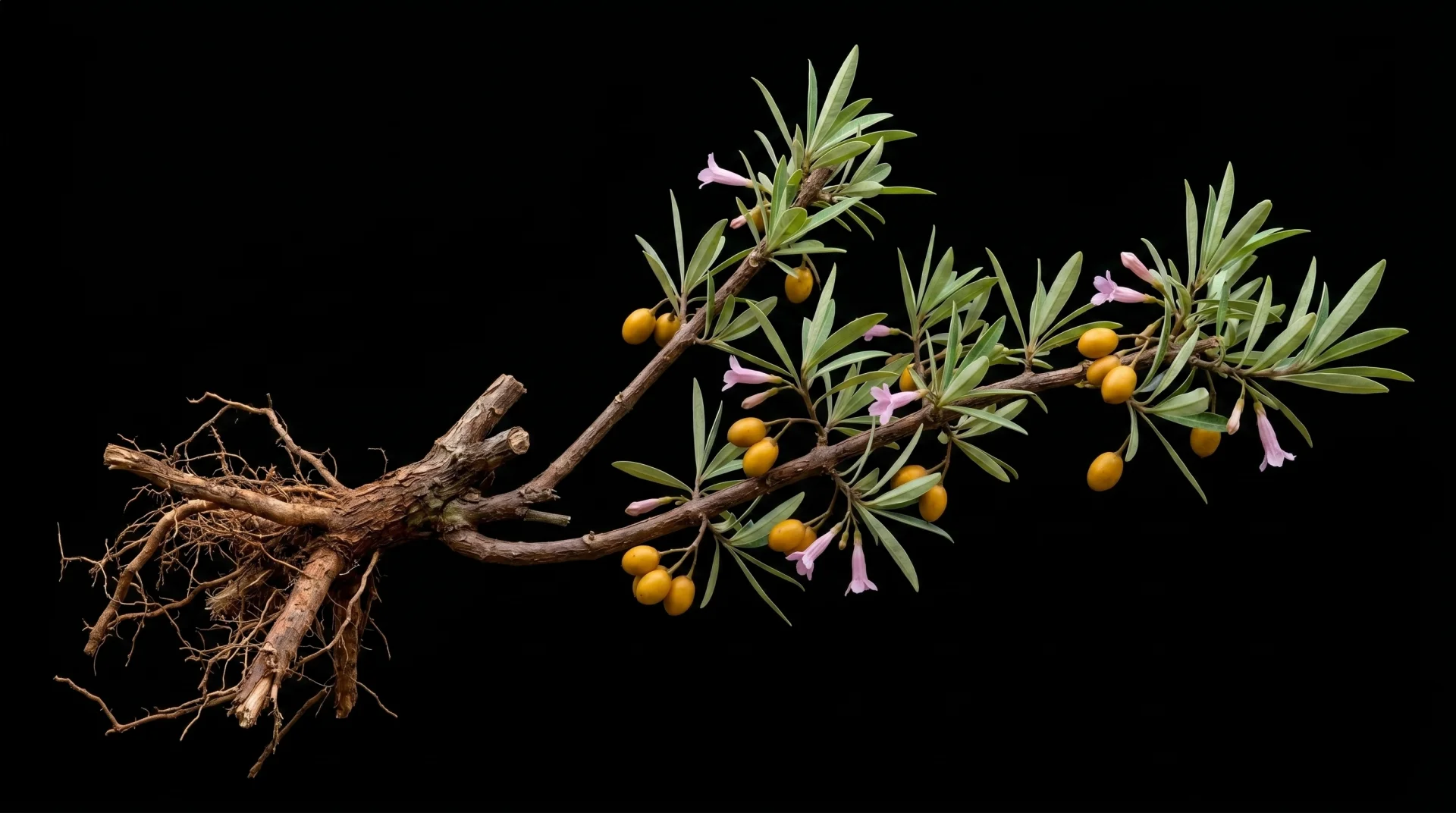
Tabernanthe iboga is a perennial rainforest shrub of the family Apocynaceae, native to the understory of Central West African forests. It grows slowly, sometimes taking decades to reach its full height of one to two meters. The leaves are small, dark green, and elliptical. The flowers are white to pink, tubular, and modest. The fruit is an orange, oval berry that splits to reveal seeds in reddish pulp.
None of this is what matters. What matters is underground.
The root bark, pale yellow when freshly peeled and drying to a fibrous tan, is where the plant concentrates its alkaloids. Fresh root bark has a faint, sharp smell, vegetal and slightly astringent. The taste is intensely bitter, among the most bitter plant materials people voluntarily consume. The bitterness is not incidental. It is how the Bwiti describe recognizing the plant's power: the more bitter, the more potent.
The bark is traditionally shaved or scraped from the root in long, thin strips. When dried and ground to powder, it takes on a pale ochre color. In ceremonial contexts, it may be chewed directly as shavings or consumed as ground powder mixed with water.
The name "iboga" is used broadly across the Bwiti tradition. Related terms include eboka and eboga. In French-speaking Central Africa, it is sometimes called bois sacré (sacred wood). "Ibogaine" refers specifically to the primary alkaloid, not the whole plant. The distinction matters: the root bark contains over a dozen alkaloids, and practitioners of Bwiti ceremony work with the whole bark, not a single isolated compound.
Strength and duration
Intensity profile
Variability: Moderate (varies with dose and setting)
Duration
Aftereffects: Residual effects may persist for days to weeks. Many people report a prolonged window of emotional clarity, reduced cravings, and heightened sensitivity to stimuli. Physical fatigue and altered sleep patterns are common for the first 3-7 days. Noribogaine, ibogaine's active metabolite, remains detectable in the body for weeks, contributing to a slow, gradual return to baseline.
Chemistry and mechanism
A pharmacological outlier
Most psychoactive substances work on one or two receptor systems. Ibogaine works on nearly all of them. This is not an exaggeration for effect. It is the central pharmacological fact about ibogaine, and it makes the compound genuinely difficult to classify.
The alkaloid family
Iboga root bark contains at least 12 indole alkaloids. The primary ones are:
- ●Ibogaine (12-methoxyibogamine), the most abundant and most studied, typically comprising 1-6% of dried root bark by weight
- ●Noribogaine (12-hydroxyibogamine), ibogaine's primary metabolite, formed in the liver and responsible for much of the prolonged aftereffect
- ●Tabernanthine, structurally similar, with overlapping but distinct receptor activity
- ●Ibogamine, present in smaller quantities
- ●Voacangine, found in related species and sometimes used as a precursor for semi-synthetic ibogaine
Traditional Bwiti practitioners do not isolate these compounds. They work with the full alkaloid profile of the root bark, and some practitioners believe the synergy between these molecules is essential to the experience.
How ibogaine works in the body
Ibogaine's receptor profile reads like a pharmacology textbook index. It interacts meaningfully with:
- ●NMDA glutamate receptors (antagonist), which may account for its dissociative and visionary properties
- ●Serotonin transporters (SERT inhibitor), contributing to mood effects
- ●Dopamine transporters (DAT inhibitor), relevant to its effects on reward circuitry and addiction
- ●Kappa-opioid receptors (agonist), linked to its dysphoric and visionary qualities
- ●Mu-opioid receptors (agonist), which may explain why it can interrupt opioid withdrawal
- ●Sigma-2 receptors, whose role is less understood
- ●Nicotinic acetylcholine receptors (antagonist), potentially relevant to its effects on tobacco craving
- ●Sodium and potassium ion channels (hERG channel blocker), which is the source of its cardiac risk
No other known psychoactive substance engages this many receptor systems simultaneously. This polypharmacology is likely why ibogaine produces such a distinctive, prolonged, and multidimensional experience.
The noribogaine factor
When ibogaine enters the body, the liver converts it to noribogaine (also called 12-hydroxyibogamine) through CYP2D6 metabolism. Noribogaine is itself psychoactive and has a much longer half-life than ibogaine, persisting in the body for days to weeks. Many researchers believe the sustained therapeutic effects attributed to ibogaine are actually mediated by noribogaine, which acts primarily on serotonin transporters and mu-opioid receptors.
This two-phase pharmacology, ibogaine followed by noribogaine, helps explain why the experience unfolds in distinct chapters: an acute visionary phase driven largely by ibogaine, followed by a prolonged reflective and restorative phase driven by noribogaine.
The cardiac question
Ibogaine blocks the hERG potassium channel, which regulates heart rhythm. This is the same channel affected by several pharmaceutical drugs that have been withdrawn from markets due to cardiac risk. Blockade of this channel can prolong the QT interval on an electrocardiogram, creating a window of vulnerability to potentially fatal arrhythmias. This is not a theoretical risk. Deaths have occurred, and cardiac screening before any ibogaine administration is considered essential by all serious practitioners and researchers.
Ibogaine
12-Methoxyibogamine
Primary psychoactive alkaloid, 1-6% of dried root bark. Multi-receptor pharmacology underlies both visionary effects and cardiac risks.
Noribogaine
12-Hydroxyibogamine
Active metabolite of ibogaine with longer half-life. Mediates sustained anti-craving and mood effects in the days and weeks following administration.
Tabernanthine
Secondary alkaloid contributing to the full-spectrum effect of whole root bark.
Voacangine
Present in iboga and more abundantly in Voacanga africana. Important as a sustainable precursor for semi-synthetic ibogaine production.

How people encounter it
Bwiti ceremony
The most established context for encountering iboga is the Bwiti tradition of Gabon, Cameroon, and the Republic of Congo. In a Bwiti initiation (ngoze), the candidate consumes large quantities of root bark over an extended period, sometimes 12-24 hours of intermittent ingestion, under the guidance of an nganga (spiritual leader). The ceremony involves music, particularly the mongongo mouth harp and the ngombi harp, which are considered essential to guiding the experience. The initiation can last three days. It is regarded as a death and rebirth, and the community that witnesses it plays a structural role.
Bwiti ceremony is not something one books online. It is embedded in a living cultural and spiritual tradition with its own protocols, hierarchies, and expectations.
Clinical ibogaine treatment
Since the 1960s, ibogaine has been explored in clinical and quasi-clinical settings for the interruption of substance dependence, particularly opioid addiction. Treatment typically involves purified ibogaine hydrochloride (HCl) administered in a medically monitored environment with cardiac monitoring equipment, IV access, and trained staff. Sessions take place in private clinics, most commonly in Mexico, New Zealand, Brazil, Costa Rica, and South Africa, where ibogaine is either legal or unregulated.
Clinical protocols include pre-treatment medical screening (ECG, liver function, electrolytes), monitored administration, and a recovery period of several days.
Underground and independent use
Some individuals obtain ibogaine or iboga root bark outside of both traditional and clinical contexts. This includes self-administered sessions, small group settings led by people with varying levels of training, and "sitter" arrangements. This context carries the highest risk, as cardiac monitoring and medical screening are often absent.
Microdosing
A smaller number of people consume very small amounts of iboga root bark on a regular basis, a practice sometimes associated with Bwiti tradition where small doses are taken as a stimulant and cognitive enhancer. This is distinct from the flood dose used in ceremony or addiction treatment.

Origin and history
The forests of the Congo Basin and coastal Gabon have held iboga for longer than anyone can document. The Pygmy peoples of the region are sometimes credited as the earliest to recognize the plant's properties, having observed animals behaving unusually after consuming the root. This knowledge, the story goes, was shared with Bantu-speaking peoples who developed it into the elaborate spiritual practice now known as Bwiti.
The Bwiti tradition is not a single practice but a family of related spiritual systems. Among the Mitsogo people of Gabon, Bwiti centers on ancestor veneration and divination. Among the Fang, it evolved into a syncretic practice incorporating elements of Christianity following colonial contact. In both cases, iboga sits at the center as the sacrament through which initiates access the spirit world, communicate with the dead, and understand their place in the community.
Colonial administrators and missionaries recognized iboga's cultural significance early. The French colonial government in Gabon attempted to suppress Bwiti practice in the early 20th century, viewing it as a threat to colonial order and Christian conversion. These efforts failed. Bwiti adapted, absorbed Christian imagery, and grew. By Gabonese independence in 1960, Bwiti was one of the country's most widespread spiritual practices. In 2000, the Gabonese government officially designated iboga as a national treasure and part of the country's cultural heritage.
The Western discovery
French and Belgian explorers first documented iboga in the mid-19th century. In 1901, the alkaloid ibogaine was isolated by Dybowski and Landrin. The pharmaceutical company CIBA marketed a product called "Lambarène" (an ibogaine extract) as a stimulant in France in the 1930s-1940s.
The modern addiction treatment story begins in 1962, when Howard Lotsof, a young heroin addict in New York, took ibogaine recreationally and discovered that his opioid withdrawal symptoms and craving had vanished. Lotsof spent the rest of his life advocating for ibogaine as an addiction treatment, obtaining patents for its use and founding the Global Ibogaine Therapy Alliance. His early observations were later supported by animal research showing that ibogaine reduces self-administration of morphine, cocaine, alcohol, and nicotine in rodent models.
Despite promising early results, ibogaine has never completed the full FDA approval process. Its cardiac risks, the length and intensity of the experience, and the difficulty of conducting placebo-controlled trials with a substance that produces unmistakable effects have all been barriers. Research continues, with synthetic analogs like 18-MC and tabernanthalog being developed to retain ibogaine's anti-addictive properties while reducing cardiac risk.
A plant under pressure
The growing global demand for ibogaine, driven largely by the addiction treatment movement, has placed enormous pressure on wild iboga populations. The plant grows slowly, and the root bark harvest is destructive. This has created a conservation crisis, particularly in Gabon, which is explored in detail in the Ethics and Ecology section.

Effects
An iboga experience is unlike anything else in the psychedelic landscape. It is not a trip in the conventional sense. It is closer to an extended, immersive review of one's own life, conducted in a state of profound physical immobility and vivid internal vision. The experience typically unfolds in three distinct phases over 24-36 hours.
The visionary phase (hours 1-8)
After onset, which may begin with mild stimulation and a buzzing sensation in the body, the visionary phase arrives. Many people describe it as watching a film of their own memories, played back with startling clarity and emotional neutrality. Childhood scenes, forgotten encounters, moments of significance and insignificance alike may appear in vivid, panoramic detail.
Some people report encountering entities, ancestors, or guiding presences during this phase. Others describe abstract geometric patterns, architectural spaces, or symbolic landscapes. The visual character tends to be more cinematic and narrative than the fractal geometry of tryptamine psychedelics. People often report feeling as though they are being shown something, rather than generating the experience themselves.
During this phase, the body is typically immobile. Attempting to stand or walk often produces severe ataxia (loss of coordination). Most people lie still with eyes closed, sometimes for hours at a time.
The processing phase (hours 8-20)
The intense visions gradually recede, replaced by a state that people often describe as deep, clear thinking. Insights from the visionary phase may be revisited, connected, and understood. Emotional processing can be intense during this period, with grief, relief, or recognition arising spontaneously.
Physical symptoms often persist through this phase. Nausea may be present (though purging is less central to iboga than to ayahuasca). Sensitivity to light, sound, and movement can be pronounced. The heart continues to work under the influence of the alkaloids, and rest is essential.
The integration phase (hours 20-36+)
Sleep may come in fragments. When it arrives, it is often accompanied by vivid, meaningful dreams. Appetite typically returns slowly. A sense of emotional openness and physical fragility coexists. Many people describe feeling "cleaned out" or "reset," though the meaning of these terms only becomes clear in the weeks that follow.
Emotional dimension
The emotional landscape of iboga tends toward confrontation rather than bliss. People may revisit painful memories with a quality of detached clarity that allows them to be seen without being overwhelming. Grief, forgiveness, and recognition of patterns are commonly reported themes. Euphoria is less typical than with serotonergic psychedelics, though some people describe moments of profound peace.
Perceptual dimension
Closed-eye visuals tend to be vivid, narrative, and personally meaningful. Open-eye visuals, when they occur, may include light trails, visual persistence, and mild distortion of spatial relationships. The visual experience is generally less abstract and more autobiographical than psilocybin or LSD.
Cognitive dimension
Many people report an unusual quality of cognitive clarity during and after the experience, a sense of being able to see the architecture of their own habits, decisions, and relational patterns. This is often described as the most therapeutically significant aspect of the experience.
Somatic dimension
A note before reading
Each experience is different. What you may notice depends on dose, setting, and the body and mind you bring to it.
What people often notice
Emotional spectrum
Visual
Patterns and gentle distortions may surface, surfaces breathing slightly, edges softening, geometries flickering at the periphery.
Cognitive
Rapid pattern recognition is common, with frames and assumptions dissolving and reforming in quick succession.

Risks and limits
Iboga and ibogaine carry real, documented, fatal risks. This section is not a formality. Multiple deaths have been attributed to ibogaine, and understanding the risk landscape is essential for anyone considering, researching, or working with this substance.
Cardiac risk
Ibogaine prolongs the QT interval by blocking the hERG potassium channel in the heart. A prolonged QT interval can trigger a type of arrhythmia called Torsades de Pointes, which can degenerate into ventricular fibrillation and death. This is the primary cause of ibogaine-related fatalities.
Risk factors that increase cardiac danger include:
- ●Pre-existing heart conditions (especially long QT syndrome, structural heart disease, or arrhythmia history)
- ●Electrolyte imbalances (low potassium or magnesium)
- ●Concurrent use of other QT-prolonging medications (methadone, certain antibiotics, antipsychotics, antidepressants)
- ●Liver impairment (slows ibogaine metabolism, increasing exposure duration)
- ●Advanced age
Cardiac monitoring (continuous ECG) throughout the experience is considered the minimum standard of care by researchers and responsible clinicians. A baseline ECG and metabolic panel before administration is essential.
Physical stress
The 24-36 hour duration places significant demands on the body. Dehydration, inability to eat, prolonged immobility, and disrupted thermoregulation all compound the physical burden. People with compromised physical health face elevated risks.
Liver toxicity
Ibogaine is metabolized by the liver, and there are reports of liver stress in some individuals. Pre-existing liver disease is a contraindication.
Psychological risks
The intensity and duration of the experience can be psychologically destabilizing, particularly for individuals with a history of psychosis, severe PTSD, or bipolar disorder. The visionary content can include deeply disturbing material. The extended duration means there is no option to "wait it out" quickly.
Drug interactions
Ibogaine interacts dangerously with numerous substances:
- ●Opioids: While ibogaine is studied for opioid addiction, active opioid use during ibogaine administration is dangerous. Timing of last opioid dose is critical.
- ●Stimulants: Cocaine and amphetamines increase cardiac risk.
- ●SSRIs and SNRIs: Serotonergic interactions are possible given ibogaine's SERT activity.
- ●Methadone: Especially dangerous due to additive QT prolongation.
- ●Benzodiazepines: May be used cautiously in clinical settings but require careful management.
- ●Alcohol: Should be avoided.
Populations requiring extreme caution
- ●Anyone with cardiac history or family history of sudden cardiac death
- ●People with liver disease
- ●People with seizure disorders
- ●Pregnant or nursing individuals
- ●People taking psychiatric medications (requires careful tapering under medical guidance)
- ●Elderly individuals
The fatality record
Estimates vary, but published case reports and tracking by organizations like the Global Ibogaine Therapy Alliance document several dozen deaths associated with ibogaine since the 1990s. Many occurred in unmonitored settings. Some occurred in clinical settings with apparently adequate screening. The true number is likely higher than published reports indicate. This fatality rate, while low relative to the number of administrations, is higher than for most other psychoactive substances used in similar contexts.

Integration and aftercare
Integration after iboga is not a weekend project. The experience is so long and so dense with material that making sense of it may take weeks or months. People who expect immediate transformation often find that the real work begins after the alkaloids have cleared.
The first days
The 3-7 days following an iboga experience are often characterized by physical fatigue, emotional sensitivity, vivid dreams, and a sense of openness that can feel both fragile and valuable. Sleep patterns may be disrupted. Appetite returns slowly. Many people describe a feeling of having been "taken apart and put back together," and the reassembly process is not instantaneous.
During this period, gentle physical activity, adequate nutrition, rest, and minimal stimulation are widely recommended. Screens, social obligations, and demanding environments can feel overwhelming.
The window
Noribogaine's long presence in the body creates what some researchers and practitioners describe as a "window of opportunity," a period of weeks during which old habits feel less compelling, emotional patterns are more visible, and new behaviors may be easier to establish. This window is not permanent. Without deliberate effort, old patterns tend to reassert themselves.
Approaches to integration
There is no single correct method. Approaches that people report finding helpful include:
- ●Journaling: Writing down the visions, insights, and emotional content of the experience before it fades
- ●Therapy: Working with a therapist (ideally one familiar with psychedelic experiences) to process what emerged
- ●Community: Connecting with others who have gone through similar experiences, whether through Bwiti community, ibogaine treatment alumni networks, or peer support groups
- ●Body practices: Gentle yoga, walking in nature, breathing exercises, or bodywork to help process somatic material
- ●Lifestyle changes: Using the window period to establish new routines, end harmful relationships, or begin recovery programs
A caution about expectations
Iboga has a reputation in some circles as a "one-session cure" for addiction. This framing is misleading. While ibogaine can interrupt acute withdrawal and reduce craving, sustained recovery requires ongoing support, behavioral change, and often continued therapeutic work. The experience may open a door, but walking through it is the person's responsibility.
Legal and ethical context
A conservation crisis
Iboga is in trouble. The plant grows slowly in the wild, taking 5-7 years to produce a root system substantial enough to harvest, and the harvest itself is often lethal to the plant. As global demand for ibogaine has increased, driven primarily by the addiction treatment movement, wild iboga populations in Gabon have declined significantly.
In 2019, Gabon's government took the unprecedented step of banning the export of iboga. The decision reflected both ecological concern and cultural protectionism. Gabon sees iboga as a national heritage, not a commodity for foreign pharmaceutical development.
Despite the ban, illegal harvesting and smuggling continue. The economic incentives are powerful: iboga root bark commands high prices internationally, and rural communities in Gabon face poverty that makes enforcement difficult.
Sustainability alternatives
Several approaches are being explored to reduce pressure on wild populations:
- ●Cultivation programs: Efforts to farm iboga commercially, though the slow growth rate makes this economically challenging
- ●Voacanga africana: A related tree whose bark contains voacangine, which can be semi-synthetically converted to ibogaine. This is currently the primary commercial source of pharmaceutical-grade ibogaine
- ●Total synthesis: Chemical synthesis of ibogaine from non-botanical precursors, though this remains expensive
- ●Analog development: Compounds like 18-MC (18-methoxycoronaridine), tabernanthalog, and oxa-ibogaine are being developed to replicate ibogaine's therapeutic effects without requiring the plant at all
Cultural sovereignty
The relationship between Western ibogaine clinics and Gabonese Bwiti tradition raises genuine questions of cultural appropriation. The knowledge that iboga has anti-addictive properties comes directly from traditional use. Bwiti practitioners have worked with this plant for centuries. The global ibogaine treatment industry profits from this knowledge while the communities that developed it often see little benefit.
Some organizations, including the Global Ibogaine Therapy Alliance, have worked to build bridges between Western researchers and Bwiti communities. Others argue that reciprocity programs and benefit-sharing agreements are necessary before the international ibogaine community can claim ethical standing.
The question is not simple. Bwiti is a living tradition, not a museum exhibit, and its practitioners have their own views on how iboga should be shared with the world. These views are not uniform. Some Bwiti leaders welcome international interest. Others view it as extraction.
The legal patchwork
Ibogaine's legal status varies dramatically by country. It is a Schedule I controlled substance in the United States, Belgium, and several other nations. It is unregulated in Mexico, Brazil, Costa Rica, and much of Africa. New Zealand has a unique regulatory framework allowing ibogaine to be prescribed by licensed medical practitioners. This uneven landscape pushes treatment seekers toward countries with permissive regulations, creating a medical tourism industry with highly variable standards of care.
Common misconceptions
Ibogaine is a guaranteed cure for addiction.
Ibogaine can interrupt acute withdrawal symptoms and reduce craving for opioids, sometimes dramatically. But sustained recovery requires ongoing support, behavioral change, and often continued treatment. Relapse rates after ibogaine treatment, while lower than some conventional approaches, are not zero. Framing ibogaine as a "one-and-done" cure sets people up for disappointment and may discourage the follow-up care that determines long-term outcomes.
Iboga is safe because it is natural.
Ibogaine has caused documented deaths. The cardiac risks are real, physiological, and unrelated to whether the substance comes from a plant or a laboratory. "Natural" is not a safety classification. Proper medical screening, cardiac monitoring, and supervised administration are essential risk-reduction measures.
Iboga and ibogaine are the same thing.
Iboga refers to the whole plant (*Tabernanthe iboga*) and especially its root bark, which contains a complex mix of over a dozen alkaloids. Ibogaine is one specific alkaloid extracted or synthesized from this matrix. Traditional Bwiti practice uses the whole root bark. Most clinical addiction treatment uses purified ibogaine hydrochloride. The experiences and risk profiles are related but not identical.
Ibogaine only works for opioid addiction.
While opioid addiction is the most researched application, observational studies and clinical reports suggest ibogaine may also reduce craving and use of cocaine, alcohol, methamphetamine, and tobacco. The mechanisms likely differ for each substance. Research on non-opioid addictions is less developed but ongoing.
The Bwiti use iboga primarily to treat addiction.
In Bwiti tradition, iboga serves as a sacrament for spiritual initiation, ancestor communication, divination, and community bonding. Addiction treatment is a Western application of the plant. While some Bwiti practitioners have adapted their practice to serve people seeking addiction treatment, framing the entire tradition through the lens of Western therapeutic goals misrepresents its purpose and depth.
Frequently asked questions

Reflection
What does it mean to see your own life laid out before you, not as a story you tell yourself, but as something observed from a still point?
If a plant can hold centuries of a culture's spiritual practice, what happens when that practice is separated from the culture that shaped it?
What do we owe to the places and peoples whose knowledge we benefit from?
Sources
- ●
Alper, K.R., Lotsof, H.S., & Kaplan, C.D. (2008). The ibogaine medical subculture. Journal of Ethnopharmacology, 115(1), 9-24. doi:10.1016/j.jep.2007.08.034
- ●
Brown, T.K. & Alper, K. (2018). Treatment of opioid use disorder with ibogaine: detoxification and drug use outcomes. American Journal of Drug and Alcohol Abuse, 44(1), 24-36. doi:10.1080/00952990.2017.1320802
- ●
Noller, G.E., Frampton, C.M., & Yazar-Klosinski, B. (2018). Ibogaine treatment outcomes for opioid dependence from a twelve-month follow-up observational study. American Journal of Drug and Alcohol Abuse, 44(1), 37-46. doi:10.1080/00952990.2017.1310218
- ●
Koenig, X. & Bhargava, A. (2022). Ibogaine and related compounds: review of pharmacology, cardiotoxicity, and pending questions. Frontiers in Pharmacology, 13, 1031622.
- ●
Fernandes, J.W. (1982). Bwiti: An Ethnography of the Religious Imagination in Africa. Princeton University Press.
- ●
Samorini, G. (1993). Adam, Eve, and Iboga. Integration: Journal for Mind-Moving Plants and Culture, 4, 4-10.
- ●
Global Ibogaine Therapy Alliance. (2021). Clinical Guidelines for Ibogaine-Assisted Detoxification. https://www.ibogainealliance.org
- ●
Mash, D.C., Kovera, C.A., Pablo, J., et al. (2000). Ibogaine: Complex pharmacokinetics, concerns for safety, and preliminary efficacy measures. Annals of the New York Academy of Sciences, 914, 394-401.
- ●
Popik, P., Layer, R.T., & Skolnick, P. (1995). 100 years of ibogaine: neurochemical and pharmacological actions of a putative anti-addictive drug. Pharmacological Reviews, 47(2), 235-253.
- ●
Schep, L.J., Slaughter, R.J., Galea, S., & Newcombe, D. (2016). Ibogaine for treating drug dependence: what is a safe dose? Drug and Alcohol Dependence, 166, 1-5.
- ●
Litjens, R.P.W. & Brunt, T.M. (2016). How toxic is ibogaine? Clinical Toxicology, 54(4), 297-302.
- ●
Wasson, R.G. (1961). The hallucinogenic fungi of Mexico: an inquiry into the origins of the religious idea among primitive peoples. Botanical Museum Leaflets, Harvard University, 19(7), 137-162.
- ●
Republic of Gabon, Council of Ministers. (2019). Decree classifying iboga (Tabernanthe iboga) as a national heritage and regulating its exploitation and commercialization.
For how we evaluate sources and structure our claims, see the methodology.
States you may encounter
Altered states of consciousness commonly reported with this substance.
Catharsiscommon
The release of suppressed emotions, sometimes through tears, laughter, or physical trembling. Often arrives uninvited and leaves behind a surprising lightness.
Grief surfacingcommon
Buried losses and unprocessed sadness may rise to awareness with unusual clarity and tenderness. The grief arrives not as re-traumatization but as something finally ready to be felt.
Entity contactcommon
The perception of encountering autonomous beings or presences during deep psychedelic states. These presences may communicate, teach, or simply observe.
Narrative visionscommon
Complex, story-like sequences that unfold with coherence and symbolic meaning, often felt as personally significant. These may feel received rather than imagined.
Energetic flow
Sensations of energy moving through the body, often described as waves, currents, or pulses along the spine. May feel electric, warm, or tingling.
Purgingcommon
Physical release through vomiting, crying, or sweating. Considered cleansing in many ceremonial traditions. Often accompanied by a sense of lightness or relief afterward.