
Wild Dagga is a South African plant traditionally used by the Khoikhoi, producing mild euphoric and relaxing effects gentler than cannabis, attributed to marrubiin and compounds with endocannabinoid activity.
Wild
Dagga
Wild Dagga is a South African plant traditionally used by the Khoikhoi, producing mild euphoric and relaxing effects gentler than cannabis, attributed to marrubiin and compounds with endocannabinoid activity.
Fact file
- Type
- Plant
- Origin
- possession of up to 1 gram results in fines up to 280 euros, while possession and distribution of larger quantities can be punished with up to 15 years imprisonment[1][1]. Poland banned Leonotis leonurus in March 2009, with possession and distribution resulting in criminal charges[1]. These European prohibitions represent the only known modern drug scheduling of wild dagga globally, reflecting perhaps heightened concern about commercial herbal markets and synthetic cannabinoid adulteration in these specific jurisdictions.
- Duration
- 1 to 4h
- Strength
- Gentle
- Legal status
- Legal in 29 of 31 listed jurisdictions, and varies elsewhere
What is Wild Dagga?
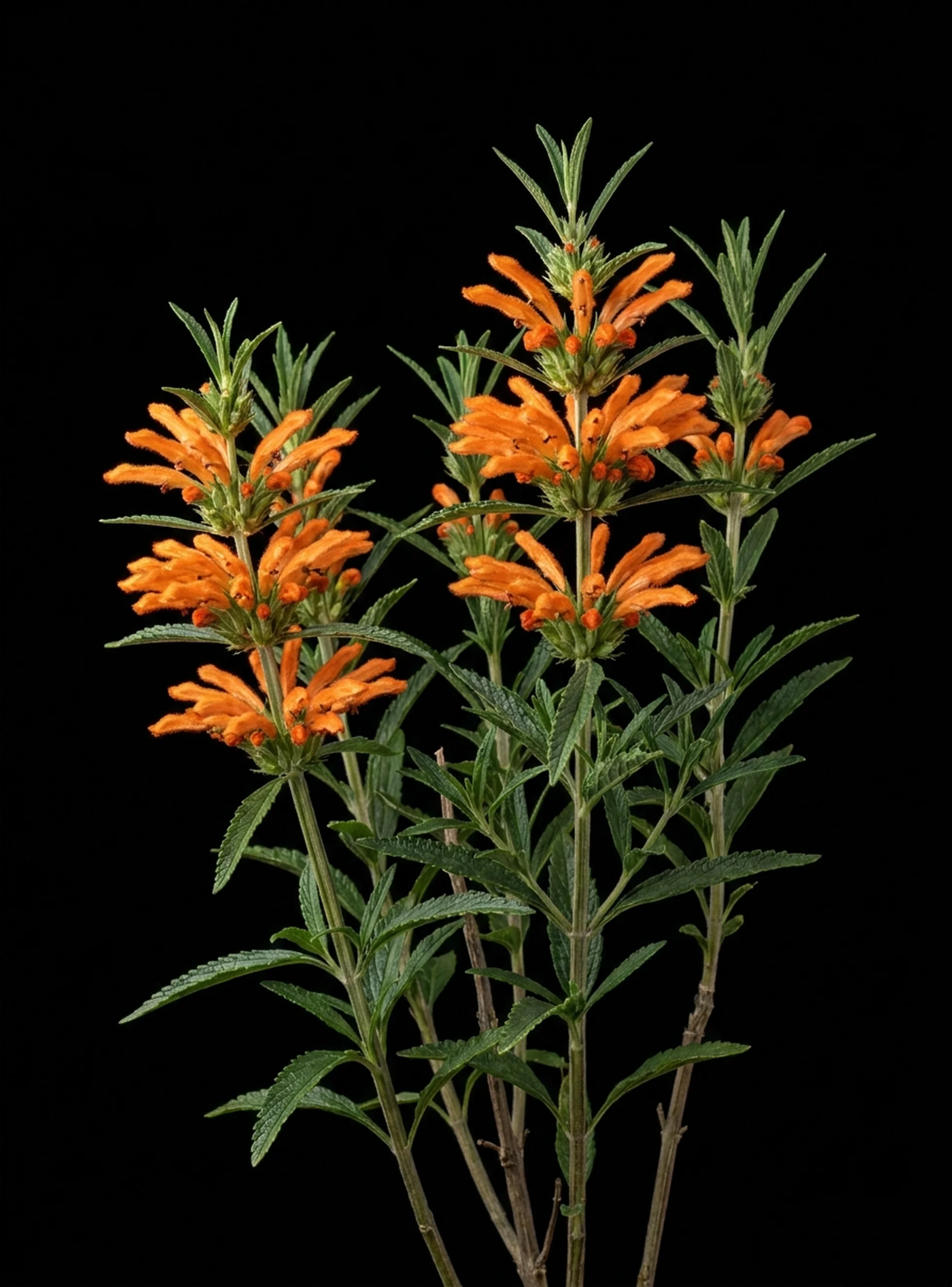
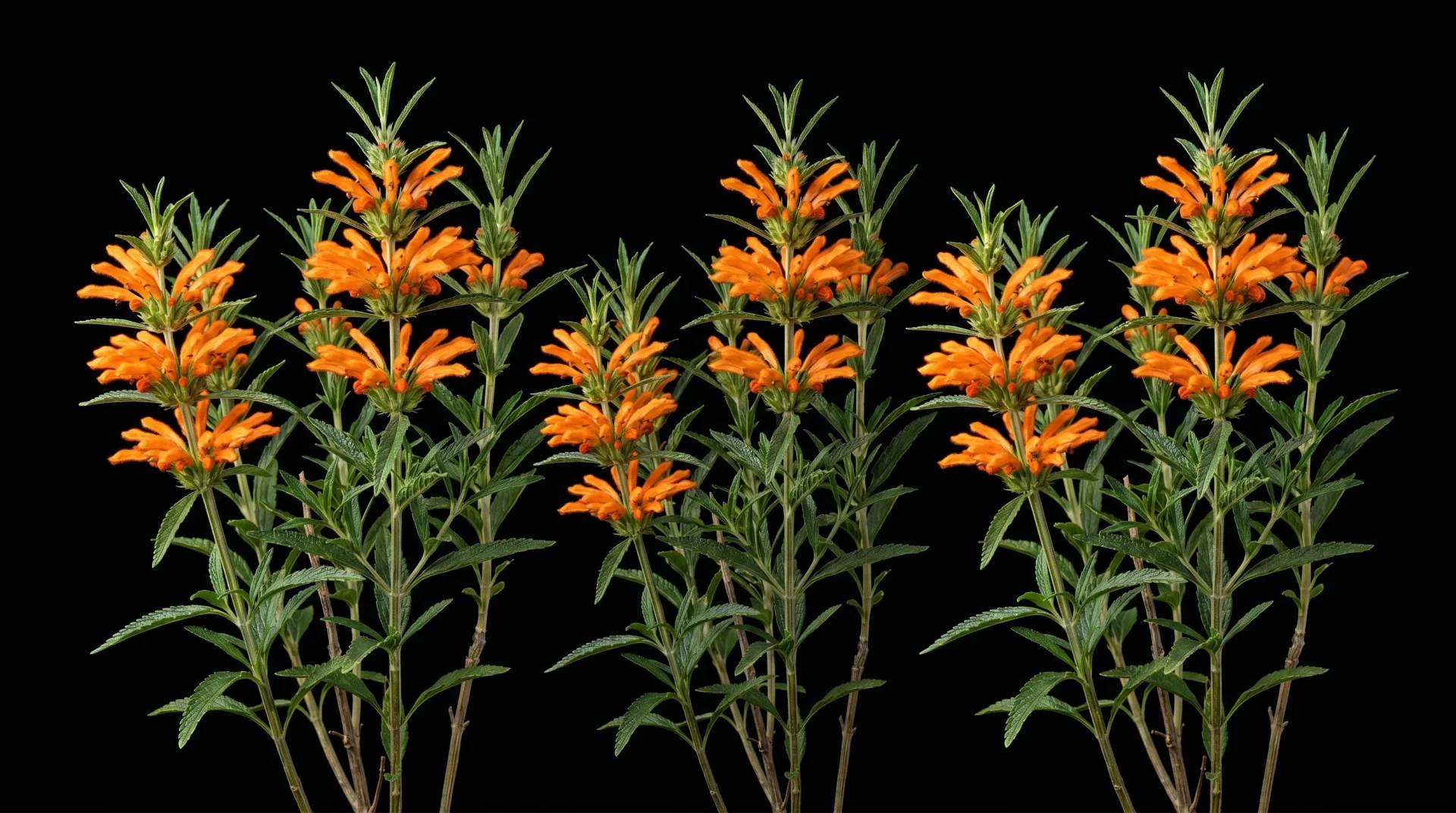
On the dry slopes of the Western Cape, a tall shrub puts out tiered whorls of orange tubular flowers, fuzzy at the lip, the shape that gave the plant its Greek name (lion's ear). Sunbirds drink from the base of those flowers. For at least a few centuries, and probably much longer, the Khoekhoe and San people of southern Africa dried the leaves and resin and smoked them to settle the nervous system into a quieter register.
Its colonial nickname ("wild dagga," wild cannabis) has shadowed the plant ever since. Settlers met it in the same pipes that held Cannabis sativa and assumed kinship. The chemistry says otherwise. Leonotis leonurus contains no THC and is not botanically related to cannabis. What it does, it does through a different door: a quiet labdane-diterpene chemistry, a possible Sigma-1 receptor signal, a recently identified fatty amide that may flirt with the endocannabinoid system. The result, in most reports, is small. A softening, not a journey.
This is a gentle plant with a complicated reputation. Worth meeting on its own terms.
The substance
Scientific name: Leonotis leonurus (L.) R. Br. Family: Lamiaceae (the mint family) Common names: wild dagga, lion's ear, lion's tail; wildedagga and duiwelstabak in Afrikaans; imvovo, utywala-bengcungcu, and umfincafincane in isiXhosa; umfincafincane, umcwili, imunyane, and utshwala-bezinyoni in isiZulu.
The genus name comes from the Greek leon (lion) and -otis (ear), referring to the pubescent upper lip of the flower. The word dagga itself is borrowed from the Khoekhoe dachab, originally a term for cannabis, which is the source of the long-running confusion between this plant and Cannabis sativa. The two share a name and a smoking history. They share almost nothing else.
In the broader taxonomy of psychoactive plants, Leonotis leonurus sits with mild herbal anxiolytics (closer in profile to lemon balm, valerian, or passionflower than to classical psychedelics or cannabis). It is a perennial evergreen shrub, one to two meters tall, native to South Africa's eastern and southern seaboard, and a familiar ornamental in gardens worldwide.
Strength and duration
Intensity profile
Variability: Moderate (varies with dose and setting)
Duration
Chemistry and mechanism
Over fifty compounds have been isolated from Leonotis leonurus. The dominant family is labdane-type diterpenes, with marrubiin (the bitter principle of many Lamiaceae) present at roughly 0.1 to 1 percent of dry plant material. A series of novel diterpenes designated leoleorins A through J has been characterized through X-ray crystallography and screened against central nervous system receptors.
The most interesting binding result, so far, comes from leoleorin C, which shows moderate affinity (Ki = 2.9 μM) at the Sigma-1 receptor. Sigma-1 is a chaperone protein in the endoplasmic reticulum that modulates intracellular calcium signaling and mitochondrial function. Agonism at this site can produce mild psychoactive and anxiolytic effects, and researchers have hypothesized that this is the most plausible mediator of wild dagga's reported calming effect. The evidence is correlative, not causal.
Other labdanes show lower-affinity binding across multiple sites: 5-HT1A and 5-HT3 (serotonin), D1 (dopamine), H1 (histamine), and M3 (muscarinic acetylcholine). The picture is one of broad, shallow binding rather than the selective, high-affinity targeting that characterizes psilocybin (5-HT2A) or THC (CB1).
A more recent finding adds a twist: a phytocannabinoid-like fatty amide, 7,10,13,16-docosatetraenoylethanolamine (adrenoyl-EA), has been tentatively identified in the white-flowered variety. Adrenoyl-EA resembles the endocannabinoid anandamide and may have weak CB1 activity. Whether it contributes to the felt experience in humans is still unknown.
A piece of older literature needs correcting. For decades, popular references named leonurine as wild dagga's main psychoactive alkaloid. Modern HPLC analysis has shown leonurine is not present in Leonotis leonurus at all. It does occur in the Asian Leonurus species (motherworts), which share a similar name but are different plants. The actual psychoactive principle of wild dagga is still, candidly, unidentified.

How people encounter it
Most people meet wild dagga in one of two forms: as smoke, or as tea.
Smoking is the older method. Khoekhoe and San traditions involved scraping the resin from leaves and flowers, rolling it into small balls, and smoking it in a pipe, often within social or ritual contexts. In contemporary use, the dried leaves and flowers are smoked alone or blended with other herbs (mullein, peppermint, damiana). Inhalation produces the fastest and clearest effects, with onset within 2 to 15 minutes and a peak between 20 and 90 minutes. The total experience tends to last 1 to 4 hours.
Tea or infusion is the gentler route. Dried flowers steeped in hot water for several minutes produce a bitter herbal drink. The oral route involves first-pass metabolism in the liver, which delays onset to 30 to 90 minutes and substantially reduces peak intensity. Some people report effects so subtle through tea that they are difficult to distinguish from baseline. Total duration extends longer, often 3 to 8 hours of mild calm.
Tinctures (alcohol extractions) sit between the two, though they are uncommon and poorly documented in the literature.
Wild dagga is also widely sold simply as an ornamental. It grows readily in gardens across most temperate climates, and a great deal of the plant material in commercial herbal markets comes from cultivated rather than wild-harvested sources.
A caution worth flagging here, not just in the risks section: commercial "wild dagga" products have been documented as adulterated with synthetic cannabinoids (JWH-018 and others) to manufacture a stronger effect. The plant itself is mild. Anything sold as a cannabis-strength alternative is suspect.

Origin and history
Leonotis leonurus is native to southern Africa, concentrated along the wetter eastern and southern seaboard of what is now South Africa. It grows in the fynbos biome (one of the most biodiverse plant communities on earth) and across grassland margins from the coast up to nearly 2,000 meters of elevation. Sunbirds pollinate it. Children, traditionally, sipped nectar from the flower base.
The oldest documented users are the Khoekhoe (historically called Khoikhoi by colonial sources) and the San, the indigenous pastoralist and hunter-gatherer peoples of southern Africa. They smoked the dried plant for its mild calming and euphoric effects, and incorporated it into ceremonial and divinatory practice. Precise dating is uncertain, but Khoekhoe use predates European contact, which began in the seventeenth century.
With the Bantu migrations south, the Xhosa and Zulu peoples adopted and adapted wild dagga into their own traditional medicine systems. Xhosa traditional healers (sangomas) used decoctions and infusions for inflammation, pain, respiratory complaints, and epilepsy. The plant remains widely available today in traditional medicine markets across the Eastern Cape and KwaZulu-Natal.
The word dagga itself comes from the Khoekhoe dachab, a term for cannabis. When Dutch settlers in the 1600s saw indigenous people smoking Leonotis leonurus in pipes, they assumed it was a wild relative of cannabis and called it wildedagga. The misnaming has stuck for three and a half centuries.
Unlike cannabis, wild dagga was never targeted by colonial or post-colonial drug prohibition. It moved quietly through the twentieth century as an ornamental and a folk remedy. Two things changed in the 2000s. First, online "legal highs" retailers began marketing wild dagga as a cannabis substitute, accelerating its commercial spread. Second, the practice of adulterating commercial product with synthetic cannabinoids was documented, prompting Poland (March 2009) and Latvia (November 2009) to schedule the plant. These remain the only two countries with active prohibition. Most of the world, including the United States at the federal level and South Africa itself, leaves it unscheduled.
A more recent thread: in 2020, researchers tentatively identified a phytocannabinoid-like compound (adrenoyl-EA) in the white-flowered variety. The discovery reopened questions about the plant's actual mechanism after decades of assumption.

Effects
Wild dagga is a quiet plant. Its composite strength rates 2 out of 10 (Gentle), and that number is probably the most important fact about the experience. People expecting something cannabis-shaped, or psychedelic-shaped, are usually disappointed. People expecting a herbal anxiolytic, something closer to chamomile or lemon balm with a slightly more interesting edge, tend to find what is actually there.
Perceptually, the experience is subtle (1.8/10). Visual phenomena are absent. There are no tracers, no patterning, no shifts in the world's appearance. Some people report a mild enhancement of touch, music, and color, more like the heightened sensitivity that follows a long deep breath than like a perceptual alteration. The visual field stays anchored.
Cognitively, the score is similarly low (2.3/10). The most commonly reported shift is a softening of mental chatter. Anxious or racing thoughts may slow, and people often describe their thinking as "clearer but quieter." Memory and rational function remain intact. Time can feel slightly compressed. Some people notice a window of easier introspection, where thoughts and feelings become more accessible without becoming overwhelming.
Emotionally, the strongest of the four dimensions, though still mild (2.8/10). The dominant note is calm, sometimes with a thread of mild euphoria laid over it. "Contentment" appears more often in reports than "pleasure." The emotional landscape does not flood or break open. Tension, particularly the bracing tension that lives in the shoulders and jaw, often releases. Some people describe it as the relief of putting something down that they did not realize they were carrying.
Somatically, the effects are minimal (1.8/10). Muscles soften. Body awareness can heighten. Coordination and motor function stay intact, and most people remain functional throughout the experience (capable of conversation, walking, reading, work that does not require fine focus). Mild nausea is uncommon but possible at higher doses, particularly through tea.
The overall arc is gradual: a slow entry, a modest plateau, a gentle return. No dissolution of self, no boundary loss, no crisis. Variability between people is significant, however. Roughly two thirds of users report clear effects; the remaining third report something so subtle they wonder if they felt anything at all. Some of this variability comes from plant material (essential oil composition differs between coastal and inland populations of the plant). Some comes from individual neurobiology. And some, almost certainly, comes from expectation.
A note before reading
Each experience is different. What you may notice depends on dose, setting, and the body and mind you bring to it.
What people often notice
Visual
Visuals tend to stay soft and mostly closed-eye, often subtle textures or gentle color shifts behind the eyelids.
Cognitive
Thoughts often settle. The mind tends to feel quieter, slower, more able to rest with what is.

Risks and limits
Wild dagga has a relatively benign safety profile compared to most psychoactive substances, but "natural" is not the same as "safe," and there are real considerations.
The most important practical risk is adulteration, not the plant itself. Commercial "wild dagga" products have been documented as sprayed with synthetic cannabinoids (JWH-018, CP 47,497, and related compounds) to amplify potency. These synthetics carry very different and far more serious risks than the plant: paranoia, palpitations, seizures, hospital admissions. If a product feels markedly stronger than the gentle profile described in the literature, adulteration is a real possibility. Sourcing from reputable herbal vendors, or growing the plant directly, sidesteps this risk.
Animal toxicity studies have shown dose-dependent effects on the liver, kidneys, and blood at high doses (1,600 mg/kg and above in rodents), with lethal effects at 3,200 mg/kg. Scaling to humans, the lethal threshold from the plant alone would require consuming quantities far beyond any documented use pattern. Still, the hepatic findings suggest that very heavy or sustained use may not be benign, and one human case report described transient elevated liver enzymes after several months of high-dose tincture use.
Drug interactions are theoretical rather than well-characterized. Caution is reasonable with: antihypertensive medications (animal studies show mild blood-pressure-lowering effects); CNS depressants including benzodiazepines, alcohol, and other sedative herbs (additive sedation is plausible); SSRIs and other serotonergic medications (some labdane diterpenes bind 5-HT receptors); and drugs metabolized through cytochrome P450 enzymes.
Populations who should avoid wild dagga or proceed only with care:
- ●People who are pregnant or breastfeeding (no human safety data exists)
- ●Children under 12 (no pediatric safety data)
- ●People with severe hypotension, advanced liver disease, or significant cardiac disease
- ●People with known allergies to the mint family (Lamiaceae)
- ●People with a personal or family history of psychotic disorders, where any consciousness-altering substance warrants caution
Respiratory considerations apply to smoking any plant material. Combustion produces particulate matter, heat, and irritants regardless of the herb involved. Tea is gentler on the lungs.
Set and setting matter less here than with stronger substances, but they still matter. A calm context will tend to deepen the calm. A chaotic context will tend to leave the effect feeling muted or strange. Support is rarely necessary, but having someone trusted nearby for a first encounter remains a sensible practice.

Integration and aftercare
Integration after a wild dagga experience is rarely the dramatic, weeks-long process that follows a high-dose psychedelic. The effects are mild enough that for many people the experience simply ends, like the end of a long quiet afternoon. Nothing requires processing.
And yet there can be something there worth attending to, especially during the experience itself. The plant tends to open a small window of softer introspection, where thoughts that usually rush past become available to notice. People sometimes meet a low-grade tension they had been carrying without knowing, or feel an emotion they had been holding at arm's length. These are small signals, easy to miss, easy to dismiss as nothing.
The practice, then, is mostly about noticing. A few suggestions:
Journaling during or shortly after the experience can capture observations that would otherwise dissolve. Even a few sentences (what eased, what surfaced, what felt different) build a record over time.
Rest matters more than effort. The calm that wild dagga offers is, in part, an invitation to do less. Letting it settle into a slow evening, a long walk, or sleep tends to extend its usefulness.
Conversation with a trusted friend can sharpen what was felt, particularly if the experience surfaced something you had not expected. The aim is not to interpret but to articulate.
Repeated use with attention can teach more than a single experience. People who return to wild dagga over weeks or months often describe a deepening sense of what it offers and what it does not, separate from any expectation about what plant medicine "should" do.
There is no breakthrough to wait for here. The plant works at the volume of a slow exhale. If you are using it for anxiety or sleep, the integration might be as simple as paying attention to whether your relationship with rest is shifting over time. If you are using it for introspection, the integration is the noticing itself.
One caution worth holding: mild substances can become habitual without the friction that flags overuse with stronger substances. Periodic pauses (a week, a month) help check whether use is intentional or merely default.
Legal and ethical context
Leonotis leonurus is classified Least Concern on the Red List of South African plants. It grows readily, tolerates poor soil, requires little water, and propagates easily from seed and cutting. Cultivation, whether for ornament or for personal use, places minimal pressure on wild populations. This is an unusually low-impact plant.
In its native habitat, wild dagga matters ecologically as a nectar source. Sunbirds (Whitebellied, Black, Yellowbellied, Olive, Collared, Marico) feed at the tubular orange flowers, and the plant supports avian communities particularly in fynbos and grassland zones where floral resources face pressure from agricultural conversion. Honoring the plant ecologically tends to mean preserving the broader habitat, not just the species.
The more complicated question is cultural. Leonotis leonurus is South African by origin and indigenous in use. The Khoekhoe and San peoples, and later the Xhosa and Zulu, developed the practical knowledge of how to dry, prepare, and use the plant. That knowledge is the reason wild dagga sits in herbal markets across Europe and North America today. The contemporary commercial chain (online retailers, smokeshops, "legal highs" suppliers) captures most of the value while the source communities receive almost none of it.
Wild dagga has not generated the prominent backlash against commercial appropriation that has formed around white sage, palo santo, or ayahuasca. This may reflect that source communities have raised fewer concerns, or it may reflect that South African voices are simply less heard in the English-language marketplace. Both are possible.
A reasonable practice for someone using wild dagga outside South Africa: acknowledge where the plant comes from and who taught the world how to use it. Where possible, source from suppliers with clear sustainability and equity practices. Grow your own when you can; the plant rewards the gesture. Recognize that calling it "wild dagga" carries a colonial misnaming, and consider learning at least one of its indigenous names (imvovo, umfincafincane).
Legal status varies by country and is documented separately in this profile. Legality is a useful practical fact, but it is not the same as ethical clarity, and a plant being legal does not settle the question of how to be in right relationship with it.
Common misconceptions
Frequently asked questions

Reflection
There is a particular kind of plant that does not announce itself. It does not break the world open. It does not deliver a vision. It loosens something small, and then it lets you go.
Wild dagga has been carrying a borrowed name for three and a half centuries, mistaken for a stronger relative it does not resemble. The marketplace has tried to make it act bigger than it is, sometimes by spraying it with synthetic chemicals to deliver the cannabis impression its name implies. None of this is the plant's fault. The plant, on its own terms, is a patient and undramatic teacher of what calm actually feels like, in a culture that has mostly forgotten.
What does it mean to value a medicine that does not promise transformation? What might we learn from spending time with something quiet?
Sources
Phytochemistry and pharmacology
- ●Nkomo, M., Koorbanally, N. A., Crouch, D. J., & Shaik, S. (2012). Labdane diterpenoids from Leonotis leonurus. Journal of Natural Products, 75(5), 1064-1072. doi: 10.1021/np300118f.
- ●Steenkamp, V., & Gouws, M. C. (2006). Phytochemical characterisation of Leonotis leonurus and assessment of anti-inflammatory activity. Journal of Ethnopharmacology, 108(1), 154-160.
- ●Steenkamp, V. (2012). A review of the traditional use and phytochemistry of Leonotis leonurus. Journal of Ethnopharmacology, 143(2), 531-540. doi: 10.1016/j.jep.2012.07.044.
- ●Madikizela, B., & Ndhlovu, M. (2020). Toward the identification of a phytocannabinoid-like compound in Leonotis leonurus. Journal of Natural Products, 83(11), 3297-3305.
Traditional use and ethnobotany
- ●Ojewole, J. A. (2005). Antinociceptive, anti-inflammatory and antidiabetic effects of Leonotis leonurus (L.) R. Br. [Lamiaceae] leaf aqueous extract in mice and rats. Methods and Findings in Experimental and Clinical Pharmacology, 27(4), 257-264.
- ●Fabricant, D. S., & Farnsworth, N. R. (2001). The value of plants used in traditional medicine for drug discovery. Environmental Health Perspectives, 109(Suppl 1), 69-75.
- ●Akerele, O., Heywood, V., & Synge, H. (Eds.). (1991). Conservation of Medicinal Plants. Cambridge University Press.
Methods and analytical
- ●Kotze, M., & Eloff, J. N. (2002). Extraction, isolation and identification of antimicrobial components of plants: Selectivity and bioassay. Journal of Ethnopharmacology, 78(2-3), 151-157.
- ●Lopes-Lutz, D., Alviano, D. S., Alviano, C. S., & Kolodziejczyk, P. P. (2008). Screening of chemical composition, antimicrobial and antioxidant activities of Artemisia essential oils. Phytochemistry, 69(8), 1732-1738.
Botanical and conservation references
- ●Leonotis leonurus. Wikipedia. https://en.wikipedia.org/wiki/Leonotis_leonurus
- ●PlantZAfrica. Leonotis leonurus. South African National Biodiversity Institute. https://pza.sanbi.org/leonotis-leonurus
Support resources
- ●SAMHSA National Helpline. Substance Use and Mental Health Services. https://www.samhsa.gov/find-help/helplines
For how we evaluate sources and structure our claims, see the methodology.