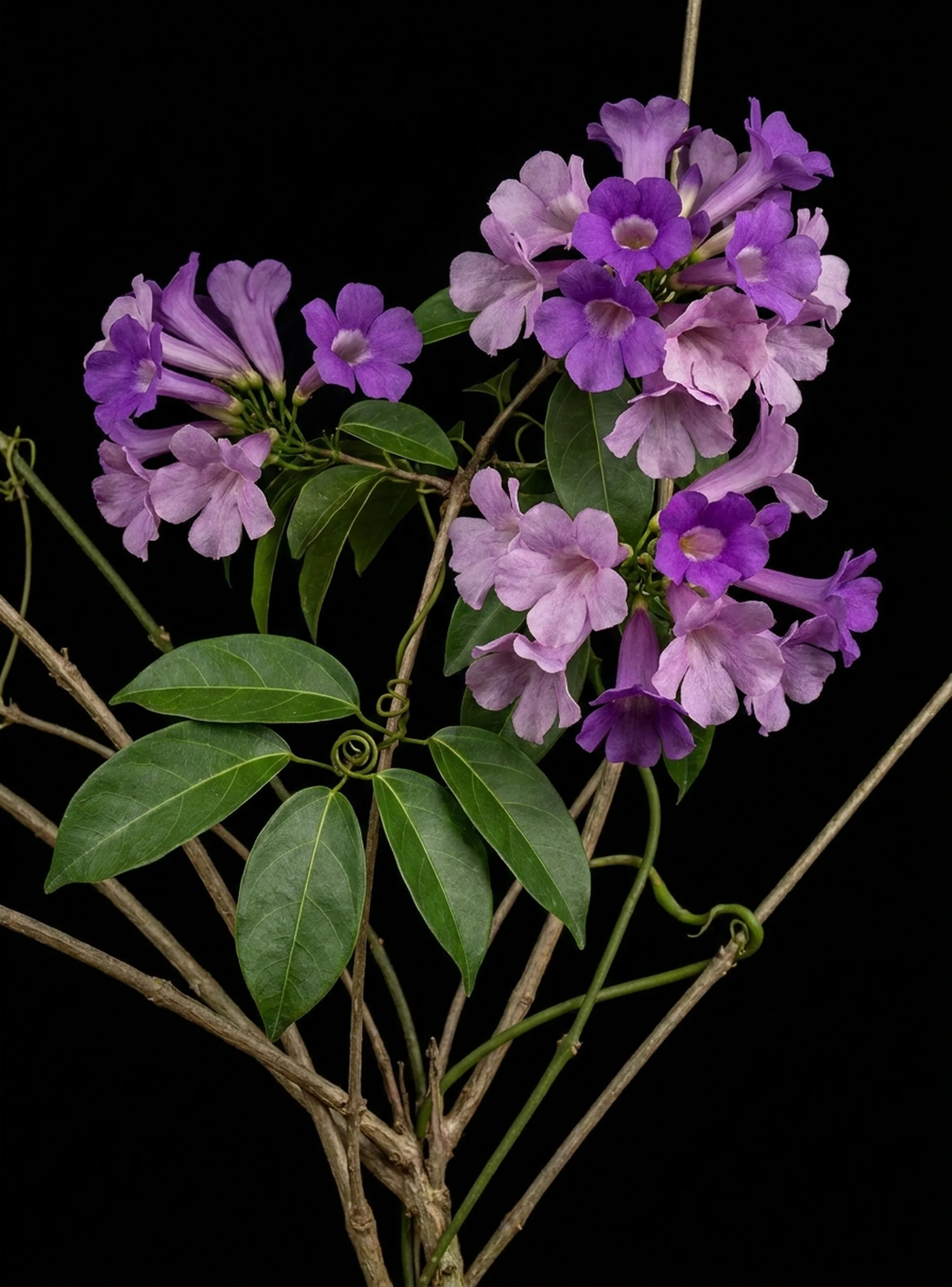

Ajo Sacha is an Amazonian liana (Mansoa alliacea) with a distinctive garlic aroma, used in Shipibo and other traditions as a master plant for cleansing, protection, and spiritual clarity.
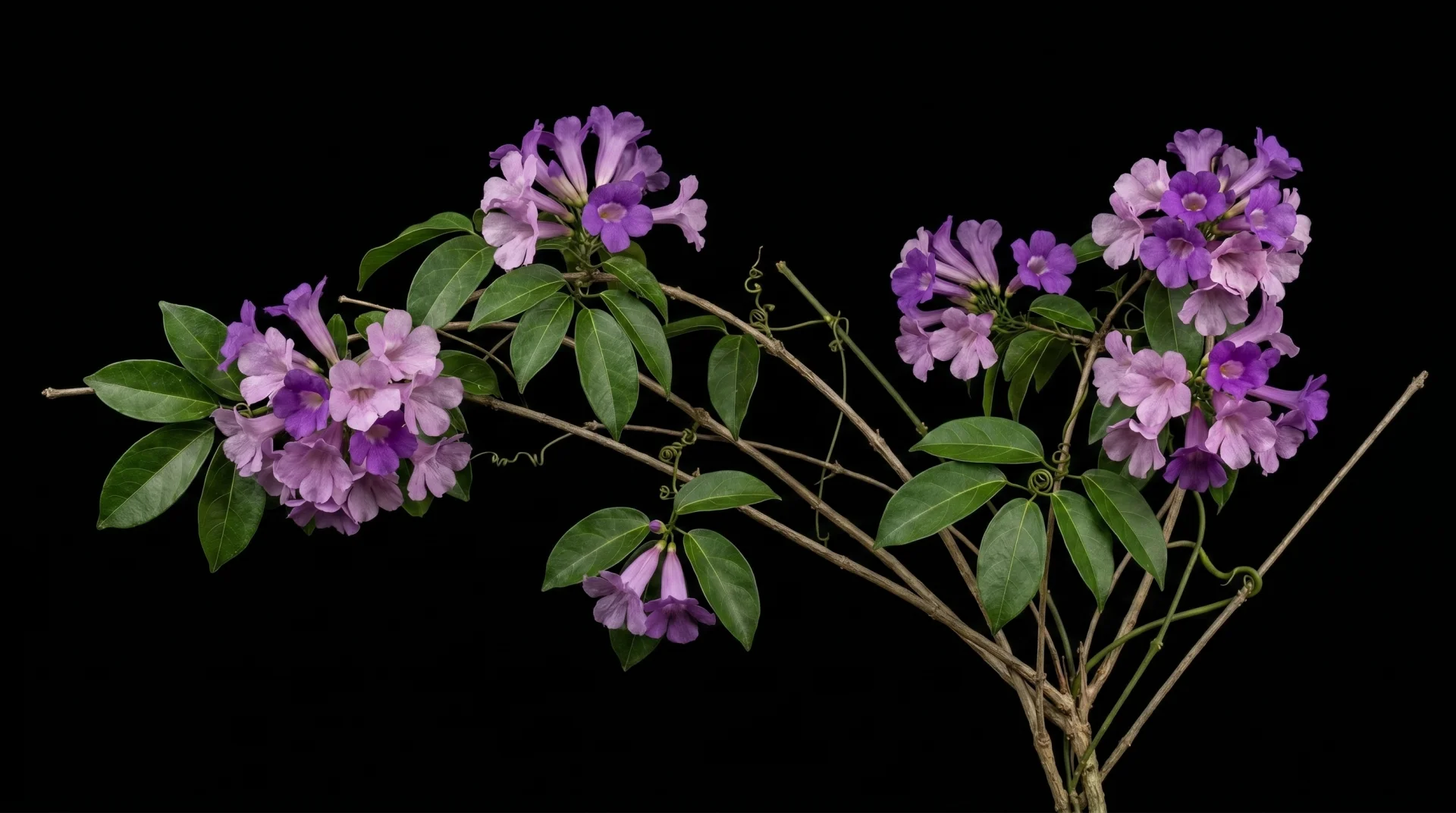
Ajo Sacha is an Amazonian liana (Mansoa alliacea) with a distinctive garlic aroma, used in Shipibo and other traditions as a master plant for cleansing, protection, and spiritual clarity.
Ajo
Sacha
Fact file
- Type
- Plant
- Origin
- the plant remains legal or unspecified in its legal status in most jurisdictions including Peru and Brazil where it is cultivated and traded commercially within the ethnobotanical and herbal medicine markets.
- Duration
- 4h
- Strength
- Gentle
- Legal status
- Legal in 34 of 35 listed jurisdictions, and varies elsewhere
What is Ajo Sacha?
Crush a leaf in the upper Amazon and the air fills with garlic. The plant is a vine, not a tree, and the smell is the first reason its name holds: ajo for garlic, sacha for forest or wild. The second reason takes longer to surface. In Shipibo-Conibo and mestizo curandero traditions, ajo sacha is treated as a senior plant ally, taken during long fasts called dietas to clear stagnation, steady the nervous system, and prepare a person for stronger medicines. Yet its chemistry is quiet. There are no tryptamines here, no beta-carbolines, no familiar psychedelic alkaloids. What there is, instead, is a dense weave of sulfur compounds, polyphenols, and flavonoids. The reputation and the pharmacology tell different stories, and learning to hold both at once is part of meeting this plant honestly. Ajo sacha is gentle. The work it asks for is not.
The substance
Scientific name: Mansoa alliacea (Lam.) A.H.Gentry
Family: Bignoniaceae (the trumpet-creeper family)
Common names: ajo sacha, garlic vine, false garlic, bejuco de ajo, cipó alho
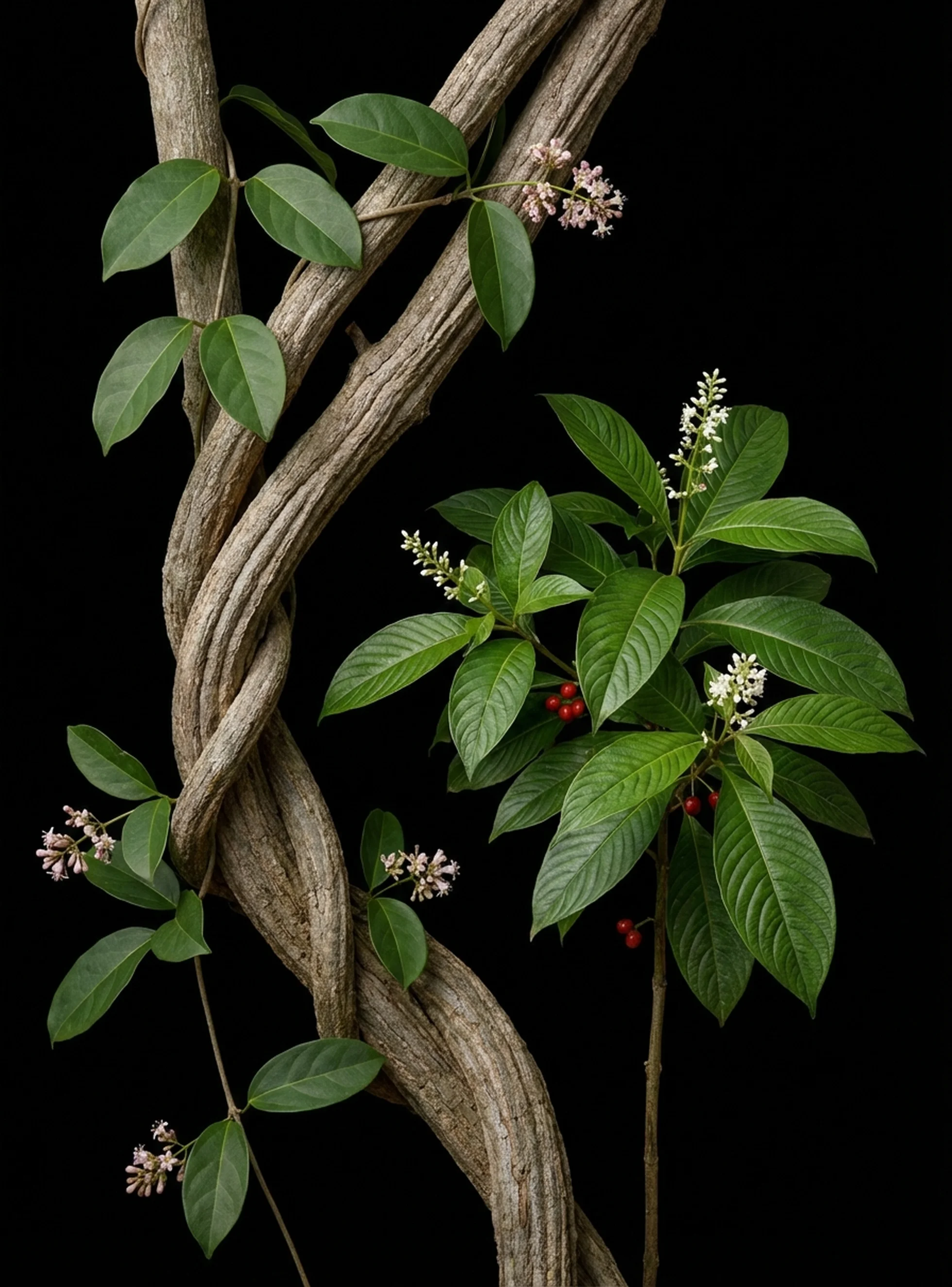
Ajo sacha is an evergreen woody liana, not a tree. Multiple stems climb from a central root system, reaching two to three metres along host vegetation. The compound leaves carry a central tendril and release a pronounced garlic-like odor when bruised. Twice yearly, the vine produces clusters of funnel-shaped flowers, roughly six centimetres across, deep purple fading to mauve as they age.
Within the broader taxonomy of psychoactive substances, ajo sacha sits at the edge rather than the centre. It contains no documented serotonergic, dopaminergic, or tryptaminergic compounds. Its pharmacology aligns it more closely with adaptogenic and anti-inflammatory plants than with classical entheogens. Cultural practice places it among the plantas maestras of Amazonian healing, but the substance itself is botanically distinct from the alkaloid-bearing plants that anchor that category in scientific literature.
Strength and duration
Intensity profile
Duration
Chemistry and mechanism
The chemistry of ajo sacha is striking less for any single molecule than for what is missing. There are no tryptamines, no beta-carbolines, no compounds known to agonize the serotonin 5-HT2A receptor that mediates classical psychedelic experiences.
What the plant does contain is a layered phytochemistry. The garlic aroma comes from sulfur compounds (allicin, allyl sulfides, diallyl disulfide) chemically analogous to those in culinary garlic. Layered on top are polyphenols and flavonoids, notably luteolin and apigenin, which appear in unusually high concentrations in the leaves. The wood holds two pyranonaphthoquinones (mansonin A and B), isolated only in 2021. Phytosterols, ursolic acid, tannins, and a class of undifferentiated alkaloids round out the profile.
Mechanistically, the action is peripheral and systemic rather than central. The polyphenols scavenge reactive oxygen species and inhibit cyclooxygenase (COX-1 and COX-2), the enzymes responsible for inflammatory cascades. A 2017 mouse model documented antinociceptive (pain-relieving) effects through delta-opioid receptor activity, not the mu-opioid pathway used by morphine and similar drugs. The alkaloids show anthelmintic activity, disrupting neurotransmission in parasitic worms by blocking acetylcholine and GABA receptors in those organisms; the same effect does not translate to mammalian central nervous system activity.
Flavonoids like luteolin can modulate GABA receptor function in vitro, which may contribute to the calming, nervous-system-stabilizing reputation of the plant in traditional use. Pharmacokinetics in humans remain largely uncharacterized: absorption, half-life, and metabolism of specific M. alliacea compounds have not been formally studied. The picture, in short, is of a plant that works through inflammation, oxidative stress, and parasitic neuromuscular pathways, not through consciousness-altering receptor agonism.

How people encounter it
People meet ajo sacha in several distinct contexts, and the context shapes the encounter as much as the plant does.
The most ceremonially elaborated form is the dieta, a structured retreat in mestizo and Shipibo-Conibo curanderismo. Participants spend days to weeks (sometimes a full lunar cycle) in dietary restriction and relative isolation, drinking a daily infusion of leaves prepared in hot water. Effects build cumulatively rather than acutely. A maestro or maestra oversees the process and helps interpret what surfaces, particularly in dreams.
Outside the dieta, ajo sacha appears as a plant bath. Bark or leaves are steeped in warm water and used as a topical wash, with the stated intention of clearing energetic stagnation, fevers, or what curanderos call manchiari, a culturally recognized condition of nervous shock. Bunches of dried leaves are also hung in homes as protection.
In ayahuasca contexts, ajo sacha sometimes appears as an admixture or adjunct, added to a brew or taken alongside it. The intent here is not to amplify visions but to provide grounding, energetic protection, and post-ceremony stabilization.
In Western herbal commerce, the plant is sold most often as dried, shredded leaf material, capsules, or powder, marketed for anti-inflammatory and general wellness use. This route is the most common encounter outside South America and the most pharmacologically isolated, removed from the dieta structure that traditional practice considers integral.
Onset for an acute oral dose tends to appear gradually, often within twenty to forty minutes as a subtle warmth or shift in mental clarity. The acute window runs roughly four hours, with longer aftereffects (notably vivid dreams) extending into the following day or two. The dieta operates on a different timescale entirely, measured in weeks rather than hours.

Origin and history
The recorded history of ajo sacha is shorter than the use of it. The plant grows wild from the Amazon basin proper through Peru, Ecuador, Colombia, Venezuela, the Guianas, and northward into Costa Rica. Across that range, multiple unrelated indigenous peoples developed parallel knowledge of its properties, a pattern that suggests deep familiarity rather than recent diffusion.
The Ese'eja of the Peru-Bolivia borderlands prepared leaf tea for colds and respiratory complaints. The Amuesha (Yanesha) of the Peruvian Amazon used it for reproductive and fertility support. The Wayãpi applied warm leaf baths for fevers. The Yanomami treated headaches, fevers, and general pain with infusions, and used the plant to cultivate energetic protection. The most elaborate ceremonial integration came from the Shipibo-Conibo, who folded ajo sacha into the formal dieta tradition as a planta maestra, a teacher plant approached for clarity, perception, and what practitioners describe as the capacity to confront and transmute stagnant inner conditions.
Formal Western documentation began comparatively late. James Duke and other ethnobotanists catalogued the plant's chemistry and traditional uses through the 1980s and 1990s. The first controlled pharmacological study, demonstrating antinociceptive effects via opioid mechanisms in a mouse pain model, was published in 2017. The two novel pyranonaphthoquinones (mansonin A and B) were isolated in 2021. A 2024 study used the plant as a substrate for green-chemistry silver nanoparticle synthesis with documented antimicrobial activity.
Unlike ayahuasca, ajo sacha was largely invisible to colonial and post-colonial drug control regimes. Its non-psychoactive chemistry kept it outside the regulatory frame that targeted DMT-bearing plants. It persisted quietly through colonization and into modern commerce, sold today in herbal markets across Peru, Brazil, and the wider world without the legal and ethical contests that surround stronger Amazonian medicines.

Effects
Ajo sacha is calibrated as gentle. The composite intensity sits at 2 out of 10. There is no acute peak the way classical psychedelics have a peak. The experience, if that word still fits, is closer to a slow shift in baseline than to a discrete event. Because much of what is documented comes from the extended dieta context rather than from controlled phenomenological studies, what follows is sketched rather than mapped.
Perceptual intensity rates 2 out of 10. The plant does not produce hallucinations, visual geometry, or distortion of space. Some practitioners describe enhanced sensory clarity, a feeling of seeing or hearing more attentively, but this is a sharpening rather than an alteration. One first-person account from a dieta describes hypnagogic phenomena at the edge of sleep (figures perceived in the maloka, a flute-like sound on the threshold of waking) rather than waking visions. These borderland experiences appear to depend heavily on the dieta context.
Cognitive intensity rates 2.5 out of 10. The reported quality is clarity rather than disruption. Practitioners speak of mental focus, introspective access, and a steady inner attention rather than novel ideation or cognitive flooding. Shipibo healers traditionally use ajo sacha during sessions specifically to support clear seeing.
Emotional intensity rates 3.5 out of 10, the highest of the four dimensions. This is where the plant tends to be most active. Practitioners report emotional clearing, sometimes spontaneous tears or release of long-held material, often described as movement out of stuck or stagnant states rather than as catharsis under duress. The emotional work tends to feel directed and self-paced rather than overwhelming. Within Shipibo terminology, the plant is sometimes called sinchi medicina, strong medicine, in the sense of strength and resilience rather than intensity.
Somatic intensity rates 1.5 out of 10. The most commonly reported physical sensation is a warm tingling distributed through the body. Nausea, tremor, and cardiovascular activation are not characteristic. Some women in extended dietas report a continuous white vaginal discharge, interpreted within the tradition as a cleansing process; this is documented as anecdotal rather than medical observation.
Dreams tend to grow vivid and lucid for the duration of the dieta and for one to four weeks after. This appears to be the most consistent reported feature across accounts, though it has not been studied in formal sleep architecture research.
A note before reading
Each experience is different. What you may notice depends on dose, setting, and the body and mind you bring to it.
What people often notice
Visual
Visuals tend to stay soft and mostly closed-eye, often subtle textures or gentle color shifts behind the eyelids.
Cognitive
Thoughts often settle. The mind tends to feel quieter, slower, more able to rest with what is.

Risks and limits
The documented safety profile of ajo sacha is favorable. No fatalities or serious organ toxicity have been reported in either traditional use or contemporary research. The most commonly reported adverse effect is mild gastrointestinal upset at higher intake or in sensitive individuals.
Drug interactions remain the most important practical caution. The plant's polyphenols and flavonoids may interact with cytochrome P450 enzymes, particularly CYP3A4, which metabolizes a wide range of prescription medications. Formal pharmacokinetic studies have not been conducted, so this is a theoretical risk rather than an established one, but it is the most plausible mechanism for trouble. People taking anticoagulants (warfarin, apixaban), narrow-therapeutic-index drugs, or any medication where small changes in blood levels matter should treat ajo sacha with care.
Population-specific risks. No formal teratogenicity studies exist; standard precaution applies during pregnancy. The plant has anti-inflammatory and mild anticoagulant-modulating properties, which is worth noting for anyone with bleeding disorders or pending surgery. Allergy to other Bignoniaceae plants is theoretically a contraindication, though specific allergen profiles have not been characterized.
Psychological risk is comparatively low. The absence of hallucinogenic alkaloids means the plant does not carry the acute-crisis risk profile of classical psychedelics. No documented cases of panic, psychosis, or depersonalization have been linked to traditional use. The traditional use of ajo sacha in pediatric contexts (treating manchiari, the nervous-shock condition) is one indirect signal of how gentle the plant is considered to be in its source cultures.
Limits of the data. No randomized human trials have been published for any indication. Pharmacokinetics in humans are uncharacterized. Long-term safety in continuous use has not been studied. The safety profile is favorable, but it rests largely on tradition and on small in vitro and animal studies rather than on contemporary clinical evidence.
The deeper safety question with ajo sacha is rarely physical. It is contextual. The dieta protocol is a serious commitment in time, isolation, and dietary restriction, and the most pronounced effects (emotional release, vivid dreams, perceptual sensitivity) are also the most demanding to integrate. Set, setting, and the presence of someone who knows the tradition matter here, even though the pharmacology is mild.

Integration and aftercare
Integration after ajo sacha tends to look quieter than integration after stronger plants, but it is not necessarily shorter. The reported aftereffects (emotional spaciousness, vivid and lucid dreams, residual perceptual sensitivity) often persist for one to four weeks after a dieta concludes, and some practitioners describe slow shifts that continue to surface for two to three months.
Because the experience is rarely dramatic, the temptation is to treat it as finished as soon as the formal protocol ends. Traditional practice resists that. Re-entry is itself a stage. Many curanderos prescribe a continued period of careful eating and limited stimulation after the dieta closes, on the understanding that the plant's teaching can still be deepened or undone in the weeks that follow.
What seems to support integration most reliably (drawing on broader plant medicine research, since direct studies on ajo sacha are absent) is some combination of slow re-entry, attention paid to dreams, and a place to talk through what surfaced. Journaling can be useful, both for the night material and for emotions that move into the day. Time in nature, particularly time spent quietly rather than on a schedule, tends to extend the calmer baseline the plant seems to offer. Community matters too, especially community with people who understand that what unfolded was real even if it was undramatic.
Professional support deserves a mention. A therapist familiar with non-ordinary states is not a substitute for a curandero, but for people working outside a traditional context, that kind of support can hold what surfaces. Emotional clearing during a dieta sometimes brings up older material than the practitioner expected, and a steady professional relationship can help integrate that material into ordinary life.
Integration here is less about decoding a vision than about staying with a quiet shift long enough for it to settle into how a person actually lives. The plant's gift, in the language of the tradition, is steadiness. Steadiness has to be tended.
Legal and ethical context
Mansoa alliacea is not currently listed by the IUCN as endangered, vulnerable, or threatened. The vine is ecologically resilient, thriving in disturbed and secondary forest as well as primary rainforest, and is increasingly cultivated in Peru and Brazil for commercial herbal trade. Wild harvest continues alongside cultivation, generally under traditional protocols developed over generations of Amazonian forest management. The plant has even been used experimentally in agroforestry as a deterrent to shoot-borer insects in timber polycultures, which suggests a constructive rather than extractive role in mixed cultivation.
The sharper ethical question is cultural rather than ecological. Ajo sacha is not just a plant; it is also a body of knowledge, developed and held by specific peoples (the Shipibo-Conibo, the Ese'eja, the Amuesha, the Wayãpi, the Yanomami, and others) over centuries of sustained relationship. Contemporary commerce often separates the plant from the knowledge. Capsules sold in Western markets carry none of the dieta context, none of the lineage of the maestros and maestras who taught and continue to teach how the plant is met. The pharmacology may travel; the relationship does not.
No standardized benefit-sharing agreements between commercial sellers and source communities are documented in the public record. That absence is the gap to sit with. Buyers can ask where the plant came from, which communities (if any) participated in its harvest or cultivation, and whether any portion of the trade returns to those communities. These are not questions with easy answers, but asking them treats the supply chain as something worth knowing, which is itself a small act of reciprocity.
Legality, separately, is not the same as ethics. The plant's legal status (legal in essentially every jurisdiction listed in the database, with Costa Rica registering as grey area) reflects the absence of psychoactive alkaloids and the resulting invisibility to drug control regimes. That ease should not be confused with permission to take the plant casually. The tradition treats it as a teacher. A teacher is something you meet with attention, not something you stock on a shelf.
Common misconceptions
Myth: Ajo sacha is psychedelic, comparable to ayahuasca or psilocybin.
It is not. The plant contains no documented hallucinogenic alkaloids, no serotonin agonists, and no tryptamines. Reported effects are subtle (clarity, emotional release, vivid dreams) rather than visionary. In ceremonial contexts ajo sacha is positioned as an opener and a stabilizer, not as a primary entheogen.
Myth: Ajo sacha is essentially forest garlic and works like dietary garlic.
The sulfur compounds overlap with culinary *Allium sativum*, but ajo sacha also contains high concentrations of luteolin, apigenin, lapachone-type quinones, and an alkaloid fraction not present in garlic. The effects (anti-inflammatory, antimicrobial, antinociceptive in animal models, and a documented role in Amazonian healing systems) extend well beyond the culinary parallel.
Myth: Tropical plant equals dangerous plant.
The documented safety profile of ajo sacha is favorable. No fatalities or serious organ toxicity are recorded. The most common adverse effect is mild gastrointestinal upset at higher intake. The plant is used traditionally with children for nervous-shock conditions, which says something about how source cultures rate its gentleness.
Myth: Ajo sacha shows up on standard drug tests.
It does not. No constituents of ajo sacha are scheduled under international drug control conventions, and standard employment or legal screening panels do not look for them.
Myth: The plant is purely physical, an anti-inflammatory herb with no psychological dimension.
Reported psychological effects (emotional clearing, dream lucidity, introspective access) are real even if subtle, and they appear to emerge most strongly in dieta contexts where the protocol itself shapes the experience. Pharmacology is one input. Context is another.
Frequently asked questions

Reflection
There is a quiet challenge in ajo sacha. The chemistry is mild, the visions are absent or barely there, and yet the tradition treats this vine as a teacher worth weeks of fasting and isolation. To meet it on its own terms is to accept that not every consequential plant arrives loud. Some arrive at the edge of sleep, in a clearer dream, in an emotion that loosens after years of staying lodged. Some smell strongly of garlic and ask for steady attention.
What would it mean to take a gentle medicine seriously? Not to amplify it past its nature, not to demand from it what stronger plants offer, but to sit with the slowness, the warmth, the small clarity. The reputation and the pharmacology will keep telling different stories about this plant. Both stories may be true at once.
Sources
Pharmacology and phytochemistry
- ●Oladele et al. (2024). Phytosynthesis of Silver Nanoparticles Using Mansoa alliacea (Lam.) A.H.Gentry Extract: Green Synthesis and Biomedical Applications. PMC. https://pmc.ncbi.nlm.nih.gov/articles/PMC11510252/
- ●Mansoa alliacea Extract Presents Antinociceptive Effect in a Chronic Inflammatory Pain Model in Mice Through Opioid Mechanisms (2017). PubMed. https://pubmed.ncbi.nlm.nih.gov/30496767/
- ●Two New Pyranonaphthoquinones from Mansoa alliacea (2021). Journal of Natural Products. PubMed. https://pubmed.ncbi.nlm.nih.gov/34396756/
- ●Antioxidant, Antimicrobial & Anthelmintic Potentials of Mansoa Alliacea. IOSR Journal of Pharmacy, Vol. 15, Issue 4. https://www.iosrphr.org/papers/vol15-issue4/B15041732.pdf
- ●Phytochemistry and Ethno Biological Discussion of Ajo Sacha. International Journal of Green Pharmacy. https://mail.greenpharmacy.info/index.php/ijgp/article/view/3217/1215
- ●Review On Pharmacognosy And Pharmacology Of Mansoa Alliacea. Jazz India Journal. https://jazindia.com/index.php/jaz/article/view/4119
- ●Investigating the In Vitro Anti-Obesity Activity of Alkaloid-Rich Extract from Mansoa alliacea Flowers. https://www.nrfhh.com/pdf-204975-125564
Ethnobotany and traditional use
- ●Spirit of the Forest: Shipibo Healers and the Sacred Plants of the Peruvian Amazon. Human Culture. https://www.humanculture.org/blog/shipibo-1
- ●El Maestro Ajo Sacha. Sinchi Runa Ayahuasca. https://sinchiruna.com/ajo-sacha/
- ●Ajo Sacha: The Great Plant Spirit Shamanism Opener. The Garden of Peace. https://www.thegardenofpeace.com/blog/ajo-sacha-the-great-plant-spirit-shamanism-opener/
- ●Amazonian Medicinal Plants, Their Lore and Their Science. Xapiri Ground. https://www.xapiriground.org/bulletin/amazonian-medicinal-plants-their-lore-and-their-science
- ●Migrant Pharmacopoeias: An Ethnobotanical Survey of Four Migrant Communities in French Guiana. PMC. https://pmc.ncbi.nlm.nih.gov/articles/PMC8528477/
- ●Ajo Sacha Technical Report. Rain Tree. https://www.rain-tree.com/reports/ajos-sacha-tech-report.pdf
- ●Mansoa alliacea Database File. Rain Tree. https://www.rain-tree.com/mansoa.htm
Botany and distribution
- ●Wikipedia. Mansoa alliacea. https://en.wikipedia.org/wiki/Mansoa_alliacea
- ●The Ferns Database. Mansoa alliacea: Useful Tropical Plants. https://tropical.theferns.info/viewtropical.php?id=Mansoa+alliacea
- ●iNaturalist. Mansoa alliacea (Garlic Vine). https://www.inaturalist.org/taxa/343814-Mansoa-alliacea
- ●USDA Plants Database. Mansoa alliacea (Lam.) A.H. Gentry. https://plants.sc.egov.usda.gov/plant-profile/MAAL13
Comparative and contextual
- ●Spindler et al. (2015). The Ethnobotany of Psychoactive Plant Use: A Phylogenetic Perspective. PMC. https://pmc.ncbi.nlm.nih.gov/articles/PMC5068365/
- ●dos Santos et al. (2016). The Therapeutic Potentials of Ayahuasca: Possible Effects Against Various Illnesses. PMC. https://pmc.ncbi.nlm.nih.gov/articles/PMC4773875/
- ●Cultural Context and the Beneficial Applications of Ayahuasca. Lake Forest College. https://www.lakeforest.edu/news/cultural-context-and-the-beneficial-applications-of-ayahuasca
- ●Herbal Remedies and Their Possible Effect on the GABAergic System. PMC. https://pmc.ncbi.nlm.nih.gov/articles/PMC7914492/
- ●Adverse Effects of Plant Food Supplements and Botanical Preparations. PMC. https://pmc.ncbi.nlm.nih.gov/articles/PMC4386943/
- ●Ayahuasca Fixings Found in 1,000-Year-Old Andean Sacred Bundle. Berkeley News. https://news.berkeley.edu/2019/05/06/ayahuasca-sacred-bundle/
For how we evaluate sources and structure our claims, see the methodology.