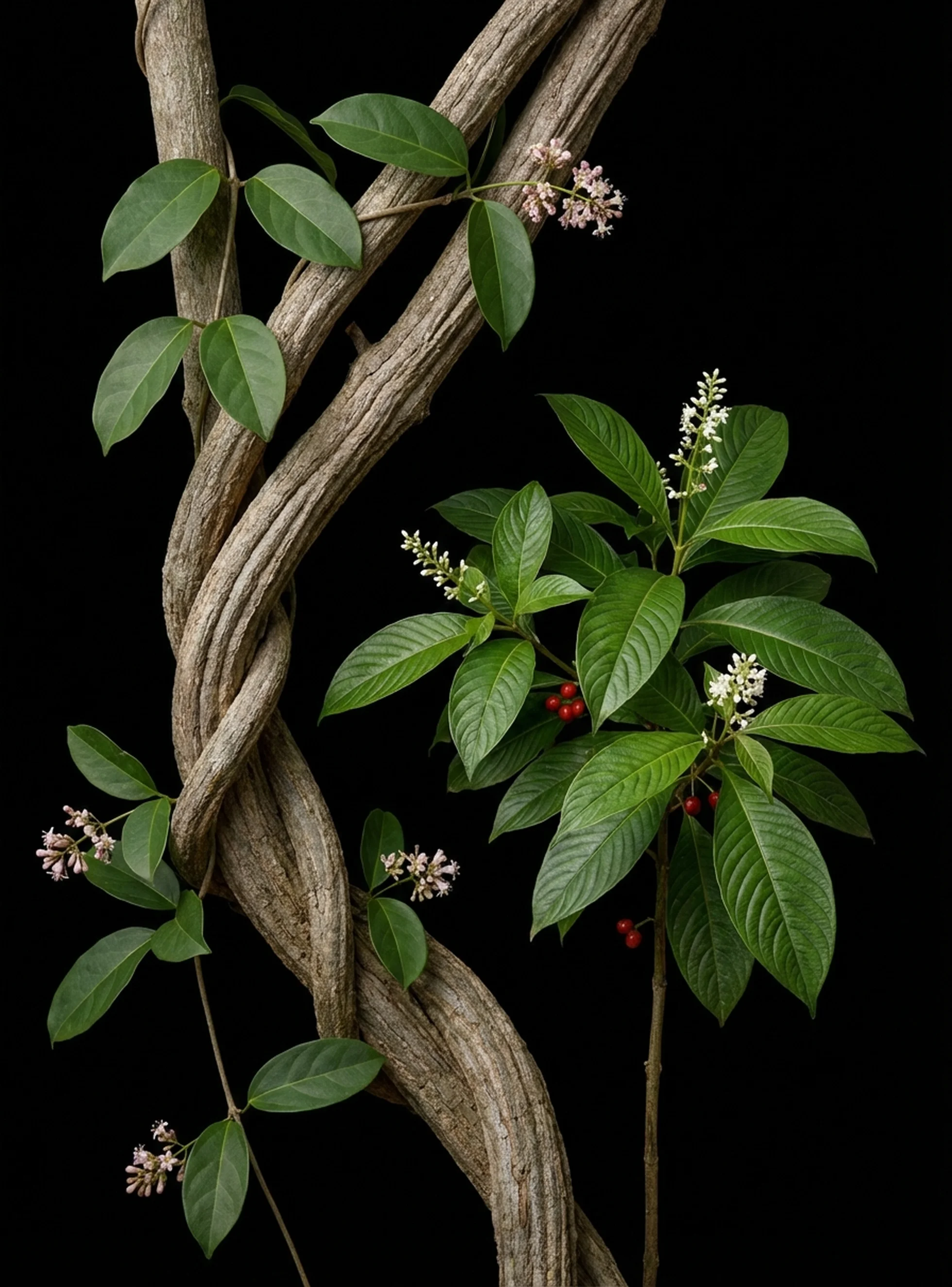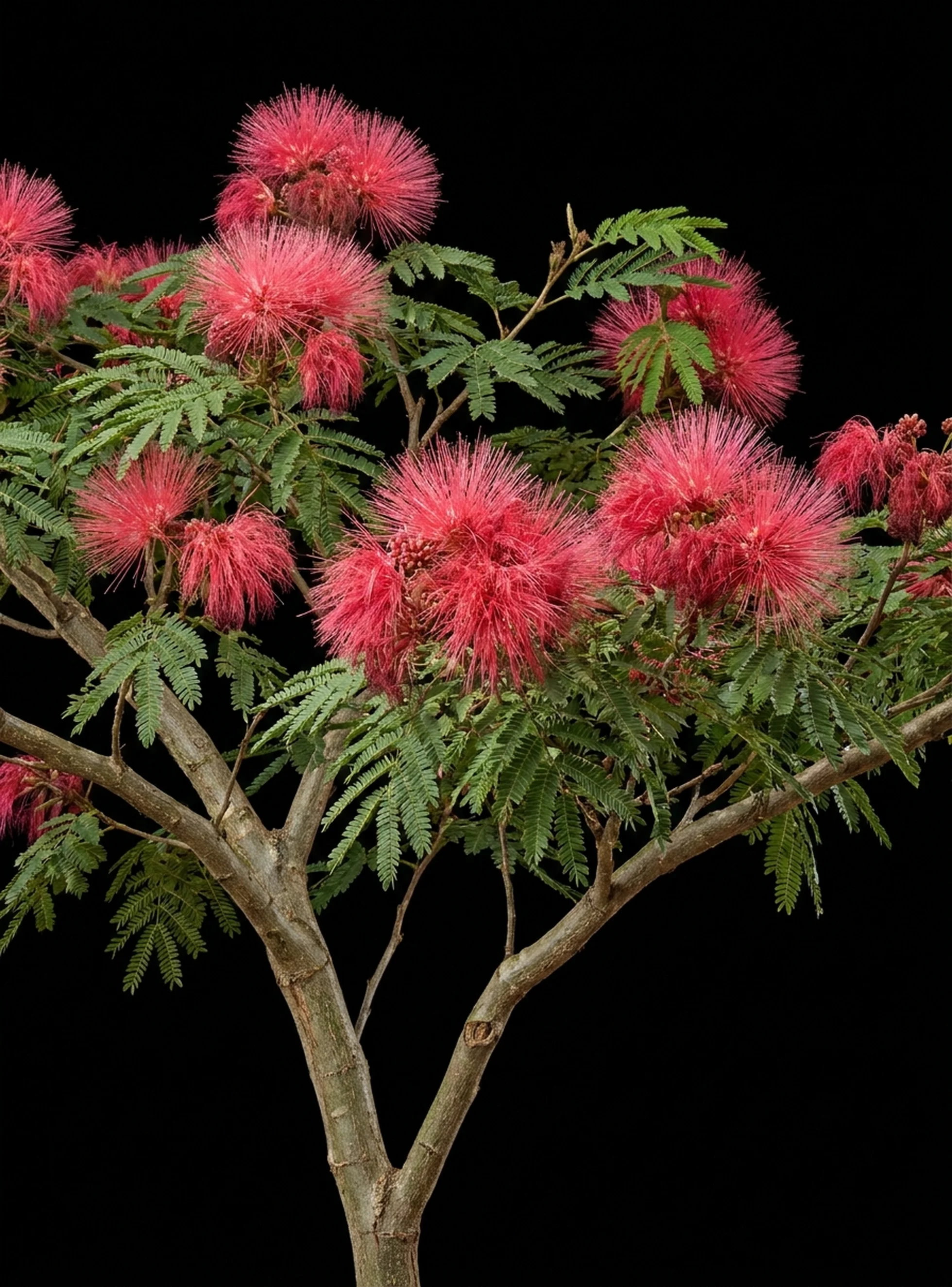

Bobinsana is an Amazonian flowering shrub (Calliandra angustifolia) used in traditional plant dietas, known for heart-opening, dreamwork effects, and as a gentle ally in Shipibo medicine.
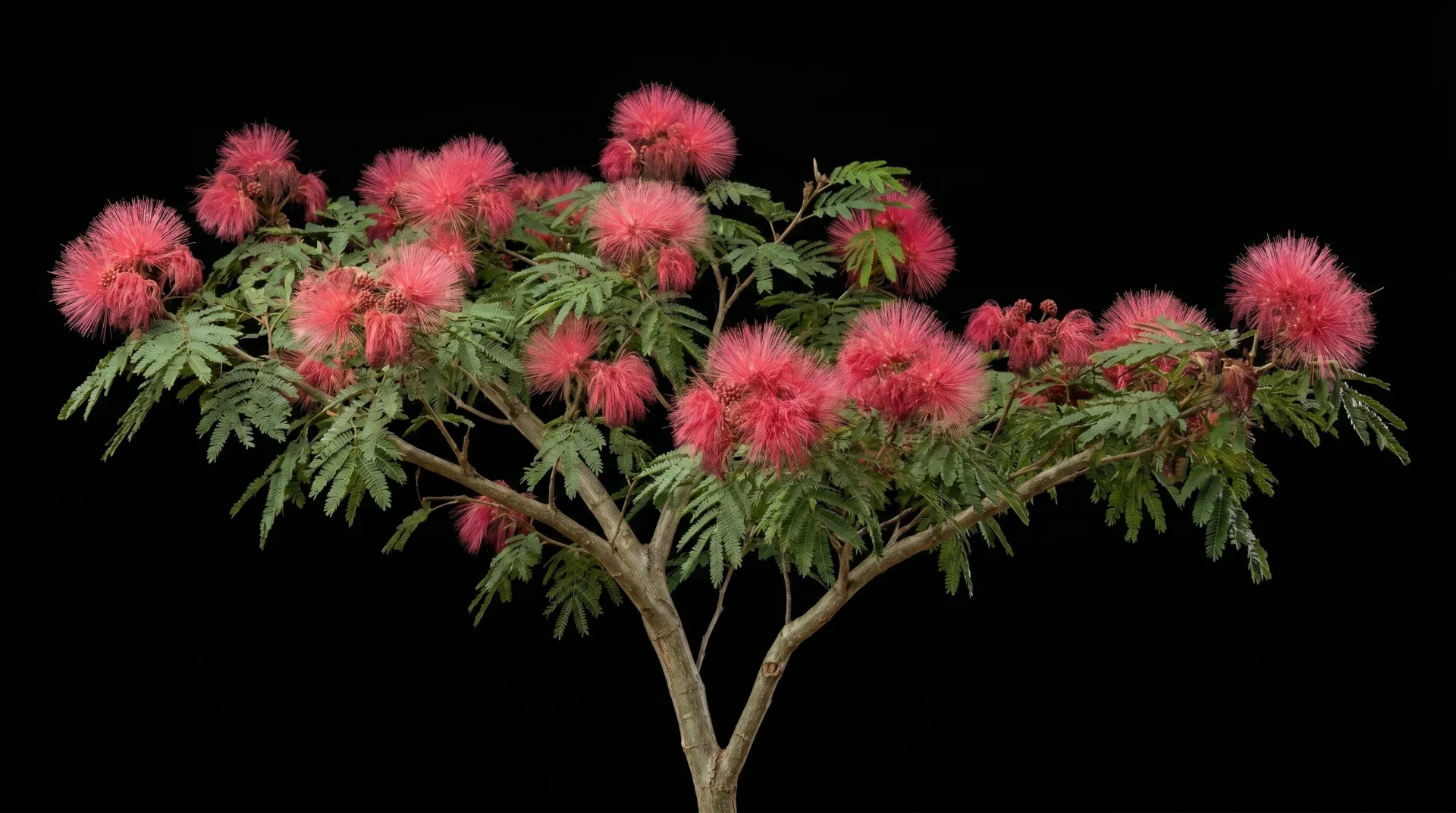
Bobinsana is an Amazonian flowering shrub (Calliandra angustifolia) used in traditional plant dietas, known for heart-opening, dreamwork effects, and as a gentle ally in Shipibo medicine.
Bobinsana
Fact file
- Type
- Plant
- Botanical name
- Calliandra angustifolia
- Origin
- Geographic Distribution and Ethnographic Documentation
- Duration
- 6 to 12h
- Strength
- Gentle to Moderate
- Legal status
- Legal in 29 of 30 listed jurisdictions, and varies elsewhere
What is Bobinsana?
Along the riverbanks of the upper Amazon, a slender shrub puts out feathery pink flowers that resemble small open hearts. The Shipibo-Conibo call it semein. Botanists call it Calliandra angustifolia. In contemporary plant work, it is more often known by a Quechua-derived name: Bobinsana.
Bobinsana is unusual among the plants gathered into Amazonian ceremony. It does not produce visions on its own. It does not, in any ordinary sense, make the world look different. What people who sit with it tend to describe instead is something quieter: an emotional thaw, a softening of the chest, a weeks-long process of grief and tenderness rising into view. Within ayahuasca ceremonies it is added in small amounts to lend the experience steadiness, the way a keel lends a boat steadiness in moving water.
In traditional practice, Bobinsana is rarely a single encounter. It is met through dieta, an extended fast in which a person stays with one plant for days or weeks under guided conditions, asking the same question across many sleeps. The character that emerges is gentle, patient, slow to speak, and almost stubbornly oriented toward the heart. To approach Bobinsana is to approach a plant whose primary medium is time.
The substance
Scientific name: Calliandra angustifolia (Fabaceae, subfamily Caesalpinioideae, mimosoid clade).
Common names: Bobinsana, bobinzana, balata, capabo, chipero, kuanti, quinilla blanca, semein (Shipibo-Conibo), among roughly fifteen documented Amazonian and colonial-era names.
Bobinsana is a riparian shrub or small tree, typically four to six meters tall, native to the western Amazon Basin. Its species epithet, angustifolia, refers to the narrow, bipinnate leaves; its genus, Calliandra, contains around 140 species and is recognized for the powderpuff-like flowers from which the English common name derives.
Within the broader taxonomy of psychoactive substances, Bobinsana sits in a category that is easy to misplace. It is not a classical psychedelic. It is not a serotonin receptor agonist like psilocybin or mescaline, and produces no waking hallucinations on its own. It belongs instead to a small group of neuromodulatory plant medicines, plants whose effects are subtle, cumulative, and bound up with ceremonial context, often used as ayahuasca admixtures or as standalone plantas maestras in the Amazonian dieta tradition.
Strength and duration
Intensity profile
Duration
Aftereffects: ** Participants report persistent emotional clarity, enhanced dream recall, and a sense of emotional openness extending 24 to 72 hours beyond the acute dosing period. In dieta contexts, effects accumulate rather than fully resolve between daily doses, creating a progressive intensification over days and weeks[2][12][13][32][34][12].
Chemistry and mechanism
Bobinsana's chemistry is, by the standards of well-studied psychoactive plants, sparsely documented. What is known points away from the receptor-agonist mechanism familiar from classical psychedelics and toward something more like quiet neuromodulation.
The most consistently identified compound class in Calliandra angustifolia leaf and bark material is a family of pipecolic acid derivatives, non-proteinogenic amino acid analogues that include hydroxylated and acetylated isomers. Plant material from Ecuadorian samples has been measured at roughly 0.25% pipecolic acid in standard form, with several minor variants present in trace amounts. These compounds are not psychoactive in the conventional sense. Preliminary biochemistry suggests they may interact with GABA receptors (the brain's primary inhibitory system, broadly responsible for tone-down and quieting) and possibly with serotonin receptor subtypes, though the affinity, selectivity, and clinical significance of these interactions have not been characterized in human studies.
Alongside the pipecolic acids, the plant contains the standard amino acid proline, polyphenolic flavonoids and tannins, triterpenoid saponins, and plant sterols, the typical chemical inventory of a tropical legume. Harmala alkaloids, the beta-carbolines responsible for monoamine oxidase inhibition in the Banisteriopsis caapi vine, are widely presumed to be present in Bobinsana but have not been directly quantified in published analyses.
The one mechanism that has been demonstrated in a peer-reviewed setting is cyclooxygenase-1 (COX-1) inhibition. Swedish researchers showed that an ethanol bark extract inhibits COX-1-catalyzed prostaglandin synthesis in vitro at a concentration of 100 micrograms per milliliter. This is the same enzymatic pathway targeted by NSAIDs such as aspirin and ibuprofen, and provides a plausible biochemical basis for Bobinsana's centuries-long traditional use against rheumatism, arthritis, and inflammation.
What the plant does not do, in isolation, is produce hallucinations. Within an ayahuasca formulation, where DMT and harmala alkaloids drive the experience, Bobinsana appears to act as a modulator rather than a primary agent: shaping the texture of the experience without authoring its visual content.

How people encounter it
People meet Bobinsana in three broadly distinct contexts: traditional indigenous medicine, plant dieta, and ayahuasca ceremony. The route of preparation shapes both the timeline and the texture of effects.
The most widely documented preparation is a hot water decoction of dried bark or leaves, traditionally simmered for several minutes to draw out water-soluble compounds. Onset on this route tends to be slow (roughly 30 to 90 minutes), with effects building gradually across two to three hours and persisting six to twelve hours. The character is typically described as a quiet emotional opening rather than an acute event.
Alcohol tinctures, prepared by macerating bark in aguardiente (a sugarcane spirit), are common in the Shipibo-Conibo and Madre de Dios traditions, where they are taken in small quantities, sometimes sublingually, for rheumatism, arthritis, and as a general tonic. The lipid- and water-soluble extraction profile differs from a tea, and onset can be somewhat faster.
Plant baths, in which bark and leaves are steeped in water and then poured over the body, occupy a different register. They are understood as energetic and protective rather than acutely psychoactive, and any pharmacological effect through transdermal absorption is mild and slow.
The more intensive context is the dieta, an Amazonian practice in which a person consumes the same plant once or twice daily for days to weeks while observing strict restrictions: no salt, sugar, spices, alcohol, sexual activity, or social contact. In this setting, Bobinsana's effects are not a single peak but a slow accumulation, often most clearly felt in dreams and in emotional material that surfaces between doses.
Finally, ayahuasca formulations sometimes include Bobinsana bark as an admixture alongside Banisteriopsis caapi and a DMT-containing plant. Here Bobinsana does not initiate the experience; it modulates it, often described by traditional curanderos as adding heart and grounding to the ceremony.
Origin and history
The earliest written record of Bobinsana appears in Spanish colonial herbals and travel accounts of the 16th and 17th centuries, but the plant's relationship with Amazonian peoples almost certainly predates European contact by many generations. There is no archaeological record to anchor a precise date, and the absence is itself instructive: Bobinsana's parts (soft bark, leaf, root) do not preserve in the way ayahuasca vine fragments or maize cobs preserve, so the plant's deeper history is held primarily in oral traditions and continuous practice.
The most extensively documented relationship is with the Shipibo-Conibo peoples of the Ucayali River region in eastern Peru, who call the plant semein and have prepared its bark in tinctures for rheumatism, arthritis, colds, uterine disorders, and edema for at least several centuries. In Shipibo-Conibo cosmology, Bobinsana is treated as a planta maestra, a master plant whose teaching is accessed not through a single dose but through the disciplined relational container of dieta. The pink, feathery flowers are sometimes described in contemporary practitioner literature as resembling open hearts, a metaphor that aligns with the plant's role as a teacher of grief, compassion, and emotional integration.
Further south, the Rio Pastaza groups have traditionally used Bobinsana root as a stimulant tonic, taken for strength and endurance, a use distinct from the ceremonial framework familiar to Shipibo-Conibo practice. In the Madre de Dios region, the bark is incorporated into ritual baths to ward off cold and sickness. The Asháninka, Huni Kuin, and Matsés peoples (who call the plant balata) have their own integrations of Bobinsana into local medicine, less extensively documented in published ethnography but present in living tradition.
Unlike coca or ayahuasca, Bobinsana was not specifically targeted by colonial prohibition. Its primary legible use, as an anti-inflammatory bark medicine, was unthreatening to colonial authorities, and its ceremonial dimensions were largely invisible to outside observers. The plant remains unscheduled across its range and beyond.
The first peer-reviewed pharmacological investigation appears to be a Swedish laboratory study in the early 2000s that documented the plant's COX-1 inhibition in vitro, the first empirical confirmation of one strand of traditional use. Contemporary ethnobotanical documentation, much of it produced through the Takiwasi Center in Tarapoto, Peru, by researchers including Matteo Politi and Fabio Friso, has begun to record Bobinsana's role in dieta and integration in more systematic terms. No clinical trials, pharmacokinetic studies, or neuroimaging studies of Bobinsana have yet been published.

Effects
Bobinsana's effects are best understood through what they are not. Composite intensity rates around 3 out of 10, gentle to moderate, and there is no peak in the way a peak occurs with classical psychedelics. The plant does not announce its arrival. Most of what it offers, it offers slowly, often in dreams, often through the quiet rearrangement of emotional weather rather than the dramatic alteration of perception.
Perceptual
Waking perception remains largely intact. Perceptual intensity scores around 2.5/10, the lowest of the four dimensions. There are no waking hallucinations, no characteristic geometry, no time dilation of the kind reported with stronger plants. What does appear, particularly during continued use, is a striking enhancement of dream vividness and lucidity. Practitioners often report that their dreams become more colored, more emotionally textured, more easily remembered, and sometimes lucid. This is the principal perceptual signature of the plant: not a change in the waking world but a sharpening of the sleeping one.
Cognitive
Cognitive effects (rated around 3.5/10) tend to feel clarifying rather than disordering. People report a kind of clear-seeing about their own behavioral patterns, relational dynamics, and emotional history, particularly when the plant is taken in dieta. There is no confusion, no thought disorder, no characteristic ego dissolution. If anything, the sense of self tends to become more legible, with old habits and inherited stories visible from a small but useful distance.
Emotional
The emotional register is where the plant is most pronounced. Emotional intensity sits around 5/10, the highest of the four dimensions, and this aligns with how Bobinsana is described across centuries of Amazonian practice. People often report a softening of the chest, a willingness to feel grief that has been waiting, an unusually accessible tenderness toward themselves and others. Practitioner accounts speak of a fierce compassion, an emotionally integrative state that combines openness with steadiness. In the early days of dieta, this can register as little more than a quiet calm; over the second and third week, it tends to deepen into substantive emotional processing.
Somatic
Somatic effects (around 2.5/10) are mild. Some people report a subtle warmth in the chest or a sense of energetic flow associated with the heart region. Mild nausea or gastrointestinal sensitivity may appear in the first days of dieta and tends to resolve. Motor coordination, vital signs, and basic bodily function remain unaffected in isolated use.
Within Ayahuasca
When Bobinsana is added to an ayahuasca brew, the visual and cognitive intensity of the experience belongs to the DMT and harmala alkaloids, not to Bobinsana. What practitioners attribute to Bobinsana in this context is something more architectural: a holding quality, a steadiness during emotional turbulence, an easier path back to the heart when the experience becomes overwhelming. The plant is described less as a voice in the ceremony than as a posture the body can return to.
A note before reading
Each experience is different. What you may notice depends on dose, setting, and the body and mind you bring to it.
What people often notice
Visual
Visuals tend to stay soft and mostly closed-eye, often subtle textures or gentle color shifts behind the eyelids.
Cognitive
Loose associations may appear, insights surface sideways, and familiar ideas can rearrange into fresh shapes.

Risks and limits
Bobinsana's safety profile is, by the available evidence, favorable, but the evidence base itself is thin. Centuries of traditional use across multiple Amazonian cultures have not produced a recognizable pattern of serious adverse events, and modern toxicology has not flagged the plant as acutely dangerous. That said, several considerations deserve attention.
Contraindications
Bobinsana is traditionally contraindicated during pregnancy and lactation and for those actively trying to conceive. It has historically been used in some Peruvian contexts as a contraceptive or menstrual stimulant, and while the underlying mechanism is not characterized, the conservative practice across traditional and contemporary practitioners is firm avoidance during these periods.
Individuals with a personal or family history of schizophrenia spectrum disorders should approach Bobinsana with significant caution, particularly in any ayahuasca-containing context where DMT exposure carries documented psychosis risk. In isolation, Bobinsana itself does not appear to provoke psychotic episodes.
Individuals in acute psychiatric crisis are generally advised to defer dieta work until stabilization is reached. The emotional intensification that emerges over weeks of dieta is not a setting for managing acute decompensation.
Drug interactions
The most important interaction concerns pharmaceutical MAOIs (phenelzine, tranylcypromine). Because Bobinsana is presumed to contain harmala alkaloids that inhibit monoamine oxidase, combining it with prescription MAOIs carries a theoretical risk of serotonin syndrome and should be avoided. Combination with SSRIs is a softer concern, with no documented cases of adverse interaction but a theoretical basis for caution.
Because the plant inhibits COX-1, combination with anticoagulants (warfarin, direct oral anticoagulants) or with other NSAIDs could plausibly amplify bleeding or gastrointestinal effects, although no clinical reports document this. Individuals with bleeding disorders, recent surgery, or significant kidney or liver disease should be cautious.
Psychological risks
Within dieta, the deliberate surfacing of suppressed emotional material can be intense. Some participants experience anxiety, grief, or trauma activation as part of the process. These are not adverse events in the pharmacological sense, but they require an adequate container: trained facilitation, integration support, and time. Inadequate integration is one of the more substantive risks associated with this plant, not because Bobinsana is dangerous in itself, but because the work it opens deserves continuation.
Set, setting, and support
Bobinsana rewards the conditions in which it has historically been used: quiet, slow, intentional, supported. A casual cup of Bobinsana tea is unlikely to harm a healthy adult; an unsupervised home dieta in a chaotic life is a different proposition. Where possible, people sit with this plant in the company of someone who knows it well.

Integration and aftercare
Integration is a word that does a great deal of work. It points to the slow, patient practice of letting an experience become part of how a person lives. With Bobinsana, integration is not a separate phase that begins after the dieta ends. It is woven into the encounter from the beginning, and continues for weeks or months afterward.
The most consistent observation across practitioners is that Bobinsana's gifts arrive late and quietly. The acute period of consumption may feel uneventful, especially in the first days. The deeper material tends to surface in dreams, in spontaneous emotional shifts during ordinary tasks, in conversations that suddenly carry weight they did not carry before. People often describe a window of two to four weeks immediately following dieta in which feelings sit closer to the surface and old patterns become more legible than usual.
Within this window, deliberate integration practice tends to consolidate what the plant has opened. Journaling, particularly first thing in the morning while dream content is still accessible, often catches material that would otherwise be lost. Time in nature and time alone allow continued processing without the immediate demands of social performance. Some people find that continued connection with a facilitator (a teacher, therapist, or experienced practitioner) helps make sense of insights that arrive in fragments. Gentle movement and rest support the body in its share of the integration; the plant tends to work alongside the nervous system rather than around it.
The Kimmerer-style framing of dieta culture is worth holding here: the plant is understood not as a service provided but as a relationship entered into. Reciprocity matters. People who emerge from dieta with new emotional space sometimes return that space to others, through care, through generosity, through the small accumulated kindnesses of a softer chest.
Difficult experiences (grief that surfaces unexpectedly, old anger, surfacing memories) are not failures of the process. They are often what the plant has been moving toward. The risk is not that they appear; the risk is that they appear in conditions without enough support. Patience, slowness, and trustworthy company are the working materials of this part of the work.
Integration is not a checklist. It is a practice of returning to what was opened until it becomes how you live.
Legal and ethical context
Bobinsana grows along rivers in the western Amazon, a riparian shrub adapted to seasonally flooded soils. The plant has not been formally assessed by the IUCN, and no global Red List status exists. Wild populations across Peru, Ecuador, Colombia, Bolivia, and northern Brazil appear to remain substantial, although systematic population surveys are absent and habitat loss in riparian zones (driven by agricultural conversion, dam construction, and deforestation) is a more meaningful threat than medicinal harvest.
Bark harvesting is the primary ecological pressure point. Done carefully, by selective pruning of larger branches, individual trees survive and regenerate. Done badly, by ringbarking trunks or removing whole branches, individual plants die. Cultivation of Bobinsana in agroforestry systems has begun in parts of Peru and Ecuador and offers some relief on wild populations, although its slow growth (three to five years to harvestable maturity) limits scale.
The deeper ethical questions are not ecological in the narrow sense. They concern indigenous sovereignty and reciprocity. Knowledge of Bobinsana's medicinal and ceremonial uses was developed and held over centuries by the Shipibo-Conibo, Asháninka, Huni Kuin, Matsés, Madre de Dios, and Rio Pastaza peoples, among others. The contemporary global market in Bobinsana products and ceremonies often draws on this knowledge while returning little to the communities who carry it. The Nagoya Protocol on Access and Benefit-Sharing provides an international framework for fairer arrangements, but enforcement remains uneven.
Some contemporary practitioners and suppliers commit to ethical sourcing, direct compensation to indigenous suppliers, and support for indigenous-led conservation. Others do not. The difference is rarely visible from a product label, and asking is often the only way to find out.
There is also the question of context. A Bobinsana dieta in its traditional setting is not simply the consumption of plant material. It is held by language, song (icaros), facilitation, dietary protocol, and relational structure. Contemporary adaptations that strip these elements are not necessarily wrong, but they are different. Treating that difference honestly, rather than presenting decontextualized use as equivalent to traditional practice, is a small form of respect.
Legality across most of the world is established and undisturbed; ethics, in this case, asks more of us than legality does.
Common misconceptions
Bobinsana is a hallucinogen.
It is not. In isolation, Bobinsana produces no waking hallucinations, no characteristic visual geometry, no acute perceptual distortion. It enhances the vividness and recall of *dreams*, and within ayahuasca formulations its presence is felt alongside DMT-driven visions, but the visions belong to DMT, not to Bobinsana.
It works the way classical psychedelics do.
The pharmacological mechanism is different. Classical psychedelics like psilocybin and LSD act primarily as agonists at the 5-HT2A serotonin receptor, producing intense perceptual and cognitive shifts. Bobinsana's known mechanisms point in a quieter direction: COX-1 inhibition (an anti-inflammatory pathway shared with NSAIDs) and presumed GABA modulation through pipecolic acid derivatives. The effect is neuromodulatory rather than receptor-agonist, gentle rather than disruptive.
One sit and you'll be transformed.
Bobinsana rarely produces dramatic single-dose experiences. Its character is cumulative and slow. People report the most pronounced effects in the second and third weeks of dieta, not in the first hours of a first cup. The plant works alongside the participant's own emotional and integrative effort rather than in place of it.
All Bobinsana is the same.
Documented pipecolic acid concentration varies by geography (around 0.25% in Ecuadorian samples, higher in some other origins), and traditional practitioners describe potency differences across river systems and seasons. There is no standardized assay. Two preparations from two suppliers may sit somewhat differently.
Centuries of safe traditional use means it's safe for everyone.
Traditional use does support a generally favorable safety profile, but it does not amount to a controlled trial. Traditional users were not on SSRIs, MAOIs, anticoagulants, or fertility treatments. Pregnancy was contraindicated then and remains so. The right reading of the traditional record is *encouraging baseline*, not *blanket safety guarantee*.
Frequently asked questions

Reflection
It is striking, in a culture often drawn to peaks, that one of the longest-honored plants of the upper Amazon is a moderating one. Bobinsana does not ask for a single dramatic encounter. It asks for return, for sleep, for slow attention to what is already happening in the chest. Its medium is patience.
The Shipibo-Conibo image of the powderpuff flower as an open heart is not, in the end, sentimental. It is structural. The plant teaches in the register of grief, tenderness, and steadiness, qualities that nervous systems often resist not because they are wrong but because feeling them takes time, and time is the one thing modern life rarely offers.
What would it mean to take seriously a teacher whose first request is simply that you stay long enough to be reached?
Sources
Ethnobotany and traditional use
- ●Taylor, L. (2006). Raintree Tropical Plant Database: Calliandra angustifolia (Bobinsana). Retrieved from www.rain-tree.com/bobinsana.htm
- ●Politi, M., & Friso, F. (2016). Amazonian medicinal plants botanical garden of Takiwasi Center in Peru: a case report of 25 years' hands-on experience. Horticulture International Journal.
- ●Wikipedia. Calliandra angustifolia.
- ●Wikipedia. Shipibo-Conibo people.
Pharmacology and chemistry
- ●Boeira, J. M., et al. (2001). Beta-carboline alkaloids in Peganum harmala and inhibition of monoamine oxidase. (Reference relevant to the harmala alkaloid class presumed in Bobinsana.)
- ●StatPearls (NCBI). Cyclooxygenase Inhibitors. Reference work on the COX-1/COX-2 pathway relevant to Bobinsana's documented anti-inflammatory mechanism.
- ●Carbonaro, T. M., & Gatch, M. B. (2016). Neuropharmacology of N,N-dimethyltryptamine. Psychopharmacology. Comparative reference for understanding DMT's role within ayahuasca formulations that include Bobinsana.
Ayahuasca context and admixtures
- ●Palhano-Fontes, F., et al. (Review). Ayahuasca: historical, pharmacological, and therapeutic aspects. Journal of Psychopharmacology (PMC11114307).
- ●James, E. (2022). N,N-dimethyltryptamine and Amazonian ayahuasca plant medicine: integration with contemporary healthcare. Psychopharmacology (PMC9286861).
- ●Wikipedia. Ayahuasca.
- ●RIVM (Netherlands National Institute for Public Health and the Environment, 2022). Assessment of Shambala and similar herbal preparations. (Toxicology of harmala alkaloids.)
Toxicology and comparative safety
- ●Thomas, M. E., et al. (2024). Psychoactive substances of natural origin: toxicological aspects. Biomedical and Environmental Sciences (PMC7961374).
Note
The contemporary peer-reviewed literature on Calliandra angustifolia itself remains limited. Much of what is documented about Bobinsana's effects, dieta protocols, and ceremonial role is held in oral traditions and in practitioner-facing ethnobotanical accounts rather than in clinical research. Where evidence levels in the underlying research were marked unknown or relied on un-named sources, those citations have been omitted here.
For how we evaluate sources and structure our claims, see the methodology.