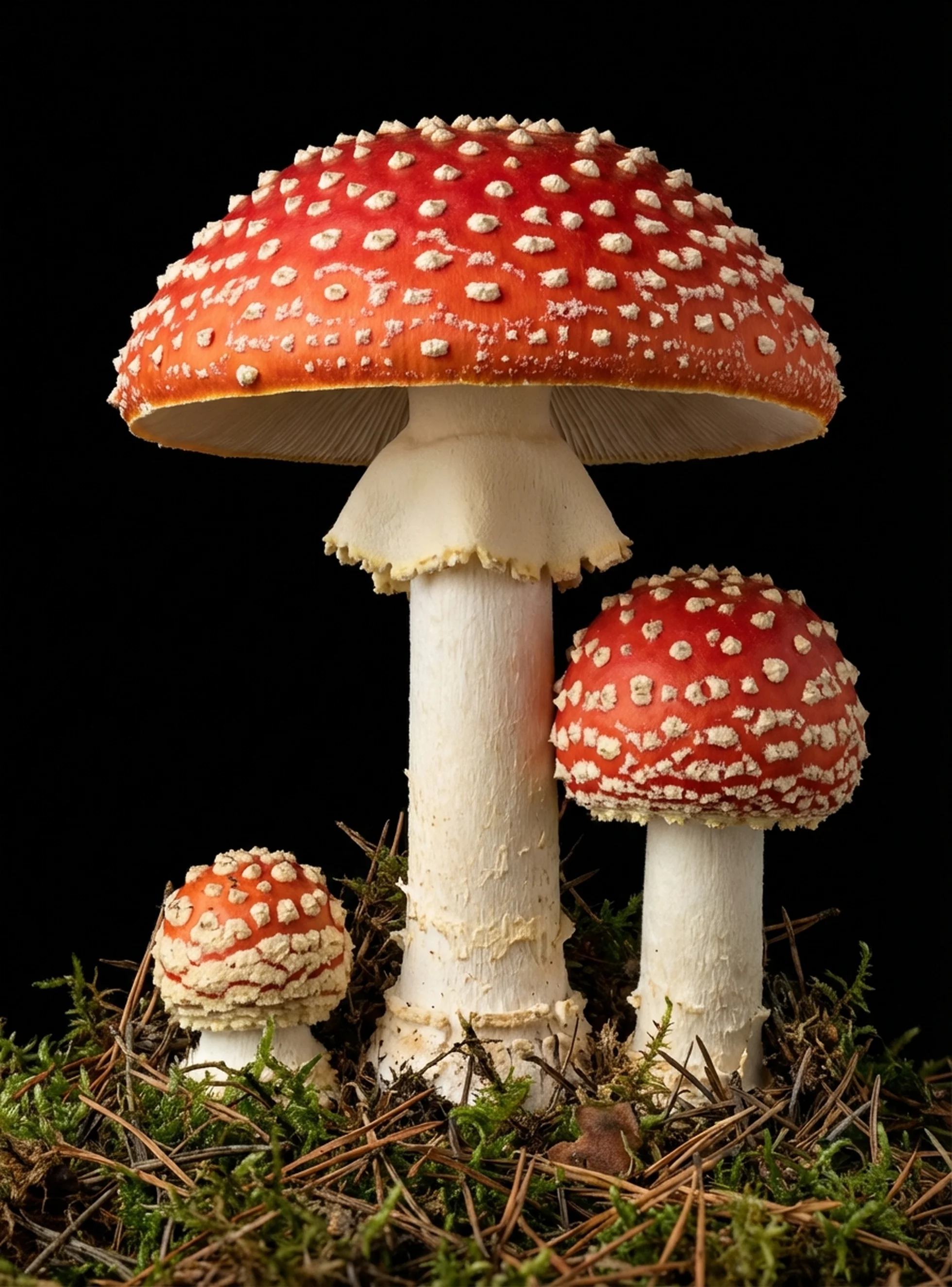

Amanita muscaria is a crimson-capped mushroom from northern forests whose compounds muscimol and ibotenic acid act on GABA receptors, producing sedative, deliriant states unlike classical psychedelics.
Amanita
Muscaria
Amanita muscaria is a crimson-capped mushroom from northern forests whose compounds muscimol and ibotenic acid act on GABA receptors, producing sedative, deliriant states unlike classical psychedelics.
Fact file
- Type
- Plant
- Botanical name
- Amanita muscaria
- Other names
- Fly agaric, fly amanita, fly fungus, Fliegenpilz
- Origin
- Northern Hemisphere (boreal forests)
- Duration
- 4-8 hours
- Strength
- Moderate
- Legal status
- Legal in 18 of 31 listed jurisdictions, and varies elsewhere
What is Amanita Muscaria?
A red cap dotted with white flecks rising from the floor of a boreal forest, half-hidden beneath birch leaves. It is one of the most recognized fungi on Earth, yet one of the least understood. Amanita muscaria belongs to a different pharmacological lineage than the psychedelics most people think of when they imagine mushrooms. Where psilocybin opens the serotonin gates and floods perception with color and meaning, fly agaric works through GABA, the brain's own quieting signal, pulling consciousness inward rather than outward.
The result is not the kaleidoscopic expansion of classical psychedelics but something closer to dreaming while awake: dissociative, sedating, sometimes unsettling in its strangeness. Objects may shrink or swell. Time bends. The body grows heavy and uncooperative. For the Sámi shamans of northern Scandinavia, for the Khanty and Koriak peoples of Siberia, this was not recreation but ritual, a crossing into territories that required training and nerve.
Fly agaric sits at the intersection of mythology, neuroscience, and ecological relationship, a fungus that feeds the roots of birch trees and, on occasion, rearranges the inner landscape of the people who encounter it. What follows is not a guide to use, but a map of what is known, what remains uncertain, and what this organism invites us to consider.
Identity
Scientific name: Amanita muscaria (L.) Lam., originally described by Linnaeus in 1753 as Agaricus muscarius and reclassified by Lamarck.
Common names: Fly agaric, fly amanita (English), Fliegenpilz (German), mukhomor (Russian), flugsvamp (Swedish), henkirata or "spirit-path" (Finnish traditional).
Classification: A basidiomycete fungus in the family Amanitaceae. It is mycorrhizal, forming symbiotic relationships with birch, pine, alder, and spruce root systems across temperate and boreal forests of the Northern Hemisphere.
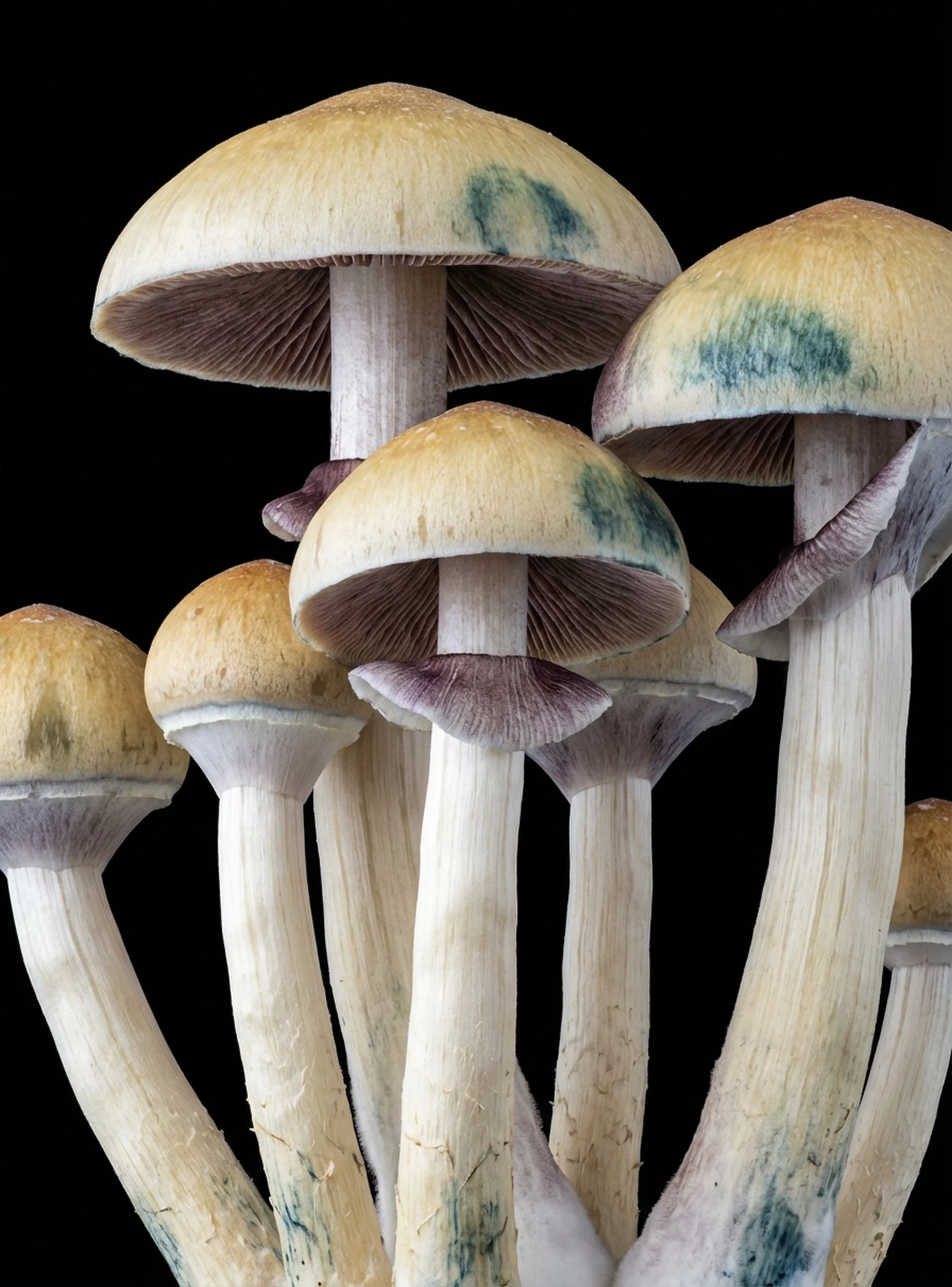
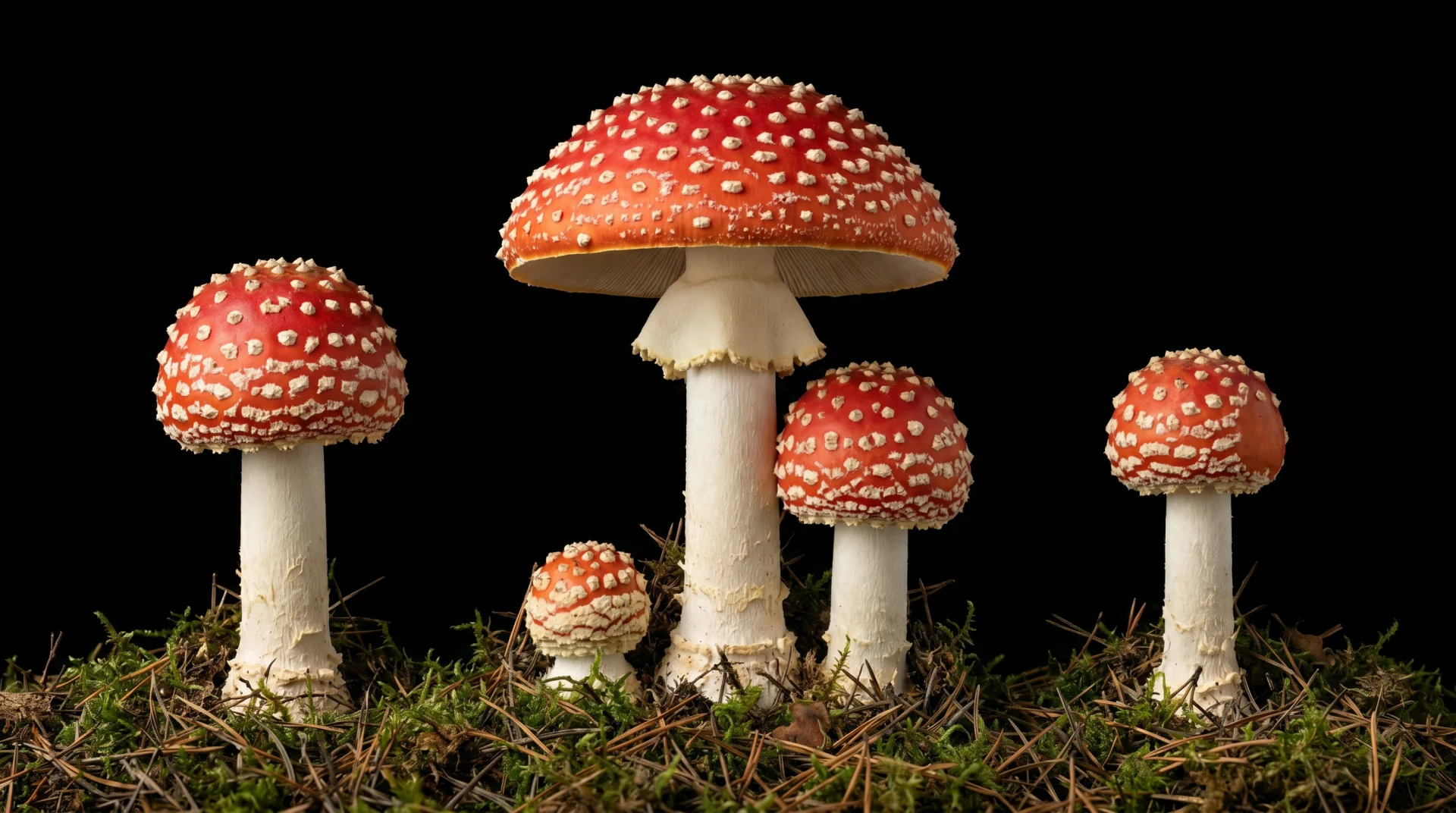
Appearance: The cap ranges from 5 to 20 cm, bright red to orange-red (occasionally yellow or white in rare variants), characteristically spotted with white warts, remnants of the universal veil that may wash away in rain. The stem is white, 8 to 20 cm tall, with a basal bulb and a membranous ring below the cap. Gills are white and crowded. Spore print is white.
Taxonomic position among psychoactive substances: Fly agaric is pharmacologically distinct from the serotonergic psychedelics (psilocybin, LSD, DMT). Its active compounds, ibotenic acid and muscimol, act on GABA-A receptors, placing it closer to the sedative-dissociative category alongside benzodiazepines and alcohol than to classical psychedelics.
Strength and duration
Intensity profile
Duration
Aftereffects: ** - Residual fatigue or heaviness for 12–24 hours [anecdotal] - Cognitive "fog" for 12–24 hours (difficulty concentrating, memory gaps) [anecdotal] - Unusual dreams or fragmented memory of the experience for 24–48 hours [anecdotal] - Mood effects variable: some users report mild euphoria or introspection; others report flatness or mild dysphoria for 24 hours [anecdotal] - Most users are functional (can work, interact) by 12 hours but may feel below baseline for 24 hours
Chemistry
The psychoactive profile of Amanita muscaria rests on two compounds that work in sequence. Ibotenic acid, a glutamate analogue present in the fresh mushroom, acts as a partial agonist at NMDA glutamate receptors, interfering with normal excitatory neurotransmission. But ibotenic acid is a precursor, not the destination. Through heat, drying, or the acid environment of the stomach, it undergoes decarboxylation into muscimol, the compound responsible for most of the experience.
Muscimol is a potent agonist at GABA-A receptors, particularly the extrasynaptic receptors containing delta subunits. By increasing chloride channel conductance and hyperpolarizing neurons, it amplifies the brain's inhibitory signaling. This is the same receptor family that benzodiazepines and alcohol act on, which explains why the fly agaric experience shares more in common with sedation and dissociation than with the visual richness of psilocybin or LSD.
The regional effects of this GABAergic activity shape the experience in specific ways. In the cerebellum and motor cortex, it produces the characteristic ataxia and altered proprioception. In the limbic system (amygdala, hippocampus), it modulates emotional processing toward dissociation rather than intensification. In the thalamus, it may alter sensory gating, contributing to the perceptual distortions that users describe.
Two additional compounds appear in trace amounts: muscazone, a GABA-A modulator that accumulates in aged or dried specimens, and muscinol, whose role remains unclear. Neither contributes significantly to the primary experience.
The conversion ratio of ibotenic acid to muscimol is the single most important variable in determining intensity. Fresh mushrooms contain more unconverted ibotenic acid, producing a slower, less predictable onset. Dried or heated material contains proportionally more muscimol, yielding more consistent and typically more potent effects. This conversion dynamic, not the amount of material consumed, is what makes the fly agaric experience so variable from one encounter to the next.
Muscimol crosses the blood-brain barrier more readily than ibotenic acid, which partly explains the delayed onset: the compound must first be formed in the gut before it can reach the brain. Elimination is renal, with an estimated half-life of 0.5 to 2 hours, though some effects persist beyond what plasma clearance would predict, suggesting either CNS retention or prolonged receptor binding.
Methods of Encounter
Most contemporary encounters with Amanita muscaria in the West are curiosity-driven, prompted by ethnobotanical literature, online communities, or the mushroom's unmistakable appearance in the wild. This represents a significant departure from the substance's historical context, where encounters were mediated by trained practitioners within structured ceremonial frameworks.
Traditional contexts include shamanic use among the Sámi peoples of northern Scandinavia, the Khanty and Mansi of western Siberia, and the Koriak of the Kamchatka Peninsula. In these traditions, the mushroom served as a tool for ecstatic trance and divination, handled by specialists rather than used casually. Some Siberian preparations involved simmering the mushroom into a decoction. Modern Sámi communities hold varied relationships to these historical practices.
Contemporary forms include fresh mushrooms, dried material, and tea or decoction. The preparation method meaningfully affects the experience:
- ●Fresh mushroom (oral): Onset tends to be slower (60 to 90 minutes) and intensity more variable, because ibotenic acid converts to muscimol unevenly during digestion. Duration typically spans 4 to 8 hours.
- ●Dried mushroom (oral): The drying process converts more ibotenic acid to muscimol before ingestion, producing a faster onset (45 to 60 minutes) and more consistent intensity. Duration is often slightly shorter, around 4 to 6 hours.
- ●Tea or decoction (oral): Onset depends on preparation temperature and steeping time. Hotter, longer preparations yield more muscimol and resemble the dried mushroom profile. Some people report less gastrointestinal discomfort with liquid preparations compared to consuming whole material.
Microdosing, popular with psilocybin and LSD, is not practical with fly agaric. The sedating pharmacology (GABA-A agonism), unpredictable alkaloid concentrations in wild-harvested material, and risk of physical dependence with chronic GABAergic exposure make sub-perceptual dosing both impractical and inadvisable.
No clinical or therapeutic framework currently exists for Amanita muscaria. The mushroom's compounds (muscimol and ibotenic acid) are used as research tools in neuroscience laboratories studying GABA-A receptor subtypes, but this is bench science, not treatment.
Origin & History
Amanita muscaria grows where its host trees grow: birch, pine, and alder across the boreal and temperate forests of Eurasia, from Scandinavia through Siberia to Japan, and into the Himalayan foothills. It was introduced to North America and the Southern Hemisphere through spore dispersal with non-native tree plantations in the 19th and 20th centuries. The fungus does not exist apart from its trees. It is mycorrhizal, trading nutrients through underground networks in exchange for the carbohydrates its hosts produce through photosynthesis. To speak of fly agaric is to speak of the forest itself.
Direct archaeological evidence for human use is scarce. Mushrooms do not preserve in soil, and spore residues are rarely sought in excavations. What exists instead is a layered record of ethnographic observation, much of it written by outsiders. The Sámi peoples of northern Scandinavia, particularly the Finnmark region of Norway and Swedish and Finnish Lapland, used fly agaric in shamanic practice. The noaidi (shaman) consumed the mushroom to enter ecstatic trance for divination and communication with spirit realms. The experience was described not as pleasant but as powerful and sometimes terrifying, consistent with muscimol's dissociative profile.
Farther east, the Khanty and Mansi peoples of the Ob River basin in western Siberia used the mushroom in séance contexts and hunting magic, documented by ethnographers Holmberg and Johelson in the early 20th century. The Koriak of the Kamchatka Peninsula maintained similar practices. In each case, the mushroom was treated as a serious ritual substance, handled by trained practitioners, not distributed casually.
Colonial expansion disrupted these traditions with deliberate force. Scandinavian Christianization campaigns from the 16th through 19th centuries targeted Sámi spiritual practices as superstition. Soviet expansion into Siberia was more aggressive still, dismantling shamanic traditions through forced urbanization and collectivization. The dismissal of Indigenous practices as "primitive intoxication" served colonial consolidation and left gaps in the documentary record that cannot be filled.
Western interest arrived through a different door. In 1957, Valentina and R. Gordon Wasson published Mushrooms, Russia and History, proposing that Amanita muscaria was the soma of ancient Vedic rituals. The hypothesis remains highly contested, with no direct textual or archaeological evidence, but it sparked a wave of ethnobotanical curiosity. By the 1960s, Japanese and European researchers had isolated ibotenic acid and muscimol, establishing the pharmacological basis for the mushroom's effects. The counterculture of the 1970s briefly flirted with fly agaric but largely moved on, finding its unpredictability and sedating character less appealing than psilocybin or LSD.
Today, Amanita muscaria occupies a quiet corner of consciousness exploration. Internet availability and published ethnographic accounts drive most contemporary Western encounters, largely disconnected from the traditions that first gave the mushroom its ceremonial meaning.

Effects
The fly agaric experience is unlike the psychedelics most people have heard about. Where psilocybin tends to open and LSD tends to accelerate, Amanita muscaria tends to slow, sedate, and dissociate. The overall character is often described as dreaming while awake, a state closer to lucid half-sleep than to the vivid perceptual theater of classical psychedelics. Variability is high, shaped by the ratio of ibotenic acid to muscimol in any given specimen, by individual metabolism, and by preparation method. What follows describes commonly reported ranges, not predictions.
Perceptual shifts are present but typically subtle, rating around 5 out of 10 on the strength scale. The most characteristic effect is micropsia and macropsia, objects appearing to shrink or swell, a distortion so associated with fly agaric that some researchers have connected it to the size-shifting episodes in Lewis Carroll's Alice in Wonderland. Mild color saturation changes, surface texture animation, and fleeting geometric patterns may appear, but full-scene hallucinations are uncommon. Auditory changes tend to be minimal, perhaps an echo quality to sounds or a sense of distance. The perceptual signature is muted and dreamlike rather than vivid.
What fly agaric lacks in visual drama, it compensates for in somatic intensity, which rates 6 out of 10. The body becomes the primary theater. Most people report altered proprioception, difficulty judging where their limbs are or how far away objects sit. Ataxia (loss of motor coordination) is pronounced, often making walking unsteady or fine motor tasks impossible. Tingling, numbness, a sense of heaviness or immobility, these are consistent with GABAergic effects on the cerebellum and somatosensory processing. Nausea affects roughly 30 to 50 percent of people, particularly during the first hour, and tends to be more common with fresh material than dried.
Cognitive effects are significant, also rating 6 out of 10. Thought slows. Working memory falters. Many people describe feeling "foggy" or thinking in slow motion, with difficulty holding multiple ideas simultaneously or finding the right words. Time perception warps, often stretching, so that four hours may feel like six or eight. At higher intensities, temporal orientation can dissolve entirely. Memory of the peak often has a fragmented, dream-like quality, vivid in patches but difficult to reconstruct sequentially. This contrasts with psilocybin, where insights often arrive with a feeling of clarity and can be recalled with relative precision.
Mild to moderate depersonalization is commonly reported: a sense of observing one's own body and actions from a slight distance, as though the mind has separated from its container. This is consistent with muscimol's dissociative pharmacology. Full ego dissolution, as sometimes reported with high-dose psilocybin, is less common but not absent.
Emotional effects rate lower, around 4 out of 10. This is perhaps the most distinctive contrast with serotonergic psychedelics. Rather than emotional opening or catharsis, fly agaric tends to produce emotional flattening or dissociation. Anxiety often surfaces during the come-up, sometimes intensely, as the loss of motor control and onset of dissociation can feel alarming. But as the experience deepens, emotional reactivity may paradoxically decrease, creating a state where feelings are present but feel distant, observed rather than inhabited. Some people describe this as surreal rather than distressing. Others find it unsettling precisely because of the emotional absence. Joy and whimsy can emerge, particularly at lower intensities, but euphoria is not the norm.
The arc of the experience follows a recognizable pattern. Onset arrives gradually, 45 to 120 minutes after ingestion, often beginning with a mood shift and nausea. The come-up builds over the next hour, with anxiety sometimes peaking here. Maximum intensity typically occurs 2 to 4 hours after ingestion, when cognitive disruption, dissociation, and motor incoordination converge. The descent is gradual, with physical coordination returning before cognitive clarity. Total duration spans 4 to 8 hours, with residual fatigue, brain fog, or unusual dreams persisting for 12 to 48 hours in many cases.
The overall feeling, for many, is of having inhabited a waking dream that resists easy interpretation, not the narrative richness of psilocybin or the electric precision of LSD, but something quieter, stranger, and more ambiguous.
A note before reading
Each experience is different. What you may notice depends on dose, setting, and the body and mind you bring to it.
What people often notice
Emotional spectrum
Visual
Patterns and gentle distortions may surface, surfaces breathing slightly, edges softening, geometries flickering at the periphery.
Cognitive
Loose associations may appear, insights surface sideways, and familiar ideas can rearrange into fresh shapes.
Risks & Limits
Fly agaric is not the lethal poison of popular imagination, but it is not benign either. Understanding what can go wrong requires separating the common discomforts from the serious risks.
Misidentification is the gravest danger. Amanita muscaria shares its genus with Amanita phalloides (death cap), a mushroom that can be fatal from as little as half a fruiting body. The death cap contains amatoxins that destroy liver and kidney cells. Fly agaric does not contain amatoxins. The most reliable field distinction is the basal volva: A. phalloides has a prominent cup-like structure at the base of the stem; A. muscaria has only a bulbous swelling. Anyone unable to identify specimens with absolute certainty should not consume them.
Physical risks during the experience center on motor impairment and gastrointestinal distress. Ataxia can be severe enough that walking becomes dangerous, particularly near stairs, uneven terrain, or water. Nausea and vomiting affect a substantial portion of people, especially with fresh material. Heart rate changes are poorly characterized in research literature but anecdotally range from increased rate during the come-up to slowed rate during the peak. Respiratory depression is rare but theoretically possible at very high intensities, given the GABAergic mechanism.
Psychological risks are real but different in character from those associated with serotonergic psychedelics. Anxiety and panic during the come-up affect roughly 30 to 50 percent of people to some degree. The dissociative quality of the experience, feeling detached from one's body, emotions, or sense of time, can itself be frightening. Acute psychotic episodes appear to be less common than with psilocybin or LSD, but transient depersonalization and derealization are expected features, not side effects. In rare cases, these states may persist for days or weeks after the experience. People with a personal or family history of psychotic disorders, schizophrenia, or bipolar disorder face elevated risk.
Drug interactions deserve particular caution. Because muscimol is a GABA-A agonist, combining it with other CNS depressants (alcohol, benzodiazepines, opioids, barbiturates) creates additive sedation and meaningful risk of respiratory depression or loss of consciousness. This is the most dangerous pharmacological interaction. Other GABAergic substances (kava, valerian, GHB) carry similar concerns. Interactions with SSRIs and MAOIs are poorly characterized but warrant caution.
Populations at higher risk include people with respiratory conditions (COPD, sleep apnea), cardiac disease, liver or kidney impairment (muscimol is renally excreted), seizure disorders, current depression or suicidal ideation, and those who are pregnant or breastfeeding. Very young and very elderly individuals face altered pharmacokinetics and reduced physiological reserve.
Unpredictability is itself a risk factor. Wild-harvested Amanita muscaria contains variable ratios of ibotenic acid to muscimol depending on the specimen, its age, growing conditions, and storage. Two mushrooms from the same forest can produce markedly different experiences. This inconsistency, combined with the absence of any standardized preparation, means that even experienced individuals cannot reliably predict what a given encounter will bring.
The combination of set, setting, and the presence of a sober, trusted companion remains the most practical risk-reduction framework for anyone who encounters this substance.
Integration
Integration after an Amanita muscaria experience presents a particular challenge. Unlike psilocybin, which often delivers its insights with a feeling of emotional clarity, fly agaric tends to leave fragments: dreamlike images, dissociated sensations, gaps where memory should be. The work of integration, then, is less about unpacking a revelation and more about sitting with something ambiguous and allowing it to settle on its own terms.
Formal integration research specific to Amanita muscaria does not exist. What follows is adapted from psychedelic integration practices and the trauma-informed literature on processing dissociative experiences.
In the first 24 hours, the body is still recalibrating. Residual fatigue, cognitive fog, and lingering heaviness are common. This is not the time for meaning-making. Rest, hydration, and gentle movement are enough. Some people find that eating light food and spending time in quiet, familiar environments helps the nervous system re-anchor.
In the days that follow, journaling may be more useful than it first appears. Because fly agaric memories often have a dream-like quality, writing down whatever fragments remain, even if they seem nonsensical, tends to preserve material that would otherwise dissolve. Revisiting these notes a week later sometimes reveals patterns or resonances that were invisible in the moment.
Grounding practices carry particular relevance for this substance. The dissociative character of the experience means the body may feel subtly "off" for a day or two. Meditation, body scanning, walking on natural ground, and simple sensory exercises (noticing textures, temperatures, sounds) can help restore the felt sense of inhabiting one's own body. These practices draw from both mindfulness traditions and clinical approaches to dissociation.
Talking with trusted others, whether friends, integration circles, or mental health professionals, can reduce the isolation that sometimes follows an experience that is hard to put into words. Unlike psilocybin or MDMA experiences, which often produce narratives that others can follow, fly agaric experiences may resist linear storytelling. That difficulty is itself worth naming.
Some people report vivid or unusual dreams in the nights following an encounter. Sleep quality may be disrupted for one or two nights. These tend to resolve without intervention.
Time is part of the process. Most people return fully to baseline within two to four weeks. For those who had a particularly intense or dysphoric experience, the integration window may stretch longer. Patience with the process matters more than any specific technique. If dissociation, mood disturbance, or physical symptoms persist beyond a few days, professional support is warranted, not as a sign of failure but as a practical response to the body asking for help.
Ethics & Ecology
Amanita muscaria is not endangered. It is widespread and abundant across the boreal and temperate forests of the Northern Hemisphere, and its populations are stable. The species is not listed on the IUCN Red List. But ecological health and ethical responsibility are not the same question.
The fungus cannot be cultivated. It is obligately mycorrhizal, meaning it requires a living relationship with tree roots (birch, pine, alder) to survive. All commercially available fly agaric comes from wild harvesting. Removing fruiting bodies does not damage the underground mycelium, so harvesting at current levels appears sustainable. However, if commercial demand were to intensify, localized depletion and forest disturbance (soil trampling, habitat disruption) could become concerns.
The ecological role of Amanita muscaria extends beyond its own biology. It participates in nutrient cycling, absorbing water, nitrogen, and phosphorus from the soil and exchanging them with host trees for carbohydrates. These mycorrhizal networks are essential for forest health, particularly in nutrient-poor boreal soils. The fruiting bodies feed insects, mammals, and birds. The presence of fly agaric in a forest indicates healthy underground networks, an ecosystem functioning as it should.
Cultural appropriation is the more difficult terrain. The Sámi peoples of Scandinavia, the Khanty and Mansi of Siberia, and the Koriak of Kamchatka developed their relationships with this mushroom over generations of ceremonial practice. Contemporary Western use often draws on romanticized versions of these traditions without acknowledgment of, or benefit to, the communities that created them. Sámi cultural advocates have raised concerns about the commodification of shamanic knowledge and the exoticization of living cultures. Meanwhile, the criminalization of fly agaric in Norway and Sweden, territories with significant Sámi populations, has been challenged by some Indigenous organizations on grounds of cultural sovereignty.
No formalized benefit-sharing agreements exist for Amanita muscaria commercialization. Western retailers, researchers, and publishers derive economic and professional benefit. Indigenous communities receive little in return.
A responsible relationship with this fungus might begin with three acknowledgments: that the knowledge has origins, that the organism has an ecological role beyond human use, and that legality is not the same as ethics.
Misconceptions
Fly agaric is as deadly as the death cap.
*Amanita muscaria* does not contain amatoxins, the cyclopeptides that make *A. phalloides* fatal. Documented deaths from fly agaric alone are extremely rare. The vast majority of fatal mushroom poisonings result from misidentification with *A. phalloides*, not from *A. muscaria* overdose. The two mushrooms belong to the same genus but occupy very different positions on the toxicity spectrum.
This mushroom was the soma of the ancient Vedic texts.
The Wasson hypothesis, proposed in 1957, is intellectually interesting but has not achieved scholarly consensus. Multiple alternative plant identifications (ergot-infected grains, Ephedra, Sarcostemma) fit the Vedic descriptions equally well or better. Direct textual or archaeological evidence linking *Amanita muscaria* to soma is absent. The idea persists in popular culture, but it remains a hypothesis, not established history.
It's natural, so it's safe.
Naturalness and safety are unrelated properties. The mushroom produces significant dissociation, motor impairment, and unpredictable intensity due to variable alkaloid concentrations in wild-harvested material. Indigenous peoples who used it ceremonially did so within structured, practitioner-led contexts. Contemporary Western use often occurs without that scaffolding, and adverse events, hospitalizations, and psychological distress have been documented.
It produces spectacular hallucinations like psilocybin or LSD.
Visual effects from fly agaric are typically subtle: mild size distortions, color changes, fleeting geometric patterns. Full-scene hallucinations are uncommon. The experience is better characterized as dreamlike dissociation with modest perceptual changes. People expecting the visual richness of classical psychedelics often find the reality quite different.
You can microdose it for daily enhancement.
Microdosing fly agaric is neither practical nor safe. The alkaloid content varies unpredictably across specimens, making consistent sub-perceptual amounts impossible to achieve. The pharmacology is sedating (GABA-A agonism), not stimulating. Chronic daily use of GABAergic substances carries risk of physical dependence. No safety or efficacy data exist for this practice.
FAQ

Reflection
There is something instructive about a substance that does not deliver what people expect. Fly agaric does not open doors to cosmic vistas or dissolve boundaries between self and universe. It dims the lights, slows the clock, and loosens the body's grip on its own coordinates. The experience, for many, is not transcendent but disorienting, not euphoric but strange.
Perhaps that is the point, or at least, the invitation. In a culture that reaches for psychedelics hoping for meaning, insight, and transformation, Amanita muscaria offers something more unsettling: ambiguity. The dream-state it produces often resists interpretation. It does not tell you what it means. It asks whether you can sit with not knowing.
The Sámi noaidi who consumed this mushroom did not call the experience pleasant. They called it powerful, and they prepared for it with the seriousness that power demands. The forest floor where fly agaric grows, beneath birch and pine, threaded through with invisible networks of mycorrhizal exchange, may itself be the most honest metaphor: a quiet system of mutual dependence, operating beneath the surface, asking nothing of our understanding in order to continue its work.
What would it mean to approach a substance, not for what it gives, but for what it asks?
Sources
Pharmacology and Chemistry
- ●Takemoto, T., Nakajima, T., & Sakuma, S. (1964). Isolation of ibotenic acid from Amanita strobiliformis and its pharmacological activity. Journal of Chemical and Pharmaceutical Bulletin, 12(12), 1526-1528.
- ●Cerletti, C., & Bernardi, G. (1992). The pharmacology of GABA and GABA receptors. In Psychopharmacology: The Fourth Generation of Progress (Bloom, F.E., & Kupfer, D.J., Eds.). Raven Press, pp. 945-964.
- ●Lüthy, B., Krähenbuhl, S., Thormann, W., & Schumacher, H. (1992). Analysis of ibotenic acid and muscimol in Amanita species by capillary electrophoresis. Journal of Chromatography, 593(1-2), 175-182.
Ethnobotany and History
- ●Wasson, V.P., & Wasson, R.G. (1957). Mushrooms, Russia and History (2 vols.). Pantheon Books.
- ●Ott, J. (1995). Pharmacotheon: Entheogenic Drugs, Their Plant Sources and History (2nd ed.). Natural Products Company.
- ●Holmberg, U. (1927). The Mythology of All Races Vol. 4: Finno-Ugric, Siberian. Archaeology Institute, Boston.
- ●Johelson, W. (1908). The Koryak: Religion and Myths (Vol. 6 of The Jesup North Pacific Expedition publications). American Museum of Natural History.
- ●Samorini, G. (1992). The oldest representations of hallucinogenic mushrooms in the world (Sahara Desert, 9000-7000 B.P.). Journal of Psychoactive Drugs, 24(4), 407-408.
Ethnopharmacology and Cultural Context
- ●Rätsch, C. (2005). The Encyclopedia of Psychoactive Plants: Ethnopharmacology and Its Applications. Park Street Press.
- ●Müller-Ebeling, C., Rätsch, C., & Storl, W.H. (2003). Witchcraft Medicine: Healing Arts, Shamanism, and Forbidden Plants. Inner Traditions.
- ●Chilkov, N. (2006). Medicinal mushrooms: Traditional nutrition from the fungi kingdom. In Herbal Medicine: Biomolecular and Clinical Aspects (2nd ed.). CRC Press.
Medical and Toxicological
- ●Pietrobon, R., Gaspari, M., & Volta, R. (2014). What the world can learn from the European poisoning registry. Clinical Toxicology, 52(5), 381-389.
Legal and Regulatory
- ●U.S. Drug Enforcement Administration (2024). Controlled Substances Act: Statutory Requirements. DEA Office of Public Affairs.
- ●Australian Department of Health (2023). Schedule of Controlled Drugs. Therapeutic Goods Administration.
For how we evaluate sources and structure our claims, see the methodology.