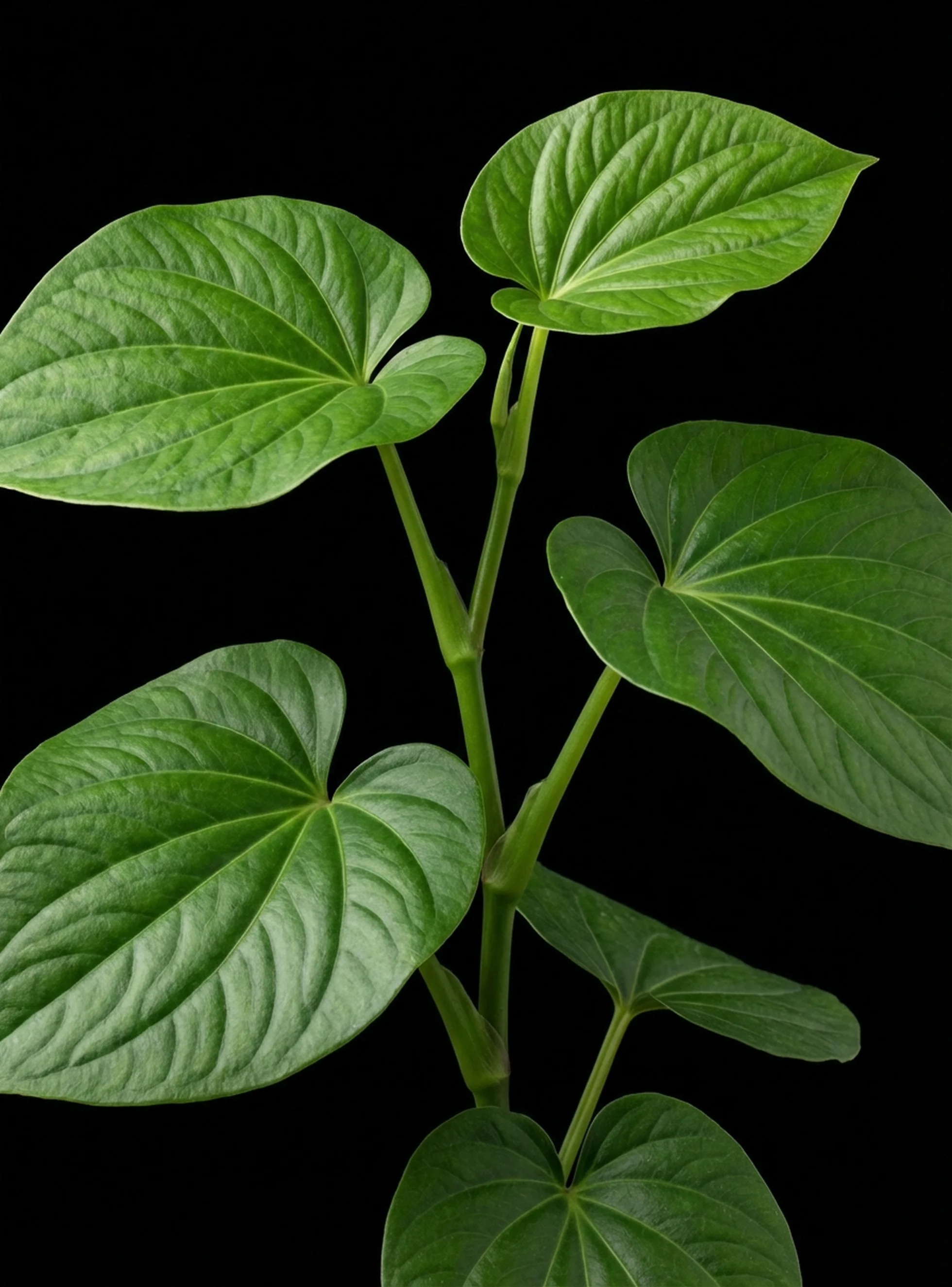

Blue Lotus is a sacred Egyptian water lily revered for millennia, producing gentle euphoria and dream-like states through nuciferine and aporphine alkaloids that act on dopamine receptors.
Blue
Lotus
Blue Lotus is a sacred Egyptian water lily revered for millennia, producing gentle euphoria and dream-like states through nuciferine and aporphine alkaloids that act on dopamine receptors.
Fact file
- Type
- Plant
- Botanical name
- Nymphaea nouchali
- Origin
- Nile River Valley
- Duration
- 2-4 hours
- Strength
- Gentle
- Legal status
- Legal in 24 of 32 listed jurisdictions, and varies elsewhere
What is Blue Lotus?
There is a flower that opens at dawn and closes before the sun reaches its peak, as if it knows something about the relationship between light and rest. For thousands of years along the Nile, the blue lotus (Nymphaea caerulea) held this rhythm, blooming in shallow water, releasing a honey-sweet fragrance into the morning air. The ancient Egyptians placed its petals on the bodies of their dead and painted it on their temple walls, not as decoration, but as a symbol of what returns.
The blue lotus is not a psychedelic in the way most people understand that word. It does not shatter perception or dissolve the boundaries of self. Instead, it tends to quiet the mind, like turning down the volume on a radio you forgot was playing. Its effects are gentle, often described as a warm settling, a softening of the edges between wakefulness and sleep. The primary alkaloid, nuciferine, works in opposition to the classical psychedelics, blocking the very receptor they activate. Where psilocybin opens a door, the blue lotus draws the curtains and dims the room.
What remains remarkable is how much we are still learning. Recent chemical analysis has revealed that most products sold as blue lotus contain far less of the active compound than authentic Egyptian specimens, raising questions not only about the contemporary market but about the very history we thought we understood.
Identity
Scientific name: Nymphaea nouchali var. caerulea (formerly Nymphaea caerulea Savigny, 1798)
Common names: Blue lotus, Egyptian blue lotus, sacred blue lily of the Nile, Egyptian water lily, blue water lily
Family: Nymphaeaceae (water lily family)
Substance type: Aquatic flowering perennial plant
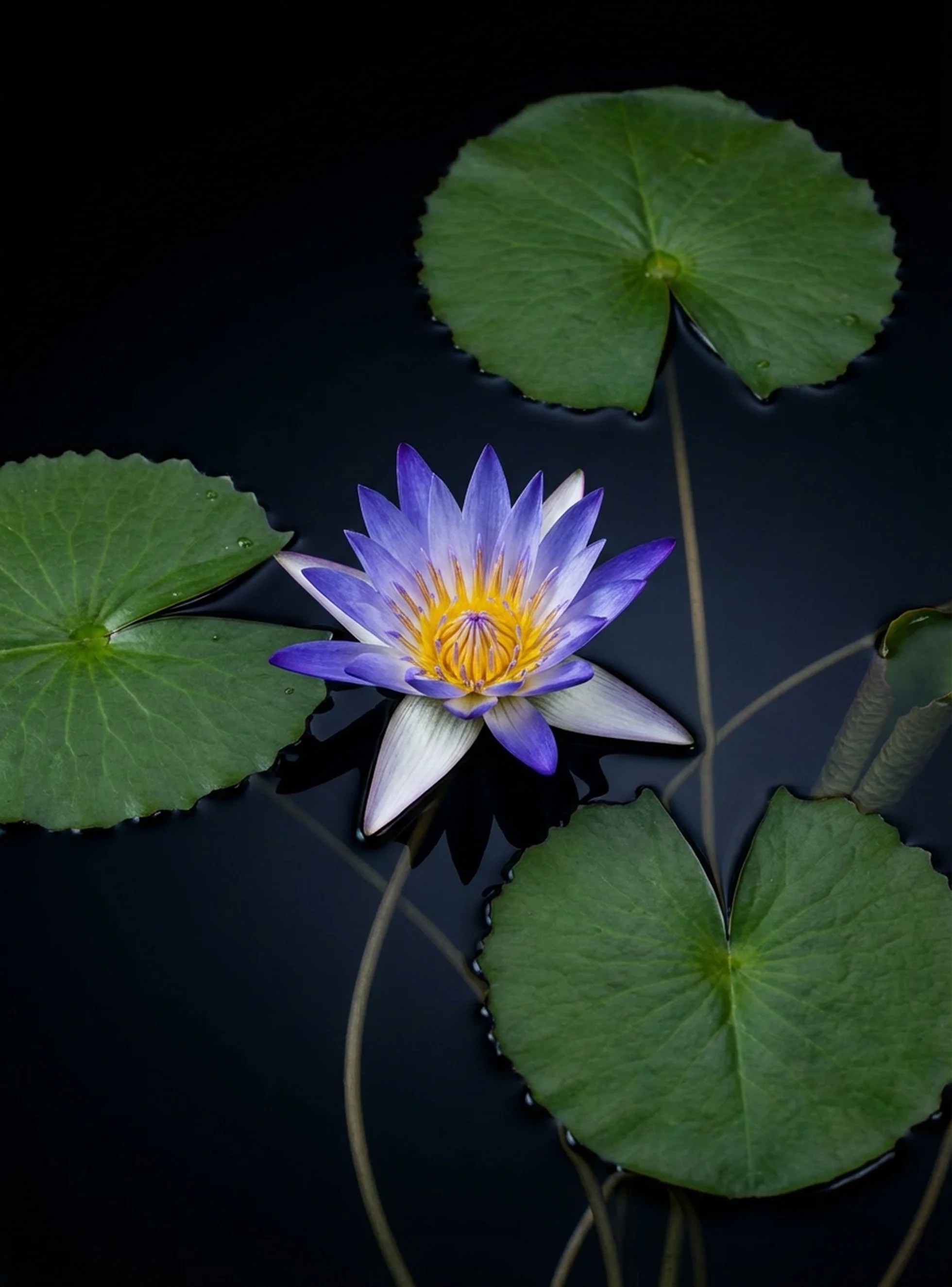
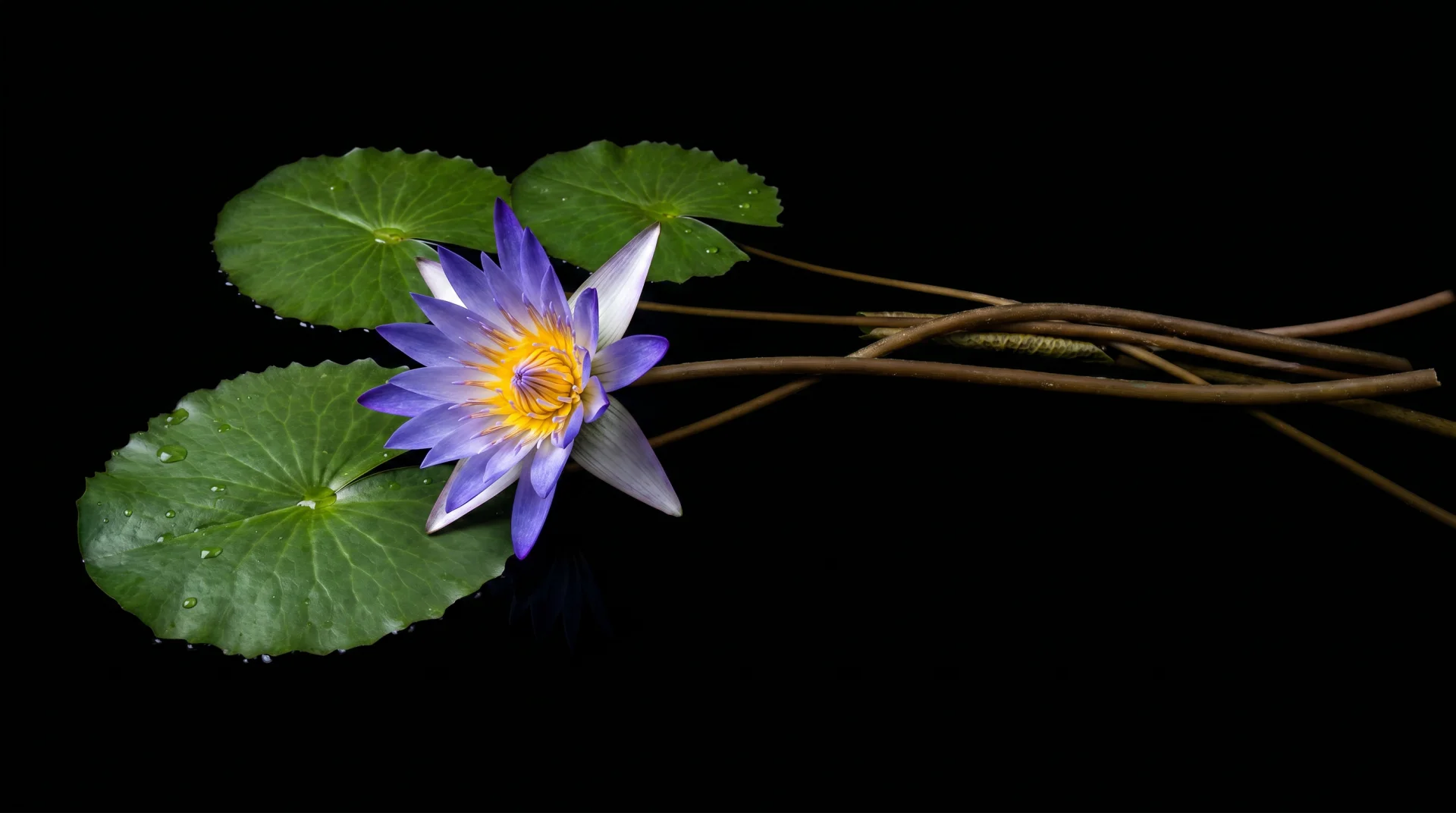
The blue lotus is a day-blooming water lily native to the Nile River basin and tropical Africa. Its flowers measure 10 to 15 centimeters across, with pointed blue-to-violet petals arranged in a star pattern around a golden-yellow center. The round, dark green floating leaves span 20 to 40 centimeters in diameter.
Taxonomically, this plant has a contested history. Originally classified as a distinct species by Savigny in 1798, it was reclassified in 1989 as a variety of Nymphaea nouchali by Bernard Verdcourt. A 2021 phylogenetic study suggested closer relation to Nymphaea colorata, and genomic data published in Nature in 2020 cited the plant under the original Nymphaea caerulea designation, indicating ongoing uncertainty.
A critical distinction: the blue lotus must not be confused with Nelumbo nucifera, the Asian sacred lotus. Despite sharing the name "lotus" in commercial contexts, these plants belong to entirely different genera and possess different alkaloid profiles.
Strength and duration
Intensity profile
Duration
Aftereffects: ** Residual mild well-being or calmness may extend 1-2 hours beyond primary effect offset. Sleep initiation is often facilitated. Dream vividity and recall often enhanced throughout sleep period. Morning-after clarity without grogginess (unlike melatonin which produces 4-5 hour half-life lingering). [58]
Chemistry
The blue lotus contains two primary psychoactive compounds, both aporphine alkaloids. Understanding how they work helps explain why this plant produces an experience so different from classical psychedelics.
Nuciferine is the primary active compound. It acts as a partial agonist at dopamine D2 and D5 receptors, meaning it activates these receptors at roughly 67% of dopamine's own strength, similar in profile to the atypical antipsychotic aripiprazole. Nuciferine also acts as an antagonist at several serotonin receptors (5-HT2A, 5-HT2C, and 5-HT2B) and as an inverse agonist at the 5-HT7 receptor. It additionally inhibits the dopamine transporter (DAT), preventing dopamine from being cleared from the synapse.
The 5-HT2A antagonism deserves particular attention. This is the receptor that classical psychedelics like psilocybin and LSD activate to produce their characteristic effects. Nuciferine does the opposite, blocking this receptor. This opposition explains why blue lotus produces mental quieting and dream enhancement rather than hallucinations and ego dissolution. The 5-HT2A receptor also plays a critical role in REM sleep regulation and dream generation, which accounts for the commonly reported phenomenon of vivid, colorful dreams.
Apomorphine, the secondary psychoactive alkaloid, is a non-selective dopamine receptor agonist that stimulates D2, D3, and D5 receptors. It has a long pharmaceutical history, used as a sedative-hypnotic for insomnia since the late 1800s and currently approved in injectable form for Parkinson's disease. Recent research suggests apomorphine may also interact with the mu-opioid receptor, which could contribute to some of its calming properties.
The combination of increased dopamine availability (through both partial agonism and reuptake inhibition) and serotonin antagonism creates the blue lotus's characteristic profile: a quieting of mental noise, mild mood elevation, and enhanced dreaming. Nuciferine's primary metabolite, atherosperminine, retains dopaminergic activity, which may extend the duration of effects.
One important pharmacological note: nuciferine has limited water solubility and requires acidic conditions, organic solvents, or fat-based vehicles for effective absorption. This bioavailability constraint has shaped how the plant has been prepared across history.

Methods of Encounter
People encounter the blue lotus through several routes, each producing a different temporal arc and experiential quality.
Tea and infusions represent the most common and traditional route. Dried flowers are steeped in hot water, sometimes with added fat or acidic ingredients to improve alkaloid extraction. This method produces the gentlest onset, with effects typically beginning within 20 to 45 minutes and building gradually over the following hour. The experience tends toward sustained, mild relaxation with a total duration of 4 to 6 hours. Many people choose this route specifically for sleep preparation.
Vaporization through electronic devices produces a markedly faster onset, often within 5 to 15 minutes, as alkaloids are absorbed directly through the lungs and bypass the digestive system. The effects tend to be more intense but shorter-lived, typically lasting 2 to 4 hours. This route carries additional safety considerations, as rapid onset can produce effects that exceed what the person expected.
Smoking dried flowers produces an onset intermediate between tea and vaporization, typically within 10 to 20 minutes, with effects lasting 2 to 4 hours.
Tinctures and extracts concentrate the alkaloids in alcohol or oil-based preparations. These products vary enormously in potency and composition.
Historically, ancient Egyptians appear to have prepared the blue lotus using fat-based oil infusions rather than simple wine soaking. UC Berkeley researchers proposed this method based on the finding that nuciferine dissolves poorly from intact flowers in pure alcohol due to the petals' waxy, water-repellent exterior, but releases readily into fat-based vehicles. This hypothesis suggests centuries of scholarly assumptions about ancient preparation methods may need revision.
A significant contemporary concern: 90% of seized drug cases mentioning blue lotus have contained at least one synthetic cannabinoid. Products purchased online, particularly vaping liquids, may contain adulterants entirely unrelated to the actual plant.

Origin & History
The blue lotus grew along the Nile long before anyone thought to write about it. Native to the shallow, calm waters of the river basin, it thrived in the seasonal flooding that nourished the delta, its blooms opening each morning as if greeting the sun and closing before midday, as if knowing when to rest.
For the ancient Egyptians, this daily rhythm carried profound meaning. In their creation narrative, the world began as water and darkness, and from that formless chaos rose a great blue lotus, from which the sun god Ra emerged. The flower became inseparable from ideas of creation, rebirth, and the movement between worlds. It appeared in tomb paintings, on temple walls at Karnak, and in the sacred papyri. When Howard Carter opened King Tutankhamun's tomb in 1922, he found blue lotus petals carefully placed over the young pharaoh's body.
The flower was not merely symbolic. During the Festival of Drunkenness, a celebration honoring Hathor (the goddess of love, fertility, and paradoxically, intoxication), worshippers consumed blue lotus-infused beverages, entered altered states, lost consciousness, and upon waking reported encounters with the goddess herself. The Ebers Papyrus, dating to approximately 1550 BCE and comprising 876 prescriptions, references lotus preparations among its medicinal formulations. The Greek physician Dioscorides, serving under Emperor Nero, later prescribed the dried flower drunk with wine to "allay lecherous dreams," a description preserved by the 11th-century Persian scholar Avicenna.
Then the relationship between the plant and its homeland was broken. In the 1960s, the construction of the Aswan High Dam, built with Soviet assistance, fundamentally altered the Nile's hydrology. The seasonal flooding that had sustained the delta's ecology for millennia ceased. The blue lotus, which depended on those shallow, periodically flooded waters, shifted from abundant to rare. The dam also inundated the Nubian region, displacing an ancient population and erasing communities that had known the river for generations.
Today, the blue lotus is considered threatened and approaching endangered status in its native range. The UC Berkeley Botanical Garden maintains what is believed to be the only university-cultivated authentic Egyptian specimen in North America. The plant that once blanketed the Nile now exists primarily in botanical gardens and commercial nurseries, far from the waters where it first opened its petals.

Effects
The blue lotus experience is defined by what quiets rather than what amplifies. With a composite strength score of 2 out of 10, it sits firmly in the "gentle" category, producing effects that many people describe as a softening rather than a shift.
Perceptual (1.5/10)
At typical amounts, the blue lotus produces no hallucinations and no meaningful sensory distortion. What people tend to notice is subtler: food may taste slightly richer, music may feel more absorbing, the texture of a blanket may register more fully. These are enhancements of ordinary perception rather than departures from it.
The most distinctive perceptual effect arrives later, during sleep. People who consume blue lotus before bed frequently report dreams of unusual vividness, with more saturated colors, greater emotional depth, and improved recall upon waking. This dream enhancement reflects nuciferine's antagonism of the 5-HT2A receptor, which plays a direct role in REM sleep regulation. No other common sleep-supporting botanical produces this specific effect.
At elevated amounts (particularly through vaporization), some people report visual disturbances, altered spatial perception, and difficulty processing sensory input from their surroundings. Emergency department cases have documented what clinicians described as hallucinations, though these appear less structured than classical psychedelic visuals.
Cognitive (2.5/10)
The cognitive signature of blue lotus is a quieting of mental chatter. The background stream of thoughts, worries, and plans that normally occupies consciousness tends to become less insistent. People describe remaining mentally clear while experiencing a reduction in mental noise, as if the volume on internal narration has been turned down.
Time perception often shifts, with longer durations feeling shorter than expected. Some people report enhanced introspective capacity, a willingness to sit with their own thoughts without the anxiety that usually accompanies self-reflection. The quality differs from what classical psychedelics produce: there is no ego challenge, no confrontation with buried material, just a gentle clearing of space.
At higher amounts, this quieting can tip into cognitive impairment: difficulty concentrating, mental fuzziness, and compromised short-term memory.
Emotional (2/10)
The emotional dimension tends to present as a warm, calm contentedness rather than pronounced euphoria. People often describe a diminishing of baseline anxiety, a sense that whatever was preoccupying them has become less urgent. This emotional quieting can occur without sedation, a quality people frequently note as distinct from other calming substances.
The mood elevation generally feels natural and unforced. At higher amounts, particularly through vaporization, this can intensify toward more pronounced euphoria, though it typically remains constrained compared to substances like MDMA or opioids. Some people compare the emotional quality to a mild cannabis experience, while others emphasize how different it feels.
Emotional risks emerge at elevated amounts. Multiple emergency department cases documented acute anxiety, paranoia, and agitation following concentrated blue lotus consumption, particularly through vaporized preparations.
Somatic (2/10)
Physically, the experience tends toward relaxation and decreased muscle tension, particularly in the neck, shoulders, and jaw. People sometimes describe the sensation as "melting into" furniture while seated. Mild nausea can occur, especially on an empty stomach, but typically passes quickly.
At higher amounts, cardiovascular effects become relevant. Emergency department cases documented heart rates reaching 139 beats per minute and elevated blood pressure. One case involved brief hypoxia during transport. These effects appear dose-dependent and more associated with concentrated extracts and vaporized preparations than with tea.
The arc
Through tea, the experience builds gently over 20 to 45 minutes, plateaus for 1 to 3 hours, and fades gradually, with most people returning to baseline within 4 to 6 hours. Through vaporization, onset arrives within minutes, peaks faster, and resolves within 2 to 4 hours. People consistently report the absence of a hangover the following morning, with some describing residual calm or well-being extending into the next day. Sleep quality following use is frequently described as particularly restorative.
A note before reading
Each experience is different. What you may notice depends on dose, setting, and the body and mind you bring to it.
What people often notice
Emotional spectrum
Visual
Visuals tend to stay soft and mostly closed-eye, often subtle textures or gentle color shifts behind the eyelids.
Cognitive
Thoughts often settle. The mind tends to feel quieter, slower, more able to rest with what is.

Risks & Limits
The blue lotus carries a lower risk profile than many psychoactive substances, but "lower" does not mean absent. Understanding where the risks concentrate helps distinguish responsible engagement from carelessness.
Cardiovascular concerns represent the most clearly documented physical risk. A military medicine case series involving five healthy adults (ages 19 to 29) documented heart rates reaching 139 beats per minute and blood pressure readings of 144/77 mmHg, both substantially elevated from baseline. One person experienced chest pain requiring evaluation. These effects appear dose-dependent and more associated with concentrated extracts and vaporized preparations than with tea. People with cardiovascular disease, hypertension, or cardiac arrhythmias face elevated risk.
Neurological risks include one documented case of seizure activity following consumption. The mechanism remains unclear. People with seizure disorders should avoid blue lotus.
Respiratory concerns are limited but present. One emergency department patient was briefly hypoxic during transport. The mechanisms remain uncertain. People with respiratory disease should exercise particular caution.
Psychological risks include acute anxiety, paranoia, and agitation, documented across multiple emergency cases. At high amounts, some people experienced hallucinations, disorientation, and what clinicians described as "bizarre behavior." These symptoms emerged during peak effect and resolved within several hours in all documented cases. People with psychotic disorders, bipolar I disorder, or strong family histories of psychosis face elevated risk.
Product contamination is a serious and underappreciated concern. Research has found that 90% of seized drug cases mentioning blue lotus contained at least one synthetic cannabinoid. People purchasing blue lotus products online, particularly vaping liquids, may be consuming substances entirely unrelated to the actual plant. Additionally, UC Berkeley research confirmed that many products sold as blue lotus are botanically different water lily species with substantially lower alkaloid concentrations. Chemical analysis is required for definitive identification; visual inspection alone is insufficient.
Drug interactions warrant careful attention. Blue lotus interacts with alcohol, benzodiazepines, opioids, antipsychotics, SSRIs, MAOIs, and stimulants through various mechanisms. Combining blue lotus with opioids or benzodiazepines carries risk of additive respiratory depression. Combining with stimulants (particularly cocaine) creates severe cardiovascular risk. Combining with antipsychotics may interfere with psychiatric medication through competition at dopamine receptors.
Populations requiring particular caution: Pregnant and breastfeeding individuals should avoid blue lotus, as the alkaloids likely cross the placental barrier and no safety data exists. Children and adolescents should avoid it due to unknown effects on developing dopaminergic systems. No documented fatalities have been directly attributed to blue lotus consumption, and all documented emergency cases resolved with supportive care.
No evidence of physical dependence or withdrawal syndrome exists in published literature. The plant does not appear to produce tolerance or escalating use patterns.
Set, setting, and the quality of what you are actually consuming matter. A cup of tea made from verified plant material in a calm environment at a reasonable hour is a fundamentally different proposition from vaping a concentrated extract of unknown provenance.

Integration
The blue lotus asks less of its integration than more intense substances do, and that gentleness can become its own kind of trap. Where classical psychedelics create pressure for meaning-making through sheer intensity, the blue lotus's quietness may invite passive consumption without reflection. The experience comes and goes easily, and what it offers can slip away just as easily if you do not pause to notice it.
The neurochemical return to baseline is relatively swift: 4 to 6 hours for tea, 2 to 4 hours for vaporized preparations. Any psychological insights or emotional shifts tend to crystallize within the first 24 to 48 hours. This window, while the experience is still fresh enough to feel real but distant enough to see clearly, is where reflection finds its footing.
Simple practices tend to serve best. Journaling, not as a structured exercise but as a quiet conversation with yourself about what quieted down and what remained when the noise receded. Time outdoors, letting the body remember its relationship with the ground. Gentle movement. A conversation with someone you trust, not to analyze the experience but to let it breathe in shared space.
For those who use blue lotus as a sleep companion, the integration may happen in the dreams themselves. The vivid, emotionally rich dreams that nuciferine tends to produce can carry their own kind of insight. Keeping a notebook by the bed and writing down what you remember before the day's concerns flood in is a small act of attention that can accumulate into something meaningful over time.
If the experience brought anxiety or unease, those feelings deserve the same attention as the pleasant ones. Discomfort is information, not failure. Some people who react negatively develop avoidance around future use or even around the quiet states that blue lotus produces. Talking through the experience with a trusted friend, therapist, or integration circle can prevent a single difficult encounter from becoming a lasting aversion.
There is no formal research evaluating integration practices specific to blue lotus. What exists is borrowed from the broader landscape of contemplative practice and psychedelic integration, where structured reflection, group sharing, and continued practice consistently enhance outcomes and reduce distress. The principle translates: whatever the substance, meaning does not arrive on its own. It is made, slowly, through the practice of paying attention.
Sacred stacks
Blue Lotus appears in the following curated combinations. Combinations can amplify both effects and risks. Read each guide carefully before considering.
All sacred stacks →Ethics & Ecology
The blue lotus is a plant whose story is inseparable from loss. In its native habitat along the Nile, it has shifted from abundant to threatened, approaching endangered status. The cause was not overharvesting or prohibition but the construction of the Aswan High Dam in the 1960s, which eliminated the seasonal flooding patterns that had sustained the delta's ecology for millennia. The plant that once symbolized creation and renewal for an entire civilization now barely survives in the waters where it originated.
All contemporary blue lotus products derive from cultivated specimens grown in botanical gardens, nurseries, and commercial operations outside Africa. The UC Berkeley Botanical Garden maintains what is believed to be the only university-cultivated authentic Egyptian specimen in North America. Most commercial lineages trace back to early 20th-century botanical collections, creating genetic bottlenecks in the cultivated population. Wild harvesting is neither sustainable nor practically feasible given the species' rarity in nature.
The question of cultural context requires honesty rather than easy answers. The blue lotus held deep sacred significance in ancient Egyptian religious life, woven into creation myths, funerary rites, and the Festival of Drunkenness. Contemporary use by non-Egyptian consumers for wellness, meditation, or relaxation represents engagement with another culture's heritage. However, the dynamics differ from cases involving living indigenous traditions: the ceremonial practices ended over 2,000 years ago following the Roman conquest of Egypt, and no contemporary Egyptian communities maintain active blue lotus traditions. Egyptian perspectives on modern international commerce in their sacred flower remain largely undocumented, a gap worth noticing.
The economics of blue lotus commerce flow primarily to Western and international vendors. Egyptian communities receive no direct benefit despite the plant's historical and cultural origins within Egypt. No formal benefit-sharing arrangements exist.
For those who choose to engage with this plant: understanding its origins is not optional decoration. The flower carried meaning for people who saw in its daily rhythm a mirror of existence itself. That meaning does not transfer automatically through commerce, but it can be honored through awareness, through learning the history before consuming the product, and through supporting research and conservation efforts that respect what the plant represents beyond its alkaloid content.
Misconceptions
Blue lotus is similar to LSD or psilocybin and produces hallucinations.
Blue lotus produces effects through the opposite pharmacological mechanism. Classical psychedelics activate the 5-HT2A serotonin receptor to produce their characteristic visual and cognitive effects. Nuciferine, the primary alkaloid in blue lotus, *blocks* this receptor. At typical amounts, blue lotus produces mental quieting, mild mood elevation, and dream enhancement, not hallucinations, ego dissolution, or profound perceptual distortion. Only at elevated amounts do mild perceptual alterations emerge, and these remain less vivid and less structured than classical psychedelic effects.
All blue lotus products sold online are authentic Egyptian *Nymphaea caerulea*.
UC Berkeley researchers found that many flowers sold online as "blue lotus" are actually different water lily species with substantially lower alkaloid concentrations. Authentic Egyptian specimens contained 2 to 3 times more nuciferine than products purchased from online marketplaces. Visual identification alone cannot distinguish authentic *Nymphaea caerulea* from look-alike species; chemical analysis is required. Consumers purchasing blue lotus online often receive products with minimal psychoactive compounds.
Blue lotus is completely safe because it is natural.
Documented adverse effects include acute anxiety, paranoia, heart rates reaching 139 beats per minute, elevated blood pressure, brief hypoxia, and one seizure. Five emergency department cases involved acute distress and altered mental status requiring medical evaluation. Additionally, 90% of seized drug cases involving blue lotus products contained synthetic cannabinoids, meaning "natural" products may contain entirely synthetic adulterants.
Ancient Egyptians simply soaked blue lotus flowers in wine.
Recent chemical analysis challenges this long-held assumption. Nuciferine dissolves poorly from intact flowers in pure alcohol due to the petals' waxy, water-repellent exterior. UC Berkeley researchers hypothesized that Egyptians instead created infused oil preparations using fat-based vehicles, which were then added to wine. This proposed methodology, while not yet independently verified, is grounded in the chemistry of alkaloid extraction.
Blue lotus is legal everywhere.
Legal status varies dramatically. Blue lotus is illegal in Poland, Latvia, Lithuania, Russia, and Romania, with criminal penalties for possession. In the United States, it is legal federally and in 49 states but prohibited in Louisiana. U.S. military service members are explicitly prohibited from using it regardless of civilian legality. Several Scandinavian countries maintain unclear regulatory status.
FAQ

Reflection
A flower that opens at dawn and closes before midday. A civilization that saw in this small act a mirror of everything that matters: the emergence of light from darkness, the return of the living from the dead, the persistence of something beautiful in a world that does not guarantee beauty.
The blue lotus does not offer revelation. It offers something quieter, something closer to permission. Permission to stop narrating, to let the background hum of worry soften, to notice what is already here when the noise recedes. In a culture saturated with substances that amplify, accelerate, and intensify, there is something worth considering in a plant that simply quiets.
The Nile no longer floods the way it once did. The flower that blanketed its delta now survives mostly in gardens far from home. What we receive when we encounter it today is not what the Egyptians received, not the same water, not the same preparation, not the same world waiting on the other side of the experience. But the question the flower asks may not have changed: what do you notice when things get still?
Sources
Clinical Studies & Case Reports
- ●Poklis, J. L., Mulder, H. A., Nusz, J., et al. (2023). "Toxicity from blue lotus (Nymphaea caerulea) after ingestion or inhalation: A case series." Military Medicine, 188(7-8), e2689-e2697.
- ●U.S. Army Criminal Investigation Laboratory. (2023). "Synthetic cannabinoid identification in cases associated with blue lotus vaping products." Journal of Analytical Toxicology, 48(8), 557-565.
Pharmacology & Chemistry
- ●Farrell, M. R., Smith, M. R., Eckman, J., & Aston-Jones, G. (2016). "In vitro and in vivo characterization of the alkaloid nuciferine from lotus as a psychoactive substance." PLOS One, 11(3), e0150602.
- ●Teng, B. S., Wang, C. D., Yang, H. S., et al. (2016). "In vitro and in vivo characterization of the alkaloid nuciferine from lotus (Nelumbo nucifera and Nymphaea caerulea) with focus on dopaminergic effects." PLOS One, 11(3), e0150602.
- ●Bhatnagar, M., Sisodia, S. S., & Bhatnagar, R. (2002). "Apomorphine-induced stereotyped behavior in mice and its modification by haloperidol." Pharmacology, Biochemistry and Behavior, 72(1-2), 115-120.
- ●Mirsalis, J. C., Pant, K., Rao, K. S., et al. (2023). "Molecular docking of apomorphine with mu-opioid receptor: A novel interaction study." Letters in Applied NanoBioScience, 134, 193.
Ethnobotany & Historical Research
- ●McEvoy, L., Williams, E., & Iavarone, A. (2025). "Investigating the psychedelic blue lotus of Egypt: Chemical analysis of authentic Nymphaea caerulea versus commercially available products." UC Berkeley Center for the Science of Psychedelics.
- ●Harer, W. B. (2018). "Medicine and healing in the Ptolemaic and later periods." In Ancient Egyptian Religion, Oxford University Press.
- ●Riveros, J. P., Gutierrez, I., & Valenzuela, G. (2017). "Chemical composition, market survey, and safety assessment of blue lotus (Nymphaea caerulea) extracts." Journal of Phytochemistry International, 10(4), 445-468.
Taxonomy & Conservation
- ●Verdcourt, B. (1989). "Nymphaeaceae taxonomy: Reclassification of Nymphaea caerulea as Nymphaea nouchali var. caerulea." Kew Bulletin, 44(3), 523-534.
- ●UC Berkeley Botanical Garden. (2025). "Nymphaea caerulea specimen documentation and conservation." UC Berkeley College of Letters and Science.
Regulatory & Safety
- ●U.S. Department of Defense. (2024). "DoD Prohibited Dietary Supplement Ingredients List." Operation Supplement Safety (OPSS).
- ●University of California. (2025). "Investigating the psychedelic blue lotus of Egypt: Where ancient magic meets modern science." UC Berkeley news article by Jason Pohl.
For how we evaluate sources and structure our claims, see the methodology.
States you may encounter
Altered states of consciousness commonly reported with this substance.