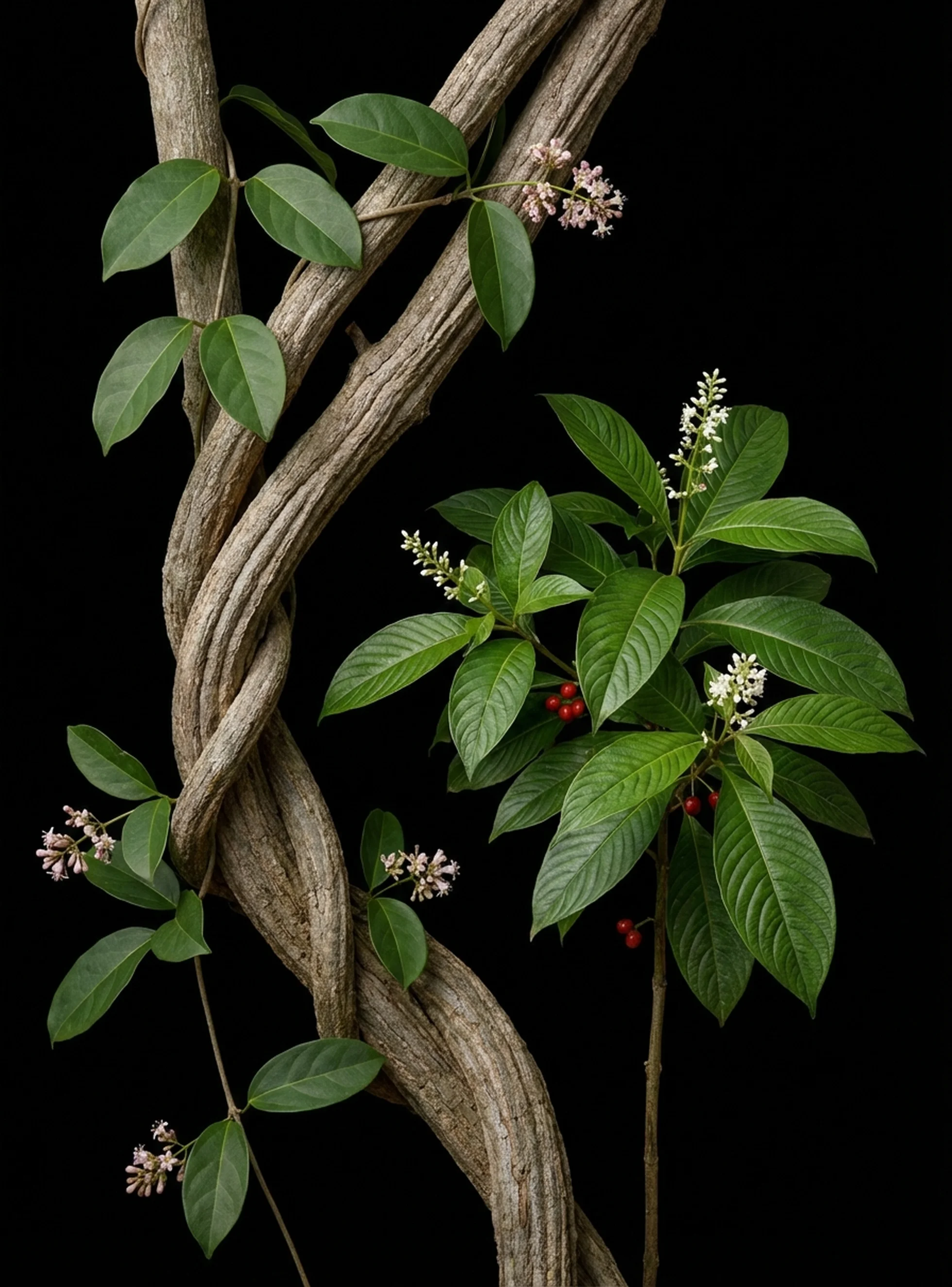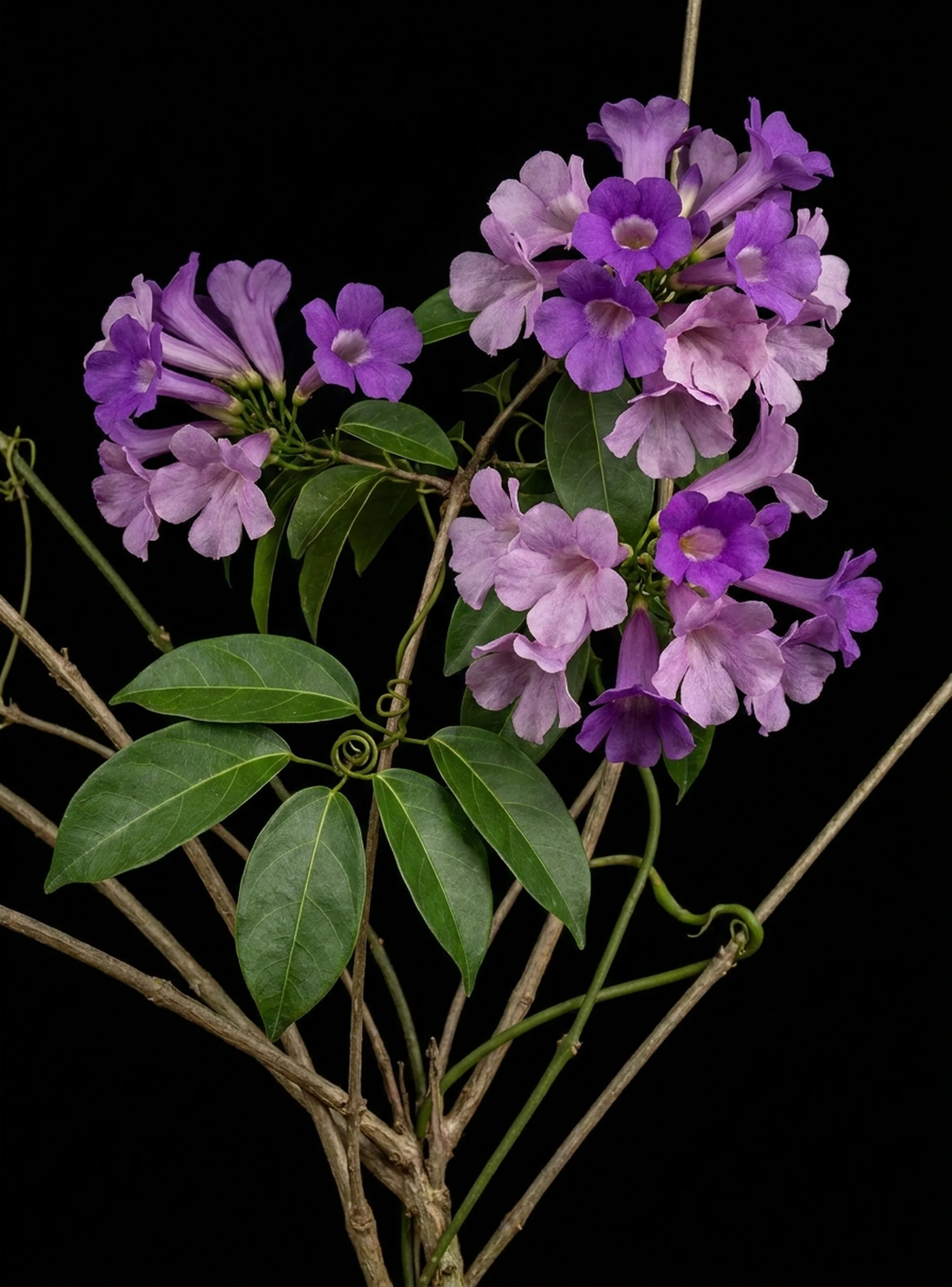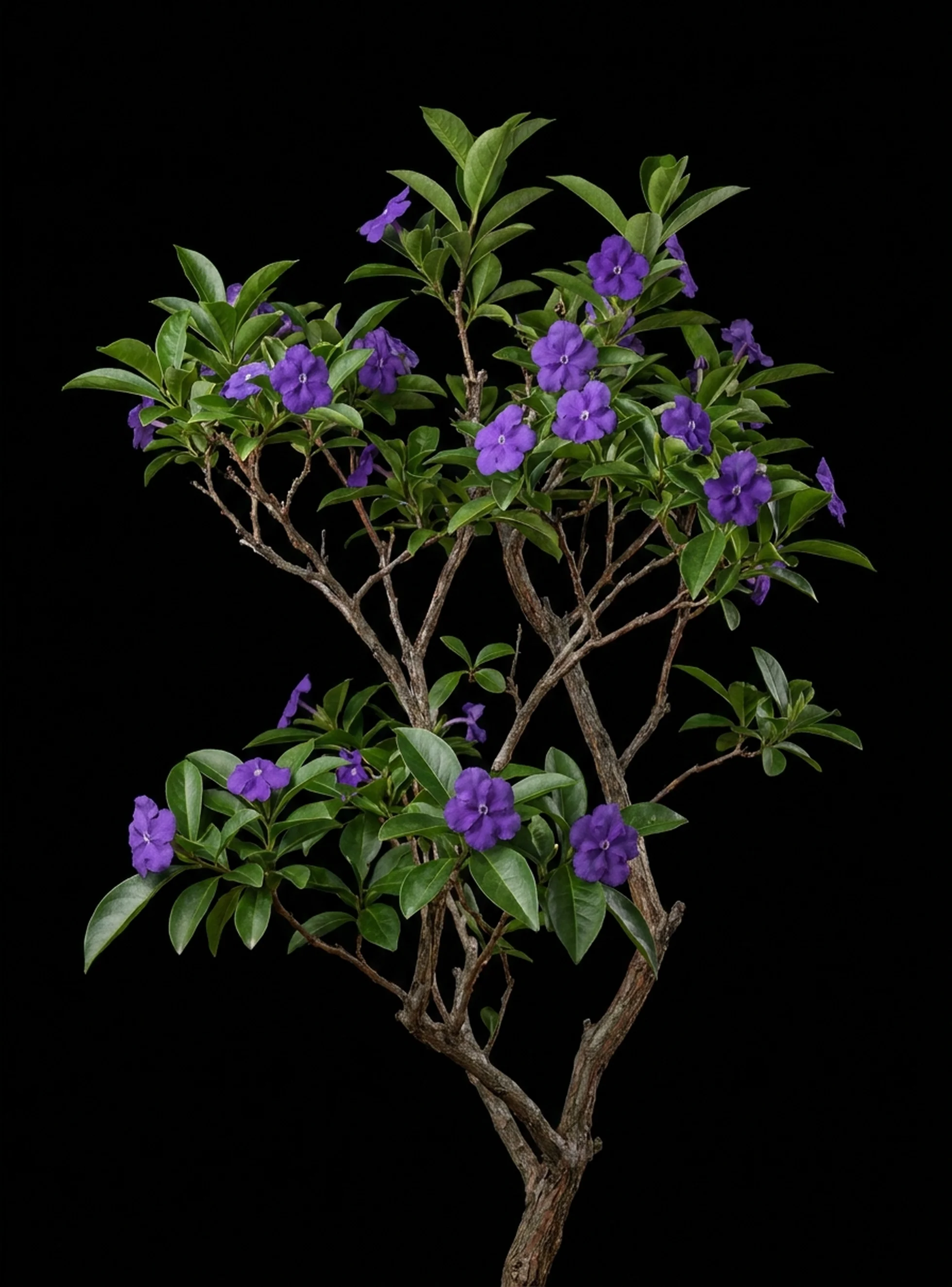

Chiric Sanango is an Amazonian shrub (Brunfelsia grandiflora) used in Shipibo dietas, known for intense physical effects including cold sensations and trembling that mark deep healing work.
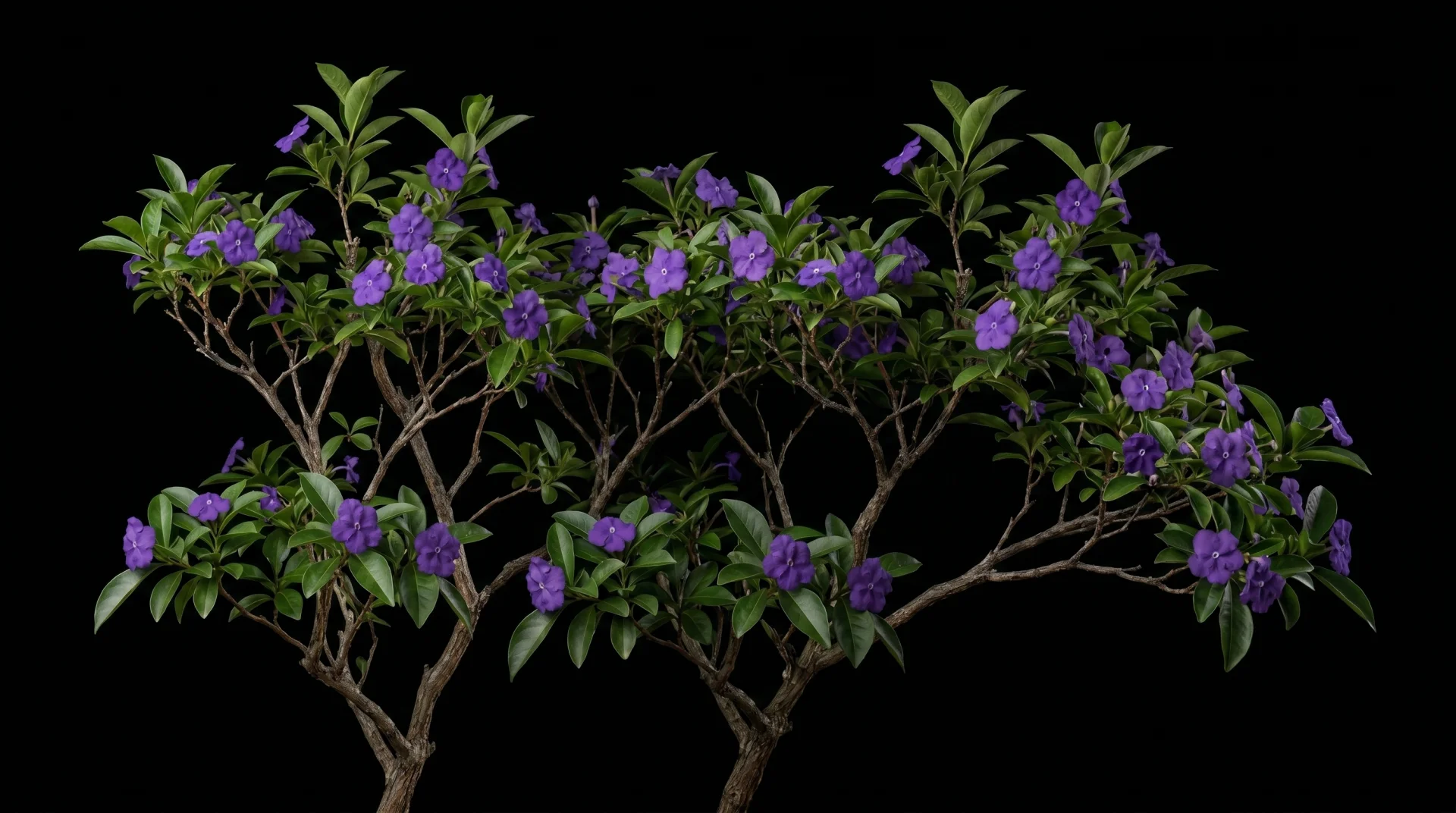
Chiric
Sanango
Chiric Sanango is an Amazonian shrub (Brunfelsia grandiflora) used in Shipibo dietas, known for intense physical effects including cold sensations and trembling that mark deep healing work.
Fact file
- Type
- Plant
- Duration
- 5 to 8h
- Strength
- Moderate
- Legal status
- Unclear in all 30 listed jurisdictions
What is Chiric Sanango?
The first thing many people notice is the cold. Not in the room, but inside the body. A tingling that begins in the mouth and travels outward, a shivering that arrives without temperature, a strange chill that practitioners say is the plant beginning its work. The Quichua name chiric means cold, and sanango means tree. A cold tree, then, that moves through a person from the inside.
Chiric Sanango is a flowering shrub of the western Amazon, used in mestizo and Indigenous traditions of the upper Amazon for emotional cleansing, for arthritic pain, and as a long fasted dieta in which a person learns from the plant over many days. It is not a substance one chases for visions. It is, in the framing of the curanderos who work with it, a teacher whose lessons arrive through the body.
What follows is a careful look at what is known about this plant, what is contested, and what may be unknowable from outside the tradition that holds it.
The substance
Scientific name: Brunfelsia grandiflora Ruiz & Pavón, formally described in 1794 by the Spanish botanists Hipólito Ruiz and José Pavón during their expedition to Peru.
Family: Solanaceae (the nightshade family), which also contains tomato, potato, tobacco, datura, and mandrake. Within this family, Brunfelsia is a genus of roughly twelve species native to South America and the Caribbean.
Common names: Chiric Sanango, chiric-sanango, chuchuwasha (in some regional usages, though this name more often refers to Maytenus), flor de muerto, and in horticultural contexts the related ornamental species B. uniflora is sold as Yesterday-Today-and-Tomorrow.
Substance type: A whole-plant preparation. Bark, root, leaves, and flowers are all used in different traditional preparations, with bark and root most common in the Amazonian medicinal context.
Within the broader taxonomy of psychoactive substances, Chiric Sanango sits apart from the classical serotonergic psychedelics (psilocybin, LSD, DMT, mescaline). It is closer in family to the deliriant Solanaceae (datura, brugmansia, henbane), though its effects and chemistry are distinct from those plants and notably less dangerous. In Amazonian curandero traditions it is grouped with the plantas maestras, the teacher plants used in dieta.
Strength and duration
Intensity profile
Duration
Aftereffects: ** Following the primary duration of Chiric Sanango effects, residual phenomena typically persist into the following day and beyond, including lingering emotional openness or softness, increased reflectivity on personal situations, a gentle rested or soothed quality, and sometimes continued access to insights or emotional processing that occurred during the peak [anecdotal]. These aftereffects are generally described as benign or positive rather than dysphoric, though individual variation exists
Chemistry and mechanism
Chiric Sanango is one of the more poorly characterized teacher plants in the modern pharmacological literature. What is known is partial, and honesty requires saying so.
Scopoletin (7-hydroxy-6-methoxycoumarin) is the best-documented constituent. It is a coumarin, not an alkaloid, and it appears in measurable concentrations in Brunfelsia tissue. Scopoletin shows mild activity at benzodiazepine binding sites and has documented sympathomimetic and anti-inflammatory properties in laboratory studies. The sympathomimetic activity is the leading candidate for the plant's signature physical effect: the deep, sustained chill and tremor that gives the plant its Quichua name. Coumarins of this class can mimic features of cold-stress activation in the autonomic nervous system, and that pattern aligns with what users consistently report.
Beyond scopoletin, the genus Brunfelsia contains additional compounds that have been less thoroughly studied. The literature references brunfelsamidine (a small alkaloid associated with seizure activity in canine toxicology cases involving ornamental Brunfelsia), manacine and manaceine (two further alkaloids reported in early twentieth-century chemistry literature), and other coumarin derivatives. The exact pharmacology of these compounds in B. grandiflora specifically, and their relative concentrations in traditional preparations, are not well characterized.
What the plant is not is a classical psychedelic. There is no good evidence for serotonergic 5-HT2A agonism. There is no DMT, no harmala alkaloid, no psilocybin. The subjective effects users report (emotional opening, vivid dreams during the dieta, occasional mild visual softening) appear to emerge from a combination of autonomic activation, anxiolysis, and the long, often isolated context in which the plant is traditionally taken, rather than from a single receptor mechanism.
This pharmacological obscurity is a fact about the state of research, not a feature of the plant. The compounds are present and active. Modern science simply has not caught up.

How people encounter it
Chiric Sanango is most often encountered in three contexts.
Traditional medicinal use. In mestizo and Indigenous communities of the Peruvian and Ecuadorian Amazon, bark and root are macerated in cane alcohol or simmered as a decoction and taken for arthritis, rheumatism, fevers, body pains, and what curanderos call aire (a category of cold or heavy energy lodged in the body). Topical preparations are also applied to swollen joints. This is the oldest and most continuous use of the plant.
The dieta. In the curandero traditions of the upper Amazon, Chiric Sanango is taken as a planta maestra: a teacher plant studied over a period of days or weeks in relative isolation, with strict food restrictions (no salt, no sugar, no pork, no alcohol, limited social contact). The dieta is not a single experience. It is a long apprenticeship to the plant, and the visions, dreams, and bodily teachings unfold over the full arc of the fast. The chills and tremors that mark the early hours of each dose are interpreted as the plant cleaning the body and opening the channels through which it will later communicate.
Ayahuasca admixture. In some curandero lineages Chiric Sanango is taken as a complement before, after, or alongside ayahuasca ceremonies, where it is understood to add a particular quality of bodily clearing or grounding to the larger work.
Reported onset is approximately 20 to 120 minutes after oral consumption, with peak effects around 90 to 180 minutes and a total duration of 5 to 8 hours. The cold sensation often arrives first and lingers. Effects vary substantially with the part of the plant used, the freshness of the material, the preparation method, and the individual. Outside these traditional contexts the plant has no established recreational use, and attempts to use it as such have generally produced experiences that practitioners describe as physically punishing without the framing that makes the work coherent.

Origin and history
The plant is native to the upper Amazon basin: the foothills where the Andes step down into the lowland forests of Peru, Ecuador, Colombia, and western Brazil. It grows in cloud forest and along forest edges, a woody shrub with violet flowers that fade to white as they age.
The Quichua name chiric sanango, meaning cold tree or tingling tree, is the linguistic record of a relationship that long predates the written one. Speakers of the upper Amazonian Quichua dialects, along with Shipibo-Konibo, Asháninka, and other peoples of the region, have used Chiric Sanango medicinally and ceremonially for generations. How many generations is genuinely uncertain. The archaeological record for soft plant material in tropical forest is poor, and the plant does not appear in the early colonial Spanish accounts that document coca, ayahuasca, or tobacco.
This absence does not mean the use is recent. It more likely means that Brunfelsia sat outside the categories that interested colonial observers: it did not produce dramatic visions, it was not commercially extractable, and its use was embedded in the slow context of the dieta rather than the public ceremony. Knowledge of it traveled through curandero lineages: from teacher to apprentice, plant to person, dream to dream.
Western ethnobotany began to document the plant in the twentieth century. Richard Evans Schultes and Robert Raffauf included Brunfelsia species in their 1990 survey The Healing Forest. Luis Eduardo Luna's work on Peruvian vegetalismo in the 1980s and 1990s described the role of plantas maestras in mestizo curanderismo, with Chiric Sanango among them. None of this writing produced the fame that surrounded ayahuasca, and the plant remained a niche knowledge.
In the twenty-first century, Chiric Sanango has begun to appear in retreat offerings in Peru and Ecuador, sometimes alongside ayahuasca and sometimes as a standalone dieta. This is a new chapter, and not an entirely peaceful one. The plant is now traveling along economic routes the curandero lineages did not design. Whether the knowledge that surrounds the plant travels with it is a question the next two decades will answer.

Effects
The defining feature of a Chiric Sanango experience is somatic. Within an hour of the first dose, most people report a deep cold sensation that settles into the body and persists. It is not the cold of a cool room. It is internal, often described as ice in the bones, or a wind blowing through the chest, or a tingling that spreads from the lips outward. Shivering and mild tremor are common. Some people report their teeth chattering even when they are warm to the touch. Practitioners frame this as the plant cleaning, moving stagnant energy, opening the channels. From a pharmacological view it appears related to scopoletin's sympathomimetic activity. From inside the experience it can feel like the plant has taken hold of the autonomic nervous system and is using it to rearrange something.
The cold is not pleasant. People who go through dietas with Chiric Sanango describe the early hours as physically taxing: chills, tremor, occasional nausea, a sense of bodily unease that does not lend itself to the language of euphoria or insight. Hedging here is unnecessary. The plant is hard.
Perceptually, effects rate around 3 of 10. Open-eye visuals are subtle: gentle softening of edges, possibly a quiet shift in the saturation of color. Closed-eye visuals are more present, particularly during the long hours of a dieta and especially in dreams, which many practitioners describe as becoming unusually vivid, structured, and instructive across the nights of the fast. Auditory sensitivity may increase. Synesthesia and dramatic distortion are not characteristic.
Cognitively, effects rate around 3 of 10. The mind tends to quiet rather than fragment. Mental chatter slows. Attention can settle on bodily sensation in ways it usually does not. Reflective access to autobiographical material, particularly material connected to the body, often deepens.
Emotionally, effects rate around 5 of 10, the dimension that registers most strongly. People often report a sustained access to grief, anger, or fear that ordinarily remains held below the surface. The emotional opening is rarely euphoric. It is more like a release of pressure: tears, sighs, a surfacing of material that the body has been carrying. In the dieta context this emotional surfacing is integrated through the long fast and the framework the curandero provides.
Somatically, effects rate around 4 of 10 by the standard scoring rubric, though for many users the somatic dimension is the dominant one. Beyond the cold and tremor, people report a sense of energy moving through the limbs, lightness in the head, occasional warmth alternating with the chill, and changes in proprioception. Reductions in joint pain and rheumatic stiffness are reported in the medicinal use tradition.
The arc typically begins with the cold within the first hour, builds through tremor and emotional surfacing across the next two to three hours, plateaus, and then descends into a tired, soft state. After-effects often include vivid dreams the following night and a residual sensitivity to the body that some find clarifying and others find raw.
A note before reading
Each experience is different. What you may notice depends on dose, setting, and the body and mind you bring to it.
What people often notice
Visual
Visuals tend to stay soft and mostly closed-eye, often subtle textures or gentle color shifts behind the eyelids.
Cognitive
Thoughts often settle. The mind tends to feel quieter, slower, more able to rest with what is.

Risks and limits
Chiric Sanango is genuinely toxic at sufficient preparations, and the relevant honesty here is closer to the clinical voice than the ceremonial one. The plant belongs to the Solanaceae, and while it is not as dangerous as datura or brugmansia, it is not benign.
Acute physical risk. Veterinary toxicology has documented seizures, ataxia, vomiting, and tremor in dogs that ingest ornamental Brunfelsia species, sometimes fatally. The implicated alkaloid in those cases is brunfelsamidine, which appears to act on the central nervous system in a way that can cross into convulsive territory at high exposure. Human cases of severe toxicity are rare in the literature, but they exist, and they are concentrated in preparations made outside traditional protocols (overly concentrated decoctions, ingestion of seeds, or ingestion of unfamiliar species mistaken for B. grandiflora). At the modest preparations used in traditional medicine and dieta the acute risk appears low, but the margin is narrower than for many of the better-known psychoactive plants.
Cardiovascular and autonomic effects. The sympathomimetic activity that produces the chills also raises heart rate and blood pressure in some users. People with cardiovascular disease, uncontrolled hypertension, or arrhythmia should treat this as a meaningful concern.
Drug interactions. Specific interaction data is sparse. Caution is warranted with serotonergic medications (SSRIs, SNRIs, MAOIs, tramadol), with stimulants, with other sympathomimetics, with sedatives, and with anticonvulsants. The general principle holds: combining poorly characterized plant alkaloids with prescribed medication is a category of risk that should be taken seriously.
Psychological risk. The plant lowers the threshold for emotional material. For people with stable psychological context this can be useful. For people with active psychotic disorder, untreated bipolar disorder, recent suicidal ideation, or unprocessed acute trauma without skilled support, the surfacing of suppressed material outside a holding container can be destabilizing.
Contraindications. Pregnancy and breastfeeding (no safety data, plant alkaloids cross placenta and milk). Personal or first-degree family history of psychotic disorder. Cardiovascular disease. Seizure disorder. Significant kidney or liver impairment.
Set and setting. Chiric Sanango is not well suited to recreational or self-directed use. The traditional context (dieta, isolation, fasting, curandero supervision, integration over days rather than hours) is not decoration. It is part of what makes the work coherent. Without it, the physical difficulty of the experience is harder to make sense of, and the risk of poor outcomes goes up. People drawn to the plant are generally better served by working with practitioners who hold a meaningful relationship to the tradition than by trying to reproduce the experience alone.

Integration and aftercare
Integration after Chiric Sanango is unusual among the plant medicines because so much of the work happens in the body. The cold passes. The tremor passes. What can remain is a kind of bodily literacy: a sense that something has moved, that a sensation that was held has been released, or, more honestly, that a sensation that had been ignored is now being heard.
Dietas in particular ask for a long return. The curandero traditions warn against breaking the food restrictions too quickly, against returning to noise and stimulation before the plant has finished what it is doing, against assuming the experience is over when the bodily symptoms ease. The teaching, in their framing, often arrives in the days and weeks afterward, in dreams and in the way ordinary situations begin to feel different.
A few practices appear to support this return:
Rest. More than is usual after most plant medicine work. The body has been put through something autonomic. Sleep, slow days, simple food, and time outdoors are not luxuries here. They are part of the medicine.
Bodily attention. Because the plant works through the body, integration that stays in the head tends to miss the point. Gentle movement (walking, slow yoga, qigong, swimming), bodywork if available, and quiet attention to what the body is doing through the day all keep the channel of communication open. Some practitioners suggest journaling sensations rather than thoughts.
Dream attention. Vivid dreams are a consistent report. Keeping a notebook by the bed, writing in the morning before speech crowds the imagery out, and noticing recurring figures or landscapes are all old practices that fit this plant unusually well.
Community. A trusted companion who knows the work, or a curandero or facilitator who has held space during the experience, is valuable for spoken integration. The tradition is not a solo one.
Professional support. If trauma material has surfaced, or if mood has shifted in ways that feel beyond the ordinary range of integration, a therapist familiar with non-ordinary states is appropriate.
Integration here is best thought of as a practice, not a checklist. The plant works slowly. The integration is also slow. Patience is part of the relationship.
Legal and ethical context
Brunfelsia grandiflora is not currently listed on the IUCN Red List, and wild populations in the upper Amazon are not formally documented as threatened. This says less about the plant's safety than about the gaps in conservation surveys for understudied species. The forests where it grows (the cloud-forest ecotones of Peru, Ecuador, Colombia, and western Brazil) are under continuous pressure from logging, agriculture, road construction, and oil and gas extraction. Where the forest goes, the plant goes with it.
Wild harvesting, where it occurs at the modest scale of traditional medicinal use, has historically been sustainable. The slower question is what happens as international retreat tourism scales demand. Some practitioners now cultivate the plant in agroforestry plots near the communities they work with, which is the more sustainable trajectory. Buyers and participants who choose to work with this plant should ask, plainly, where the material was grown or gathered and by whom.
The deeper ethical question is not ecological but cultural. Chiric Sanango is held, primarily, by curandero lineages in the upper Amazon: Shipibo-Konibo, Quichua, Asháninka, mestizo vegetalistas, and others. The dieta is their tradition. The framework that makes the work coherent (the food restrictions, the isolation, the songs, the cosmology of plant teachers) is not free-floating information that can be lifted into a Western retreat without losing something essential. When it is lifted that way, the lift tends to flow in one direction: knowledge moves outward, money moves inward, and the communities whose ancestors built the practice receive a small fraction of what their tradition is generating.
This is not a reason to refuse the plant. It is a reason to be honest about the relationship. Working with practitioners rooted in the tradition, ensuring meaningful payment flows back to the communities, declining to teach what one has not been taught to teach, and resisting the impulse to turn the plant into a content category are all small practices of reciprocity. The plant is not a commodity. The lineages that hold it are still here.
Legal status varies. The plant is not specifically scheduled in most countries, but several jurisdictions (Australia, New Zealand, Russia) treat possession ambiguously under broader plant-material legislation. Local law should be checked before possession or use.
Common misconceptions
Frequently asked questions

Reflection
There is something quietly instructive about a plant whose central teaching arrives as cold. The body shivers. The mind, accustomed to running the show, finds itself standing back while something older takes over. For a few hours, knowing what is happening becomes less important than letting it happen.
Much of what the modern conversation about psychedelic medicine emphasizes (the breakthrough, the insight, the visionary peak) is absent here. Chiric Sanango does not offer a story so much as a sensation, and the sensation is not pleasant. The plant works at the level where the body holds what the mind has not yet found language for, and it does that work whether or not anyone is watching.
What does it mean to learn from a plant whose lessons cannot be summarized? What does it ask of a culture used to extracting active ingredients to encounter a tradition that holds the dieta, the isolation, the fasting, the songs, and the long return as parts of the same medicine?
Sources
Ethnobotany and traditional use
Schultes, R. E., & Raffauf, R. F. (1990). The Healing Forest: Medicinal and Toxic Plants of the Northwest Amazonia. Dioscorides Press.
Luna, L. E. (1986). Vegetalismo: Shamanism among the Mestizo Population of the Peruvian Amazon. Almqvist & Wiksell International.
Luna, L. E., & White, S. F. (Eds.). (2000). Ayahuasca Reader: Encounters with the Amazon's Spirit Vine. Synergetic Press.
de la Torre, L., Navarrete, H., Muriel, P., Macía, M. J., & Balslev, H. (Eds.). (2008). Enciclopedia de las plantas útiles del Ecuador. Herbario QCA & Herbario AAU, Pontificia Universidad Católica del Ecuador.
Sanz-Biset, J., Campos-de-la-Cruz, J., Epiquién-Rivera, M. A., & Cañigueral, S. (2009). A first survey on the medicinal plants of the Chazuta valley (Peruvian Amazon). Journal of Ethnopharmacology, 122(2), 333-362.
Chemistry and pharmacology
Mors, W. B., & Ribeiro, O. (1957). Occurrence of scopoletin in the genus Brunfelsia. Journal of Organic Chemistry, 22(8), 978-979.
Lloyd, H. A., Fales, H. M., Goldman, M. E., Jerina, D. M., Plowman, T., & Schultes, R. E. (1985). Brunfelsamidine: A novel convulsant from the medicinal plant Brunfelsia grandiflora. Tetrahedron Letters, 26(22), 2623-2624.
Iyer, R. P., Brown, J. K., Chaubal, M. G., & Malone, M. H. (1977). Brunfelsia hopeana I: hippocratic screening and antiinflammatory evaluation. Lloydia, 40(4), 356-360.
Berger, A., Kostyan, M. K., Klose, S. I., Gastegger, M., Lorbeer, E., Brecker, L., & Schinnerl, J. (2016). Loganin and secologanin derived tryptamine-iridoid alkaloids from Palicourea crocea and Palicourea padifolia. Phytochemistry, 116, 162-169.
Vollenweider, F. X., & Preller, K. H. (2020). Psychedelic drugs: Neurobiology and potential for treatment of psychiatric disorders. Nature Reviews Neuroscience, 21(10), 611-633.
Toxicology and clinical case literature
Spainhour, C. B., Fiske, R. A., Flory, W., & Reagor, J. C. (1990). A toxicological investigation of the garden shrub Brunfelsia calycina var. floribunda in three species. Journal of Veterinary Diagnostic Investigation, 2(1), 3-8.
Banton, M. I., Jowett, P. L. H., Renegar, K. R., & Nicholson, S. S. (1989). Brunfelsia pauciflora ('yesterday, today, and tomorrow') poisoning in a dog. Veterinary and Human Toxicology, 31(2), 496-497.
Gable, R. S. (2004). Comparison of acute lethal toxicity of commonly abused drugs. Addiction, 99(1), 86-96.
Ecology, ethics, and indigenous sovereignty
Kimmerer, R. W. (2013). Braiding Sweetgrass: Indigenous Wisdom, Scientific Knowledge, and the Teachings of Plants. Milkweed Editions.
Posey, D. A. (Ed.). (1999). Cultural and Spiritual Values of Biodiversity. UNEP and Intermediate Technology Publications.
Celidwen, Y., Redvers, N., Githaiga, C., Calambás, J., Allkins, K., Caichac Hidalgo, P., Lopez, J., Aboites Rivera, K., Marsiglia Fernando, F., & Ware, A. N. (2023). Ethical principles of traditional Indigenous medicine to guide western psychedelic research and practice. The Lancet Regional Health - Americas, 18, 100410.
For how we evaluate sources and structure our claims, see the methodology.