
Coca is the sacred leaf of the Andes, chewed for millennia to sustain altitude, nourish ceremony, and carry prayers, often misunderstood globally yet central to Andean identity.
Coca
Coca is the sacred leaf of the Andes, chewed for millennia to sustain altitude, nourish ceremony, and carry prayers, often misunderstood globally yet central to Andean identity.
Fact file
- Type
- Plant
- Botanical name
- Erythroxylum coca
- Other names
- Coca, coca leaf, coca, hoja de coca
- Origin
- Andean highlands
- Duration
- 1-2 hours
- Strength
- Mild
- Legal status
- Illegal in 35 of 38 listed jurisdictions, and varies elsewhere
What is Coca?
High in the Andes, where the air thins and the body protests, there is a small green leaf that has been answering the same quiet question for four thousand years: How do you keep going?
Coca is not a drug of revelation. It does not crack open perception or dissolve the boundaries of self. It is, instead, a plant of sustenance, woven so deeply into Andean life that separating it from the culture that tends it would be like pulling thread from cloth. Chewed with a pinch of mineral lime, brewed into pale tea, or offered whole to the mountain spirits the Quechua call apu, coca belongs to the category of substances that do less than you expect and mean more than you imagine.
Its active compound is cocaine, but to equate the leaf with the powder is to confuse a river with a flood. In the leaf, the alkaloid arrives slowly, gently, at concentrations that produce a mild lift in mood and a steady current of energy. The experience is closer to a good cup of tea than to anything dramatic. Yet within that subtlety lies a remarkable story of ecology, empire, resistance, and the politics of what we allow ourselves to call medicine.
To understand coca is to hold two truths at once: the plant is both ordinary and sacred, both pharmacological and political, both ancient and urgently contemporary.
Identity
Scientific name: Erythroxylum coca Lam. (family Erythroxylaceae)
Common names: Coca, coca leaf (English); coca, hoja de coca (Spanish); kuka (Quechua, Aymara)
Substance type: Plant (perennial shrub)
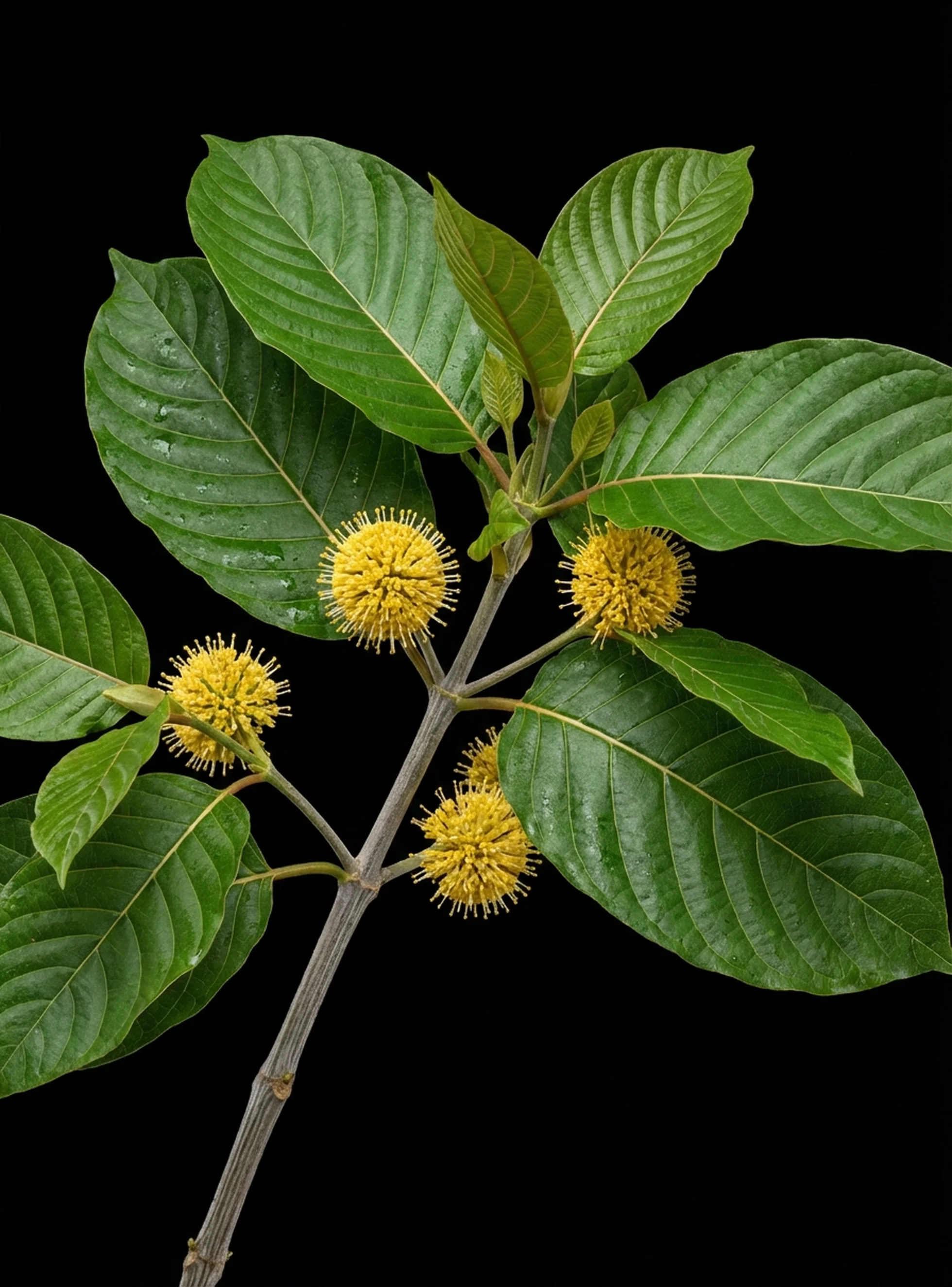
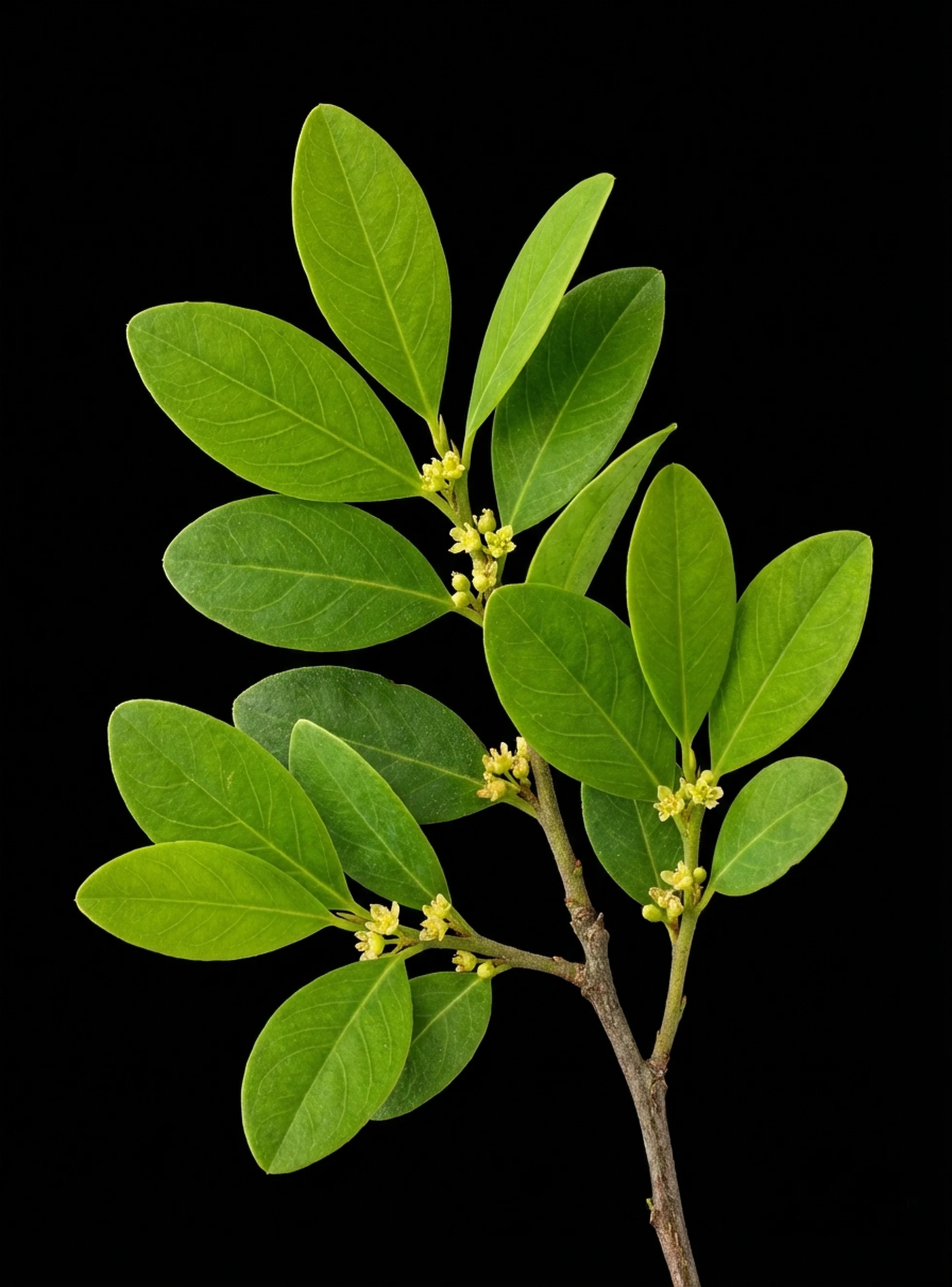
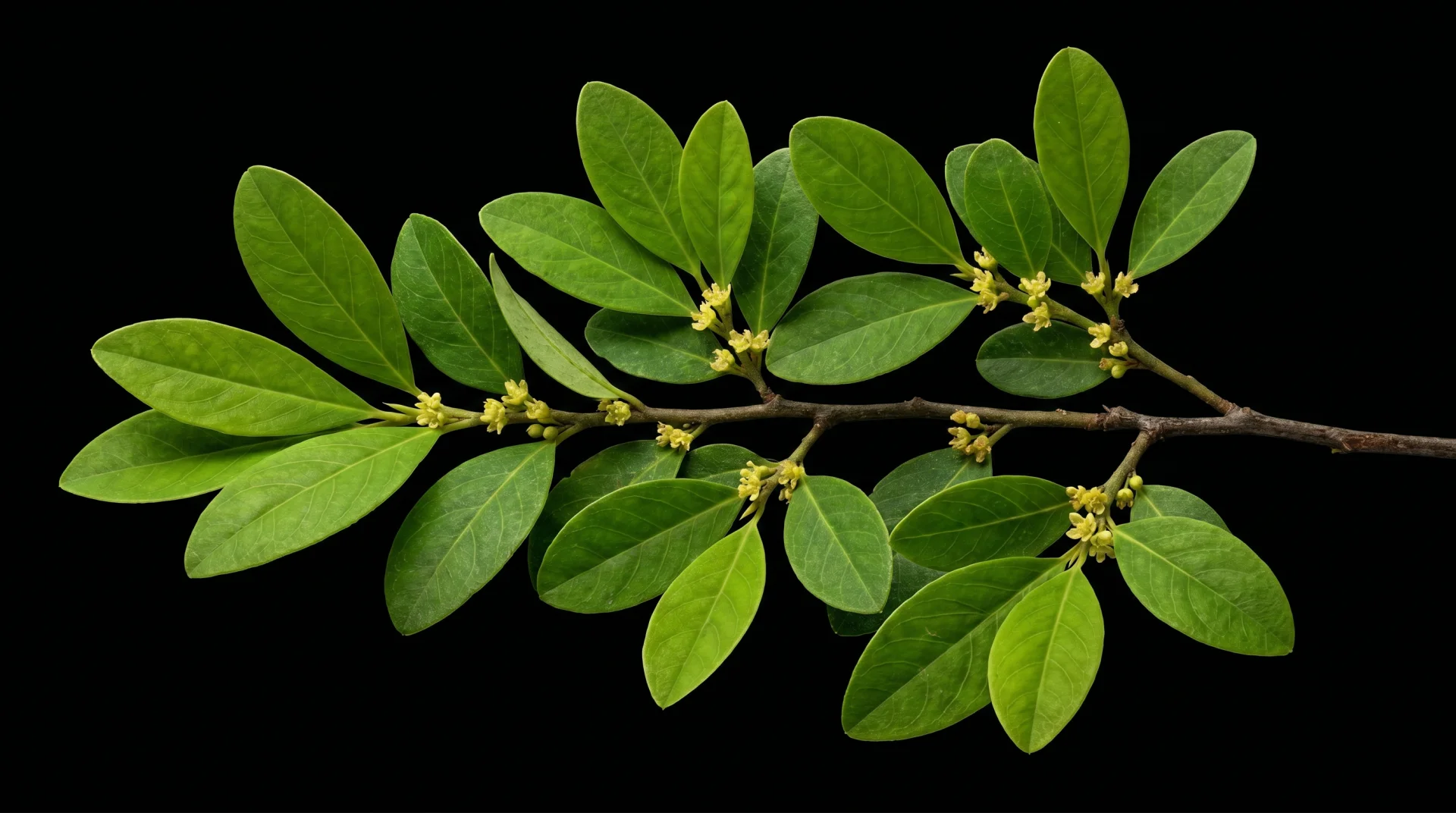
Coca is a woody shrub, typically one to three meters tall in cultivation, with small oval leaves bearing a distinctive reddish midvein and fine parallel veining. The leaves are faintly aromatic when crushed, slightly bitter, and produce a mild numbing sensation when chewed. Small white or pale pink flowers cluster along stem nodes, followed by red-orange single-seeded berries.
The plant is most closely related to Erythroxylum novogranatense (Colombian coca), which is smaller-leaved and grows at lower elevations. Both species contain cocaine, though in different proportions. Within the broader landscape of psychoactive substances, coca occupies a distinctive position: it is a mild stimulant whose primary alkaloid is one of the most potent reinforcing compounds known, yet whose whole-leaf form produces effects closer to caffeine than to any classical psychedelic or dissociative.
Strength and duration
Intensity profile
Duration
Aftereffects: ** Mild residual alertness for 1–2 hours post-cessation; no dysphoria, no "crash," no lingering physical symptoms reported in ethnographic literature [3]. Users resume normal activities without adjustment period.
Chemistry
Coca leaves contain over a dozen alkaloids, but cocaine is the one that matters most. Present at roughly 0.5 to 0.8 percent by weight in dried Erythroxylum coca leaves, cocaine is a tropane alkaloid that acts as a non-selective monoamine reuptake inhibitor. In plain language, it blocks the recycling of three key neurotransmitters (dopamine, norepinephrine, and serotonin) at nerve terminals, allowing them to linger longer in the synaptic gap between neurons.
Each of these systems contributes something distinct. Dopamine, accumulating in the nucleus accumbens and reward circuits, produces the subtle mood elevation and sense of motivation. Norepinephrine, rising through projections from the locus coeruleus, sharpens alertness and increases sympathetic tone (the mild heart rate increase, the widened pupils). Serotonin, elevated through raphe nuclei pathways, contributes a secondary layer of well-being.
The mechanism is not one of activation but of removal. Cocaine does not turn on a signal. It removes the off switch, letting signals already in motion persist.
Beyond cocaine, the leaf contains secondary tropane alkaloids (ecgonine, methylecgonine, tropacocaine) with minimal psychoactivity, along with polyphenols like catechin, epicatechin, quercetin, and kaempferol. These tannins and flavonoids contribute antioxidant properties and may, according to emerging but unconfirmed research, modulate the bioavailability of cocaine when the leaf is consumed whole. The hypothesis that whole-leaf constituents buffer or modify cocaine's effects remains unproven, but it is pharmacologically plausible.
Cocaine is metabolized rapidly. Plasma half-life is roughly 20 minutes, with the liver's esterases breaking it down primarily into benzoylecgonine (psychologically inert) and small amounts of norcocaine. The short half-life of the active compound explains why traditional users redose throughout the day, maintaining a steady, low-level effect rather than experiencing sharp peaks and valleys.

Methods of Encounter
The most ancient and most common way to meet coca is through the leaf itself, placed in a wad (a quid) between cheek and gum. In Quechua and Aymara practice, the chewer adds a small amount of mineral lime, traditionally ground from seashells and called llipta or tocra. This alkaline additive increases salivation and raises the pH of the mouth, enhancing absorption of cocaine through the buccal mucosa. The onset is gradual (15 to 30 minutes), the peak gentle (45 to 90 minutes), and the total duration spans two to four hours without a sharp decline. Workers in the Andes pause periodically to refresh their quid, sustaining a mild baseline of alertness across the day.
Coca tea (te de coca) offers a gentler route. Hot water extracts the alkaloids into a pale infusion that is widely available in Andean hotels, markets, and homes. Absorption through the stomach and small intestine is slower and less efficient (roughly 33 percent bioavailability), so effects tend to arrive 20 to 40 minutes after drinking and sit at the subtler end of the spectrum. The experience is often compared to a good cup of green tea, with a slightly more noticeable lift in mood.
Concentrated tinctures and extracts represent a less traditional form. Applied under the tongue, they can produce effects within 5 to 15 minutes with somewhat more pronounced stimulation. These preparations exist in a space between traditional leaf use and pharmaceutical extraction.
Coca also has a non-consumptive form of encounter. In Andean ceremony, whole leaves are offered, not eaten, as gifts to Pachamama (Earth Mother) and to mountain spirits. In these contexts, the relationship to the plant is spiritual rather than pharmacological.
The route of encounter shapes the experience profoundly. Traditional chewing and tea produce gradual, sustained, mild effects. Concentrated forms accelerate and intensify. The further one moves from the whole leaf, the more the experience diverges from the plant's original character.

Origin & History
Coca belongs to the cloud forests of the eastern Andean slopes, the humid transition zone between the high plateau and the Amazon lowlands. In what is now Peru and Bolivia, the plant has been tended for at least four thousand years. Archaeological deposits in the Cusco region, dating to roughly 3000 to 1500 BCE, contain leaf residues and alkaloid traces left by people who gathered coca before agriculture, before cities, before empire.
By the time of the Moche civilization (50 to 750 CE), coca had become central enough to appear on ceramic vessels: figures with bulging cheeks, mid-chew, preserved in fired clay. The Inca state (1438 to 1533 CE) formalized what communities had long practiced, building coca into the architecture of governance. Storage facilities at administrative centers held vast leaf reserves. Distribution was tracked on khipu, the knotted string records that served as Inca accounting. Coca was currency, sacrament, and fuel for the labor that built an empire across six modern nations.
The Spanish arrived in 1532 and initially tried to suppress coca as a pagan substance incompatible with Christianity. That prohibition lasted only as long as it took colonial administrators to notice that coca-chewing workers produced more silver in the mines of Potosi. The reversal was swift and brutal: the same plant condemned as demonic was distributed to enslaved Indigenous laborers to reduce their fatigue and suppress their hunger. An estimated eight million Indigenous people died in the first century of colonization, and coca, sacred to the people being killed, was instrumentalized in the machinery of their exploitation.
In 1860, Albert Niemann isolated the alkaloid he named cocaine. Within two decades, it was in patent medicines, surgical theaters, and Vin Mariani, a coca wine endorsed by popes and presidents. By 1903, Coca-Cola had quietly removed it from its formula. The Harrison Narcotics Tax Act of 1914 began the long process of criminalization. The 1961 UN Single Convention on Narcotic Drugs placed cocaine on Schedule I, though it carved out an exception for traditional Andean chewing that has been contested ever since.
Today, Peru and Bolivia maintain legal coca markets as assertions of cultural sovereignty. Bolivia's Evo Morales, himself a former coca grower, championed reforms distinguishing traditional coca from cocaine extraction. Meanwhile, the plant remains illegal in most of the world, caught in the gap between a colonial inheritance and an Indigenous birthright.
The history of coca is, in miniature, the history of who gets to decide what a plant means.

Effects
Coca, in its traditional leaf form, is one of the gentlest substances in Psylopedia's library. Its composite strength score sits at 2 out of 10, placing it firmly in the mild range. The experience is less an altered state than a subtle recalibration, a quiet brightening of what is already there.
Perceptual
There is almost nothing to report here, and that absence is itself informative. Coca does not alter visual perception, shift color saturation, distort sound, or produce any of the sensory rearrangements associated with psychedelics or dissociatives. Perception remains clear and realistic. At most, some users describe a slightly heightened tactile awareness, a pleasantness in the sensation of skin or texture. The perceptual dimension scores 0.5 out of 10, reflecting a substance that leaves the senses essentially untouched.
Cognitive
The cognitive effects are where coca begins to show its character. Users tend to report increased mental clarity, a sharpening of focus, and a reduction in the mental fatigue that accumulates during repetitive or demanding work. Ideas may flow more freely, and sustained attention tends to come more easily. These are stimulant-class effects, not the novel associations or pattern-recognition shifts of psychedelics, but they are genuinely useful. The cognitive dimension scores 2.5 out of 10, reflecting enhancement rather than alteration. At higher concentrations (approaching extracted cocaine rather than traditional leaf), thought can accelerate into restlessness, but in the leaf's gentle range, the effect is more like a fog clearing than a gear shifting.
Emotional
Coca tends to produce a mild, broad-spectrum mood elevation. Users often describe it as warmth, a subtle contentment that makes conversation easier and social interaction more comfortable. In the Andean context, this quality is inseparable from the communal practice of sharing coca during work pauses. The emotional dimension scores 2.5 out of 10: a lift, not a wave. There is no emotional catharsis, no deep opening, no sudden access to buried feeling. The effect is surface-level in the best sense, smoothing rather than deepening, producing ease rather than intensity. Irritability can occasionally emerge with repeated dosing or in stimulant-sensitive individuals.
Somatic
The body registers coca primarily as energy. Fatigue diminishes, physical stamina may feel extended, and there is often a mild increase in heart rate (roughly 5 to 15 beats per minute in traditional users). Appetite tends to decrease. Dry mouth is common. The somatic dimension scores 1.5 out of 10, reflecting effects that are present but gentle. There is none of the nausea, trembling, or body-load associated with stronger substances. The first sensation many people notice is the slight numbing of the mouth from cocaine's local anesthetic properties, a small, distinctive marker that the leaf is working.
The Arc
With chewed leaf, effects build gradually over 15 to 30 minutes, reach a modest peak at 45 to 90 minutes, and sustain for two to four hours before fading without a crash. The descent is uneventful. There is no rebound dysphoria, no hangover, no lingering disruption. Users typically resume normal activity without an adjustment period. This gentle arc is one of coca's most distinctive features: it arrives quietly, stays modestly, and leaves without drama.
A note before reading
Each experience is different. What you may notice depends on dose, setting, and the body and mind you bring to it.
What people often notice
Emotional spectrum
Visual
Visuals tend to stay soft and mostly closed-eye, often subtle textures or gentle color shifts behind the eyelids.
Cognitive
Thoughts often settle. The mind tends to feel quieter, slower, more able to rest with what is.

Risks & Limits
Coca's gentleness in traditional form does not mean it is without risk. The same alkaloid that produces a mild mood lift in the leaf produces one of the most addictive and cardiovascularly dangerous profiles in medicine when concentrated. Understanding where the risks lie, and where the evidence is thin, matters.
Cardiovascular considerations
Cocaine is a sympathomimetic compound. Even at the low concentrations delivered by leaf chewing or tea, it elevates heart rate modestly and may increase blood pressure. In healthy individuals, these changes are generally well tolerated. In people with pre-existing hypertension, coronary artery disease, arrhythmias, or structural heart conditions, even modest sympathomimetic stimulation carries real risk. Cocaine is known to induce coronary vasoconstriction and prolong the QT interval at higher doses. Whether traditional leaf doses produce clinically meaningful cardiac effects remains unstudied, but the mechanism is shared, and caution is warranted.
Psychological risks
Stimulants can precipitate anxiety or panic in susceptible individuals. People with severe anxiety disorders, panic disorder, bipolar disorder, or psychotic spectrum conditions face elevated risk. Cocaine-induced psychosis is well documented at pharmaceutical doses; its relevance to traditional leaf use is unclear but cannot be dismissed in vulnerable populations. Traditional users embedded in cultural contexts rarely report psychological disturbance, but this observation may reflect the protective effects of set, setting, and social integration rather than pharmacological safety.
Drug interactions
Coca interacts significantly with several medication classes. Combinations with MAO inhibitors are potentially fatal, producing severe hypertensive crisis through extreme catecholamine accumulation. SSRIs, SNRIs, and tricyclic antidepressants increase serotonin syndrome risk. Beta-blockers can leave cocaine-induced vasoconstriction unopposed. Other stimulants (caffeine, amphetamines, pseudoephedrine) produce additive cardiovascular stress. Alcohol, combined with coca, forms cocaethylene in the liver, a toxic metabolite. Anyone taking psychiatric or cardiovascular medications should treat coca with the same caution they would apply to any stimulant.
Addiction potential
This is where the leaf and the powder diverge most sharply. Extracted cocaine has an addiction rate estimated at 15 to 30 percent of users, among the highest of any substance. Traditional coca leaf use, by contrast, has not been associated with compulsive use patterns in ethnographic literature. The difference likely reflects dose, route, and context: the slow, gentle delivery of the leaf does not produce the sharp dopamine spike that drives compulsive redosing. But the underlying pharmacology is shared, and concentrated forms of coca carry meaningfully higher risk.
Contraindicated populations
Coca should be avoided by people with cardiac disease, seizure disorders, psychotic spectrum conditions, or bipolar disorder. It is contraindicated during pregnancy and breastfeeding (cocaine crosses the placental barrier). Children and older adults face elevated risk due to developing or compromised cardiovascular systems. People with hyperthyroidism or poorly controlled diabetes should exercise particular caution.
The honest summary
Traditional coca leaf use appears to carry a wide margin of safety in healthy adults, but "appears" is doing significant work in that sentence. Formal clinical studies of coca leaf safety do not exist. Most risk data is extrapolated from cocaine research. The absence of documented harm in traditional users is reassuring but not the same as evidence of safety.

Integration
Coca does not typically produce the kind of experience that demands integration in the way a psychedelic encounter might. There is no dissolved boundary to rebuild, no symbolic vision to decode. The leaf arrives gently and departs the same way.
And yet, the Andean traditions that have tended coca for millennia embed it in structures of reflection that deserve attention. In Quechua and Aymara communities, coca is not consumed in isolation. It is shared during communal work pauses (apacheta), offered in ceremony, and woven into the rhythm of a day that acknowledges reciprocity with the land. The integration, in other words, is the context itself: the pause, the sharing, the acknowledgment that energy is a gift that comes with obligations.
For those encountering coca outside these traditions, a few principles drawn from stimulant pharmacology and general practice may be helpful.
Rest and rhythm. Coca is a stimulant, and stimulants borrow energy from the future. If coca has enabled you to work longer or harder than usual, the body will eventually request repayment. Adequate sleep, particularly if coca was used in the afternoon or evening, supports dopamine system recovery.
Honest self-observation. Notice what you reached for coca to do. Was it to sustain effort that was already depleting you? To smooth social discomfort? To push past a signal your body was sending? The answers are not moral judgments, but they are useful data.
Community over isolation. Traditional coca use is fundamentally social. If you find yourself using any stimulant primarily alone and primarily to perform, that pattern is worth examining, not with alarm, but with curiosity.
Patience with ordinariness. One of stimulant use's subtlest risks is the quiet recalibration of what "normal" feels like. If baseline energy or mood begins to feel insufficient without coca, that shift deserves attention and, if needed, the support of someone trained to help.
Formal integration research specific to coca leaf does not exist. What exists is the wisdom embedded in four thousand years of communal practice: the plant is best met in relationship, not in transaction.
Ethics & Ecology
Coca grows where the Andes begin to descend into cloud forest, at elevations of 600 to 2,000 meters in the humid transition zones of Peru and Bolivia. It is not a threatened species. It is widely cultivated and occurs in wild populations across its native range. But the ecosystems it inhabits are under pressure.
An estimated 50,000 to 100,000 hectares of Andean cloud forest have been cleared for coca cultivation over the past three decades. Where traditional agroforestry practices persist (coca planted alongside plantain, citrus, cacao), the ecological impact is modest. Where market demand has driven monoculture, the loss of biodiversity is significant. Synthetic pesticides used in intensive cultivation contaminate soil and water. The plant itself is relatively efficient (less water, less fertilizer than many export crops), but no monoculture replaces a forest.
The politics of coca cultivation are inseparable from questions of sovereignty. Peru and Bolivia have legalized traditional coca markets, supporting roughly 200,000 smallholder farmers and asserting cultural rights against international pressure to criminalize. This is not a simple story of conservation versus commerce. It is a story about who decides what an Indigenous plant is for.
Cultural appropriation concerns are real. Coca tea marketed as an "Andean energy drink" to Western wellness consumers, or despacho ceremonies conducted by non-Indigenous facilitators, strip context from a practice that carries deep spiritual meaning for Quechua and Aymara communities. The offering of coca to Pachamama is not a lifestyle choice. It is an expression of reciprocal obligation to the land.
The question for anyone encountering coca outside its home traditions is not simply "Is this legal?" (the legal status is already documented in this profile). The question is: What is my relationship to this plant, and to the people who have tended it?
Misconceptions
Coca leaf is just as dangerous as cocaine.
Coca leaves contain 0.5 to 0.8 percent cocaine by weight. A typical chewed dose delivers roughly 10 to 50 milligrams of bioavailable cocaine, compared to 50 to 300 milligrams in a dose of extracted cocaine with much higher bioavailability. Peak plasma concentrations from leaf use are 5 to 30 times lower than from the isolated compound. Acute cardiovascular and neurological risks scale with peak concentration. The leaf and the powder share an alkaloid, but they occupy different pharmacological territory.
Coca has been used for thousands of years, so it's completely safe.
Four millennia of traditional use is meaningful evidence, but it is not a safety certificate. Traditional use occurred in specific populations, at moderate doses, within social structures that regulated consumption. It does not eliminate risk for individuals with cardiac disease, psychiatric conditions, or concurrent medication use. The absence of documented fatal outcomes in traditional users is encouraging but reflects limited study, not proven harmlessness.
Coca leaf is legal throughout South America because it's traditional.
Bolivia and Peru have legalized traditional coca use and maintain regulated markets. Colombia, Ecuador, Brazil, and Argentina criminalize possession despite Indigenous traditional use in some regions. Legal status reflects political and treaty decisions, not the mere fact of historical practice.
Coca is a mild recreational drug with no addiction potential.
Traditional leaf use does not appear to produce compulsive use patterns. Extracted cocaine, however, has one of the highest addiction rates of any substance (15 to 30 percent of users). The distinction between leaf and concentrated forms is critical. Treating "coca leaf is not highly addictive" as equivalent to "coca alkaloids carry no addiction risk" is a dangerous conflation.
Coca tea cures altitude sickness.
Coca tea is a traditional remedy for *soroche* (altitude sickness), and some users report symptom relief. No controlled clinical trials have tested this claim. The stimulant effects may reduce fatigue and increase alertness at altitude, but coca does not address the underlying physiological hypoxia. Public health organizations do not recommend it as a primary altitude treatment.
FAQ

Reflection
There is something worth sitting with in the fact that the same molecule can be sacred in one context and destructive in another. The same compound, moving through the same receptors, producing effects that range from a quiet afternoon's endurance to the unraveling of a life.
Coca invites us to consider that a substance is never just its chemistry. It is also its dose, its route, its culture, its history, its politics, and the intention of the person reaching for it. The Quechua worker sharing a quid with colleagues during a mountain pause and the person chasing a sharper high in a distant city are both encountering cocaine. They are not having the same experience.
Perhaps the most useful thing coca teaches is that the question "Is this substance good or bad?" is almost always the wrong question. The better one, the harder one, is: What relationship am I in with this, and is it one of reciprocity or extraction?
The Andean traditions that shaped coca into a practice of mutual obligation, between worker and mountain, between human and earth, understood something that pharmacology alone cannot capture. The plant offers. What we do with that offering says more about us than about the leaf.
Sources
Primary research sourced from peer-reviewed pharmacological, ethnobotanical, and clinical literature. See the full research profile for detailed citations and evidence tags.
For how we evaluate sources and structure our claims, see the methodology.