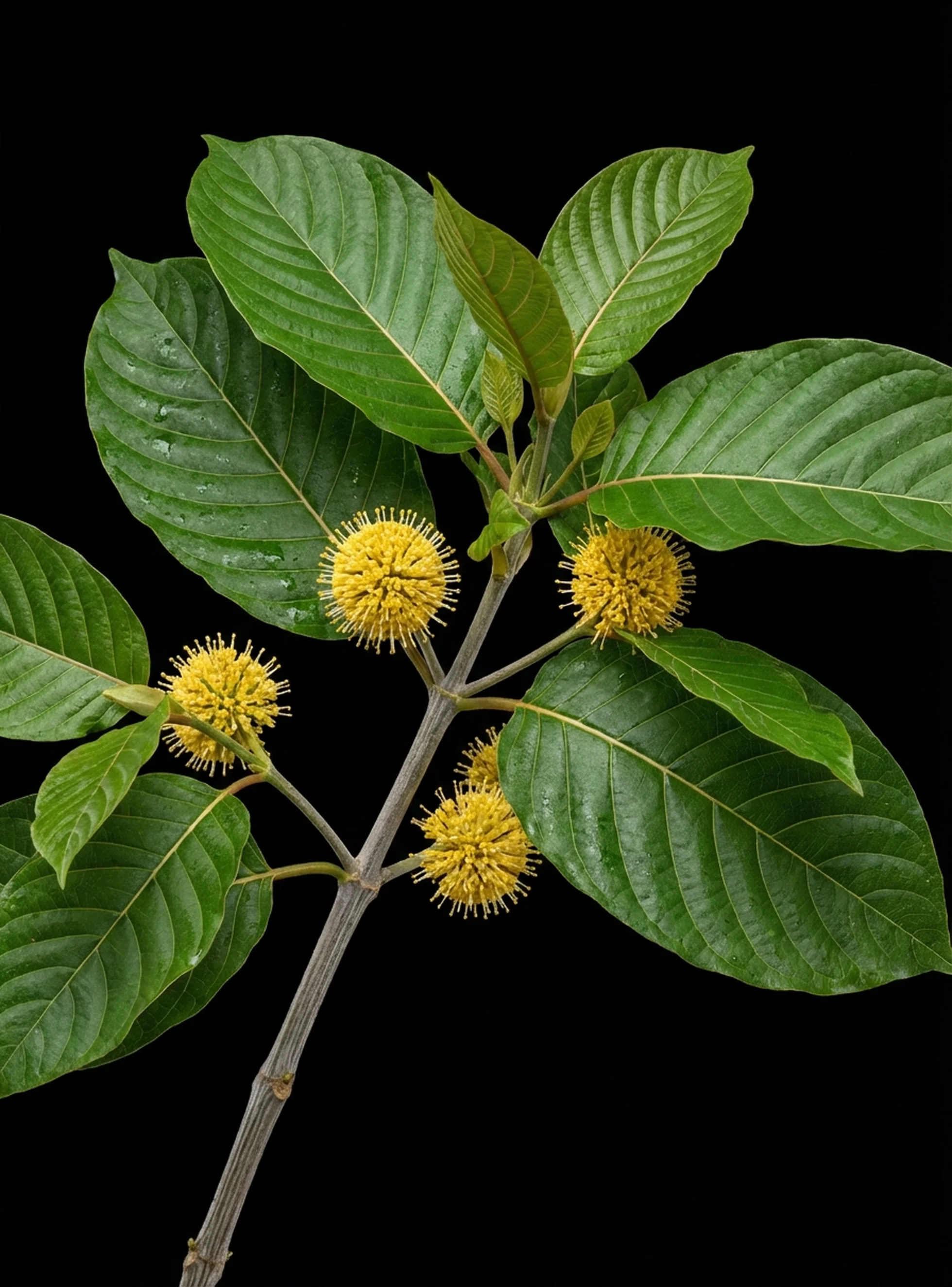

Kratom is a Southeast Asian tree whose leaves act on opioid and adrenergic receptors, producing stimulating effects at low doses and sedating analgesia at higher ones.
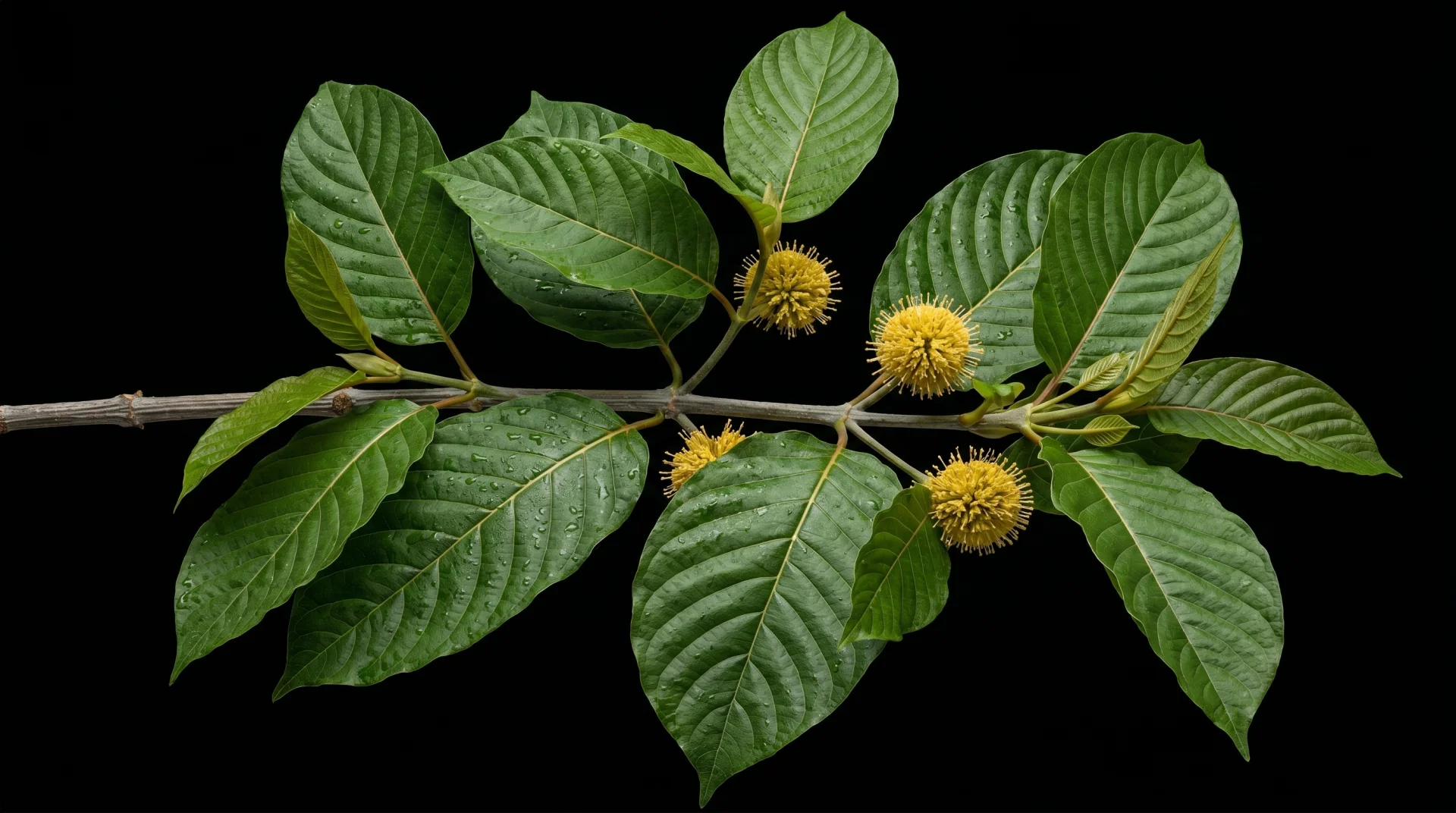
Kratom is a Southeast Asian tree whose leaves act on opioid and adrenergic receptors, producing stimulating effects at low doses and sedating analgesia at higher ones.
Kratom
Fact file
- Type
- Plant
- Botanical name
- Mitragyna speciosa
- Other names
- Kratom, kratom, กระท่อม kratom, Ketum
- Origin
- Southeast Asia
- Duration
- 3-6 hours
- Strength
- Mild
- Legal status
- Legal in 23 of 34 listed jurisdictions, and varies elsewhere
What is Kratom?
In the rubber plantations and fishing villages of southern Thailand, there is a tree whose leaves have been chewed by laborers for as long as anyone can remember. Not for visions. Not for ceremony. For the simple, radical act of making a hard day bearable.
Mitragyna speciosa occupies an unusual position in the pharmacological landscape. It is a member of the coffee family (Rubiaceae) that behaves, at the receptor level, like a distant cousin of morphine. Its primary alkaloid, mitragynine, activates the same opioid receptors that govern pain and pleasure, but does so as a partial agonist, pressing the lever halfway rather than slamming it to the floor. It also engages the adrenergic system, the machinery of alertness and focus, which gives kratom something no classical opioid can claim: a stimulant face and a sedative face, expressed differently depending on how much leaf is consumed.
This duality is what makes kratom difficult to categorize and easy to misunderstand. It is neither a psychedelic nor a simple painkiller. It does not dissolve boundaries or reveal hidden architectures of mind. What it offers is more modest and, for many people, more immediately useful: a shift in the body's relationship to discomfort, fatigue, and unease. Whether that shift is a tool, a crutch, or something in between depends on who is reaching for the leaf and what they are reaching away from.
Identity
Scientific name: Mitragyna speciosa (Korth.) Havil.
Common names: Kratom (English, Thai), ketum (Malay), biak-biak (Southeast Asian vernacular). In Thai script: กระท่อม.
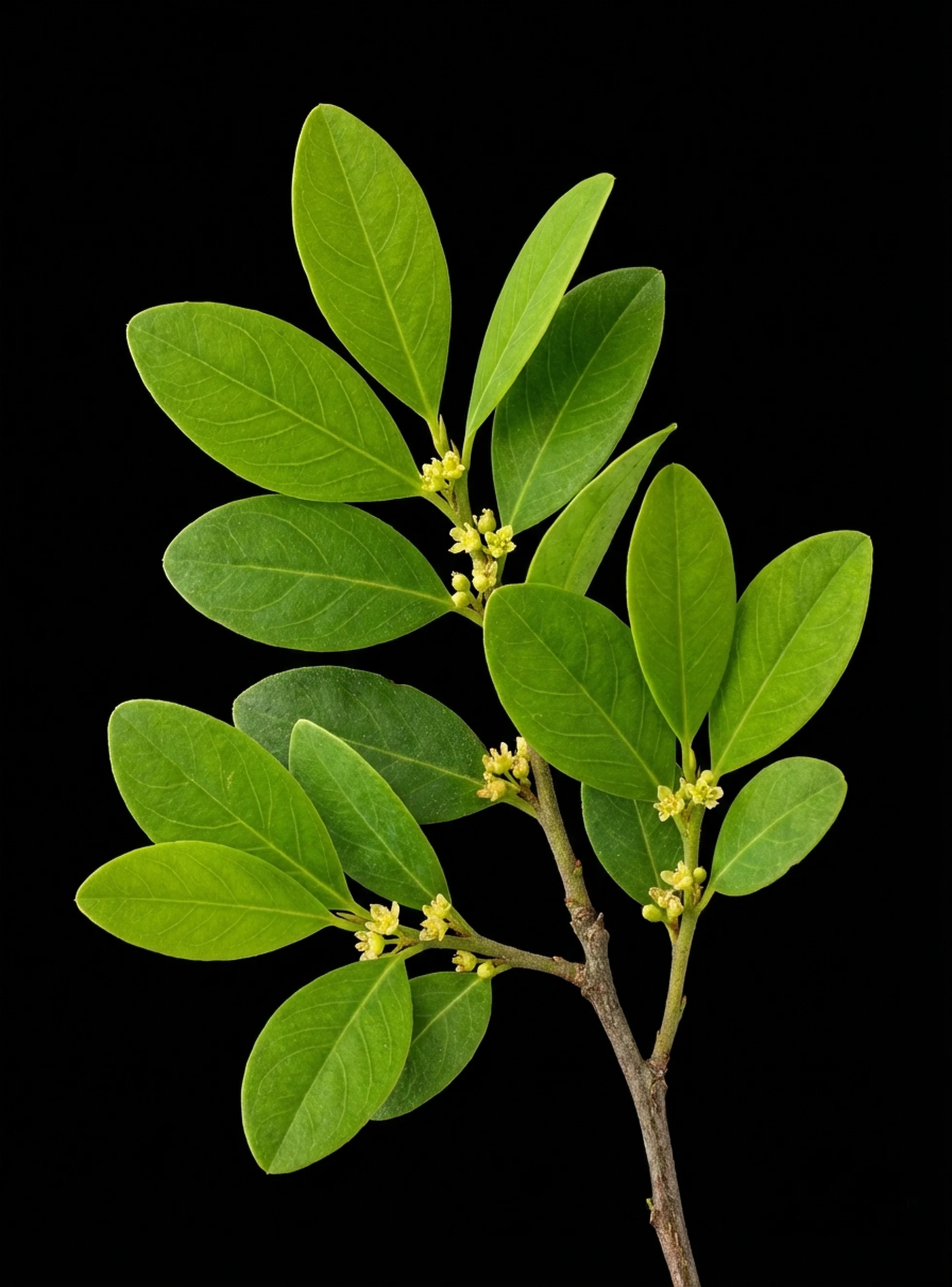
Classification: A tropical evergreen tree in the family Rubiaceae, the same lineage that includes coffee (Coffea arabica) and cinchona (the source of quinine). The tree grows 4 to 16 meters tall in its native habitat, with glossy, dark green, ovate leaves measuring 8 to 17 cm long. Flowers are small and yellowish, clustered in dense spherical panicles.
Substance type: Plant. Its psychoactive properties derive from indole alkaloids, primarily mitragynine, which act on opioid and adrenergic receptors rather than serotonin receptors. This places kratom in a pharmacological category distinct from classical psychedelics.
Taxonomic note: Originally described as Stephania speciosa by Korthals in 1839, the species was reclassified to genus Mitragyna by Haviland in 1859. Market designations such as "red vein," "green vein," and "white vein" reflect harvest timing and post-harvest oxidation rather than genuine botanical subspecies. Regional labels (Bali, Maeng Da, Thai, Borneo) similarly reflect commercial branding more than verifiable geographic origin. Alkaloid profiles vary substantially based on soil, climate, tree age, and processing method.
Strength and duration
Intensity profile
Duration
Aftereffects: 2–6 hours of residual effects post-baseline (subtle mood elevation, lingering sedation, fatigue, or contentment). Some users report lingering "smoothness" or emotional stability for many hours post-effects [anecdotal].
Chemistry
Kratom leaves contain over 40 alkaloids, but two carry nearly all of the pharmacological weight: mitragynine and 7-hydroxymitragynine. Both belong to the indole alkaloid class, sharing a molecular architecture with compounds found in other Rubiaceae species.
Mitragynine is the dominant alkaloid, comprising 0.3 to 5 percent of dry leaf weight. It acts as a partial agonist at mu-opioid receptors, the same receptors targeted by morphine and codeine, but with a critical difference. Partial agonism means the receptor is activated to roughly half its maximum capacity, producing analgesia and mild euphoria while appearing to carry a lower ceiling for respiratory depression than full opioid agonists. Mitragynine also binds to alpha-2-adrenergic receptors (the same family targeted by the prescription medications clonidine and guanfacine), which contributes to the stimulant-like alertness and focus that characterize lower amounts of kratom.
7-hydroxymitragynine is present at far lower concentrations (0.01 to 0.04 percent) but demonstrates 13 to 17 times greater potency at mu-opioid receptors than mitragynine. Emerging research suggests the body may generate some 7-hydroxymitragynine from mitragynine via CYP3A4-mediated metabolism in the liver, meaning the compound's contribution to the overall effect profile may be partly endogenous.
This dual receptor engagement, opioid and adrenergic, produces kratom's signature dose-dependent switching. At lower amounts, adrenergic effects tend to predominate: alertness, focus, mild energy. At higher amounts, opioid signaling takes over: sedation, warmth, pain relief. The same plant, depending on how much is consumed, can feel like a strong cup of coffee or a mild opiate. This is not a metaphor; it reflects a genuine shift in which receptor system is driving the experience.
Recent research has identified a potentially significant detail in kratom's downstream signaling. Mitragynine appears to engage the beta-arrestin pathway at mu-opioid receptors, which may partly dissociate analgesic effects from respiratory depression. If confirmed in human studies, this could help explain why fatal overdoses from kratom alone are essentially undocumented in the clinical literature.
Metabolism occurs primarily in the liver through CYP3A4 and CYP2D6 enzymes, with a half-life estimated at 3.5 to 9 hours. This wide range reflects real pharmacogenetic variation: people with different enzyme activity profiles can experience meaningfully different durations and intensities from the same leaf.

Methods of Encounter
People encounter kratom across a spectrum that ranges from traditional folk practice to modern commercial convenience. The route of encounter shapes the timeline more than the fundamental character of the experience.
Fresh leaf chewing is the oldest method, still practiced in southern Thailand and Malaysia. Workers strip the central vein from a mature leaf and chew it slowly, swallowing the juice and discarding the fibrous pulp. Effects emerge within 10 to 20 minutes. This is kratom in its most unmediated form, intensely bitter, mildly stimulating, and tightly woven into the rhythms of physical labor.
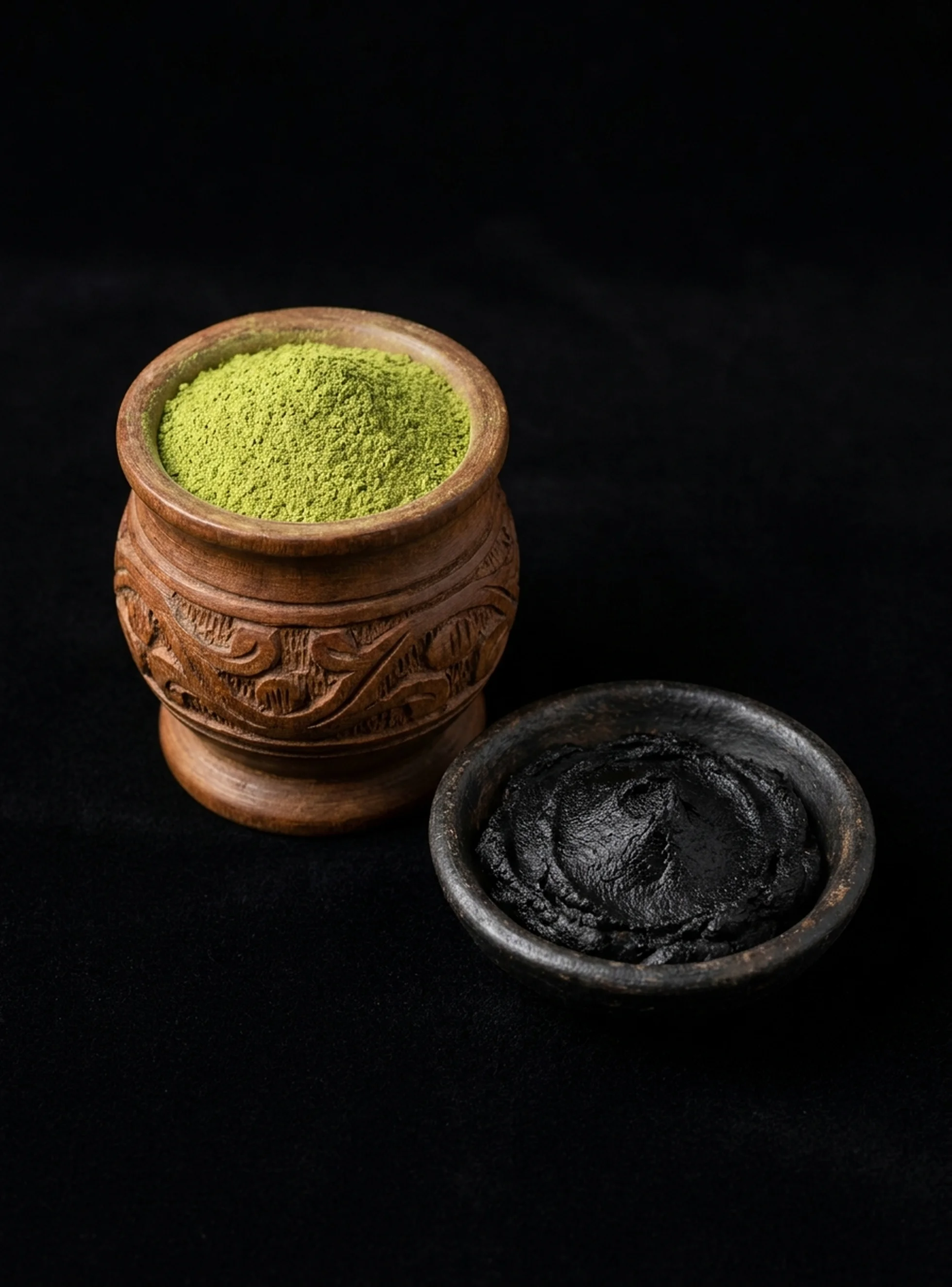
Powder mixed in liquid is now the most common route outside Southeast Asia. Dried, ground leaf is stirred into water, juice, or a flavored drink. The extreme bitterness is a consistent feature; most people report the taste as one of the less pleasant aspects of the encounter. Onset runs 10 to 40 minutes, with peak effects typically arriving at 1.5 to 2.5 hours and total duration spanning 4 to 7 hours.
Capsules and tablets contain the same powder but delay onset by 5 to 15 minutes while the casing dissolves. The pharmacokinetic profile is otherwise identical.
Tea or decoction involves steeping or simmering leaves in hot water. This method may feel somewhat cleaner (with less plant-matter nausea), but hot-water extraction recovers only an estimated 20 to 50 percent of the available alkaloids, which can mean reduced intensity or inconsistent effects.
Concentrated extracts (liquid tinctures, enhanced powders, or "shots") deliver higher alkaloid concentrations per volume. Onset tends to be faster (15 to 30 minutes), peaks arrive sooner, and total duration compresses to roughly 3 to 5 hours. The narrower window and sharper peak also mean a lower threshold for adverse effects like nausea.
All standard routes involve oral absorption and hepatic metabolism, which means the fundamental pharmacokinetic pattern remains consistent: gradual onset, a plateau, and a slow descent. Route primarily affects timing and intensity rather than the quality of what is felt.

Origin & History
Mitragyna speciosa grows naturally in the lowland tropical forests of Southeast Asia, in soils that are often waterlogged and poor, along rivers and disturbed forest edges in southern Thailand, peninsular Malaysia, and the Indonesian islands of Sumatra and Borneo. This is a tree that thrives where the ground stays wet and the canopy lets in enough light, a colonizer of margins rather than a species of the deep interior.
The earliest human encounters with this tree predate any written record. By the time European botanists arrived in Southeast Asia in the 19th century, kratom use was already well established among rural and working-class populations in the Malay Peninsula. German pharmacologist Mauritz Gottfried Schlagintheit documented it during an 1839 expedition, describing a leaf chewed by laborers to sustain energy during long days of agricultural work, fishing, and logging. The practice was pragmatic and occupational, a worker's tonic rather than a healer's sacrament.
This is worth noting because it distinguishes kratom from many other plants in the psychoactive pharmacopeia. Unlike psilocybin mushrooms in Mesoamerica or ayahuasca in the Amazon, kratom was never incorporated into formalized spiritual ceremony, initiation rites, or sacred healing practice. No shamanic tradition surrounds it. No priesthood guarded access to it. Its role was consistently functional: managing pain, fighting fatigue, and getting through the day. The Orang Asli (aboriginal peoples of the Malay Peninsula) and Malay farming communities used it alongside betel nut and tea as an everyday substance, not a ritual one.
The 20th century brought prohibition. In 1943, Thailand classified kratom under the Kratom Act (B.E. 2486), placing it alongside opium and cannabis as a controlled substance. The motivations remain historically unclear and actively contested: theories range from labor regulation to alignment with post-war international drug policy frameworks. Whatever the reasoning, the practical consequence was the criminalization of a plant deeply embedded in rural working-class life. Malaysia followed with its own ban under the Dangerous Drugs Act. In both countries, enforcement has been uneven, with rural communities continuing to cultivate and use kratom while facing nominally criminal penalties.
Western scientific engagement began in earnest in 1979, when German chemists comprehensively analyzed the leaf's alkaloid composition for the first time, identifying and quantifying mitragynine and 7-hydroxymitragynine. By the early 1990s, kratom had appeared in European alternative medicine markets, primarily in Germany and the Netherlands. The internet accelerated everything. Between 1997 and 2005, online retailers brought kratom to North American consumers, creating a global market that now moves millions of kilograms of dried leaf annually.
Regulatory attention followed the market. Germany banned kratom in 2005, France in 2007. In the United States, the FDA issued Import Alert 54-15 in 2016, allowing seizure of kratom shipments, while six states enacted outright bans. But federal scheduling efforts repeatedly failed, partly due to organized consumer advocacy and partly due to the absence of a mortality signal comparable to synthetic opioids. As of 2026, kratom remains legal in most of the world, occupying a regulatory space that is less a settled position than an ongoing negotiation.

Effects
The kratom experience is not a journey into altered consciousness. It is closer to an adjustment, a recalibration of the body's baseline that most people describe in terms of what diminishes (pain, anxiety, fatigue) rather than what appears. With a composite strength score of 3/10, kratom sits firmly in the gentle range, though the particular texture of its effects can vary considerably depending on how much leaf is consumed and who is consuming it.
Perceptual: 1.5/10
Kratom does not produce hallucinations, visual distortions, or the perceptual reorganization characteristic of classical psychedelics. The visual world remains intact. What some people report is subtle and secondary: a mild enhancement of color vibrancy or tactile sensitivity that likely reflects mood elevation rather than direct changes to sensory processing. At higher amounts, there may be a diffuse quality to body awareness, a feeling of slight disconnection from the limbs that some describe as gently dissociative, though reality testing remains fully intact. Pupil constriction (miosis), consistent with opioid receptor activation, is one of the few observable perceptual markers.
Cognitive: 2.5/10
The cognitive signature is one of quieting rather than expansion. At lower amounts, thinking may feel slightly sharper or more focused, with racing thoughts and anxious rumination tending to settle. Verbal fluency can improve modestly, and some people find social conversation easier. Time may feel to pass slightly faster, with attention drawn more naturally to the present moment.
At higher amounts, this quieting deepens into something closer to cognitive dampening. Thoughts slow. Working memory becomes less reliable. The motivation to plan or initiate complex tasks fades. Unlike the cognitive disruption of psychedelics, which often generates novel associations and surprising connections, kratom's effect on thought is conservative: the architecture remains unchanged, but the energy driving it winds down.
Emotional: 3.5/10
This is where kratom's effects are most clearly felt. The emotional shift tends to begin as a gentle mood elevation, a warmth that people consistently describe as "cozy" or "contented" rather than euphoric. Background anxiety softens. Social anxiety, in particular, may diminish noticeably. For people living with chronic worry, this reduction can feel significant even though it registers as mild on any objective scale.
At higher amounts, the emotional quality deepens toward what might be called comfortable indifference. Euphoria becomes more pronounced but retains its body-centered, inward character, more blanket than fireworks. Emotional responsiveness may flatten: problems feel less pressing, but so does the capacity to engage fully with the emotional texture of life. This narrowing is gentle and often welcome in the moment, but it hints at the mechanism that, with repeated use, can make ordinary emotional experience feel insufficient by comparison.
Somatic: 3.5/10
The body registers kratom's presence as warmth and relaxation. Muscular tension eases. At lower amounts, this coexists with a mild physical vitality, an "up and moving" quality consistent with the adrenergic component. At higher amounts, the warmth deepens into heaviness: limbs feel weighted, the body sinks into whatever supports it, and the desire to be active fades into a preference for stillness.
Nausea is the most commonly reported unwanted somatic effect, affecting roughly 10 to 30 percent of people at moderate amounts and a higher proportion at elevated amounts. Appetite suppression is typical. Constipation develops with regular use, consistent with opioid effects on gut motility.
The overall arc unfolds over 4 to 7 hours with standard preparations. Onset arrives gradually (10 to 40 minutes), building through a come-up phase into a peak that plateaus for 1 to 2 hours before descending slowly toward baseline. Aftereffects, a residual calm or mild fatigue, may linger for several hours beyond the main experience. With concentrated extracts, this timeline compresses: faster onset, sharper peak, shorter total duration of roughly 3 to 5 hours.
A note before reading
Each experience is different. What you may notice depends on dose, setting, and the body and mind you bring to it.
What people often notice
Emotional spectrum
Visual
Visuals tend to stay soft and mostly closed-eye, often subtle textures or gentle color shifts behind the eyelids.
Cognitive
Thoughts often settle. The mind tends to feel quieter, slower, more able to rest with what is.

Risks & Limits
Kratom's safety profile occupies an unusual position: it activates opioid receptors but appears to carry substantially lower acute risk than classical opioids. No documented fatalities have been attributed solely to kratom in the published clinical literature. This is a meaningful signal given that millions of people worldwide use it regularly. However, the absence of a dramatic mortality signal should not be mistaken for the absence of risk.
Dependence is the most significant concern for regular users. Physical dependence develops in an estimated 10 to 30 percent of daily users, driven by the same mu-opioid receptor downregulation that underlies dependence on other opioids. Withdrawal symptoms (dysphoria, irritability, muscle aches, insomnia, restlessness) typically emerge within 6 to 48 hours of cessation and peak at 2 to 7 days. They are generally described as milder than opioid withdrawal but meaningfully uncomfortable, comparable to or exceeding caffeine withdrawal in intensity. Psychological dependence, the pattern of continued use despite wanting to stop, is reported in an estimated 15 to 35 percent of chronic users.
Drug interactions carry serious risk. Combining kratom with other opioids creates additive mu-opioid receptor activation and increased overdose potential. Multiple deaths have been documented involving kratom combined with fentanyl, benzodiazepines, or alcohol, all of which produce synergistic central nervous system depression. CYP3A4 inhibitors (including common medications like erythromycin and even grapefruit juice) can elevate kratom alkaloid levels by slowing hepatic metabolism. MAOIs pose theoretical risk of serotonin syndrome. SSRIs and SNRIs warrant caution given kratom's serotonergic receptor affinity.
Gastrointestinal effects are the most common acute complaint. Nausea affects 10 to 50 percent of users depending on amount, and constipation develops predictably with chronic use.
Contamination is an underappreciated risk. Kratom products have been found to contain Salmonella, E. coli, and heavy metals. There are no mandatory testing standards in most markets; product quality varies widely between vendors.
Populations at elevated risk include individuals with cardiac conditions (kratom's adrenergic activity can produce mild tachycardia), liver or kidney impairment (where alkaloid metabolism and clearance may be compromised), active opioid use (additive overdose risk), and pregnancy (no safety data exists for fetal exposure). People with untreated psychotic disorders face unknown but theoretically elevated risk.
Rare case reports describe hepatotoxicity and, extremely rarely, psychotic symptoms temporally associated with kratom use, though causality has not been established in any case, and confounding factors (contamination, polypharmacy, pre-existing conditions) have not been ruled out.
The context of use matters. Kratom used occasionally for a specific purpose carries a different risk profile than daily use sustained over months or years. The line between tool and dependency often shifts gradually, and the transition can be difficult to notice from the inside.

Integration
Integration after kratom looks different from integration after a psychedelic experience. There are rarely visions to interpret, no ego dissolution to reassemble, no encounter with the numinous demanding recontextualization. Kratom's effects are functional rather than revelatory, and the work that follows them is correspondingly practical.
For occasional use, integration may require nothing more than rest and honest attention. The body often communicates clearly in the hours after: mild fatigue, a flatness in mood, disrupted sleep if taken late in the day. These signals are worth listening to rather than overriding. Some people find it useful to notice what the experience revealed about their baseline, not through dramatic insight, but through the simple contrast of temporarily having something lifted and then feeling it return. What was the relief about? What does it suggest about what is being carried?
Journaling can serve this noticing without requiring elaborate frameworks. A few lines about what shifted and what that shift felt like may be more valuable than any structured protocol.
For those whose use has become regular, the integration question changes character. It begins to overlap with the territory of harm reduction and, in some cases, recovery. The relevant practices are not esoteric: understanding one's own patterns of use, recognizing the signs of tolerance (needing more to feel the same), and being honest about whether the substance is serving its original purpose or has begun serving its own perpetuation.
Community matters here. Whether through trusted relationships, peer support, or professional guidance, the process of examining habitual kratom use benefits from external perspective. The nature of opioid-receptor-mediated comfort is that it can make self-assessment feel less urgent, which is precisely when outside input becomes most valuable.
For those reducing or stopping after extended daily use, patience is not optional. Withdrawal symptoms typically resolve within one to two weeks, but the subtler recalibration, the return of ordinary emotional responsiveness, the rebuilding of motivation from internal rather than chemical sources, unfolds over weeks to months. This timeline is not a failure of willpower. It reflects the time required for neurobiological systems to find their new equilibrium.
The most useful integration stance for kratom may be the simplest: treat the experience not as something that happened to you, but as information about what your body and mind were reaching for. The answer to that question often points toward what needs attention next.
Ethics & Ecology
The ethical landscape around kratom is, in some respects, simpler than that of many other psychoactive plants. There is no sacred tradition to appropriate, no restricted ceremonial knowledge to violate. Kratom was a worker's leaf, openly used and openly traded, and the communities that cultivated it have generally welcomed international demand as an economic opportunity rather than experienced it as an extraction.
But simpler does not mean uncomplicated. The global kratom supply chain moves raw material from Southeast Asian farms to Western retail markets, and the distribution of profit along that chain is uneven. Rural cultivators in Indonesia and Thailand receive payment for dried leaf but do not control processing, branding, or retail distribution. The value-added margins accrue downstream, a pattern familiar from coffee, cacao, and countless other tropical commodities. Fair trade certifications for kratom exist but are not widespread, and no systematic monitoring of labor practices or community reinvestment is in place.
Ecologically, kratom cultivation occupies a middle ground. The species is not endangered; it grows readily across Southeast Asia and is not threatened with extinction. Wild populations have been reduced in some areas due to habitat loss from logging and agricultural conversion, but commercial cultivation has expanded to partially offset harvesting pressure. The environmental concern is less about the plant itself and more about the land: expanding kratom monocultures replace mixed tropical forest, reducing local biodiversity. Processing and drying require fuel inputs, and some cultivators use pesticides and heavy-metal-containing fertilizers whose runoff enters local waterways.
None of this approaches the ecological crisis driven by palm oil or coca cultivation. But the questions are still worth asking, particularly as global demand continues to grow: Who benefits? Who bears the environmental cost? And what would it look like to build a supply chain that answers those questions more equitably?
Misconceptions
Kratom is basically heroin.
While kratom activates mu-opioid receptors, it does so as a partial agonist rather than a full agonist, which produces a qualitatively different and generally milder effect profile. It also engages alpha-2-adrenergic receptors, giving it a stimulant dimension that opioids lack entirely. Fatal overdoses from kratom alone are undocumented in the clinical literature, a sharp contrast with the mortality associated with heroin and synthetic opioids.
It's natural, so it's safe.
The word "natural" carries no pharmacological meaning. Kratom produces real effects via receptor agonism and can cause nausea, dependence (in an estimated 10 to 30 percent of daily users), cardiovascular changes, and contamination-related risks. Hemlock and ricin are also natural. The relevant question is always about specific mechanisms and specific risks, not about the origin of the molecule.
Kratom is a psychedelic.
Kratom produces minimal perceptual alteration. It does not cause hallucinations, visual distortions, or the consciousness-expanding effects characteristic of psilocybin, LSD, or mescaline. Its pharmacology is opioid and adrenergic, not serotonergic. Categorizing it alongside psychedelics misrepresents both its effects and its risks.
Most people who use it get addicted.
Physical dependence develops in an estimated 10 to 30 percent of regular daily users, which is lower than the dependence rate for nicotine (32 percent) or prescription opioids (23 percent) and comparable to cannabis (9 percent). Dependence is a real possibility but not a statistical probability for the majority of users.
Kratom is an FDA-approved opioid substitute.
Kratom is not approved by the FDA for any indication. Some individuals have informally self-managed opioid tapering using kratom, but this is not evidence-based treatment. It lacks clinical oversight, may transfer dependence rather than resolve it, and is not recommended by medical authorities as a substitute for established medication-assisted treatment.
FAQ

Reflection
There is something clarifying about a plant that makes no grand promises. Kratom does not offer visions or dissolution or encounters with the infinite. It offers, instead, a few hours in which the weight of ordinary difficulty is lighter, the background noise of pain or anxiety is turned down, and the body is permitted to rest in a warmth it did not generate on its own.
The question the leaf raises is not about transcendence but about baseline. What does it mean that so many people reach for a mild opioid partial agonist not to explore consciousness but simply to get through the day? What does that say about the day?
Perhaps kratom's most honest contribution to the conversation about psychoactive substances is this: not every encounter with a plant is about expanding the mind. Sometimes it is about the more ordinary, and no less important, question of how a body in discomfort finds its way to bearable.
Sources
Primary research sourced from peer-reviewed pharmacological, ethnobotanical, and clinical literature. See the full research profile for detailed citations and evidence tags.
For how we evaluate sources and structure our claims, see the methodology.