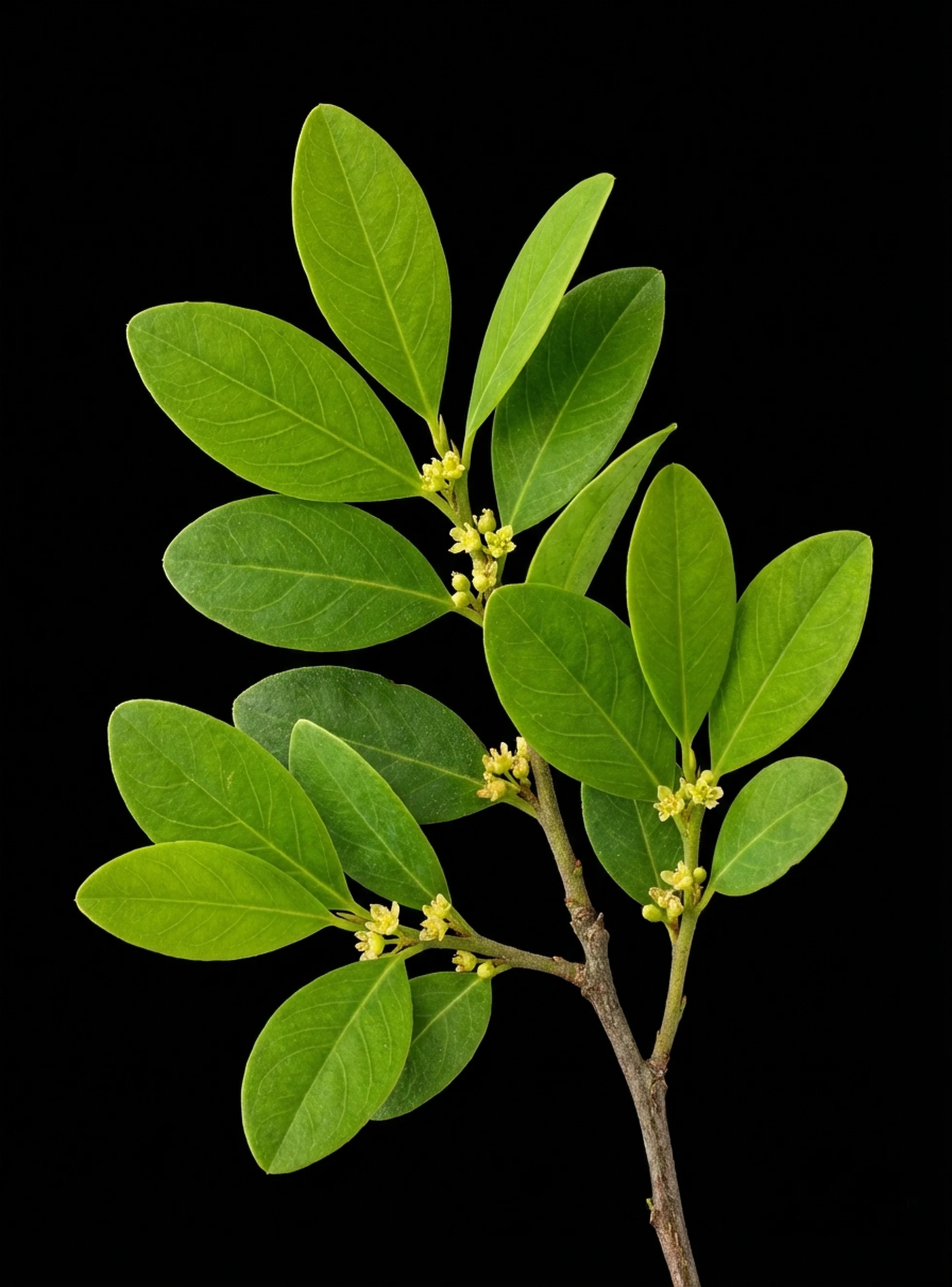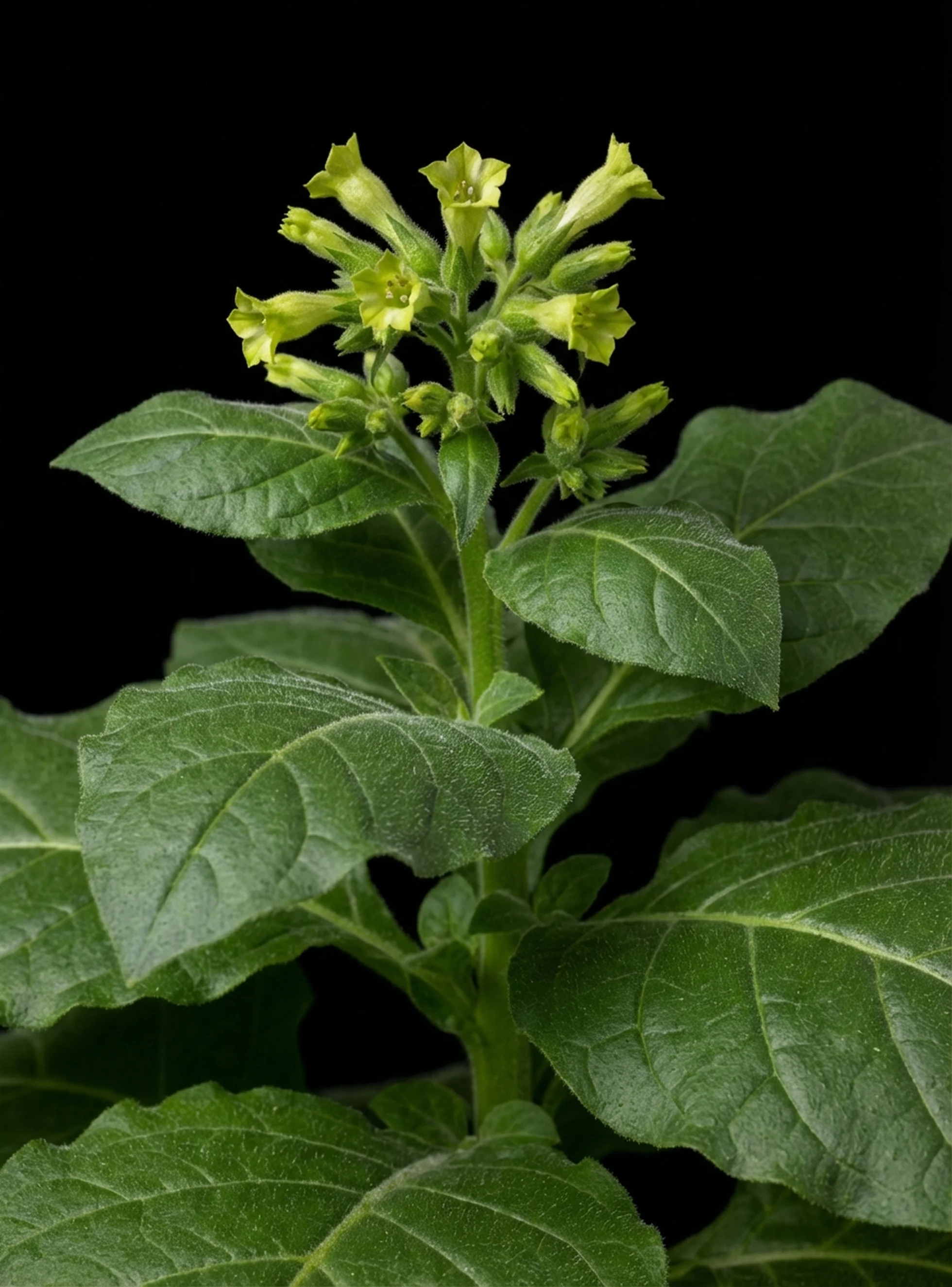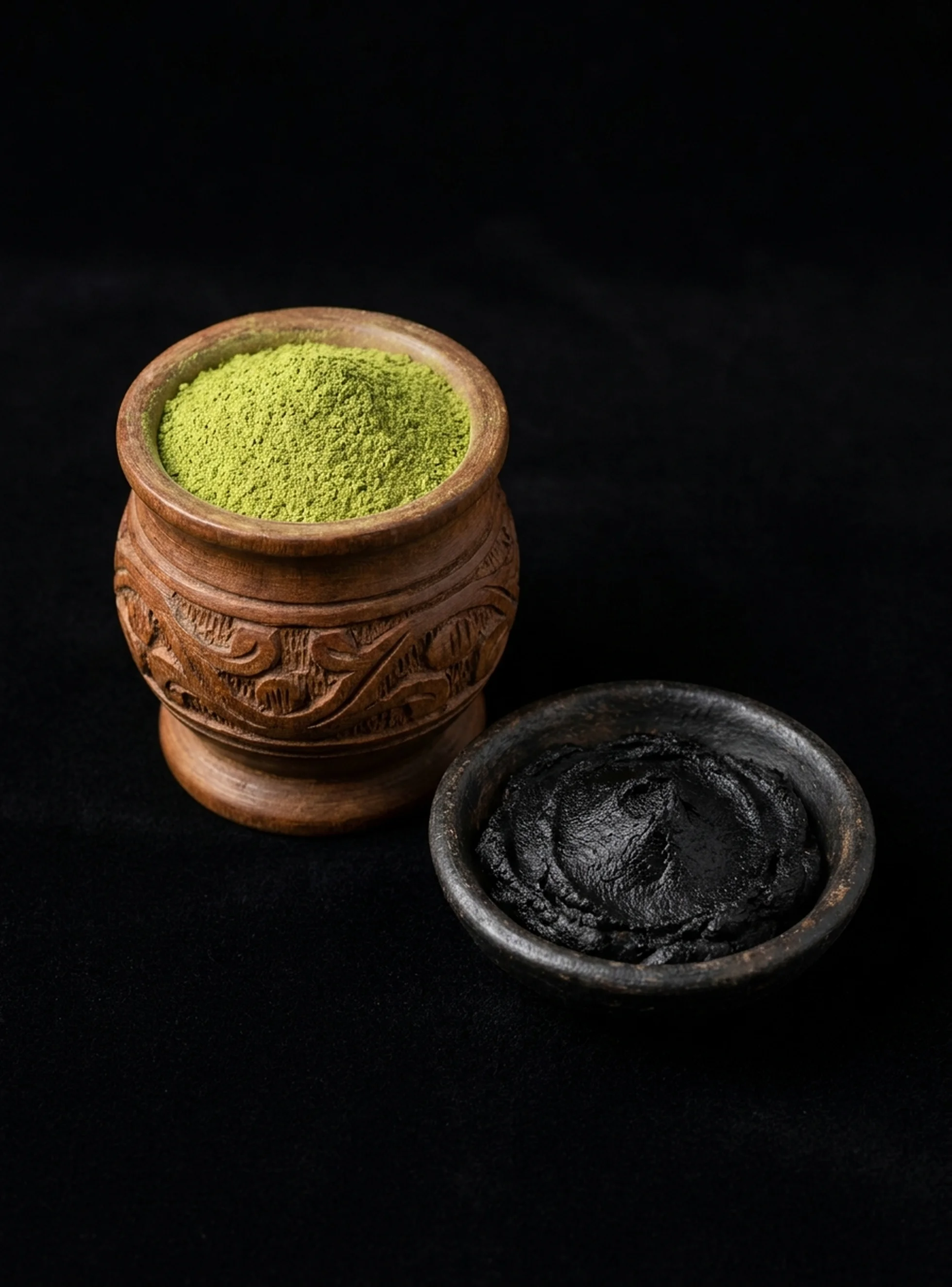

Mambe and Ambil are an ancient Amazonian ceremonial pair, mambe (coca leaf powder) and ambil (tobacco paste), used by Uitoto, Muinane, Bora, and related peoples of the Colombian Amazon for sacred dialogue and clarity.
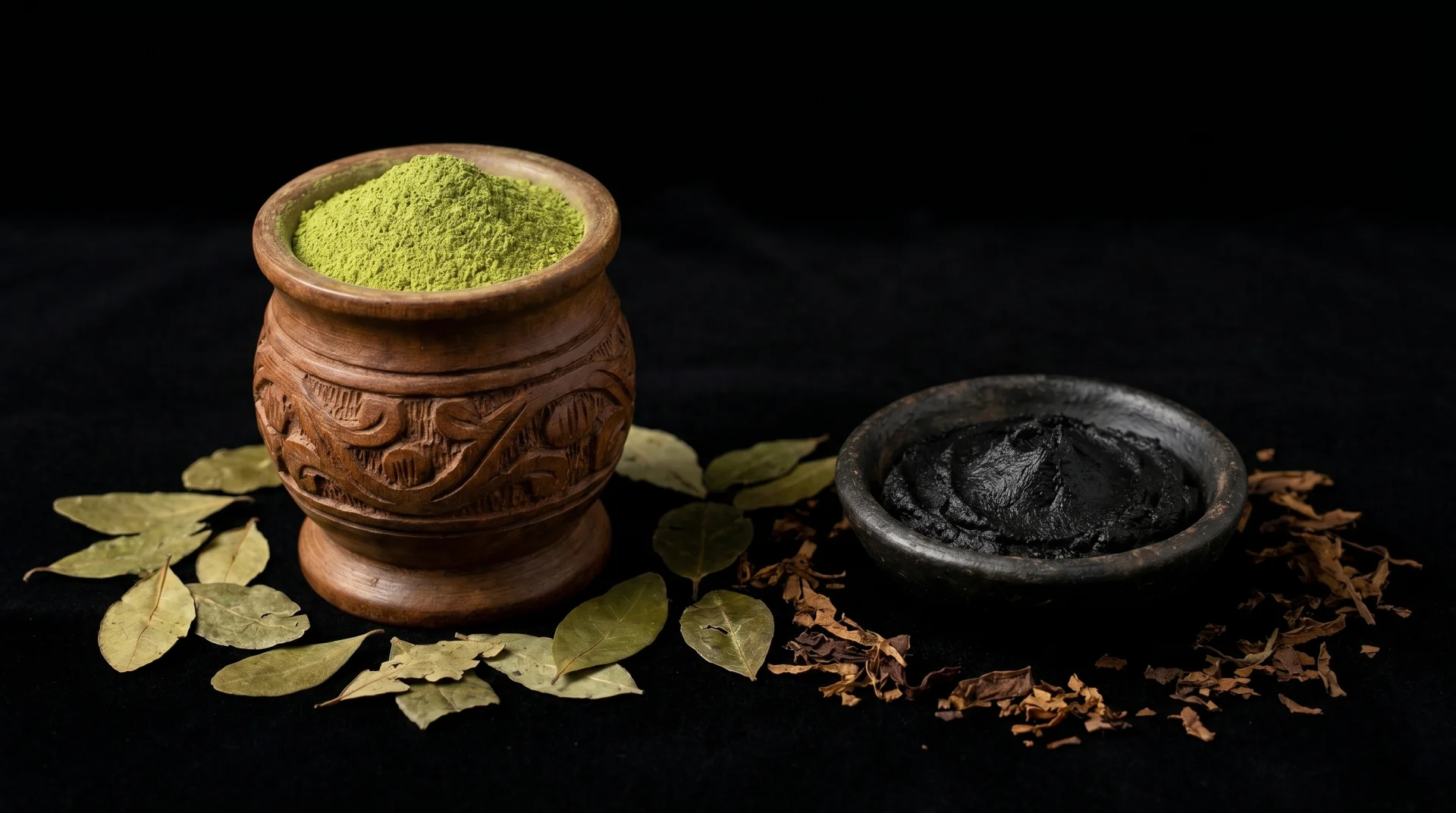
Mambe
and Ambil
Mambe and Ambil are an ancient Amazonian ceremonial pair, mambe (coca leaf powder) and ambil (tobacco paste), used by Uitoto, Muinane, Bora, and related peoples of the Colombian Amazon for sacred dialogue and clarity.
Fact file
- Type
- Brew
- Botanical name
- Erythroxylum coca
- Other names
- Erythroxylum coca var. coca, and Erythroxylum coca var. ipadu, Erythroxylum novogranatense (Morris) Hieron.
- Origin
- Chemistry, Medicine, and Law
- Duration
- 3 to 6h
- Strength
- Gentle
- Legal status
- Illegal in 30 of 39 listed jurisdictions, and varies elsewhere
What is Mambe and Ambil?
In the longhouses of the Colombian Amazon, after dark, a circle gathers. Elders, grown men, sometimes a few apprentices. A wooden vessel of fine green powder is passed. Each person takes a small spoonful into the cheek, where it slowly dissolves over hours. A second container holds a thick, dark paste. A drop of it goes onto the tongue or gums.
Then the talking begins.
This is the mambeadero, the Circle of the Word, and the two medicines passing through it are Mambe (toasted coca leaf with the alkaline ash of the yarumo tree) and Ambil (a slow-cooked paste of strong Amazonian tobacco with vegetable salts). Among the Witoto, Bora, Muinane, Murui, Okaina, and Nonuya, they have been used together for centuries to do one specific thing: hold the human capacity for clear, honest, careful speech.
This is not a substance for visions. There are no images, no dissolutions, no journeys. What Mambe and Ambil offer is something more uncommon in modern life: a long, steady night of being able to think clearly, listen well, and speak from somewhere closer to the truth. The leaf opens the word. The tobacco anchors it. Between them, a conversation can happen that might not happen any other way.
The substance
Mambe and Ambil are a paired ceremonial preparation, not a single substance. Each comes from a different plant, and each is processed through a different method.
Mambe is the toasted, finely ground leaf of Erythroxylum coca (family Erythroxylaceae), almost always the Amazonian variety E. coca var. ipadu, mixed with alkaline ash from the leaves of the yarumo tree (Cecropia spp.) or other ash sources. The result is a fine, sage-green powder. It is held in the cheek and absorbed slowly through the mouth.
Ambil is a thick, dark paste prepared by reducing the leaves of Nicotiana rustica (family Solanaceae) over low heat for hours or days, often with vegetable salts that concentrate and stabilize the alkaloids. N. rustica is sometimes called mapacho or Aztec tobacco; it contains roughly three to nine times the nicotine of commercial cigarette tobacco. A pea-sized amount or smaller is used at a time, applied to the gums.
In the broader taxonomy of psychoactive plants, both are classified as stimulants rather than hallucinogens. They sit alongside other traditional plant stimulants (khat, betel, yerba maté, guayusa) rather than alongside the visionary medicines (ayahuasca, psilocybin, peyote). What sets them apart is that they are designed to be used as a pair, in conversation.
Strength and duration
Intensity profile
Duration
Aftereffects: ** Following the cessation of acute effects, practitioners typically report a gradual return to baseline mental state with no reported "crash" or negative rebound effects at traditional doses [anecdotal]. Some practitioners describe a lingering sense of clarity or calm for several hours following the acute effects. Physical aftereffects are minimal; mild thirst and increased salivation may persist briefly. No distinctive hangover or fatigue is characteristically reported [anecdotal].
Chemistry and mechanism
Mambe and Ambil are pharmacologically straightforward, though their combination is unusually well-tuned.
The active constituents of Mambe are tropane alkaloids, of which cocaine is the most studied. In dried coca leaf, cocaine is present at roughly 0.1 to 0.9 percent by weight, alongside more than a dozen related alkaloids: cinnamoylcocaine, the truxillines, hygrine, cuscohygrine, tropacocaine, and others. The yarumo ash mixed into Mambe matters more than it might seem. By raising the pH of the mouth, the ash shifts cocaine and its relatives from their ionized to their non-ionized form, which crosses the lining of the cheek much more readily. Without the ash, the alkaloids would mostly pass through the gut unabsorbed.
In the brain, cocaine acts as a monoamine reuptake inhibitor. It blocks the transporters that recycle dopamine, norepinephrine, and serotonin, leaving more of these neurotransmitters in the synapse. The result is heightened alertness, focus, and verbal fluency. The slow oral route, the small ceremonial quantities, and the presence of other coca alkaloids produce a profile that is gentler and longer than rapid routes such as insufflated cocaine, with no sharp peak and no characteristic crash.
The active constituent of Ambil is nicotine, a pyridine alkaloid that binds to nicotinic acetylcholine receptors (nAChRs) throughout the brain and body. These are ligand-gated ion channels involved in attention, working memory, and the regulation of dopamine release. Nicotine acts as an agonist: it binds where acetylcholine would, opening the channel and producing a brief, focused alerting effect. The α4β2 and α7 subtypes appear central to its cognitive effects.
The pairing makes sense. Mambe broadens the circuit by raising baseline monoamine activity. Ambil tightens it by sharpening attention through cholinergic signaling. The leaf opens; the tobacco focuses.

How people encounter it
Mambe is encountered through the cheek. A small spoonful of the green powder is placed between the gum and the inner cheek and allowed to dissolve there over the next several hours. The user does not chew, swallow, or smoke it. Saliva and the alkaline ash do the work, releasing the alkaloids gradually into the buccal mucosa. Onset tends to come on within five to fifteen minutes, with the steady plateau settling in over the next hour and lasting for the duration of the gathering.
Ambil is encountered through the gums. A small dab of the dark paste, often the size of a grain of rice or smaller, is taken on the tip of a wooden stick or a clean fingertip and placed against the inner gum. Onset is faster than Mambe, sometimes within seconds, and the felt effect is shorter and more pointed. In ceremonial use, Ambil is taken in small doses several times across an evening, often as a punctuation at the start or end of a thought.
The traditional context is the mambeadero, the gathering space (and the practice itself) where elders, men, and apprentices sit through the night to talk. Decisions are made, agreements are formed, stories are transmitted, conflicts are worked through. The medicines are not the point. The talking is the point. The medicines exist to make the talking better.
Outside this context, Mambe and Ambil sometimes appear in modern Amazonian-influenced ceremonies, sold and shared by non-Indigenous facilitators in retreat settings or wellness markets. These adaptations vary widely in their relationship to the traditions they draw from, and the cultural distance between a mambeadero in Putumayo and a weekend retreat in Europe is large. The plants travel; their meaning does not always travel with them.

Origin and history
Coca is one of the oldest cultivated plants in the Americas. Mummified human remains from northern Chile carry traces of coca leaf in association with burials dating to roughly 1000 BCE, and archaeological evidence places its domestication centuries earlier still. By the time of Inca rule, between roughly 1400 and 1532 CE, coca was already woven into ceremony, labor, healing, and the protocols of meeting another person. It was offered to mountains, exchanged between strangers, given as wages, and held between the fingers when speaking with a spirit.
The specifically Amazonian preparation, mambe (coca leaf toasted and powdered with alkaline ash), is harder to date. It belongs to the lowland forest peoples between the Putumayo and Caquetá rivers, what is now southern Colombia and northern Peru. Among the Witoto (Murui-Muina), Bora, Muinane, Okaina, Nonuya, and Andoke, collectively known to themselves as the Gente del Centro, the People of the Center, the practice has been carried for many generations through the mambeadero, the longhouse circle where the word is held.
In Witoto cosmology, coca and tobacco are the two instruments through which ancestral law is transmitted. Coca opens thought and listening. Tobacco anchors intention and responsibility. Together they make speech that holds. The traditions are not abstract: they are practical institutions of governance, education, and conflict resolution.
The colonial encounter was harder for these plants than for almost any others on Earth. Spanish authorities in the sixteenth century at first tried to suppress coca, then accepted it because it allowed Indigenous workers to labor longer in the silver mines of Potosí. In 1860, the German chemist Albert Niemann isolated cocaine from the leaf, separating a single alkaloid from the whole plant for the first time. Within decades, isolated cocaine moved through European pharmacies, into Coca-Cola, and into the medical and recreational markets of the early twentieth century.
The political reaction came next. The 1914 Harrison Tax Act in the United States, framed in explicitly racist terms targeting Black Americans, set the template. The 1961 UN Single Convention on Narcotic Drugs then bound nearly every country in the world to treat coca leaf and cocaine as the same thing. The Convention obliged signatories to uproot coca bushes, to abolish leaf chewing within twenty-five years, and to criminalize cultivation. The legal logic, in other words, treats a five-thousand-year-old Indigenous plant practice as if it were the modern industrial drug extracted from it.
Bolivia and Peru have since filed formal reservations, asserting that the leaf is not the alkaloid and that ancestral use is a cultural right. A WHO review of coca's international status is now underway. The mambeadero continues, quietly, in the longhouses where it has always been.

Effects
The first thing to say about the effects of Mambe and Ambil is that they are gentle. The composite intensity sits at roughly three out of ten, in the same range as moderate caffeine or low-dose kava. There are no visions, no dissolutions, no shifts in the appearance of the room. What changes, instead, is the texture of attention.
Perceptual. The perceptual register barely moves. Sensory acuity may sharpen slightly, with sounds becoming more distinct and colors a little more present, but no hallucinations, no synesthesia, no distortion. Some practitioners describe a sense of the boundary between self and surroundings becoming a little more porous, more in the manner of attentive presence than of altered consciousness.
Cognitive. This is where the effect concentrates. Thought tends to organize. Words become easier to find. The thread of a conversation, even one that wanders for hours, is easier to hold. Many practitioners describe a feeling of being able to listen in a way that does not happen in ordinary conditions: a slowing of the impulse to reply before the other person has finished, a willingness to sit with what was just said before responding. Time sometimes feels expanded. A long night of conversation can pass without the felt fatigue that would ordinarily mark it.
Emotional. The emotional shift is subtle. Mood often warms slightly. There is some social facilitation, some lowering of the friction in difficult conversations. Where Mambe alone might tilt toward stimulation, Ambil acts as a counterweight, settling the body and bringing what practitioners describe as a kind of gravity to whatever is being said. The emotional intensity stays low; this is not a substance that pulls toward catharsis or breakthrough.
Somatic. The body stays steady. Saliva increases noticeably (a characteristic effect, sometimes called mambeo). Heart rate may rise slightly. There is sustained energy through the night, with little of the appetite or the need for sleep that would ordinarily mark a long evening. There is no nausea at traditional ceremonial amounts, no characteristic comedown, and no distinct hangover the next morning.
The arc is unhurried. Onset over five to fifteen minutes, peak between one and two hours in, plateau for several hours, descent over the final hour. What remains, often, is a quiet sense of clarity that lingers into the next day, like the residue of a long, careful conversation.
A note before reading
Each experience is different. What you may notice depends on dose, setting, and the body and mind you bring to it.
What people often notice
Visual
Visuals tend to stay soft and mostly closed-eye, often subtle textures or gentle color shifts behind the eyelids.
Cognitive
Loose associations may appear, insights surface sideways, and familiar ideas can rearrange into fresh shapes.

Risks and limits
Mambe and Ambil are gentle in traditional ceremonial use, but they are not risk-free, and the underlying pharmacology matters.
Cardiovascular. Both cocaine (in Mambe) and nicotine (in Ambil) are sympathomimetic. They raise heart rate and blood pressure, increase the work demanded of the heart, and constrict coronary vessels. At ceremonial quantities, taken slowly through the cheek and gums, the cardiovascular load is far lower than rapid-route cocaine. Even so, anyone with a history of myocardial infarction, stroke, coronary artery disease, arrhythmia, uncontrolled hypertension, or a family history of sudden cardiac death should not use these medicines. The combination of coca and tobacco in particular can produce additive sympathomimetic effects.
Psychiatric. Stimulants tend to amplify whatever is already in the nervous system. People living with anxiety disorders, panic disorder, bipolar disorder, schizophrenia, or a personal or family history of psychosis face elevated risk, even at low doses. Cocaine in particular is associated with paranoia and psychotic symptoms in susceptible users at higher doses; while ceremonial Mambe is far below that range, individual sensitivity varies and the data on traditional preparations are sparse. People with active depression should be cautious: stimulants can produce a mood lift in the short term and a depressive rebound after.
Drug interactions. Several combinations are dangerous. Alcohol combines with cocaine to form cocaethylene, a more cardiotoxic metabolite that has been linked to a substantially elevated risk of sudden cardiac events. MAOIs, SSRIs, and other serotonergic medications can interact unpredictably with cocaine. Stimulant medications (amphetamines, pseudoephedrine) produce additive cardiovascular load. Antihypertensives can be overridden. Specific interactions with ayahuasca and DMT-containing brews are not well studied; combining them is not advised without traditional guidance.
Pregnancy and breastfeeding. Both cocaine and nicotine cross the placenta and are excreted in breast milk. Cocaine is teratogenic and has been associated with miscarriage, low birth weight, and increased risk of sudden infant death. Use during pregnancy or breastfeeding is contraindicated.
Diabetes, liver, and kidney disease. Coca alkaloids can affect blood glucose. Impaired liver or kidney function can prolong the effects of both cocaine and nicotine. People with these conditions should avoid use or at minimum exercise caution.
Dependence. Cocaine produces dependence in roughly 15 to 20 percent of users in modern recreational contexts; nicotine is among the most addictive substances known, with around a third of users developing dependence. Traditional ceremonial Mambe and Ambil use, with low doses, slow oral routes, and embedded social structure, appears to carry far less dependence risk than modern stimulant use. People with a personal or family history of stimulant or nicotine dependence should treat any exposure with care.
Set, setting, and support. These are not substances to take alone, on a whim, or outside a clear container. The traditional setting (a long evening, a circle of people, a held conversation, an experienced presence to hold the space) is part of how the medicines work. Take them out of that container and they tend to behave more like the substances they pharmacologically resemble.

Integration and aftercare
Most of what is written about psychedelic integration assumes a journey: a difficult experience that needs to be metabolized over weeks. Mambe and Ambil are not journeys. They do not produce the kind of overwhelming material that has to be slowly translated back into ordinary life. The integration question they pose is different.
In the mambeadero, integration is built into the practice itself. The medicines are taken to support a specific conversation. The agreements made there are the integration. The decisions reached about how to live with one's neighbors, how to teach a child, how to handle a conflict, how to remember an ancestor, those are not insights to be journaled later. They become the next day, and the day after.
Outside that container, the work is gentler but still real. People who use these medicines often report that what they want to bring forward is not a revelation but a quality of attention: the slow listening, the careful word, the sense of speech as something that carries weight. Integration here is mostly a matter of asking whether that quality has any room in ordinary life, and whether one is willing to make some.
A few practical companions. Sleep matters; even though Mambe and Ambil are gentler than rapid-route stimulants, they are still stimulants, and a real night of sleep afterward supports the body's settling. Hydration matters; the salivary response and the long evening can leave the body dry. Conversation in the days after, with a trusted person, often does more than journaling. The medicines were taken to support speech; speech is a reasonable place to continue.
Watch for two patterns. First, the temptation to repeat too soon, to chase the clarity the medicines seemed to offer. Clarity that depends on a substance is not the kind that holds. Second, the temptation to flatten what happened into a Western-shaped story of insight or healing. The medicines come from a tradition with its own categories. Some respect for that tradition, even at a distance, is part of integration.
If difficult material does surface (most often, old conflicts, things one has not said to people one loves), the same supports that hold any psychological work apply: time, rest, community, and where appropriate, a therapist or counselor familiar with non-ordinary states. The work of integration is rarely fast and never linear. With these particular medicines, it is mostly about staying close to the word.
Legal and ethical context
Of all the medicines in this library, Mambe and Ambil sit closest to a wound that is still open.
The Indigenous peoples who carry these traditions, the Witoto, Bora, Muinane, Murui, Okaina, Nonuya, the Tukano, the Kogi, and others, have lived through five centuries of attempted erasure. The colonial period brought disease, slavery, and the rubber boom of the late nineteenth and early twentieth centuries, in which entire Witoto-speaking communities were enslaved and killed in the Putumayo region. The twentieth century brought a different harm wearing a respectable face: international drug policy. The 1961 UN Single Convention on Narcotic Drugs treats coca leaf as equivalent to cocaine and obliges signatory governments to eradicate it. That obligation has been enforced, often violently, in Indigenous territories.
A few things follow from this.
The leaf is not the powder. Pharmacologically, culturally, and ethically, Erythroxylum coca in its leaf form (chewed, brewed, mambeado) is not the same substance as crystalline cocaine hydrochloride. Five thousand years of Indigenous use have not produced epidemics of dependence. The compound that did, when extracted in 1860 and industrialized in the twentieth century, is a different thing. International law has refused to recognize this distinction, and the cost has been borne by the people who hold the leaf.
The tradition is not a commodity. Mambe and Ambil exist within a specific cosmology, a specific governance practice, and a specific relationship with land. The mambeadero is not a workshop. The Gente del Centro are not a brand. When these medicines appear in retreat centers and online shops in Europe, North America, or Australia, sold by non-Indigenous people for non-Indigenous use, what is moving is the substance, not the practice that gives it meaning. Indigenous federations such as Fedecoca have been clear that any commercialization of these plants should be Indigenous-led, with benefits returning to the communities who hold the knowledge.
Sovereignty, not permission. The framing question is not whether outsiders may use these medicines but whether the peoples who carry them are free to continue carrying them on their own terms: free from eradication campaigns, free to cultivate in their own territories, free to teach their children without those children being criminalized. Bolivia and Peru's reservations to the UN Convention are steps in that direction. The work is far from done.
Ecology. Traditional cultivation of coca and Nicotiana rustica in agroforestry systems is sustainable and has been for centuries. Industrial cultivation for the cocaine market is not, and is responsible for substantial deforestation in the Amazon and Andes. The two should not be conflated, but they are entangled in practice; the militarization of coca-growing regions has often pushed cultivation deeper into forest and farther from traditional, sustainable patterns.
For a curious outsider, the most useful posture is restraint. Read Indigenous voices first. Support the political and territorial fights. Be honest about why you are interested. Some traditions are not best entered through the substance.
Common misconceptions
Frequently asked questions

Reflection
Most of the medicines in this library are about altering perception. Mambe and Ambil are about altering speech.
This is a stranger gift than it sounds. Speech is the medium through which most of what matters in a human life gets done: the agreements made, the children taught, the conflicts repaired or left to fester, the histories carried, the love confessed or withheld. The peoples who carry these medicines decided, somewhere in the long stretch of their living, that this medium deserved its own technology of care. Not to escape it. Not to transcend it. To attend to it.
Sit with that for a moment. A whole tradition built around the simple proposition that conversation is sacred enough to deserve a plant.
What would it mean, in any life, to treat the word that way?
Sources
Ethnobotany and cultural context
- ●Plowman, T. (1986). Ethnobotany of Coca (Erythroxylum spp., Erythroxylaceae). Journal of Ethnopharmacology, 3(3), 193 to 225.
- ●Henman, A. R. (1978). Mama Coca: An Examination of the Coca Leaf and the Cocaine Industry. Hassle Free Press.
- ●Echeverri, J. A. (2000). The First Love of a Young Man: Salt and Sexual Education among the Uitoto Indians of Lowland Colombia. In The Anthropology of Love and Anger: The Aesthetics of Conviviality in Native Amazonia, Routledge.
- ●Pereira, E. (2012). Coca and Ritual in Amazonian Communities: The Mambeadero and the Sacred Word. Instituto de Investigaciones Amazónicas.
Pharmacology and chemistry
- ●Sershen, H., Hashim, A., and Lajtha, A. (1981). Biological activity of the alkaloids of Erythroxylum coca and related compounds. Journal of Ethnopharmacology, 3(3), 231 to 259.
- ●Plowman, T., and Rivier, L. (1983). Cocaine and cinnamoylcocaine content of Erythroxylum species. Annals of Botany, 51(5), 641 to 659.
- ●Benowitz, N. L. (2010). Nicotine addiction. New England Journal of Medicine, 362(24), 2295 to 2303.
- ●Picciotto, M. R., Brunzell, D. H., and Heinemann, S. F. (1997). Neuronal nicotinic acetylcholine receptor signaling mechanisms. Journal of Neuroscience, 17(2), 567 to 574.
- ●Javaid, J. I., et al. (1983). Kinetics of cocaine determined by constant infusion. Life Sciences, 32(12), 1359 to 1369.
Cardiovascular and clinical risk
- ●Stimmel, B., and Goldsmith, D. S. (2010). Acute coronary syndromes associated with cocaine use. American Journal of Cardiology, 96(4), 521 to 524.
- ●Knuepfer, M. M. (2003). Cardiovascular disorders associated with cocaine use: mechanisms and manifestations. Journal of the American College of Cardiology, 38(6), 1523 to 1529.
- ●Hearn, W. L., et al. (1991). Cocaethylene: a unique cocaine metabolite. Journal of Neurochemistry, 56(2), 698 to 701.
History, law, and policy
- ●Gootenberg, P. (2008). Andean Cocaine: The Making of a Global Drug. University of North Carolina Press.
- ●Musto, D. F. (1999). The American Disease: Origins of Narcotic Control. Oxford University Press.
- ●United Nations (1961). Single Convention on Narcotic Drugs. United Nations Treaty Series.
- ●Transnational Institute (2014). The UN Drug Control Conventions: A Primer. Drugs and Democracy Programme.
Indigenous voices and contemporary advocacy
- ●Federación Nacional de Productores de Coca Colombianos (Fedecoca). (2023). La Coca Como Medicina y Cultura: Perspectivas Indígenas para la Decolonización de la Política de Drogas.
- ●Calderón Sáenz, F. (2018). Coca: Plant of Peace. Indigenous-authored advocacy publication, Putumayo, Colombia.
- ●Kimmerer, R. W. (2013). Braiding Sweetgrass: Indigenous Wisdom, Scientific Knowledge, and the Teachings of Plants. Milkweed Editions. (For a broader frame on reciprocity with plant relations.)
For how we evaluate sources and structure our claims, see the methodology.