
Kava is a Pacific Island root whose kavalactones calm the nervous system and induce a state of sociable relaxation without intoxication, central to ceremony across Polynesia and Melanesia.
Kava
Kava is a Pacific Island root whose kavalactones calm the nervous system and induce a state of sociable relaxation without intoxication, central to ceremony across Polynesia and Melanesia.
Fact file
- Type
- Plant
- Botanical name
- Piper methysticum
- Other names
- kava, kava-kava, kawa, Traditional Polynesian: ava Samoa
- Origin
- Western Pacific Islands
- Duration
- 2-4 hours
- Strength
- Mild
- Legal status
- Legal in 36 of 38 listed jurisdictions, and varies elsewhere
What is Kava?
There is a moment, somewhere between the second and third cup, when the edges of worry simply dissolve. Not dramatically, not with fanfare, but the way fog lifts from a harbor at dawn: gradually, quietly, until you realize it is gone.
Kava (Piper methysticum) is a plant that trades in subtlety. Where other psychoactive substances announce themselves with force, kava arrives as a slow warmth, a loosening of the jaw, a softening of the distance between you and the person across the circle. It is not a visionary plant. It does not rearrange perception or unlock hidden corridors of the mind. What it does, and what it has done for thousands of years across the islands of the Pacific, is something quieter and perhaps more radical: it makes it easier to be present with other people.
The roots of this pepper-family shrub, pounded and strained into a cloudy, earthy drink, have anchored ceremonies in Fiji, Samoa, Tonga, and Vanuatu for millennia. The plant is not interested in spectacle. It is interested in connection, in the shared space between bodies seated in a circle, in the particular calm that comes from knowing the worry will wait.
Identity
Scientific name: Piper methysticum G. Forst. (first described by Johann Reinhold Forster, 1786)
Common names: Kava, kava-kava, kawa (English); ava (Samoa), yaqona (Fiji), awa (Hawaii)
Family: Piperaceae (the pepper family, making it a botanical cousin of black pepper, Piper nigrum)
Substance type: Plant (woody perennial shrub, 1 to 3 meters tall)
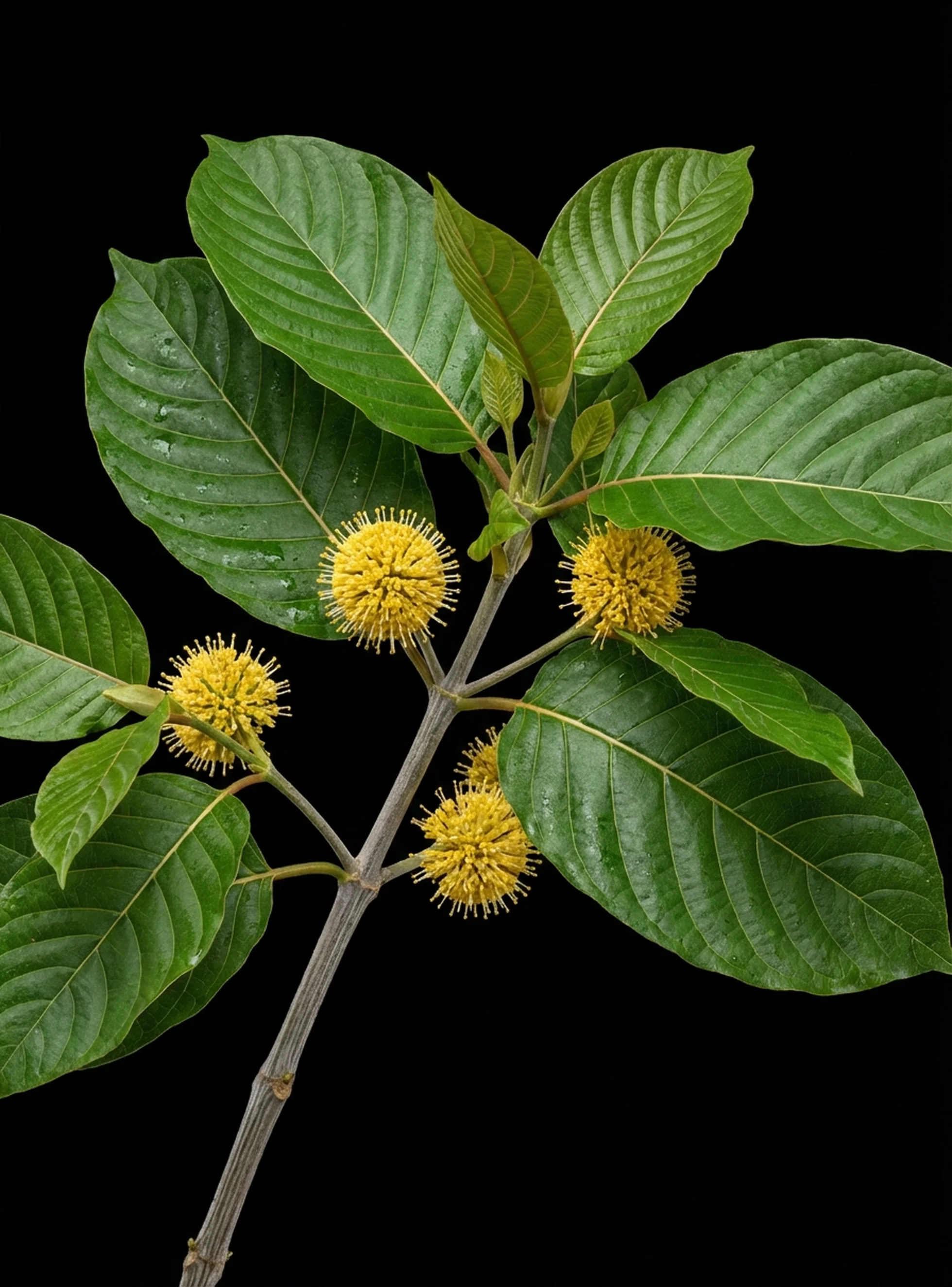
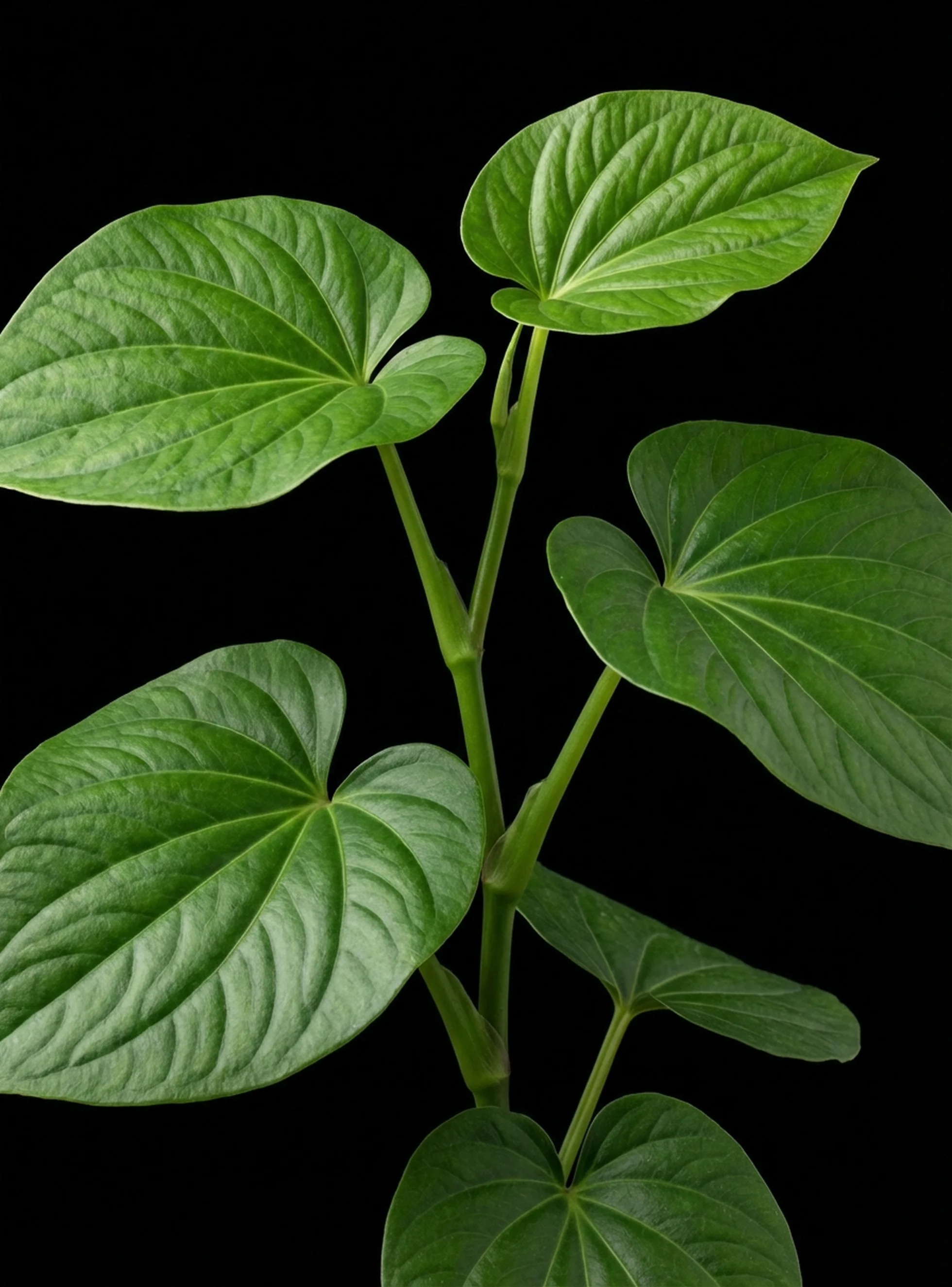
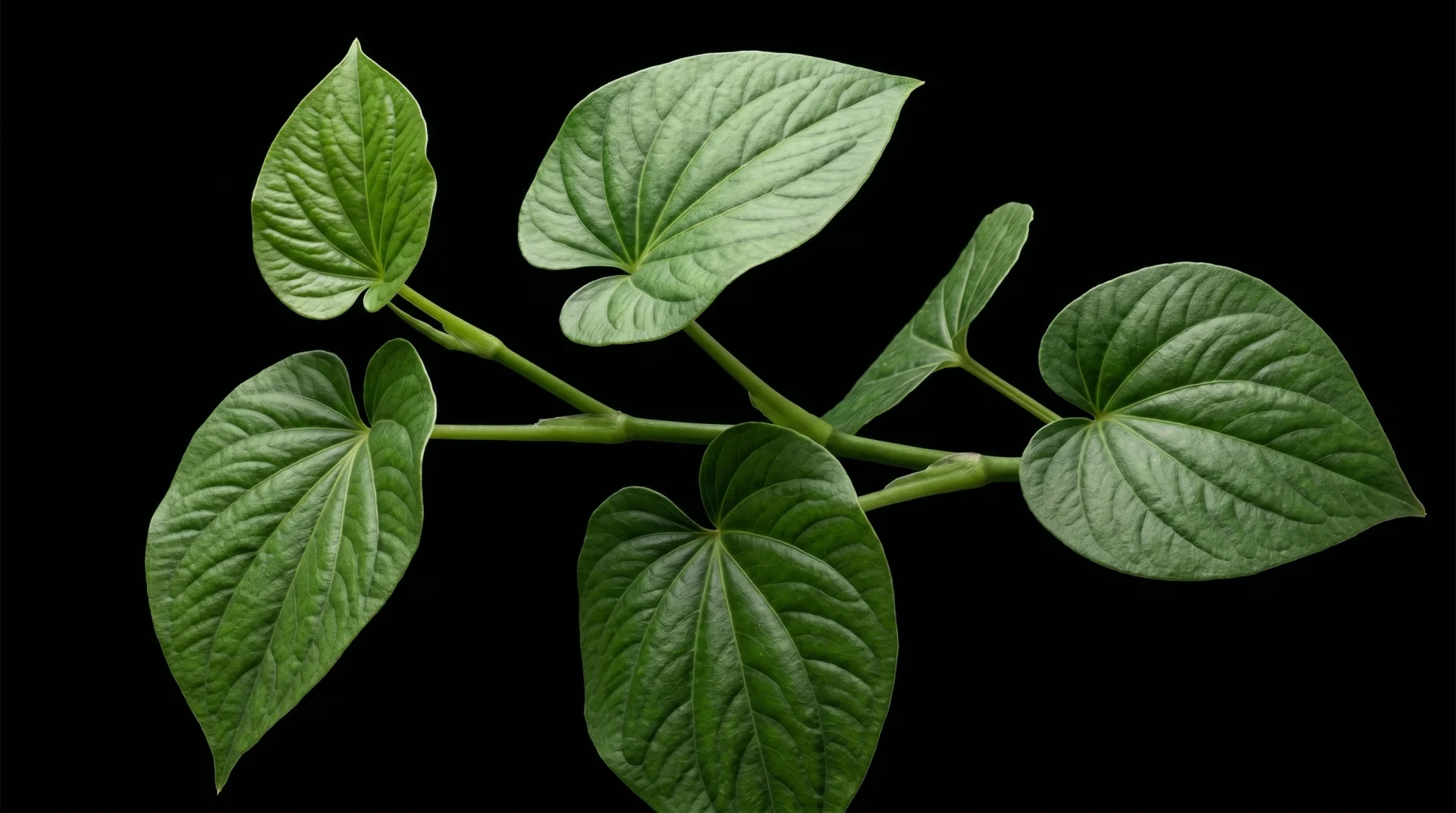
Kava is a stout, segmented shrub with large heart-shaped leaves and a thick, fleshy rhizome that serves as the primary source of its active compounds. The plant produces no fruit in cultivation and relies entirely on human propagation, a detail that speaks to its long co-evolution with Pacific Island peoples.
Pharmacologically, kava occupies an unusual position. It is not a classical psychedelic, not a stimulant, and not quite a sedative in the conventional sense. Its six primary kavalactones act on GABA-A receptors, placing it in the same broad neurochemical neighborhood as alcohol and benzodiazepines, but with a selectivity and gentleness that sets it apart. Among the substances cataloged in this library, kava sits at the mild end of the spectrum: a plant whose effects are felt more in the body and social field than in the mind's eye.
Strength and duration
Intensity profile
Duration
Aftereffects: ** Mild residual relaxation or fatigue possible for 1–3 hours post-peak; no dysphoric or unpleasant aftereffects reported. Some users report light sleep facilitation in evening. No hangover-like effect or next-day impairment at typical doses [established].
Chemistry
Kava's pharmacological character comes from a family of six compounds called kavalactones, all belonging to the pyranopyrone chemical class. The six primary kavalactones are kavain, methysticin, yangonin, dihydrokavain (DHK), dihydromethysticin (DHM), and demethoxyyangonin (DMY). Each is present in varying concentrations depending on the cultivar, and their relative proportions create what researchers call the plant's "chemotype," a biochemical fingerprint that shapes the character of any given kava experience.
The primary mechanism is GABA-A receptor modulation. Kavalactones bind allosterically to GABA-A receptor complexes in the central nervous system, increasing chloride channel conductance and dampening neuronal excitability. In practical terms, this means the brain's inhibitory signaling gets a gentle boost, particularly in regions involved in anxiety processing: the amygdala, the anterior cingulate cortex, and the insula. This is the mechanism behind kava's anxiolytic effects, and it is well established in both electrophysiology studies and human neuroimaging.
Beyond the GABA system, kavalactones appear to have secondary effects. There is emerging evidence for weak inhibition of monoamine oxidase B (MAO-B), which slows the breakdown of serotonin and dopamine, potentially contributing to mild mood elevation. Kavalactones also block voltage-gated sodium and calcium channels, reducing neuronal excitability through a separate pathway. And because these compounds are highly lipophilic (fat-soluble), they accumulate in neuronal membranes over time, altering membrane fluidity. This lipophilic sequestration likely explains the slow onset and unusually sustained plateau that characterizes the kava experience.
All psychoactivity comes from the parent compounds themselves. Unlike many substances, kavalactones are not converted into active metabolites by the liver. They are processed through hepatic enzymes (CYP3A4, CYP2D6, CYP2C9) and eliminated primarily through bile and feces, with half-lives ranging from 2 to 3 hours for kavain up to 6 to 12 hours for the dihydro variants.
The distinction between "noble" and "tudei" cultivars matters here. Noble varieties (preferred in Fiji, Samoa, and Tonga) carry a balanced kavalactone profile with relatively higher kavain and methysticin, producing a cleaner, shorter experience. Tudei varieties (found primarily in Vanuatu) are enriched in DHK and DHM, which have longer half-lives and tend to produce more prolonged sedation.
Methods of Encounter
The most traditional way to meet kava is through its aqueous preparation: dried root pounded or ground, mixed with water, strained through cloth, and served as a cloudy, earthy beverage. This is the form used in Pacific Island ceremonies and in the nakamals (kava bars) of Vanuatu and Fiji. The drink has a distinctive peppery, bitter taste and produces a characteristic numbing of the mouth and throat within the first few minutes, a calling card of the kavalactones making contact with oral mucosa.
With the traditional beverage, onset typically begins within 15 to 30 minutes. Peak effects arrive between 1 and 3 hours, and the total experience lasts roughly 2 to 4 hours. The arc is gentle: a gradual rise, a sustained plateau, and a slow descent with no abrupt drop-off.
Concentrated lipophilic extracts take a different path. Because kavalactones dissolve readily in fats, oil-based preparations cross membranes more quickly, producing onset in 15 to 20 minutes and a sharper peak. These tend to last longer overall (3 to 6 hours) due to sustained release from lipid stores.
Commercial tablets and capsules represent the most variable route. Absorption depends on stomach contents and digestive physiology, producing erratic onset times ranging from 45 minutes to over an hour. The experience tends to be milder and less predictable.
Context shapes the encounter as much as chemistry. In ceremonial settings, the social amplification of effects is measurable: group context, expectancy, and ritual formality enhance perceived intensity. Solo home use tends to produce a quieter experience, where somatic sensations (warmth, relaxation, that tingling mouth) become more noticeable in the absence of social energy.
Origin & History
Kava begins in Vanuatu. The archipelago, scattered across the southwestern Pacific some 1,750 kilometers east of Australia, is where Piper methysticum was coaxed into existence from its wild ancestor, Piper wichmannii, through generations of patient horticultural selection. The plant does not set seed in cultivation. Every kava shrub growing today exists because a human hand planted a cutting, a quiet testament to a relationship between people and plant that stretches back millennia.
Archaeological evidence from Vanuatu, including pollen records dated to roughly 3,000 years ago, suggests early management of Piper species. From Vanuatu, kava traveled east with Austronesian seafarers, carried as cuttings aboard voyaging canoes alongside taro, breadfruit, and coconut. It reached Fiji perhaps 2,500 years ago, Samoa roughly 1,500 years ago, and Hawaii approximately 1,500 years ago. By the time European ships arrived in the 18th century, kava ceremonies were deeply woven into the social fabric of Pacific Island life.
These ceremonies were never primarily about intoxication. The yaqona ceremony of Fiji, the ava ceremony of Samoa, the formal protocols of Tonga, all used kava as a social technology. The order of serving made hierarchy visible. The shared bowl made community tangible. Disputes were mediated, chiefs installed, births celebrated, and the dead honored with kava at the center.
European contact brought disruption. Captain Cook documented kava use in Hawaii in 1778. Missionaries who followed viewed the ceremonies with hostility. In Hawaii, American missionaries and the overthrow of the Hawaiian Kingdom in 1893 nearly extinguished traditional awa use, a suppression that was explicitly racialized, targeting Indigenous cultural practices as incompatible with colonial order.
The 20th century brought a different kind of attention. In 1882, European chemists first isolated compounds from kava root. By the 1990s, German clinical trials had demonstrated anxiolytic effects, and Germany's Commission E approved kava extracts for anxiety in 1996. Then came the hepatotoxicity scare of 2001 to 2003, when European case reports of liver damage led to regulatory suspensions. Retrospective analysis revealed confounding factors in nearly all cases, and most countries have since restored access.
Today, kava occupies a complex position: a traditional ceremonial plant that is also a clinically studied anxiolytic. In Vanuatu, nakamals continue to serve as primary social venues. In Hawaii, cultural organizations work to revive awa practice. And in laboratories across the Pacific, new trials seek to understand what Island communities have known by experience for a very long time.

Effects
Kava's effects register as a whisper where many substances speak at full volume. The composite strength score sits at 2 out of 10, placing it firmly in the "mild" category, and even that number conceals how much depends on context, cultivar, and the particular nervous system receiving it.
Perceptual shifts are nearly absent. Scoring 1 out of 10 on perceptual intensity, kava produces no hallucinations, no color shifts, no geometric patterns. The one sensory signature that reliably announces kava's presence is tactile: a distinctive numbing and tingling of the mouth and throat that begins within minutes of the first sip.
Cognitively, the shift is toward simplicity. Worry quiets. The looping, future-oriented thoughts that characterize anxious minds tend to slow and thin, sometimes ceasing altogether during the plateau. This is kava's most clinically documented effect, confirmed across 11 randomized controlled trials. In people who carry significant baseline anxiety, the cognitive relief can feel substantial. In those without it, the change may barely register. Memory remains intact, and the experience is typically recalled with clarity.
Emotionally, kava operates with quiet precision. The primary shift is anxiolytic: a reduction in anxiety that clinical studies have measured as distinct from general mood elevation. This is not euphoria. It is more like the absence of tension, a baseline of contentment that may feel unremarkable until you notice how different it is from your usual state. In ceremonial contexts, this emotional softening combines with social presence to produce a heightened sense of belonging. The descent is gradual, with no crash or dysphoria.
Somatically, the body responds before the mind fully registers what is happening. Muscle tension eases, particularly in the neck, shoulders, and jaw. A gentle warmth spreads, sometimes accompanied by mild facial flushing. Heart rate and blood pressure remain essentially unchanged. Coordination stays intact, though at higher amounts, mild unsteadiness may appear.
The arc follows its own unhurried logic. Onset takes 15 to 30 minutes. The plateau, lasting 1 to 3 hours, is unusually stable, a flat, gentle shelf rather than a peak and valley. Then a slow descent, gradual enough that many people simply notice at some point that they feel normal again. Total duration runs 2 to 4 hours.
Variability belongs as a footnote on every sentence above. Noble cultivars produce a cleaner, shorter experience. Tudei cultivars are more sedating. Ceremonial settings amplify perceived effects. Baseline anxiety may be the strongest predictor of how much someone notices.
A note before reading
Each experience is different. What you may notice depends on dose, setting, and the body and mind you bring to it.
What people often notice
Emotional spectrum
Visual
Visuals tend to stay soft and mostly closed-eye, often subtle textures or gentle color shifts behind the eyelids.
Cognitive
Thoughts often settle. The mind tends to feel quieter, slower, more able to rest with what is.
Risks & Limits
The most discussed safety consideration with kava is liver function. Between 2001 and 2003, case reports from Germany described liver damage in kava users, triggering regulatory suspensions across Europe and an FDA advisory in the United States. The picture that emerged on closer examination was more complicated: nearly all documented cases involved confounding factors, including concurrent alcohol use, hepatitis C, or pre-existing liver disease. Epidemiological data from Vanuatu and Fiji, where kava consumption is highest globally, do not show elevated rates of liver disease. The estimated incidence is 1 to 3 cases per 1 to 10 million doses consumed, substantially lower than acetaminophen. The risk appears real but rare, and likely concentrated in individuals with pre-existing hepatic vulnerability.
Kava's interaction with other central nervous system depressants deserves particular attention. Combined with alcohol, benzodiazepines, barbiturates, or opioids, kava can produce additive sedation and respiratory depression. Medications that inhibit CYP3A4 or CYP2D6 liver enzymes (including certain antifungals and antidepressants) may slow kavalactone metabolism, increasing both effects and hepatic exposure. Kava should be discontinued at least two weeks before surgical procedures due to interactions with anesthetics.
Populations with specific vulnerabilities include those with liver disease or viral hepatitis, people who consume alcohol regularly, pregnant or lactating individuals (kavalactones cross the placental barrier), and anyone with a history of drug-induced liver injury.
Psychological risks are minimal. Acute anxiety reactions are rare. No cases of kava-precipitated psychosis have been documented in non-predisposed individuals. At higher levels, some people report mild dissociative feelings that resolve as effects wear off.
Dependence potential is low but not zero. An estimated 2 to 5 percent of chronic heavy users develop mild physical dependence, with withdrawal symptoms (anxiety, sleep disturbance) that resolve within a week. Chronic heavy use may also produce kava dermopathy, a dry, scaly skin rash affecting 1 to 5 percent of daily users, which resolves with cessation.
Kava is gentle, but gentleness is not the same as absence of risk. Knowing your liver health, being honest about alcohol use, and paying attention to how your body responds over time are the most practical forms of harm reduction available.
Integration
Kava asks less of integration than many substances in this library, and that is part of what it teaches. There are no shattering visions to reassemble, no ego boundaries to re-draw. What remains after the warmth fades is subtler: perhaps a memory of what it felt like to sit without worry, a residual ease in the body, or the afterimage of a conversation that flowed more freely than usual.
The traditional cultures that have lived longest with this plant built integration into the ceremony itself. In Fijian and Samoan practice, kava ceremonies do not end when the last cup is served. Conversation continues. Community members linger. The social bonds reinforced during the ritual extend naturally into the hours that follow. This is integration without a name for it, woven into the fabric of communal life.
For those encountering kava outside ceremonial contexts, the integration needs are modest but worth honoring. The hours immediately following use often carry a residual calm, sometimes accompanied by mild fatigue. This is a natural time for rest, gentle movement, or quiet reflection. Some people find it useful to note which worries fell away, what tensions were conspicuously absent, how the body felt without its habitual holding patterns.
If kava revealed something about your relationship with anxiety, that observation is worth sitting with. Regular use over weeks can produce cumulative anxiolytic effects, but stopping after daily use may bring mild anxiety rebound as the nervous system recalibrates. This typically resolves within one to two weeks.
Integration, here as elsewhere, is not a checklist to complete. It is the practice of paying attention to what lingers, and allowing the experience to inform, rather than dictate, what comes next.
Ethics & Ecology
Kava presents an unusual ecological picture: nearly 100 percent of commercial supply comes from cultivation rather than wild harvesting. There is no overharvesting crisis, no endangered species concern, no deforestation narrative. The plant is grown on smallholder farms across the Pacific, typically intercropped with taro and coconut in low-input systems that have sustained island communities for generations. Vanuatu, producing roughly 80 percent of global supply, dedicates about 1.2 percent of its land area to kava. Pesticide use is minimal.
The harder questions are economic. An estimated 85 percent of Vanuatu's kava cultivators are small-to-medium farmers, yet roughly 10 to 15 percent of final retail price returns to the farmer, while 65 to 75 percent accrues to retailers and distributors. Traditional knowledge carries no formal intellectual property protection. No benefit-sharing agreements exist between Pacific communities and Western commercial entities.
Cultural appropriation is a live conversation, though not a settled one. Some Pacific Island leaders welcome global interest as economic opportunity. Others note that Western commercialization risks reducing a ceremonial practice to a relaxation product, stripping meaning from context. The concern is not that outsiders drink kava, but that the ceremony and communal intention might be lost in translation.
The colonial history casts a long shadow. Kava ceremonies were actively suppressed by missionaries across the Pacific as part of broader campaigns to dismantle Indigenous institutions. That the same plant now circulates as a Western wellness product, often without acknowledgment of this history, is a tension worth holding.
Choosing kava sourced through fair-trade channels, seeking out Pacific Island-owned suppliers, and understanding the cultural weight of what you are consuming are practical expressions of reciprocity. The plant has traveled far from Vanuatu. The question is whether respect travels with it.
Misconceptions
Kava is a hallucinogen like psilocybin or LSD.
Kava produces no visual hallucinations, geometric patterns, or perceptual distortions. Its mechanism is GABAergic (enhancing inhibitory signaling), not serotonergic (altering perception). The pharmacology and phenomenology are entirely distinct from classical psychedelics.
Kava causes liver failure in most users.
Documented hepatotoxicity from kava is rare: approximately 3 to 5 possible cases were reported in Germany between 2000 and 2003, nearly all involving confounding factors such as alcohol co-use or pre-existing liver disease. The estimated incidence is 1 to 3 cases per 1 to 10 million doses consumed. In Pacific Island populations with the highest kava consumption globally, there is no elevated burden of liver disease.
Kava is highly addictive.
Physical dependence develops in an estimated 2 to 5 percent of chronic heavy users, with mild withdrawal symptoms that resolve within a week. This is substantially lower than alcohol (10 to 15 percent), benzodiazepines (15 to 40 percent), or nicotine (32 percent).
Kava ceremonies are just recreational drug use.
Pacific Island kava ceremonies are formalized rituals with deep social, political, and spiritual significance. Serving order reflects hierarchy. The ceremony mediates disputes, marks lifecycle events, and reinforces community bonds. The pharmacological effect is secondary to the cultural architecture.
Kava is a South American plant related to ayahuasca.
Kava is native to Vanuatu in the South Pacific, not South America. It belongs to the pepper family (*Piperaceae*), while ayahuasca involves entirely different plant families. The two are botanically unrelated, pharmacologically distinct, and culturally separate.
FAQ

Reflection
What does it mean that for thousands of years, across scattered islands in an enormous ocean, people chose to gather in circles, share a bitter drink, and sit together in the particular quiet that follows?
Kava does not promise transformation. It does not open doors to other dimensions or dissolve the boundaries of self. What it offers is more modest and, in its own way, more difficult to dismiss: the experience of anxiety's absence. Not its opposite, not euphoria or bliss, just the plain, unadorned sensation of a nervous system at rest.
Perhaps the most interesting thing kava teaches is how much of our social life runs on low-grade tension we have stopped noticing. When that tension lifts, even slightly, the space between people changes. Conversation becomes less performative. Silence becomes less uncomfortable. The circle holds.
It is worth asking what we are looking for when we reach for calm, and whether the answer has more to do with chemistry or with company.
Sources
Primary research sourced from peer-reviewed pharmacological, ethnobotanical, and clinical literature. See the full research profile for detailed citations and evidence tags.
For how we evaluate sources and structure our claims, see the methodology.
States you may encounter
Altered states of consciousness commonly reported with this substance.