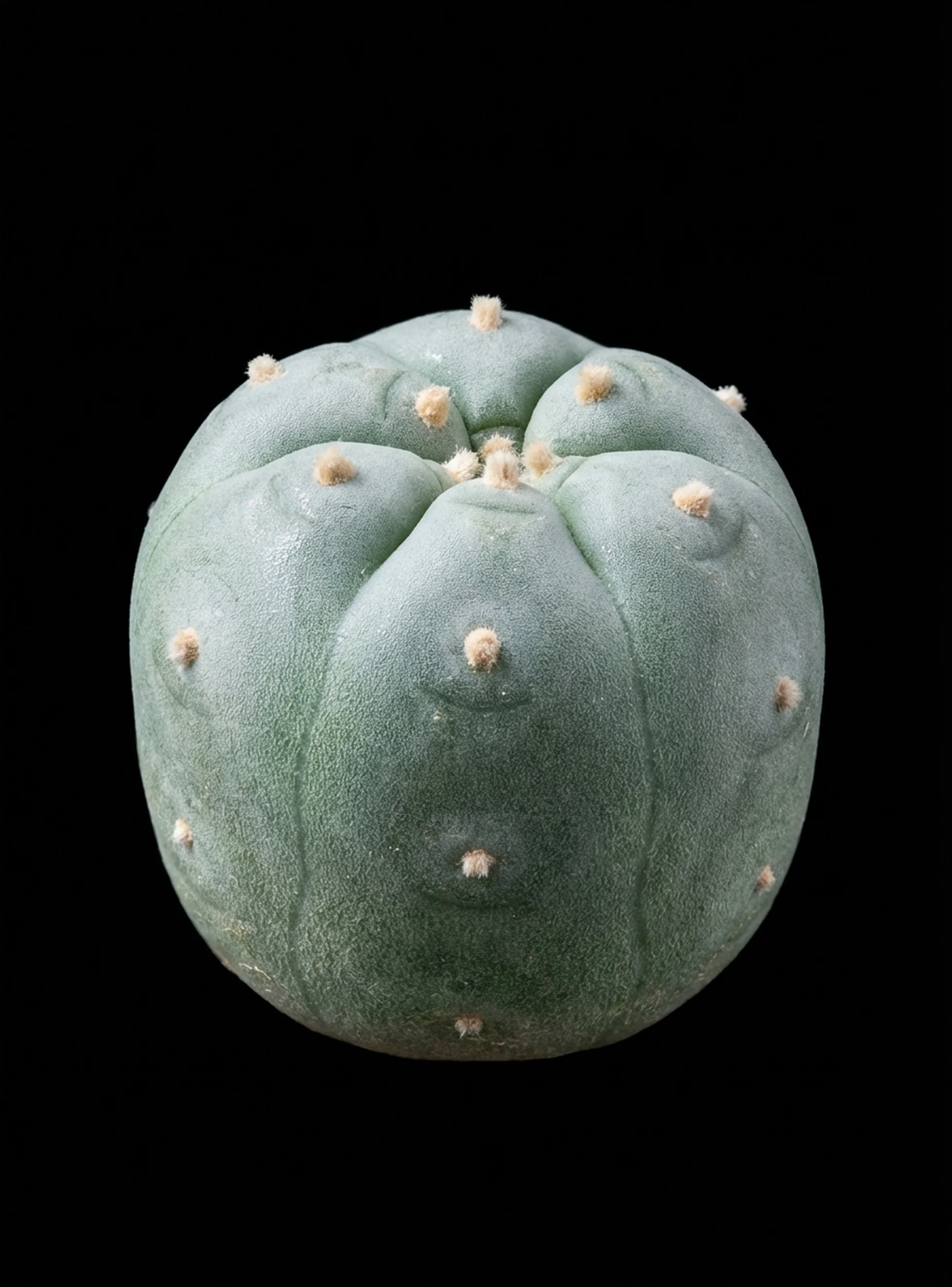
Opium Poppy is the ancient source of morphine and codeine, whose milky latex has shaped medicine, trade, war, and addiction across thousands of years of human history.
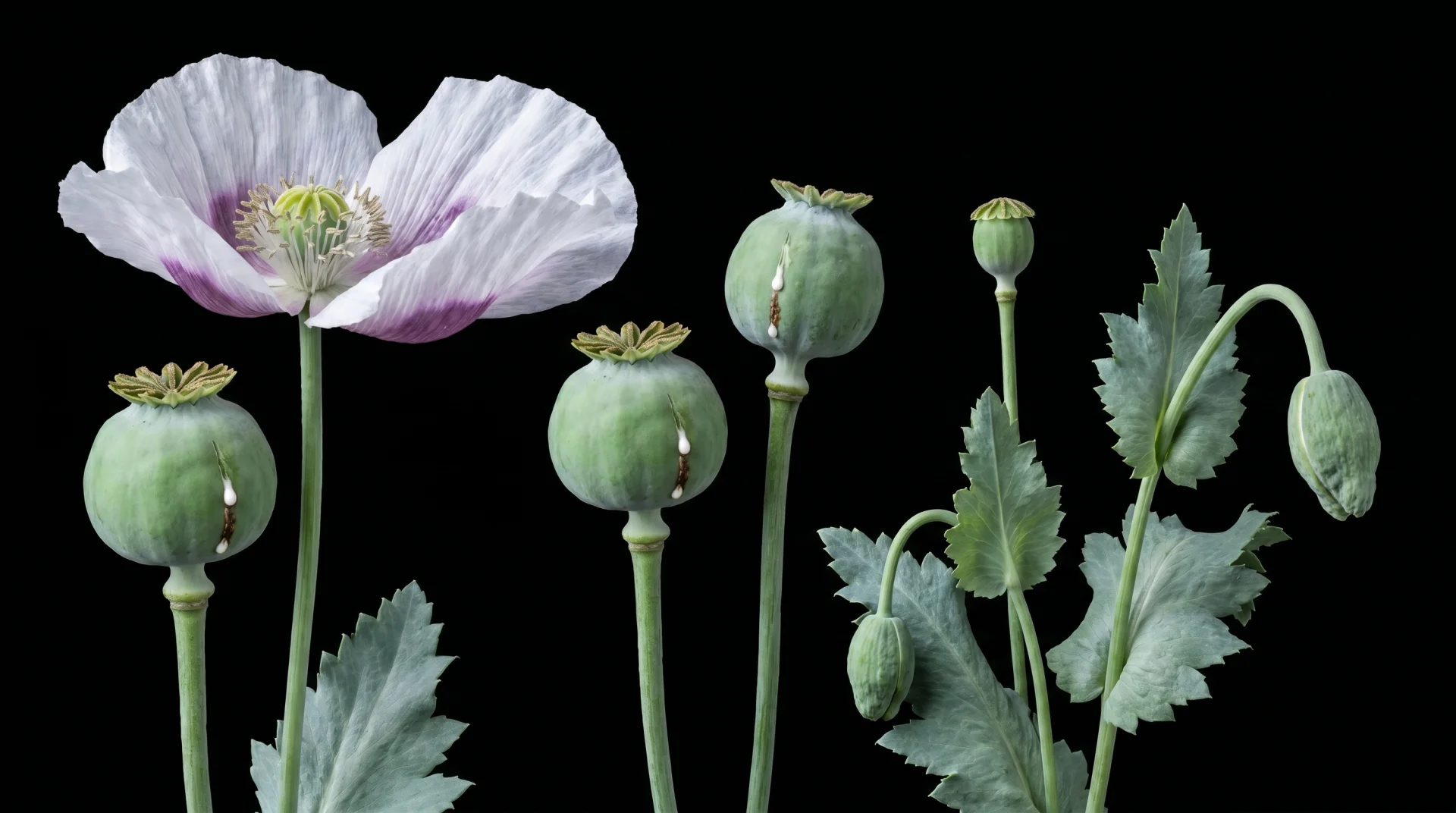
Opium Poppy is the ancient source of morphine and codeine, whose milky latex has shaped medicine, trade, war, and addiction across thousands of years of human history.
Opium\nPoppy
Fact file
- Type
- Plant
- Botanical name
- Papaver somniferum
- Other names
- Opium poppy, common poppy, breadseed poppy, Pavot à opium
- Origin
- Eastern Mediterranean
- Duration
- 4-6 hours
- Strength
- Moderate
- Legal status
- Illegal in 24 of 30 listed jurisdictions, and varies elsewhere
What is Opium Poppy?
Somewhere in the world right now, a green capsule is being scored with a blade, and a white latex is beading on its surface, oxidizing to brown in the open air. This is how the opium poppy offers what it has always offered: a chemical key to the body's own system for managing pain and pleasure.
Papaver somniferum is not a psychedelic. It does not reorganize perception or dissolve the boundaries of selfhood. What it does is older and, in some ways, more profound: it reaches into the mu-opioid receptors that govern how suffering registers in the nervous system and turns the volume down. The warmth that follows, the heaviness, the quiet in the mind, these are not hallucinations. They are what happens when the brain's own pain-suppression architecture is activated from outside.
This is a plant that has shaped empires and broken them. It gave us morphine, the first alkaloid ever isolated, and it gave us the opioid crisis. It remains on the WHO's List of Essential Medicines and on every nation's list of controlled substances. To understand the opium poppy is to sit with a contradiction: that the same molecule can be the most compassionate tool in a hospice and the engine of the deepest dependence the pharmacopeia has produced.
Identity
Scientific name: Papaver somniferum L. (Linnaeus, 1753)
Common names: Opium poppy, breadseed poppy, common poppy. In French: pavot somnifère. In German: Schlafmohn. In Arabic: khashkhash. In Hindi: aphim ka paudha. In Chinese: yīng sù.
Classification: A herbaceous annual in the Papaveraceae (poppy family), growing 50 to 160 cm tall with a distinctive glaucous (waxy, bluish-white) coating on stems and leaves. Flowers are large (7 to 11 cm), typically white, pink, red, or purple, with four crinkled petals. The fruit is a globose capsule with a crown-like stigmatic disc at the apex, the diagnostic feature that distinguishes it from related species like Papaver rhoeas (corn poppy).
Substance type: Plant. Its psychoactive properties derive from benzylisoquinoline alkaloids, primarily morphine, codeine, and thebaine. These act on opioid receptors rather than serotonin receptors, placing the opium poppy in a fundamentally different pharmacological category from classic psychedelics.
Taxonomic note: The species is considered an allopolyploid derivative of a Mediterranean ancestor, likely P. setigerum. Cultivars vary dramatically in alkaloid profiles, from high-morphine pharmaceutical varieties grown in Tasmania and India to ornamental and culinary strains with negligible alkaloid content.
Strength and duration
Intensity profile
Duration
Aftereffects: ** Low-grade residual heaviness and emotional blunting may persist 4–6 hours after peak effects end. Some users report mild lethargy, sleep disruption (paradoxically, despite sedative properties, sleep architecture is disrupted), and mild dysphoria or irritability during 8–24 hour post-use period. Physical effects (constipation) begin within hours and persist for 24–48 hours with single use; chronic use produces persistent constipation. [established]
Chemistry
The opium poppy produces over 80 alkaloids, but three primary compounds carry nearly all of the pharmacological weight: morphine, codeine, and thebaine. All three belong to the benzylisoquinoline alkaloid class, sharing a molecular architecture built around two fused ring systems.
Morphine is the dominant psychoactive compound, comprising 10 to 15 percent of dried latex. It binds with high affinity to mu-opioid receptors (specifically the mu-1 subtype), which are distributed throughout the central and peripheral nervous system. When morphine activates these receptors in key brain regions, a cascade of effects follows. In the periaqueductal gray, it suppresses pain signaling. In the ventral tegmental area, it disinhibits dopamine neurons by quieting the GABAergic interneurons that normally restrain them, releasing dopamine into the nucleus accumbens. This is the reward circuit, the same pathway activated by food, sex, and social bonding, though morphine activates it with an intensity and directness that natural rewards rarely match.
Codeine makes up 1 to 3 percent of the latex and functions largely as a prodrug: roughly 10 percent of it converts to morphine in the liver via the CYP2D6 enzyme. This conversion is genetically variable. Ultra-rapid metabolizers (common in certain Middle Eastern and North African populations) produce excess morphine from the same amount of codeine, while poor metabolizers get almost no analgesic effect.
Thebaine (1 to 2 percent of latex) is pharmacologically distinct. It acts as a weak partial agonist at mu-opioid receptors and additionally antagonizes delta-opioid receptors, producing a stimulant rather than sedative profile. It is rarely consumed directly but serves as the pharmaceutical precursor for buprenorphine, now a cornerstone of opioid use disorder treatment.
Secondary alkaloids include papaverine (a smooth muscle relaxant and vasodilator), noscapine (an antitussive used in cough medicines), and trace compounds like laudanosine and reticuline. These contribute to the "entourage" quality of crude opium, which produces a somewhat different subjective profile than purified morphine alone.
The metabolic pathway adds complexity. Oral morphine has only 20 to 30 percent bioavailability due to extensive first-pass metabolism in the liver. The body converts it primarily into morphine-3-glucuronide (inactive) and morphine-6-glucuronide (active, and in some assays more potent than morphine itself). This active metabolite can accumulate in people with impaired kidney function, intensifying and prolonging effects unpredictably.
Methods of Encounter
People encounter the opium poppy across a wide spectrum of contexts, from hospital pain management to traditional medicine to the global heroin trade. The route of encounter fundamentally reshapes the experience.
Oral opium (raw latex, tincture, or laudanum) is the oldest method. Sumerian physicians mixed crude opium with beer and honey; 19th-century Europeans dissolved it in alcohol as laudanum. Oral ingestion produces the most gradual onset (20 to 90 minutes), the longest plateau, and the gentlest descent. Total duration runs 4 to 8 hours. The experience tends to build slowly into a steady warmth rather than arriving as a rush.
Smoked opium was the form that defined the opium dens of 19th-century China and, later, San Francisco and London. Refined opium is heated and inhaled, producing rapid onset (5 to 15 minutes) and a compressed, more intense peak lasting 20 to 40 minutes. The steeper rise and faster fall create a stronger reinforcement signal in the brain's reward circuits, which is one reason smoked routes carry higher dependence risk.
Pharmaceutical morphine (oral, sublingual, or injected) represents the modern clinical context. Intravenous administration delivers morphine to the brain within seconds, producing what is described as an immediate and overwhelming wave of warmth and pleasure. This route carries the highest overdose risk and the strongest reinforcement of compulsive use.
Intranasal administration (snorting morphine powder or heroin) falls between oral and intravenous in onset speed (10 to 20 minutes) and intensity, with total duration of 3 to 5 hours.
The route matters because the speed of onset directly affects how the brain processes reward. Faster delivery creates steeper peaks in blood concentration, which trigger stronger dopamine responses and, consequently, stronger patterns of craving and repeated use. The same molecule, entering the body through different routes, produces experiences that differ not just in timeline but in their capacity to establish dependence.
Origin & History
The opium poppy's story begins in the rocky soils of the eastern Mediterranean, somewhere in what is now Turkey, where wild relatives like Papaver setigerum still grow in mountain grasslands. Before anyone recognized its psychoactive properties, the plant was cultivated for its oil-rich seeds, a food crop in the truest sense.
By 3400 BCE, Sumerian physicians in Nippur were recording the poppy's medicinal properties on clay tablets in cuneiform, documenting a plant they called gal, used for pain and sleeplessness. The Ebers Papyrus, composed in Egypt around 1550 BCE, prescribed opium mixed with myrrh and honey for coughs and aches. These were medical contexts, not ceremonial ones. The poppy was treated as a tool, not a sacrament.
The plant moved east along trade routes and south through the hands of Persian and Islamic physicians who brought both rigor and caution. Al-Razi in the 9th century documented opium's efficacy alongside its risks of dependence. Ibn Sina's Canon of Medicine (early 11th century) distinguished between crude opium and refined preparations, offering what amounted to an early pharmacological framework. Islamic jurisprudence, meanwhile, debated whether opium's intoxicating properties placed it under the same prohibitions as wine, a tension between medical necessity and religious law that was never fully resolved.
In India, opium entered the Ayurvedic pharmacopeia as aphim, documented in texts like the Bhava Prakash of the 16th century. By the Mughal period, use had moved beyond the clinic and into courts and cities, blurring the boundary between medicine and recreation.
Then came the colonial chapter, and it changed everything. The British East India Company systematized opium cultivation in Bengal and exported it to China, where the Qing dynasty had banned opium smoking in 1729 out of legitimate concern for its social consequences. When China impounded over 20,000 chests of British opium in 1839, Britain responded with warships. The First Opium War (1840-1842) ended with the Treaty of Nanking, which forced China to legalize opium imports and ceded Hong Kong. The Second Opium War (1856-1860) deepened the humiliation. This was drug trade enforced at gunpoint, and it remains one of the most explicit examples of colonial violence in the service of commercial interest.
The racial dimensions of prohibition followed a predictable pattern. When Chinese immigrants brought opium smoking to North America in the 1870s, it became a pretext for exclusion laws. The Harrison Narcotics Tax Act of 1914 was enforced selectively: federal agents targeted Chinese-American and Black communities at rates far exceeding their share of opioid use, while white medical consumption went largely unquestioned.
In 1805, Friedrich Wilhelm Serturner isolated morphine from opium, the first alkaloid ever identified. The hypodermic needle arrived in 1853. Heroin was synthesized in 1874 and marketed by Bayer as a cure for morphine addiction (a cruel irony that would repeat itself). The 20th century brought international control treaties, the WHO Pain Ladder of 1986 (which restored morphine as the standard for cancer pain), and eventually the opioid crisis of the 2010s, driven primarily by synthetic fentanyl rather than the plant itself.
What the poppy has witnessed, across five millennia, is a recurring cycle: a substance that relieves genuine suffering is adopted, commercialized, politicized, and criminalized, with the consequences falling most heavily on those with the least power to resist them.

Effects
The opium experience is not a vision or a revelation. It is, by most accounts, a subtraction: the removal of pain, anxiety, and the restless background noise of ordinary consciousness, replaced by something that feels like warmth, weight, and an unfamiliar stillness.
Perceptual: 2/10
Opium is not a hallucinogen. Even at significant levels of intoxication, the visual world remains largely intact. What changes is its quality. Colors may appear slightly muted, as though viewed through a soft filter. Vision narrows as the pupils constrict to pinpoints (miosis), a diagnostic sign that persists throughout the experience. Sounds may feel distant or dampened, as if arriving through water. Some people report a dreamlike softness to their surroundings, but this is qualitative rather than hallucinatory: the room does not transform, it simply matters less.
Tactile perception shifts more noticeably. Touch may feel unusually pleasurable in the early phase, with textures registering as richer or more satisfying than usual. At higher levels of engagement, sensation dulls, and the body's pain signals fade to background static.
Cognitive: 4/10
The mind slows. Racing thoughts and anxious rumination tend to quiet, sometimes dramatically. This cognitive deceleration often feels welcome, particularly for people whose baseline mental experience involves considerable noise. Attention narrows: complex tasks feel unimportant, and the motivation to initiate action diminishes. Short-term memory may become unreliable.
Unlike the cognitive effects of psilocybin or LSD, which tend to reorganize thought patterns and generate novel associations, opium's cognitive signature is one of simplification. The architecture of thought remains intact, but the energy driving it winds down. Some people describe feeling as though they have been given permission to stop thinking. At higher levels, this progresses toward difficulty forming coherent thoughts, eventually approaching sleep.
Time perception dilates: minutes feel longer, and the boundary between present and recent past softens. Self-consciousness decreases, not through the dramatic ego dissolution of psychedelics, but through a gentle reduction in how much the self seems to matter.
Emotional: 6/10
This is where the opium poppy exerts its most distinctive influence. The emotional shift often begins as a spreading sense of well-being, a warmth that is less excitement than contentment. Anxiety lifts. The emotional weight of problems, relationships, unresolved conflicts, all of it may feel temporarily lighter, not resolved but simply less pressing.
At moderate levels of engagement, this deepens into something people often describe as "indifference to suffering," not in a cold way, but in the way a warm bath makes the cold air outside feel theoretical. Fear and existential anxiety can be profoundly suppressed. The emotional palette narrows: sadness, anger, and frustration become harder to access, replaced by a steady-state pleasure that does not fluctuate much with external events.
This emotional blunting is both the substance's appeal and its trap. The relief it provides is real, but it comes at the cost of emotional range. Chronic use tends to flatten the spectrum further, producing anhedonia (the inability to feel pleasure from ordinary sources) between encounters, which in turn drives the cycle of repeated use.
Somatic: 5/10
The body registers opium's presence as heaviness and warmth. The onset often begins as a sensation of gentle heat spreading outward from the core, particularly with oral use. Limbs feel weighted, as though sinking into whatever surface supports them. This physical gravity is frequently described as comforting rather than alarming.
Heart rate typically decreases. Breathing slows, sometimes to rates that, at higher levels of engagement, become clinically significant. The gut slows too: nausea affects 20 to 40 percent of people unfamiliar with opioids, and constipation begins within hours and persists well beyond the experience itself. Itching is common, a result of histamine release triggered by mu-opioid receptor activation.
The overall somatic arc with oral use unfolds over 4 to 8 hours: a gradual onset of warmth and heaviness (20 to 90 minutes), a peak of physical comfort and analgesia (90 to 180 minutes), and a slow descent that often leaves residual lethargy and mild emotional flatness for hours afterward. With smoked or injected routes, this arc compresses dramatically, the warmth arriving as a rush rather than a tide, peaking in minutes rather than hours, and descending more sharply, sometimes into a noticeable crash.
A note before reading
Each experience is different. What you may notice depends on dose, setting, and the body and mind you bring to it.
What people often notice
Emotional spectrum
Visual
Visuals tend to stay soft and mostly closed-eye, often subtle textures or gentle color shifts behind the eyelids.
Cognitive
Loose associations may appear, insights surface sideways, and familiar ideas can rearrange into fresh shapes.
Risks & Limits
The primary physical risk of opioid use is respiratory depression. Morphine suppresses the brainstem centers that regulate breathing in a direct, dose-dependent manner. When breathing slows below 8 breaths per minute, the cascade that follows (hypoventilation, oxygen desaturation, carbon dioxide retention, cardiac arrhythmia) is the mechanism behind most opioid overdose deaths. This risk is not theoretical: approximately 136,000 opioid-related deaths occur globally each year, though the majority now involve synthetic fentanyl rather than morphine or crude opium.
Cardiovascular effects include dose-dependent decreases in heart rate and blood pressure. In clinical studies of intravenous morphine, heart rate reductions of 8 to 12 beats per minute and systolic blood pressure drops of 5 to 15 mmHg have been documented within minutes. Severe bradycardia and hypotension are possible at higher levels of exposure.
Gastrointestinal effects are among the most persistent. Opioids suppress gut motility through mu-opioid receptors in the enteric nervous system. Constipation develops in 40 to 80 percent of people with regular use, and unlike most opioid side effects, tolerance to this effect develops slowly if at all.
Drug interactions represent critical risk multipliers. Combining opioids with benzodiazepines, alcohol, or other central nervous system depressants produces additive respiratory depression, dramatically increasing overdose risk. CYP3A4 inhibitors (including grapefruit juice and certain antifungal medications) can increase morphine levels by reducing hepatic metabolism. MAOIs create risk of serotonin syndrome. Naloxone, the opioid antagonist, reverses all opioid effects but can precipitate acute withdrawal in dependent individuals.
Dependence develops with notable speed. Physical dependence (tolerance and withdrawal upon cessation) can emerge within 5 to 7 days of regular use. Withdrawal is not life-threatening (unlike alcohol or benzodiazepine withdrawal) but is intensely uncomfortable: anxiety, insomnia, muscle pain, sweating, and gastrointestinal cramping peaking at 48 to 72 hours. Psychological addiction develops in approximately 20 to 40 percent of regular users, driven by neurobiological changes in dopamine reward circuits that persist weeks to months after cessation. Relapse rates without treatment exceed 85 percent.
Populations at elevated risk include people with respiratory diseases (COPD, sleep apnea, asthma), severe liver or kidney impairment (where morphine and its active metabolites accumulate), cardiac conditions, elevated intracranial pressure, and a personal or family history of substance use disorder. Ultra-rapid CYP2D6 metabolizers face particular risk with codeine, as they convert it to morphine at rates that can produce toxicity. Opioid use during pregnancy carries risks of neonatal opioid withdrawal syndrome.
Chronically, opioid use is associated with endocrine disruption (testosterone levels may decrease 30 to 50 percent), mild cognitive impairment in attention and executive function, and, paradoxically, increased pain sensitivity (opioid-induced hyperalgesia) through changes in NMDA signaling.
The context of use matters. Set, setting, and the presence of someone who can recognize signs of respiratory distress do not ensure safety, but their absence substantially increases risk.
Integration
Integration after opioid use looks different from integration after a psychedelic experience. There are rarely mystical insights to process, no ego dissolution demanding reinterpretation, no visions that need grounding in daily life. What there is, instead, is a question that tends to surface quietly in the days that follow: What was I so relieved to be free of?
The opium poppy does not reveal new territories of consciousness. It temporarily removes the weight of existing ones, pain, anxiety, the low-grade suffering that accumulates in a body and mind navigating ordinary difficulty. When that weight returns (and it does, typically within hours), the contrast can be clarifying. Some people find that the experience highlights what they have been carrying, not through insight delivered by the substance, but through the simple fact of its temporary absence.
For occasional encounters, integration may need nothing more than rest, hydration, and honest reflection. The body often feels depleted for a day or two afterward: mild fatigue, disrupted sleep, a flatness in mood that resolves on its own. Journaling about what the relief felt like, and what it revealed about baseline states of distress, can be useful without requiring elaborate frameworks.
For those whose encounters have become patterns, integration and recovery begin to overlap. The distinction matters: psychedelic integration is typically about meaning-making, while opioid recovery is about addressing the neurobiological and psychological drivers of compulsive use. Cognitive-behavioral approaches help identify triggers. Mindfulness practices show emerging evidence for reducing craving. Physical movement and somatic work (yoga, walking, practices that reconnect attention to the body) may ease the post-acute phase.
Community matters. Whether through formal support groups, trusted friends, or therapeutic relationships, the process of making sense of opioid use is rarely well served by isolation. The quality of the listening matters more than the method.
Patience is not optional. For those moving away from regular use, neurobiological recovery (particularly in the dopamine system) unfolds over months. The capacity to feel pleasure from ordinary sources returns, but slowly. Expecting this process to be linear sets up unnecessary disappointment. Integration, here, is less about extracting wisdom and more about rebuilding the capacity for a life that does not require chemical relief to feel bearable.
Ethics & Ecology
Papaver somniferum is not endangered. It is a widespread cultivated annual with no conservation concerns for the species itself, though certain wild relatives (like P. setigerum) have localized vulnerability in their native Mediterranean range.
The ecological footprint of the opium poppy divides sharply along the line of legality. Licensed pharmaceutical cultivation (in Tasmania, India, Turkey, and France) operates within conventional agricultural frameworks: modest land use, standard crop rotation, environmental impacts comparable to other field crops. This regulated production supplies the world's morphine and codeine.
Illicit cultivation tells a different story. Afghanistan alone has devoted over 80,000 hectares to poppy farming. In Myanmar and Laos, forest clearing for poppy fields drives biodiversity loss. The processing of opium into heroin generates severe chemical pollution, heavy metals and solvents contaminating soil and water in communities with no power to refuse the trade.
Cultural appropriation concerns are minimal for this particular plant. Unlike psilocybin mushrooms, ayahuasca, or peyote, the opium poppy holds no central spiritual or ceremonial role in any indigenous tradition. Its use has been medical across every culture that adopted it: Sumerian, Egyptian, Persian, Islamic, Indian. Modern use is not an appropriation of sacred practice.
What does demand ethical attention is the colonial history that remains inseparable from this plant. The Opium Wars represent one of the most explicit instances of military force used to enforce drug trade. British cultivation of opium in India extracted wealth while impoverishing agricultural workers. American prohibition was enforced along explicitly racial lines. These are not ancient grievances; their consequences shape drug policy, incarceration patterns, and access to pain treatment today.
The ongoing equity dimension is equally uncomfortable. When opioid addiction affected predominantly Black and Latino urban communities in the 1960s through 1980s, the response was criminalization. When it affected predominantly white rural communities in the 2010s, it was reframed as a public health crisis warranting treatment and compassion. The pharmacology did not change. The politics of who deserved sympathy did.
Misconceptions
Opium has no medical value and is purely recreational.
Morphine and codeine extracted from the opium poppy are on the WHO's List of Essential Medicines. Morphine remains the gold standard for severe acute pain, cancer pain, and palliative care in virtually every country. The medical value is extensive and well-established, though contemporary prescribing is more carefully regulated than in previous eras.
Opium is uniquely addictive compared to all other substances.
Opioids have high addiction potential, but the numbers do not support uniqueness. Approximately 20 to 40 percent of regular opioid users develop opioid use disorder. This is comparable to cocaine (20 percent), higher than alcohol (15 percent) and cannabis (9 percent), but lower than nicotine (32 percent). What distinguishes opioids is the speed of physical dependence (days to weeks), not the overall addiction rate.
Opium produces hallucinations like LSD or psilocybin.
Opium produces minimal perceptual distortion and no visual or auditory hallucinations, even at high levels of intoxication. It acts on opioid receptors, producing euphoria, analgesia, and sedation, a fundamentally different pharmacology from serotonergic hallucinogens. The subjective experience of ego softening that opioids can produce lacks the visual and cognitive complexity of psychedelic states.
Opium was used in ancient shamanic and spiritual rituals across many cultures.
The historical record does not support this. Opium's role was medical in every major tradition that adopted it: Sumerian, Egyptian, Greek, Persian, Islamic, and Indian. While opium appears metaphorically in Sufi poetry, there is no evidence of formal ritual use. The absence of a spiritual role reflects the pharmacology: opioids produce comfort and escape, not the ego dissolution and perceptual restructuring central to entheogenic traditions.
Modern prescription opioids like OxyContin are safer and less addictive than traditional opium.
Semi-synthetic and fully synthetic opioids have addiction potential equal to or greater than morphine. The opioid crisis of the 2010s and 2020s was driven by pharmaceutical overprescribing, particularly of OxyContin, which was marketed as "less addictive" based on claims later found to be fraudulent. Bioavailability, half-life, and route of administration determine addiction risk more than whether the opioid is plant-derived or synthetic.
FAQ

Reflection
The opium poppy asks us to sit with a question that has no comfortable answer: What do we owe to a plant that can relieve the worst suffering a body can produce, and that can also dismantle a life with quiet, patient efficiency?
Perhaps the difficulty is that we want the poppy to be one thing. A medicine or a menace. A gift from the earth or a trap set by chemistry. But the plant does not resolve into a single category. It holds both, the compassion and the capture, in the same white latex, separated by nothing more than frequency, context, and the particular architecture of a particular nervous system.
What the poppy reveals, if it reveals anything, is how thin the membrane is between relief and dependence, between a body finding ease and a body forgetting how to find ease on its own. That membrane is worth studying, not as pharmacology alone, but as a question about what it means to be a creature wired for both suffering and the desire to stop suffering.
The flowers, when they bloom, last only a day or two. Then the petals fall, and what remains is the capsule, holding its seeds and its chemistry, waiting for someone to decide what to do with what it offers.
Sources
Historical and Ethnobotanical
- ●Kritikos, P. G., & Papadaki, S. P. (1967). The history of the poppy and of opium and their expansion in antiquity in the Eastern Mediterranean area. Journal of the History of Medicine and Allied Sciences, 22(4), 307-314.
- ●Halioua, B., & Ziskind, B. (2005). Medicine in the days of the pharaohs. Harvard University Press.
- ●Pormann, P. E., & Savage-Smith, E. (2007). Medieval Islamic medical science. Journal of the Royal Asiatic Society, 17(1), 23-42.
- ●Lovell, J. (2011). The opium war: Drugs, dreams and the making of China. Picador.
- ●Trocki, C. A. (1999). Opium, empire, and the global political economy. Routledge.
- ●Chouvy, P. A. (2010). Opium: A history. Picador.
- ●Courtwright, D. T. (2001). Forces of habit: Drugs and the making of the modern world. Harvard University Press.
Pharmacology and Chemistry
- ●Waldhoer, M., Bartlett, S. E., & Whistler, J. L. (2004). Opioid receptors. Current Biology, 14(13), R520-R528.
- ●Nestler, E. J. (2004). Molecular mechanisms of drug addiction. Neuropharmacology, 47(S1), 24-32.
- ●Pasternak, G. W. (2012). Opioids and their receptors: are we there yet? Nature Reviews Drug Discovery, 11(12), 892-909.
- ●Christrup, L. L. (1997). Morphine metabolites. Acta Anaesthesiologica Scandinavica, 41(S107), 1-8.
- ●Ingelman-Sundberg, M. (2004). Human drug metabolising cytochrome P450 enzymes: properties and polymorphisms. International Journal of Molecular Sciences, 5(1), 15-27.
- ●Wise, R. A., & Robble, M. A. (2020). Dopamine and addiction. Nature Neuroscience, 23(7), 863-874.
Clinical and Safety
- ●World Health Organization. (1986). Cancer pain relief: A report of a WHO expert committee. WHO Technical Report Series, 804.
- ●Mattick, R. P., et al. (2014). Buprenorphine maintenance versus placebo or methadone maintenance for opioid dependence. Cochrane Database of Systematic Reviews, 2, CD002207.
- ●Baldacchino, A., et al. (2012). Neuropsychological consequences of chronic opioid use. Psychopharmacology, 225(2), 305-318.
- ●Camilleri, M. (2011). Opioid-induced constipation: Challenges and opportunities. American Journal of Gastroenterology, 106(5), 835-842.
- ●Abs, R., et al. (2000). Endocrine consequences of long-term intrathecal opioid administration. Journal of Clinical Endocrinology and Metabolism, 85(8), 2713-2717.
- ●Crews, K. R., et al. (2014). Clinical pharmacogenetics implementation consortium guideline for codeine therapy in the context of CYP2D6 genotype. Clinical Pharmacology and Therapeutics, 95(1), 24-33.
Epidemiology and Policy
- ●United Nations Office on Drugs and Crime. (2021). World drug report 2021: Booklet 3, Depressants. UNODC Publications.
- ●Musto, D. F. (1999). The American disease: Origins of narcotic control. Expanded edition, Oxford University Press.
- ●Grant, B. F., et al. (2016). Epidemiology of DSM-5 opioid use disorder in the United States. JAMA Psychiatry, 73(1), 39-47.
- ●Hansen, H., & Sklar, D. (2012). Structural racism and the prescription opioid epidemic. Medical Education Online, 17(1), 17639.
- ●CDC. (2021). WONDER database: Drug poisoning mortality. Centers for Disease Control and Prevention.
- ●Meier, B. (2018). Pain killer: A "wonder" drug's trail of addiction and death. Penguin.
- ●Sneader, W. (2005). Drug discovery: A history. Wiley-Blackwell.
For how we evaluate sources and structure our claims, see the methodology.