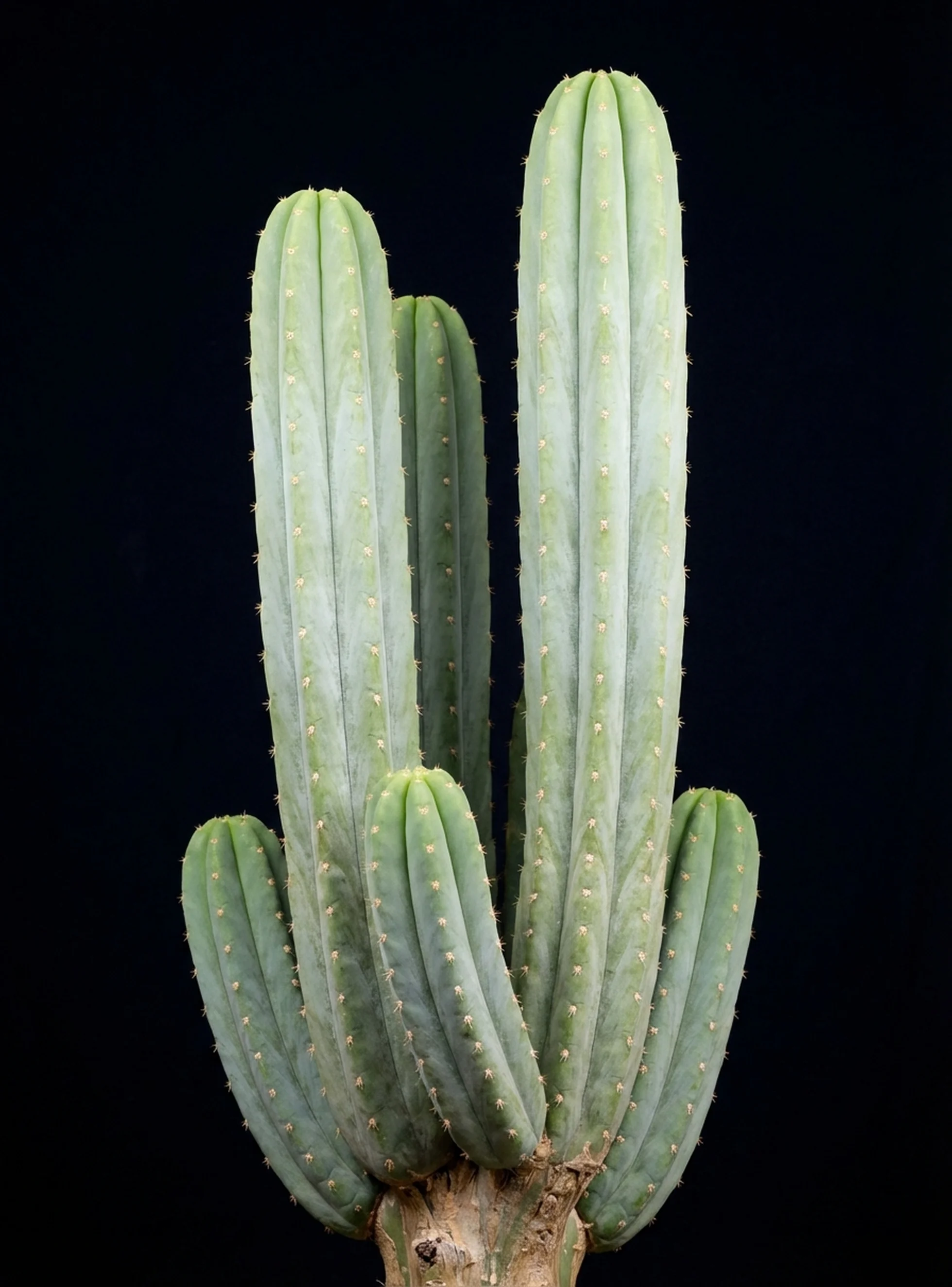

San Pedro is a towering Andean cactus containing mescaline, used in healing ceremonies for thousands of years and prized for its gentle, earth-connected psychedelic quality.
San
Pedro
San Pedro is a towering Andean cactus containing mescaline, used in healing ceremonies for thousands of years and prized for its gentle, earth-connected psychedelic quality.
Fact file
- Type
- Plant
- Botanical name
- Echinopsis pachanoi
- Other names
- huachuma, wachuma, achuma, aguacolla
- Key compounds
- Mescaline, Hordenine
- Origin
- Andean highlands
- Duration
- 8-14 hours
- Strength
- Intense
- Legal status
- Illegal in 15 of 33 listed jurisdictions, and varies elsewhere
What is San Pedro?
Somewhere in the high valleys of Peru, a columnar cactus has been growing for longer than any living tradition can remember. Its green flesh holds mescaline, and mescaline holds a door. Not the sudden door of a flash or a jolt, but a slow opening, the kind that takes ten or twelve hours to walk through, that lets you look around while you are crossing the threshold.
San Pedro is the oldest continuously used psychedelic plant on Earth. Archaeological samples from a cave in the Peruvian Andes date its human relationship to roughly 8600 BCE, which means people have been preparing and drinking this cactus for over ten thousand years. That fact alone should give pause. A substance does not persist across that span of time, through empires and colonial suppression and the rise of modern pharmacology, unless it offers something that resists easy replacement.
What it offers, by most accounts, is a particular quality of altered awareness: vivid but grounded, emotionally deep but physically active, long enough to feel like a genuine passage rather than a glimpse. The experience tends to preserve a sense of self even as perception changes, which may explain why traditional Andean healers have used it not to dissolve identity but to sharpen vision. The cactus does not demand surrender. It seems, instead, to ask for attention.
Identity
Scientific name: Echinopsis pachanoi (formerly Trichocereus pachanoi). The reclassification from Trichocereus to Echinopsis occurred in 2012 based on phylogenetic analysis, though both names remain in circulation.
Common names: San Pedro, huachuma (or wachuma), achuma, aguacolla. The Spanish name "San Pedro" (Saint Peter) was applied during or after colonial contact, reflecting the idea that just as Saint Peter holds the keys to heaven, the cactus grants access to spiritual realms.
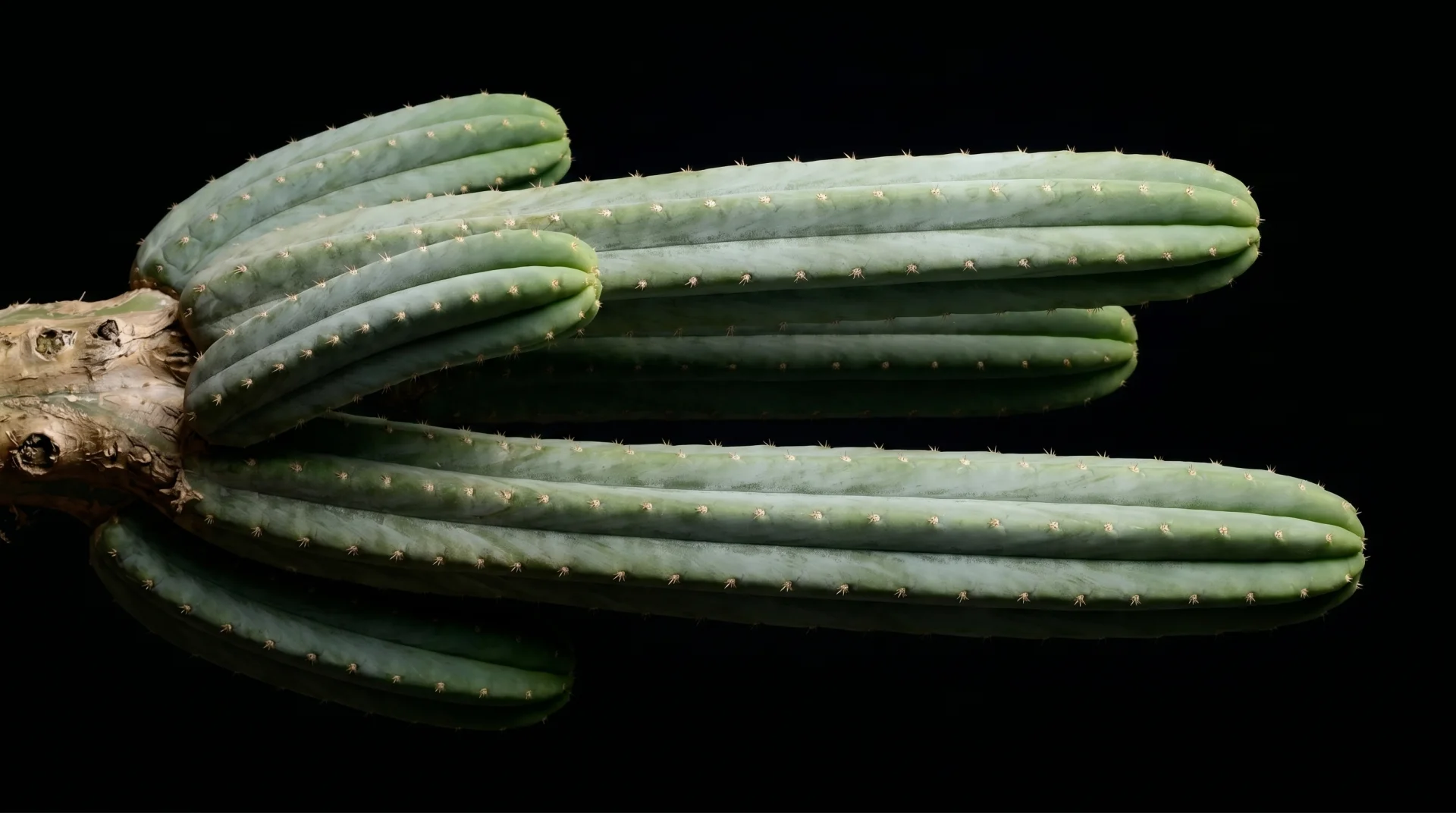
Botanical classification: Family Cactaceae, subfamily Cactoideae. A fast-growing columnar cactus native to the Andes of Ecuador and Peru, found at elevations between 2,000 and 3,000 meters. Typically 3 to 6 meters tall with 6 to 8 prominent ribs, small yellow spines, and distinctive white nocturnal flowers up to 20 centimeters across.
Primary active compound: Mescaline (3,4,5-trimethoxyphenethylamine), a substituted phenethylamine. San Pedro also contains secondary alkaloids including hordenine, tyramine, 3-methoxytyramine, and anhalonidine.
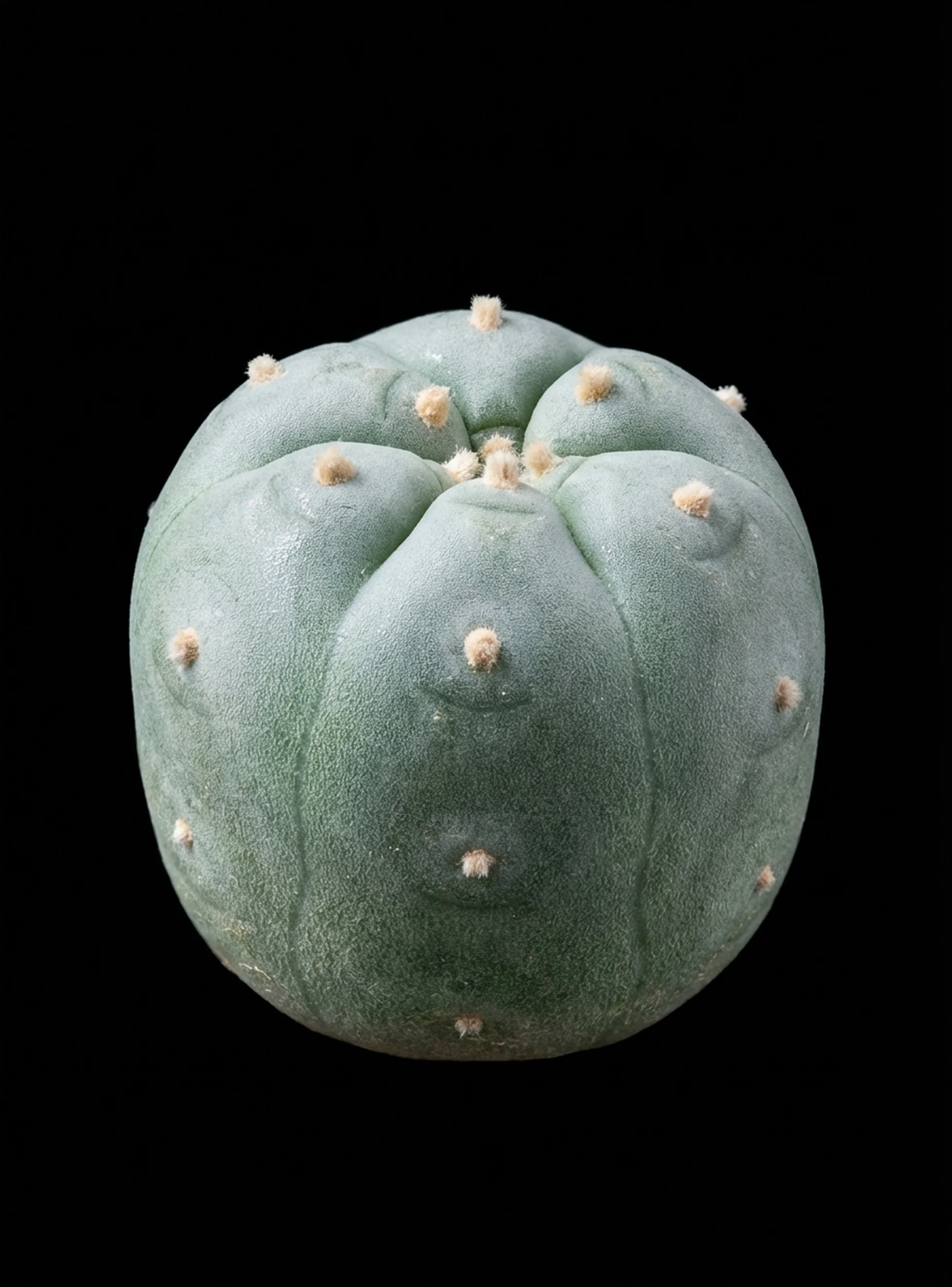
Taxonomic position among psychoactives: San Pedro belongs to the phenethylamine class of psychedelics, alongside peyote (Lophophora williamsii) and synthetic mescaline. It is pharmacologically distinct from the tryptamine psychedelics (psilocybin, DMT) and the ergoline psychedelics (LSD), though all share primary activity at the serotonin 5-HT2A receptor. Among mescaline-bearing cacti, San Pedro is the most widely cultivated and the most commonly encountered outside laboratory settings.
Strength and duration
Intensity profile
Variability: Moderate (varies with dose and setting)
Duration
Aftereffects: Following the descent phase and return to baseline perceptual and cognitive function, an afterglow phase persists 24-72 hours characterized by elevated mood (reported in majority of users), enhanced emotional sensitivity (heightened responsiveness to music, beauty, interpersonal dynamics), lingering mild perceptual changes (colors remain somewhat saturated, subtle visual enhancement in peripheral vision), and continued integration of insights and meaning from the experience[27][55]. Most users r
Chemistry
Mescaline is a substituted phenethylamine, structurally simple compared to the tryptamines and ergolines. Its molecular architecture, three methoxy groups attached to a phenethylamine backbone, makes it one of the most straightforward psychedelic compounds known. Alexander Shulgin, who catalogued its effects and those of dozens of analogues in PiHKAL, considered mescaline the "meter" of psychedelic pharmacology: the first psychedelic alkaloid systematically investigated by Western science and the reference compound against which structural modifications were measured.
Primary mechanism of action
Mescaline produces its psychedelic effects through partial agonism at the serotonin 5-HT2A receptor, located prominently in the prefrontal cortex and visual cortex. Its binding affinity at this receptor is relatively modest (EC50 of approximately 10,000 nanomolar), substantially weaker than LSD or psilocin. This lower affinity is one reason mescaline requires doses in the hundreds of milligrams where LSD operates in micrograms, but the subjective intensity at comparable receptor occupancy levels is similar across all three compounds.
Secondary receptor activity
Mescaline also binds to 5-HT1A and 5-HT2C serotonin receptors, adrenergic alpha-2A receptors, dopamine receptors, and trace amine-associated receptor 1 (TAAR1). The adrenergic activity accounts for the sympathomimetic effects observed during the experience: elevated heart rate, increased blood pressure, and mild stimulation. Unlike some other psychoactive substances, mescaline does not significantly interact with monoamine transporters, meaning it does not directly increase circulating serotonin or dopamine.
Metabolism and duration
Mescaline is hydrophilic, which means it crosses the blood-brain barrier slowly. This poor permeability explains both the delayed onset (30 to 90 minutes) and the requirement for high doses. Once absorbed, approximately half undergoes first-pass liver metabolism to an inactive metabolite (TMPAA), yielding an oral bioavailability of about 53%. The plasma half-life is approximately 3.5 hours, comparable to LSD, yet the subjective experience lasts longer (10 to 14 hours versus 8 to 10). This extended duration reflects a slower onset and a broader peak plateau rather than slower elimination.
Alkaloid variation
Mescaline concentration in San Pedro varies widely, from 0.33% to 2.375% by dry weight, with the highest concentrations in the green photosynthetic tissue (chlorenchyma) just beneath the outer skin. The secondary alkaloids, including hordenine, tyramine, and anhalonidine, are present in trace amounts. Their individual psychoactive contributions remain poorly characterized, though some researchers have proposed an "entourage effect" in which the full alkaloid profile of the plant produces subtly different qualities than isolated mescaline alone.
Mescaline
3,4,5-trimethoxyphenethylamine
Hordenine
N,N-dimethyltyramine

Methods of Encounter
People meet San Pedro through two broadly different traditions, and the character of the encounter depends substantially on which path is taken.
Traditional preparation
In Andean healing practice, the cactus is prepared by removing spines and slicing the green outer flesh, which is then boiled for hours into a concentrated, intensely bitter decoction sometimes called cimora. This preparation is often combined with tobacco and other plants. Notably, ethnobotanical analysis has found that traditional doses typically contain sub-psychoactive amounts of mescaline (34 to 159 milligrams of total alkaloids), producing diagnostic and spiritual effects for the healer rather than the vivid hallucinations associated with higher doses.
Contemporary preparations
Outside traditional contexts, San Pedro is encountered as dried cactus powder (sometimes in capsules), as a home-prepared decoction, or occasionally as extracted mescaline. Contemporary ceremonial use, particularly in retreat settings across Peru, Ecuador, the Netherlands, and Costa Rica, typically involves higher doses designed to produce pronounced psychedelic effects including visual phenomena and ego dissolution.
Route and timing
The vast majority of San Pedro consumption (approximately 97% in survey data) occurs through oral ingestion. Effects typically begin 30 to 90 minutes after drinking, build over 1 to 4 hours, reach peak intensity during a plateau that may last 4 to 8 hours, then gradually decline over another 2 to 4 hours. Total duration ranges from 10 to 14 hours. This extended timeline distinguishes San Pedro from psilocybin (4 to 6 hours) and is comparable to or slightly longer than LSD (8 to 10 hours).
One quality frequently noted by ceremony facilitators is that San Pedro, unlike some other psychedelics, tends to permit and even encourage physical movement during the experience. Walking, dancing, and social interaction remain possible through the peak, a characteristic attributed to mescaline's mild stimulant properties.
Origin & History
The oldest direct archaeological evidence of mescaline use on Earth comes from a cave in Peru. Samples recovered from Cueva del Guitarrero (Guitar-player's Cave) in the Andes have been dated to approximately 8600 BCE, placing the human relationship with San Pedro at over ten thousand years. This predates the earliest evidence of peyote use in North America by more than five thousand years.
The relationship deepened across millennia. By the time of the Chavin culture (roughly 1200 to 500 BCE), San Pedro had become embedded in organized religious architecture. A stone carving in the circular plaza at Chavin de Huantar depicts a human figure holding a San Pedro cactus, and recent chemical analysis of bone inhalers excavated from sealed underground galleries at the same site confirmed the presence of psychoactive plant materials. The cactus appears again in the ceramic art of the Moche (100 to 750 CE) and the Nazca, woven into depictions of healers and ritual vessels.
Across these cultures, San Pedro served a function that deserves careful attention: it was primarily a diagnostic tool. The healer, not the patient, ingested the cactus. The purpose was to develop vista, a kind of clarified perception that allowed the practitioner to identify the nature and origin of illness. This is a relationship of reciprocity: the plant offers vision, and the healer receives responsibility.
When Spanish colonizers arrived, they recognized San Pedro as a threat to their theological project. Ecclesiastical sources described indigenous practitioners who "would drink the beverage, and after its ingestion, they would lose their judgment and become senseless, having visions in which only the image of the devil appeared." Suppression followed, but it was never complete. The cactus survived through an act of cultural accommodation: it was given the name San Pedro, Saint Peter, keeper of the keys to heaven, allowing it to persist under a Christian guise while retaining its function within indigenous worldviews.
Mescaline entered European science through a parallel path. In 1897, German chemist Arthur Heffter isolated the compound from peyote and named it. Ernst Spath completed the first synthesis in 1919. By the mid-twentieth century, mescaline had become a tool of psychiatric research, a model for understanding psychosis, and eventually a subject of the international drug control treaties that classified it as a prohibited substance in 1971.
Yet in the Andes, the older relationship continued. Curanderos in northern Peru, Yachakkuna healers in Ecuador, and Paqos (Andean priests) maintained the practice across generations. In 2022, the Peruvian Ministry of Culture formally recognized traditional San Pedro use as cultural heritage, an acknowledgment that arrived ten thousand years after the practice began.

Effects
A San Pedro experience unfolds slowly. Where psilocybin arrives like weather and LSD like a switch, mescaline builds like a tide, gradual enough that the transition into altered awareness can feel almost conversational. The full arc takes 10 to 14 hours, and within that span, perception, emotion, cognition, and body all shift in characteristic ways.
Perceptual (7/10)
The visual dimension is vivid and sustained. Colors intensify dramatically, often described as more saturated and alive than anything in ordinary experience. With eyes closed, geometric patterns emerge: fractals, lattices, and tessellating designs that tend toward organic forms (ferns, flowing water, serpentine shapes) rather than the sharp-edged geometry sometimes associated with LSD. With eyes open, the existing visual scene transforms rather than being replaced. Surfaces may breathe or shimmer. Synesthesia, the blending of sensory channels, is frequently reported: sounds may appear as colors or textures, and colors may seem to carry emotional weight.
Auditory perception sharpens. Music becomes resonant in ways that can feel revelatory, with increased awareness of tonal qualities, spatial depth, and emotional nuance. Touch sensitivity heightens as well: textures become more interesting, temperature more noticeable, and waves of warmth or pleasant vibration may move through the body during peak moments.
Emotional (7/10)
This is where San Pedro may distinguish itself most clearly. The emotional dimension tends to rate notably high, and participants in formal research have described experiences of deep empathy, spiritual connection, and cathartic emotional release. Feelings of unity with natural environments, profound peace, and a sense of meaning are common reports. Some people experience unexpected grief, the surfacing of old losses or unresolved emotions, sometimes expressed as weeping that feels cleansing rather than distressing.
Challenging emotional states can also emerge: anxiety, confusion, or waves of fear. In formal research on ceremonial use, however, challenging effects were rated as "very slight" on average across participants, suggesting that supported settings substantially buffer the emotional difficulty. The emotional tone characteristically arrives in waves rather than a steady state, with periods of intensity alternating with calm.
Cognitive (6/10)
Thought processes become non-linear. The mind may make unusual connections, hold contradictions without discomfort, or explore ideas from perspectives that feel genuinely novel. Time perception distorts, sometimes dramatically: hours may compress into what feels like minutes, or a single moment may seem to expand. Ego dissolution, a softening of the boundaries of individual identity, occurs at moderate levels. Formal research found that ceremonial San Pedro use produced moderate (not extreme) scores on ego-dissolution measures, suggesting that the experience typically preserves enough self-awareness for reflection even during its most intense phases. Memory access may increase, with long-forgotten experiences surfacing with emotional clarity.
Somatic (6/10)
The body participates fully. Heart rate and blood pressure increase through adrenergic activation, typically rising to 100 to 120 beats per minute during peak effects. Nausea is nearly universal (reported in 70 to 90% of experiences) and usually arrives 30 to 90 minutes after ingestion, resolving within an hour or two. In traditional Andean practice, this purging is understood as spiritual cleansing. Pupils dilate. Core temperature rises slightly. Beyond these physiological markers, many people report pleasant bodily sensations: warmth, gentle energy, a sense of physical lightness. Motor coordination remains largely intact at typical levels, and the mescaline experience, unlike many other psychedelics, tends to be compatible with walking, movement, and social engagement.
The overall arc moves through distinct phases: anticipation and mild nausea during onset, intensifying perception and emotion through the come-up, a broad plateau of peak effects lasting several hours (during which intensity may wax and wane in characteristic waves), a gradual mellowing, and finally an afterglow of elevated mood and subtle perceptual enhancement that can persist 24 to 72 hours.
A note before reading
Each experience is different. What you may notice depends on dose, setting, and the body and mind you bring to it.
What people often notice
Emotional spectrum
Visual
Imagery can become vivid and immersive, often with rich geometry, color depth, and scenes that feel layered onto the room.
Cognitive
Loose associations may appear, insights surface sideways, and familiar ideas can rearrange into fresh shapes.
Risks & Limits
San Pedro is not acutely toxic in the way that common fears about psychedelics might suggest. Documented fatalities from mescaline alone are essentially absent from the medical literature, and only 31 single-substance mescaline exposures were reported to California Poison Control over an 11-year period. But low lethality is not the same as low risk, and the compound deserves honest accounting.
Cardiovascular effects
Mescaline produces dose-dependent increases in heart rate and blood pressure through adrenergic receptor activation. During peak effects, heart rate may rise to 100 to 120 beats per minute, with both systolic and diastolic blood pressure increasing. Core body temperature also rises. These changes are generally tolerable in healthy individuals but present genuine concern for people with cardiovascular disease, arrhythmia history, hypertension, or those taking cardiac medications.
Gastrointestinal distress
Nausea affects 70 to 90% of people who ingest San Pedro, with a substantial proportion experiencing vomiting. The nausea typically peaks 30 to 90 minutes after ingestion and resolves within one to three hours. Severe vomiting can lead to dehydration if fluids are not replaced. San Pedro's nausea profile is notably more intense than peyote at comparable alkaloid levels, for reasons that remain pharmacologically unclear.
Psychological risks
Anxiety and panic can emerge during the experience, particularly in unsupported settings or in people with pre-existing anxiety disorders. More rarely, mescaline can trigger persistent psychotic symptoms in individuals with a personal or family history of schizophrenia, bipolar disorder, or psychotic episodes. Meta-analytic evidence across psychedelics found that 3.8% of susceptible individuals in uncontrolled trials developed long-lasting psychotic symptoms. Depression or suicidal ideation may also surface, particularly in people processing difficult psychological material, and the heightened emotional sensitivity that persists for days afterward can amplify vulnerability.
Hallucinogen Persisting Perception Disorder (HPPD), involving persistent visual disturbances after the substance has cleared, is rare and appears more commonly associated with LSD than with mescaline.
Drug interactions
The highest-risk combination is mescaline with monoamine oxidase inhibitors (MAOIs), which can produce serotonin syndrome, a potentially life-threatening condition involving hyperthermia, muscle rigidity, and autonomic instability. Combinations with SSRIs or SNRIs may diminish psychedelic effects or create additive serotonergic activity. Stimulants (amphetamines, cocaine) compound the cardiovascular burden. Alcohol is unpredictable and increases nausea.
Populations requiring particular caution
People with cardiovascular disease, psychiatric conditions involving psychosis, severe liver or kidney impairment, or those who are pregnant should approach San Pedro with serious caution or avoid it entirely. The 10-to-14-hour duration means that any adverse reaction will be sustained, making adequate preparation, a safe environment, and the presence of a trusted, sober companion not luxuries but practical necessities.

Integration
A San Pedro experience does not end when the effects fade. The 10 to 14 hours of altered awareness often surface emotional material, perceptual shifts, and insights that require time and attention to become meaningful. Integration is the practice of receiving what was offered and finding where it belongs in ordinary life.
The first 24 to 72 hours after an experience tend to carry an afterglow: elevated mood, heightened emotional sensitivity, and a lingering sense of connection. This window can feel like a gift, but it is also a period of vulnerability. Music may move you to tears. Interpersonal dynamics may feel unusually vivid. The temptation is to make large decisions or declare transformations. Patience is worth more than certainty here.
Research on classical psychedelics consistently demonstrates that structured integration, meaning-making through conversation, journaling, or therapeutic support, substantially improves outcomes compared to the experience alone. While specific mescaline integration research remains limited, the principle holds: the experience provides the raw material, and integration is the work of shaping it.
Practices that people have found useful include writing about the experience within the first day or two, while sensory and emotional memory remains vivid. Sharing with others who understand the territory, whether a facilitator, a therapist, or a peer group, can help translate private experience into language. Spending time in natural settings, a common instinct after San Pedro, may help sustain the sense of connection that many people describe during the experience itself.
The integration timeline extends beyond the immediate days. Insights often continue to clarify over two to four weeks, sometimes arriving as subtle shifts in perspective or behavior rather than dramatic revelations. Some people find that creative expression (art, music, writing) helps metabolize aspects of the experience that resist verbal articulation.
Not every experience resolves neatly. Difficult material may surface that benefits from professional support. If confusion, distress, or depersonalization persists beyond the first week, working with a therapist experienced in non-ordinary states of consciousness is a reasonable step. Integration is not about having the "right" experience. It is about being willing to stay with what actually happened, however unexpected, and letting it teach at its own pace.
Ethics & Ecology
San Pedro exists in a fortunate ecological position. The IUCN classifies Echinopsis pachanoi as Least Concern, and the species maintains stable populations across its native Andean range. Unlike peyote, which grows slowly and faces genuine overharvesting pressure, San Pedro is a fast-growing cactus that propagates readily from cuttings, and widespread ornamental cultivation around the world has created genetic backup populations far from its original habitat.
This does not mean questions of responsibility are settled. The expansion of San Pedro ceremonies into Western retreat culture has created a market in which economic value is captured overwhelmingly by non-indigenous facilitators and business owners rather than by the Andean communities who have maintained the practice for millennia. A 2026 survey identified over 976 advertised retreat centers globally, with daily costs ranging from $200 to $550. Indigenous curanderos may receive compensation for their direct work, but institutional frameworks for equitable benefit-sharing remain underdeveloped.
Cultural appropriation is a live question. There is a difference between receiving a practice with respect and extracting it as a commodity. Traditional San Pedro use in the Andes is primarily a healing practice conducted by trained specialists within specific cosmological frameworks. When that practice is transplanted into a Western "consciousness exploration" context, often with higher doses and different intentions, something is preserved and something is changed. Acknowledging both sides of that equation is more honest than pretending the transfer is seamless.
The 2022 declaration by the Peruvian Ministry of Culture recognizing traditional San Pedro use as cultural heritage represents formal acknowledgment of the practice's significance, but recognition is not the same as protection. Those who engage with San Pedro outside its indigenous context might consider what reciprocity looks like: supporting indigenous practitioners and communities, learning about the cultural framework before borrowing the practice, and resisting the impulse to treat a ten-thousand-year relationship as a consumer product.
Misconceptions
San Pedro is illegal everywhere.
The legal landscape is more complex than blanket prohibition. The plant is fully legal in Peru, Ecuador, Bolivia, Portugal, the Netherlands, Czech Republic, and Ukraine. In the United States, Canada, Germany, Italy, and many other countries, the cactus is legal to grow for ornamental purposes while extracting or consuming mescaline is prohibited. Only a few jurisdictions (Denmark, Switzerland, Norway) ban even the plant itself.
San Pedro is highly addictive.
Mescaline demonstrates minimal dependence potential. No physical dependence develops with any pattern of use, and no withdrawal symptoms occur upon cessation. Only 9% of lifetime users report craving, and fewer than 1% report legal or psychological problems related to use. For comparison, dependence rates are approximately 15% for alcohol, 32% for nicotine, and 23% for opioids. Most mescaline users (60%) consume it less than once per year.
San Pedro produces the same experience as peyote.
While both contain mescaline, the experiences differ. Traditional San Pedro preparation yields sub-psychoactive alkaloid amounts (34 to 159 milligrams), serving a diagnostic function for the healer, while peyote buttons are typically consumed for their full psychoactive effect. Users who have experienced both often describe San Pedro as producing a more physically comfortable experience with less obligatory nausea than peyote.
San Pedro is just spirituality, with no real pharmacological basis.
San Pedro's effects are grounded in well-characterized pharmacology. Mescaline acts as a partial agonist at serotonin 5-HT2A receptors, with documented binding at multiple secondary receptor systems. Neuroimaging studies confirm measurable brain activation patterns during the experience. The consistency and reliability of effects across users reflect a genuine neurochemical substrate, not suggestion or expectation alone.
Peruvian Torch is ten times stronger than San Pedro.
Published phytochemical data does not support this claim. Mescaline content in San Pedro ranges from 0.33% to 2.375% by dry weight, and published analyses of Peruvian Torch show comparable variability. The only way to arrive at a tenfold difference is to compare the single highest Peruvian Torch analysis against the single lowest San Pedro analysis, which is methodologically unsound. Realistic estimates suggest Peruvian Torch may be roughly two to two-and-a-half times more potent, and even that difference likely reflects specimen variation more than species difference.
FAQ

Reflection
Ten thousand years is a long time to keep returning to the same plant. Long enough to raise a question worth sitting with: what is it about this particular cactus, growing in these particular mountains, that has sustained human attention across such an improbable span?
Perhaps it is the pace. San Pedro does not rush. It takes its time arriving, unfolds gradually, lingers. In a world increasingly organized around compression and speed, the experience of spending ten or twelve hours inside a single, slow opening may offer something that cannot be abbreviated.
Or perhaps it is simpler than that. The Andean healers who first prepared this cactus were not seeking transcendence. They were seeking clarity. The ability to see what was actually there, beneath the surface of symptoms and stories. That desire has not changed, even if the settings have.
What would it mean to approach a plant that has been a partner to human consciousness for a hundred centuries, not as a product to consume, but as a relationship to honor? The cactus does not answer that question. It simply keeps growing, as it has for longer than any of us can remember, waiting for someone to ask.
Sources
Primary research sourced from peer-reviewed pharmacological, ethnobotanical, and clinical literature. See the full research profile for detailed citations and evidence tags.
For how we evaluate sources and structure our claims, see the methodology.
States you may encounter
Altered states of consciousness commonly reported with this substance.