
Synesthesia
When the senses forget their borders
The blending of senses, such as hearing colors or seeing sounds. Boundaries between sensory channels become fluid, revealing unexpected correspondences.
Typical intensity
What is Synesthesia?
Psychedelic synesthesia reveals something about perception that ordinary consciousness hides: the senses are less separate than they appear. Under normal conditions, the brain maintains clear boundaries between visual, auditory, tactile, and other sensory channels. When those boundaries soften, the result is a fluid, cross-modal experience where sound has color, touch has shape, and music becomes visible.

Effects
The most commonly reported form is hearing colors or seeing sounds, where music produces vivid visual accompaniment. But synesthesia can also involve tasting emotions, feeling textures in response to visual patterns, or perceiving temperature changes linked to sounds.
The experience tends to feel natural rather than disorienting. People often describe it as an enhancement rather than a distortion, as if the senses were always communicating but the conversation was previously inaudible.
Intensity correlates with dose. Mild synesthesia may manifest as music feeling more "colorful." Full synesthesia can create immersive multisensory landscapes where every input resonates across all channels simultaneously.

Reflection
What might your senses be telling each other that you normally cannot hear?
Related medicines
Substances commonly associated with synesthesia.
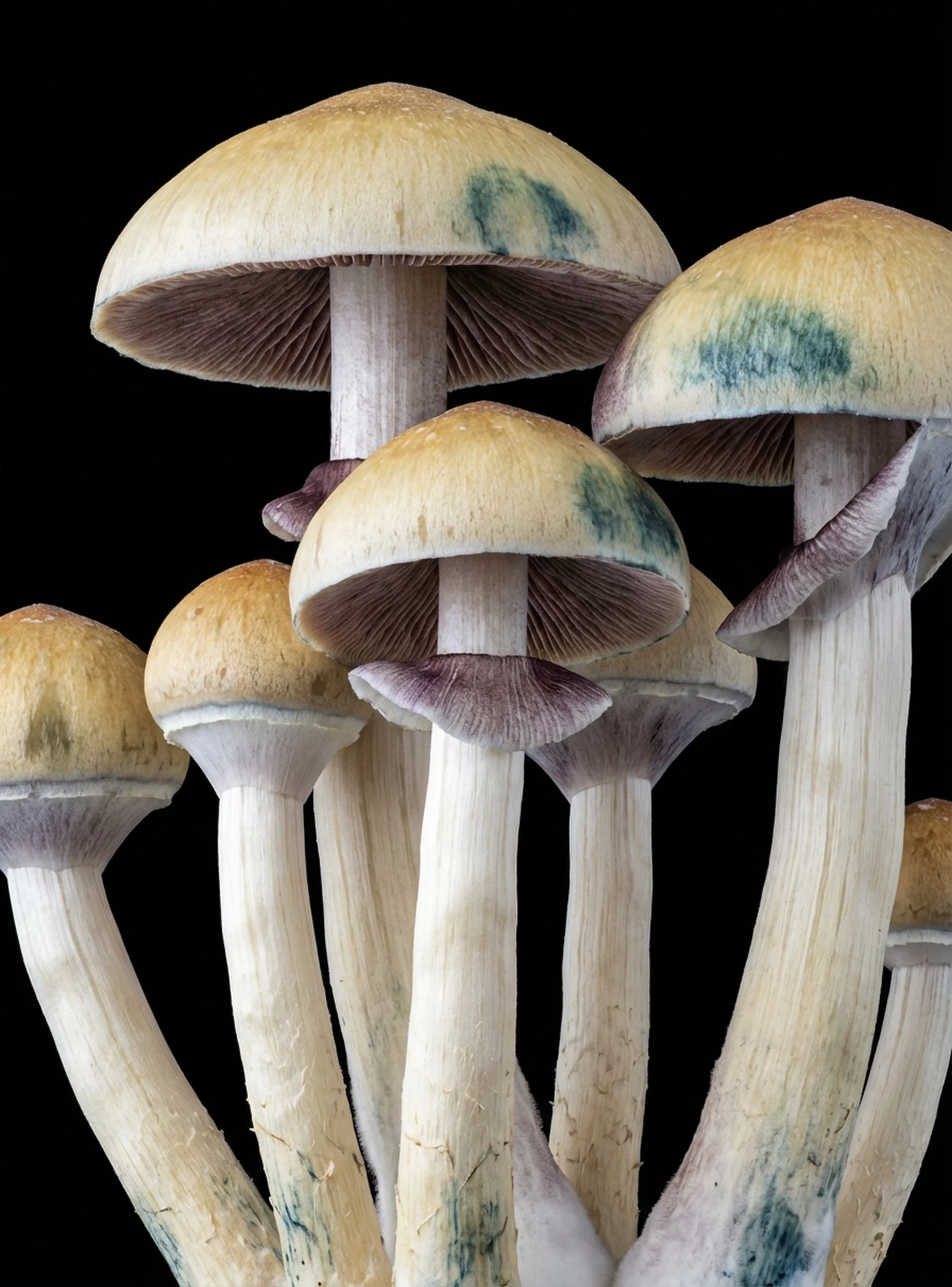
Psilocybin Mushrooms
Psilocybe cubensis (and 200+ species)
Hallucinogenic · 4-6 hours · Moderate

Peyote
Lophophora williamsii
Hallucinogenic · 10-12 hours · Intense

Ayahuasca
Banisteriopsis caapi + Psychotria viridis
Hallucinogenic · 4-8 hours · Intense

2C-B
4-Bromo-2,5-dimethoxyphenethylamine
Psychedelic · 4-6 hours · Moderate