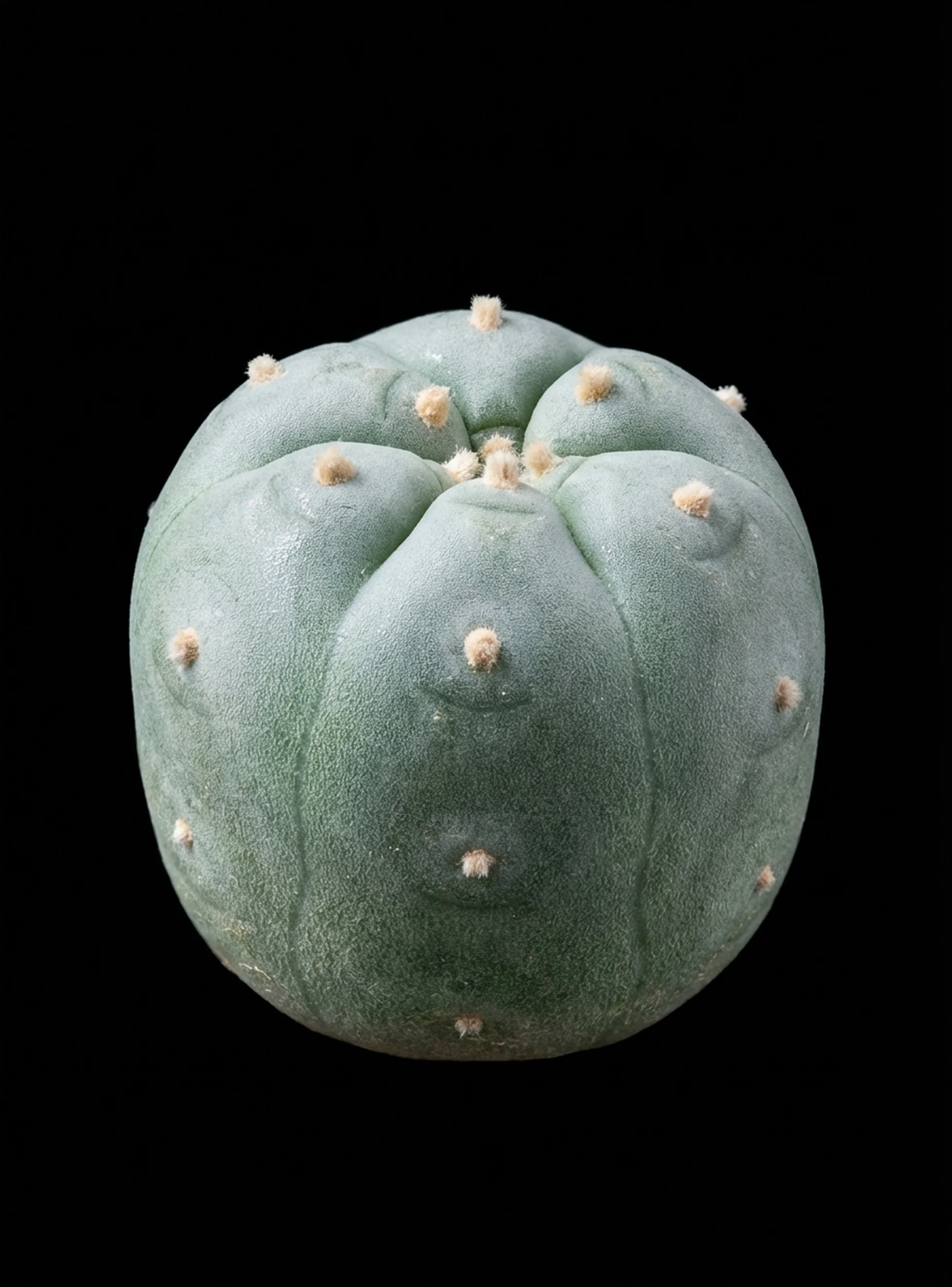
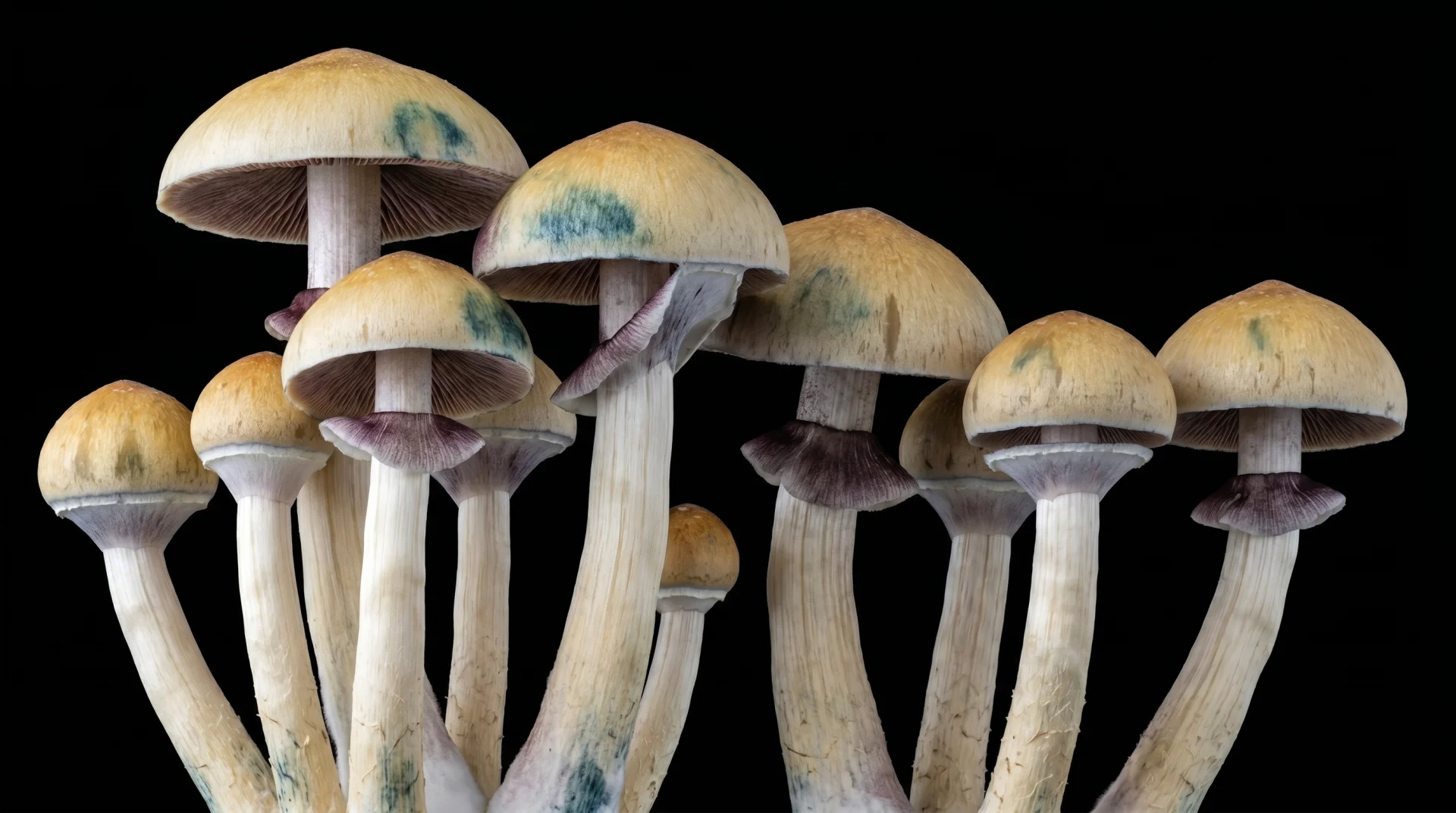
Psilocybe cubensis is a family of fungi containing psilocybin, used in Mesoamerican ceremony for millennia and now at the center of a renaissance in psychiatric research.
Psilocybe
Cubensis
Psilocybe cubensis is a family of fungi containing psilocybin, used in Mesoamerican ceremony for millennia and now at the center of a renaissance in psychiatric research.
Fact file
- Type
- Fungus
- Botanical name
- Psilocybe cubensis (and 200+ species)
- Other names
- magic mushrooms, shrooms, teonanácatl, niños santos
- Key compounds
- Psilocybin, Psilocin, Baeocystin
- Origin
- Mesoamerica
- Duration
- 4-6 hours
- Strength
- Moderate
- Legal status
- Illegal in 23 of 37 listed jurisdictions, and varies elsewhere
What is Psilocybin Mushrooms?
In the cloud forests of Oaxaca, a Mazatec healer arranges small brown mushrooms on a cloth and calls them niños santos, holy children. These unassuming fungi contain psilocybin, a molecule so similar to serotonin that the brain accepts it as a kind of key, one that opens doors ordinarily kept closed. The experience that follows tends to be intensely visual, deeply emotional, and strangely intimate, as though the mind were meeting itself without its usual defenses. Three thousand years of ceremony. Sixty years of clinical research. And still, the mushroom resists easy summary.
The substance
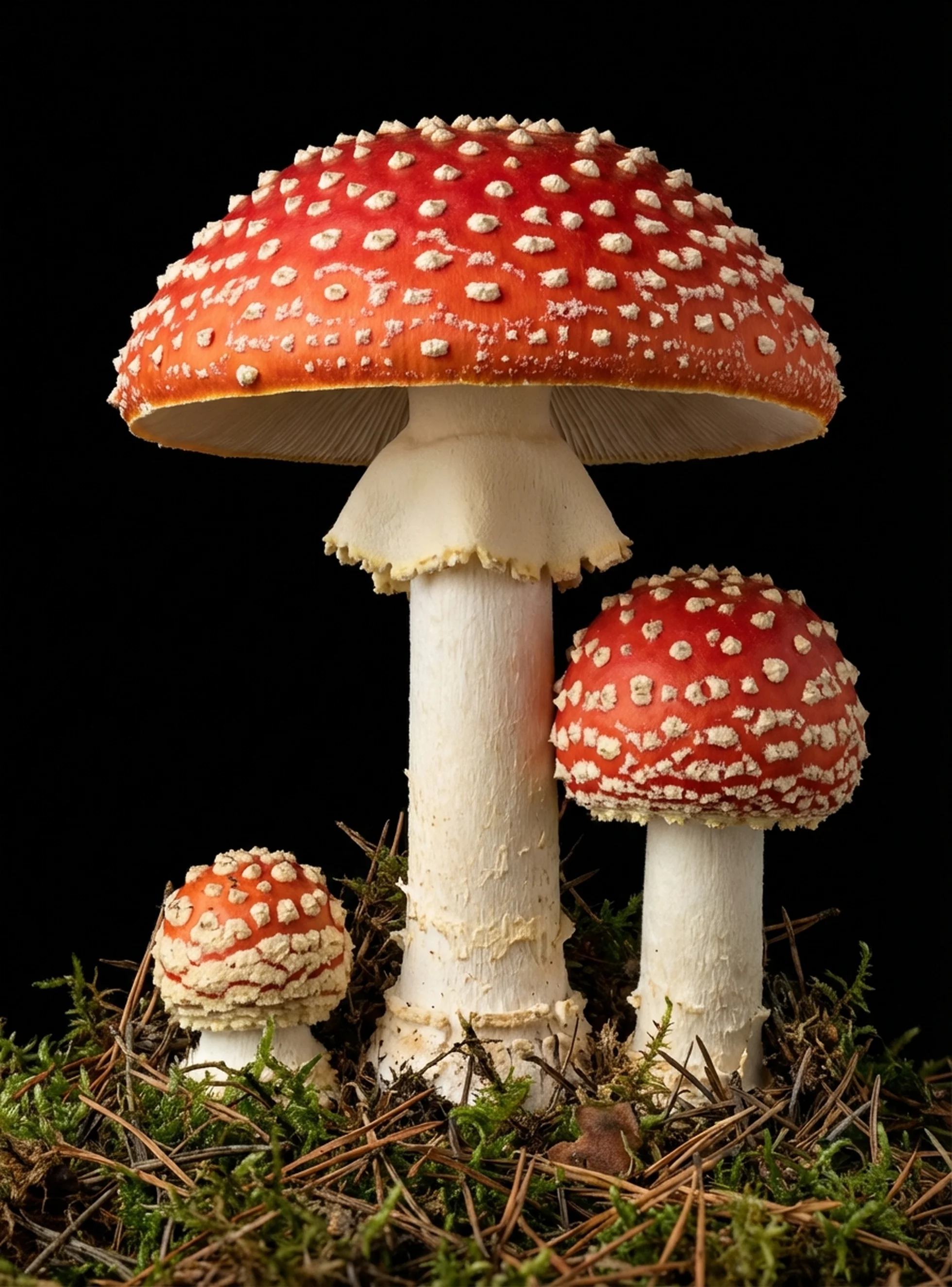
Psilocybin mushrooms do not announce themselves. Most species are small, pale to golden-brown, with thin stems and caps that bruise blue when handled, a visible sign of the psilocin oxidizing inside. Psilocybe cubensis, the most widely recognized species, grows on cattle dung in tropical and subtropical regions, an origin that belies the depth of what it contains.
But cubensis is only one member of a large family. Over 200 species across more than a dozen genera produce psilocybin: Psilocybe, Panaeolus, Gymnopilus, Pluteus, Copelandia, and others. They grow on every inhabited continent, from the Pacific Northwest to Southeast Asia, from the highlands of Mexico to the grasslands of Australia. The highest concentration of species (53) is found in Mexico, where the longest unbroken tradition of ceremonial use persists.
The Aztec name teonanácatl, "flesh of the gods," gives a sense of how these fungi were understood: not as recreational substances but as sacred intermediaries. The Mazatec name niños santos, "holy children," conveys a similar reverence, quieter and more familial.
Other names include magic mushrooms, shrooms, hongos, and caps. Each name carries its own cultural weight, from the clinical to the colloquial to the sacred.
Strength and duration
Intensity profile
Variability: Moderate (varies with dose and setting)
Duration
Aftereffects: An afterglow of elevated mood and clarity may last 1-3 days. Neuroplasticity window extends roughly 3 weeks, during which integration work may be most effective.
Chemistry and mechanism
The chemistry of psilocybin begins with a trick of molecular resemblance. Psilocybin itself is a prodrug, pharmacologically inert. When you eat a mushroom, enzymes in the gut and liver strip a phosphate group from the molecule, converting it into psilocin (4-hydroxy-DMT). Psilocin is what reaches the brain, and it does so because its structure is nearly identical to serotonin, the neurotransmitter that regulates mood, perception, and the sense of self.
The receptor
Psilocin binds primarily to serotonin 5-HT2A receptors, the same targets activated by LSD and DMT. Neuroimaging studies using PET scans have measured this directly: at therapeutic doses, psilocybin occupies 43% to 72% of cortical 5-HT2A receptors, and the intensity of the experience tracks closely with how many receptors are engaged.
But activating a receptor is just the beginning. What matters is what happens downstream.
The network shift
The brain operates through networks of coordinated regions. One of the most important is the default mode network (DMN), a set of structures active during self-reflection, mind-wandering, and the construction of personal narrative. It is, in a sense, the neural substrate of the voice that says "I."
Psilocin disrupts this network. Activity within the DMN decreases, and the usual boundaries between brain regions become more permeable. Systems that normally operate in isolation, visual processing, emotional memory, abstract thought, begin to cross-talk in ways they ordinarily do not. The result is a brain that is temporarily less organized but more interconnected, a state researchers describe as increased entropy.
This is where the strange logic of the experience originates: colors becoming emotions, memories becoming scenes, the boundaries of self becoming negotiable.
After the molecule clears
Psilocin has a half-life of roughly 1.5 to 4 hours. By six hours, most of it is gone. But the effects do not end when the molecule does. Neuroimaging conducted weeks after a single dose reveals persistent changes in brain connectivity, particularly reduced coupling between the hippocampus and the default mode network. This window of altered plasticity, lasting roughly three weeks, may explain why a single session can produce changes that persist long after the chemistry has resolved.
Variability
Individual responses vary enormously. Differences in liver enzyme activity (particularly CYP2D6 and CYP3A4) mean that the same dose can produce plasma psilocin levels ranging from 2.3 to 19.3 micrograms per liter across different people. Food in the stomach delays onset. Genetics, mood, expectations, and environment all modulate the subjective experience. This is why psilocybin research emphasizes preparation, support, and individualized approaches rather than standardized protocols.
Psilocybin
4-phosphoryloxy-N,N-dimethyltryptamine
Prodrug, converted to psilocin by alkaline phosphatase enzymes
Psilocin
4-hydroxy-N,N-dimethyltryptamine
Active metabolite, 5-HT2A agonist responsible for psychedelic effects
Baeocystin
4-phosphoryloxy-N-methyltryptamine
Minor tryptamine alkaloid, minimal contribution to overall experience
How people encounter it
Psilocybin mushrooms have been encountered in radically different contexts across time and geography. The setting shapes the experience as much as the molecule.
Traditional ceremony
In the mountains of Oaxaca, the Mazatec velada remains the longest-surviving ceremonial tradition. These nighttime healing ceremonies are led by a sabia or chjota chjine (specialist healer), who consumes the mushrooms alongside the person seeking help. The ceremony unfolds in darkness, guided by chanting and prayer, and may last many hours. Mushrooms were used for divination, healing, and answering questions that could not be resolved through ordinary means.
The Aztec and other Mesoamerican civilizations incorporated mushrooms into religious rituals conducted by priests, often involving fasting, purification, and communion with deities. These were not casual encounters. Access was regulated by spiritual authority and cultural protocol.
Clinical research
Modern clinical trials follow a structured three-phase protocol: preparation sessions (2-3 meetings to build rapport and set intentions), a dosing session (6-8 hours in a comfortable room, with eyeshades and curated music, attended by two trained facilitators), and integration sessions (multiple meetings over weeks to process insights). This framework has produced the most robust evidence for psilocybin's therapeutic potential.
Retreat and ceremonial settings
Outside the clinic, people encounter psilocybin through retreat centers (legal in Jamaica, the Netherlands, and parts of the United States), neo-shamanic ceremonies, underground therapeutic practices, and personal exploration. These contexts vary dramatically in preparation, safety, and integration support.
A note on context
Psilocybin mushrooms remain prohibited under Schedule I of the United Nations Convention on Psychotropic Substances and are illegal in most jurisdictions. Several US cities and the state of Oregon have moved toward decriminalization or regulated access, but the legal landscape is uneven and changing.
Origin and history
The relationship between humans and psilocybin mushrooms is older than written language. In Mesoamerica, where the archaeological record is richest, mushroom-shaped stone sculptures dating to approximately 1000 BCE suggest that these fungi held ritual significance long before the civilizations we can name. More speculative evidence, rock art from Tassili n'Ajjer in Algeria and sites in Spain, may push the timeline back 6,000 to 8,000 years, though interpretations remain debated.
What is not debated is the depth of the Mesoamerican tradition.
Sacred use across cultures
The Aztec called them teonanácatl, "flesh of the gods," and incorporated them into religious ceremonies for divination, healing, and communion with the divine. The Maya, Mixtec, Zapotec, and Nahua peoples each developed their own practices, evidenced through iconography in codices, ceramic figurines, and ritual objects.
Among the Mazatec of Oaxaca, mushrooms were known as niños santos, "holy children," and used in nighttime healing ceremonies called veladas. This tradition survived colonial suppression and continues today, carried by healers who learned from their elders in an unbroken lineage.
Colonial disruption
Spanish colonizers and missionaries recognized the spiritual power of mushroom ceremonies and worked to suppress them. Friar Bernardino de Sahagún documented their use while condemning them as the work of the devil. For centuries, practices were driven underground but never fully extinguished.
Western rediscovery
In 1955, ethnomycologist R. Gordon Wasson participated in a velada led by María Sabina, a Mazatec sabia. His 1957 Life magazine article, "Seeking the Magic Mushroom," introduced psilocybin to the Western world. The exposure brought intense scientific interest (Albert Hofmann isolated psilocybin in 1958) but also a flood of outsiders that disrupted Mazatec community life. Sabina later expressed regret about sharing the sacred knowledge.
The research arc
Harvard's Timothy Leary and Richard Alpert conducted psilocybin experiments in the early 1960s before their work collapsed under controversy. The Controlled Substances Act of 1970 placed psilocybin in Schedule I, effectively halting research for decades. The current renaissance began in the late 1990s at Johns Hopkins and NYU, where rigorous clinical trials have demonstrated therapeutic potential for depression, anxiety, addiction, and end-of-life distress.
In 2018 and 2019, the FDA granted Breakthrough Therapy Designation to psilocybin-assisted therapy for treatment-resistant depression and major depressive disorder, a regulatory milestone reflecting the strength of the evidence.

Effects
The psilocybin experience is not one thing. It unfolds differently each time, shaped by the person, the dose, the setting, and factors that resist measurement. What follows is a composite drawn from clinical research and phenomenological studies, not a promise of what will happen.
Emotional dimension
Emotion tends to arrive first and stay longest. Many people describe a gradual opening, as though a door inside has been unlocked that was previously sealed. Feelings of love, gratitude, and connectedness can surface with startling intensity. So can grief, shame, fear, and memories long set aside.
Emotional lability is characteristic. A person may move from quiet wonder to tears to laughter within minutes, not because the emotions are shallow but because the usual mechanisms that regulate and sequence them have temporarily relaxed. Neuroimaging confirms this: amygdala reactivity to negative stimuli decreases during the experience and may remain reduced for weeks afterward.
Challenging emotional content is not rare. In research settings, 10% to 40% of participants report moderate to severe anxiety or psychological distress during portions of the experience. In many cases, this material, when supported, contributes to therapeutic benefit rather than undermining it. The difficulty and the value are often inseparable.
Perceptual dimension
Visual changes are the most reliably reported feature. At moderate doses, colors brighten. Textures seem to breathe and shift. Surfaces develop flowing geometric patterns. Synesthesia, the blending of senses ("seeing" music, "feeling" colors), can occur.
With eyes closed, the visual field may become elaborate: geometric fractals giving way to complex three-dimensional scenes, immersive landscapes, and symbolic imagery that feels more remembered than invented. Research using the Altered States of Consciousness scale documents visual hallucination ratings reaching 70% to 76% of maximum values at higher doses.
The source of these visions is not increased visual cortex activity. Rather, the visual cortex becomes hyper-connected to regions processing emotion, memory, and self-awareness, while becoming less responsive to actual external input. The brain is, in effect, dreaming with its eyes open.
Cognitive dimension
Thinking shifts from linear to associative. Time may slow, accelerate, or lose meaning entirely. Thoughts arrive as images and metaphors rather than arguments. Many people describe moments of profound clarity, a sudden recognition of patterns in their life or relationships that had been invisible.
At higher intensities, the sense of being a separate self can soften or dissolve entirely. This "ego dissolution" is not always comfortable, but research consistently finds that its occurrence, particularly in the context of mystical-type experiences, predicts positive therapeutic outcomes weeks and months later.
Somatic dimension
The body participates. Nausea is the most common physical effect, particularly during the first hour, a result of psilocin activating serotonin receptors in the gut (where roughly 90% of the body's serotonin is produced). Some people experience tremors, muscle tension, sweating, or temperature fluctuations.
These physical effects are generally time-limited and resolve within the first two hours. Psilocybin's physiological toxicity is remarkably low: the estimated lethal dose is roughly 1,000 times the psychoactive dose, making it one of the safest psychoactive substances in terms of acute physical risk.
A note before reading
Each experience is different. What you may notice depends on dose, setting, and the body and mind you bring to it.
What people often notice
Emotional spectrum
Visual
Patterns and gentle distortions may surface, surfaces breathing slightly, edges softening, geometries flickering at the periphery.
Cognitive
Loose associations may appear, insights surface sideways, and familiar ideas can rearrange into fresh shapes.
Risks and limits
Psilocybin's physical safety profile is among the most favorable of any psychoactive substance. Its primary risks are psychological and behavioral.
Psychological risks
Acute anxiety, panic, confusion, and paranoia can occur during the experience. In surveys of naturalistic users, roughly 10% described their most difficult psilocybin experience as among the worst of their lives. Fear and distress are not complications to be avoided at all costs; in supported settings, they often lead to meaningful processing. But without adequate support, they can be destabilizing.
Temporary psychotic symptoms (paranoid thinking, disorganized thought, hallucinations persisting beyond the expected window) occur rarely and usually resolve within 24 to 48 hours. Individuals with a personal or family history of schizophrenia or psychotic disorders face significantly elevated risk.
Psilocybin can surface suppressed traumatic material with unexpected force. In a therapeutic context with trained support, this can be valuable. Without that support, it can be retraumatizing.
Physiological considerations
Modest increases in heart rate, blood pressure, and body temperature are well documented. These are generally mild and transient but could pose risks for people with cardiovascular conditions or uncontrolled hypertension.
Nausea affects a majority of users, particularly during onset. It is uncomfortable but self-limiting.
At extremely high doses (far beyond the therapeutic range), seizures and dangerous hyperthermia have been documented, though such cases are exceptionally rare.
Drug interactions
SSRIs may reduce or block psilocybin's effects. Lithium combined with psilocybin has been associated with seizures in case reports. MAO inhibitors require caution regarding serotonin accumulation. Any medication changes should be discussed with a prescribing physician.
Populations requiring caution or avoidance
- ●Personal history of schizophrenia, schizoaffective disorder, or psychotic disorders
- ●First-degree family history of psychotic disorders
- ●Bipolar I disorder with history of mania
- ●Active suicidal ideation
- ●Pregnancy (insufficient safety data)
- ●Severe cardiovascular disease
- ●Current lithium use
Behavioral risks
Impaired judgment and disorientation during the acute experience can lead to accidents or dangerous behavior. These risks are substantially reduced in supervised settings where the person is not responsible for navigating the physical world.
Microdosing
Microdosing psilocybin involves taking a fraction of a standard dose -- typically 0.05 to 0.3 grams of dried mushrooms -- at regular intervals, without the perceptual intensity of a full experience. At these quantities, visual distortion, ego dissolution, and the characteristic alteration of time perception generally do not occur.
Common protocols
The Fadiman protocol (one day on, two days off) remains the most widely used starting point. The Stamets Stack adds Lion's Mane mushroom and niacin to the regimen, based on proposed synergies with neuroplasticity -- though these specific combinations remain understudied in controlled trials.
What to expect
Most people report subtle shifts in mood and attention on dosing days. Some notice increased emotional availability or a mild sensory brightening. Effects are rarely dramatic; the value of a microdosing period, when it exists, tends to emerge across weeks rather than individual sessions.
Practical considerations
Psilocybin's relatively short half-life (4-6 hours) makes it more forgiving for daytime use than LSD. Tolerance builds quickly with frequent dosing -- most protocols include at least two off-days per cycle for this reason. Sleep is less commonly disrupted than with LSD, though dosing after midday is still worth avoiding in the first weeks.
For protocols, evidence, and integration practices, see the dedicated Microdosing guide.
Integration and aftercare
The effects of psilocybin resolve within hours. The meaning of the experience may take much longer to settle.
Integration is the practice of working with what surfaced, not to force conclusions but to stay present with whatever the experience opened. Without it, even vivid insights can fade into disconnected memories. With it, the window of heightened neuroplasticity that follows a session (roughly three weeks, according to current research) becomes an opportunity for genuine change.
What integration looks like
There is no single right way. Some people find that journaling in the first 24 to 48 hours helps capture impressions before they lose their texture. Others process better through conversation, with a trusted friend, a therapist, or an integration circle where people share experiences without judgment.
Body-based practices can be particularly useful. Walking, gentle movement, time outdoors, and breathwork help reconnect with physical experience after a session that may have felt largely internal. Meditation and mindfulness, if already part of someone's life, can extend the qualities of openness and presence that the experience made available.
Timing
The first few days after a session tend to be tender. Many people report an "afterglow," an elevated mood and unusual clarity that may last a day or several. Others feel tired, emotionally raw, or unsettled. Both are normal. Keeping the immediate post-session period relatively unstructured, without major decisions or demanding social obligations, tends to serve the process.
Deeper integration unfolds over weeks and months. Some insights become actionable quickly. Others need to mature. And some of what surfaced may not be insight at all but material that simply needed to be felt.
Professional support
When an experience surfaces trauma, persistent anxiety, or shifts in identity that feel destabilizing, working with a therapist familiar with psychedelic experiences is worth seeking out. Integration-focused therapy is a growing field, and directories of trained practitioners are increasingly accessible.
A quiet note
Integration is not about proving the experience was worthwhile. It is not about having the right takeaways or making dramatic changes. Sometimes the most honest integration is noticing what has shifted, however quietly, and giving it room.
Sacred stacks
Psilocybin Mushrooms appears in the following curated combinations. Combinations can amplify both effects and risks. Read each guide carefully before considering.
All sacred stacks →Legal and ethical context
Legal status
Psilocybin is classified as Schedule I under the UN Convention on Psychotropic Substances and remains illegal in most countries. The legal landscape is shifting, unevenly.
Oregon legalized regulated psilocybin services in 2020 (Measure 109), with licensed service centers now operating. Colorado followed with a broader decriminalization measure in 2022. Several US cities (Denver, Oakland, Seattle, Washington D.C., and others) have deprioritized enforcement. The Australian TGA approved psilocybin for treatment-resistant depression in 2023, making it the first country to allow prescribing.
In most of Europe, psilocybin remains controlled. The Netherlands permits the sale of "magic truffles" (sclerotia containing psilocybin) while prohibiting the mushrooms themselves. Jamaica and Brazil have no specific prohibition on psilocybin mushrooms.
Cultural sovereignty
The modern psychedelic renaissance owes an immeasurable debt to Indigenous Mesoamerican peoples who developed and preserved mushroom knowledge over millennia. The Mazatec, in particular, bore the costs of Western exposure: María Sabina's community was disrupted by outsiders, and the sacred velada tradition became a tourist attraction.
This history raises questions that pharmacology cannot answer. Whose knowledge is being studied? Who benefits from patented psilocybin therapies built on Indigenous practice? Several Indigenous-led organizations and researchers are working to ensure benefit-sharing and cultural recognition, but progress is slow.
Sustainability
Wild harvesting of psilocybin mushrooms has not created the same sustainability crisis as, for example, peyote harvesting. Many common species (particularly P. cubensis) are readily cultivable. However, increased demand does affect less common wild species and forest habitats.
Research ethics
With over 134 registered clinical trials and substantial venture capital investment, psilocybin research has moved from academic curiosity to commercial enterprise. Questions about equitable access, the influence of profit motives on clinical practice, and the relationship between pharmaceutical psilocybin and traditional use are becoming more, not less, urgent.
Common misconceptions
Psilocybin is addictive
Psilocybin produces no physical dependence and no withdrawal symptoms. Rapid tolerance develops after repeated use, requiring progressively higher doses for the same effect, which actually discourages compulsive use. In comparative analyses of addiction potential, psilocybin ranks lower than caffeine.
Psilocybin causes permanent brain damage
No evidence supports this claim. Neuroimaging studies show that psilocybin temporarily disrupts brain network organization but does not cause structural damage. The changes observed after a session, including increased connectivity and enhanced neuroplasticity, are associated with improved psychological functioning, not impairment.
Flashbacks" are a common risk
Hallucinogen Persisting Perception Disorder (HPPD), the clinical term for recurring visual disturbances after psychedelic use, has been documented but appears exceedingly rare with psilocybin specifically. It is far more commonly associated with other substances. Systematic reviews find very limited evidence for HPPD from classical psychedelics in controlled settings.
Psilocybin mushrooms are physically dangerous
Psilocybin ranks among the lowest-risk substances in terms of acute toxicity. The estimated lethal dose is roughly 1,000 times the psychoactive dose. Its primary risks are psychological and behavioral (anxiety, disorientation, impaired judgment), not pharmacological poisoning. The real danger lies in misidentification when foraging wild mushrooms, not in the psilocybin itself.
One session will cure depression
Clinical trials have shown that psilocybin-assisted therapy can produce rapid, sustained improvements in depression. But "cure" overstates what the evidence shows. Responses vary. Not everyone benefits. And the therapy involves far more than the molecule: preparation, psychological support, and integration are essential components. The mushroom is part of the process, not a magic fix.
Frequently asked questions

Reflection
What would it mean to take the mind seriously as a place worth exploring, with the same care we bring to any unfamiliar landscape?
If the self that dissolves was never as fixed as it seemed, what holds together when it returns?
What do we owe to the traditions that carried this knowledge, long before the clinical trials began?
Sources
- ●
Carhart-Harris, R.L., et al. (2012). Neural correlates of the psychedelic state as determined by fMRI studies with psilocybin. Proceedings of the National Academy of Sciences, 109(6), 2138-2143.
- ●
Griffiths, R.R., et al. (2006). Psilocybin can occasion mystical-type experiences having substantial and sustained personal meaning and spiritual significance. Psychopharmacology, 187(3), 268-283.
- ●
Davis, A.K., et al. (2021). Effects of psilocybin-assisted therapy on major depressive disorder: a randomized clinical trial. JAMA Psychiatry, 78(5), 481-489.
- ●
Goodwin, G.M., et al. (2022). Single-dose psilocybin for a treatment-resistant episode of major depression. New England Journal of Medicine, 387(18), 1637-1648.
- ●
Johnson, M.W., et al. (2014). Pilot study of the 5-HT2AR agonist psilocybin in the treatment of tobacco addiction. Journal of Psychopharmacology, 28(11), 983-992.
- ●
Madsen, M.K., et al. (2019). Psychedelic effects of psilocybin correlate with serotonin 2A receptor occupancy and plasma psilocin levels. Neuropsychopharmacology, 44(7), 1328-1334.
- ●
Daws, R.E., et al. (2022). Increased global integration in the brain after psilocybin therapy for depression. Nature Medicine, 28(4), 844-851.
- ●
Schultes, R.E. & Hofmann, A. (1979). Plants of the Gods: Origins of Hallucinogenic Use. McGraw-Hill.
- ●
Guzmán, G. (2008). Hallucinogenic mushrooms in Mexico: an overview. Economic Botany, 62(3), 404-412.
- ●
Wasson, R.G. (1957). Seeking the magic mushroom. Life Magazine, 42(19), 100-120.
- ●
Stamets, P. (1996). Psilocybin Mushrooms of the World. Ten Speed Press.
- ●
Griffiths, R.R., et al. (2016). Psilocybin produces substantial and sustained decreases in depression and anxiety in patients with life-threatening cancer. Journal of Psychopharmacology, 30(12), 1181-1197.
- ●
Carhart-Harris, R.L., et al. (2018). Psilocybin with psychological support for treatment-resistant depression: six-month follow-up. Psychopharmacology, 235(2), 399-408.
- ●
Johnson, M.W., Hendricks, P.S., Barrett, F.S., & Griffiths, R.R. (2019). Classic psychedelics: an integrative review of epidemiology, therapeutics, mystical experience, and brain network function. Pharmacology & Therapeutics, 197, 83-102.
- ●
Nichols, D.E. (2016). Psychedelics. Pharmacological Reviews, 68(2), 264-355.
- ●
Chacruna Institute for Psychedelic Plant Medicines. (2023). Indigenous reciprocity initiative.
- ●
Barrett, F.S. & Griffiths, R.R. (2018). Classic hallucinogens and mystical experiences: phenomenology and neural correlates. Current Topics in Behavioral Neurosciences, 36, 393-430.
For how we evaluate sources and structure our claims, see the methodology.
States you may encounter
Altered states of consciousness commonly reported with this substance.
Catharsis
The release of suppressed emotions, sometimes through tears, laughter, or physical trembling. Often arrives uninvited and leaves behind a surprising lightness.
Empathic opening
A heightened capacity for compassion and emotional attunement, both toward oneself and others. Boundaries between self-concern and concern for others soften.
Existential awecommon
A feeling of reverence or wonder in the face of something vast and incomprehensible. The ordinary frame of reference dissolves, replaced by a sense of contact with something immeasurably larger.
Grief surfacing
Buried losses and unprocessed sadness may rise to awareness with unusual clarity and tenderness. The grief arrives not as re-traumatization but as something finally ready to be felt.
Visual geometrycommon
Intricate, often symmetrical patterns that appear with closed or open eyes. Fractals, lattices, and spirals are commonly reported, sometimes evolving into more complex forms.
Synesthesiacommon
The blending of senses, such as hearing colors or seeing sounds. Boundaries between sensory channels become fluid, revealing unexpected correspondences.
Time dilation
The subjective experience of time slowing down, speeding up, or losing meaning entirely. Minutes may feel like hours, or an hour may compress into what feels like moments.
Ego dissolutioncommon
A temporary loss of the boundary between self and world. The sense of being a separate individual fades or disappears, often described as merging with everything.
Thought loops
Recurring patterns of thought that cycle repeatedly, sometimes with insight, sometimes with discomfort. The same idea returns with variations, each pass revealing a new facet.
Noetic qualitycommon
A strong sense that what is being experienced is deeply true or meaningful, even if difficult to articulate. Insights feel self-evident in the moment.
Meta-awareness
The ability to observe one's own thoughts and mental processes with unusual clarity and detachment. A witness perspective emerges that can notice patterns normally invisible.
Narrative visions
Complex, story-like sequences that unfold with coherence and symbolic meaning, often felt as personally significant. These may feel received rather than imagined.
Body dissolutioncommon
The feeling that the physical body is dissolving, expanding, or merging with the surrounding environment. The usual sense of where the body ends and the world begins becomes uncertain.
Euphoriacommon
A sustained feeling of deep wellbeing and joy, often described as feeling connected to everything. Not the sharp hit of pleasure, but a warm, expansive sense that the world is fundamentally okay.
Microdosing this medicine
A different context entirely: sub-perceptual doses taken at intervals over weeks, not a single session.
Microdosing lens
What the research shows, common protocols, and the risks that are often underplayed.