
2C-B is a synthetic phenethylamine psychedelic that blends vivid visual enhancement with empathogenic warmth, often described as a milder, shorter version of MDMA combined with low-dose LSD.
2C-B is a synthetic phenethylamine psychedelic that blends vivid visual enhancement with empathogenic warmth, often described as a milder, shorter version of MDMA combined with low-dose LSD.
2C-B
Fact file
- Type
- Synthetic compound
- Botanical name
- 4-Bromo-2,5-dimethoxyphenethylamine
- Other names
- 2C-B primary research designation, 4-Bromo-2, 5-dimethoxyphenethylamine IUPAC-aligned, Spectrum occasional variant
- Origin
- Berkeley, California (Shulgin lab)
- Duration
- 4-6 hours
- Strength
- Moderate
- Legal status
- Illegal in all 10 listed jurisdictions
What is 2C-B?
Imagine a prism held up to afternoon light, splitting white into a fan of color that shifts the moment you tilt your hand. 2C-B sits in the psychedelic landscape something like that prism: a short, vivid encounter with altered perception that tends to arrive quickly, burn brightly, and recede before the evening is over.
Synthesized in 1974 by chemist Alexander Shulgin as part of a systematic exploration of phenethylamine chemistry, 2C-B belongs to no tradition, grows in no soil, and carries no centuries of ceremonial context. It is an entirely modern invention, a molecule designed in a California laboratory to test what a single bromine atom on a benzene ring might do to human consciousness.
What makes 2C-B distinct is its compression. Where other psychedelics unfold across eight or twelve hours, 2C-B often completes its arc in four to six. The perceptual effects, geometric patterns, saturated color, surfaces that seem to breathe, tend to arrive with notable sharpness. The cognitive space, by contrast, often remains relatively clear. Many people describe the experience as visually rich but mentally navigable, a combination that sets it apart from its longer-acting relatives.
This is a compound that invites curiosity about what a brief window of shifted perception can reveal, and what it cannot.
Identity
Scientific name: 4-Bromo-2,5-dimethoxyphenethylamine (IUPAC: 2-(4-bromo-2,5-dimethoxyphenyl)ethanamine)
Common names: 2C-B, Nexus, Spectrum
Chemical class: Substituted phenethylamine
Molecular formula: C₁₀H₁₄BrNO₂ (molecular weight: 243.13 g/mol)
Substance type: Synthetic compound with no known natural source
2C-B is a member of the 2C-X family, a group of phenethylamines characterized by a two-carbon ethylamine side chain attached to a substituted benzene ring. The "2C" in its name refers to this two-carbon backbone; the "B" denotes it as the bromine-substituted variant in Shulgin's naming system.
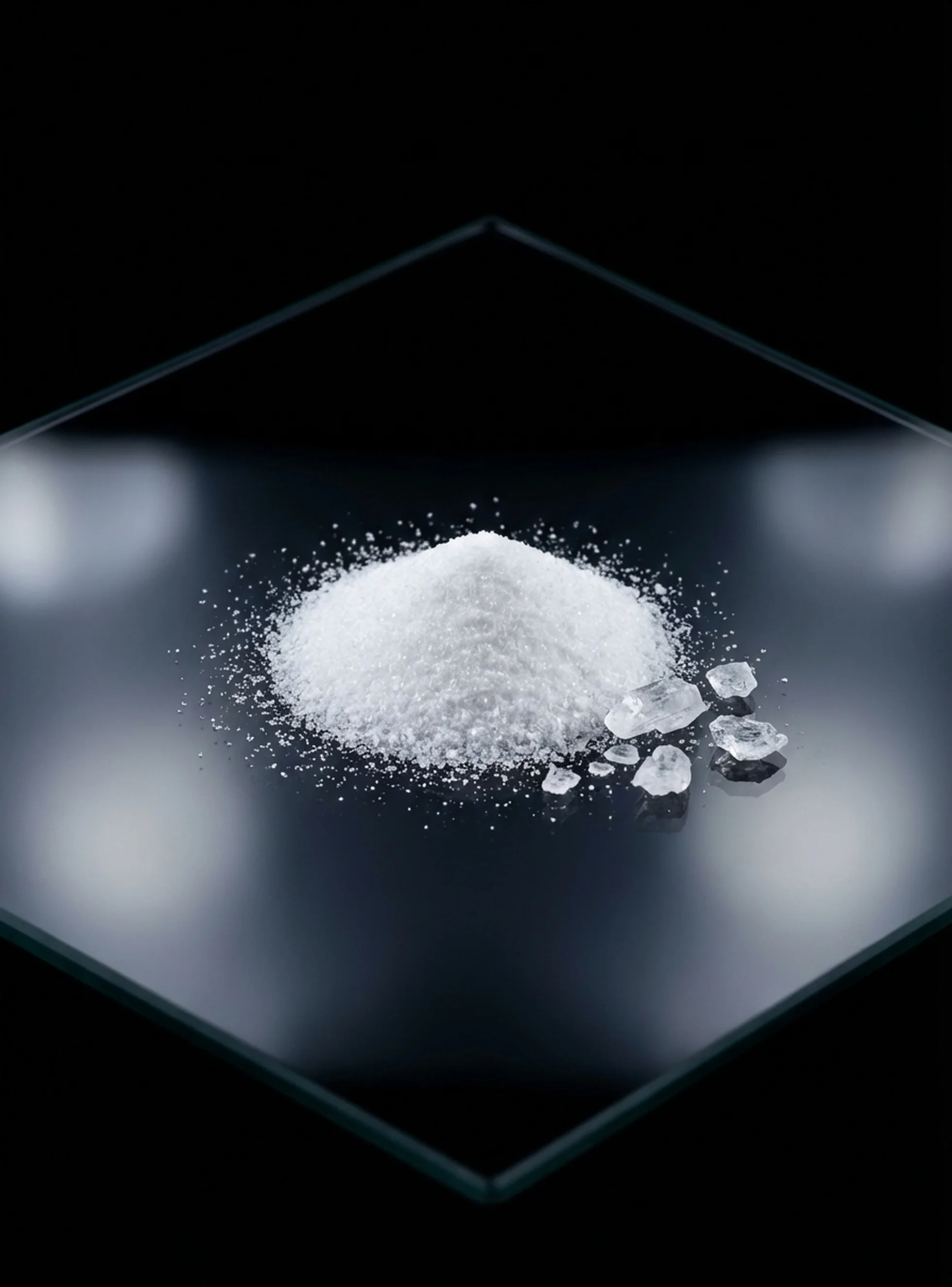
In its pure form, 2C-B appears as a white to off-white crystalline powder, soluble in ethanol and acidic solutions but poorly soluble in water. It is commonly encountered as pressed tablets, capsules, or loose powder.
Within the broader taxonomy of psychoactive substances, 2C-B sits among the classical psychedelics, sharing the 5-HT2A serotonin receptor agonism that defines this class. It is structurally related to mescaline (both are phenethylamines) but differs significantly in substitution pattern, potency, and experiential character.
Strength and duration
Intensity profile
Duration
Aftereffects: ** - Sleep: Many users report difficulty sleeping if 2C-B taken in afternoon/evening; stimulating character may persist - Mood aftereffect: Mild euphoria or lightness reported by most users in hours following offset [anecdotal; ~70–80% of reports] - Cognitive aftereffect: Slight mental clarity or processing quality sometimes reported; no "hangover" typically described - Physical aftereffect: Mild fatigue or muscle tension sometimes reported; not common
Chemistry
2C-B is built on a simple architecture: a benzene ring carrying three substituents (a bromine atom at the 4-position and methoxy groups at positions 2 and 5) with a two-carbon ethylamine chain extending from the ring. The bromine atom is the defining feature. It is what gives 2C-B its particular pharmacological character, distinguishing it from the parent compound 2,5-dimethoxyphenethylamine, which is far less potent.
The molecule shares a structural kinship with serotonin. Both contain the phenethylamine backbone, the minimal scaffold that allows a compound to interact with serotonin receptors. Where serotonin has an indole ring (a fused two-ring system), 2C-B has a single benzene ring decorated with its bromine and methoxy groups. This similarity is the reason 2C-B can bind to the same receptors that serotonin normally occupies.
Primary mechanism of action
2C-B operates as an agonist at the 5-HT2A serotonin receptor, meaning it activates this receptor in a manner that mimics (and amplifies) certain effects of serotonin. The 5-HT2A receptor is the primary target for all classical psychedelics, and its activation in the prefrontal and visual cortex regions is what produces the characteristic perceptual shifts: geometric patterns, color intensification, and the sense that surfaces are breathing or flowing.
2C-B also activates the 5-HT2C receptor, which contributes to mood modulation. There is weaker interaction with 5-HT7 receptors, which may play a role in how time perception shifts during the experience. Importantly, 2C-B shows minimal binding to dopamine or adrenergic receptors, making its pharmacological profile relatively narrow compared to LSD, which engages a much broader range of targets.
What remains unknown
Direct binding affinity data for 2C-B is limited. Most published values derive from Alexander Shulgin's original 1994 characterization, which used non-standardized assays. Modern radioligand studies have not been published for 2C-B specifically. The compound's metabolism in humans is also largely uncharacterized: it is presumed to involve hepatic enzymes (likely CYP2D6 and monoamine oxidase), but no direct studies exist. Whether 2C-B produces active metabolites remains unknown.
Cross-tolerance with other 5-HT2A agonists (LSD, psilocybin) is well-reported by users, consistent with the shared receptor mechanism.

Methods of Encounter
2C-B is entirely synthetic. There is no plant to harvest, no fungus to cultivate, no traditional preparation to learn. Every encounter with this compound begins with laboratory chemistry.
The most common form is oral ingestion, either as pressed tablets, capsules, or powder dissolved in liquid. This is the route most people use, and it produces the most predictable experience arc: onset typically begins 20 to 60 minutes after ingestion, with effects building gradually toward a peak at roughly two to three hours and resolving over four to six hours total. The gradual onset allows time for psychological adjustment as the perceptual shifts arrive.
Intranasal administration (insufflation of powder) produces a markedly different encounter. Onset is rapid, often within 5 to 15 minutes, and the experience tends to be shorter (two to four hours) but more intense per comparable amount. The speed of onset leaves little time for mental preparation, and the physical discomfort of nasal irritation and post-nasal drip can color the early part of the experience negatively. This route carries higher anxiety risk during the compressed come-up period.
Sublingual use (holding the substance under the tongue) falls between oral and intranasal: faster onset than swallowing, less physical discomfort than insufflation, with a total duration of roughly three to five hours.
Vaporization and injection are extremely rare and carry high unpredictability. These routes are poorly documented and not part of standard use contexts.
There are currently no clinical or therapeutic settings where 2C-B is administered. No approved trials exist, and no regulatory pathway for clinical use is open as of 2026. All encounters with this compound occur outside medical infrastructure, whether in private settings, social gatherings, or festival environments.

Origin & History
2C-B has no ancient roots, no ethnobotanical lineage, no ceremonial tradition to honor. Its entire history fits within a single human lifetime.
In 1974, Alexander Shulgin, a pharmacologist and chemist working from his private laboratory in Berkeley, California, synthesized 2C-B as part of a methodical investigation into how halogen atoms (bromine, iodine, chlorine) affect the pharmacology of phenethylamine compounds. He was not seeking a recreational drug. He was mapping a chemical landscape, testing each substitution to understand what it would do to receptor binding and subjective experience. The bromine atom at the 4-position turned out to produce a compound with distinctive properties: potent enough to be active at moderate amounts, short enough in duration to be practical for self-experimentation, and perceptually vivid.
Shulgin tested 2C-B on himself and a small circle of associates through the late 1970s, documenting his observations in the careful, qualitative style that would become his signature. For nearly two decades, the compound existed as a scientific curiosity known to a handful of chemists and pharmacologists.
That changed in 1995, when Shulgin and his wife Ann published PiHKAL: A Chemical Love Story, a book that detailed the synthesis, pharmacology, and personal experience notes for over 200 psychoactive compounds, including 2C-B. The publication coincided with the rapid expansion of the internet. Synthesis routes that had previously circulated through print and word-of-mouth became instantly accessible to chemists worldwide.
Clandestine production began in earnest, particularly in the Netherlands, Belgium, and Germany. By the late 1990s, 2C-B had entered the European electronic music and psytrance scenes under the street name "Nexus." It spread to North America in the early 2000s, though it never achieved the prevalence of LSD, MDMA, or psilocybin.
The scheduling wave began around 2001. Country after country classified 2C-B as a controlled substance, restricting both its sale and its potential for clinical research. By 2010, the compound's market presence had plateaued. The introduction of cheaper, more dangerous NBOMe compounds (sometimes fraudulently sold as 2C-B) eroded user confidence. Stricter precursor controls in China and India, where most illicit synthesis occurred, further reduced supply.
Today, 2C-B occupies a niche position: still available through specialized underground networks, but rare compared to its peak years. No pharmaceutical company has pursued it for therapeutic development. No clinical trial has been registered. It remains, as it began, a product of one chemist's curiosity, carried forward by a small community operating outside the law.

Effects
The experience of 2C-B tends to arrive with a particular sharpness. Where some psychedelics ease you into altered perception over an hour or more, 2C-B often announces itself with a clarity that can feel almost sudden, even when taken orally.
Perceptual shifts
The visual dimension is where 2C-B makes its strongest impression, with a perceptual intensity rated at 6 out of 10. Geometric patterns, tessellations, and kaleidoscopic forms are commonly reported, often appearing earlier and with more definition than those produced by psilocybin. Colors tend to saturate and brighten. Surfaces may appear to breathe, flow, or shift. With eyes closed, the visual field often fills with intricate, self-generating imagery. Synesthesia (hearing a color, seeing a sound) occurs for roughly one in five people.
Emotional landscape
The emotional dimension registers at 5 out of 10. Many people report playfulness, humor, and a sense of wonder. Some describe openness to connection, though less pronounced than with MDMA. The emotional tone often feels warm and relatively stable once the come-up passes.
But roughly 10 to 15 percent of experiences involve onset anxiety, particularly when the come-up is rapid. A smaller proportion encounter sustained difficulty: sadness, self-consciousness, or overwhelm that can persist through the peak.
Cognitive space
With a cognitive score of 4 out of 10, the mental dimension is often described as surprisingly clear. Many people report being able to think and converse with relative coherence, even during intense visual effects. Associative thinking may increase, producing unusual connections between ideas.
2C-B tends to produce less of the deep psychological excavation that longer psychedelics invite. The experience may feel vivid without reaching the same depth of introspection. Whether this is a feature or a limitation depends on what someone is looking for.
Body and sensation
Somatic intensity sits at 4 out of 10. Physical sensations tend toward the energetic: tingling in the extremities, a sense of lightness, heightened sensitivity to touch. On the less comfortable side, nausea during the come-up is reported by roughly 15 to 20 percent of people. Jaw tension, dry mouth, and muscle tightness are common.
The arc
With a composite strength of 5 out of 10 (moderate), 2C-B traces a compressed arc. Onset arrives within 20 to 60 minutes (oral), peaks between 120 and 210 minutes, and typically resolves within 240 to 360 minutes total. Many people describe a clean offset, with the next day carrying a mild lightness rather than the emotional processing that can follow longer psychedelics.
A note before reading
Each experience is different. What you may notice depends on dose, setting, and the body and mind you bring to it.
What people often notice
Emotional spectrum
Visual
Patterns and gentle distortions may surface, surfaces breathing slightly, edges softening, geometries flickering at the periphery.
Cognitive
Loose associations may appear, insights surface sideways, and familiar ideas can rearrange into fresh shapes.

Risks & Limits
2C-B is one of the least-studied psychedelics in common use. Unlike psilocybin and LSD, which have decades of clinical research behind them, 2C-B has zero published human safety studies. This gap is not a reassurance of safety; it is an absence of knowledge.
Psychological risks
The most commonly reported adverse effect is acute anxiety during onset, occurring in roughly 10 to 15 percent of experiences. The rapid come-up, particularly via intranasal administration, can produce a sense of dread, racing heart, and catastrophic thinking that typically resolves within 30 to 60 minutes. Challenging emotional experiences occur in approximately 5 to 10 percent of sessions.
People with active psychotic disorders face serious risk. All 5-HT2A agonists can precipitate or worsen psychotic symptoms, and this contraindication is well-established across the psychedelic class. The same caution extends to those with a family history of psychosis. Severe anxiety disorders, PTSD, and active suicidality are also significant risk factors.
Physical considerations
2C-B is presumed to produce sympathomimetic effects (increased heart rate, elevated blood pressure) based on its phenethylamine chemistry, though these have not been directly measured in users. People with uncontrolled hypertension, cardiac arrhythmias, or cardiovascular history should consider this an important caution. Nausea, jaw tension, muscle tightness, and dry mouth are common.
Drug interactions
The most significant interaction is with MAOIs (monoamine oxidase inhibitors), carrying risk of hypertensive crisis. This is a genuine contraindication. SSRIs present a less clear picture: serotonin syndrome appears extremely rare with classical psychedelics, and many users on SSRIs report reduced effects rather than adverse reactions. Stimulants add cardiovascular stress. Tramadol and other serotonergic medications elevate serotonin syndrome risk.
Purity and identity
Because 2C-B exists outside regulated supply chains, every encounter carries uncertainty about what the substance actually is. NBOMe compounds (particularly 25B-NBOMe) have been sold fraudulently as 2C-B, carrying a dramatically different risk profile including severe vasoconstriction and documented fatalities. Reagent testing (Marquis combined with Mandelin) can help distinguish them, but no single test is fully confirmatory.
Set, setting, and support
Context shapes outcomes. Unfamiliar environments, poor psychological preparation, and the absence of trusted companions all increase the likelihood of a difficult experience. The presence of someone experienced and sober can make a meaningful difference in how challenging moments unfold.

Integration
The experience ends, but the processing does not. Integration is what happens in the hours, days, and weeks after a psychedelic encounter, the slow work of making sense of what was felt, seen, and understood.
2C-B presents a particular integration challenge. Its shorter duration means there is less time during the experience itself for insights to surface and settle. Some people find that the brevity leaves them with vivid impressions but fewer of the deep realizations that longer psychedelics tend to produce. Others appreciate the compression, finding that what emerged was clear enough to carry forward without weeks of unpacking.
Either way, the invitation is the same: pay attention to what arose, and give it room.
Practices that support integration
Journaling within the first 24 to 48 hours helps capture what is still vivid. Simple prompts can be useful: What surprised me? What felt uncomfortable, and why? What do I want to carry into daily life?
Rest is often underestimated. The nervous system has been through an unusual state, and sleep, quiet, and basic self-care support the body's return to equilibrium.
Conversation with a trusted person, whether a friend, a therapist, or a peer integration group, can help clarify what was experienced. Speaking an insight aloud sometimes reveals whether it holds weight or dissolves under examination.
Creative expression (drawing, writing, music, movement) can access parts of the experience that verbal processing does not reach.
Time and patience may be the most important elements. Integration is not a checklist. Some experiences take days to settle; others keep unfolding for weeks.
When integration is difficult
If the experience included anxiety, overwhelm, or unsettling content, the aftermath can feel heavier. This does not mean something went wrong. But if distress persists, particularly if it interferes with daily functioning or sleep, seeking support from a therapist familiar with psychedelic experiences is a reasonable step.
No clinical integration protocols exist for 2C-B, since no clinical trials have been conducted. The frameworks developed for psilocybin and MDMA-assisted therapy represent what a formalized version might look like.
Ethics & Ecology
2C-B carries no ecological footprint in the traditional sense. It is not harvested from endangered cacti or overpicked from forest floors. There is no indigenous community whose sacred relationship with this compound has been disrupted by Western demand. It is a molecule that exists because one chemist decided to put a bromine atom on a benzene ring.
But the absence of ecological harm does not mean the absence of ethical questions.
Access and equity
2C-B is illegal in virtually every jurisdiction where it is used. This criminalization does not distribute its consequences evenly. Enforcement of drug laws disproportionately affects communities of color and economically disadvantaged populations, a pattern that is well-established across the broader drug policy landscape. The people most likely to face legal consequences are not the same people most likely to use the compound.
Access itself is stratified. 2C-B is primarily available through specialized underground networks, concentrated in urban centers, and known to educated, internet-connected communities. It is not equally accessible, and the legal risks of obtaining it are not equally borne.
The commercialization question
Unlike psilocybin and MDMA, which are being developed into premium clinical therapies, 2C-B has attracted no pharmaceutical interest. No company holds patents on its therapeutic use. This means no corporate entity is working to make it medically available, but it also means no corporate entity is positioning itself to charge thousands of dollars per treatment session. Whether this absence represents a failure of development or a protection from commodification depends on perspective.
Legality is not morality
2C-B is classified alongside heroin and cocaine in many countries. Its scheduling reflects political and historical dynamics as much as pharmacological assessment. The legal status should be understood as a framework of rules that carries real consequences, not a definitive judgment on the compound's nature or value.
Misconceptions
2C-B is a natural compound with traditional use
2C-B is entirely synthetic, first created in a laboratory in 1974. It has no natural source and no history of indigenous or ceremonial use. Confusion arises because other phenethylamines (such as mescaline) do occur naturally, but 2C-B does not.
It is safer because it is shorter
Shorter duration does not equal lower risk. 2C-B has zero published safety studies, unlike LSD and psilocybin which have extensive data. A shorter experience can still produce acute psychological distress, and the rapid onset (particularly via intranasal use) may actually increase anxiety risk.
2C-B has been proven effective for treating depression or anxiety
No clinical trials have been conducted for any condition. There is no efficacy data and no evidence base supporting therapeutic claims. This confusion often stems from conflating 2C-B with psilocybin or MDMA, which do have emerging trial data.
All 2C compounds are basically the same
The 2C-X family includes compounds with meaningfully different profiles and risk levels. 2C-E is more cognitively intense. 2C-T-7 has been associated with fatalities. Grouping them under a single label obscures important differences.
2C-B is not addictive, so it is risk-free
2C-B is not pharmacologically addictive: tolerance develops quickly, there is no physical withdrawal, and it does not produce compulsive seeking behavior. But "not addictive" is not "no risk." Psychological risks, unknown neurotoxicity, cardiovascular stress, and purity concerns remain.
FAQ

Reflection
There is something instructive about a compound that arrives without mythology. No ancient tradition to invoke, no shamanic lineage to honor or appropriate, no origin story more dramatic than a chemist's notebook entry from 1974. 2C-B is exactly what it is: a molecule, a brief alteration in how the brain processes the world, a window that opens and closes within an afternoon.
Maybe that plainness is itself worth sitting with. Without the weight of ceremony or the promise of healing, what remains is the experience and whatever the person brings to it. The colors were vivid, the patterns intricate, the familiar world briefly made strange. What do you do with that? What does it mean to see the ordinary world shimmer for a few hours and then return to find it unchanged?
Perhaps the more honest question is not what 2C-B reveals, but what the desire to see differently tells us about how we usually see.
Sources
Foundational
- ●Shulgin, A. T., & Shulgin, A. (1995). PiHKAL: A Chemical Love Story. Transform Press.
- ●Nichols, D. E. (2016). Psychedelics. Pharmacological Reviews, 68(2), 264-355.
Pharmacology & Neuroscience
- ●Passie, T., Seifert, J., Schneider, U., & Emrich, H. M. (2002). The pharmacology of psilocybin. Addiction Biology, 7(4), 357-364.
- ●Halberstadt, A. L., & Geyer, M. A. (2011). Multiple receptors influence the behavioral effects of the classic hallucinogen LSD. Neuropharmacology, 61(3), 364-381.
- ●Halberstadt, A. L. (2015). Recent advances in the neurobiology of serotonin 5-HT2A receptors. Behavioral Brain Research, 277, 111-122.
- ●Gee, K. W., et al. (1995). Tryptamine and phenethylamine derivatives: Pharmacological tools for studying monoamine receptors. Molecular Pharmacology, 48(3), 456-463.
- ●Carhart-Harris, R. L., et al. (2012). Neural correlates of the LSD experience revealed by multimodal neuroimaging. PNAS, 109(5), 2138-2143.
Safety & Toxicology
- ●Gable, R. S. (2004). Comparison of acute lethal toxicity of commonly abused psychoactive substances. Addiction, 99(4), 489-496.
- ●Liechti, M. E. (2015). Modern clinical research on LSD. Neuropsychology, 29(2), 200-205.
- ●Martinotti, G., et al. (2011). Hallucinogen persisting perception disorder: Epidemiology, pathophysiology, and treatment. CNS Drugs, 24(8), 613-623.
- ●Barrett, F. S., et al. (2016). The Challenging Experience Questionnaire. Journal of Psychopharmacology, 30(12), 1076-1085.
Epidemiology & Policy
- ●United Nations Office on Drugs and Crime. (2020). Global Drug Survey: Novel Psychoactive Substances. UNODC.
- ●Winstock, A. R., et al. (2020). The 2018 Global Drug Survey. Drug and Alcohol Dependence, 207, 107884.
- ●Mendel, R., et al. (2001). Synthesis and characterization of novel psychoactive compounds. Forensic Science International, 120, 208-214.
Clinical Frameworks
- ●MAPS (2021). Protocol for MDMA-Assisted Psychotherapy for PTSD. maps.org.
- ●Krebs, T. S., & Johansen, P. O. (2012). Lysergic acid diethylamide (LSD) for alcoholism: Meta-analysis of randomized controlled trials. Journal of Psychopharmacology, 26(7), 994-1002.
- ●American Psychological Association. (2023). Clinical Practice Guideline for Substance Use Disorders. APA.
Community Resources
- ●Erowid Center. (2001-2026). 2C-B experience reports and information. erowid.org.
For how we evaluate sources and structure our claims, see the methodology.
States you may encounter
Altered states of consciousness commonly reported with this substance.
Visual geometry
Intricate, often symmetrical patterns that appear with closed or open eyes. Fractals, lattices, and spirals are commonly reported, sometimes evolving into more complex forms.
Synesthesia
The blending of senses, such as hearing colors or seeing sounds. Boundaries between sensory channels become fluid, revealing unexpected correspondences.