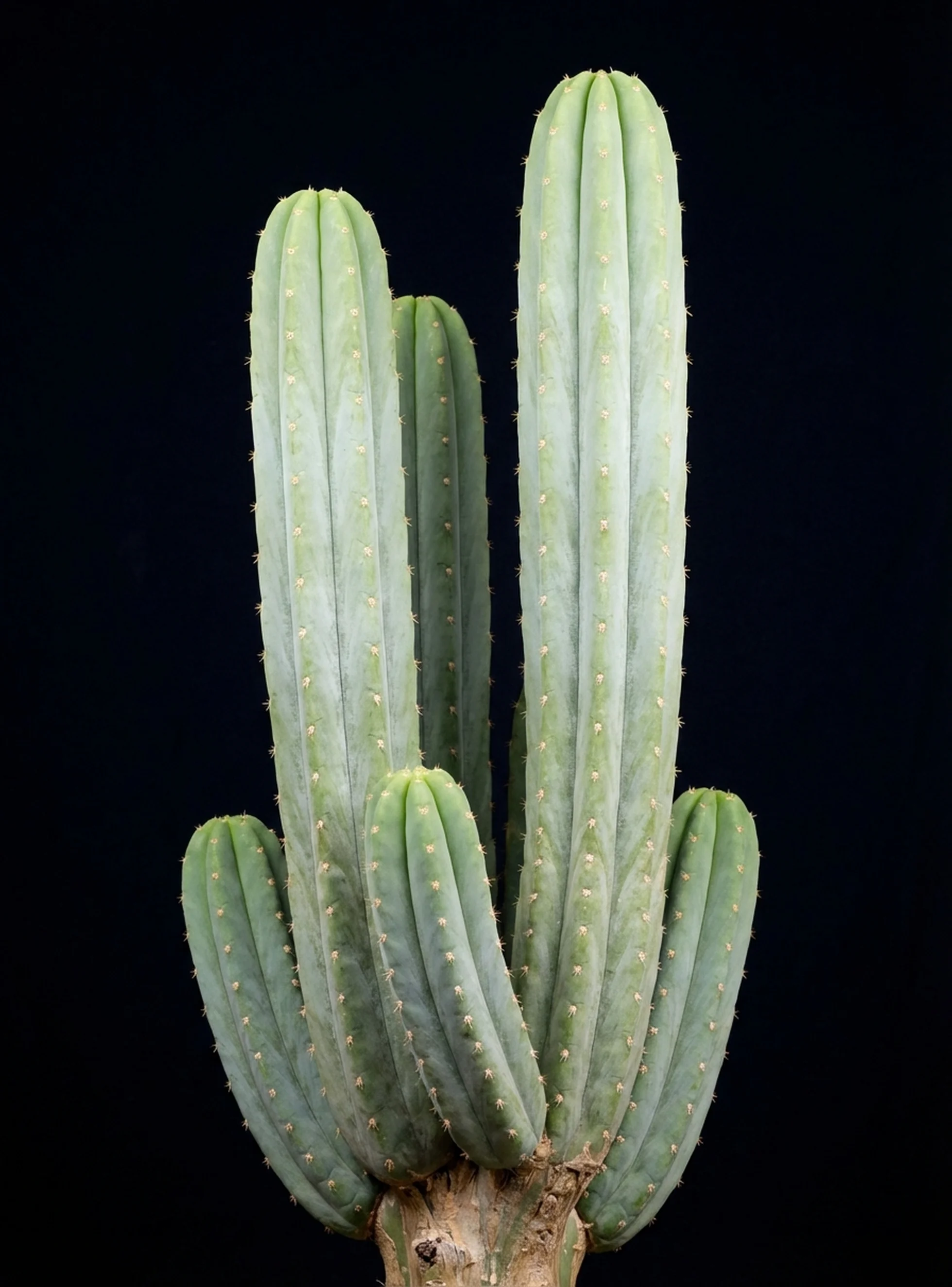
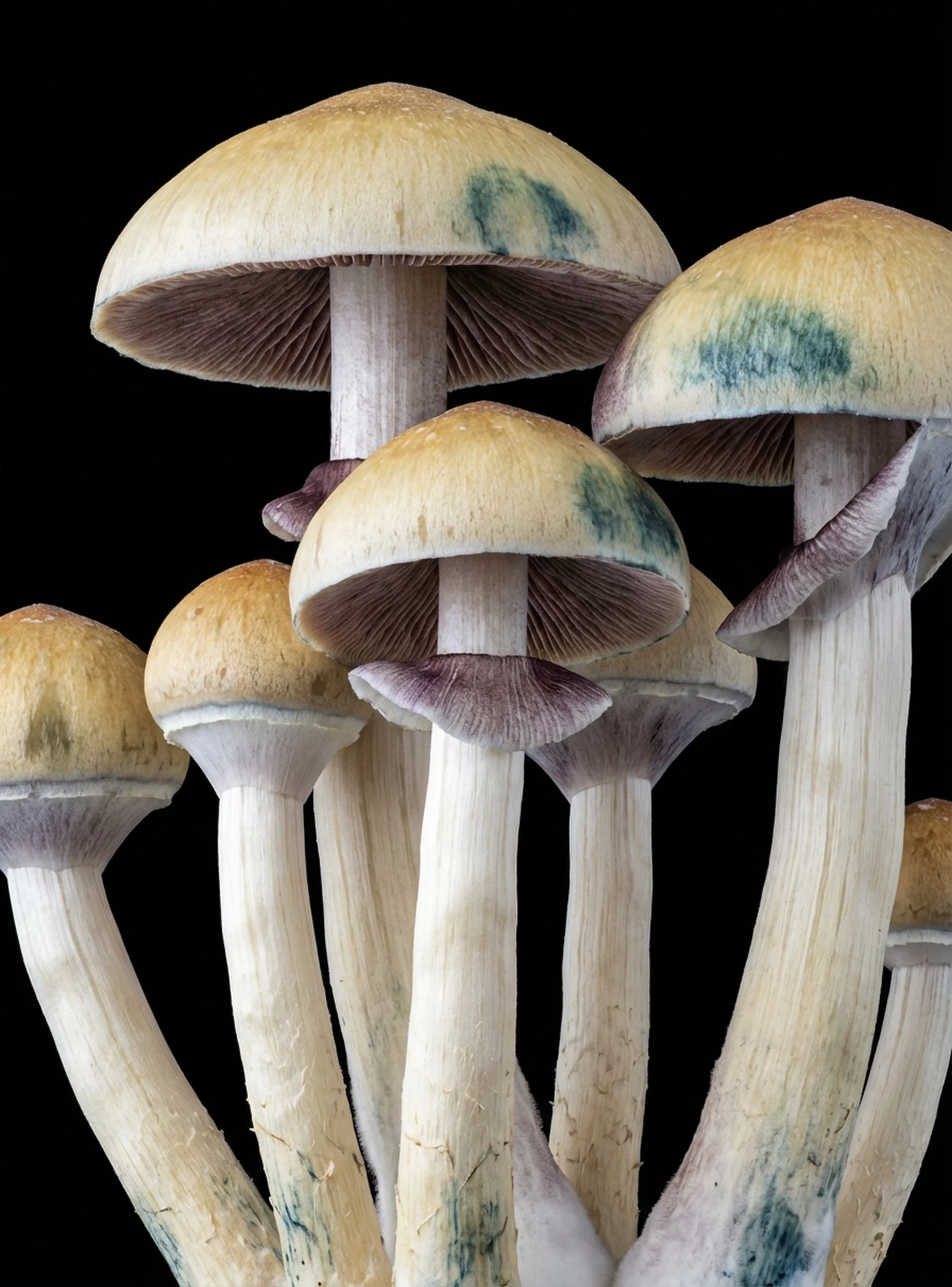
Peyote is a small, spineless cactus from the Chihuahuan Desert, sacred to Native American peoples, containing mescaline and used ceremonially for thousands of years.
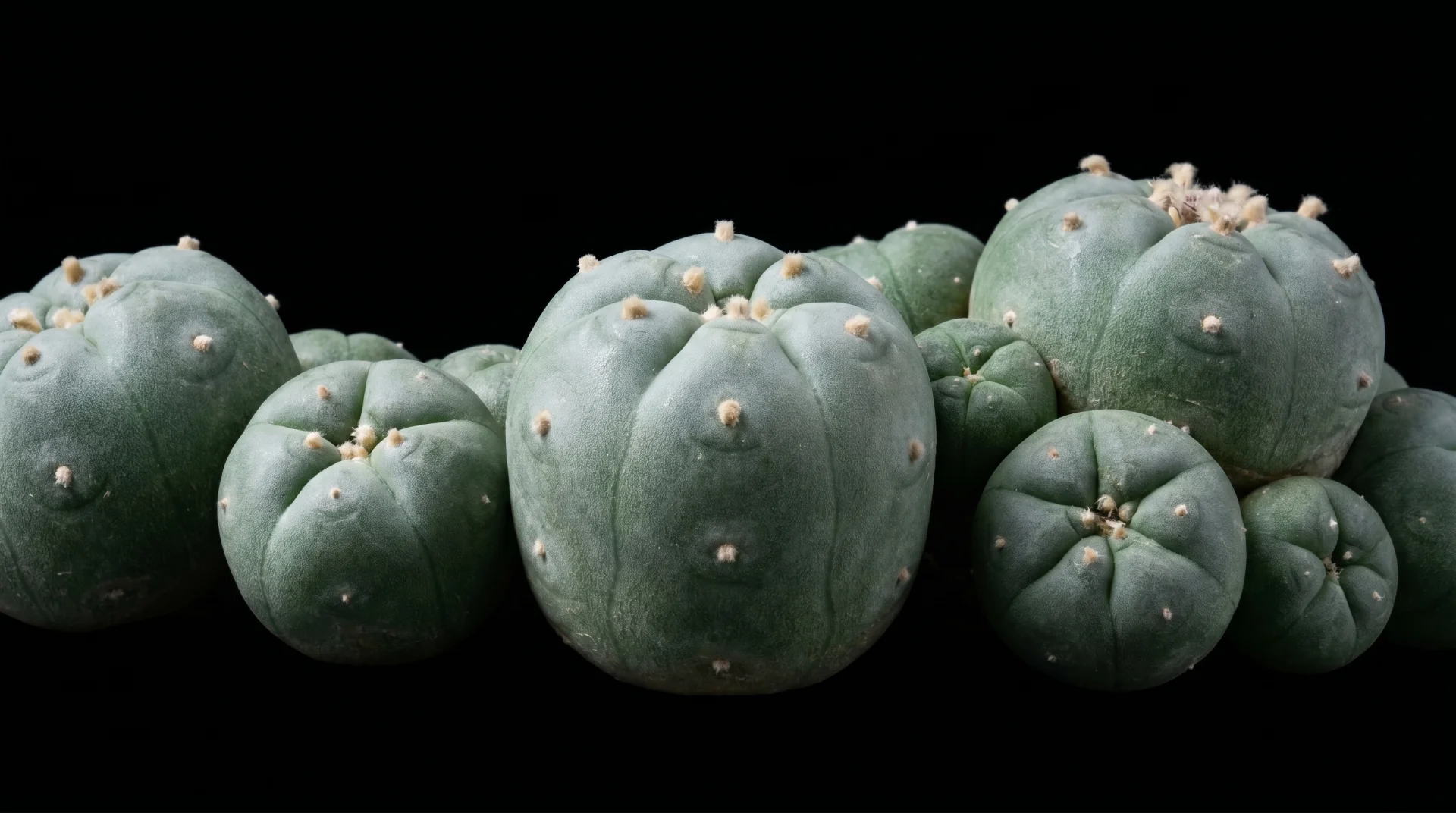
Peyote is a small, spineless cactus from the Chihuahuan Desert, sacred to Native American peoples, containing mescaline and used ceremonially for thousands of years.
Peyote
Fact file
- Type
- Plant
- Botanical name
- Lophophora williamsii
- Other names
- peyotl, mescal buttons, buttons, hikuri
- Key compounds
- Mescaline, Hordenine, Pellotine
- Origin
- Chihuahuan Desert
- Duration
- 10-12 hours
- Strength
- Intense
- Legal status
- Illegal in 17 of 28 listed jurisdictions, and varies elsewhere
What is Peyote?
In the dry limestone flats of the Chihuahuan Desert, flush with the gravel, grows a cactus the size of a coat button. It has no spines, no height, no obvious defense. What it has instead is mescaline, and a relationship with human beings that stretches back at least 5,700 years. Peyote is slow in every sense: slow to grow, slow to take effect, slow to release its hold. The experience it produces is long, warm, and deeply physical, moving through nausea into hours of vivid color, emotional openness, and a quiet sense of connection that many Indigenous traditions consider sacred. It is not a substance that hurries, and it does not reward those who try to rush it.
The substance
Lophophora williamsii is a small, spineless, blue-green cactus that grows partially buried in alkaline soils across the Chihuahuan Desert, from southern Texas to the central Mexican states of San Luis Potosi and Zacatecas. Mature plants rarely exceed 5 centimeters above ground. The visible portion, called the "button" or "crown," is a soft, rounded disc divided into ribs with tufts of fine white hair where spines would be on other cacti.
Peyote grows slowly. A button the size of a silver dollar may be a decade old. The taproot, hidden below, can extend 15 centimeters or more into the earth, storing water and alkaloids through long dry seasons. When harvested correctly (cut at the soil line, leaving the root intact), a plant can regenerate new crowns over several years. When pulled whole, it dies.
Fresh, the flesh is rubbery and bitter. Dried, the buttons shrink to hard, dark discs with a sharp, unpleasant taste that most people find difficult to chew. The bitterness is not incidental. It signals the presence of mescaline (3,4,5-trimethoxyphenethylamine) and over 50 additional alkaloids concentrated in the flesh.
Other names reflect the cactus's cultural geography: hikuri (Wixáritari/Huichol), peyotl (Nahuatl, from which the English name derives), mescal buttons (early American ethnography), and simply "medicine" within the Native American Church.
Strength and duration
Intensity profile
Variability: Moderate (varies with dose and setting)
Duration
Aftereffects: A gentle afterglow lasting 2-4 hours, often accompanied by emotional openness, mild fatigue, and a quiet sense of renewed appreciation. Residual effects may linger for 24 hours or more.
Chemistry and mechanism
Peyote's chemistry is more complex than a single molecule, but its signature effects trace largely to one compound.
Mescaline
Mescaline (3,4,5-trimethoxyphenethylamine) is the principal psychoactive alkaloid in peyote. It belongs to the phenethylamine class, making it a structural relative of dopamine and amphetamine rather than the tryptamine family that includes psilocybin and DMT. This distinction matters. It gives mescaline a pharmacological personality that differs from other classical psychedelics.
Mescaline acts primarily as a partial agonist at serotonin 5-HT2A receptors, the same receptors activated by psilocybin and LSD to produce visual and cognitive alterations. But it does not stop there. It also binds to 5-HT2C receptors, dopamine D1, D2, and D3 receptors, and adrenergic alpha-1A and alpha-2A receptors. This broader receptor engagement is thought to contribute to the warmth, stimulation, and bodily intensity that distinguish a mescaline experience from a psilocybin one.
In controlled studies, the serotonin 5-HT2A antagonist ketanserin attenuates and shortens mescaline's effects, confirming that the 5-HT2A receptor is the primary mediator of its psychedelic action. But the additional dopaminergic and adrenergic activity likely explains why mescaline tends to feel more "heart-centered" and physically energizing than tryptamines.
Potency and absorption
Mescaline is not a potent molecule by pharmacological standards. It takes hundreds of milligrams to produce full effects, roughly 30 times more material than psilocybin and 3,000 times more than LSD. A mature peyote button contains approximately 45 milligrams of mescaline.
Absorption is slow. Plasma concentrations peak around 2 hours after ingestion, and the elimination half-life is approximately 3.5 hours. Yet the experience lasts 10 to 12 hours or longer. This paradox, long effects despite a short half-life, likely reflects slow, sustained release from the gastrointestinal tract rather than a single bolus entering the bloodstream.
The supporting cast
Peyote contains over 50 additional alkaloids beyond mescaline, including hordenine, anhalonidine, pellotine, and lophophine. Most are present in small quantities, and their individual contributions to the experience remain poorly characterized. Some may modulate nausea, mood, or sedation. Others may have no perceptible effect at the concentrations present. The full alkaloid profile distinguishes whole-plant peyote from synthetic mescaline, and some users and practitioners report qualitative differences between the two, though controlled comparisons are limited.
What remains unknown
Several questions remain open. Why does mescaline produce more gastrointestinal distress than other serotonergic psychedelics with similar receptor profiles? What accounts for the distinctive emotional warmth, the "heart-opening" quality that users consistently describe? How do the minor alkaloids interact with mescaline in the body? And what long-term neuroplastic changes, if any, does mescaline produce? The neuroscience of mescaline lags decades behind psilocybin and LSD research, in part because its legal status has made clinical studies difficult to conduct.
Mescaline
3,4,5-trimethoxyphenethylamine
Primary psychoactive alkaloid. Acts as a partial agonist at serotonin 5-HT2A/2C receptors with additional dopamine and adrenergic receptor binding. A mature button contains approximately 45 mg.
Hordenine
N,N-dimethyltyramine
Secondary alkaloid with weak MAO-inhibiting properties. May potentiate the effects of mescaline and contribute to cardiovascular stimulation.
Pellotine
1,2-dimethoxy-6-methyl-6,7-dihydroisoquinoline
Minor alkaloid with mild sedative properties. May soften the stimulant edge of mescaline and contribute to the overall character of whole-cactus peyote versus synthetic mescaline.

How people encounter it
Peyote is encountered almost exclusively through oral ingestion, but the contexts surrounding that encounter vary enormously.
Ceremonial contexts
Native American Church (NAC): The most widespread contemporary ceremonial context. NAC peyote meetings typically take place overnight in a tipi or dedicated ceremonial structure, beginning Saturday evening and continuing into Sunday morning. A roadman (ceremony leader) guides participants through cycles of prayer, singing, drumming, and the communal passing of sacramental peyote. The setting is austere: a crescent-shaped earthen altar, a central fire, and the sound of a water drum. The ceremony is not recreational. It is structured around prayer, repentance, healing, and gratitude.
Wixáritari (Huichol) pilgrimage: Each year, Wixáritari communities undertake a pilgrimage of over 400 kilometers from their homelands in the Sierra Madre Occidental to Wirikuta, a desert region in San Luis Potosi that they regard as a sacred landscape. Led by a Mara'akame (shaman-priest), pilgrims visit sacred springs, caves, and hills before arriving at the peyote fields to harvest hikuri. The pilgrimage is a re-enactment of their creation story, and peyote is understood not as a drug but as a deity, a relative, a source of life.
Other Indigenous traditions: The Tarahumara (Rarámuri) of northern Mexico and several other Indigenous groups have their own ceremonial relationships with peyote, predating the NAC by centuries. These vary in form and purpose but share the understanding that peyote is a sacred being, not merely a substance.
Modern contexts
Outside ceremonial frameworks, some people encounter peyote in private settings, retreats, or informal gatherings focused on personal exploration, emotional processing, or spiritual seeking. These encounters exist in a legal gray area in most jurisdictions and lack the cultural structure, guidance, and communal accountability of traditional ceremonies.
Small-scale clinical research has resumed in recent years, administering synthetic mescaline (rather than whole peyote) in controlled laboratory settings to characterize safety, pharmacology, and subjective effects.
Origin and history
The history of peyote is inseparable from the peoples who have tended, consumed, and defended it.
Deep time
In 2005, researchers extracted alkaloids from dried peyote specimens found in Shumla Cave No. 5 in the lower Pecos region of Texas. Radiocarbon dating placed the specimens at 3780-3660 BCE, roughly 5,700 years ago. Chemical analysis yielded approximately 2% mescaline, making these the oldest plant-derived psychoactive specimens ever to produce a confirmed bioactive compound in a laboratory. The people who placed them in that cave left no written record, but the care with which the buttons were stored suggests intentional, not accidental, use.
In South America, the timeline extends even further. San Pedro cactus remains from Guitarrero Cave in Peru's Callejón de Huaylas valley date to approximately 8600 BCE. While San Pedro is a different species and will receive its own page, the shared presence of mescaline across both cacti points to a relationship between humans and this molecule that may span ten thousand years.
The Wixáritari and the living tradition
The Wixáritari (commonly known as Huichol) of the Sierra Madre Occidental maintain what may be the most intact peyote tradition in the Americas. For the Wixáritari, peyote is not a substance to be consumed but a relative to be visited. Their annual pilgrimage to Wirikuta, the desert where peyote grows, is a re-creation of the original journey made by their ancestors at the beginning of time. The peyote they gather is called hikuri, and it is understood as a bridge between the human world and the world of the gods.
This is not metaphor. The Wixáritari regard the pilgrimage as necessary for maintaining the balance of the cosmos. If the pilgrimage stops, they believe, the rains will not come, the corn will not grow, and the world will lose its order.
Colonial suppression
When Spanish missionaries and administrators arrived in Mexico in the 16th century, they encountered peyote use across multiple Indigenous groups and moved quickly to prohibit it. The Inquisition classified peyote as a tool of the devil. Edicts issued in 1620 explicitly banned its use, equating it with witchcraft and heresy. Indigenous practitioners were punished, ceremonies driven underground.
The suppression was not complete. Peyote use persisted in remote mountain communities and desert regions beyond effective colonial control. But the violence of the encounter, the destruction of ceremonial objects, the imprisonment and torture of practitioners, left scars that Indigenous communities carry to this day.
The Native American Church
In the late 19th century, as Plains tribes were forced onto reservations, a new form of peyote ceremony emerged. Drawing from older Mesoamerican practices and adapting them to the realities of reservation life, leaders like Quanah Parker (Comanche) helped shape a syncretic ceremonial form that blended Indigenous prayer with Christian elements.
The Native American Church (NAC) was legally incorporated between 1918 and 1920. It provided a structure that allowed peyote practice to survive within the American legal system. Today, the NAC serves approximately 400,000 practitioners across North America, making it the largest organized peyote tradition in the world.
The relationship between the NAC and American law has been contested at every stage. The American Indian Religious Freedom Act Amendments of 1994 established a federal exemption allowing NAC members to use, possess, and transport peyote for bona fide ceremonial purposes. This exemption remains one of the most significant religious liberty protections in U.S. drug policy.
Western science discovers mescaline
In 1897, the German chemist Arthur Heffter isolated mescaline from peyote and self-administered it, becoming the first person to identify and experience a purified psychedelic compound. Ernst Späth achieved the first total synthesis in 1919. In the decades that followed, mescaline became a tool for writers, artists, and researchers, most famously Aldous Huxley, whose 1954 book The Doors of Perception described his experience with synthetic mescaline and helped introduce psychedelics to Western intellectual culture.
But this Western interest came with a cost. Increased demand for peyote, combined with habitat loss from agriculture and ranching, has placed severe pressure on wild populations. The tension between scientific curiosity, spiritual tourism, and Indigenous sovereignty over peyote remains unresolved.

Effects
The peyote experience is long, layered, and deeply physical. It tends to move through distinct phases, though the boundaries between them are soft and variable. What follows is a composite drawn from ceremonial accounts, naturalistic surveys, and controlled research. Individual experiences vary widely.
The onset: body first
Perceptual changes
Colors intensify. Greens become greener. The grain of wood, the texture of fabric, the pattern of light through leaves, all become vivid and absorbing. Geometric patterns may appear, sometimes with eyes closed, sometimes overlaid on surfaces. These tend to be less chaotic than LSD visuals and less organic than psilocybin's. Many people describe them as precise, almost architectural.
At higher levels of intensity, objects may appear to breathe, shift, or pulse. Faces may seem to ripple or take on unfamiliar expressions. Open-eye visuals are common but rarely overwhelming. The perceptual quality is often described as "lucid," a sense that the mind remains clear even as the visual field transforms.
Emotional depth
This is where peyote's signature lies. The emotional quality is often described as "heart-opening," a warmth and tenderness that radiates outward. Empathy deepens. Compassion for others, for oneself, for the difficulty of being alive, may arise spontaneously and without the sense of effort that usually accompanies emotional vulnerability.
Some people experience cathartic release: tears, laughter, or a sense of long-held tension finally letting go. Others describe a steady, quiet warmth that persists for hours. The emotional character tends to differ from psilocybin, which can pull a person inward toward confrontation with difficult material. Peyote more often produces a feeling of being held, of spaciousness, of permission to feel without being consumed by what surfaces.
Surveys of naturalistic users found that 68-86% of respondents with histories of depression, anxiety, or PTSD reported subjective improvement following their experience, with emotional openness playing a central role.
Cognitive qualities
Thought patterns shift toward meaning-making. Ordinary objects or situations may seem to carry significance. Personal memories may surface with unusual clarity, not as flashbacks but as gently revisited scenes that now seem to hold something previously missed.
Unlike high-dose psilocybin or DMT, peyote tends to preserve a sense of agency and self-awareness. Most people report being able to direct their attention, hold a conversation, or follow a line of thought, even at the peak. This "lucid" quality is one of mescaline's distinguishing features. Ego dissolution, while possible, occurs less frequently than with tryptamine psychedelics.
The body throughout
Duration and resolution
The peak typically spans hours 3 through 7, after which intensity gradually diminishes. The descent is gentle, not abrupt. Colors slowly return to normal. Emotional intensity softens into a quiet warmth. By hours 10 to 12, most primary effects have faded, leaving a lingering sense of openness, mild fatigue, and, for many, a feeling of gratitude.
The afterglow can persist for a day or more. Some people describe the days following a peyote experience as carrying a residual clarity, as though the volume of ordinary perception has been turned up slightly and not yet returned to baseline.
A note before reading
Each experience is different. What you may notice depends on dose, setting, and the body and mind you bring to it.
What people often notice
Emotional spectrum
Visual
Imagery can become vivid and immersive, often with rich geometry, color depth, and scenes that feel layered onto the room.
Cognitive
Rapid pattern recognition is common, with frames and assumptions dissolving and reforming in quick succession.

Risks and limits
Psychological risks
Challenging experiences can occur regardless of preparation or intention. Intense anxiety, fear, confusion, or paranoia may arise, particularly at higher levels of intensity or in unsupportive environments. In surveys of psychedelic users, approximately 11% reported thoughts of self-harm during difficult experiences, and 2.6% sought medical help afterward. Most challenging experiences resolve without lasting harm, but they are not trivial.
Psychiatric vulnerability is a significant risk factor. People with active psychosis, bipolar disorder, or a personal or family history of schizophrenia face elevated risk of symptom worsening or acute psychiatric crisis. Peyote does not cause psychosis in previously healthy individuals, but it can destabilize conditions that are latent or poorly controlled.
Hallucinogen persisting perception disorder (HPPD) affects a small percentage of people who use psychedelics. Symptoms include visual snow, trailing, halos, or geometric patterns that persist after the experience ends. Research suggests approximately 32% of users notice at least one mild perceptual change at four weeks, though less than 1% find these effects distressing. Risk factors include younger age, prior psychiatric diagnosis, and high trait absorption.
Physiological risks
Cardiovascular effects. Peyote increases blood pressure and heart rate. In controlled studies with healthy participants, systolic blood pressure remained below 180 mmHg and heart rate exceeded 100 bpm in approximately 3% of sessions. These changes are generally well-tolerated by healthy people but pose risk to anyone with cardiovascular disease, uncontrolled hypertension, or related conditions.
Nausea and vomiting are common, sometimes intense, and represent the most frequent physical challenge. Aspiration risk exists if a person vomits while lying on their back.
Temperature elevation occurs in roughly 5% of controlled administrations, with body temperature exceeding 38°C. In warm environments or with prolonged physical exertion, dehydration becomes an additional concern.
Serotonin syndrome is the most serious physiological risk and arises from combining peyote with other serotonergic substances, particularly MAO inhibitors, SSRIs, or MDMA. This is a potentially life-threatening condition involving hyperthermia, rapid heart rate, muscle rigidity, and seizures.
Who should not use peyote
- ●People with cardiovascular disease, uncontrolled hypertension, or seizure disorders
- ●People with active psychosis, acute mania, or severe unstable depression
- ●People currently taking MAO inhibitors, SSRIs (without appropriate washout), or lithium
- ●Pregnant or breastfeeding individuals
- ●Adolescents and young people (developing brains, elevated HPPD risk)
Drug interactions
- ●MAO inhibitors: Risk of serotonin syndrome and hypertensive crisis
- ●SSRIs and SNRIs: Risk of serotonin syndrome; may also blunt or unpredictably alter effects
- ●Lithium: Reports of seizures when combined with serotonergic psychedelics
- ●Stimulants and sympathomimetics: Additive cardiovascular strain

Integration and aftercare
There is no single right way to integrate a peyote experience. What follows are approaches that people have found useful, drawn from clinical frameworks and traditional practices alike.
The first hours and days
The experience is long, and the body knows it. Rest is not optional. Sleep, eat gently, drink water. Many people find that the hours immediately after a peyote experience carry a particular openness, a willingness to feel and reflect that may not last. This is a good time to write, draw, or simply sit quietly with what arose.
Capture what you can while it is fresh. Not to analyze, but to record. Details fade faster than you expect.
The first weeks
Insights that felt luminous during the experience may look different in ordinary light. Some will hold. Others will seem less clear, or less actionable, than they appeared. Both responses are normal.
Talking with someone you trust, whether a therapist, a guide, a friend who understands, can help organize what surfaced. The goal is not to "figure out" the experience but to find the parts of it that want to be lived, not just remembered.
Somatic practices (gentle movement, breathwork, time outdoors) can help the body release what it held during the experience. Emotional processing often continues in the body long after the mind has moved on.
The longer arc
Integration is not a weekend project. Some people find that the most meaningful changes appear weeks or months later, as small shifts in how they relate to other people, to work, to habitual patterns.
The question is not "What did peyote show me?" but "What am I willing to change?"
In Indigenous traditions, integration is not a separate step. The ceremony itself is embedded in a web of relationships, responsibilities, and ongoing practice. The peyote experience is not an isolated event but a thread in a larger life. For those encountering peyote outside these traditions, building some version of that continuity, whether through regular reflection, community, creative practice, or simply returning to the questions that mattered most, tends to produce the most lasting benefit.
Legal and ethical context
Peyote presents some of the most urgent ethical and ecological questions in the psychedelic space. Anyone engaging with this subject should understand them.
Conservation crisis
Peyote is in trouble. The cactus grows in a narrow geographic range across the Chihuahuan Desert, and it grows slowly, taking 10 to 15 years to reach maturity. Wild populations have declined significantly due to a combination of overharvesting, habitat loss from agriculture and ranching, urban development, and improper harvesting techniques (pulling entire plants instead of cutting the crown and leaving the root to regenerate).
Mexico listed Lophophora williamsii as a "subject to special protection" species under its environmental law. The crisis is not abstract. Members of the Native American Church report traveling farther each year to find harvestable peyote, and some ceremonial leaders have expressed concern about whether future generations will have access to their sacrament.
Indigenous sovereignty
Peyote is not a general-purpose psychedelic. For the Wixáritari, Rarámuri, and the approximately 400,000 members of the Native American Church, it is a sacred relative, a deity, a medicine in the oldest sense of that word. Their relationship with this cactus predates modern nation-states by millennia.
The growing Western interest in psychedelics has increased demand for peyote from people who have no cultural relationship with it. This presents a direct conflict: every peyote button consumed by a non-Indigenous person is one less available to the communities whose spiritual lives depend on it.
Several Indigenous-led organizations, including the Indigenous Peyote Conservation Initiative and the National Council of Native American Churches, have asked non-Indigenous people not to consume peyote and to use San Pedro, synthetic mescaline, or other alternatives instead. This is not a casual preference. It is a request grounded in conservation reality and spiritual sovereignty.
Legal landscape
In the United States, peyote is a Schedule I controlled substance with a specific exemption for bona fide members of the Native American Church for ceremonial use, established by the American Indian Religious Freedom Act Amendments of 1994. This exemption is one of the most significant religious liberty protections in American drug policy.
In Mexico, peyote is listed as endangered and its harvest is restricted, though traditional Indigenous use is legally protected. Several other countries classify mescaline as illegal without specific exemptions for peyote.
The tension between religious freedom, conservation, drug policy, and growing popular interest in psychedelics makes peyote one of the most legally and ethically complex substances in this space.
What respect looks like
Respect, in this context, is not a feeling. It is a set of choices:
- ●Learning the history before consuming the substance
- ●Understanding that Indigenous access takes priority over personal curiosity
- ●Choosing San Pedro or synthetic mescaline when the desire is for the mescaline experience rather than for peyote specifically
- ●Supporting Indigenous-led conservation efforts
- ●Not appropriating ceremonial forms, symbols, or language from traditions that are not your own
- ●Sitting with the possibility that some experiences are not meant for everyone
Common misconceptions
Peyote is safe because it is natural.
"Natural" does not mean "safe." Peyote produces significant cardiovascular changes, intense nausea, and profound alterations in consciousness that carry real psychological risk, especially for people with psychiatric vulnerabilities or cardiovascular conditions. Natural preparations also introduce dose uncertainty, since alkaloid content varies between individual plants.
Peyote is the same as synthetic mescaline.
Peyote contains over 50 alkaloids beyond mescaline. Some users and practitioners report qualitative differences between whole-cactus peyote and pure synthetic mescaline, though controlled comparisons are limited. More importantly, peyote carries cultural, ecological, and legal dimensions that synthetic mescaline does not. They share a molecule but not a context.
Using peyote helps preserve Indigenous traditions.
Non-Indigenous use of peyote accelerates the overharvesting crisis threatening both the species and Indigenous access to their sacrament. Indigenous leaders have explicitly asked non-Indigenous people to use alternatives. Preservation means supporting Indigenous sovereignty, not consuming their medicine.
A positive intention guarantees a positive experience.
Set and setting significantly influence outcomes, but they do not eliminate the possibility of challenging or distressing experiences. Difficult psychological material can surface regardless of preparation, and some degree of challenge may be inherent to deep psychedelic work.
Peyote is addictive.
Peyote does not produce physical dependence or withdrawal symptoms. Rapid tolerance develops, making frequent use impractical. The intensity and duration of the experience tend to be self-limiting. Surveys consistently show that mescaline has among the lowest rates of problematic use of any psychoactive substance.
Frequently asked questions

Reflection
What does it mean to approach a living being that has been someone else's relative for five thousand years?
If the desert can produce something this patient, what might patience look like in your own life?
Sources
- ●
Halpern, J.H. (2004). "Hallucinogens and dissociative agents naturally growing in the United States." Pharmacology & Therapeutics, 102(2), 131-138.
- ●
El-Seedi, H.R., et al. (2005). "Prehistoric peyote use: Alkaloid analysis and radiocarbon dating of archaeological specimens of Lophophora from Texas." Journal of Ethnopharmacology, 101(1-3), 238-242.
- ●
Schultes, R.E., Hofmann, A., & Rätsch, C. (2001). Plants of the Gods: Their Sacred, Healing, and Hallucinogenic Powers. Healing Arts Press.
- ●
Nichols, D.E. (2016). "Psychedelics." Pharmacological Reviews, 68(2), 264-355.
- ●
Agin-Liebes, G., et al. (2021). "Naturalistic use of mescaline is associated with self-reported psychiatric improvements and enduring positive life changes." ACS Pharmacology & Translational Science, 4(2), 543-552.
- ●
Native American Church of North America. Peyote and Religious Freedom. https://nativeamericanchurch.com
- ●
Schaefer, S.B. & Furst, P.T. (Eds.) (1996). People of the Peyote: Huichol Indian History, Religion, and Survival. University of New Mexico Press.
- ●
Uthaug, M.V., et al. (2022). "A placebo-controlled study of the effects of mescaline in healthy volunteers." Psychopharmacology, 239, 1743-1757.
- ●
Terry, M., et al. (2012). "Limitations to natural production of Lophophora williamsii (Cactaceae) I. Regrowth and survivorship two years post-harvest." Journal of the Botanical Research Institute of Texas, 6(2), 661-675.
- ●
Huxley, A. (1954). The Doors of Perception. Chatto & Windus.
- ●
Holze, F., et al. (2024). "Comparative acute effects of mescaline, lysergic acid diethylamide, and psilocybin in a randomized, double-blind, placebo-controlled cross-over study in healthy participants." Neuropsychopharmacology, 49, 1620-1631.
- ●
Stewart, O.C. (1987). Peyote Religion: A History. University of Oklahoma Press.
- ●
American Indian Religious Freedom Act Amendments of 1994, 42 U.S.C. § 1996a.
For how we evaluate sources and structure our claims, see the methodology.
States you may encounter
Altered states of consciousness commonly reported with this substance.
Existential awecommon
A feeling of reverence or wonder in the face of something vast and incomprehensible. The ordinary frame of reference dissolves, replaced by a sense of contact with something immeasurably larger.
Visual geometrycommon
Intricate, often symmetrical patterns that appear with closed or open eyes. Fractals, lattices, and spirals are commonly reported, sometimes evolving into more complex forms.
Synesthesia
The blending of senses, such as hearing colors or seeing sounds. Boundaries between sensory channels become fluid, revealing unexpected correspondences.
Ego dissolutioncommon
A temporary loss of the boundary between self and world. The sense of being a separate individual fades or disappears, often described as merging with everything.
Noetic qualitycommon
A strong sense that what is being experienced is deeply true or meaningful, even if difficult to articulate. Insights feel self-evident in the moment.
Purging
Physical release through vomiting, crying, or sweating. Considered cleansing in many ceremonial traditions. Often accompanied by a sense of lightness or relief afterward.