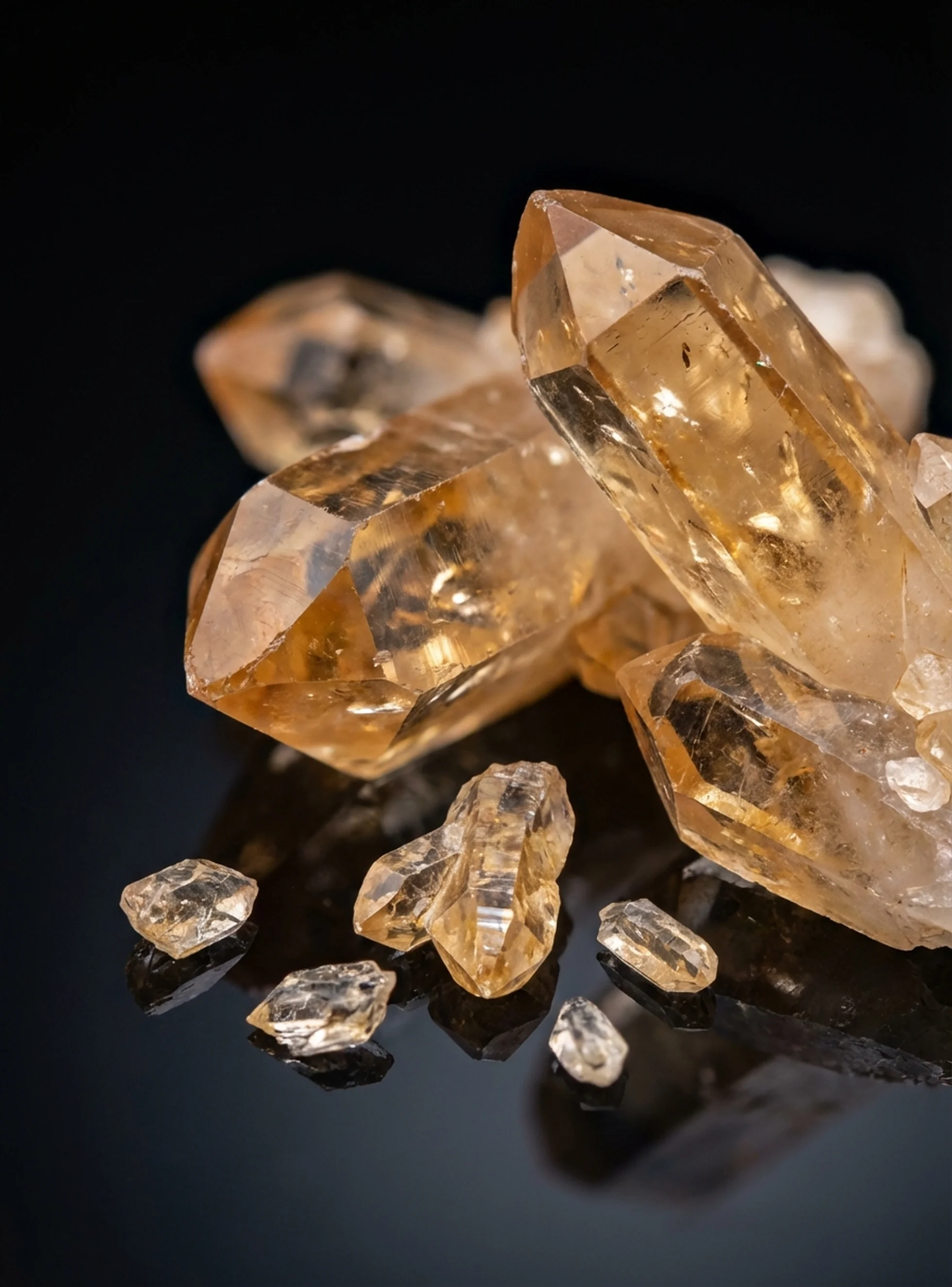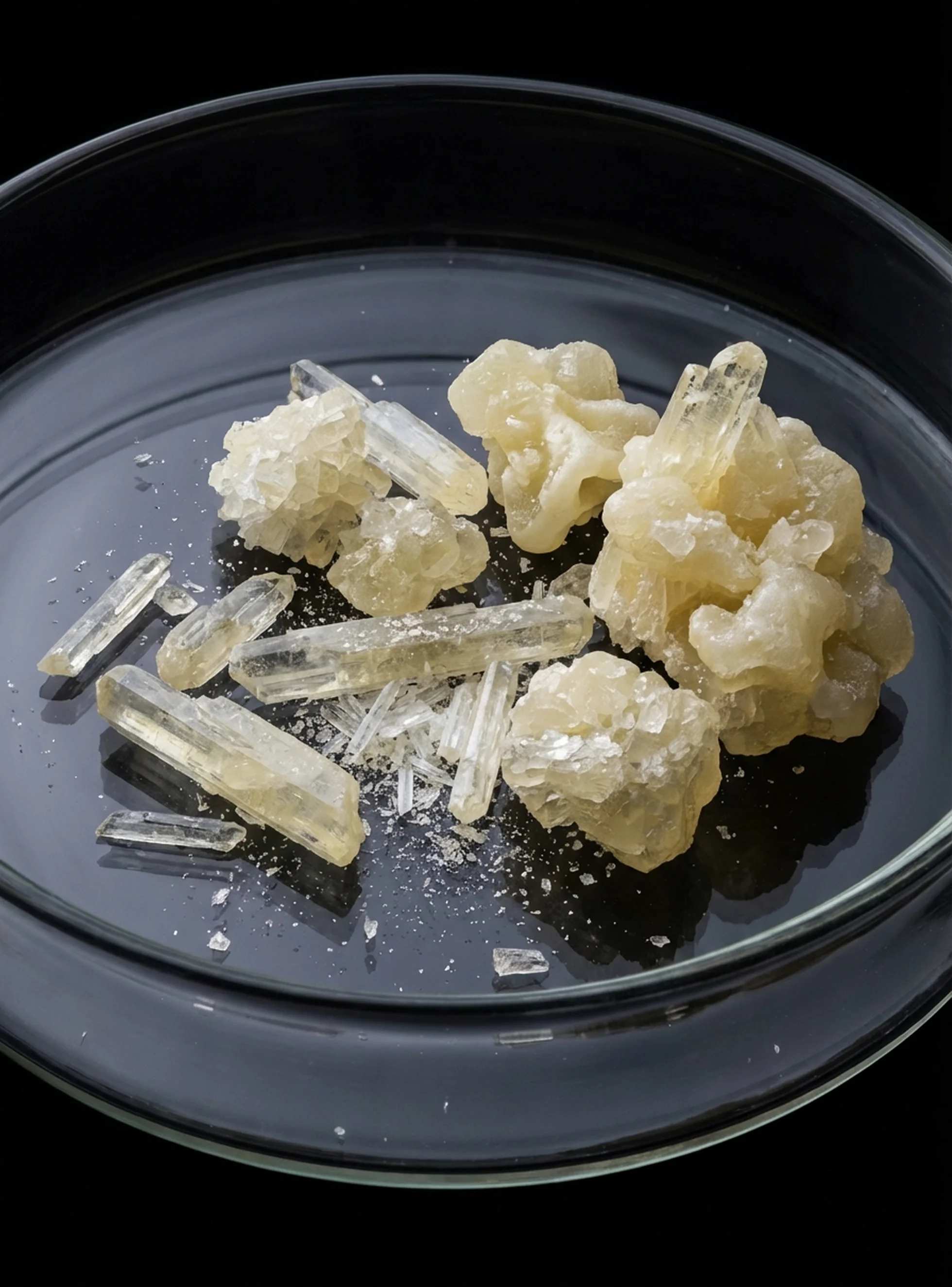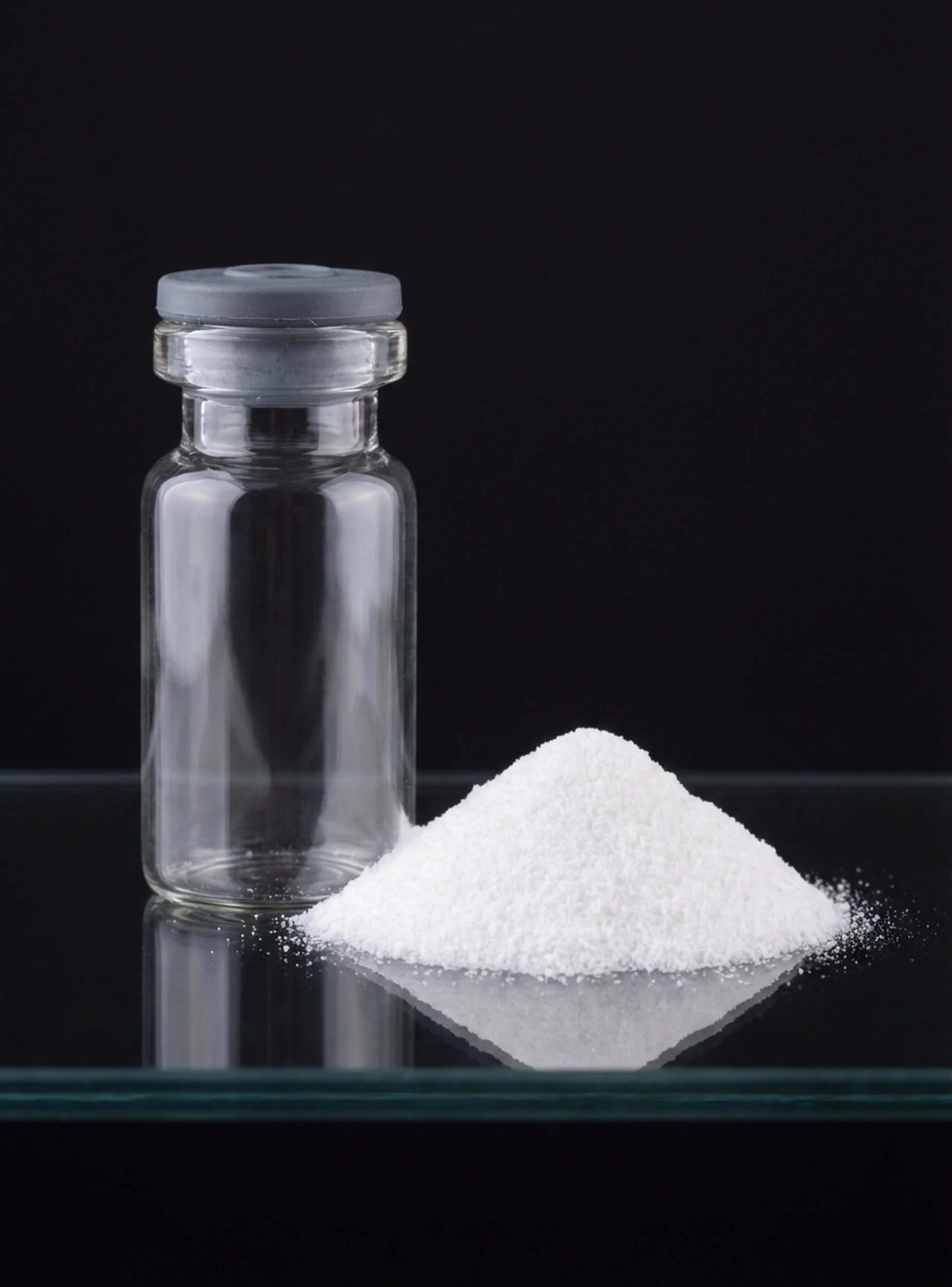

Ketamine is a dissociative anesthetic that at sub-anesthetic doses produces floating, dream-like states, and is now prescribed for treatment-resistant depression in clinical settings.

Ketamine
Ketamine is a dissociative anesthetic that at sub-anesthetic doses produces floating, dream-like states, and is now prescribed for treatment-resistant depression in clinical settings.
Fact file
- Type
- Synthetic compound
- Botanical name
- Ketamine hydrochloride
- Origin
- Detroit, Michigan (Parke-Davis)
- Duration
- 1-2 hours
- Strength
- Moderate
- Legal status
- Unclear in 6 of 7 listed jurisdictions, and varies elsewhere
What is Ketamine?
There is a place the mind goes when the body stops answering. Not sleep, not unconsciousness, but a strange clearing where perception folds inward and the familiar architecture of selfhood quietly dissolves. Ketamine opens the door to that clearing.
Unlike the classical psychedelics, which amplify sensation and emotion through serotonin pathways, ketamine works by subtraction. It blocks the brain's primary excitatory messenger, glutamate, at the NMDA receptor, creating a selective silence in the circuits that normally bind you to your body, your surroundings, your sense of being you. The result is not hallucination so much as dissociation: a controlled unmooring from the default experience of having a self.
First synthesized in a Detroit laboratory in 1962, ketamine has lived several lives. Operating-room anesthetic. Battlefield medicine. Underground club compound. And now, in its most recent chapter, a rapid-acting psychiatric intervention, FDA-approved for treatment-resistant depression, capable of lifting mood within hours rather than the weeks demanded by conventional antidepressants.
What makes ketamine singular is not any one of these identities but the fact that it holds all of them at once. It sits at a crossroads between anesthesia and awareness, between clinical precision and phenomenological strangeness, between a compound whose mechanism is well understood and an experience whose meaning remains genuinely open.
Identity
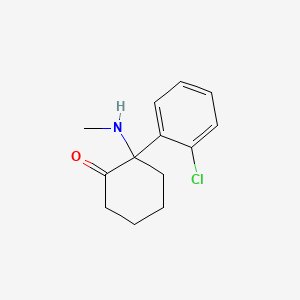
Scientific name: 2-(2-chlorophenyl)-2-(methylamino)cyclohexanone
Common names: Ketamine, ketamine hydrochloride, K, Special K, Ket. Research designations include CI-581 (the original Parke-Davis code), Ketalar, and Ketaject. The isolated S(+) enantiomer is marketed as esketamine (brand name Spravato).
Chemical class: Arylcyclohexylamine. Ketamine belongs to the same structural family as phencyclidine (PCP), sharing a cyclohexane ring fused to an aromatic ring, but with a substantially milder pharmacological profile.
Molecular formula: C₁₃H₁₆ClNO (molecular weight: 237.72 g/mol)
Substance type: Fully synthetic. Ketamine does not occur in any known plant, fungus, or organism. It exists as a white to off-white crystalline powder, highly soluble in water, with a characteristic bitter, numbing taste reflecting its local anesthetic properties.
Taxonomic position: Ketamine is a dissociative, not a classical psychedelic. It does not belong to the tryptamine or phenethylamine families and does not act through serotonin pathways. Its primary mechanism, NMDA receptor antagonism, places it in a distinct pharmacological category alongside PCP, dextromethorphan (DXM), and memantine.
Strength and duration
Intensity profile
Duration
Aftereffects: ** - Medical anesthesia protocols typically aim for 30–40 min duration - Clinical dissociation studies often show 45–90 min duration - Recreational users report highly variable duration ("felt like hours") - Receptor occupancy likely falls to sub-effective levels ~90–120 min post-injection - Subjective afterglow common 4–12 hours post-dose
Molecular structure
Chemistry
Ketamine's defining structural feature is a cyclohexanone ring attached to a phenyl group bearing a chlorine atom at the 2-position, with a methylamino group branching from the cyclohexanone. This architecture is fundamentally different from classical psychedelics: no indole ring (as in tryptamines), no benzene-amphetamine moiety (as in phenethylamines). The structural difference maps directly to a different mechanism of action.
Primary mechanism: NMDA receptor antagonism
Ketamine is a non-competitive antagonist of the NMDA (N-methyl-D-aspartate) glutamate receptor. Rather than competing with glutamate for the binding site, ketamine enters the ion channel pore from inside the cell and blocks it in a use-dependent manner. This means the compound preferentially accumulates in channels that are actively firing, creating a selective brake on overactive neural circuits.
The NMDA receptor is the brain's primary excitatory switch. When ketamine blocks it, excitatory glutamate signaling drops, particularly in regions governing pain perception, consciousness, and self-referential processing. This produces both anesthesia at high concentrations and dissociation at lower ones.
Secondary mechanisms
Several downstream effects contribute to ketamine's broader pharmacological profile:
- ●AMPA receptor upregulation: Paradoxically, NMDA blockade leads to increased AMPA receptor expression over hours to days. This delayed effect is a leading candidate for explaining ketamine's rapid antidepressant action, independent of the acute dissociative experience.
- ●Opioid system interaction: Ketamine weakly activates kappa and mu opioid receptors, contributing to its analgesic properties and possibly influencing the quality of dissociation.
- ●Neuroplasticity: Ketamine increases brain-derived neurotrophic factor (BDNF) and promotes dendritic spine growth in the hippocampus and prefrontal cortex, effects linked to its antidepressant mechanism.
Network-level effects
During acute dissociation, ketamine disrupts the default mode network (DMN), the brain's self-referential processing hub that is normally active during rest. It also impairs thalamic gating, the sensory filtering system that normally prevents unprocessed information from reaching the cortex. Together, these disruptions account for the dissociative phenomenology: the sense of separation from body, environment, and self.
Critical distinction: Ketamine does not directly activate serotonin or dopamine receptors. Any increases in these neurotransmitters during a ketamine session are downstream consequences of NMDA blockade, not direct receptor agonism. This places ketamine in a pharmacologically distinct category from psilocybin, LSD, MDMA, and other compounds commonly studied in psychedelic research.
Methods of Encounter
Ketamine reaches people through several distinct pathways, each shaping the experience differently.
Clinical settings represent the most structured encounter. Ketamine infusion clinics administer pharmaceutical-grade ketamine intravenously for treatment-resistant depression and chronic pain. The FDA-approved intranasal formulation of esketamine (Spravato) is available in certified clinics for treatment-resistant depression and acute suicidal ideation. Research programs at institutions including the National Institute of Mental Health, Johns Hopkins, and Yale continue to explore applications across depression, PTSD, and anxiety.
Route matters. The way ketamine enters the body fundamentally alters the experience:
- ●Intravenous (IV): Nearly 100% bioavailability. Onset within 30 to 60 seconds. The experience arrives abruptly, with little transition. Peak effects last 5 to 20 minutes, resolving within 60 to 120 minutes.
- ●Intramuscular (IM): Bioavailability around 90 to 95%. Onset in 3 to 5 minutes, allowing a more gradual entry with a similar intensity but a gentler arc.
- ●Intranasal: Bioavailability of roughly 50 to 75%. Onset over 5 to 15 minutes, building rather than arriving. This is the route used in FDA-approved esketamine and the most common in informal settings.
- ●Oral: Bioavailability drops to 20 to 30% due to extensive first-pass liver metabolism. Onset is gradual (20 to 45 minutes), the experience tends to feel softer, and the active metabolite norketamine plays a larger role. Duration extends to 60 to 180 minutes.
Ketamine is fully synthetic and has no traditional or indigenous use context. Its informal use emerged in the 1970s among medical professionals, expanding into club and electronic music culture through the 1990s and 2000s.
Origin & History
Ketamine was born from a problem. In the late 1950s, phencyclidine (PCP) had shown promise as a dissociative anesthetic, but its severe psychiatric side effects, including prolonged psychotic episodes and post-operative delirium, made it unsuitable for clinical use. The search for a safer alternative led to Parke-Davis Laboratories in Detroit, where chemist Calvin Lee Stevens synthesized compound CI-581 in 1962.
The first human administration came in 1965, when pharmacologist Edward F. Domino at the University of Michigan gave CI-581 to volunteers and documented something unusual: pronounced dissociative effects, preserved consciousness, rapid onset and offset, and, critically, intact airway reflexes. The compound could render someone insensible to pain while keeping them breathing on their own. Domino published his findings in Anesthesiology that same year, and by 1970, ketamine had received FDA approval for human anesthesia.
Adoption was rapid. Operating rooms across the country incorporated it into standard practice, and during the Vietnam War, ketamine became a staple of field medicine, valued for its speed, simplicity, and respiratory safety in conditions where maintaining an airway was essential.
Then the compound began to move beyond its intended setting. Through the 1970s and 1980s, anesthesiologists and medical professionals with pharmaceutical access began exploring ketamine recreationally. By the 1990s, it had entered club and electronic dance music culture, becoming associated with urban underground scenes, LGBTQ+ communities, and the broader rave movement. The DEA responded: Louisiana became the first state to schedule ketamine in 1998, and federal scheduling as a Schedule III substance followed in November 1999.
The story might have ended there, as another compound moving from medicine to recreation to prohibition. But in 2006, psychiatrist Carlos Zarate Jr. at the National Institute of Mental Health published a small, landmark study showing that a single intravenous infusion of ketamine could lift treatment-resistant depression within 24 hours, something no existing antidepressant could do. The finding challenged decades of assumption that antidepressants required weeks to work.
By 2019, the FDA had approved esketamine (the S-enantiomer of ketamine, marketed as Spravato) for treatment-resistant depression, granting the compound a clinical legitimacy it had not held since its anesthesia days. Today, ketamine occupies a position unlike any other compound in pharmacology: simultaneously an established surgical tool, a scheduled recreational substance, a rapid-acting psychiatric intervention, and the subject of intensive neuroscience research. Its arc from laboratory to operating room to dance floor to psychiatric clinic is, in many ways, the story of how society decides what a drug is for.

Effects
Ketamine's effects do not resemble those of classical psychedelics. Where psilocybin and LSD tend to amplify and intensify, ketamine subtracts and separates. The experience is best understood as dissociation across four dimensions.
Perceptual (6/10)
At lower levels, perception softens rather than sharpens. Vision may become foggy, colors may shift in saturation, and the environment can take on a faint sense of unreality. At deeper levels, the visual field may flatten or lose depth entirely. Boundaries between self and surroundings can dissolve into something closer to perceptual blur than to the rich geometric patterning of serotonergic psychedelics. In deep dissociation, some people report immersion in alternate visual environments or vast empty spaces, though these are more dreamlike than hallucinatory. Sounds tend to become muffled or distant, and auditory timing may feel distorted.
Cognitive (7/10)
This is where ketamine's signature lives. Thought becomes fragmented, disconnected from its usual linear momentum. Some people describe it as watching thoughts arise rather than thinking them. Self-referential processing diminishes: the constant internal narrator may quiet or disappear entirely. At deeper levels, this can become full ego dissolution, not the emotional expansion described with classical psychedelics, but something more like observer-detachment, consciousness floating without a fixed perspective point. Time distortion is pronounced. Minutes may feel like hours, and afterward, the entire session can seem to have passed in a fraction of its actual length.
Emotional (5/10)
The emotional landscape tends toward detachment rather than intensity. Many people report a characteristic emotional flatness during the peak, observing their own feelings from outside. Anxiety may be present but can feel strangely distant. At lower levels, some people report warm euphoria or profound ease. In clinical settings, mood elevation often emerges not during the session but in the hours and days that follow, a delayed brightening that may persist for days to weeks.
Somatic (6/10)
The body becomes strange. Limbs may feel very large, very small, or impossibly distant. Proprioception becomes unreliable. Some people describe floating, others a sense of gravity inverting. The compound's anesthetic properties produce a general numbing that can range from subtle tingling to complete bodily detachment. Motor coordination is impaired throughout, and at deeper levels, voluntary movement may feel disconnected from intention.
The overall composite intensity sits at a moderate 6/10. The experience tends to peak within 5 to 20 minutes (varying by route) and resolves within 60 to 120 minutes. What distinguishes ketamine from nearly every other compound in this library is the quality of the experience: not more, not brighter, not deeper in the usual sense, but other. A step sideways from ordinary consciousness rather than an amplification of it.
A note before reading
Each experience is different. What you may notice depends on dose, setting, and the body and mind you bring to it.
What people often notice
Emotional spectrum
Visual
Patterns and gentle distortions may surface, surfaces breathing slightly, edges softening, geometries flickering at the periphery.
Cognitive
Rapid pattern recognition is common, with frames and assumptions dissolving and reforming in quick succession.
Risks & Limits
Ketamine's safety profile is well-studied in medical settings and less well-understood outside them. What follows is an honest accounting of what the evidence shows.
Psychological risks
Dissociative panic affects an estimated 5 to 15% of people who use ketamine. The sensation of losing contact with one's body and environment can produce intense fear, particularly for those who are unprepared or have a history of anxiety disorders. These episodes typically resolve within 30 to 60 minutes as the compound clears. In a smaller subset, deep dissociation can trigger depersonalization that persists for days to weeks, particularly in people with pre-existing vulnerability to dissociative states.
Physical risks
Ketamine raises heart rate and blood pressure, making it a concern for people with uncontrolled hypertension, coronary artery disease, or cardiac arrhythmias. Respiratory depression is rare at sub-anesthetic levels but becomes significant when combined with other depressants such as opioids, benzodiazepines, or alcohol. The most common acute physical risk in informal settings is accidental injury: impaired coordination and reduced pain perception leave people vulnerable to falls and environmental hazards.
Chronic use concerns
The most distinctive long-term risk is urological. Chronic high-frequency use (daily or near-daily over months to years) is associated with ketamine-associated lower urinary tract dysfunction (KALTD), presenting as painful urination, urgency, and reduced bladder capacity. Prevalence in chronic heavy users ranges from 2 to 9%. The risk appears strongly dose- and duration-dependent, and rare at clinical frequencies.
Psychological dependence develops in an estimated 10 to 15% of regular recreational users, often linked to using dissociation as an escape from emotional distress. Physical dependence is less pronounced than with opioids or benzodiazepines. Tolerance develops rapidly and reverses with brief abstinence.
Contraindications
Ketamine is contraindicated in people with untreated severe hypertension, recent myocardial infarction, unstable angina, or undiagnosed porphyria. Careful consideration is needed for those with active psychosis, severe liver or kidney disease, raised intracranial pressure, or active substance use disorders. Combining ketamine with other central nervous system depressants substantially increases respiratory risk.
Set, setting, and support
A safe physical environment, the presence of a trusted and sober person, and adequate preparation all reduce the likelihood of adverse outcomes. The absence of these factors does not guarantee harm, but their presence meaningfully reduces it.
Integration
The ketamine experience does not always leave clear footprints. Unlike serotonergic psychedelics, which often produce vivid, emotionally charged memories, ketamine's dissociative nature means that what happened during the session may return as fragments, impressions, or the vague residue of something significant that resists being put into words. Integration here is less about unpacking a narrative and more about learning to sit with what remains.
The hours immediately following a session are a transition. Dissociation fades gradually. Coordination returns, cognitive clarity rebuilds, and the familiar sense of self re-establishes itself, usually within two to six hours. During this window, many people report a subtle mood shift: a gentle elevation, a quiet calm, or, less commonly, a flat emptiness. None of these responses is wrong.
For those who experienced deep dissociation, the primary integration challenge is often not emotional overwhelm but something closer to perplexity: a sense that something happened that matters, without knowing exactly what it was.
What tends to help:
- ●Rest. The nervous system benefits from stillness after profound dissociation.
- ●Journaling. Writing down whatever fragments remain, even if they seem incoherent, can help the mind begin to organize the experience.
- ●Conversation. Speaking with someone who understands the territory, whether a therapist, a trusted friend, or a peer community, can reduce the isolation that sometimes follows unusual states of consciousness.
- ●Professional support. For those who notice persistent depersonalization, working with a therapist familiar with altered states can provide grounding.
- ●Time. Integration is not a single event but an ongoing practice. Meaning may arrive weeks later, or it may not arrive at all, and that is acceptable.
In clinical settings, integration support varies widely. Some ketamine-assisted psychotherapy programs include structured preparatory and follow-up sessions, while many infusion clinics focus primarily on the medical protocol with minimal psychological support. The emerging evidence suggests that outcomes tend to improve when the experience is embedded in a broader therapeutic context.
Not every session needs to produce insight. Sometimes the value is simply in the interruption, a brief departure from habitual patterns that allows something new to take root.
Ethics & Ecology
Ketamine carries no ecological footprint in the way that plant-based or fungal compounds do. It is fully synthetic, manufactured in pharmaceutical facilities, and its production does not threaten any species or ecosystem. There is no overharvesting concern, no endangered habitat, no indigenous tradition to honor or protect. In this sense, ketamine's ethical landscape is simpler than that of psilocybin, ayahuasca, or peyote.
But simplicity of sourcing does not mean absence of ethical complexity.
The most pressing ethical question surrounding ketamine today is access. FDA-approved esketamine (Spravato) costs $600 to $1,000 per session, with a full induction course running into thousands of dollars. Off-label ketamine infusions carry similar price tags. Insurance coverage is inconsistent and often requires extended patient advocacy. The result is a treatment landscape shaped primarily by wealth: clinical ketamine services concentrate in affluent urban areas, and the patient populations accessing them skew heavily toward white, higher-income demographics.
This creates a pointed contradiction. The communities most affected by the criminalization of ketamine possession have the least access to its clinical benefits. Recreational possession remains a felony in most jurisdictions, with enforcement patterns reflecting broader disparities in the criminal justice system.
The rapid commercialization of ketamine clinics raises additional questions. Many operate with minimal psychological support, administering infusions in a medical framework without the integration infrastructure that emerging evidence suggests improves outcomes. Private clinics are not required to publish their outcomes data, creating a transparency gap between marketed promises and documented results.
None of these concerns invalidate ketamine's genuine clinical value. They do, however, ask us to consider who benefits from a medicine, who is excluded from it, and what obligations accompany the act of making a powerful compound available on terms that not everyone can meet.
Misconceptions
Ketamine is basically PCP.
Both are NMDA antagonists from the same chemical family, but PCP has higher receptor affinity, produces stronger psychotomimetic effects, lasts 2 to 6 hours (versus 1 to 2), and carries higher abuse potential. PCP's severe psychiatric side effects led to complete abandonment of its medical use. Ketamine was designed as the safer alternative.
Ketamine is highly addictive like heroin or cocaine.
Ketamine produces rapid tolerance, the opposite of sensitization seen with highly addictive compounds. Physical dependence is weak, and withdrawal does not carry the medical dangers of opioids or benzodiazepines. Psychological dependence develops in an estimated 10 to 15% of regular recreational users, but this pattern differs from the compulsive escalation seen with stimulants or opioids.
Every ketamine experience is therapeutic or enlightening.
Deep dissociative states are highly variable. Some people report profound insight, while others describe fragmentary or unsettling content. Therapeutic benefit appears to depend on preparation, intention, and integration support rather than on the dissociative experience alone.
Esketamine (Spravato) is an entirely new drug.
Esketamine is one half of the standard racemic ketamine mixture, isolated into a single enantiomer. Its advantages are regulatory (FDA approval, standardized nasal delivery) rather than pharmacological.
Street ketamine and pharmaceutical ketamine are the same thing.
Pharmaceutical-grade ketamine exceeds 99% purity. Street samples range from 10 to 95%, with common adulterants including phenibut, lidocaine, and methoxetamine.
FAQ

Reflection
Ketamine asks a question that most compounds in this library do not: What happens when you remove the self from the equation?
Classical psychedelics tend to intensify the experience of being alive, flooding perception with color, emotion, meaning. Ketamine does something quieter and, in its own way, stranger. It peels back the layers of selfhood and lets you look at what is underneath. Sometimes what is underneath is vast and peaceful. Sometimes it is nothing at all. Both of these can be valuable.
There is something worth sitting with in a compound that does not promise revelation or healing or cosmic connection, but simply offers a temporary departure from the default. Not every departure needs a destination. Sometimes the value is in discovering that the self you left behind is still there when you return, perhaps a little lighter, perhaps a little more flexible in its assumptions about what consciousness requires.
What would it mean if the most therapeutically promising compound in modern psychiatry works not by adding something but by briefly, carefully, taking something away?
Sources
Landmark and Clinical Studies
- ●Domino, E. F., Chodoff, P., & Corssen, G. (1965). Pharmacologic effects of CI-581, a new dissociative anesthetic, in man. Clinical Pharmacology & Therapeutics, 6(3), 279-291.
- ●Zarate, C. A., Singh, J. B., Carlson, P. J., et al. (2006). A randomized trial of an N-methyl-D-aspartate antagonist in treatment-resistant major depression. Archives of General Psychiatry, 63(8), 856-864.
- ●Popova, V., Daly, E. J., Trivedi, M., et al. (2019). Efficacy and safety of flexibly dosed esketamine nasal spray combined with a newly initiated oral antidepressant in treatment-resistant depression. American Journal of Psychiatry, 176(6), 428-438.
- ●Aan het Rot, M., Collins, K. A., Murrough, J. W., et al. (2010). Safety and efficacy of repeated-dose intravenous ketamine for treatment-resistant depression. Biological Psychiatry, 67(2), 139-145.
Pharmacology and Mechanism
- ●Zarate, C. A., Machado-Vieira, R., Henter, I., et al. (2010). Glutamatergic modulators: implications for the development of novel treatments in mood disorders. Biological Psychiatry, 67(7), 718-728.
- ●Li, N., Lee, B., Liu, R. J., et al. (2010). mTOR-dependent synapse formation underlies the rapid antidepressant effects of NMDA antagonists. Science, 329(5994), 959-964.
- ●Hustveit, O., Maurset, A., & Oye, I. (1995). Interaction of the chiral forms of ketamine with opioid, monoaminergic, and GABAergic receptors. Pharmacology & Toxicology, 77(5), 355-359.
Epidemiology and Chronic Use
- ●Morgan, C. J., Krupitsky, E. M., & Parsons, L. H. (2010). Ketamine use, abuse and toxicity: A review of the literature. Substance Abuse Treatment, Prevention, and Policy, 5(1), 15.
- ●Winstock, A. R., & Kaar, S. J. (2020). Ketamine: A review of the literature. Addiction Biology, 25(3), e12836.
- ●DEA National Drug Threat Assessment. (2023). United States Drug Enforcement Administration.
Purity and Harm Reduction
- ●Brunt, T. M., Poortman, A., Niesink, R. J., & van den Brink, W. (2011). Instability of the composition of street heroin in the Netherlands. Drug and Alcohol Dependence, 117(1), 51-57.
For how we evaluate sources and structure our claims, see the methodology.
States you may encounter
Altered states of consciousness commonly reported with this substance.
Time dilation
The subjective experience of time slowing down, speeding up, or losing meaning entirely. Minutes may feel like hours, or an hour may compress into what feels like moments.
Ego dissolution
A temporary loss of the boundary between self and world. The sense of being a separate individual fades or disappears, often described as merging with everything.
Body dissolutioncommon
The feeling that the physical body is dissolving, expanding, or merging with the surrounding environment. The usual sense of where the body ends and the world begins becomes uncertain.