Belladonna is a European nightshade bearing glossy black berries and potent tropane alkaloids, a plant of oracles and witchcraft that crosses the threshold between vision and delirium.
Belladonna
Belladonna is a European nightshade bearing glossy black berries and potent tropane alkaloids, a plant of oracles and witchcraft that crosses the threshold between vision and delirium.
Fact file
- Type
- Plant
- Botanical name
- Atropa belladonna
- Origin
- Southern and Central Europe
- Duration
- 12-24 hours
- Strength
- Intense
- Legal status
- Unclear in 17 of 31 listed jurisdictions, and varies elsewhere
What is Belladonna?
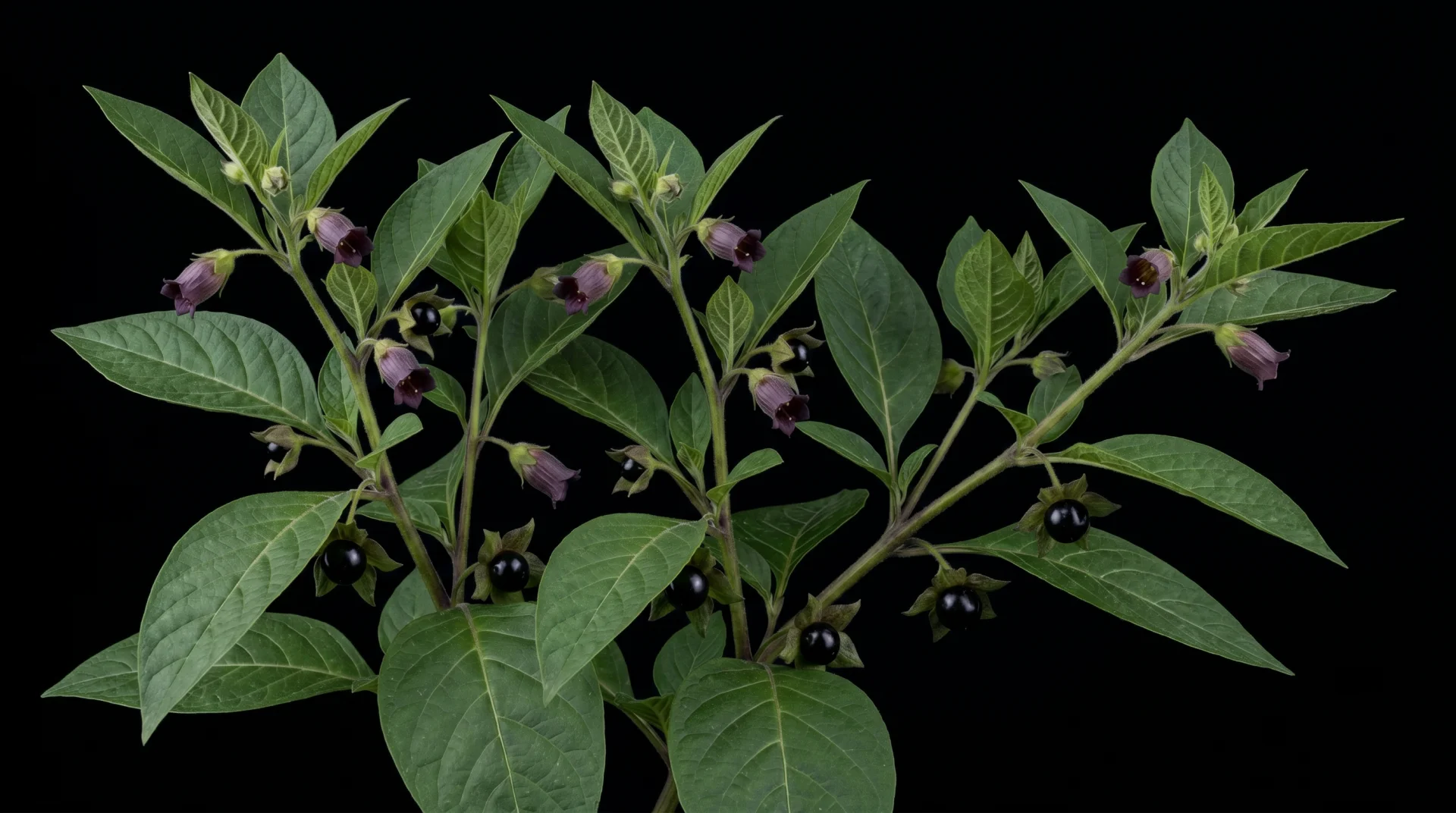
There is a plant that grows in the ruins of old gardens, along crumbling stone walls, in the shaded margins of European woodlands. Its berries are glossy and black, sweet-looking enough that children reach for them. Its name means "beautiful woman," a reference to Renaissance-era women who dropped its extract into their eyes to dilate their pupils, accepting the risk of poison for the sake of beauty.
Belladonna occupies a strange position among psychoactive plants. It does not offer visions that resolve into meaning, the way psilocybin often does. It does not open a door to emotional connection, the way MDMA can. What it does, through its tropane alkaloids, is dismantle the ordinary architecture of thought, memory, and orientation. The acetylcholine system it disrupts is not peripheral to consciousness; it is foundational. Block it, and the mind does not expand. It fragments.
This is a plant that has been feared, revered, weaponized, and misunderstood for centuries. Witches were burned for possessing it. Physicians used it cautiously, knowing the distance between remedy and ruin was vanishingly small. What remains, after all that history, is a compound that asks a very particular question: what happens when the brain's most basic coherence is taken away?
Identity
Scientific name: Atropa belladonna L. (Linnaeus, 1753)
Common names: Belladonna, deadly nightshade, devil's cherry, dwale, sorcerer's nightshade
Family: Solanaceae (the nightshade family, which also includes tomatoes, tobacco, and Datura)
Substance type: Flowering herbaceous perennial, 60-150 cm tall, bearing distinctive bell-shaped purple flowers and glossy black berries
Belladonna is a tropane alkaloid-containing plant, placing it in the anticholinergic (or deliriant) class of psychoactive substances rather than the classical psychedelic class. Its genus name references Atropos, the Greek Fate who cuts the thread of life. The genus is monotypic, meaning Atropa belladonna is the sole species, though alkaloid ratios vary significantly across populations from Turkey, the Balkans, and Central Europe.
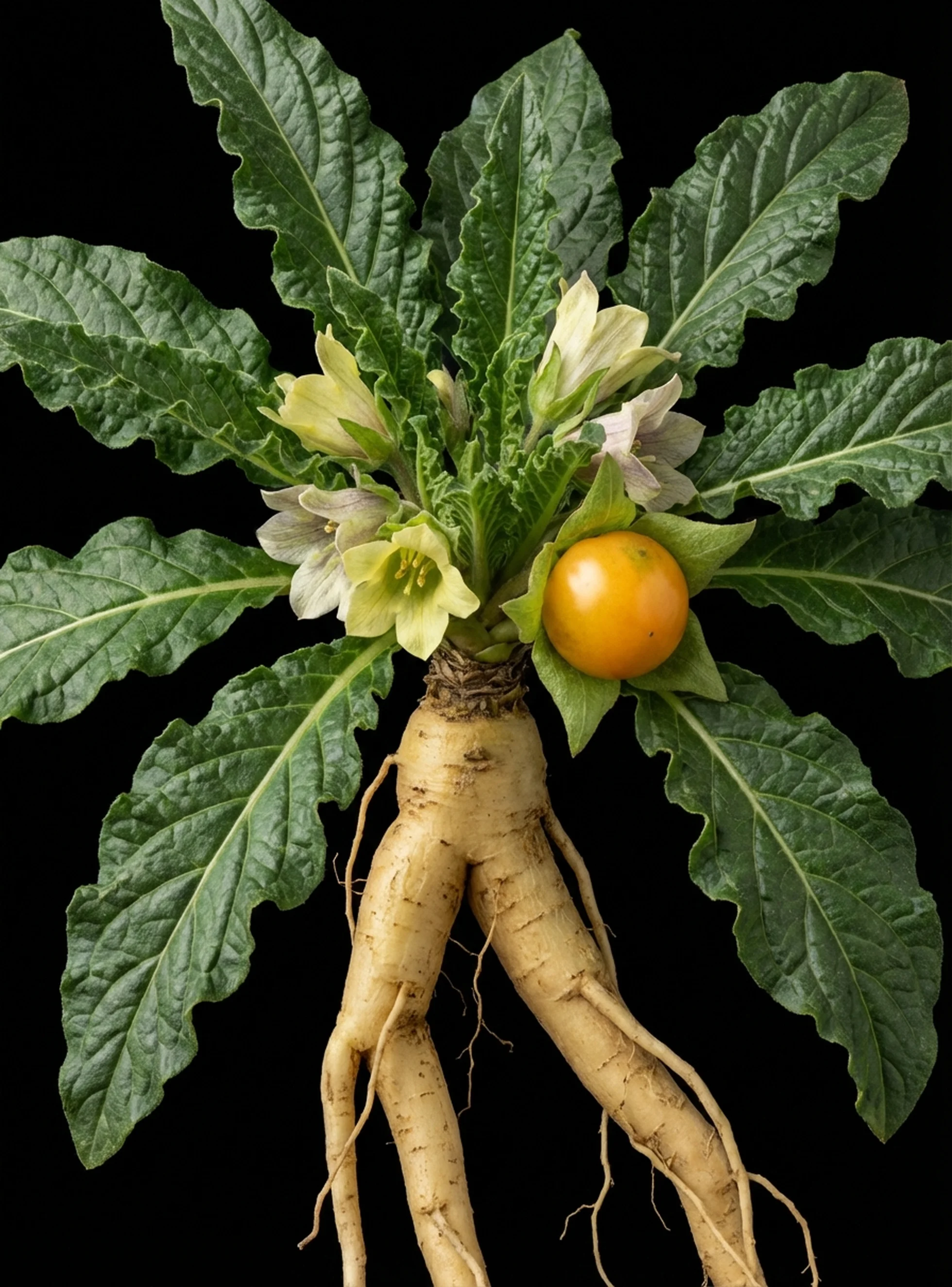
It should not be confused with Mandragora officinarum (mandrake), despite centuries of conflation in historical herbals, nor with Solanum nigrum (black nightshade), whose smaller berries can look superficially similar to the untrained eye.
Strength and duration
Intensity profile
Variability: High (depends heavily on dose, setting, and individual sensitivity)
Duration
Aftereffects: **
Chemistry
Belladonna's psychoactive effects arise from tropane alkaloids, a class of compounds built on a bicyclic nitrogen-containing backbone. The two primary alkaloids are hyoscyamine (comprising 70-80% of total alkaloid content) and scopolamine (10-20%), with smaller amounts of atropine and trace compounds like apoatropine and tigloyloxytropane.
How it works: These alkaloids are competitive antagonists at muscarinic acetylcholine receptors (M1 through M5), meaning they block the neurotransmitter acetylcholine from binding to its usual targets. Acetylcholine is not a peripheral player in brain function. It orchestrates cortical arousal, memory consolidation, emotional regulation, and the coordination between thought and action. When belladonna's alkaloids occupy those receptor sites, they do not replace acetylcholine's signal with something else. They simply silence it.
The consequences cascade through multiple brain regions. In the cerebral cortex, reduced cholinergic tone produces sedation, confusion, and hallucinations. In the hippocampus, memory formation falters, producing the anterograde amnesia characteristic of anticholinergic states. In the basal ganglia, the careful balance between acetylcholine and dopamine tips, producing motor disturbances. In autonomic centers, parasympathetic outflow drops, leaving the sympathetic nervous system unopposed: heart rate climbs, pupils dilate, body temperature rises, and salivation ceases.
Scopolamine crosses the blood-brain barrier more efficiently than hyoscyamine due to its chemical structure, but because hyoscyamine dominates the alkaloid mixture, it drives most of belladonna's effects. The ratio between these two compounds varies by plant population, growing conditions, and season, which is one reason experiences with this plant are so unpredictable.
This mechanism stands in sharp contrast to classical psychedelics. Psilocin, for example, activates serotonin 5-HT2A receptors, exciting cortical circuits and enhancing pattern recognition. Belladonna does the opposite: it strips away a layer of neural coordination, producing not expanded perception but fragmented cognition.

Methods of Encounter
The most common modern encounter with belladonna is accidental. Each year, roughly 1,200 pediatric exposures are estimated across Europe, typically from children eating the plant's glossy, cherry-like berries. Adult accidental exposures tend to involve foragers who misidentify the plant.
Deliberate encounters, though rare, have taken several forms across history.
Oral ingestion of berries or leaf preparations produces the slowest and most variable onset (45-120 minutes), with peak effects arriving 2-4 hours later and the full experience lasting 8-12 hours. Absorption depends heavily on stomach contents, gastric pH, and the unknowable alkaloid concentration of any given plant specimen.
Transdermal and transmucosal application has a long history. Renaissance women applied belladonna extract directly to the eyes as cosmetic drops. Medieval European practitioners reportedly used "flying ointments" containing belladonna mixed with animal fat, applied to mucous membranes for rapid absorption bypassing the digestive system. This route produces effects within 20-60 minutes, with a somewhat shorter total duration of 6-10 hours.
Inhalation appears in historical accounts but is poorly documented in modern sources. Historical "flying ointment" preparations may have included volatile components. This route reportedly produces the most rapid onset (5-15 minutes) and shortest duration (2-6 hours).
The route matters beyond simple timing. Slow oral absorption allows anxiety to build gradually over an extended come-up. Rapid transmucosal absorption produces sudden disorientation without that anticipatory period. Neither route, according to available reports, produces experiences that users describe as positive or spiritually coherent.
There is no modern ceremonial, therapeutic, or organized group context for belladonna use. No clinical trials for consciousness exploration have been registered. The isolated alkaloids (scopolamine and atropine) are used pharmaceutically, but as standardized, controlled compounds, not as whole-plant preparations.

Origin & History
Belladonna is native to the Mediterranean basin, Southern Europe, the Balkans, Anatolia, and the Caucasus. Fossil pollen from southern Greece and Italy places the plant in these landscapes at least 5,000 years ago. Seeds recovered from the Bronze Age settlement at Lerna, Greece (approximately 2,500 BCE), suggest it grew alongside human communities, though whether those early encounters were intentional or incidental remains unclear.
The first clear written record of belladonna's pharmacological properties comes from the Greek physician Dioscorides, around 60 CE, who documented nightshade preparations as sleep-inducing and pain-relieving, while explicitly noting their lethal potential. Pliny the Elder and Galen referenced nightshade toxicity in the first and second centuries, with Galen noting the ophthalmic use of pupil-dilating drops.
But belladonna's most charged historical chapter belongs to medieval Europe. Between the 12th and 17th centuries, the plant became entangled with witchcraft. Court records from the Bamberg witch trials (1626-1631) and the Trier trials (1581-1593) explicitly name Atropa belladonna in confessions describing "flying ointments." Modern interpretation suggests that the anticholinergic effects (severe dissociation, loss of proprioception, hallucinations) created subjective sensations of flight and spatial displacement. The plant did not confer supernatural power. It dismantled the body's sense of where it was.
Possession of belladonna became evidence of heresy in some jurisdictions of the Holy Roman Empire. The persecution fell disproportionately on women, healers, midwives, and religious minorities. The plant shifted from medicinal knowledge to forbidden knowledge, and the communities who understood it were systematically destroyed.
The 19th century brought a different kind of transformation. German pharmacists isolated atropine in 1825 and scopolamine in the 1880s, allowing precise pharmaceutical use. What had been a witch's tool became a chemist's compound. By 1968, the World Health Organization added atropine and scopolamine to the Essential Medicines List.
Today, belladonna as a whole plant occupies a quiet margin. No major pharmaceutical product uses the whole plant. Online ethnobotanical communities occasionally discuss it, but the reports are overwhelmingly negative. The plant persists in European gardens and roadsides, doing what it has always done: growing in the disturbed spaces, producing its glossy black berries, and waiting for someone to reach.

Effects
Understanding belladonna's effects requires an important caveat: no controlled human trials of belladonna's subjective effects have been conducted in the modern era. What follows is drawn from historical accounts, accidental poisoning case reports, and anecdotal descriptions from online communities, all of which carry significant limitations.
Perceptual
Perceptual intensity rates at 7/10, reflecting a substance that substantially alters sensory experience, though not in the intricate, detailed manner of classical psychedelics. The earliest perceptual change is mydriasis (extreme pupil dilation), which users notice as heightened light sensitivity, glare, and haloing around light sources.
At higher levels of exposure, open-eye hallucinations tend to appear: shadowy figures, dark humanoid forms, indistinct animal shapes. These are characteristically murky and amorphous, lacking the vivid geometric patterns or detailed imagery often associated with psilocybin or DMT. What makes them particularly unsettling, according to reports, is that users frequently do not recognize them as hallucinations during the experience. There is often no metacognitive awareness that what is being seen is not real, a stark contrast to psilocybin, where most people retain some sense that their perceptions are altered.
Cognitive
Cognitive intensity scores 8/10, and this is perhaps the defining dimension of the belladonna experience. The disruption is not subtle. Time perception fractures: minutes may feel like hours, or entire hours may vanish from awareness. Autobiographical memory can become inaccessible, with users unable to recall their own names or life histories during peak effects. The sense of agency dissolves, not into the expansive merging that psilocybin users sometimes describe, but into fragmentation, a scattering of the self into incoherent pieces.
Anterograde amnesia is pronounced. Events during the peak may never be encoded into memory at all, leaving gaps that cannot be reconstructed afterward. Thought itself becomes disorganized: users report an inability to follow a single idea, to form coherent sentences, or to maintain any thread of reasoning. This is fundamentally different from the enhanced associative thinking that characterizes classical psychedelics. Belladonna does not reorganize thought. It disrupts it.
Emotional
Emotional intensity registers at 7/10, but the character of that intensity deserves careful description. The predominant emotional arc reported follows a pattern of anxiety escalating to panic, shifting into dissociative numbness, then cycling through confusion and residual fear over many hours.
Unlike psilocybin, where fear often resolves into acceptance, insight, or even a sense of profundity, belladonna's fear tends to remain unresolved. It does not connect to meaningful existential themes. Reports describe the emotional experience as "alienating and hollow" rather than penetrating. Anhedonia and emotional bluntness commonly follow in the 24-48 hours after the experience, leaving a residue of flatness rather than the afterglow many people report from classical psychedelics.
Somatic
Somatic intensity scores 8/10, reflecting substantial and sometimes alarming physical effects. Severe dry mouth is among the earliest and most consistent symptoms. Heart rate may climb to 120-160 beats per minute. Body temperature rises as the ability to sweat is impaired. Pupils dilate to near-maximum, persisting for 12-24 hours even after other effects subside.
Motor coordination deteriorates. Users report feeling as though their body is not responding to their intentions, with ataxia, tremor, and difficulty walking. Skin crawling sensations (formication) are commonly reported, particularly on the face and neck. Historical accounts of "flying" likely reflect severe proprioceptive distortion, the body's sense of its own position in space becoming unreliable enough to produce sensations of weightlessness or displacement.
The overall arc of a belladonna experience, by oral ingestion, typically unfolds over 8-12 hours: a slow, anxious onset (45-120 minutes), building physical discomfort, escalating cognitive confusion, a peak plateau of disorientation and possible hallucination (2-4 hours), and a long, exhausting descent back to clarity. The extended duration compounds the difficulty, as the dysphoric character of the experience does not resolve into meaning or acceptance but simply persists until the alkaloids are metabolized.
A note before reading
Each experience is different. What you may notice depends on dose, setting, and the body and mind you bring to it.
What people often notice
Emotional spectrum
Visual
Imagery can become vivid and immersive, often with rich geometry, color depth, and scenes that feel layered onto the room.
Cognitive
Rapid pattern recognition is common, with frames and assumptions dissolving and reforming in quick succession.

Risks & Limits
Belladonna carries risks that are qualitatively different from those of most psychoactive substances. The central concern is the extraordinarily narrow margin between an active and a lethal amount. The therapeutic index is estimated at roughly 1-7:1, meaning the gap between the level that produces effects and the level that can kill is dangerously small. For comparison, psilocybin has no documented lethal overdose in humans.
This narrow margin is compounded by a fundamental problem of unpredictability. Alkaloid concentrations vary dramatically between individual plants, plant parts, seasons, and populations. Two berries from the same bush may contain very different amounts of active compounds. There is no reliable way for a person to know what they are consuming.
Physical risks are significant. Heart rate elevations of 50-90 beats per minute above baseline are documented. Blood pressure may rise by 20-40 mmHg. Body temperature can climb 1-2 degrees Celsius, and because the plant impairs sweating, the body's primary cooling mechanism is compromised. These cardiovascular and thermoregulatory effects are particularly dangerous for anyone with pre-existing cardiac conditions, hypertension, or vulnerability to heat.
Belladonna is contraindicated for individuals with narrow-angle glaucoma (anticholinergic pupil dilation can trigger acute angle closure), urinary retention, and significant liver or kidney impairment. It should be avoided during pregnancy and breastfeeding.
Drug interactions represent a serious layer of risk. Combining belladonna with other anticholinergic substances (including common antihistamines, tricyclic antidepressants, and certain antipsychotics) can produce additive toxicity that escalates rapidly. Combinations with MAOIs risk hypertensive crisis. Combinations with stimulants compound cardiovascular strain. Alcohol, opioids, and benzodiazepines add CNS depression to an already destabilized system.
Psychological risks are high. Approximately 90% of anecdotal reports describe acute anxiety or panic. Anticholinergic delirium (disorganized thought, hallucinations without insight, combative behavior) is a documented clinical outcome at moderate-to-high levels of exposure. Depersonalization and derealization are reported in roughly 70% of accounts. Unlike psilocybin-induced anxiety, which many users report resolving into acceptance, belladonna's anxiety tends to persist as an unresolvable feedback loop: physical symptoms trigger alarm, cognitive disorganization prevents rational reassurance, and the cycle compounds.
Post-experience effects commonly include 24-72 hours of anhedonia, emotional bluntness, and fatigue. Some users describe the experience retrospectively as traumatic. Sleep disturbances, including nightmares from REM rebound, are reported in the days following.
Fatalities, while rare in the modern era (estimated at fewer than 2 per year across the EU), are documented. Death typically results from severe hyperthermia, cardiac arrhythmia, or respiratory failure. The presence of modern emergency medicine has reduced but not eliminated this risk.
Set and setting, which meaningfully modulate the experience of classical psychedelics, appear to have limited protective effect with belladonna. The dysphoria and cognitive disruption seem largely intrinsic to the pharmacological mechanism rather than dependent on external conditions.

Integration
Integration after a belladonna experience presents a challenge that is fundamentally different from what follows a psilocybin or ayahuasca session. Classical psychedelics tend to produce experiences rich with narrative, emotion, and symbolic material that lend themselves to reflection and meaning-making. Belladonna tends to produce chaos, amnesia, and fragmentation. There may be very little coherent memory to integrate.
This does not mean the aftermath requires no attention. The body and nervous system have been through a significant ordeal, and the days following deserve care.
Physical recovery comes first. Hydration is important after hours of impaired salivation and possible hyperthermia. Rest is essential. The cardiovascular system has been under strain, and the autonomic nervous system needs time to recalibrate. Mydriasis may persist for a day or more, making eyes sensitive to light.
Emotional processing may look different than expected. Rather than mining the experience for insight (as one might after psilocybin), the more relevant work may be acknowledging the difficulty of what happened. Some people report a trauma-like response: hypervigilance, startle reactions, intrusive memories of frightening hallucinations. If these persist beyond a few days, speaking with a mental health professional who understands altered states can be valuable.
Narrative reconstruction is a common impulse. Users who experienced significant amnesia often try to piece together what happened, sometimes with the help of others who were present. This can be useful for grounding, but it is worth holding gently. The gaps may not be fillable, and that is acceptable.
Grounding practices (time in nature, physical movement, connection with trusted people, routine) may support the return to baseline more than active analysis of the experience. The acetylcholine system typically recovers its normal function within 48-72 hours.
No formal integration protocols exist for belladonna. The clinical research that has informed integration practices for psilocybin and MDMA simply does not have a parallel here. What can be borrowed from those traditions, patience, self-compassion, the willingness to sit with discomfort without forcing meaning, may still be useful. But it is also worth recognizing that not every encounter with an altered state yields a lesson. Sometimes the most honest integration is simply allowing the experience to be what it was, without demanding that it become something more.
Ethics & Ecology
Belladonna is not an endangered plant. It is not listed on the IUCN Red List and remains common to abundant throughout its native and naturalized range, from the Mediterranean through Central Europe and into introduced populations in North America and Australia. There is no conservation crisis here.
This is partly because demand is negligible. Historical pharmaceutical harvesting of wild populations in Mediterranean and Central European regions has largely ceased since synthetic production of scopolamine and atropine became standard. Modern wild harvesting, where it occurs, is limited to small-scale traditional medicine practitioners in Turkey and the Balkans.
Ecologically, belladonna plays a modest but genuine role in its habitat. Its tropane alkaloids serve as chemical defenses against herbivores, and some specialist insects have evolved tolerance to feed on its foliage. Birds appear to consume and disperse its berries, likely tolerating alkaloid levels that would be dangerous to mammals. The plant favors disturbed ground, roadsides, and woodland margins, and has mild invasive potential in some introduced ranges without forming the monocultures characteristic of more aggressive invasive species.
Cultural appropriation is not a significant concern with belladonna in the way it is with ayahuasca or psilocybin mushrooms. There is no living indigenous community with sovereignty claims over belladonna knowledge or practice. Its historical use context, European witchcraft, represents a tradition that was violently suppressed and does not persist as an organized cultural practice.
The legal landscape is complex and varies by jurisdiction. In most of Europe, the whole plant exists in a regulatory gray zone: not explicitly prohibited, but its alkaloids are controlled as prescription medicines. Australia and New Zealand classify it more strictly. In the United States, status varies by state. Legal status data is already captured in the database.
What merits reflection is not scarcity or appropriation but the relationship between knowledge and responsibility. Belladonna is readily available in many places, growing wild or sold as an ornamental. The ethical weight falls not on the plant's conservation status but on the honest communication of its risks, particularly to those who might encounter it through curiosity or misinformation.
Misconceptions
Belladonna and mandrake are the same plant.
They are distinct species in the same family (Solanaceae). *Atropa belladonna* has an upright stem, purple bell-shaped flowers, and a normal root system. *Mandragora officinarum* grows as a basal rosette with greenish flowers and the characteristic forked root that fueled centuries of anthropomorphic folklore. Medieval herbalists frequently conflated them, and that confusion has persisted in popular writing, but modern botany is clear on the distinction.
Belladonna produces meaningful spiritual experiences like psilocybin or ayahuasca.
Available reports consistently describe belladonna experiences as dysphoric, chaotic, and resistant to meaning-making. Users do not report spiritual insight, emotional connection, or the sense of profundity characteristic of classical psychedelics. The typical descriptors are "hellish," "alien," and "incomprehensible." This difference is not about context or preparation. It reflects fundamentally different pharmacology: serotonergic psychedelics enhance neural coherence and pattern recognition, while anticholinergic compounds disrupt them.
Belladonna is addictive.
There is no evidence of physical dependence, psychological dependence, or compulsive use. The anticholinergic mechanism does not produce the receptor downregulation that drives opioid or benzodiazepine dependence, and the uniformly negative experience provides no positive reinforcement to drive repeated use. Estimated addiction rate: effectively zero.
It's safe because it's natural.
Belladonna has one of the narrowest therapeutic indices of any psychoactive substance. The estimated ratio between an active and a lethal amount is roughly 1-7:1. Psilocybin, by contrast, has no documented lethal overdose in humans. Documented fatalities from belladonna poisoning continue to occur. "Natural" is a descriptor of origin, not of safety.
Witches used belladonna to actually fly.
Medieval practitioners did use belladonna in preparations, and the experience of "flight" was genuinely reported. Modern neuroscience interprets this as severe proprioceptive distortion and dissociative hallucination produced by anticholinergic effects. The body remained stationary while the brain's sense of its own position in space was profoundly disrupted. The subjective experience of flying was real; the physical displacement was not.
FAQ

Reflection
Belladonna reminds us that not every key fits every lock.
In a landscape of psychoactive plants that have become, rightly, objects of renewed curiosity and clinical interest, belladonna stands apart. It does not reward exploration in the ways that psilocybin, ayahuasca, or MDMA can. It does not open doors to meaning, connection, or self-understanding. What it does is reveal, starkly, how much of ordinary consciousness depends on systems we never notice: the quiet hum of acetylcholine coordinating memory, thought, orientation, the sense of being a continuous self in a coherent world.
There is something worth sitting with in that. The fact that a single molecule can dissolve the feeling of being someone, not into oceanic unity but into scattered confusion, tells us something about the architecture of the mind that no positive experience could.
Belladonna is not a guide. It is not a teacher in the way that other plants have been described. But it is a mirror of a particular kind, one that shows us what consciousness looks like when its most basic scaffolding is removed. Whether that reflection is worth the cost of looking is a question each person must weigh honestly, knowing what the research, the history, and the accumulated reports all consistently say.
Sources
Historical and Ethnobotanical References
- ●Grieve, M. (1931). A Modern Herbal (Vol. 1). Dover Publications.
- ●Lewin, L. (1998). Phantastica: Narcotic and Stimulating Drugs, Their Use and Abuse (1924 German original; English trans. 1998). Park Street Press.
- ●Rätsch, C. (2005). The Encyclopedia of Psychoactive Plants: Ethnopharmacology and Its Applications. Park Street Press.
- ●Gartz, J. (1995). Magic Mushrooms Around the World. LIS Publications.
Pharmacology and Toxicology
- ●Caulfield, M. P., & Birdsall, N. J. (1998). "International Union of Pharmacology. XVII. Classification of Muscarinic Acetylcholine Receptors." Pharmacological Reviews, 50(2), 279-290.
- ●Eddleston, M., Persson, H., & Sjöström, L. (Eds.). (2019). Poisoning and Toxicology Handbook (5th ed.). Oxford University Press.
- ●Duits, A. J., et al. (2008). "Anticholinergic Drugs and Delirium." Neuropsychology of Aging, 22(3), 399-410.
- ●Passouant, P., et al. (1979). "REM Sleep Suppressors: Anticholinergic Agents and Experimental Sleep Disruption." Sleep, 2(3), 339-357.
Genetics and Phytochemistry
- ●Hawkins, R. P. (2005). "Phylogenetic Analysis of Atropa and Related Genera Using Molecular Markers." Molecular Phylogenetics and Evolution, 34(2), 423-437.
- ●Paseshnichenko, V. A., et al. (2004). "Tropane Alkaloid Content Variability in Atropa belladonna L. Populations from Different Geographic Origins." Phytochemistry, 65(8), 1052-1061.
Clinical and Therapeutic Context
- ●Mithoefer, M. C., et al. (2011). "The Safety and Efficacy of MDMA-Assisted Psychotherapy for Treatment of Chronic, Treatment-Resistant PTSD." Journal of Psychopharmacology, 25(4), 439-452.
Anecdotal and Community Sources
- ●Erowid. (2024). "Atropa belladonna Erowid Vault." Retrieved from https://erowid.org/plants/belladonna/belladonna.shtml
For how we evaluate sources and structure our claims, see the methodology.