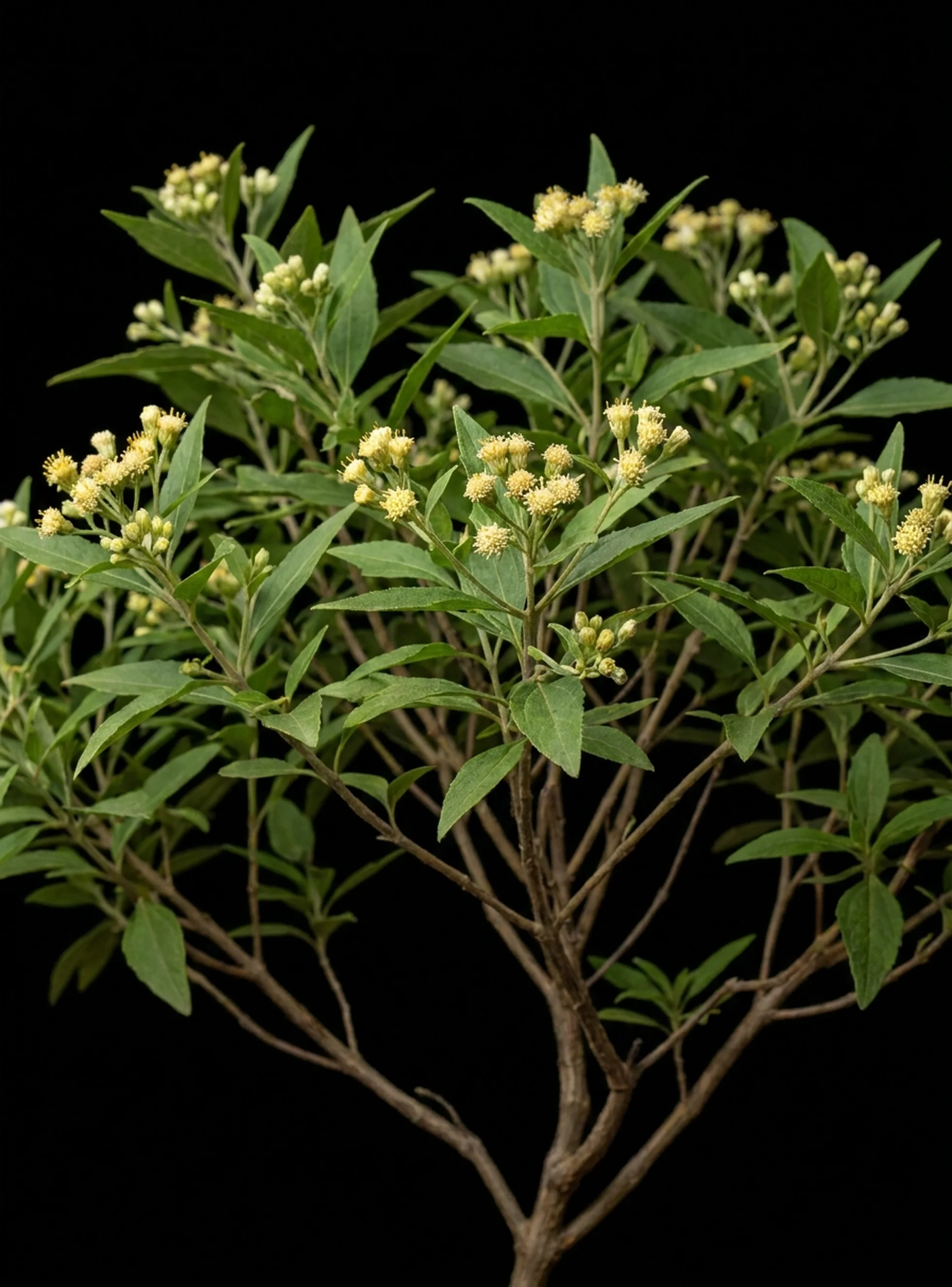

Dream Herb (Calea zacatechichi) is a Mexican plant used for centuries by the Chontal Maya for lucid dreaming and divination, taken as a bitter tea before sleep to enhance dream content.
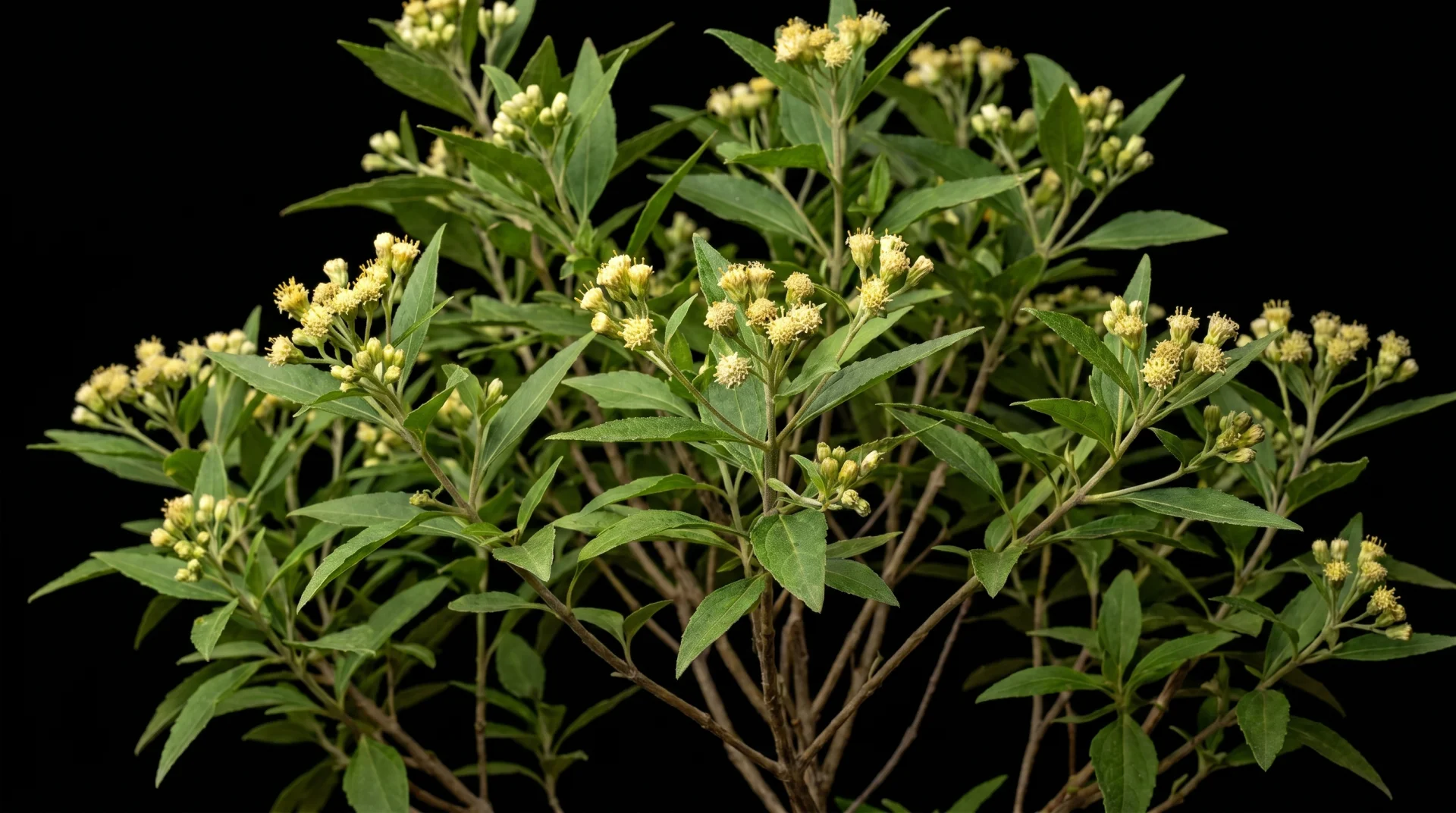
Dream Herb (Calea zacatechichi) is a Mexican plant used for centuries by the Chontal Maya for lucid dreaming and divination, taken as a bitter tea before sleep to enhance dream content.
Dream
Herb
Fact file
- Type
- Plant
- Botanical name
- Calea zacatechichi
- Origin
- The Chontal Indigenous Practice of Oneiromancy
- Legal status
- Legal in 18 of 22 listed jurisdictions, and varies elsewhere
What is Dream Herb?
A bitter leaf, an evening tea, and then sleep. The encounter with Calea zacatechichi does not happen in waking consciousness. It happens after the lights go out, in the territory of dreams. For the Chontal people of Oaxaca, this plant has long been a tool for oneiromancy, the practice of seeking guidance through dreaming. The Nahuatl name, zacatechichi, means simply 'bitter grass.'
What sets dream herb apart from most psychoactive plants is the location of its effects. Where psilocybin or LSD reshape the mind in waking life, Calea leaves waking life largely intact and instead intensifies what unfolds during REM sleep. People often report dreams that feel more vivid, more emotionally charged, more available to memory the next morning. Some describe hypnagogic imagery, the drifting visions that surface at the edge of sleep, arriving with unusual clarity.
It is one of the few plants traditionally used not to alter the day, but to deepen the night.
The substance
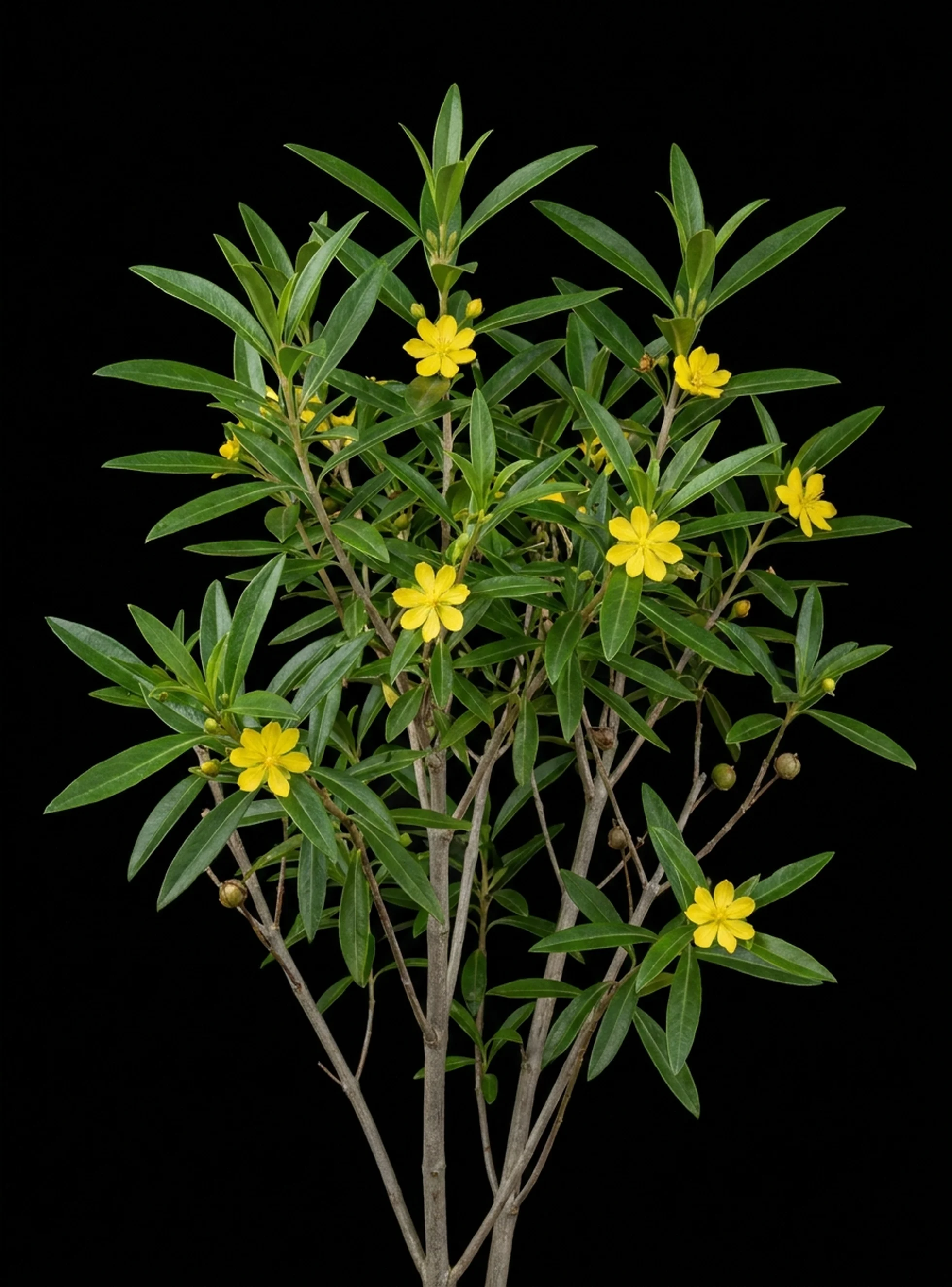
Calea zacatechichi Schltdl., synonymous with Calea ternifolia Kunth, is a flowering perennial in the Asteraceae family (the same family as ragweed, chamomile, and sunflower). It grows as a shrubby herb up to roughly three meters tall, native to Mexico and Central America, with small yellow-white composite flower heads and lance-shaped leaves that turn olive-green when dried.
Common names cluster around the plant's two defining qualities: bitterness and dreams. Zacatechichi is Nahuatl for 'bitter grass.' The Chontal Maya call it thle-pela-kano. In English it is most often called dream herb or Mexican dream herb. In contemporary classification, Calea sits within a small group of substances known as oneirogens, agents that act primarily on dreaming rather than on waking perception. This distinguishes it pharmacologically and phenomenologically from classical psychedelics, dissociatives, and conventional sedatives, even when its mechanism overlaps with sedative pharmacology.
Chemistry and mechanism
Calea zacatechichi contains a complex mixture of more than two hundred identifiable compounds, dominated by two chemical families: sesquiterpene lactones (specifically germacranolides) and flavones. The compounds most consistently associated with the plant's effects include caleicine, calein A, calealactone C, and calein D among the lactones, and acacetin and ciliarin among the flavones. Chlorogenic acid and small amounts of α-pinene round out the active profile.
The primary mechanism appears to be GABAergic modulation. Caleicine is understood as a prodrug for eugenol, a compound that acts as a positive allosteric modulator at GABA-A receptors. In plain terms, this means it does not directly switch the receptor on, but enhances the effect of the brain's own GABA, the principal inhibitory neurotransmitter. The pharmacology overlaps in mechanism with benzodiazepines and barbiturates, yet the experiential profile is distinct: rather than producing flat sedation, Calea tilts sleep architecture toward lighter stages, more spontaneous awakenings, and (in animal studies) elevated gamma-band activity in the hippocampus during REM sleep, the same neural signature associated with vivid mental imagery and episodic memory.
This is the chemistry's central oddity. Most GABAergic compounds suppress dreaming. Calea seems to enhance it, possibly through how its specific mixture engages distinct GABA-A receptor subtypes. Secondary activities have also been documented: alpha-glucosidase inhibition (lowering blood sugar), mild blood pressure reduction via chlorogenic acid, and antioxidant effects. None of these account for the dream effect, which remains incompletely understood.

How people encounter it
Most people meet Calea zacatechichi through one of three traditional forms: as a tea brewed from dried leaves, as a smoke from those same leaves, or as material placed beneath the pillow before sleep. The pillow practice is documented in Chontal ethnography and persists in contemporary use, though no clear pharmacological mechanism explains it; the effect, if any, may rely on volatile compounds or on ritual framing.
The tea is the most thoroughly documented route. Dried leaf is steeped in hot water for ten to fifteen minutes, typically in the hour before sleep. Effects, when they appear, build during the first sleep cycle and tend to peak in the early hours of the night. The taste is famously bitter, intensely so, and that bitterness is part of the encounter rather than a flaw to engineer around.
Smoking offers faster onset and is sometimes preferred by those who find the tea difficult to keep down. Modern users occasionally combine Calea with the Wake-Back-to-Bed (WBTB) technique, in which sleep is interrupted after several hours and the substance taken before returning to bed, aligning its action with the longer REM periods of the second half of the night. This is a contemporary adaptation, not a traditional practice.
Whichever route, Calea is encountered horizontally, in the dark, on the threshold of sleep. The waking experience is subtle. The work happens later.

Origin and history
The plant's center of cultural gravity is the highlands of Oaxaca, where the Chontal Maya have used it for generations as a tool for oneiromancy, the divinatory reading of dreams. The Chontal name, thle-pela-kano, encodes specific knowledge accumulated over long observation. Neighbouring peoples used the plant differently: the Zoque Popoluca called it tam huñi, 'bitter gum,' and applied it for digestive and respiratory complaints; the Mixe named it poop taam ujts, 'white bitter herb,' for similar somatic uses. The same plant carried distinct relationships in distinct places.
Dream divination occupies a particular place in Mesoamerican cosmology. Dreams were not regarded as the residue of waking life but as a parallel channel through which guidance, warning, and counsel could arrive. Calea was the instrument that opened that channel. To use it was to ask a question and listen for the answer in sleep.
When Spanish colonization reshaped Mesoamerican life, indigenous psychoactive plants were absorbed into European pharmaceutical categories that emptied them of cosmological context. By 1853, Oliva's Lecciones de Farmacología described Calea zacatechichi as a tonic and febrifuge. By 1893, its tincture was registered in the Formulario de la Facultad Médica Mexicana as an aperitive and a hepatic remedy. The plant kept its institutional standing while losing its dream practice in the official record.
Scientific re-engagement began in 1986, when Mayagoitia and colleagues at the National University of Mexico ran a placebo-controlled study using EEG monitoring. They documented measurable shifts in sleep architecture and significantly increased dream recall. Toxicological scrutiny followed in 2016 with the Mossoba nephrotoxicity findings. The plant's lineage thus runs through Chontal practice, colonial pharmacopoeia, and contemporary laboratory work, each frame seeing a different plant.

Effects
The waking effects of Calea zacatechichi are subtle. People often describe a soft heaviness in the limbs, a slowing of thought, a quiet drift toward sleep. Reaction times tend to slow modestly, and the sense of passing time may shift. Some notice a deepening of hypnagogic imagery, the floating fragments that drift across the mind in the moments before sleep. There are no waking hallucinations, no perceptual distortions, no ego dissolution. By the standards of classical psychedelics, almost nothing happens.
The encounter begins later, in the dreams that follow.
Cognitively, dreams under Calea are often described as more coherent, more narrative, more available to memory upon waking. Rather than the fragmentary sense of 'I dreamed something' that fades in seconds, people frequently report dreams they can recount in detail hours after rising. Some describe dreams that include unusual clarity of thought within the dream itself, occasionally sliding toward something resembling lucidity, the awareness of dreaming while it continues.
Perceptually, dream imagery often arrives with sharper visual definition. Colours can feel saturated, places specific, faces recognisable. The hypnagogic phase between waking and sleep tends to extend, populated by brief vivid images that some find pleasant and others disorienting.
Emotionally, individual variation is wide. Some people report an amplification of feelings within dreams, joy made more luminous, fear made more present, grief made more accessible. Others describe a kind of emotional clarity, as if dream content allows access to feelings that waking awareness keeps muffled. Reports vary on whether the emotional tone tends pleasant or difficult; both are common.
Somatically, the night under Calea is marked by frequent spontaneous awakenings, often accompanied by clear dream recall. EEG studies show increased time in lighter sleep stages and elevated gamma-band activity in the hippocampus during REM, the same neural signature associated with vivid imagery and memory consolidation. The morning sometimes carries a residual softness, occasionally a mild grogginess, occasionally a sense of having been somewhere distinct from ordinary sleep.
The phenomenology is unusual among psychoactive plants. The drug works on dreaming, not on the dreamer's waking mind. What the plant offers is an open door at the threshold of sleep; what comes through it depends on the dreamer.

Risks and limits
The most important consideration with Calea zacatechichi is not psychological but physiological. Recent toxicology research has identified clear evidence of nephrotoxicity (kidney toxicity) in laboratory models, and this evidence deserves to be stated plainly rather than minimized.
A 2016 study by Mossoba and colleagues at the FDA exposed human kidney proximal tubule cells to Calea extract and found significant cellular damage, with a measured LC50 (the concentration at which half of the cells die) of 91.7 micrograms per millilitre. Damage included reduced mitochondrial membrane potential, elevated reactive oxygen species, and rising levels of kidney injury biomarkers (KIM-1, albumin, cystatin C, β-2-microglobulin). A 2020 rat study by Salas-Montalvo and colleagues showed corresponding effects in vivo: structural changes in renal tubules, elevated liver enzymes (ALT, AST, ALP), reduced platelet and leukocyte counts, and inflammation in liver tissue.
The relationship between these laboratory findings and traditional Chontal use, where the plant has been consumed for generations, is not yet clear. No human epidemiological study has established whether traditional dose patterns produce clinical kidney or liver disease. What can be said is that the toxicological signal is real, the mechanism is plausible, and caution is warranted, particularly for anyone whose kidneys or liver are already vulnerable.
People with existing kidney disease, diabetic nephropathy, hepatic disease, or elevated liver enzymes should avoid Calea. The same caution applies during pregnancy and breastfeeding, where no safety data exist. Calea also strongly inhibits the CYP3A4 liver enzyme, which metabolises roughly half of all pharmaceutical drugs. This creates real potential for interactions with statins, immunosuppressants, certain anti-anxiety medications, blood-pressure drugs, and antidiabetic medications. Combining Calea with sedatives or alcohol risks excessive GABAergic suppression.
Membership in the Asteraceae family also raises allergy considerations: people sensitised to ragweed, chamomile, mugwort, or chrysanthemum may cross-react.
Psychological risks appear modest at traditional use levels. Most reports describe enhanced dream recall without lasting distress. Still, people with psychotic disorders, severe trauma history, or significant sleep disruption may find the intensification of dream content destabilising rather than illuminating. The plant works by changing how sleep is organised; if sleep is already a difficult territory, that change may not help.
Set and setting matter less here than with daytime psychedelics, but the principle still applies: a calm bedroom, an unhurried evening, and trusted company within reach all support a more workable encounter.

Integration and aftercare
Integration after a Calea night looks different from integration after a daytime psychedelic experience. There is no pronounced afterglow, no extended cognitive shift, often little to discuss with a sitter or guide because no sitter was present. The material to work with is the dream itself, and the work begins in the first minutes of waking.
Dream content fades fast. The single most useful practice is to write before fully rising. A notebook within reach of the bed, a pen that does not need finding, a habit of recording fragments before they dissolve. Even a few words can later unfurl into a remembered scene. Voice memos work for those who find writing in low light difficult. The Chontal tradition holds the dream itself as the message, and the early morning is the only window in which that message remains legible.
From there, integration is patient and quiet. Dream content can be returned to over days, sometimes weeks, especially if a particular image or feeling persists. People often find that the meaning of a dream emerges slowly, in connection to waking life events, rather than arriving fully formed on the morning after.
Rest the following day matters more than people expect. The frequent spontaneous awakenings characteristic of Calea sleep can leave the body feeling under-slept even when dream recall feels rich. Hydration, an unhurried morning, and a willingness to nap if the body asks all support recovery. Repeated nightly use tends to dull the effect; cyclical use, two or three nights a week or less, preserves the plant's distinctness and reduces strain on liver and kidneys.
For those drawn to the practice over time, the deeper integration may not be of any single dream. It may be the gradual rebuilding of a relationship with the dream world itself, an apparatus most modern life has trained us to ignore. Therapists trained in dreamwork, Jungian or otherwise, can be valuable companions for that longer arc, particularly when material recurs or carries unusual emotional weight. Community is also possible: dream-sharing groups exist in many cities, and the simple practice of telling a dream aloud often shifts how it is held.
Integration here is not a protocol. It is a slow remembering of something the dreaming mind has been doing all along.
Legal and ethical context
Calea zacatechichi grows on disturbed hillsides across Mexico and Central America. It is not currently considered endangered, and small-scale wild harvest has not, so far, produced documented population pressure. Cultivation is straightforward in suitable climates, and most material on the global market is grown rather than gathered from wild stands. This places Calea in a more comfortable ecological position than many endangered psychoactive plants.
The more delicate question is cultural. Dream divination is a Chontal practice with specific traditions, ceremonies, and frameworks that did not arise alongside modern Western interest in oneirogens. Engaging with Calea with awareness of its origin matters: this is a plant carried across centuries by particular people, in particular places, through colonial pressures that worked actively to erase the practice. Honouring that lineage is not the same as performing it. It can mean reading what the Chontal themselves have published or said about their relationship with the plant; it can mean choosing suppliers who source ethically and pay growers fairly; it can mean refusing to repackage Chontal cosmology as personal aesthetic.
Legally, Calea sits in mostly unrestricted territory: legal across Mexico, Canada, most of Europe, and most of Latin America. Notable exceptions are Poland (banned in 2009 alongside opioids) and Louisiana (prohibited for human consumption since 2005, though legal as an ornamental plant). The UK position is technically restricted under the 2016 Psychoactive Substances Act but rarely enforced. Legal status varies, and changes; it is worth checking before crossing borders.
Legality is not the same as ethics. The plant can be legal and still warrant care. It can be widely available and still deserve respect for what it is and where it comes from.
Common misconceptions
Frequently asked questions

Reflection
Dreams are the part of human experience modern life has most thoroughly forgotten. We move from one waking task to another and treat the eight hours between them as travel time. Calea zacatechichi points to an older arrangement, in which the night was its own territory, and dreaming was a way of asking and being answered.
The Chontal did not regard dreams as residue. They regarded them as language. To use this plant was to ask a question and to listen, in sleep, for what came back. Whether or not that frame is available to a contemporary user, the practice itself remains: to take the dreaming mind seriously, to write down what it offers, to wait for the meaning to arrive in its own time.
What would change, if we treated the night as something that speaks?
Sources
Pharmacology and Sleep Research
- ●
Mayagoitia, L., Diaz, J. L., & Contreras, C. M. (1986). Psychopharmacologic analysis of an alleged oneirogenic plant: Calea zacatechichi. Journal of Ethnopharmacology, 18(3), 229-243. https://pubmed.ncbi.nlm.nih.gov/3821139/
- ●
Martínez-Mota, L., et al. (2020). Calea zacatechichi Schltdl. (Compositae) produces anxiolytic- and antidepressant-like effects, and increases the hippocampal activity during REM sleep in rodents. Journal of Ethnopharmacology. https://pubmed.ncbi.nlm.nih.gov/32866569/
Toxicology
- ●
Mossoba, M. E., et al. (2016). Evaluation of 'Dream Herb,' Calea zacatechichi, for nephrotoxicity using human kidney proximal tubule cells. Journal of Toxicology, 2016, 9794570. https://pubmed.ncbi.nlm.nih.gov/27703475/
- ●
Salas-Montalvo, A., et al. (2020). Safety of aqueous extract of Calea ternifolia used in Mexican traditional medicine. Pharmaceutical Biology, 58(1), 156-167. https://pmc.ncbi.nlm.nih.gov/articles/PMC6944969/
Ethnobotany and Historical Context
- ●
Diaz, J. L. (1979). Ethnopharmacology and taxonomy of Mexican psychodysleptic plants. Journal of Psychedelic Drugs, 11(1-2), 71-101.
- ●
MacDougall, D. M. (1968). The plant use among certain Mexican tribes. In R. E. Schultes & A. Hofmann (Eds.), Plants of the Gods: Their sacred, healing and hallucinogenic powers (pp. 89-99). McGraw-Hill.
Phytochemistry
- ●Herz, A., & Kumar, V. (1980). Sesquiterpenes from Calea zacatechichi. Phytochemistry, 19(4), 685-687.
Botanical Reference
- ●
Kew Science. (2024). Calea zacatechichi Schltdl. Plants of the World Online. Royal Botanic Gardens, Kew. https://powo.science.kew.org/taxon/urn:lsid:ipni.org:names:187802-1
- ●
Schlechtendal, D. F. L. von (1835). Calea zacatechichi [original description]. Flora, 18(2), 234-237.
For how we evaluate sources and structure our claims, see the methodology.