
Hawaiian Baby Woodrose is a tropical climbing vine whose seeds contain LSA, producing a dreamy, introspective psychedelic state with pronounced physical sedation lasting 6-8 hours.
Hawaiian Baby
Woodrose
Hawaiian Baby Woodrose is a tropical climbing vine whose seeds contain LSA, producing a dreamy, introspective psychedelic state with pronounced physical sedation lasting 6-8 hours.
Fact file
- Type
- Plant
- Botanical name
- Argyreia nervosa
- Origin
- Indian subcontinent
- Duration
- 6-10 hours
- Strength
- Moderate
- Legal status
- Legal in 19 of 30 listed jurisdictions, and varies elsewhere
What is Hawaiian Baby Woodrose?
Somewhere in the tangle of a tropical vine, inside a seed pod that looks like a miniature carved wooden rose, there is a chemical that the human brain was never meant to ignore. The compound is lysergic acid amide, a molecule so structurally close to LSD that chemists can draw the family resemblance on a napkin. Yet the experience it produces is not what anyone expects from that lineage.
Hawaiian baby woodrose (Argyreia nervosa) is a plant of contradictions. It is not from Hawaii. It has no verified history as a ceremonial medicine. Its seeds contain not one psychoactive compound but a shifting cocktail of at least a dozen ergot alkaloids, each batch a different recipe. Where LSD is often described as crystalline and electric, Hawaiian baby woodrose tends to pull the body downward, into a heavy, dreamlike sedation punctuated by waves of nausea. The emotional terrain can range from quiet contentment to acute distress, sometimes within the same session.
What makes this plant worth understanding is precisely what makes it difficult to use: its radical unpredictability. Two seeds from the same packet may contain tenfold differences in alkaloid concentration. The body does not know in advance what it is receiving. Neither does the mind. This is a substance that demands respect not because of what it promises, but because of how little it promises.
Identity
Scientific name: Argyreia nervosa (Burm. f.) Bojer
Common names: Hawaiian baby woodrose, elephant creeper, woolly morning glory, silver morning glory
Sanskrit names: Bastantri, Vriddhadara
Family: Convolvulaceae (morning glory family)
Substance type: Perennial climbing vine
Two botanical varieties: A. nervosa var. nervosa (the more commonly encountered form) and A. nervosa var. speciosa (used in Ayurvedic medicine, with lower LSA but higher concentrations of other ergot alkaloids).
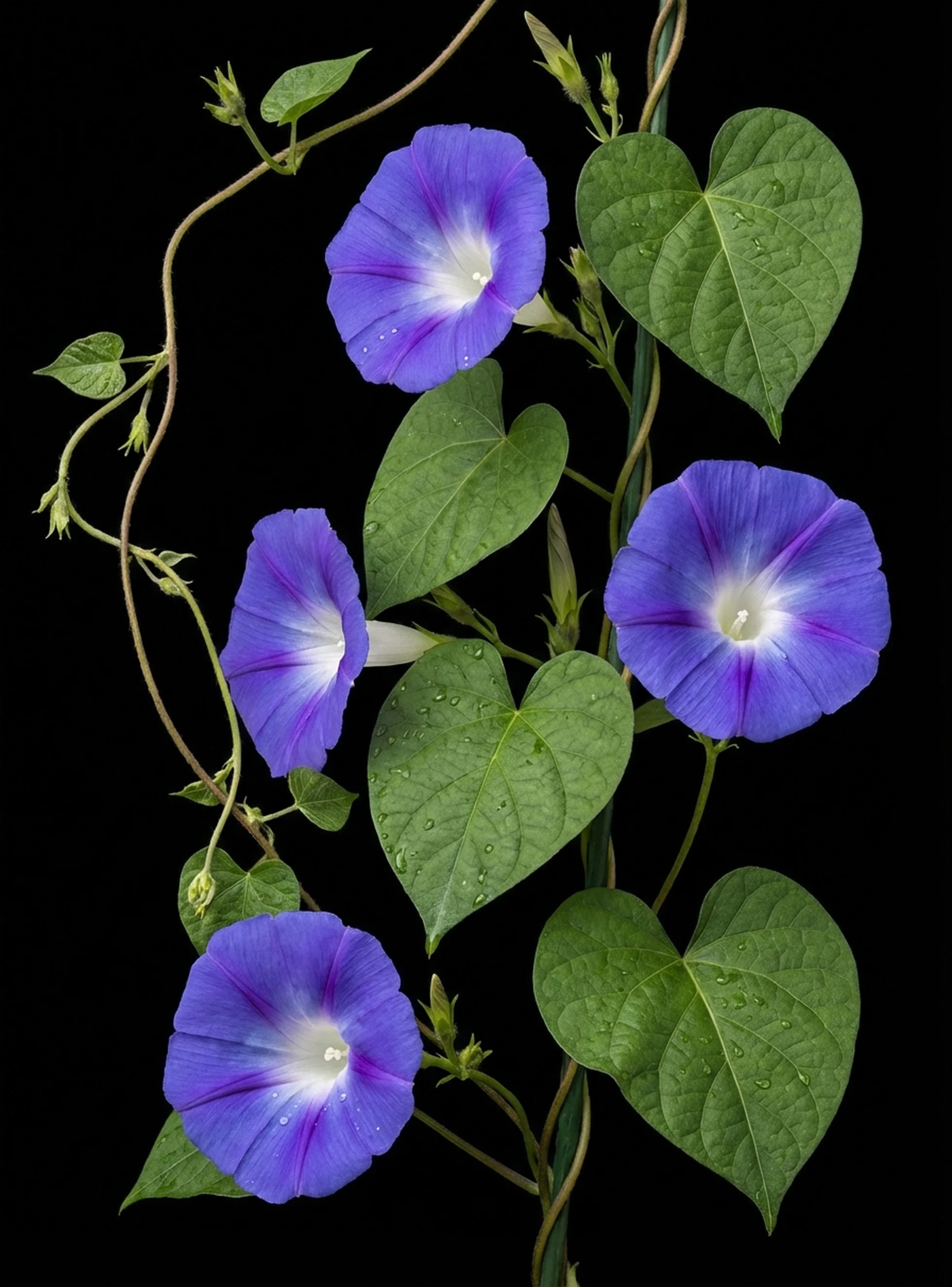
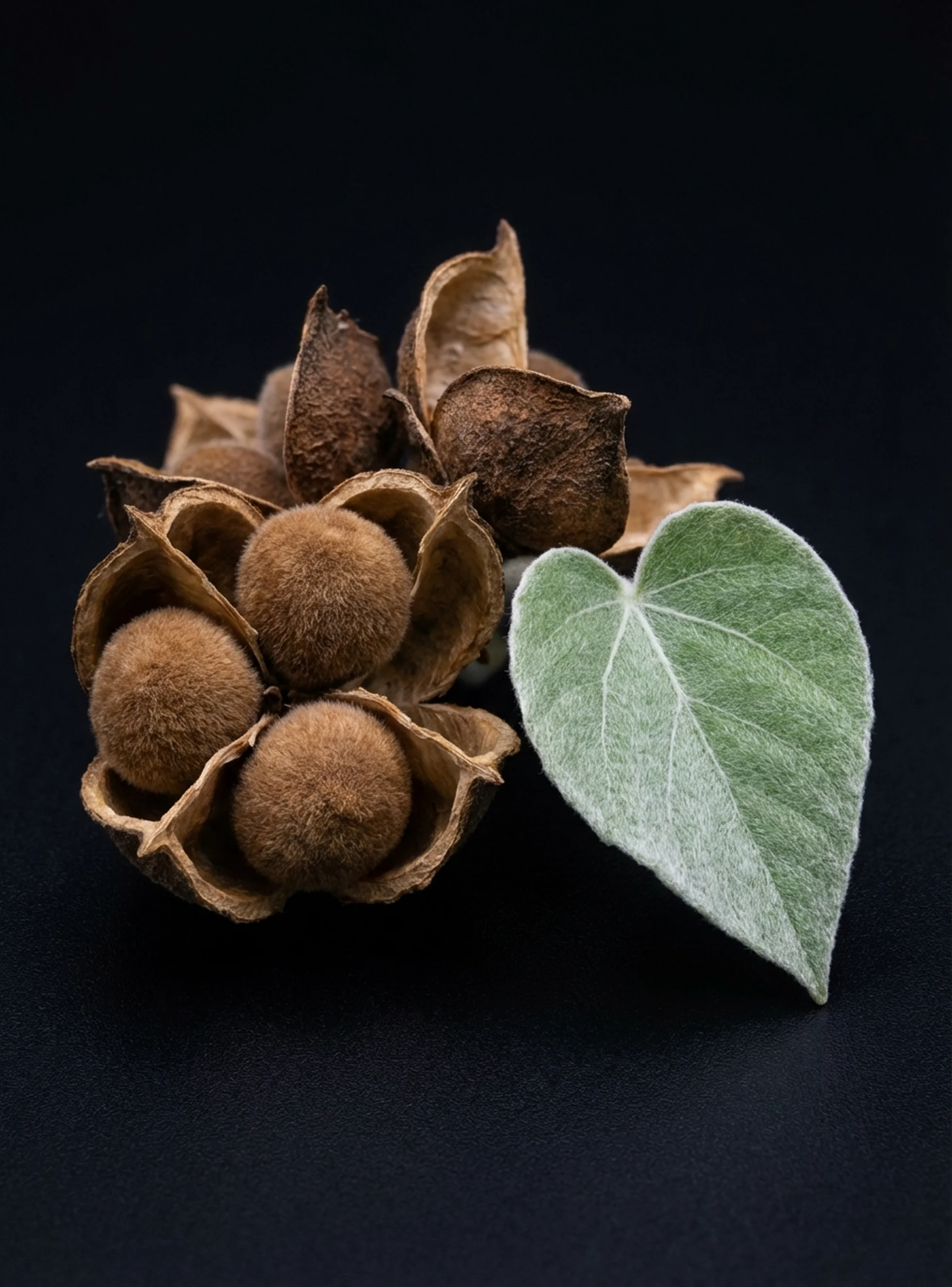
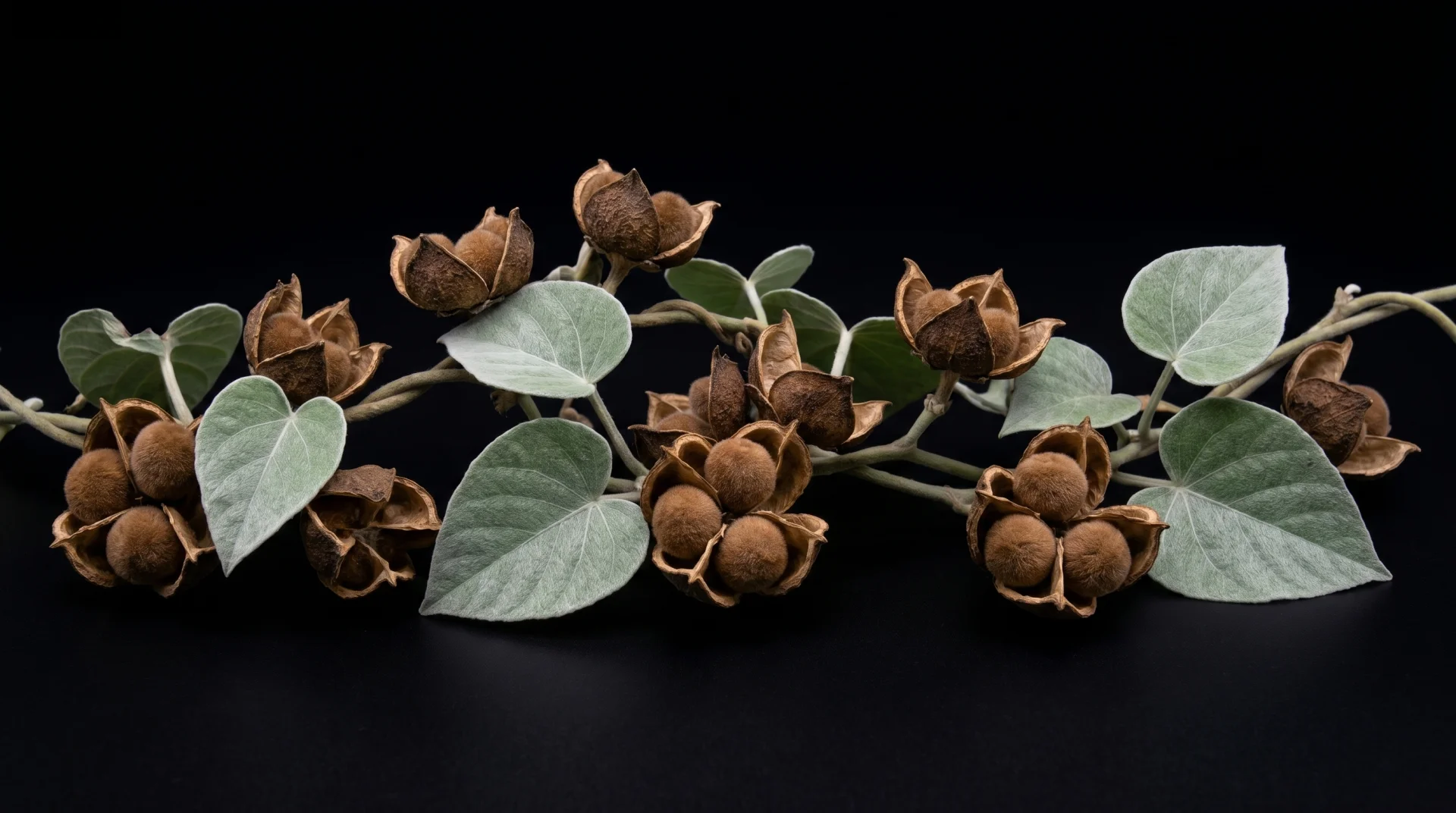
The plant is a vigorous woody climber with large heart-shaped leaves exceeding 30 centimeters in width, trumpet-shaped flowers ranging from pale pink to dark violet, and a distinctive white milky sap when stems are broken. Each dried seed pod, roughly 2 centimeters across and surrounded by a five-sectioned calyx, contains four to six large, hard seeds coated in a fuzzy brown layer. The "woodrose" in the common name refers to the appearance of these dried pods.
Within the broader taxonomy of psychoactive substances, Hawaiian baby woodrose belongs to the ergoline alkaloid class, placing it in the same chemical family as LSD and the Mesoamerican morning glories (Ipomoea tricolor and Ipomoea corymbosa). It is distinguished from those related species by its substantially larger seeds, its fuzzy seed coating, and its higher alkaloid concentration per seed. The genus Argyreia comprises approximately 30 species distributed across India, Malaysia, and surrounding regions.
Strength and duration
Intensity profile
Duration
Aftereffects: **
Chemistry
The seeds of Argyreia nervosa contain a complex mixture of ergoline alkaloids, compounds built on the same structural backbone as LSD. Understanding these compounds helps explain why the experience differs so sharply from its more famous chemical relative.
Ergine (LSA) and isoergine are the two primary psychoactive compounds, both classified as lysergamides. LSA is present at approximately 0.136% of dry seed weight, while isoergine is actually more abundant at 0.188%. Both function as partial agonists at serotonin receptors, with particular affinity for 5-HT1A and 5-HT2A. The 5-HT2A receptor is the same target that classical psychedelics like psilocybin and LSD activate to produce their characteristic effects. However, LSA binds this receptor with roughly one-tenth the affinity of LSD, which accounts for its reduced potency and its qualitatively different perceptual signature.
Beyond the primary pair, the seeds contain at least ten additional ergot alkaloids. Ergometrine is a clinically significant compound used in obstetrics to control postpartum bleeding, present at 0.049% of seed weight. Lysergic acid hydroxyethylamide and its isomer contribute additional psychoactive effects. Several clavine alkaloids (elymoclavine, chanoclavine) are present in trace amounts. Notably, methylergometrine and methysergide, previously thought to exist only as synthetic pharmaceuticals, have been identified in the seeds.
This multi-alkaloid profile is critical. The combination of compounds creates what researchers describe as a "whole seed" effect that differs from what purified LSA alone would produce. The ergot alkaloids collectively interact with serotonergic, dopaminergic (D1 through D5), and alpha-adrenergic receptors, a broader receptor footprint than most classical psychedelics. The dopamine D2 stimulation helps explain the pronounced nausea. The alpha-adrenergic activity produces vasoconstriction and the cardiovascular effects that users notice as heart pounding and blood pressure changes.
One pharmacological detail deserves emphasis: alkaloid concentrations vary dramatically between individual seeds. Analytical studies measuring single seeds found LSA ranging from 3 to 34 micrograms per seed, with an average of 17 micrograms. Only three of five commercial seed lots tested contained detectable ergot alkaloids at all. This variability is not a minor footnote. It is the defining pharmacological feature of the plant.
Methods of Encounter
People encounter Hawaiian baby woodrose almost exclusively through one route: eating the seeds. The seeds are purchased online from ethnobotanical retailers and smartshops, typically marketed as ornamental products with "not for human consumption" disclaimers, despite the understood intent.
Whole seed consumption is the most common method. The seeds are chewed and swallowed, with effects emerging 1 to 3 hours after ingestion and peaking at 4 to 8 hours. Total duration extends from 6 to 12 hours, with an afterglow that may persist an additional 12 hours. This route involves the entire seed matrix, including the fuzzy outer coating, inner kernel, and all accompanying plant compounds. Gastrointestinal distress, particularly nausea, is characteristic of this method.
Seed coat removal is sometimes practiced, based on the belief that the fuzzy outer layer contributes to nausea. Some people report reduced gastrointestinal distress after peeling the seeds, while others notice no difference. No controlled comparison exists, and the nausea derives partly from the alkaloids' own pharmacological action on dopamine receptors, not solely from the physical seed material.
Water or ethanol extraction concentrates the alkaloids by soaking crushed seeds in liquid, then filtering out the plant matter. This approach would theoretically produce faster onset and potentially reduce the fiber-related stomach upset, though it cannot eliminate the pharmacologically-mediated nausea. Limited published data describe the experiential effects of extracts specifically.
Poison center data reveal that 97% of documented exposures occurred through oral ingestion, with 93% taking place at the person's own residence. The typical user profile is male, mean age 24 years, consuming the seeds in private settings rather than ceremonial or clinical contexts.
It is worth noting what Hawaiian baby woodrose is not: it has no established tradition as a ceremonial medicine. The root of the speciosa variety has been used in Ayurvedic medicine for centuries as a rejuvenating tonic, but that tradition addresses the root, not the seeds, and targets systemic conditions like rheumatoid arthritis and edema rather than altered states of consciousness. Claims of ancient Hawaiian shamanic seed use lack credible evidence.

Origin & History
The vine grows where it has always grown, threading itself up through the tallest trees in the warm, humid regions stretching from Assam and Bengal in the northeast of India to Belgaum and Mysore in the south. In its native soil, Argyreia nervosa is an unremarkable presence: a large woody climber with heart-shaped leaves, a milky sap, and trumpet flowers that open in shades of pink to violet. For centuries, the plant's relationship with the people of the Indian subcontinent was mediated not through its seeds but through its roots.
In the Ayurvedic tradition, the variety speciosa is known as Vriddhadara and valued as a rasayana, a rejuvenator. The root, described as bitter and tonic, is traditionally given with milk for conditions ranging from edema to synovitis. Complex paste preparations combine it with other plants for cough, cold, and fever. Commercial Ayurvedic formulations like Speman and Geriforte continue this lineage today. The psychoactive potential of the seeds appears nowhere in this tradition.
The seeds entered Western awareness through a different door. In 1963, Albert Hofmann, the Swiss chemist who had synthesized LSD two decades earlier, identified lysergic acid amides in the seeds of morning glory species. His attention was focused on Ipomoea tricolor, which had documented ceremonial use among the Aztec and other Mesoamerican peoples, where it was known as tlitliltzin. The Spanish colonial records of the 16th century describe these morning glory rituals in detail. Argyreia nervosa shares the same chemical family as those Mesoamerican vines but shares none of their history.
The plant arrived in Hawaii at some undocumented date, introduced from India, and naturalized in the islands' tropical lowlands. Despite the common name "Hawaiian baby woodrose," the plant has no Hawaiian roots, and claims of traditional use by "Huna shamans" reflect a 20th-century fabrication rather than any indigenous practice.
During the 1960s, as the counterculture expanded its pharmacological curiosity, the seeds began circulating as a legal psychoactive. By the 1990s and 2000s, online smartshops were marketing them as "natural LSD," a description that overpromises and misleads. The regulatory landscape has evolved unevenly in response. In most jurisdictions, the seeds remain legal to purchase while extraction of their alkaloids is not. A few countries, including Italy, Austria, Sweden, and New Zealand, have moved toward explicit prohibition.
One of the most remarkable chapters in this story emerged only recently. In 2022, researchers Corinne Hazel and Daniel Panaccione at West Virginia University identified the source of ergot alkaloids in morning glory seeds: a previously undescribed fungal symbiont they named Periglandula clandestina, for the way it hides itself within the plant. This fungus produces ergot alkaloids at concentrations up to 1,000 times higher than grasses infected by related fungal species. The discovery solved a long-standing mystery about why these particular plants, belonging to an entirely different family than the cereal grains traditionally associated with ergot, produce the same class of compounds.

Effects
The Hawaiian baby woodrose experience is defined less by what it opens than by what it weighs down. With a composite strength score of 5 out of 10, it sits in the moderate range, but that number obscures an important truth: the somatic burden often makes the experience feel subjectively harder than other substances at a similar intensity level.
Perceptual (4.5/10)
The perceptual effects tend to arrive muted, like a psychedelic experience viewed through frosted glass. Open-eye visuals may include colors appearing more saturated, shapes seeming to breathe or flow, and subtle geometric patterning. Closed-eye visuals are typically more prominent, with some people reporting kaleidoscopic imagery that intensifies during the peak hours.
What distinguishes the perceptual profile is the auditory dimension. People frequently report distortions in how sound registers: music may feel immersive or emotionally amplified, environmental sounds may take on unfamiliar qualities, and some people describe synesthetic effects where senses seem to cross, such as "seeing" music or "feeling" color. This auditory prominence appears more characteristic of Hawaiian baby woodrose than of many other psychedelic substances.
Time perception undergoes significant distortion. Minutes may feel like hours during the peak, or extended periods may pass unnoticed. This alteration carries a dreamlike quality rather than the vivid temporal stretching reported with LSD.
Cognitive (4.5/10)
The cognitive terrain is complicated by a persistent sedation that colors the entire experience. Where LSD tends to produce a crystalline sharpness of thought, Hawaiian baby woodrose often brings a diffuse, drowsy quality. Thoughts may become associative and drift-prone, with attention difficult to maintain on structured reasoning.
Self-reflection can deepen. Some people report examining their behaviors and thought patterns from an altered vantage point. But this introspection tends toward passive observation rather than the active interrogation that psilocybin or LSD may provoke. The mind watches its own processes as if through a window, without the same urgency to engage.
At higher intensities, depersonalization or derealization may occur, feelings of detachment from one's sense of self or from reality. Memory encoding during the experience is often compromised, with people reporting that the details of what happened feel hazy afterward, in contrast to the vivid recall that often accompanies LSD experiences.
Emotional (5.5/10)
The emotional dimension carries the widest range. Some people report gentle euphoria and a peaceful lassitude, a profound heaviness that feels more like surrender than sedation. Others encounter anxiety that builds during the come-up and may persist throughout, coloring the entire experience with unease.
This variability is not simply a matter of individual differences. The same person, consuming seeds from the same batch, may have a qualitatively different emotional experience on different occasions. The unpredictability of alkaloid concentration means that the emotional landscape cannot be reliably anticipated.
At the difficult end of the spectrum, case reports document agitation, panic, toxic psychosis, and in rare instances, suicidal ideation. These outcomes are not typical, but they are not hypothetical either. They represent the far tail of a distribution that extends further than many people expect.
The afterglow, when it arrives, can bring a tranquil resolution. Some people describe deep, refreshing sleep following the experience, while others carry residual anxiety or dysphoria into the next day.
Somatic (6.5/10)
This is where Hawaiian baby woodrose announces itself most insistently. Nausea is the signature physical effect, reported by a substantial proportion of people who consume the seeds and documented in 45% of poison center cases. It typically emerges during the come-up, sometimes progressing to vomiting, and may be accompanied by stomach cramps and flatulence. The nausea derives from two sources: the physical seed material (oils, fiber, coating) and the alkaloids' stimulation of dopamine D2 receptors in the gut.
Cardiovascular effects include elevated blood pressure, heart palpitations, and in some cases, a paradoxical slowing of heart rate. These reflect the ergot alkaloids' interaction with alpha-adrenergic receptors, producing vasoconstriction. People with existing cardiovascular conditions face meaningful risk from these effects.
The body feels heavy. Motor coordination decreases, fine motor control becomes difficult, and physical movement takes deliberate effort. This profound lethargy is one of the clearest distinctions from LSD, which may produce restlessness but not this particular brand of leaden stillness. Body temperature may fluctuate, with alternating sensations of chills and warmth. Pupils dilate. Appetite disappears entirely.
The arc
The experience unfolds slowly. Effects first become noticeable 1 to 3 hours after consumption, building through a come-up phase that is often the most physically uncomfortable period. The peak arrives 4 to 8 hours in and may plateau for 1 to 3 hours before beginning a gradual descent. Total primary effects span 6 to 12 hours, with an afterglow that may add another 12. Most people return to baseline within 24 hours, though some report lingering headaches, blurred vision, or fatigue the following day.
A note before reading
Each experience is different. What you may notice depends on dose, setting, and the body and mind you bring to it.
What people often notice
Emotional spectrum
Visual
Patterns and gentle distortions may surface, surfaces breathing slightly, edges softening, geometries flickering at the periphery.
Cognitive
Loose associations may appear, insights surface sideways, and familiar ideas can rearrange into fresh shapes.

Risks & Limits
Hawaiian baby woodrose carries a risk profile that is easy to underestimate because the seeds look harmless and are legal in many places. The risks are real, documented in clinical case reports and poison center data, and they concentrate in specific areas.
Cardiovascular effects are the most clinically significant physical concern. The ergot alkaloids produce vasoconstriction through alpha-adrenergic receptor activation, leading to elevated blood pressure. Animal studies document blood pressure increases exceeding 30 mmHg above baseline with related ergot compounds. Heart rate may rise or, paradoxically, decrease (bradycardia). People with hypertension, coronary artery disease, peripheral vascular disease, or a history of stroke or heart attack face meaningfully elevated risk of serious complications.
Neurological complications include documented cases of seizure and posterior reversible encephalopathy syndrome (PRES), a serious condition involving cerebral vasoconstriction that required intensive care. Among 29 poison center cases, neurological effects were documented in 41%, including tremors and altered consciousness.
Psychiatric risks deserve particular attention. Acute anxiety and panic are common adverse effects. Case reports document toxic psychosis with hallucinations and psychomotor agitation requiring hospitalization. Suicidal ideation and intent have been recorded in multiple cases, including one fatal instance involving a person who jumped from a building during intoxication. Among poison center consultations, 7% experienced major effects requiring intensive intervention.
Pregnancy is an absolute contraindication. The seeds contain ergometrine, a compound used clinically to induce uterine contractions. Even a single exposure could precipitate miscarriage, placental abruption, or fetal distress.
Drug interactions are extensive. Combining Hawaiian baby woodrose with MAO inhibitors creates serious risk of serotonin syndrome. SSRIs and other serotonergic medications amplify serotonin effects. Alcohol potentiates sedation and impairs judgment (the one documented fatality involved concurrent alcohol and cannabis use). Ergot derivatives like ergotamine, sometimes prescribed for migraines, can produce dangerous additive vasoconstriction.
Populations at elevated risk include people with psychotic disorders or family history of schizophrenia, people with active depression and suicidal ideation, people under 18 (whose central nervous systems are still developing), and people with impaired liver or kidney function.
The unpredictability factor compounds every other risk. Because alkaloid concentration varies from 3 to 34 micrograms of LSA per seed, the same number of seeds can produce anything from mild effects to a medical emergency. This is not a substance where prior experience reliably predicts the next encounter.
No physical dependence or withdrawal syndrome has been documented. Classical hallucinogens in general show low dependence potential compared to opioids, alcohol, or stimulants, and the frequently unpleasant nature of the Hawaiian baby woodrose experience likely limits repeat use further.
Set, setting, and the company of a trusted, sober person matter here, as they do with any psychoactive substance. But with Hawaiian baby woodrose, even these precautions cannot fully compensate for the fundamental uncertainty of what is in each seed.

Integration
What comes after a Hawaiian baby woodrose experience may not resemble what comes after other psychedelic encounters. The afterglow, when it arrives, can bring genuine tranquility: a deep sleep, a quiet morning, a sense that something has settled. But for many people, the predominant feeling is relief that the physical discomfort has passed rather than a sense of meaning waiting to be unpacked.
This distinction matters. Much of the psychedelic integration literature assumes that the experience contained insight, that there is a thread to follow back into daily life. With Hawaiian baby woodrose, the experience may have been primarily somatic, dominated by nausea and heaviness rather than revelatory content. Integration in this context might begin with a simpler question: how is my body feeling today?
For those who did encounter meaningful emotional or perceptual material, the same practices that support integration after other psychedelics apply. Journaling, especially in the first 24 to 48 hours while memory is freshest, can help preserve impressions that tend to fade quickly (the dreamlike cognitive quality of this substance makes recall particularly fragile). Rest, not just sleep but unhurried time without obligations, gives the nervous system room to recalibrate.
Conversation with a trusted person can be grounding, particularly if the experience involved anxiety, panic, or feelings of depersonalization. Naming what happened, without dramatizing or dismissing it, helps place the experience in context. For anyone who encountered suicidal ideation or psychotic symptoms during intoxication, professional support is not optional. These are not experiences to process alone.
Research on psychedelic afterglow across 48 studies suggests that positive psychological effects, including reduced anxiety and increased mindfulness, are commonly observed in the days and weeks following classical psychedelic use. Whether this pattern extends to Hawaiian baby woodrose specifically is unknown, given the absence of controlled studies.
One integration question is particular to this substance: whether to return to it. The high variability of effects and the documented potential for serious adverse outcomes mean that a mild first experience does not predict a mild second one. For some people, the most honest form of integration may be the decision that this particular door does not need to be opened again.
Ethics & Ecology
The ecological story of Hawaiian baby woodrose is, in some ways, the inverse of what we find with many psychoactive plants. There is no conservation crisis. The plant is not endangered, not overharvested, not struggling to survive. Within its native Indian subcontinent range, it remains common, cultivated intentionally as both an ornamental and a source of Ayurvedic medicine. Commercial seeds come from cultivated stock, not wild populations. No habitat is being destroyed to produce what appears on a retailer's website.
The ecological concern runs in the opposite direction. Argyreia nervosa is an aggressive climber that, once introduced to tropical regions outside its native range, tends not to stay where it is planted. In Hawaii (where the common name originates), in Queensland, Australia, and in parts of the Caribbean, the vine has naturalized and can outcompete native vegetation. In island ecosystems, where biodiversity is both precious and fragile, this invasive potential represents genuine ecological harm.
The cultural dimension is more troubling. The marketing of this plant as "Hawaiian" baby woodrose, often wrapped in imagery of island spirituality and indigenous ceremony, constitutes a specific form of appropriation. The plant is not from Hawaii. No credible evidence supports traditional Hawaiian use. The "Huna shamanism" narrative sometimes attached to these seeds was invented by Max Freedom Long in the 20th century and does not represent authentic Hawaiian religious practice. Native Hawaiian communities have not endorsed or benefited from this commercial framing.
Within India, where the plant does have legitimate traditional use in Ayurvedic medicine, the commercialization of Argyreia extracts by multinational pharmaceutical companies raises questions about equitable benefit-sharing with the knowledge holders who developed those preparations over centuries.
The legal landscape, already documented in the database, reflects these tensions without resolving them. Seeds remain legal in most jurisdictions, occupying a grey zone where retailers and buyers participate in a shared fiction about ornamental intent.
Misconceptions
Hawaiian baby woodrose is a mild, natural, safer alternative to LSD.
The word "natural" does not mean safer. While LSA is chemically related to LSD, the experiential profiles differ substantially. Hawaiian baby woodrose produces sedation, pronounced nausea, cardiovascular effects, and, in documented cases, psychosis and suicidal ideation. Among poison center cases, 7% experienced major effects requiring intensive intervention. The alkaloid mixture in the seeds creates a qualitatively different experience from LSD, one that is frequently dominated by autonomic distress rather than perceptual clarity.
Removing the seed coat eliminates the nausea.
Some people report reduced stomach upset after peeling the fuzzy outer layer, but no controlled evidence supports this practice. The nausea has two sources: physical plant material (oils, fiber) and pharmacological action (dopamine D2 receptor stimulation by the alkaloids themselves). Removing the coat addresses only the first source. The second persists regardless.
Dosing is predictable if you count seeds.
Analytical chemistry tells a different story. LSA content ranges from 3 to 34 micrograms per seed, a tenfold variation. When researchers tested seeds from five different vendors, only three contained detectable ergot alkaloids at all. Counting seeds provides the illusion of precision while the actual alkaloid load remains unknown.
The plant has ancient Hawaiian ceremonial origins.
*Argyreia nervosa* is native to India, not Hawaii. It was introduced to the Hawaiian islands at an undocumented modern date. Claims of traditional use by "Huna shamans" reflect a 20th-century fabrication, not indigenous Hawaiian practice. No archaeological, ethnographic, or historical documentation supports ceremonial seed use in Hawaii or in India.
A single experience carries negligible risk for healthy people.
Documented adverse outcomes include seizures, posterior reversible encephalopathy syndrome, psychosis, and one fatality. Among poison center cases, 12.3% required medical attention. Even in people without known risk factors, the extreme variability in seed alkaloid content means that an unexpectedly high-potency batch can produce effects far beyond what was anticipated.
FAQ

Reflection
There is something instructive about a psychoactive plant that resists romanticization. Hawaiian baby woodrose offers no lineage of sacred ceremony, no mythos of shamanic tradition, no story of ancient peoples who understood what we have forgotten. It is a vine from India that ended up in Hawaii, named for a seed pod that resembles a carved rose, containing compounds that the body processes as something between an ordeal and a riddle.
Perhaps the honest question is not what this plant can give us, but what it asks us to sit with. Uncertainty. The knowledge that two seeds from the same batch may carry entirely different chemical messages. The recognition that the body has its own vocabulary for discomfort, and sometimes the most important information in an experience is not the vision but the nausea.
We are drawn to substances that promise transformation. This one, more than most, reminds us that transformation is never guaranteed, and that the territory between the promise and the reality is where our attention belongs.
Sources
Primary research sourced from peer-reviewed pharmacological, ethnobotanical, and clinical literature. See the full research profile for detailed citations and evidence tags.
For how we evaluate sources and structure our claims, see the methodology.