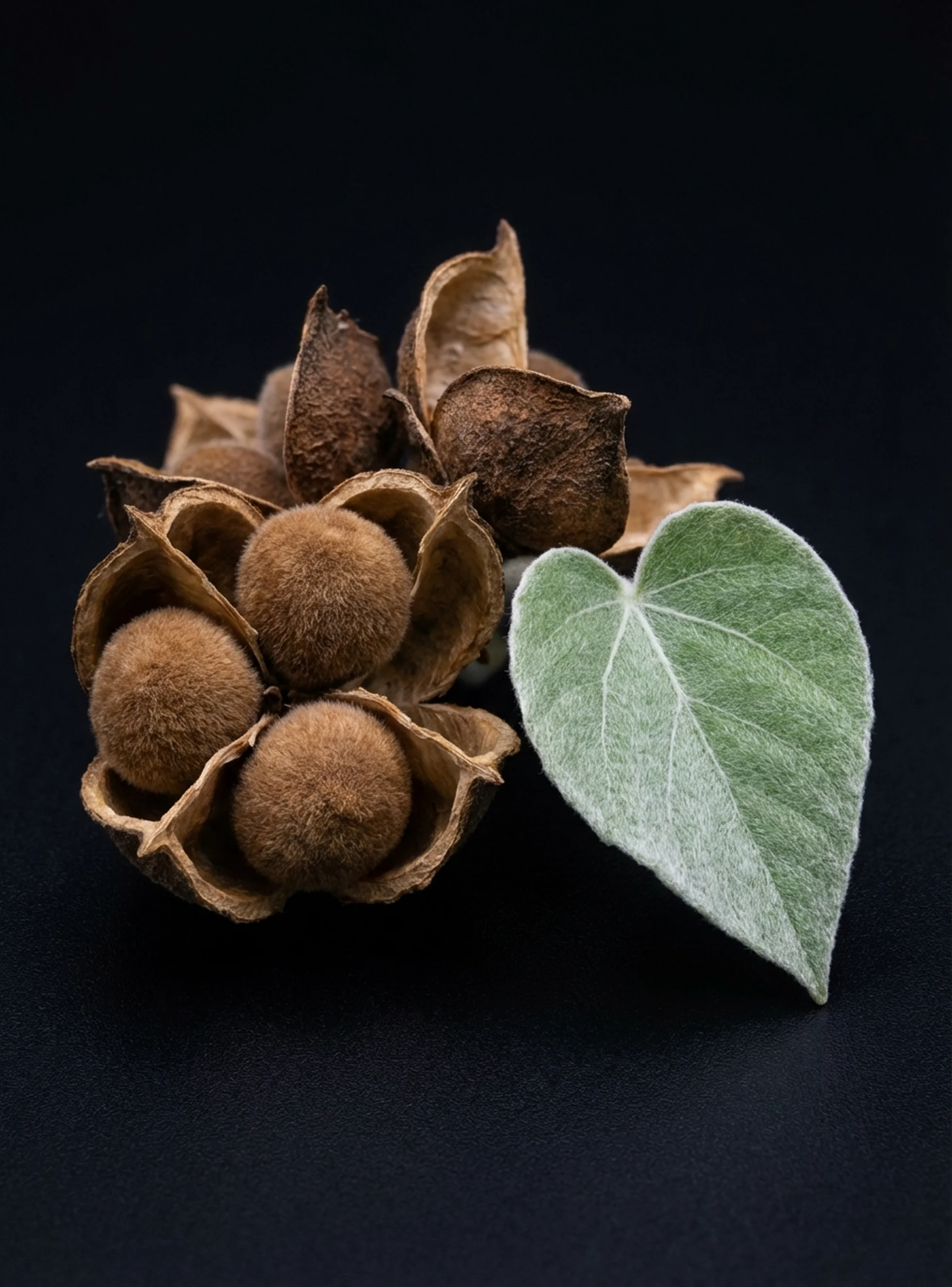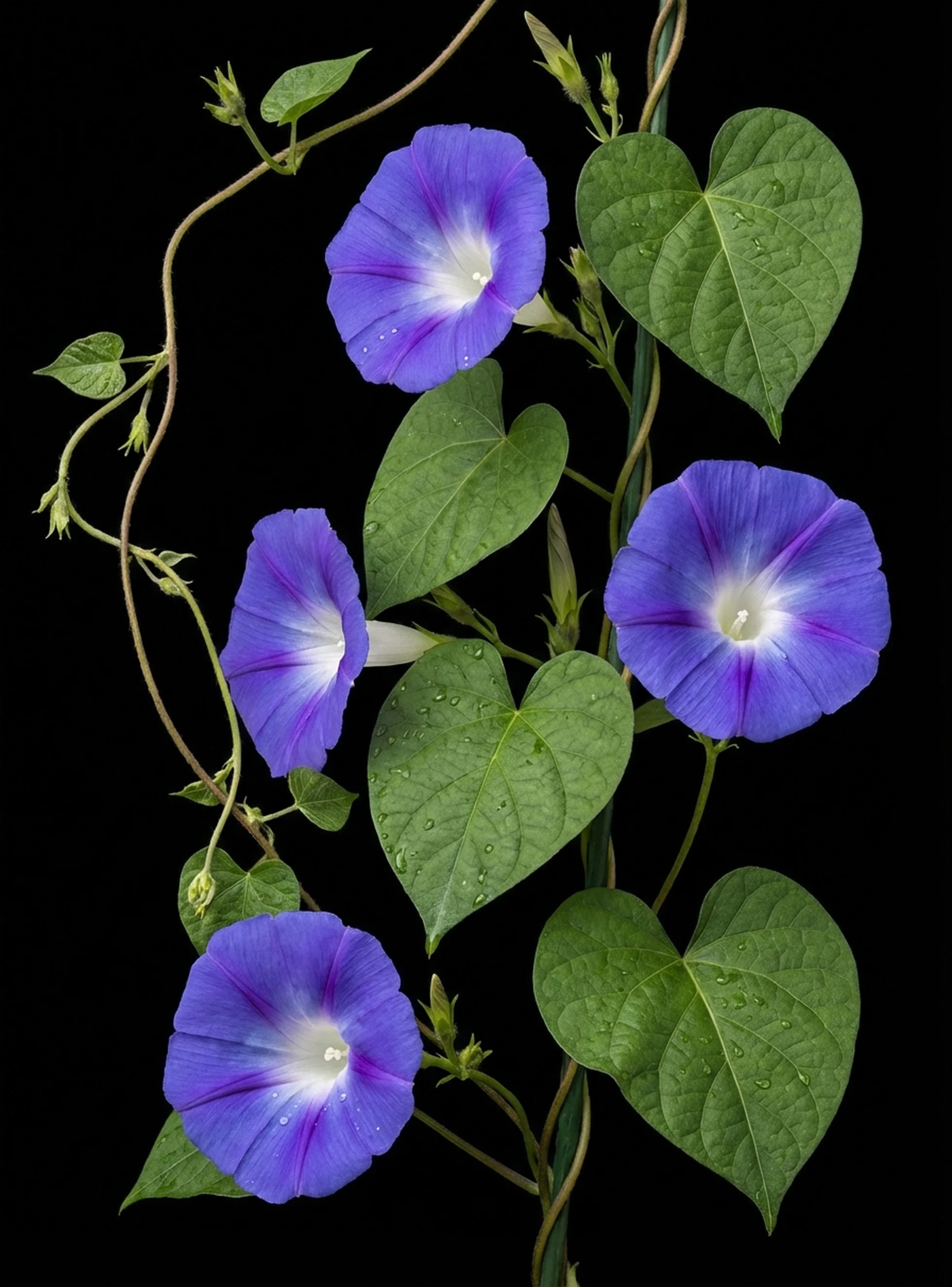

Morning Glory is a common garden vine whose seeds contain ergine (LSA), producing a dreamy, watery psychedelic state gentler and shorter than LSD, used ceremonially in ancient Mesoamerica.
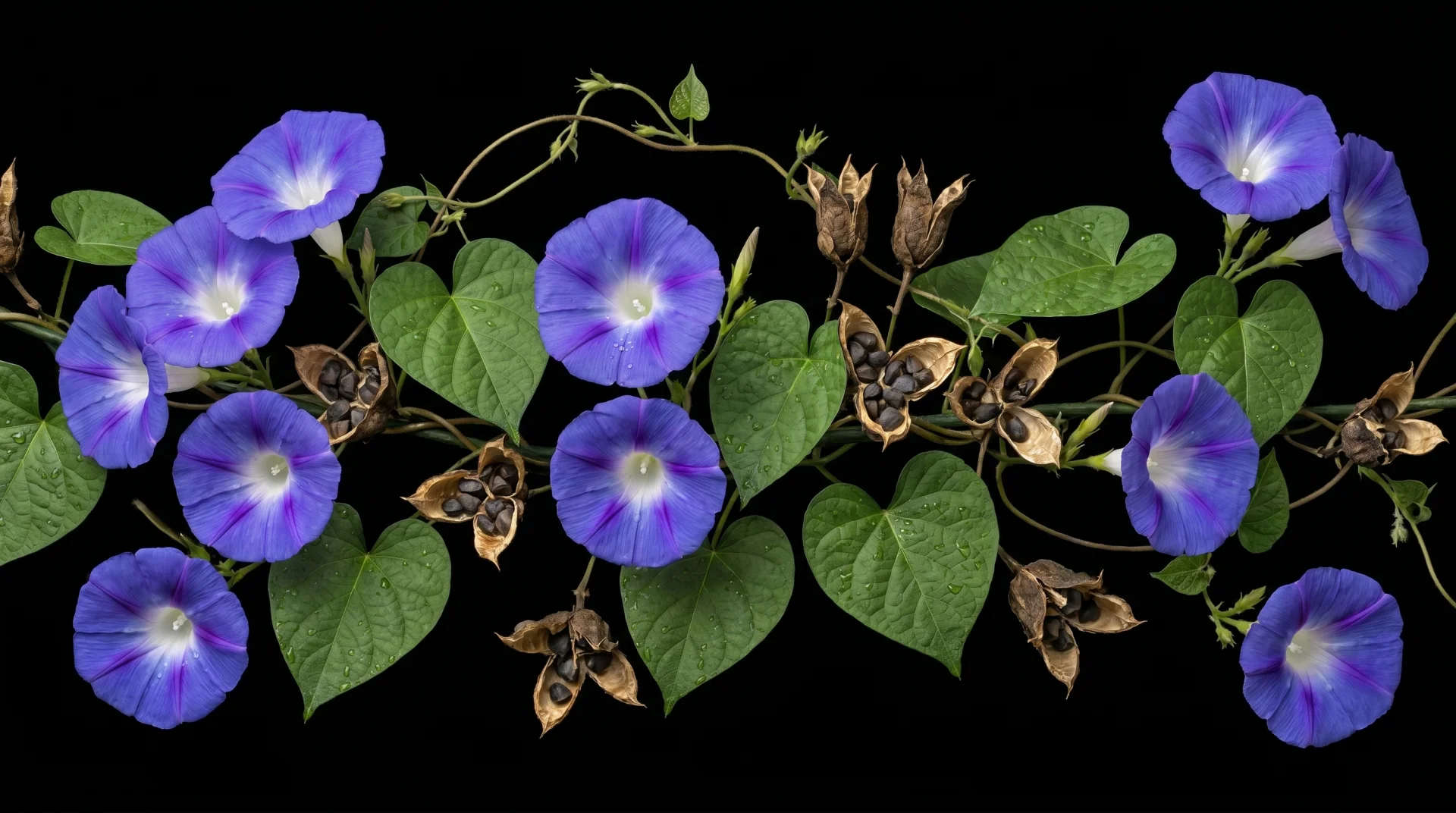
Morning Glory is a common garden vine whose seeds contain ergine (LSA), producing a dreamy, watery psychedelic state gentler and shorter than LSD, used ceremonially in ancient Mesoamerica.
Morning
Glory
Fact file
- Type
- Plant
- Botanical name
- Rivea corymbosa
- Other names
- Morning glory, heavenly blue, pearly gates, flying saucers
- Origin
- Mesoamerica
- Duration
- 6-10 hours
- Strength
- Moderate
- Legal status
- Illegal in 21 of 31 listed jurisdictions, and varies elsewhere
What is Morning Glory?
In the cloud forests of Oaxaca, a vine climbs toward the light and opens its trumpet-shaped flowers at dawn, then closes them before afternoon. The seeds it drops are small, dark, and bitterly unassuming. For centuries, Zapotec healers ground those seeds in the dark, consumed them in ceremony, and waited for what they described as a doorway to open between this world and another.
Morning glory (Ipomoea tricolor, Turbina corymbosa) occupies a strange position among psychoactive plants. Its primary compound, ergine, is a structural relative of LSD, yet the experience it produces tends to be gentler in the mind and rougher on the body. Where LSD offers precision, morning glory offers variability. Alkaloid concentrations in the seeds can shift tenfold or more between batches, making each encounter a negotiation with uncertainty. Nausea visits the majority of those who consume the seeds, and the physical discomfort often colors the entire arc of the experience.
What makes morning glory worth understanding is not its potency but its strangeness: a garden flower sold at hardware stores, carrying compounds that rearrange perception, embedded in a history of colonial suppression that tried to erase the very knowledge of what the seeds could do. The vine kept climbing.
Identity
Scientific names: Ipomoea tricolor Cav. (1791); Turbina corymbosa (L.) Raf. (formerly Rivea corymbosa)
Common names: Morning glory, heavenly blue, pearly gates, flying saucers, ololiuhqui (Nahuatl), ndo-cua (Zapotec)
Family: Convolvulaceae (morning glory/bindweed family)
Substance type: Flowering plant (dicot), climbing vine
Two distinct species are commonly referenced under the name "morning glory." Ipomoea tricolor produces the iconic deep blue-to-purple trumpet flowers (5 to 7 centimeters across) that open in the morning and fade by afternoon. Its seeds are small, dark brown to black, roughly 3 to 4 millimeters in diameter. Turbina corymbosa produces smaller white-to-pink flowers and slightly larger seeds, arranged in the compound clusters that give the species its name.
Both belong to the Convolvulaceae, a large family that includes several species with overlapping alkaloid profiles. The most notable relative is Argyreia nervosa (Hawaiian baby woodrose), which contains similar ergot alkaloids at higher concentrations. Modern DNA barcoding confirms that Ipomoea tricolor and Turbina corymbosa are distinct species despite their shared chemistry.
The taxonomy has shifted over time. The genus Rivea was merged into Turbina by Austin and Huaman in 1996 based on cladistic analysis, but many older papers still cite Rivea corymbosa, creating persistent citation confusion in the ethnobotanical literature.
Strength and duration
Intensity profile
Variability: High (depends heavily on dose, setting, and individual sensitivity)
Duration
Aftereffects: **
Chemistry
Morning glory seeds contain a family of ergot alkaloids, compounds structurally related to LSD but pharmacologically distinct in ways that matter.
Ergine (lysergic acid amide, or LSA) is the primary psychoactive compound, present at roughly 0.003 to 0.1 percent of seed dry weight. Isoergine, the second major alkaloid, differs slightly in its binding profile and may contribute to qualitative differences in the experience. Both were first isolated by Albert Hofmann's group at Sandoz Laboratories in 1960 and 1963 respectively, the same team that had synthesized LSD two decades earlier.
Ergine and isoergine function as partial agonists at serotonin receptors, with their strongest affinity at the 5-HT2A receptor (the primary target for hallucinogenic effects across all classical psychedelics). The word "partial" is important here. Where LSD activates the 5-HT2A receptor with full force, ergine engages it at reduced strength, which helps explain why morning glory experiences tend to be less perceptually intense. The compounds also bind to 5-HT1A receptors (potentially contributing to anxiolytic properties), 5-HT7 receptors (involved in circadian rhythm), and dopamine receptors to a lesser degree.
The downstream effect of 5-HT2A activation follows a now-familiar cascade: increased glutamate release in the prefrontal cortex, disruption of thalamic gating (the brain's sensory filter), and reduced activity in the default mode network, the system associated with the sense of a stable self. This is the shared mechanism that links morning glory to LSD, psilocybin, and mescaline.
Several secondary alkaloids are present in smaller quantities. Lysergic acid, ergotamine, penniclavine, chanoclavine, and festuclavine all appear in the seeds, though their contribution to the subjective experience remains unclear. Ergotamine deserves specific mention: it is a known vasoconstrictor used medically for migraine, and its presence may account for some of the cardiovascular effects users report.
A critical practical consideration is concentration variability. Alkaloid content in morning glory seeds can vary by a factor of ten to one hundred depending on harvest date, growing conditions, cultivar, and storage. This creates a level of unpredictability that standardized compounds like pharmaceutical-grade LSD or psilocybin do not carry.

Methods of Encounter
People encounter morning glory almost exclusively through oral consumption. The seeds themselves are the vehicle, and how they are prepared shapes the arc of the experience.
Whole seeds represent the most common route. Seeds are typically chewed or ground before swallowing. Onset ranges widely, from 30 minutes to 2 hours, depending on individual gastric emptying, food in the stomach, and the seed's hard coat, which can delay alkaloid release. The experience tends to begin with physical sensations (warmth, tremor, and often nausea) before the perceptual and cognitive shifts arrive. Total duration runs 6 to 9 hours. The wide variability in alkaloid content means that identical seed counts from different sources can produce markedly different experiences.
Tea or cold-water infusions involve soaking or gently heating seeds to extract the alkaloids into liquid, then filtering out the plant material. Users who choose this route often report a somewhat faster onset (45 to 90 minutes) and, in some cases, reduced nausea, since the seed solids, rich in tannins and lipids that irritate the digestive tract, are removed. However, no systematic study has measured how efficiently different alkaloids transfer into water, and the duration may be slightly shorter than with whole seeds.
Other routes are either ineffective or undocumented. Smoking destroys the alkaloids, which are heat-sensitive. Intranasal, rectal, and intravenous administration are not documented in any literature and carry serious safety concerns.
In traditional Mesoamerican contexts, Zapotec healers prepared Turbina corymbosa seeds by grinding them with other plant materials in ceremonies conducted at night, in sacred settings, with community support. Modern use is largely solitary, typically in home settings, by people who have purchased seeds from online botanical suppliers or garden centers. The gap between these two contexts, one ritualized and guided, the other informal and self-directed, shapes not only the experience itself but the risks that accompany it.

Origin & History
The vine grew first in the Sierra Madre del Sur, along the borderlands of Oaxaca and Guerrero, in the cloud forests and mixed deciduous zones between 800 and 2,000 meters. Turbina corymbosa took root there, and the Zapotec people, who had lived alongside it for generations, came to understand its seeds as something more than botanical material. They called it ndo-cua, and their healers consumed it in nighttime ceremonies to facilitate diagnosis of illness, to communicate with ancestors, and to see what ordinary sight could not reach.
The Mixtec people used the seeds similarly, entrusting them to calendar-keepers and diviners called tonalpouhque. The Aztecs knew a related preparation as ololiuhqui, a Nahuatl word meaning "round thing," though which exact species that name referred to remains debated among modern ethnobotanists. The seeds were not understood as drugs. They were understood as messengers, openers of pathways between realms.
Then came the Spanish. Friar Bernardino de Sahagun, writing his Historia General de las Cosas de Nueva Espana around 1570, described Aztec use of ololiuhqui for trance and prophecy, then characterized it as sinful, "a false god, a pretense, a lie." Colonial authorities burned codex manuscripts, prohibited gatherings, and threatened punishment. The Inquisition pursued cases of "witchcraft" that sometimes involved hallucinogenic plants. Urban and accessible populations shifted away from use. In remote mountain communities, the practice continued quietly.
Four centuries passed before Western science circled back. In 1960, Albert Hofmann, the same chemist who had synthesized LSD in 1938, isolated ergine from Turbina corymbosa seeds at Sandoz Laboratories in Basel. He consumed the seeds himself and documented the experience: milder than LSD, accompanied by more physical discomfort, but unmistakably psychoactive. By 1963, his group had identified isoergine as a second major alkaloid, revealing a complexity that helped explain the variability in user reports.
The 1960s counterculture discovered morning glory as a legal alternative to the newly prohibited LSD. Seeds were purchased at garden shops and consumed in dorm rooms, a far cry from the ceremonial context of Oaxacan cloud forests. The United States responded with the Controlled Substances Act of 1970, though LSA in plant form occupied a legal gray area for decades. By the 2000s, various countries had implemented explicit prohibitions, yet the seeds remained widely available as ornamentals, sold with disclaimers against human consumption.
Today, a quiet irony persists. The knowledge that colonial powers tried to erase is now documented in academic journals and discussed on internet forums, while the communities that held that knowledge for centuries have seen their traditions disrupted by the very commercialization and external interest that brought morning glory back to public attention.

Effects
The morning glory experience tends to begin not in the mind but in the stomach. Within the first hour, most people become aware of their body in ways they did not expect, and this physical conversation between the seeds and the gut colors everything that follows.
Perceptual (5/10)
The perceptual effects of morning glory occupy a middle register. With eyes closed, people often report rich, complex visuals: geometric tessellations, spirals, grids, and occasionally coherent scenes or narrative imagery described as carrying symbolic weight. The palette may shift toward what users call "electric" or "neon" hues. With eyes open, the effects tend to be more restrained than what LSD or psilocybin produce. Surfaces may appear to breathe or warp gently, colors may seem more saturated, and a dreamlike quality can settle over the environment. Full-blown open-eye hallucinations are less common.
Auditory perception often sharpens. Music may feel more emotionally resonant, sounds more detailed. In quiet settings, some people notice internal sounds or slight auditory distortions. Tactile sensitivity tends to increase as well, with textures registering more vividly and temperature perception shifting unpredictably.
Residual visual sensitivity (enhanced colors, mild geometric pattern recognition) can linger for 12 or more hours after the peak, sometimes extending into the following day.
Cognitive (5/10)
Thought patterns loosen. Associations that normally stay separate begin to connect, and metaphorical thinking may feel unusually natural. People frequently report accessing perspectives on their own behavior, relationships, or decisions that feel genuinely novel, as if a familiar room has been rearranged just enough to reveal something previously hidden.
Time tends to dilate. Hours may feel substantially longer than they are, especially in the early phases. Self-observation often intensifies: people describe watching their own thoughts from a slight distance, as though a quiet witness has joined the conversation. At higher intensities, the boundary between self and environment can soften toward what some describe as a dissolving of edges.
Rumination is a real possibility. Some people find themselves cycling through a particular thought or worry, unable to set it down. This looping quality, when it appears, often coincides with the period of greatest physical discomfort.
Emotional (6/10)
Emotional intensity rates notably high, and the range is wide. The early phase is often colored by the body's response to the seeds: nausea and tremor can generate anxiety before the psychoactive effects have fully arrived, creating a feedback loop in which discomfort feeds apprehension and apprehension intensifies discomfort.
Once the peak settles, the emotional landscape may open considerably. Some people describe profound awe or a sense of interconnectedness with the world around them. Others access grief, melancholy, or memories they had not visited in years. The experience does not guarantee euphoria; it tends to amplify whatever is already present, and what is present includes the difficult. An estimated 15 to 30 percent of users report significant anxiety, sometimes approaching panic.
The descent phase often carries its own emotional character: a quality of processing or release, as if the mind is sorting through what was encountered. The day following may bring emotional sensitivity, a lingering tenderness that can feel either clarifying or raw.
Somatic (6/10)
This is where morning glory distinguishes itself from its pharmacological relatives, and not comfortably. Nausea affects an estimated 60 to 80 percent of users, typically arriving in the first hour and peaking during the come-up before easing as the experience reaches its plateau. Roughly 10 to 15 percent of users vomit. The tannins, lipids, and fiber in the seed material likely contribute, but the ergot alkaloids themselves carry sympathomimetic properties that add to the discomfort.
Tremor is common, ranging from subtle hand shaking to whole-body vibration. Heart rate may increase by 10 to 30 beats per minute, and some users report palpitations or a racing sensation. Pupil dilation is typical and persistent. Appetite suppresses throughout the experience and often into the following day. Fatigue tends to arrive during the descent and can extend well into the next morning.
The somatic load is frequently described as the most difficult aspect of the experience, sometimes overshadowing the perceptual and cognitive dimensions entirely. Many people who try morning glory once and do not return cite the physical discomfort as their primary reason.
A note before reading
Each experience is different. What you may notice depends on dose, setting, and the body and mind you bring to it.
What people often notice
Emotional spectrum
Visual
Patterns and gentle distortions may surface, surfaces breathing slightly, edges softening, geometries flickering at the periphery.
Cognitive
Loose associations may appear, insights surface sideways, and familiar ideas can rearrange into fresh shapes.

Risks & Limits
Morning glory carries a risk profile shaped less by extreme danger and more by unpredictability. No fatal overdose from morning glory seeds alone has been documented in the accessible literature, but "not documented as lethal" is a low bar for safety, and the risks that do exist deserve honest attention.
Cardiovascular concerns are the most physiologically significant. Ergot alkaloids have sympathomimetic properties, meaning they can accelerate heart rate, elevate blood pressure, and constrict blood vessels. Ergotamine, present in the seeds alongside ergine, is a known vasoconstrictor used medically for migraine. No formal blood pressure monitoring study with morning glory exists in humans, but user reports consistently describe cardiovascular activation. People with hypertension, arrhythmias, cardiac disease, or a family history of early cardiac events face meaningfully elevated risk.
Gastrointestinal distress is nearly universal. The nausea, cramping, and occasional vomiting that affect 60 to 80 percent of users are not merely unpleasant; they can trigger anxiety, complicate the psychological experience, and, in rare cases involving prolonged vomiting, raise concerns about dehydration and aspiration.
Psychological risks follow the pattern shared by all serotonergic psychedelics, with added complications from the physical discomfort. An estimated 15 to 30 percent of first-time users report significant anxiety or panic, often triggered by the unfamiliarity of the somatic effects. Transient psychotic features (paranoia, delusions, loss of reality testing) may occur in roughly 1 to 3 per 1,000 users from the general population, with substantially higher estimates for people with a family history of schizophrenia or bipolar disorder. Depersonalization during the experience is reported by an estimated 5 to 15 percent of users and usually resolves as the effects fade.
Drug interactions require particular caution. Combining morning glory with MAOIs creates risk of serotonin syndrome and hypertensive crisis. Stimulants (amphetamines, cocaine) combined with ergot alkaloids can produce severe cardiovascular events. SSRIs may reduce morning glory's effects but also introduce additive serotonergic load. Alcohol worsens nausea and impairs judgment. Ergot-derived medications (bromocriptine, cabergoline, dihydroergotamine) combined with morning glory seeds risk dangerous vasoconstriction.
Contraindicated populations include: people with uncontrolled hypertension or cardiac arrhythmias; people with a history of heart attack or stroke; anyone taking MAOIs; pregnant or nursing individuals (ergot alkaloids have documented teratogenic and uterotonic effects); people with active psychotic disorders or uncontrolled bipolar I disorder; and people under 18, whose developing brains face unknown risks.
The unpredictability factor deserves its own mention. Alkaloid content varies 10 to 100-fold across seeds, making it impossible to anticipate intensity from seed count alone. This variability, combined with individual differences in metabolism, gut microbiota, and psychological state, means that two people consuming identical quantities from the same source may have profoundly different experiences. Set, setting, the presence of a trusted companion, and honest assessment of one's own physical and psychological health are not luxuries. They are the minimum framework for navigating this kind of uncertainty.

Integration
No formal research on integration practices specific to morning glory exists. What follows draws from the broader landscape of psychedelic integration (primarily studied with psilocybin and LSD) and applies it to morning glory's particular character: moderate intensity, high physical burden, and a tendency to surface emotions that may not have been expected.
The first 24 to 48 hours after the experience are often the most fertile ground for reflection. Emotional sensitivity tends to run high. Some people feel a sense of expanded perspective, while others feel raw or unsettled. Both responses carry information worth attending to. Simple journaling, not as a structured exercise but as a quiet inventory of what surprised you, what felt meaningful, and what remains uncertain, can anchor insights before the momentum of ordinary life pulls them under.
The body deserves attention too. Morning glory asks a great deal physically, and the fatigue, appetite disruption, and residual sensitivity that follow are not just side effects to push through. Rest is part of the process. Time outdoors, gentle movement, adequate hydration, and patience with a body that has been through something demanding are all forms of integration, even when they do not feel like it.
For those whose experience included anxiety, nausea-driven panic, or encounters with difficult emotional material, the temptation to dismiss or minimize what happened can be strong. Discomfort is information, not failure. Talking through the experience with someone you trust (a friend, a therapist, or a peer integration circle) can prevent a difficult encounter from calcifying into avoidance or unprocessed distress.
Community matters, even informal community. Online forums and integration circles provide spaces where the experience can be spoken about without judgment, and the simple act of sharing often clarifies what solitary reflection cannot. If professional support is sought, a therapist familiar with psychedelic experiences will understand the terrain.
One pattern worth watching for: the "let-down" effect. If the experience was profound, the return to ordinary consciousness can feel deflating, and that contrast can shade toward sadness or restlessness. This is common and temporary. It is not a sign that something went wrong. It is a sign that the mind is adjusting, and adjustment takes time.
Perhaps the most important principle is patience. Integration is not a weekend project. The perspective shifts that emerge from a morning glory experience, if they emerge at all, tend to consolidate over weeks, and only if given space. Using again before the previous experience has been absorbed rarely serves understanding. The vine grows slowly. The integration can too.
Ethics & Ecology
Neither Ipomoea tricolor nor Turbina corymbosa is endangered. Both species thrive globally as ornamental plants, and in some non-native ecosystems they have become invasive, outcompeting local vegetation. The ecological concern with morning glory runs in the opposite direction from most psychoactive plants: there is no scarcity crisis, no overharvesting, no fragile habitat at stake.
The ethical questions are cultural, not ecological. Morning glory's psychoactive use was developed and maintained by Zapotec and Mixtec peoples in Oaxaca over centuries, embedded in ceremonial contexts with trained healers, specific spiritual frameworks, and community accountability. That knowledge was actively suppressed by Spanish colonial authorities, who burned codex manuscripts, prohibited gatherings, and prosecuted indigenous practitioners through the Inquisition. The knowledge survived despite suppression, carried quietly through generations in remote mountain communities.
Today, morning glory seeds are sold globally by ornamental horticulture companies and online ethnobotanical retailers. The economic value flows to these businesses, not to the indigenous communities whose knowledge made the seeds culturally significant. No formal benefit-sharing agreements exist under the Nagoya Protocol or any other framework. The communities whose traditions were criminalized receive no share of the commerce their knowledge enabled.
Responses within Zapotec and Mixtec communities are not uniform. Some healers express concern that commodification strips the seeds of spiritual meaning and disrupts knowledge transmission within their communities. Others see external interest as a potential avenue for cultural recognition and economic opportunity. Many hold both views simultaneously.
What seems clear is that awareness matters. Acknowledging where the knowledge came from, understanding the difference between ceremonial use within a tradition and self-directed use outside one, and recognizing that "legal to purchase" does not mean "ethically uncomplicated" are all forms of respect that cost nothing and offer something real.
Misconceptions
Morning glory seeds contain the same thing as LSD, just in plant form.
Ergine (LSA) and LSD are structurally related but pharmacologically distinct. Ergine is a partial agonist at serotonin receptors; LSD is a full agonist with sustained receptor occupancy. Users consistently describe morning glory as producing a different character of experience: generally less perceptually intense, more physically uncomfortable, and more variable in quality. The compounds are cousins, not twins.
Morning glory is safer than LSD because it is natural.
"Natural" and "safer" are not synonyms. Morning glory produces significant nausea in the majority of users, cardiovascular stress from ergot alkaloids, and anxiety in an estimated 15 to 30 percent of those who consume it. The extreme variability in alkaloid content (10 to 100-fold across seed batches) makes the experience less predictable than standardized LSD. Decades of safety data exist for LSD; almost none exist for morning glory in controlled settings.
Centuries of traditional use prove it is safe for anyone.
Traditional Zapotec and Mixtec use was supervised by trained healers, embedded in spiritual frameworks, supported by community, and restricted to specific ceremonial contexts. Modern self-directed use in secular settings differs in every meaningful dimension. Traditional precedent validates a practice within its original context. It does not validate a fundamentally different practice in a fundamentally different context.
Morning glory seeds are completely legal because they are sold as ornamentals.
Legal status varies by jurisdiction and is more restrictive than the garden-shop packaging suggests. In the United States, marketing seeds for human consumption is illegal. In Canada, Australia, and much of Europe, LSA is explicitly controlled. The ornamental label does not provide legal protection if consumption can be demonstrated. A few countries (Netherlands, Switzerland, Czech Republic) maintain genuine gray areas, but assuming legality based on retail availability is unreliable.
You can extract pure LSA from seeds to get a cleaner experience.
Home extraction methods typically pull multiple alkaloids in variable ratios, not pure ergine. Ergotamine, a vasoconstrictor, is chemically similar enough that amateur separation is impractical. DIY extractions lack quality control, analytical verification, and sterility. The result is a product of unknown composition with unknown risks.
FAQ

Reflection
There is something instructive about a plant that asks you to be uncomfortable before it shows you anything at all. Morning glory does not offer the clean precision of a laboratory compound or the gentle softness of a calming tea. It offers a negotiation: with nausea, with uncertainty, with a body that protests while the mind begins to wander in unfamiliar directions.
Perhaps that is the point, or at least the question worth sitting with. The Zapotec healers who first understood these seeds did not use them casually. The experience was embedded in relationship, in community, in a framework that could hold difficulty without calling it failure. What does it mean to encounter the same compound outside that framework, alone, with no container but your own attention?
The vine climbs whatever is nearest. It does not ask permission and it does not explain itself. It simply grows toward the light and drops its seeds. What we do with them, and what we understand about where they came from, remains our responsibility.
Sources
Primary research sourced from peer-reviewed pharmacological, ethnobotanical, and clinical literature. See the full research profile for detailed citations and evidence tags.
For how we evaluate sources and structure our claims, see the methodology.