
MDMA is a substituted amphetamine that floods the brain with serotonin and oxytocin, producing profound feelings of empathy, emotional openness, and connection lasting 3-5 hours.

MDMA
MDMA is a substituted amphetamine that floods the brain with serotonin and oxytocin, producing profound feelings of empathy, emotional openness, and connection lasting 3-5 hours.
Fact file
- Type
- Synthetic compound
- Botanical name
- 3,4-Methylenedioxymethamphetamine
- Other names
- N-methyl-1-(3, 4-methylenedioxy-N-methylamphetamine, 1-(1, 3-benzodioxol-5-yl)-N-methylpropan-2-amine
- Origin
- Darmstadt, Germany (Merck)
- Duration
- 3-5 hours
- Strength
- Moderate
- Legal status
- Illegal in 8 of 10 listed jurisdictions, and varies elsewhere
What is MDMA?
There is a feeling that sits just beneath everyday conversation, a warmth most people carry but rarely access on purpose. MDMA is the compound that seems to open a direct line to it. Synthesized in a German laboratory over a century ago and then forgotten, rediscovered by a curious chemist in the 1970s and shared quietly among therapists before the law intervened, MDMA belongs to a rare pharmacological category: the entactogens, substances that produce a felt sense of connection rather than visions or altered geometry.
What distinguishes MDMA is not intensity but direction. Where classical psychedelics reshape perception, MDMA reshapes relationship, both with others and with one's own emotional interior. The world does not look different so much as it feels different: closer, warmer, more tolerable. Fear softens. Defensiveness quiets. The distance people maintain between themselves and their own difficult memories can, for a few hours, become navigable.
This is not a promise. The compound carries real physiological costs, legal consequences, and open scientific questions about long-term effects. But the reason MDMA keeps returning to clinical research, decade after decade, is the same reason it was shared among therapists before it ever reached a dance floor: it appears to do something that very few molecules can do. It lowers the walls.
Identity
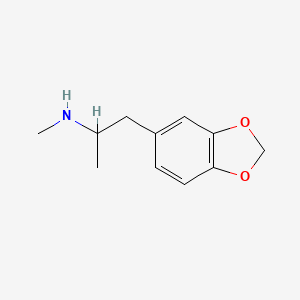
MDMA (3,4-methylenedioxymethamphetamine) is a synthetic compound belonging to the phenethylamine and amphetamine chemical families. Its molecular formula is C₁₁H₁₅NO₂, with a molecular weight of 193.2 g/mol. The most common form encountered is the hydrochloride salt (MDMA·HCl), a white or off-white crystalline powder soluble in water.
Structurally, MDMA shares a core backbone with amphetamine but carries a methylenedioxy ring substitution at the 3,4 positions of the benzene ring, giving it distinct pharmacological properties. It exists as a racemic mixture of two mirror-image forms: (S)-MDMA, which is more biologically active with a shorter half-life, and (R)-MDMA, which persists longer in the body.
MDMA is classified as an entactogen (sometimes called an empathogen), a category distinct from both classical stimulants and classical psychedelics. In recreational contexts it is commonly called ecstasy (tablet form) or molly (crystalline powder or capsules). It is neither a hallucinogen in the traditional sense nor a pure stimulant, but occupies a pharmacological middle ground defined by its pronounced effects on emotional and social processing.
Strength and duration
Intensity profile
Duration
Aftereffects: Intranasal (Snorted)
Molecular structure
Chemistry
MDMA's effects arise from a mechanism fundamentally different from classical psychedelics. Rather than binding directly to serotonin receptors the way psilocybin or LSD does, MDMA works indirectly: it blocks and reverses the transporter proteins responsible for recycling serotonin, dopamine, and norepinephrine back into neurons. The result is a surge of these neurotransmitters flooding the synaptic space, with serotonin release being the dominant driver of MDMA's distinctive emotional effects.
The compound binds with high affinity to the serotonin transporter (SERT), moderate affinity to the dopamine transporter (DAT), and moderate affinity to the norepinephrine transporter (NET). This hierarchy matters: the preferential elevation of serotonin over dopamine is what produces MDMA's empathogenic profile rather than the intense euphoria and reward-seeking behavior associated with amphetamines.
A critical receptor in the story is 5-HT₂B. MDMA acts as a partial agonist at this receptor, and research using genetic knockout models has shown that without functional 5-HT₂B receptors, MDMA fails to produce its characteristic behavioral activation or serotonin release in key brain regions. This receptor appears to serve as a kind of gatekeeper for the compound's effects.
MDMA also triggers the release of oxytocin, a hormone associated with social bonding and trust, which likely contributes to the pronounced feelings of closeness and interpersonal warmth during the experience.
The primary active metabolite is MDA (3,4-methylenedioxyamphetamine), produced during liver metabolism. MDA has roughly 10 times the affinity for the 5-HT₂A receptor compared to MDMA itself, meaning it can produce more psychedelic-like perceptual effects. Individuals who metabolize MDMA more slowly (due to genetic variation in the CYP2D6 enzyme) tend to accumulate more MDA, which can shift their experience toward more perceptual intensity.
One of MDMA's most important pharmacological features is nonlinear kinetics. The liver enzyme CYP2D6 becomes saturated at relatively low concentrations, meaning small increases in the amount consumed can produce disproportionately large spikes in blood levels. This is not a linear relationship, and it makes the margin between a moderate experience and a physiologically risky one narrower than many people assume.

Methods of Encounter
Most people encounter MDMA in one of two contexts: recreational social settings or, increasingly, structured clinical research. The form and route of administration shape the experience significantly.
Oral ingestion is by far the most common route, accounting for roughly 90% of use. MDMA is swallowed as pressed tablets (often stamped with logos or symbols) or as crystalline powder in gelatin capsules. Oral administration produces a gradual onset over 30 to 60 minutes, building toward a sustained peak at around 2 to 3 hours, with total effects lasting approximately 4 to 6 hours. The slower rise tends to feel more manageable and allows the experience to unfold rather than arrive all at once.
Intranasal administration (snorting) produces effects within 10 to 15 minutes but with a shorter total duration of roughly 2 to 4 hours. The rapid onset can feel more intense and sometimes overwhelming. The shorter window often leads to repeated use within a single session, which compounds physiological strain.
Clinical protocols follow a structured format developed over years of research. Sessions typically involve oral administration in a controlled medical environment, with continuous monitoring by trained therapist pairs. The clinical setting is designed to support emotional processing rather than recreation, with preparatory sessions beforehand and integration sessions afterward.
A persistent challenge in non-clinical settings is compound verification. Studies of samples sold as MDMA have found that many contain adulterants, lack MDMA entirely, or include other psychoactive substances. In some analyses, fentanyl has been detected in a significant proportion of samples. Reagent testing kits can identify some misrepresented substances but cannot confirm purity or detect all contaminants. The gap between what people believe they are taking and what they actually consume remains one of the most significant practical risks associated with MDMA outside of clinical contexts.

Origin & History
MDMA entered the world quietly, as a chemical footnote. In 1912, chemist Anton Köllisch at the German pharmaceutical company Merck in Darmstadt synthesized it as an intermediate step in a project aimed at producing a blood-clotting agent. Merck filed a patent for the synthesis method on Christmas Eve of that year. The patent described the procedure but made no mention of psychoactive properties. MDMA was not the goal; it was something the process passed through on the way to something else.
Contrary to a widely repeated claim in medical literature, Merck did not develop MDMA as an appetite suppressant. Systematic review of original company archives from 1900 to 1960 found no evidence for this story. It appears to be a historical error that hardened into accepted fact through repetition. MDMA sat unremarkable in Merck's records for decades, tested briefly in animal models in 1927 and 1959, generating no particular interest either time.
The compound's second life began in the mid-1970s with American chemist Alexander Shulgin. Working from his private laboratory near San Francisco, Shulgin had synthesized MDMA years earlier but did not consume it until September 1976, after hearing from colleagues about its unusual effects. His response was immediate recognition: this was something different from the psychedelics he had spent years exploring. In 1977, he introduced the compound to psychiatrist Leo Zeff, who began quietly incorporating it into therapeutic sessions and sharing it with other practitioners.
For a brief window between the late 1970s and mid-1980s, MDMA existed in an unusual legal and cultural space. Therapists across the United States used it as an adjunct to psychotherapy, while it was simultaneously sold legally in bars in Dallas, Houston, and New York, available by credit card and subject to sales tax. In 1978, Shulgin and chemist David Nichols published the first peer-reviewed paper documenting its effects in humans.
That window closed in 1985. The DEA placed MDMA into Schedule I on an emergency basis, citing "imminent hazard to public safety." International scheduling followed rapidly: the WHO recommended global prohibition, Australia made its first seizure in 1986, the Netherlands banned the compound in 1988. By the early 1990s, MDMA was prohibited in virtually every country. The informal therapeutic tradition that Shulgin and Zeff had seeded was, for all practical purposes, terminated.
Nearly two decades of near-complete research prohibition followed before carefully designed clinical trials began re-emerging in the early 2000s, led by the Multidisciplinary Association for Psychedelic Studies (MAPS). The question Shulgin had raised in 1976, whether this compound could serve a therapeutic purpose, had simply been waiting.

Effects
The MDMA experience is not easily compared to classical psychedelics. Where psilocybin or LSD tend to disassemble perception and cognition, MDMA leaves the architecture of ordinary consciousness largely intact while changing its emotional tone. The world remains recognizable. What shifts is how it feels to be in it.
Emotional dimension (8/10)
This is where MDMA concentrates its force. The emotional intensity rates notably high, and it is the defining feature of the experience. People often report a profound softening of defensiveness, a sense that the barriers they normally maintain between themselves and others have become permeable. Fear, shame, and anxiety tend to recede, replaced by warmth, compassion, and a willingness to be vulnerable. Difficult memories may surface but arrive without the usual protective flinch, making them easier to approach and sit with. Some people describe it as feeling emotionally "held," even when alone. MDMA also elevates oxytocin levels, which likely contributes to the pronounced feelings of trust and social bonding. This is not euphoria in the stimulant sense; it is more like a temporary removal of emotional armor.
Cognitive dimension (5/10)
Cognitive effects are moderate. Abstract reasoning and complex problem-solving may feel somewhat muted, while attention shifts decisively toward emotional and relational content. People tend to find that practical concerns lose urgency and that interpersonal matters feel more important, more real. There can be a quality of emotional clarity, a sense that feelings are being perceived without the usual distortion of anxiety or self-judgment. Working memory may be somewhat impaired, and detailed analytical thinking tends to take a back seat to emotional processing.
Somatic dimension (5/10)
The body responds noticeably. Heart rate and blood pressure rise. Jaw tension and teeth grinding (bruxism) are common. Touch sensitivity increases, sometimes dramatically, with physical contact feeling unusually pleasant or meaningful. Some people report waves of warmth moving through the body or a sense of physical lightness. Appetite typically decreases. Temperature regulation can become unreliable, which is one reason MDMA carries particular risk in hot, physically active environments.
Perceptual dimension (3/10)
Unlike classical psychedelics, MDMA produces only subtle perceptual changes. Colors may seem slightly more vivid, music may feel more emotionally resonant, and sensory input in general may seem enhanced rather than distorted. Clear hallucinations are uncommon. The perceptual world remains largely stable; what changes is the emotional meaning attached to sensory experience rather than the sensory experience itself.
Temporal arc
Effects typically begin 30 to 60 minutes after oral ingestion, building gradually before reaching a peak at around 2 to 3 hours. The peak state lasts roughly 1 to 2 hours before beginning a gradual descent. Total duration runs approximately 4 to 6 hours. The comedown period, extending from the end of acute effects through the following 1 to 3 days, often brings fatigue, low mood, irritability, and difficulty concentrating as the brain's serotonin stores replenish. This aftermath, sometimes called "Tuesday blues" by those who use recreationally on weekends, reflects the neurochemical cost of the acute serotonin release.
Individual variation
Responses differ meaningfully between people. Genetic differences in the CYP2D6 enzyme affect how quickly MDMA is metabolized and how much of the more psychedelic metabolite MDA accumulates. Research has found sex-specific differences: MDMA tends to increase emotional empathy and prosocial behavior more in men than in women, while women may experience greater impairment in recognizing negative facial expressions. Set, setting, and psychological state before the session all shape how the experience unfolds. The same compound, in different hands and contexts, can produce markedly different encounters.
A note before reading
Each experience is different. What you may notice depends on dose, setting, and the body and mind you bring to it.
What people often notice
Emotional spectrum
Visual
Visuals tend to stay soft and mostly closed-eye, often subtle textures or gentle color shifts behind the eyelids.
Cognitive
Loose associations may appear, insights surface sideways, and familiar ideas can rearrange into fresh shapes.

Risks & Limits
MDMA is not pharmacologically benign, and honest engagement with this compound requires understanding where its risks concentrate.
Hyperthermia is the most acute physical danger. MDMA raises core body temperature through increased metabolic heat production and reduced heat dissipation via vasoconstriction. In controlled settings at rest, the increase is modest (0.2 to 0.8°C). In environments involving dancing, crowds, and heat, however, the combination can push body temperature above 41°C, which can be fatal. Emergency presentations with dangerously elevated temperature remain one of the most common serious MDMA-related medical events.
Hyponatremia (dangerously low sodium) represents a less intuitive but equally serious risk. MDMA triggers inappropriate antidiuretic hormone secretion, causing the body to retain water. When combined with excessive water intake (often motivated by fear of dehydration), this can dilute blood sodium to levels that produce seizures, cerebral edema, and death. Women appear more vulnerable to this effect.
Cardiovascular strain is consistent and measurable. MDMA raises heart rate by approximately 30 beats per minute and significantly increases blood pressure. For individuals with pre-existing cardiac conditions, arrhythmias, or hypertension, this added load creates meaningful risk. Chronic use has been associated with potential cardiac valve changes through sustained 5-HT₂B receptor activation, though the clinical significance of this in typical users remains debated.
Serotonin syndrome is a life-threatening possibility when MDMA is combined with monoamine oxidase inhibitors (MAOIs) such as phenelzine or tranylcypromine. Multiple fatalities have been documented from this combination. SSRIs present a different profile: they do not typically produce dangerous serotonin syndrome with MDMA in clinical settings, but they may alter MDMA's effects and effectiveness. Notably, analysis of adverse event databases found that all documented serotonin syndrome cases involving MDMA included concurrent use of additional serotonergic substances.
Neurotoxicity remains the most debated long-term question. Animal studies consistently show reduced serotonin and serotonin transporter density after high-dose MDMA. Human brain imaging of abstinent users has not consistently replicated these findings, raising the possibility that the changes are reversible or less severe in humans. Memory and learning impairments have been documented in chronic users and correlate with lifetime consumption. The honest scientific position is that lasting harm is plausible but not definitively proven in humans, and individual risk likely depends on frequency, quantity, and genetic factors.
Psychological risks include worsened depression and anxiety in vulnerable individuals, mood destabilization in those with bipolar disorder, and the potential for the post-use serotonin depletion (the comedown) to trigger depressive episodes in those already predisposed.
Adulterant hazards are not pharmacological but are among the most dangerous practical risks. Fentanyl has been detected in a significant proportion of samples sold as MDMA in some drug-checking analyses. Reagent testing provides preliminary verification but cannot confirm purity or detect all contaminants.
The context of use matters enormously. Clinical settings with medical screening, monitoring, and controlled environments eliminate many of these risks. Unstructured recreational settings amplify them. Set, setting, and the presence of informed support do not eliminate pharmacological risk, but they dramatically affect outcomes.

Integration
The experience does not end when the effects wear off. What happens in the hours, days, and weeks afterward often determines whether the encounter becomes meaningful or simply fades into memory.
Integration is not a technique with steps. It is closer to a practice of attention, a willingness to stay with what surfaced and let it settle before rushing to interpret or act on it. The emotional openness that MDMA can produce sometimes reveals feelings, memories, or relational truths that need time and care to metabolize. Trying to return immediately to ordinary pace can feel jarring.
Rest and recovery come first. The neurochemical depletion following MDMA use is real, and the body needs time to restore serotonin levels. Sleep, nourishment, and reduced stimulation in the first day or two support this biological process. The low mood that sometimes follows is not a sign that something went wrong; it reflects the temporary cost of the acute serotonin release.
Reflection can take many forms. Some people journal about what they felt, noticed, or understood during the experience. Others prefer conversation with a trusted person, someone who can listen without interpreting or directing. The goal is not to extract a lesson but to remain curious about what was revealed. Not every insight needs to be acted upon immediately. Some need to be carried for a while before their meaning becomes clear.
Professional support can be valuable, particularly when the experience brought up difficult emotional material. Therapists trained in psychedelic integration understand that the heightened emotional access during a session can uncover grief, trauma, or relational patterns that benefit from skilled accompaniment. Clinical protocols build this support directly into the treatment structure, with multiple integration sessions following each medication session.
Community and relationship matter, too. Sharing the experience with someone who was present, or with someone who understands the territory, can help consolidate what was felt. Isolation in the aftermath tends to narrow the aperture of meaning, while connection tends to widen it.
Integration is patient work. It does not follow a schedule, and it resists being rushed. The experiences that matter most often take the longest to understand.
Ethics & Ecology
Unlike many psychoactive substances profiled on this site, MDMA is entirely synthetic. It is not harvested from a plant or fungus, and its production does not directly threaten endangered species or fragile ecosystems. The ecological considerations that apply to psilocybin mushrooms, ayahuasca, or peyote, questions of overharvesting, habitat loss, and cultural stewardship, do not apply here in the same way.
The ethical landscape of MDMA centers instead on access, equity, and the politics of prohibition.
MDMA-assisted therapy, as it currently exists in clinical research and in Australia's prescribing framework, is expensive. Treatment courses often exceed $15,000, and access is concentrated in wealthy countries and among patients with the resources to navigate specialized clinics. This creates a structural inequity: the therapeutic benefits of a compound may accrue primarily to those who already have access to quality mental health care, while criminalization continues for everyone else.
The enforcement of MDMA prohibition has not been applied equally. Drug law enforcement in the United States and elsewhere has produced well-documented racial disparities, with Black and Latino individuals arrested and incarcerated at higher rates than white individuals for comparable drug offenses, despite similar rates of use across racial groups. MDMA prohibition participates in this broader pattern.
The commercialization of MDMA-assisted therapy raises further questions. Patent applications filed by Lykos Therapeutics (formerly the clinical arm of MAPS) seek to protect specific formulations, potentially extending market exclusivity for decades. Whether psychedelic medicine should follow the traditional pharmaceutical model, with intellectual property protections and proprietary pricing, or a public health model oriented toward broad access, remains an open and consequential question.
Legality is not morality. The legal status of MDMA varies across jurisdictions and has changed repeatedly over its history. Treating current law as a definitive ethical guide misses the complexity of how drug scheduling decisions have been made and whom they have served.
Misconceptions
Molly is pure MDMA
The term "molly" was marketed as a purer alternative to pressed ecstasy tablets, but this distinction has no scientific basis. Hair follicle testing of people who purchased and consumed molly found that nearly half tested positive for synthetic cathinones ("bath salts") they had never knowingly taken. Visual appearance and crystalline form provide no reliable indication of compound identity or purity.
MDMA is harmless
MDMA produces measurable cardiovascular strain, raises body temperature, and depletes serotonin. Chronic use is associated with memory impairment and increased vulnerability to depression. The question of lasting neurotoxicity in humans remains open, but available evidence does not support claims of harmlessness. Risk varies with frequency, quantity, and individual physiology.
MDMA is not addictive
While physical withdrawal may be less severe than with opioids or alcohol, psychological dependence can develop. Tolerance builds with repeated use, leading some people to increase the amount consumed to recapture earlier effects, even as negative consequences accumulate. The pattern of continued use despite increasing harm meets common definitions of problematic substance use.
Recreational MDMA use is the same as therapy
The clinical benefits observed in MDMA-assisted psychotherapy depend on a specific structure: medical screening, trained therapist pairs, controlled environments, preparatory sessions, and systematic integration afterward. Recreational use in unstructured settings, without these safeguards, has not been shown to produce comparable therapeutic outcomes. The compound alone is not the therapy; the container matters.
MDMA was originally an appetite suppressant
This claim appears in many medical textbooks but is a historical error. Review of original Merck company archives found no evidence that MDMA was developed for appetite suppression. It was synthesized as a chemical intermediate in an unrelated project and remained unremarkable for over sixty years.
FAQ

Reflection
MDMA asks a disarming question: what would it feel like to meet your own feelings without flinching?
For a few hours, the compound appears to lower the threshold between a person and their own emotional life, between one person and another. The defenses that ordinarily stand between self and feeling, between self and other, become quieter. What remains, according to those who have been there, is a more direct encounter with something that was present all along but usually kept at a careful distance.
Whether this softening can be sustained without the molecule, whether the walls return or whether something has shifted permanently in the architecture, is a question each person carries differently. The clinical researchers studying MDMA are, in essence, studying that question in controlled conditions. The answer appears to be: sometimes, with the right support, something does change.
But the compound itself is only a doorway. What matters is what a person does once they have walked through it, and whether they can find their way back to that openness without needing to be carried there again.
Sources
Clinical Studies
- ●Mithoefer, M.C. et al. (2019). MDMA-assisted psychotherapy for treatment of PTSD: study design and rationale for phase 3 trials. Psychopharmacology.
- ●Mitchell, J.M. et al. (2021). MDMA-assisted therapy for severe PTSD: a randomized, double-blind, placebo-controlled phase 3 study. Nature Medicine, 27, 1025-1033.
- ●Sessa, B. et al. (2019). First study of safety and tolerability of MDMA-assisted psychotherapy in patients with alcohol use disorder. Journal of Psychopharmacology, 33(12), 1529-1535.
- ●Feduccia, A.A. et al. (2019). Breakthrough therapy designation for MDMA-assisted psychotherapy for PTSD. New England Journal of Medicine, 381, 1866-1868.
Pharmacology & Chemistry
- ●Liechti, M.E. (2017). Modern clinical research on LSD. Neuropsychopharmacology, 42(11), 2114-2127.
- ●Vizeli, P. & Liechti, M.E. (2017). Safety pharmacology of acute MDMA administration in healthy subjects. Journal of Psychopharmacology, 31(10), 1260-1271.
- ●Hysek, C.M. et al. (2012). MDMA enhances emotional empathy and prosocial behavior. Social Cognitive and Affective Neuroscience, 9(11), 1645-1652.
- ●de la Torre, R. et al. (2004). Non-linear pharmacokinetics of MDMA ('ecstasy') in humans. British Journal of Clinical Pharmacology, 57(2), 159-169.
- ●Doly, S. et al. (2008). Serotonin 5-HT₂B receptors are required for MDMA-induced behavioral and neurochemical effects. Neuropharmacology, 55(4), 495-499.
Neurotoxicity & Risks
- ●Parrott, A.C. (2013). Human psychobiology of MDMA or 'ecstasy': an overview of 25 years of empirical research. Human Psychopharmacology, 28(4), 289-307.
- ●Halpern, J.H. et al. (2011). Residual neurocognitive features of long-term ecstasy users with minimal exposure to other drugs. Addiction, 106(4), 777-786.
- ●Kuypers, K.P. et al. (2016). No evidence for neurotoxicity in chronic MDMA users: A review. Cortex, 82, 233-245.
- ●Dafters, R.I. (2006). Chronic ecstasy (MDMA) use is associated with deficits in task-switching but not inhibition or memory updating executive functions. Drug and Alcohol Dependence, 83(2), 181-184.
History & Policy
- ●Freudenmann, R.W. et al. (2006). The origin of MDMA (ecstasy) revisited: the true story reconstructed from the original documents. Addiction, 101(9), 1241-1245.
- ●Shulgin, A.T. & Nichols, D.E. (1978). Characterization of three new psychotomimetics. In The Psychopharmacology of Hallucinogens, Pergamon Press.
- ●Pentney, A.R. (2001). An exploration of the history and controversies surrounding MDMA and MDA. Journal of Psychoactive Drugs, 33(3), 213-221.
- ●Nutt, D. (2022). Psychedelic drugs: a new era in psychiatry? Dialogues in Clinical Neuroscience, 21(2), 139-147.
Adulterant & Harm Reduction
- ●Palamar, J.J. et al. (2017). Hair testing to assess both known and unknown use of drugs amongst ecstasy users in the electronic dance music scene. International Journal of Drug Policy, 48, 91-98.
- ●Harper, L. et al. (2017). An overview of forensic drug testing methods and their suitability for harm reduction point-of-care services. Harm Reduction Journal, 14(1), 52.
For how we evaluate sources and structure our claims, see the methodology.
States you may encounter
Altered states of consciousness commonly reported with this substance.
Euphoriacommon
A sustained feeling of deep wellbeing and joy, often described as feeling connected to everything. Not the sharp hit of pleasure, but a warm, expansive sense that the world is fundamentally okay.
Empathic openingcommon
A heightened capacity for compassion and emotional attunement, both toward oneself and others. Boundaries between self-concern and concern for others soften.
Meta-awareness
The ability to observe one's own thoughts and mental processes with unusual clarity and detachment. A witness perspective emerges that can notice patterns normally invisible.
Energetic flow
Sensations of energy moving through the body, often described as waves, currents, or pulses along the spine. May feel electric, warm, or tingling.